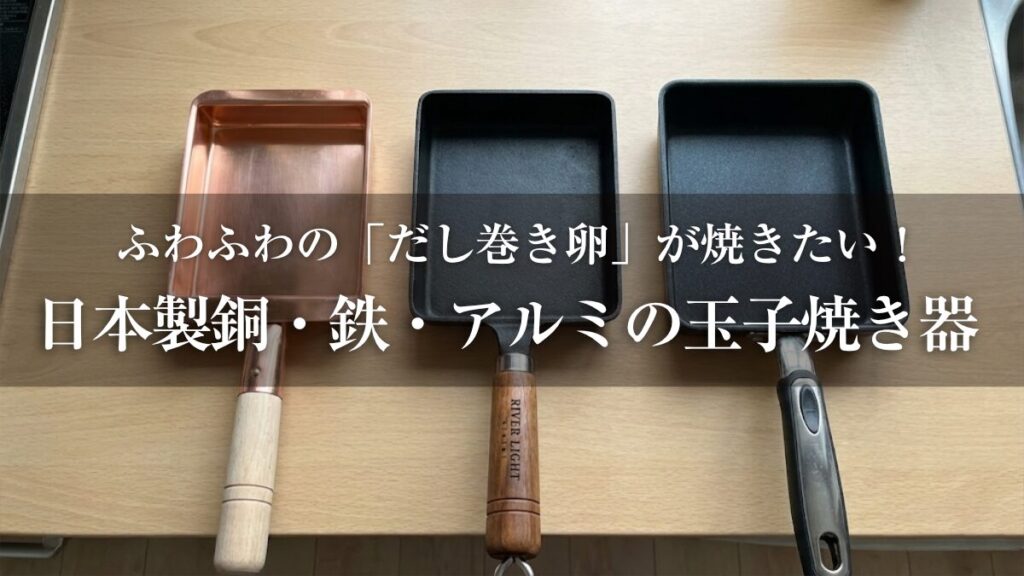
For most home cooks, a coated aluminum tamagoyaki pan is the right choice — forgiving, easy to clean, and produces consistently good results. If you want professional-grade dashi maki tamago with the silkiest possible texture, copper is what Japanese professional chefs use. Iron is the durable middle ground: lower maintenance than copper, better heat retention than aluminum.
The tamagoyaki pan (玉子焼き器) is one of Japan's most specialized kitchen tools — a rectangular pan designed specifically for rolling layered egg. This guide covers how each material affects the result, how to choose between the east-style (square) and west-style (rectangular) shapes, and which Japanese brands make the best versions of each.
Quick Reference: Tamagoyaki Pan Materials Compared
| Material | Heat | Result | Care | Best for |
|---|---|---|---|---|
| Copper | Highest (instant, even) | Silky, moist — professional grade | Re-tinning required every few years | Dashi maki tamago, serious cooks |
| Iron | Good (improves with use) | Slightly crisp outside, firm texture | Oil after washing, no soap | Bento, everyday use, long-term ownership |
| Coated aluminum | Good (uniform) | Soft, easy to roll | Wash with soap, replace after 2–4 years | Beginners, quick morning cooking |
Why Japanese Tamagoyaki Pans?
The tamagoyaki pan is not a universal kitchen tool — it is a specifically Japanese invention designed for one dish. The rectangular shape creates the square cross-section that defines Japanese rolled egg. A round frying pan produces round-edged results; a rectangular pan produces the clean, stackable bar shape used in bento boxes and sushi platters.
Japanese manufacturers have refined this tool for centuries. Copper tamagoyaki pans made in Kyoto or Tokyo by specialist craftspeople are direct descendants of pans used in Edo-period professional kitchens. Modern Japanese brands have brought that craft heritage into contemporary manufacturing — producing pans with extremely precise heat distribution characteristics optimized specifically for egg rolling.
The key difference from a generic rectangular pan: Japanese tamagoyaki pans are sized and proportioned specifically for the dish. The depth, wall angle, and base thickness are tuned to allow a thin layer of egg to cook evenly, develop a light skin on the bottom, and roll cleanly before the top is fully set. Getting this geometry right matters: a poorly proportioned pan makes rolling much harder.
Did you know: tamagoyaki in Japanese cuisine
Tamagoyaki (玉子焼き) literally means "grilled egg" — but the dish is anything but simple. The classic version served at high-end sushi restaurants is dashi maki tamago (だし巻き卵): egg mixed with dashi stock (often made from kombu and katsuobushi), mirin, and a small amount of soy sauce, then rolled in multiple layers. The dashi-to-egg ratio and temperature control are what separate a professional result from a home version. A copper pan makes the latter possible even at home.
Material Comparison: Copper, Iron, and Aluminum
Copper — the professional standard
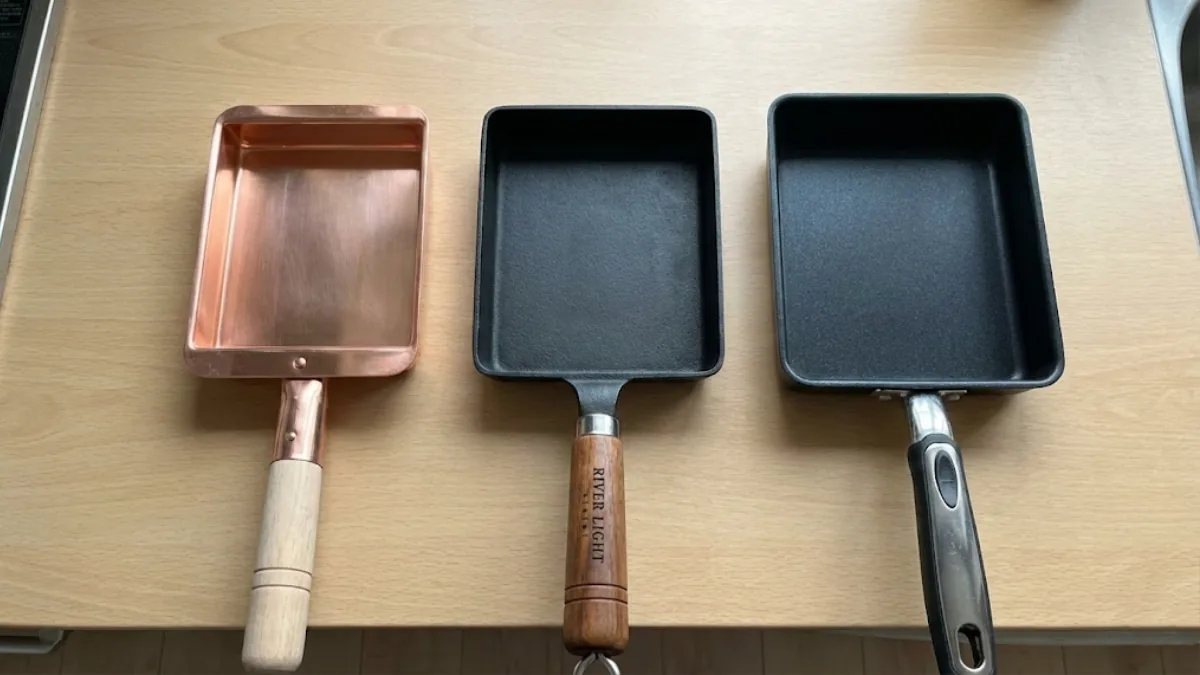
Copper conducts heat approximately 5 times faster than iron and 1.5 times faster than aluminum. In practice: when you pour egg mixture into a properly heated copper pan, the base surface cooks almost instantly and evenly across the entire rectangular surface. This speed matters because tamagoyaki is about rolling semi-set egg — if heat is uneven, one area overcooks while another is still liquid, making clean rolls difficult.
The internal surface of a copper tamagoyaki pan is lined with tin (錫引き), a soft metal that is food-safe and provides a slightly non-stick surface. With proper care, a copper pan becomes increasingly responsive over years of use. When the tin lining eventually wears thin (typically after several years of regular use), a specialist craftsperson can re-apply it — hence the "lifetime tool" designation.
The downside: copper requires more attentive heat management (it responds to heat changes faster), cannot go in the dishwasher, and the re-tinning service costs around ¥3,000–¥8,000 when eventually needed.
Iron — durable, flavorful, low-maintenance
Iron tamagoyaki pans heat less evenly than copper but retain heat better. The result is a slightly firmer, more rustic egg roll with a lightly browned exterior — which many people prefer for everyday bento use. As the seasoning develops over use, iron becomes progressively more non-stick. Modern Japanese nitrided iron pans (Riverlight Kiwame) are non-stick from the first use and resist rust significantly better than traditional iron.
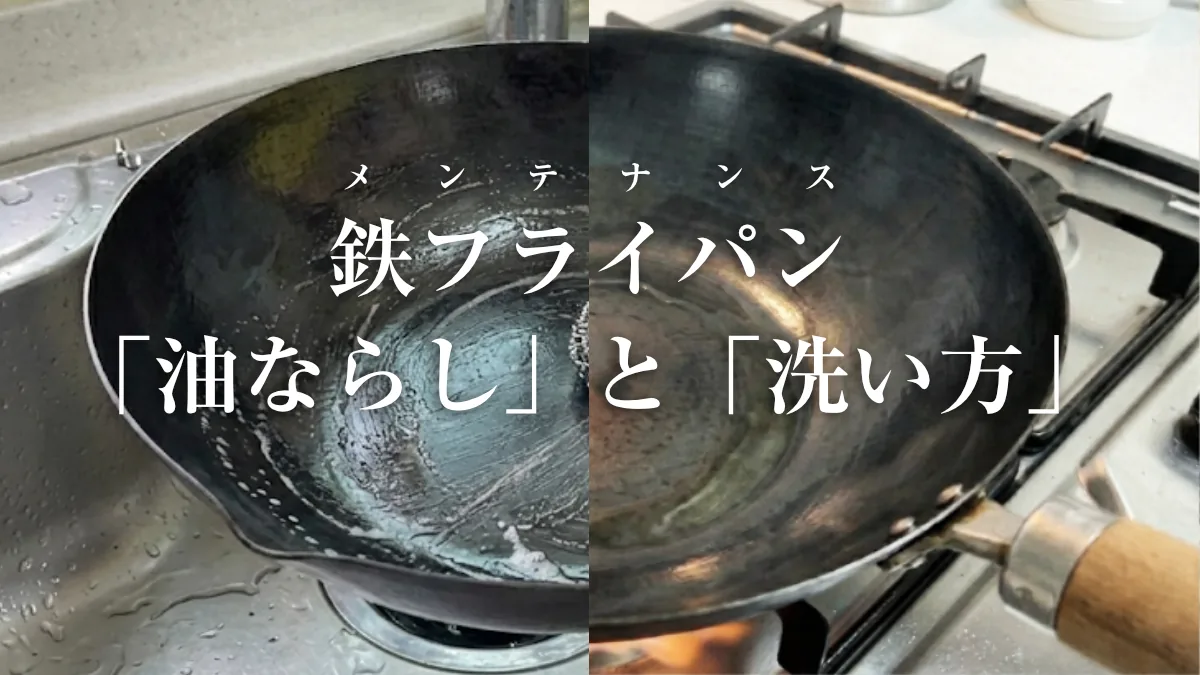
Iron tamagoyaki pans are heavier than aluminum but lighter than full copper. Daily care: hot water rinse, heat-dry on stove, light oil wipe. No soap (except on modern nitrided pans — check manufacturer guidance).
Coated aluminum — the forgiving everyday choice
Aluminum with a fluoropolymer coating heats evenly, is naturally non-stick from new, and allows high-dashi egg mixtures (which are prone to sticking) to roll cleanly even for beginners. Modern Japanese cast aluminum models have thicker bases than standard pressed aluminum, improving heat distribution and producing noticeably better results.
The limitation is lifespan: even premium Japanese coatings (Teflon™ Platinum Plus) will degrade over 2–5 years of daily use. When the coating starts to show wear, replace the pan. For a tool used primarily for one dish, this is acceptable — especially at the relatively modest price point of Japanese aluminum tamagoyaki pans.
East-Style vs. West-Style: Which Shape to Choose
East-style (Kanto-gata, 関東型) — square
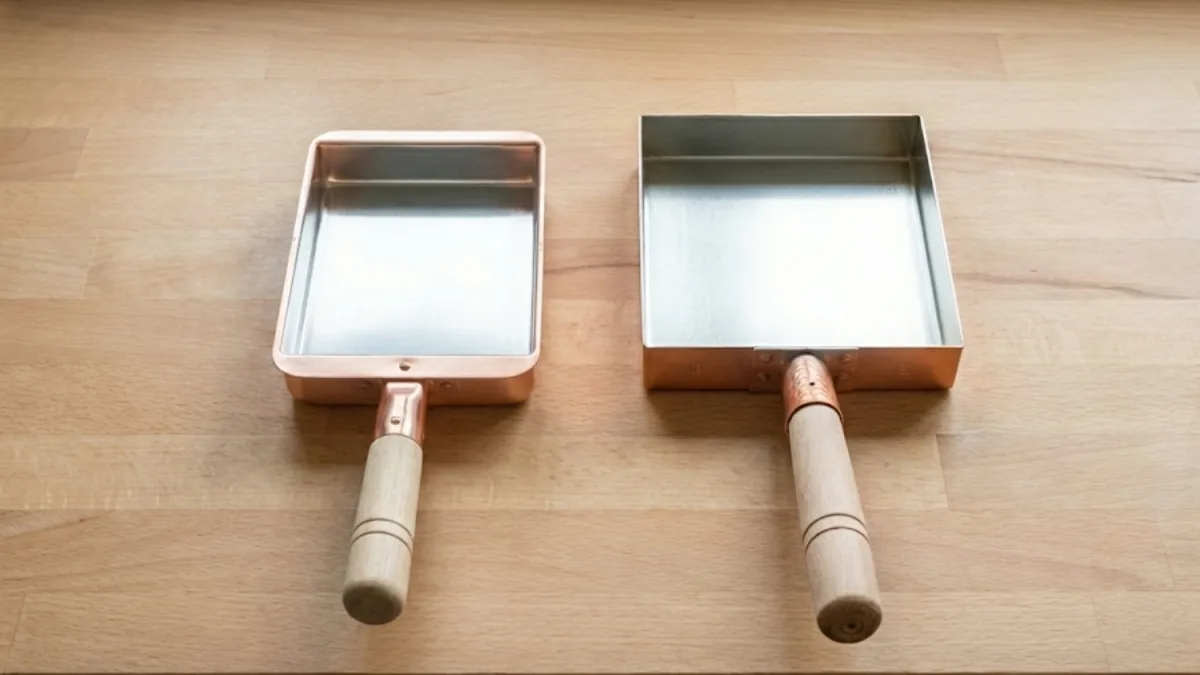
The square pan produces a thick, substantial tamagoyaki — the kind served at high-end sushi restaurants (江戸前寿司) as a thick slab of egg. Requires 4+ eggs per roll to fill the volume and produce the characteristic height. Heavier and slightly harder to maneuver for beginners, but produces an impressive result.
West-style (Kansai-gata, 関西型) — rectangular
The narrow rectangular shape is the most common for home use across Japan. It works well with 2–3 eggs and produces a compact, bento-appropriate roll with clean square edges. The narrower width makes rolling easier and allows more control. If you're buying your first tamagoyaki pan, start with the rectangular (west-style) shape.
Size within the rectangular format: small (approximately 13 × 18 cm) is ideal for 1–2 people; medium (approximately 15 × 21 cm) handles 2–4 servings comfortably. Most standard Japanese tamagoyaki pans sold for home use fall in the small-to-medium rectangular range.
Top Japanese Tamagoyaki Pan Brands
Fujita Kinzoku (藤田金属) — Factory-Seasoned Iron Tamagoyaki Pan
Fujita Kinzoku, based in Yao City, Osaka, heat-treats every pan at around 700°C and applies oil by hand before shipping — the pan arrives pre-seasoned and ready to cook with. Their iron tamagoyaki pan delivers better heat retention than aluminum, giving the egg roll a lightly golden exterior and a firmer, more layered set. The design is clean enough to serve directly at the table. Made in Japan, IH compatible.
- Material
- Iron (factory hard-tempered)
- Made in
- Yao City, Osaka, Japan
- Initial seasoning
- Not required — arrives pre-seasoned
- Best for
- Cooks who want iron flavor and durability without the break-in hassle
Perfect for: Anyone upgrading from coated aluminum who wants iron's performance without the traditional seasoning ritual.
Riverlight — Kiwame JAPAN Tamagoyaki Pan
Riverlight's nitrided iron tamagoyaki pan brings the benefits of their Kiwame JAPAN technology to this specific format. No initial seasoning required — the nitriding treatment hardens the surface and prevents rust without the traditional lacquer coating that requires burning off. The iron heat retention adds a lightly browned exterior to the egg roll that aluminum cannot match. IH compatible. Replaces handles when worn.
- Material
- Nitrided iron
- Initial seasoning required
- No
- Made in
- Japan
- IH compatible
- Yes
Perfect for: Cooks who want iron's durability and flavor without traditional seasoning complexity.
Hokuriku Aluminium (HOKUA) — Cast Aluminum with High-Grade Coating
Based in Takaoka City, Toyama Prefecture — an aluminum production center — Hokuriku Aluminium's tamagoyaki pans use cast aluminum (鋳物) rather than pressed aluminum. The cast base is thicker, stores more heat, and heats more evenly, producing egg rolls with noticeably better texture than standard pressed aluminum pans at comparable prices. Their top models use high-density fluoropolymer coatings (Teflon™ Platinum Plus) with significantly better durability than entry-level coatings.
- Material
- Cast aluminum with high-grade fluoropolymer coating
- Made in
- Takaoka City, Toyama, Japan
- Advantage over standard aluminum
- Thicker cast base = more even heat
Perfect for: Cooks who want coated non-stick but want meaningfully better results than standard pressed aluminum pans.
The Copper Pan: Why It's a Lifetime Piece
The interior of a copper tamagoyaki pan is lined with tin (錫引き — "suzubiki"). Tin is a soft, food-safe metal that provides a slightly non-stick cooking surface while protecting the copper underneath from direct food contact. Over years of regular use, the tin lining gradually wears thin — visible as lighter patches on the interior surface.
At this point, many people assume the pan is finished. It is not. A specialist craftsperson (suzubiki shokunin) can strip the old tin and apply a fresh layer — a process called 錫引き直し (suzubiki naoshi). The cost ranges from approximately ¥3,000 to ¥8,000 depending on the pan size, and the result is a pan that looks and performs like new. This service can be repeated indefinitely. As long as the copper body is undamaged, the pan will outlast its owner.
Copper tamagoyaki pans are available from specialized kitchen tool makers in Kyoto (particularly the Nishiki Market area), Tokyo's Kappabashi kitchen district, and online. Prices start around ¥5,000–¥8,000 for home-size pans and can exceed ¥20,000 for professional-grade sizes. For a tool that will last a lifetime, this is a worthwhile investment for anyone who takes Japanese egg cooking seriously.
FAQ
Does the pan material really make a difference in tamagoyaki taste?
Yes, measurably so — particularly with copper. Copper's extreme heat conductivity means the egg surface sets almost instantly and uniformly, sealing in moisture and dashi. The result is a silkier, moister texture with distinct layers. Iron produces a slightly firmer, more browned exterior. Coated aluminum falls between the two — soft and consistent but without copper's delicacy or iron's browning. For casual cooking, aluminum is perfectly good. For dashi maki tamago where the silky interior texture is the point, copper produces a genuinely superior result.
What is the difference between a tamagoyaki pan and a regular frying pan?
The rectangular shape and the proportions. A rectangular tamagoyaki pan creates clean square edges on the rolled egg, which is the expected shape for bento boxes and sushi accompaniments. The specific width-to-length ratio and wall depth are also designed for the rolling motion — too wide and the egg slides before it can be rolled; too narrow and multiple layers become difficult. A round pan can make something resembling tamagoyaki, but the result looks different and the technique is harder.
Can I use a tamagoyaki pan on an IH (induction) stove?
It depends on the material. Iron tamagoyaki pans (including Riverlight Kiwame) are naturally IH-compatible. Copper and aluminum are not IH-compatible unless they have an IH-compatible base layer bonded to the bottom. Check the product specifications — IH compatibility will be clearly stated as "IH対応." If you cook on induction, confirm compatibility before purchasing copper or aluminum models.
How do I care for a copper tamagoyaki pan?
Wash by hand with hot water and a soft sponge — no dish soap, no dishwasher. After washing, dry immediately (copper will water-spot if left wet). The exterior of copper pans naturally darkens and develops a patina over time, which is normal and does not affect performance. If you prefer the bright original finish, polish with a paste of lemon juice and salt, then rinse thoroughly. The interior tin lining should be re-done by a professional when it wears thin — do not attempt to re-tin yourself.
Which is better: east-style (square) or west-style (rectangular) tamagoyaki pan?
For most home cooks: rectangular (west-style). The narrower shape works with 2–3 eggs and produces a bento-appropriate roll with less effort. The square east-style pan requires 4+ eggs to fill properly and produces the thick, sushi-restaurant-style result — excellent if that's specifically what you want, but less practical for daily cooking. If you're buying one pan, start with rectangular.
What is the trick to making fluffy tamagoyaki without it sticking?
Three keys: temperature, oil, and timing. The pan should be at medium-low heat when egg goes in — not too hot or the base browns before you can roll, not too cool or the egg spreads without setting. Oil the pan with a paper towel before each egg addition. The most important moment is timing the roll: start rolling when the bottom surface is set but the top is still visibly liquid. If you wait until the top is fully set, the layers won't bond and the roll breaks. Use a chopstick or tamagoyaki spatula (not a wide flat spatula) for better control during rolling.
The tamagoyaki pan is one of those kitchen tools that seems specialized until you own one — then you use it constantly. For bento boxes, quick breakfasts, sushi accompaniments, and Japanese cooking generally, it's one of the most-used tools in a Japanese kitchen. Start with a good Japanese cast aluminum model if you want zero fuss. Add copper if you want to take dashi maki tamago seriously. Either way, Japanese-made versions from the brands above will outlast anything generic.
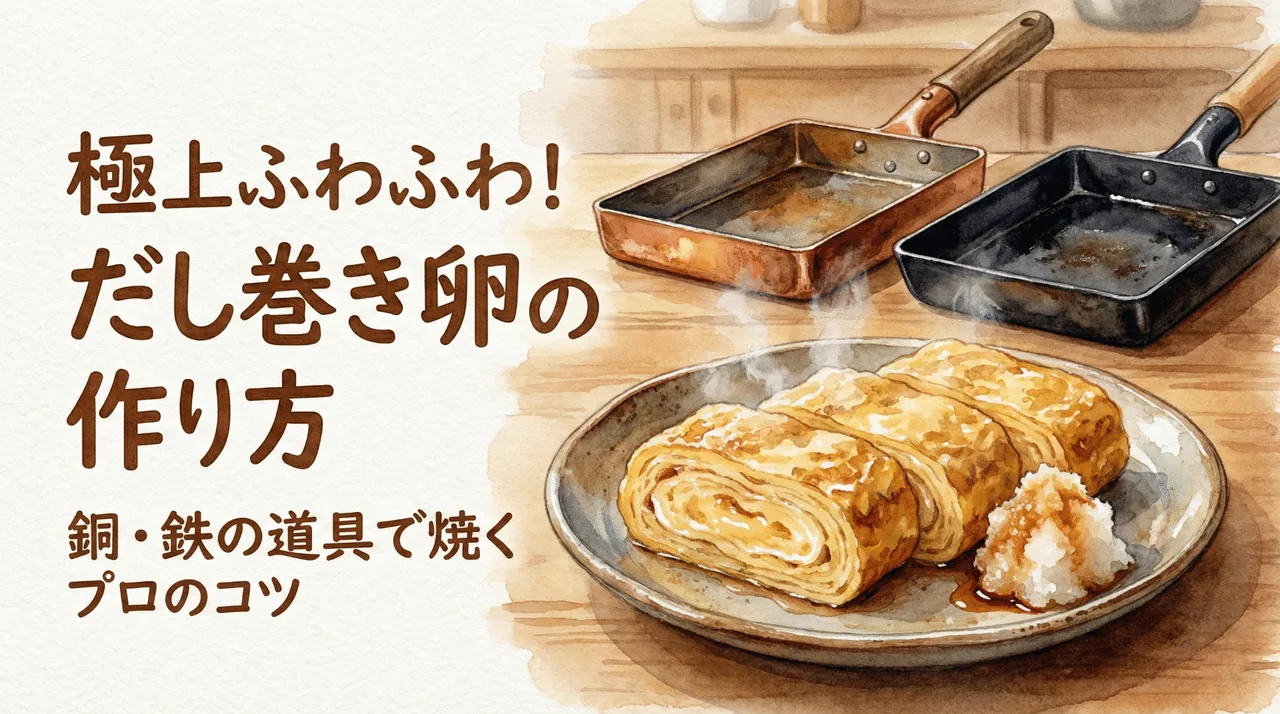
How to Make Tamagoyaki: Fluffy Japanese Rolled Egg Recipe
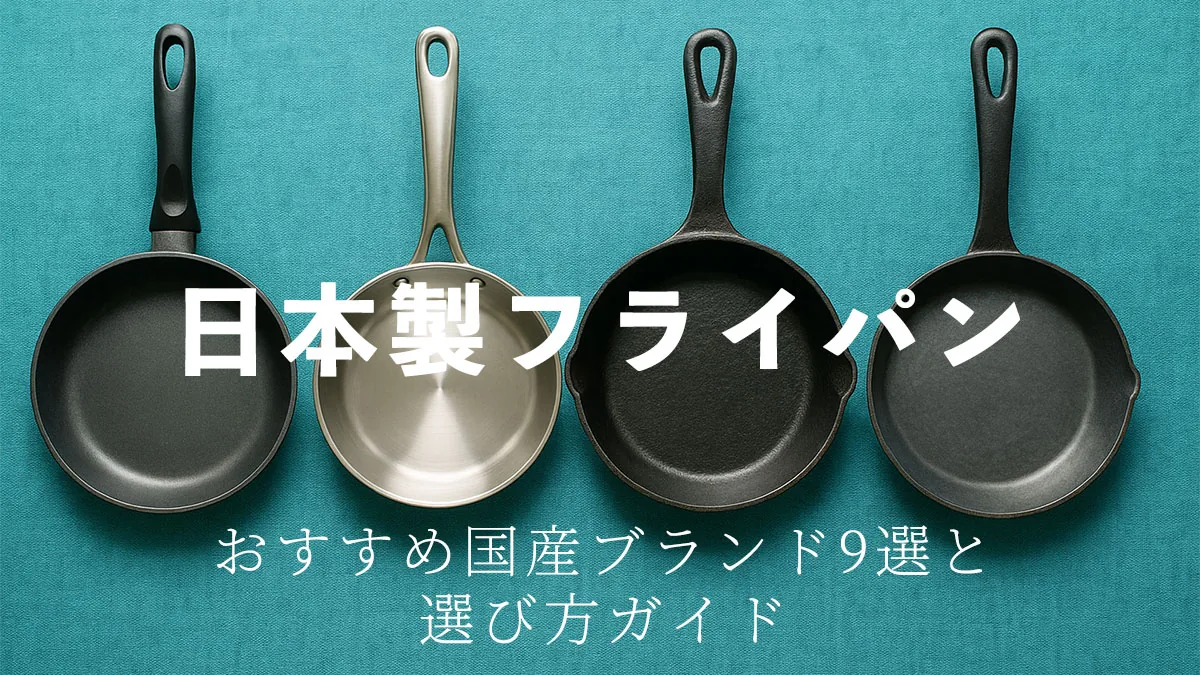
Best Japanese Frying Pans: Materials, Brands & Buying Guide