
Your prized figurines, the lacquered surface of a piano, the family altar honoring your ancestors.
Are you cleaning these delicate objects with a synthetic fiber handheld mop?
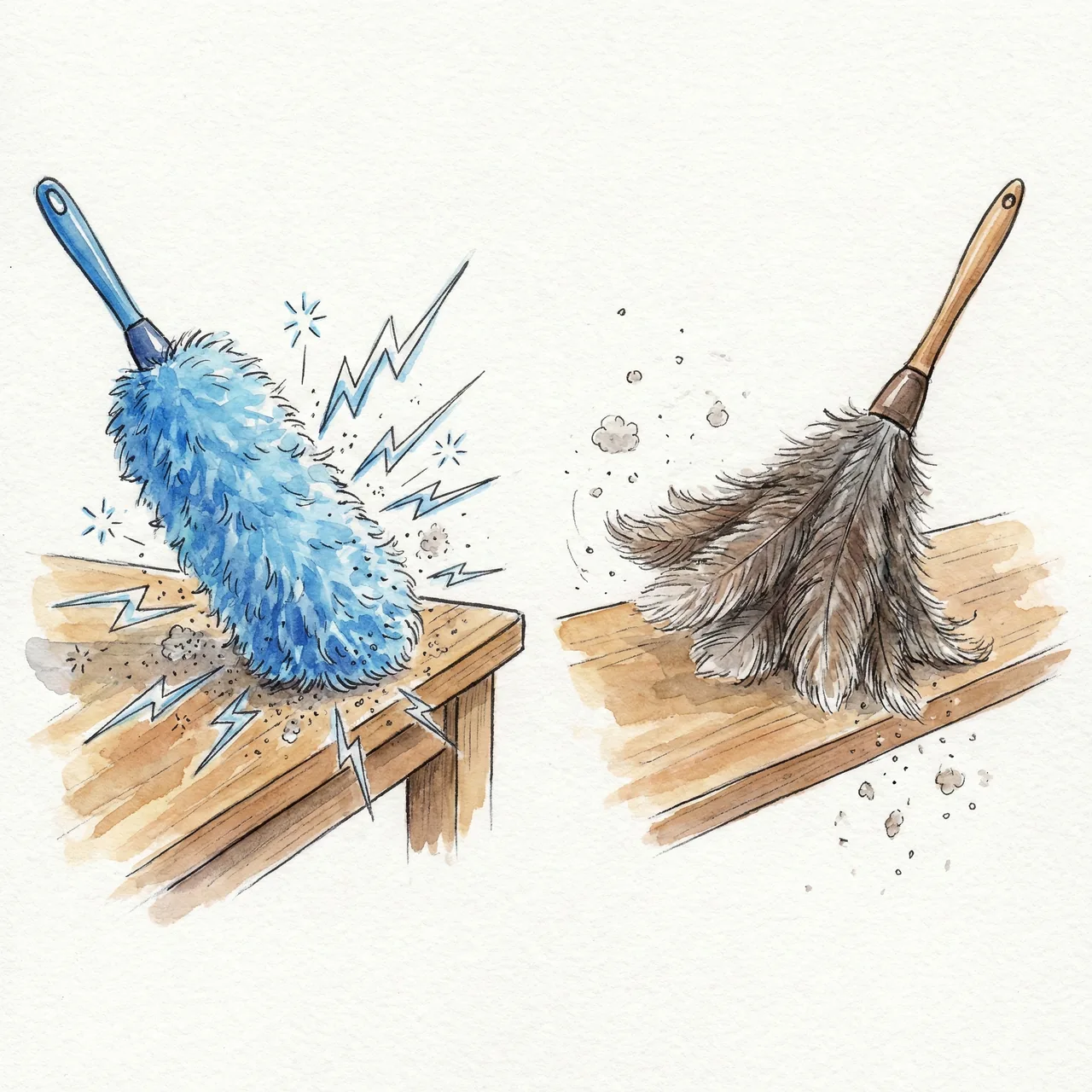
The problem: synthetic fibers generate static electricity through friction — and that static stays on the furniture,
drawing dust right back the moment you've finished cleaning.
The solution is the old-fashioned Japanese feather duster (hane-hataki).
Natural-material dusters generate no static — a gentle stroke is all it takes to lift dust away without harming the
surface.
This guide covers how to choose the right material for each job, and introduces the finest Japanese-made dusters
that make cleaning a pleasure for years to come.
Series: This article is part of the 9 Made-in-Japan Housework Tools for Life series.
Quick Reference: Feather Duster Materials at a Glance
| Material | Features | Best For | Care |
|---|---|---|---|
| Feather (bird) | Low static; gently traps dust | Altars, pianos, precision instruments | Shake out; occasional gentle wash |
| Shuro hemp | Firm; strong sweeping power | Furniture, shelves, floor perimeter | Washable (must dry thoroughly) |
| Cotton | Soft; ideal for delicate surfaces | Wooden furniture, lacquered surfaces | Machine-washable |
| Anti-static | Anti-static material; repels dust after cleaning | Electronics, blinds | Washable |
1. The Benefits of Dusting with a Duster | No Static — Dust Stays Gone
Why bother with an analog tool like a feather duster in this day and age? The answer comes down to static electricity.
Synthetic Fiber Mops "Invite" Dust; Natural Materials "Sweep It Away"
Synthetic dusters attract dust with static electricity — but that static remains on the furniture, drawing
airborne dust right back almost immediately.
Natural materials like feathers and washi paper generate no static, so the surface stays dust-free
longer after cleaning.
The difference is especially noticeable on TV wiring bundles, black-lacquered furniture, and other surfaces
where dust is highly visible.
2. Choosing by Material | Feather vs. Washi — the Decisive Difference
Dusters broadly fall into two types: feather and washi (Japanese paper). Choose based on what you're cleaning.
[Feather] Ostrich & Chicken — "Stroke" Cleaning for Fragile Items
Soft feathers gently stroke the surface, catching and lifting dust without contact pressure.
Best for: altars, pianos, figurines, TV screens, houseplant leaves, car bodywork.
Ideal when you want to lift dust from tight spaces without moving the object.

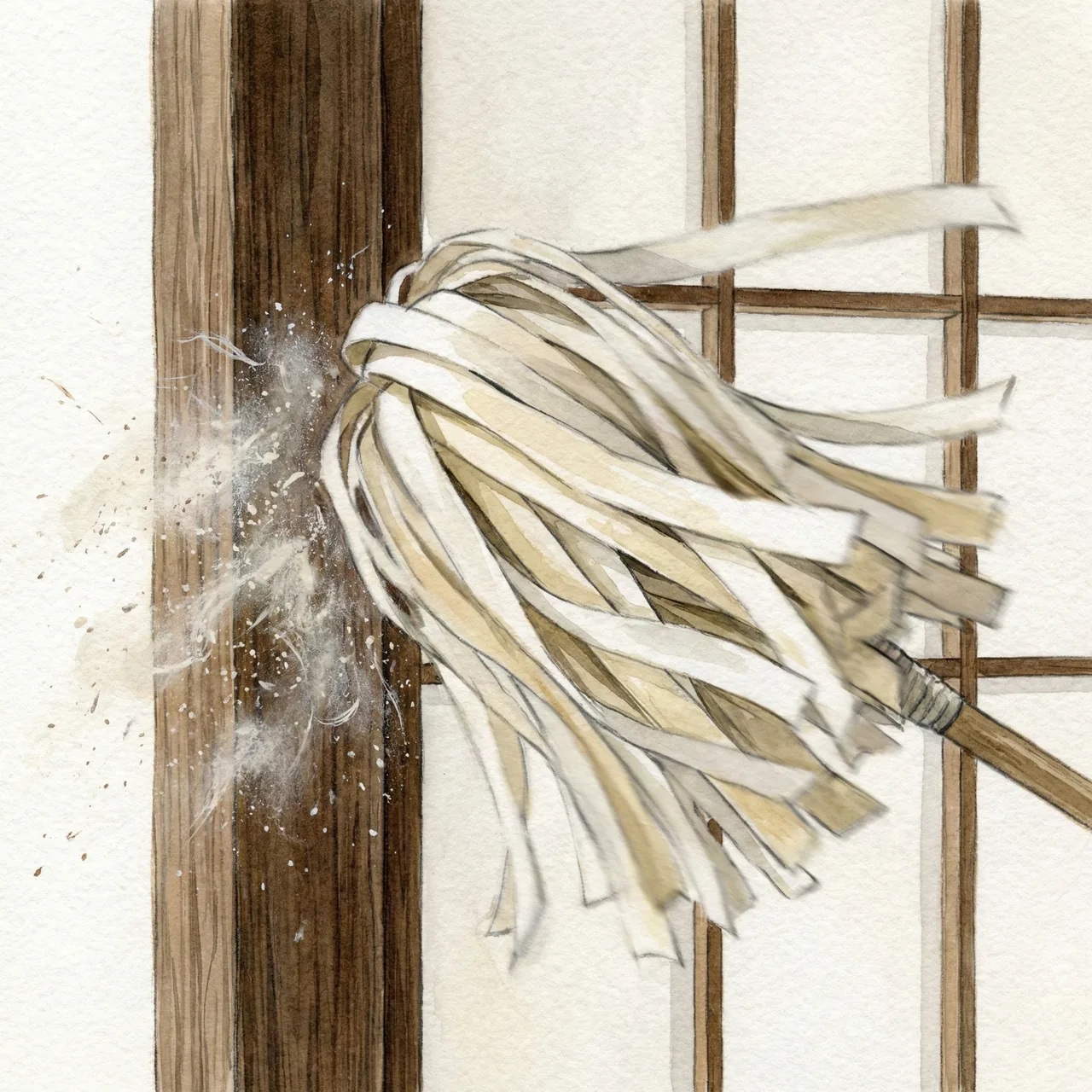
[Washi] Ikkanbari — "Beat" Cleaning; Wind Pressure Knocks Dust Loose
The "pat-pat" sound of washi paper generates an air pressure burst that blasts dust out of tight spots.
Best for: shoji screen lattices, bookshelves, lamp shades, the top of a chest of drawers.
A forceful tool for dislodging accumulated or embedded dust.
3. [Feather] Ostrich Feather Duster | For Altars, Pianos, and Cars
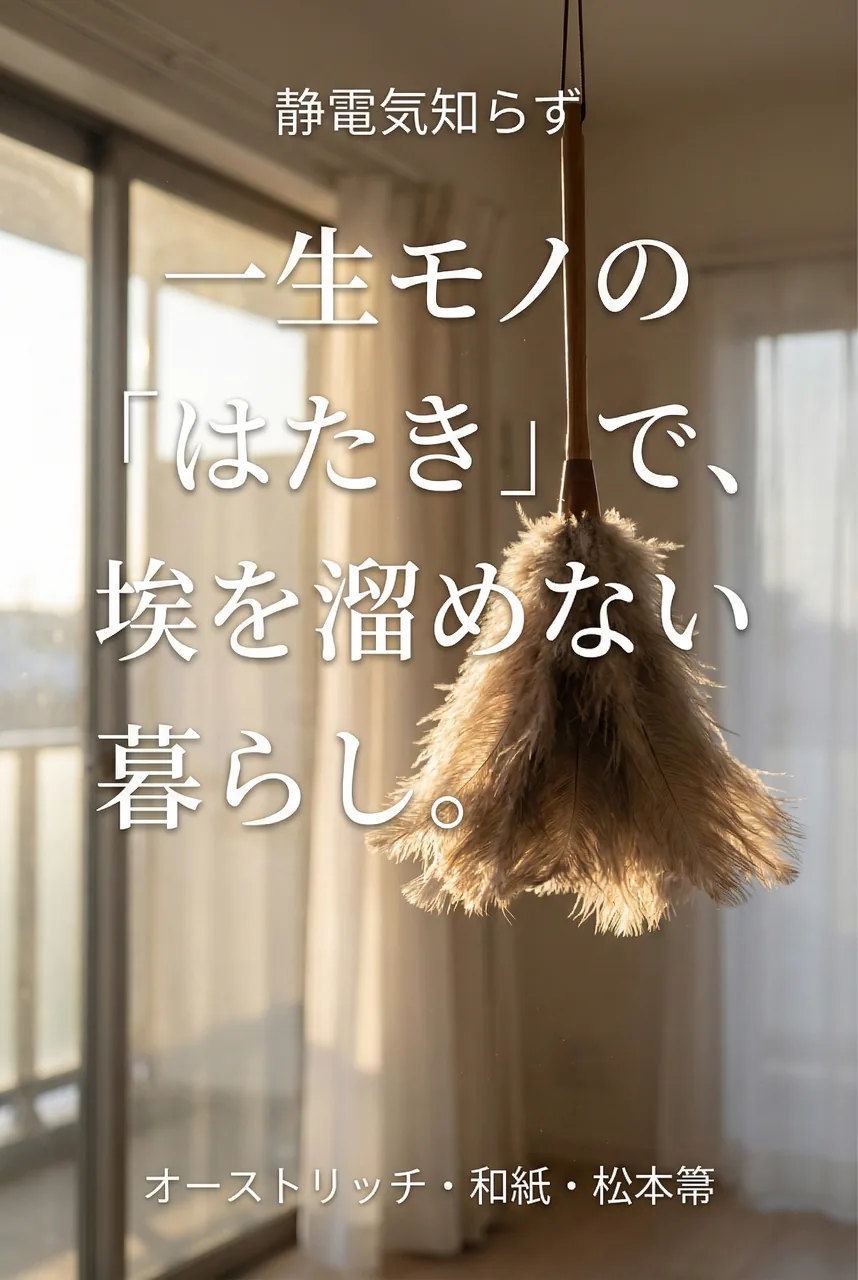
Among feather dusters, ostrich (dacho) is regarded as the finest grade.
ESCI Ostrich Feather Duster
Soft enough for car paintwork — the ultimate in feather-duster finesse.
Made by a Japanese specialty manufacturer.
Far finer in fiber than chicken feathers, it catches even microscopic dust without missing a speck.
So gentle it's trusted for luxury car maintenance — completely safe on gold-leafed household altars and
delicate piano lacquer finishes.
4. [Silk] Silk Duster by Yatsuya | Polishes as It Dusts
Made from genuine silk — another revered Japanese traditional material — this duster is a hidden gem.
Yatsuya (YATSUYA) Taiyo Silk Duster
Made from genuine silk off-cuts — polishes as it cleans.
Cleaning tool specialist Yatsuya uses real silk fabric in this duster.
Silk fibers have a triangular cross-section — wiping furniture or an altar removes dust while simultaneously
creating a subtle polishing effect that brings out a distinctive shine.
No static electricity, and a velvety feel that synthetics simply cannot replicate. Easy to find on Amazon too.
5. [Traditional] The Legendary Matsumoto Broom (Matsumoto Umo) | Wild Bird Feathers for Artisan Dusting
A craft-grade duster made in Matsumoto City, Nagano Prefecture — known only to those in the know.
Matsumoto Umo GK — "Matsumoto Broom"
Natural oils in the feathers add a shine to furniture with every use.
Once a winter craft of farming households, the Matsumoto broom is now made by a small number of remaining
artisans using feathers from wild birds.
Unlike the puff of ostrich, these feathers have a firm quill — giving superior "sweeping" performance.
The natural oils in the feathers are said to bring a deepening polish to furniture the more you use it.
6. Correct Technique | Work "Top to Bottom" with a Wrist Snap
Waving a duster randomly isn't enough — there's a professional method that keeps dust from resettling.
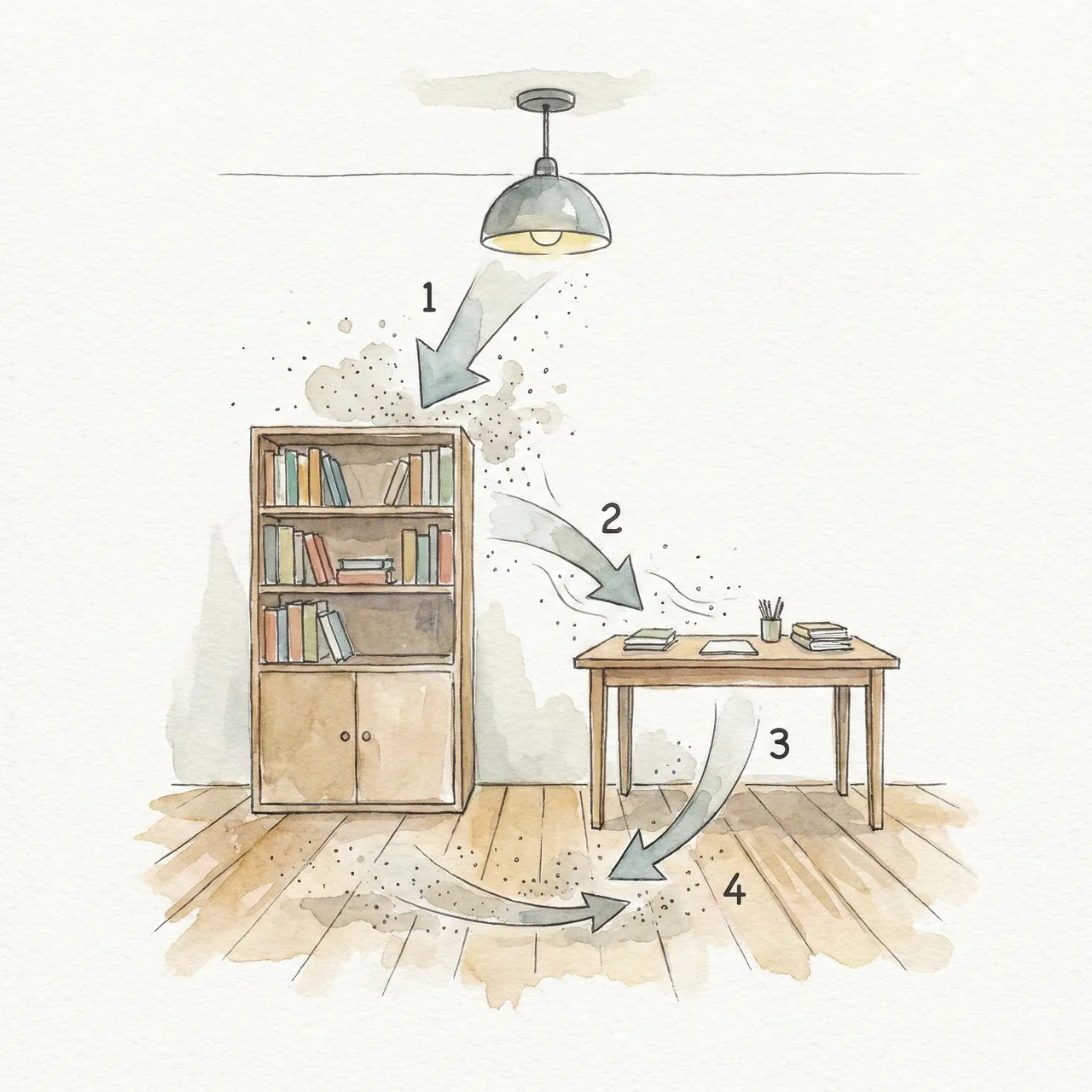
Always Work Top to Bottom — Dust Before You Sweep the Floor
Dusting sends particles downward. Always follow this sequence: lights → top of shelves → furniture →
floor.
Once dust has settled on the floor, pick it up with a vacuum or shuro broom — that's the most efficient
approach.
And don't forget to open the windows first so dust escapes rather than circling back.
Use a Wrist Snap, Not Pressure — Stroke Gently
No need to scrub or press.
Use a light rotation of the wrist — a "snap" — and let the tip of the feathers stroke the surface, or let the tip
of the washi paper deliver a light tap.
Too much force risks the handle or shaft scratching the very furniture you're trying to protect.
7. Care & Maintenance | Restoring Feather Volume After Use
A natural-material duster, properly cared for, can last for many years.
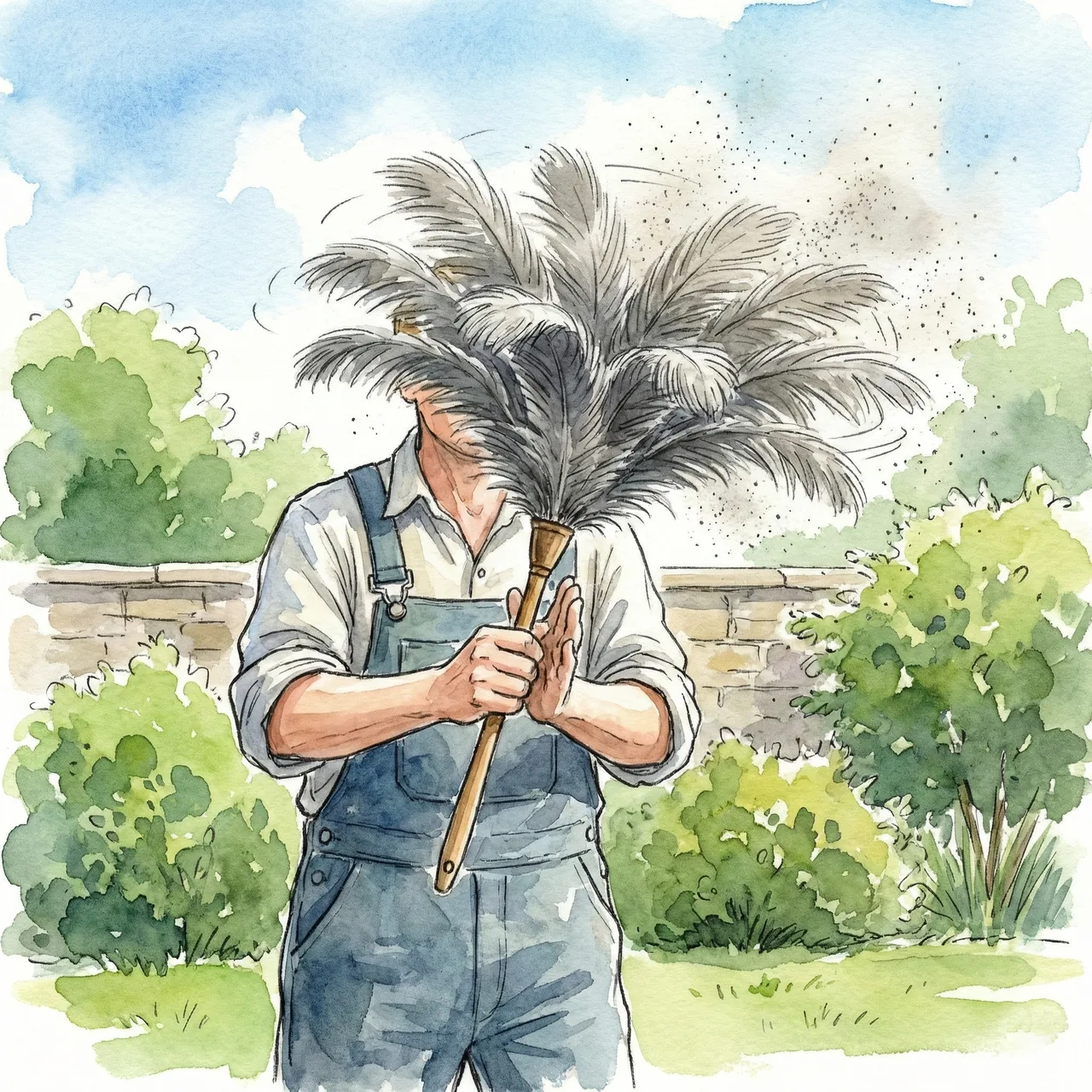
Shake Dust Free Outdoors After Each Use — Spin the Handle Between Your Palms
After cleaning, always step outside to release the accumulated dust.
For ostrich dusters, hold the handle between both palms and spin it like a bamboo helicopter — centrifugal force
causes the feathers to stand outward, shaking dust free and restoring the full, fluffy volume.
Only wash with mild detergent and air-dry in the shade if genuinely dirty — frequent washing shortens the life
of the feathers.
8. Frequently Asked Questions
How does it compare to a wool (merino) duster?
Wool has strong dust-grabbing power; ostrich excels at sweeping.
Wool is said to generate less static than synthetics, but still produces more than ostrich.
Wool can also trap dust in a way that's hard to shake out, while ostrich releases it easily with a shake — making
maintenance simpler.
For cuteness, wool wins; for practical performance and luxury feel, ostrich is the recommendation.
Is it safe to dust a gold-leaf altar with it?
A high-quality ostrich duster is safe — but be careful of the hardware.
Gold leaf is extremely fragile and must never be wiped with cloth, but a soft feather duster can lightly sweep
it.
Just be sure only the feather tips make contact — keep the central shaft and any fittings well away from the
surface.
What's the best way to store it?
Always hang it — that's the golden rule.
Laying it flat or standing it in a container causes the feathers or washi paper to take on a permanent kink.
Hang it on a wall in a well-ventilated spot — it becomes part of the decor, and you can grab it for a quick
dust-off whenever you notice it's needed.
Can I wash it when it gets dirty?
It depends on the material. Washi paper dusters must never be washed.
Ostrich feathers can be gently hand-washed with delicate laundry detergent and air-dried in the shade if truly
dirty — but frequent washing accelerates deterioration.
Washi paper dusters must never be wetted: it destroys the persimmon-tannin coating and tears the paper.
When should I replace it? How long does it last?
Replace when feathers break and volume drops, or when the quill risks making contact with
surfaces.
A well-maintained ostrich duster can last over 10 years.
For washi paper dusters, it's time to replace when the paper has gone so soft it no longer makes a crisp "pat-pat"
sound when you use it.
Final Thoughts: Love Your Tools, Love Your Cleaning
There's an elegance to dusting with a feather duster that a vacuum cleaner simply can't match.
Taking the time to tenderly stroke each piece of furniture and give it a moment of attention.
A good Japanese duster transforms that routine into something more — from a chore into a small ritual of
care.
Free yourself from the frustration of static and ever-returning dust, and find your perfect duster to keep your
home beautifully clean.
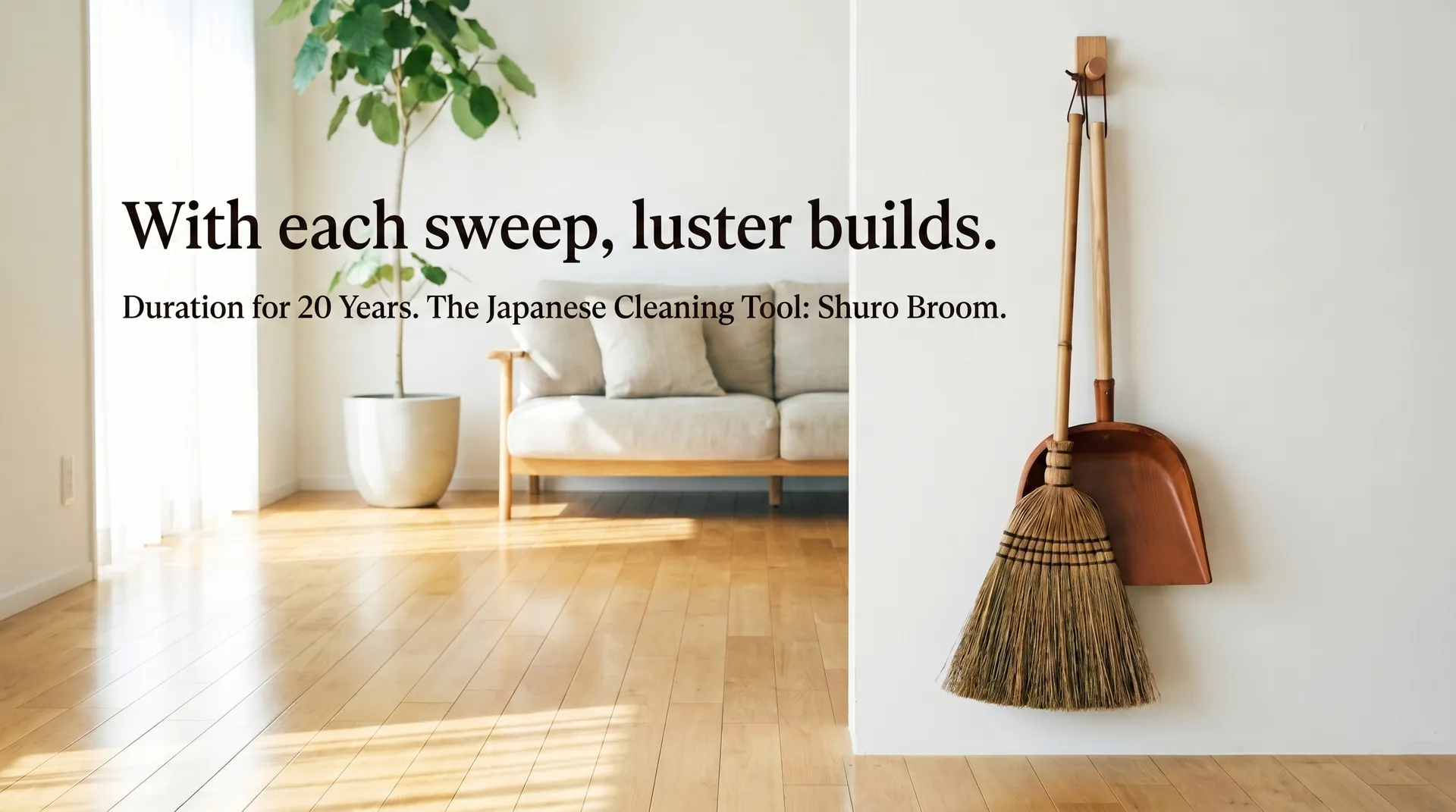
Japanese Shuro Palm Broom: The Lifetime Tool Crafted by Wakayama Artisans
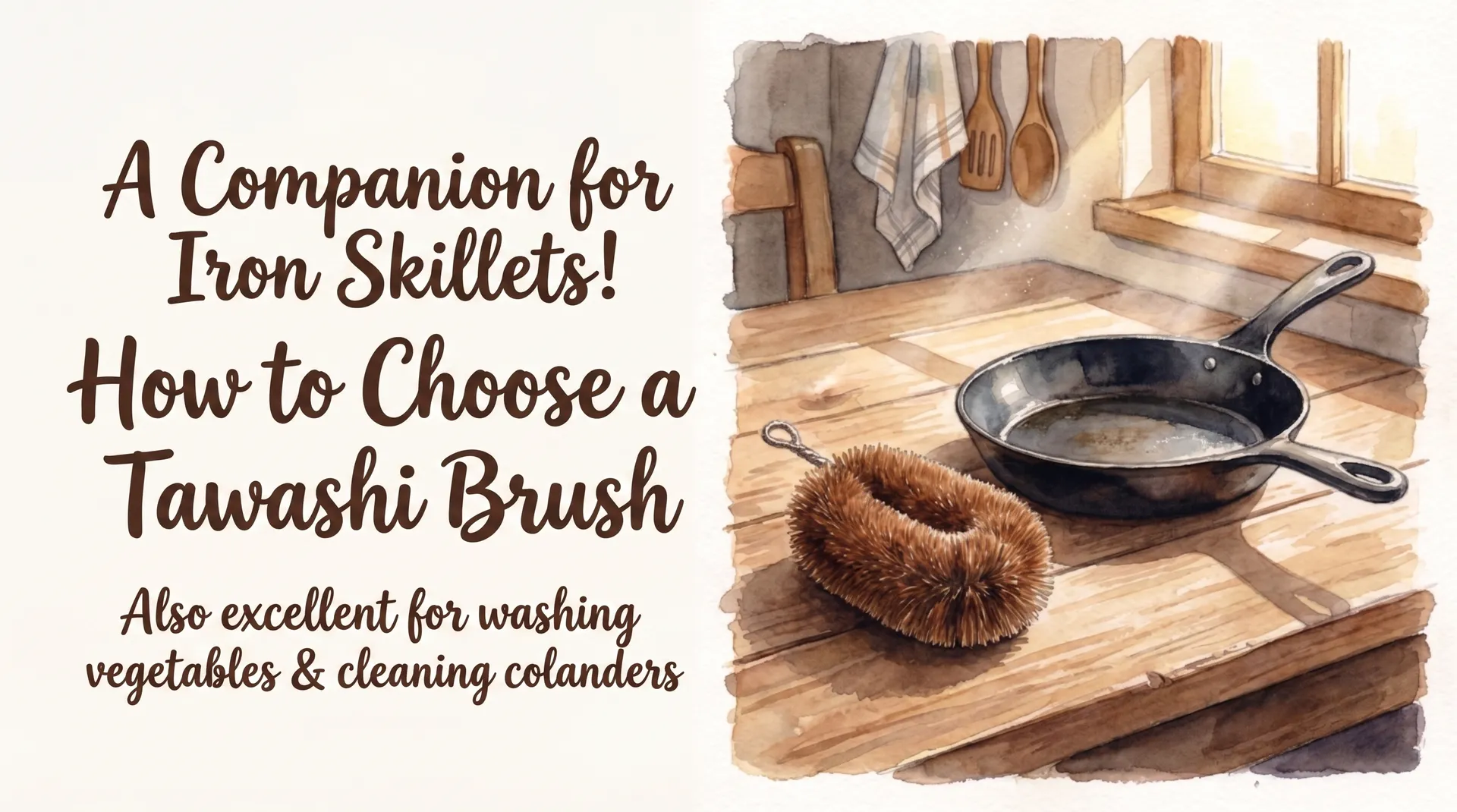
Kamenoko Tawashi: Japan's 100-Year-Old Scrubbing Brush for the Kitchen