
If you have ever owned an Alvarez Yairi, you have owned a Japanese guitar
hand-built in a small workshop in Gifu — and the brand name on the headstock was designed so you
would not have to think about that.
English-speaking guitarists have been playing Japanese instruments for sixty years, mostly under
other names. The 1970s "lawsuit era" copies. The Yamaha in half the school music rooms in
the world. The Fender and Ibanez models built by a factory almost nobody outside Japan can
name.
This guide covers the three makers still worth buying new — Yamaha, K.Yairi and
Fujigen — what each is actually doing differently, and the one care instruction that
matters more than any of it.
Quick Reference: The Three Makers
| Maker | Known for | Buy it if |
|---|---|---|
| Yamaha | A.R.E. — wood treated to behave as though aged | You want a new guitar that sounds broken in |
| K.Yairi Kani, Gifu |
Hand building in a small workshop. Sold in the US as Alvarez Yairi | You want an individual instrument, not a consistent one |
| Fujigen FGN |
The factory behind other brands, selling under its own name | You want precision and intonation, mostly electrics |
| Whatever you buy: keep it at around 50% relative humidity. That single habit outweighs every specification below. | ||
Why Japanese Guitars — and the Alvarez You Already Owned
The Alvarez story
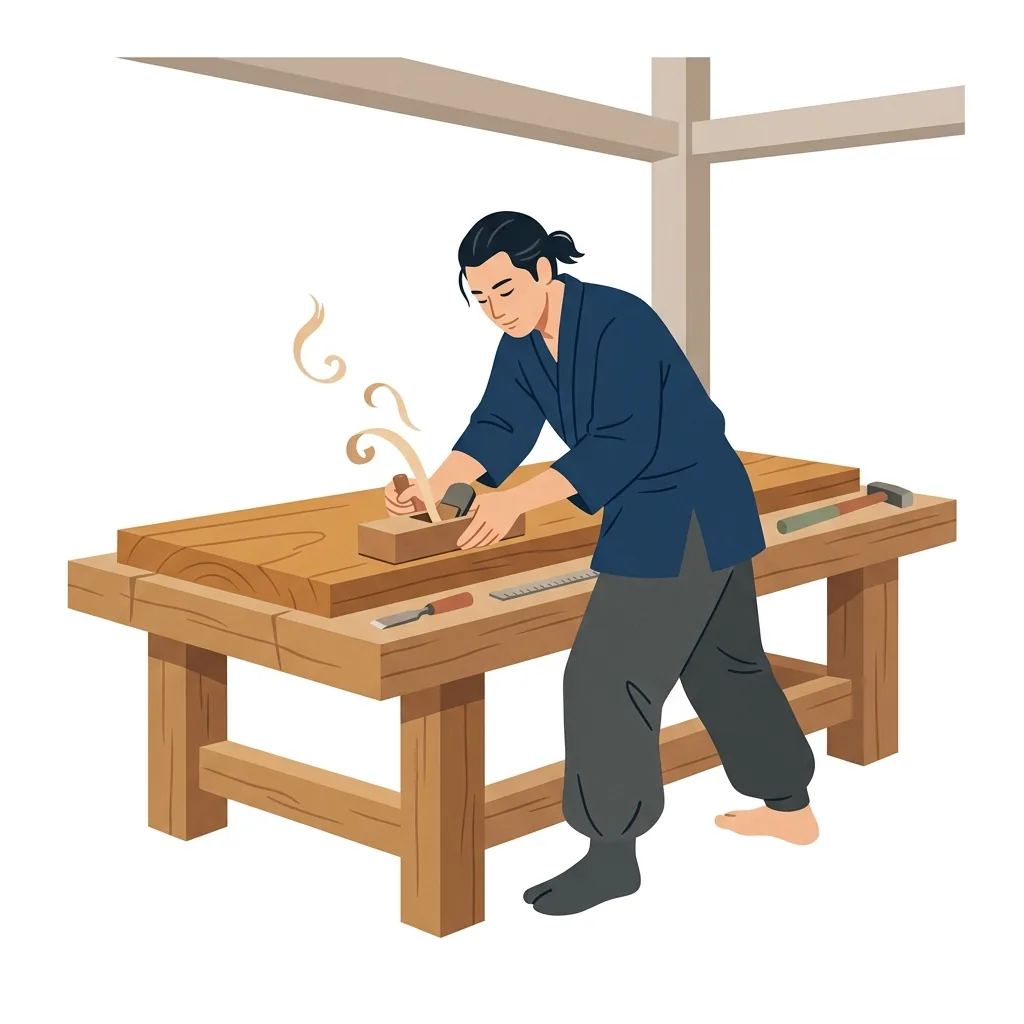
K.Yairi is a workshop in Kani, a small town in the hills of Gifu prefecture, north of Nagoya. It was built up by the luthier Kazuo Yairi, whose father Gi'ichi had worked in the same trade in the same region, and it has stayed a largely hand-building operation.
In 1965, Kazuo Yairi created a second brand aimed at the American market — a way of getting Yairi instruments to US buyers at accessible prices — and it was distributed in partnership with St. Louis Music. That brand was Alvarez.
So the guitars sold for decades in the United States as "Alvarez Yairi" and "Alvarez by K.Yairi" came out of that same Gifu workshop. A great many American players have owned a hand-built Japanese guitar and filed it mentally under "American brand".
The lawsuit era, briefly
The other reason Japanese guitars are quietly everywhere is the 1970s. Japanese
factories built copies of American designs that were close enough in quality to
genuinely worry the originals — and close enough in appearance to attract legal
attention, which is where the nickname comes from.
Those instruments are now collected on their own merits rather than as substitutes. The joke
stopped being funny when players noticed the copies had held up.
And the boring reason: wood drying
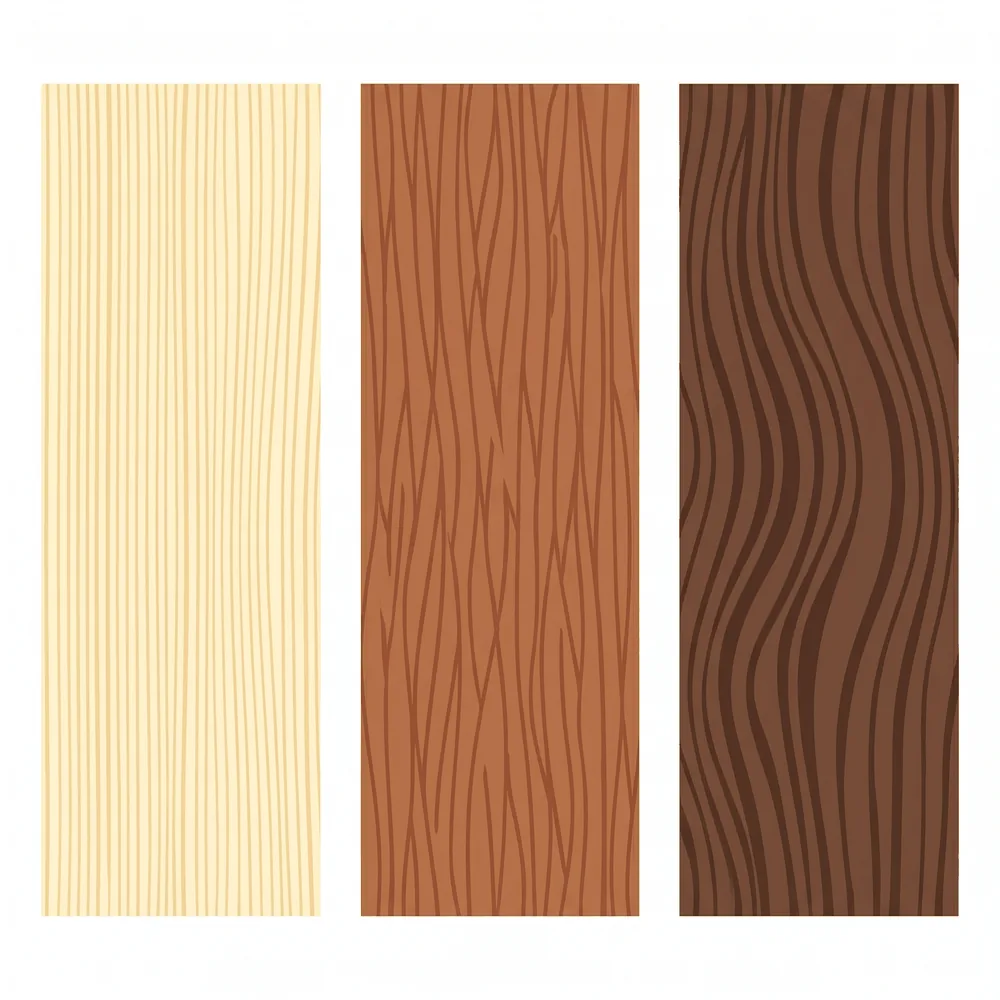
Japan swings from humid summers to dry winters, and an instrument built with insufficiently
seasoned timber will move — the neck bows, the top bellies, the action goes wrong.
Builders working in that climate had to take drying seriously to survive commercially.
It is the least glamorous thing on this page and arguably the most important: a guitar
whose neck is still straight after twenty years is worth more than any tonewood
argument.
Yamaha's A.R.E.: Aging Wood on Purpose
Everyone accepts that acoustic guitars sound better after years of playing. The wood's cell structure changes as moisture and volatile compounds leave it, and the top becomes more responsive. That process normally takes decades.
Yamaha's A.R.E. — Acoustic Resonance Enhancement — treats the wood with controlled temperature, humidity and pressure to produce those changes before the guitar is built. The intention is a new instrument that starts where an old one has arrived.
How to think about it honestly
It is not a substitute for a genuinely old guitar, and anyone claiming a new
instrument equals a 1960s one is selling something. What A.R.E. does reliably deliver is
a guitar that does not need three years of playing in before it opens up — which
is worth real money if you are buying one instrument and keeping it.
Compare an A.R.E. model against the non-treated version of the same guitar in a shop. The
difference is audible, and you can decide for yourself what it is worth.
Fujigen: The Factory Behind the Names
Fujigen is a Nagano guitar factory that spent decades building instruments that went out under other companies' brands — including models from names any guitarist would recognise. Its own-brand line is FGN.
It is the same story as Japan's forging houses in golf, or the OEM audio manufacturers: the company that actually builds the thing eventually puts its own name on one. You are buying the factory rather than the logo, and the price reflects the missing marketing.
C.F.S. — the fret spacing thing
Fujigen's technical calling card is Circle Fretting System: frets set in a shallow arc across the fingerboard rather than in a straight line perpendicular to the neck.
The reasoning is that a string's contact point differs slightly across the width of the neck, so perfectly straight frets are a compromise. Curving them very slightly is meant to improve intonation across the whole fingerboard rather than only in the positions a straight fret favours.
Whether you can hear it is genuinely debated. What is not debated is Fujigen's build quality and fretwork, which is what most buyers are actually paying for.
What to Buy
Yamaha L-series (LL16 A.R.E.) — the sane first choice
Solid top, solid back and sides, A.R.E. treatment, and a price that undercuts the American
instruments it competes with. Yamaha's consistency is the point — pick one
off a wall anywhere in the world and it will be set up properly and built to the same
standard.
Widely stocked in English-speaking markets, which also means you can play one before buying.
- Body
- Original Jumbo — between a dreadnought and a grand auditorium
- Top
- Solid Engelmann spruce with A.R.E. treatment
- Character
- Balanced, even, immediately responsive
- Availability
- Excellent everywhere
- Price range
- $700–$1,100
Perfect for: A first serious acoustic, or anyone who wants one guitar that does everything without drama.
K.Yairi — hand-built, and each one slightly its own
The opposite proposition to Yamaha. Small workshop, hand work, individual
instruments — two of the same model will not be identical, which is either the
appeal or the problem depending on how you shop.
K.Yairi has long been known for standing behind its instruments, and the workshop's
reputation among owners is unusually devotional.
- Made in
- Kani, Gifu — hand-built
- Also sold as
- Alvarez Yairi / Alvarez by K.Yairi in the US
- Character
- Varies by instrument. Play before you buy if you can
- Availability
- European site direct; US via Alvarez-Yairi; used on Reverb and eBay
- Price range
- $900–$2,500 new
Perfect for: Someone buying their last acoustic guitar, who would rather have character than uniformity.
Fujigen FGN — mostly electrics, exceptional fretwork
FGN's own-brand instruments lean towards electrics, where the factory's precision shows most
clearly. Fretwork and neck construction are the standout, and the Circle
Fretting System is applied across much of the range.
If you have ever admired a Japanese-built instrument from a famous brand, there is a
reasonable chance you were admiring this factory's work.
- Focus
- Electric guitars and basses primarily
- Signature
- C.F.S. fret arrangement; very high fretwork standards
- Made in
- Nagano, Japan
- Price range
- $900–$2,000
Perfect for: Players who care about how a neck feels and how well a guitar intonates up the board.
A word on buying vintage Japanese
1970s Japanese guitars are widely available used and often excellent — but they are fifty
years old and were not all stored well. Check the neck relief, look along the top for
bellying behind the bridge, and check whether the bridge is lifting. A neck reset costs several
hundred dollars and turns a bargain into a project.
Buy from someone who plays guitars, not someone clearing a loft.
50% Humidity Matters More Than the Guitar
Every specification above is worth less than this section. An acoustic guitar is a thin wooden shell under permanent string tension, and wood moves with humidity.
| Humidity | What happens |
|---|---|
| Too dry (under ~35%) | Top sinks, action drops, fret ends protrude — and eventually the top cracks |
| Around 45–55% | Where you want to be. The guitar stays where the builder left it |
| Too humid (over ~65%) | Top swells, action rises, tone goes dull and slack |
- Keep it in the case with a humidifier if you live somewhere with cold dry winters or run heating. A hygrometer costs almost nothing and removes the guesswork.
- Never leave it near a radiator, a heat vent or a window in direct sun. Rapid change does more damage than a steady wrong value.
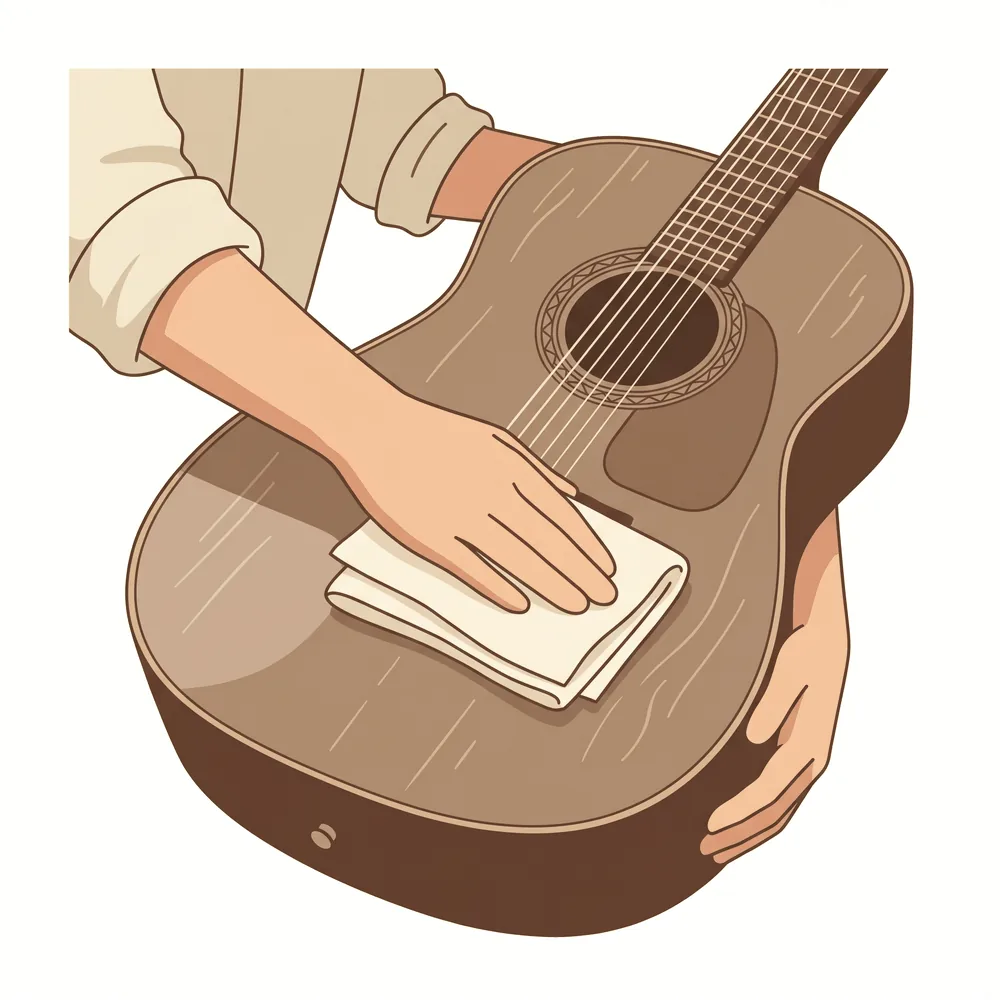
- Wipe the strings and the fingerboard after playing. Sweat corrodes strings and dries out the board.
- A case beats a stand for anything longer than a day. A guitar on a stand is a guitar living in whatever your room is doing.
Dryness is the dangerous direction. Excess humidity makes a guitar sound bad; dryness makes it crack, and a cracked top is a repair bill rather than an adjustment.
Frequently Asked Questions
Is Alvarez a Japanese brand?
The Yairi line is. Kazuo Yairi founded Alvarez in 1965 as a way to reach the US
market, distributed with St. Louis Music, and "Alvarez Yairi" and "Alvarez by K.Yairi"
instruments were built in the K.Yairi workshop in Kani, Gifu.
Not everything carrying the Alvarez name is a Yairi build — the Yairi-designated models are the
ones to look for.
What is A.R.E., and does it work?
Yamaha's process for treating wood with controlled heat, humidity and pressure so
it behaves as though it has aged. The aim is a new guitar that is already open rather than one
needing years of playing in.
It is not the same as a genuinely old instrument, but the difference against an
untreated version of the same model is audible. Play both.
Solid top or laminate?
Solid top, if you can afford it. A solid piece of wood vibrates as one and
continues to improve with playing; a laminate is glued layers that do neither.
Laminate back and sides are a much smaller compromise, which is why solid top with
laminate back and sides is the sensible mid-range configuration — and considerably more
robust in changeable humidity.
Are 1970s Japanese guitars actually good?
Often, and the good ones are now collected on their own merits. The "lawsuit era"
copies were built well enough to worry the companies being copied.
But a fifty-year-old guitar is a fifty-year-old guitar. Check the neck angle, look for a
bellying top and a lifting bridge — a neck reset costs several hundred dollars.
Case or stand?
Case, for anything longer than a day. A case lets you control humidity around the
instrument; a stand leaves the guitar exposed to whatever your room is doing, which in winter with
heating on can be very dry indeed.
A stand is fine for a guitar you pick up several times a day — just watch the hygrometer.
What humidity should I keep it at?
Around 45–55%. Below roughly 35% the top sinks, fret ends start protruding and
the top can crack. Above about 65% the action rises and the tone goes dull.
Dry is the dangerous direction — humid makes it sound bad, dry makes it split.
Final Thoughts: You Have Probably Played One Already
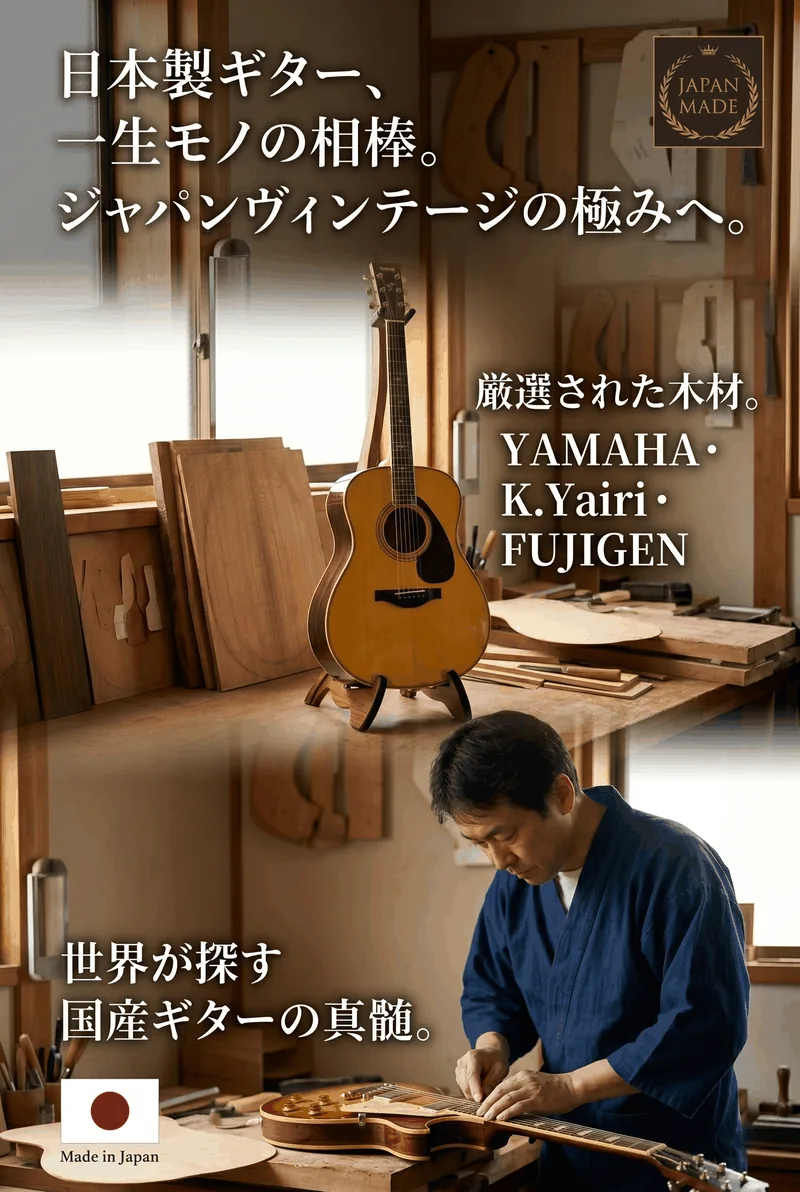
Japan's guitar industry spent sixty years building excellent instruments with other people's names on the headstock — Alvarez, and a long list of famous brands' Japanese production. The three makers above are what happens when the builders sign their own work.
Yamaha if you want consistency and a guitar that is already open. K.Yairi if you want an individual instrument. Fujigen if the neck and the fretwork are what you notice.
Then buy a hygrometer, keep it near 50%, and the guitar will outlast the argument about which one you should have bought.
Japanese Headphones: From the E3000 to Flagships
Japanese Mechanical Pencils: Precision You Can Hold