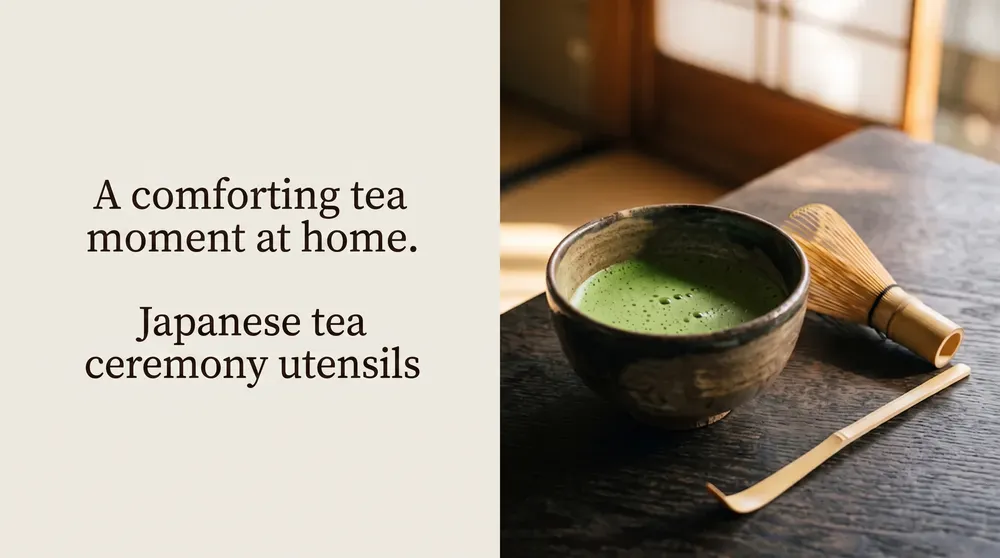
You need two things to make matcha at home: a bowl and a whisk. Everything else in
the sets you have been looking at is optional, and one of them can be replaced by a teaspoon.
The whisk is where the money should go, and where most people get it wrong. The majority of
bamboo whisks sold today are made outside Japan — most of them in China, from bamboo cut
without seasoning and then bleached to look right. The Japanese ones come from
Takayama in Nara, where the bamboo is dried for two to three years before anyone touches
it.
This guide covers how to tell them apart, what a bowl actually needs to do, and why your
whisk is a consumable — which nobody tells you before you buy one.
Quick Reference: What You Need and What You Do Not
| Item | Japanese name | Do you need it? |
|---|---|---|
| Whisk | chasen 茶筅 | Yes. Buy the good one — this is the whole difference |
| Bowl | chawan 茶碗 | Yes, and the shape matters more than the maker |
| Scoop | chashaku 茶杓 | No. A half teaspoon is the same measure |
| Sifter | furui 篩 | More useful than the scoop. Kills the clumps |
| Whisk stand | kusenaoshi くせ直し | Cheap, and it makes the whisk last longer |
| Look for "Takayama" or "Nara" on the whisk. If the listing does not say where it was made, assume it was not made in Japan. | ||
The Chasen Problem: Most Are Not Japanese
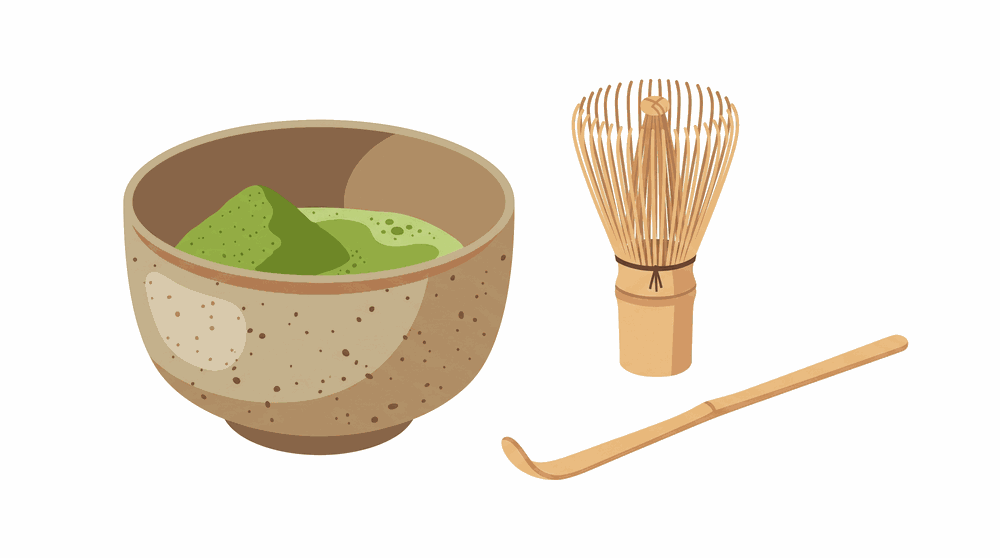
A chasen is a single piece of bamboo split into somewhere between 70 and 120 tines. It looks simple and it is not — and the version most people buy is not the version this guide is about.
| Takayama (Nara) | Mass-produced overseas | |
|---|---|---|
| The bamboo | Dried 2–3 years before use | Cut and used without seasoning |
| Colour | Natural, varies between pieces | Bleached to look uniform |
| Making | Entirely by hand, no machines or chemicals | Machine-assisted, at volume |
| Tine tips | Thinner and more elastic — this is what makes foam | Thicker, stiffer, less responsive |
| Life | Thicker walls, smoother fibre — lasts longer | Tines snap sooner |
The tine tips are the whole product. Foam in matcha is produced by thousands of tiny flexible tips beating air into the suspension. A stiff tine stirs; a thin, elastic one whips. That is the difference between a flat green liquid and the dense pale foam you were trying to make.
How to check before you buy
- The listing must say Takayama or Nara. "Japanese-style", "traditional" and "authentic" are not statements about where it was made.
- Bleached-white bamboo is a warning sign. Naturally seasoned bamboo is pale gold and varies slightly from piece to piece.
- Price is a rough guide. Genuine Takayama whisks start around $25–$40. A $6 whisk is not one.
- Buy from tea specialists rather than general marketplaces, where origin claims are hardest to verify.
How many tines?
Whisks are sold by tine count — 70, 80, 100, 120. More tines make foam more easily, which is why thin tea (usucha, the everyday kind you are almost certainly making) favours higher counts.
- 80 tines — the standard all-purpose choice. Buy this if unsure.
- 100 tines — easier foaming, softer feel. Excellent for beginners making usucha.
- 70 tines or fewer — stiffer, intended for thick tea (koicha), which is kneaded rather than whisked.
Why Takayama — 500 Years and Two Years of Waiting
Takayama is a small district in the northwest of Nara prefecture, and it has
been making tea whisks for over five hundred years. Not as a marketing origin story — as the
actual concentration of the craft, with the knowledge held in a small number of families.
The part that cannot be shortcut is the waiting. Bamboo is harvested and then dried for
two to three years before a whisk is made from it. Unseasoned bamboo still contains
moisture that will leave later — and a tine that dries after it has been split will warp and
become brittle.
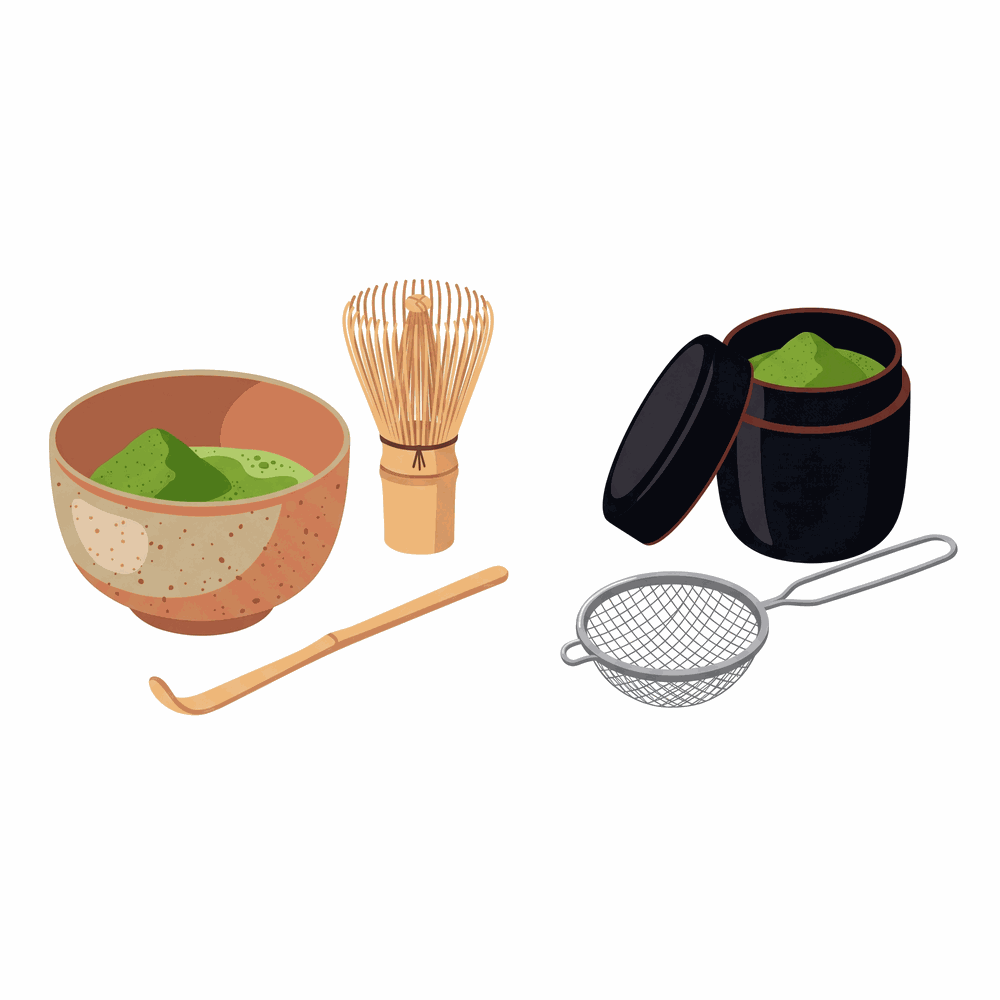
Everything after the drying is done by hand with a knife: splitting the head into a ring of coarse tines, splitting those again, thinning each one, and finally curling the tips inward — the detail that lets the whisk lift the powder off the bottom of the bowl instead of pushing it around.
A skilled maker produces a limited number per day. That, and not branding, is why an artisanal Takayama whisk can reach $200 while a factory one costs $6.
You do not need the $200 one
To be clear: a $30 Takayama whisk and a $200 Takayama whisk both make excellent matcha. The expensive one is a named maker and finer work. The meaningful jump is from a mass-produced whisk to a Nara-made one — everything above that is collecting, and there is nothing wrong with collecting as long as you know that is what you are doing.
The Bowl: Why Not Just Any Bowl
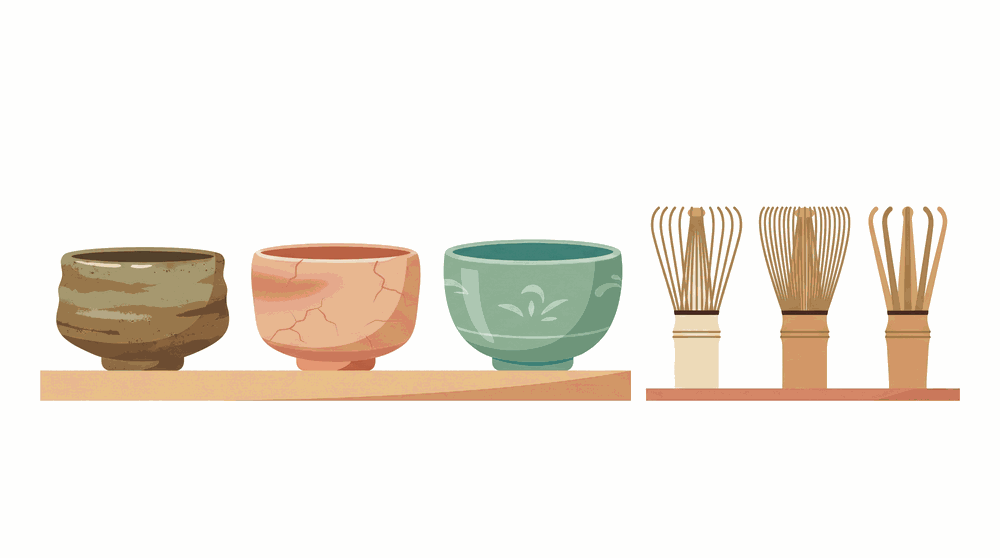
You can make matcha in a cereal bowl, and it will be worse for reasons that are entirely mechanical.
- Wide enough to move the whisk. The motion is a brisk W or M across the surface, and a narrow bowl leaves you scraping the sides. Around 11–13cm across is the useful range.
- Deep enough not to splash — and a rounded interior, because a sharp corner between wall and base traps unmixed powder where the whisk cannot reach.
- Thick walls hold heat. Matcha is made with a small volume of water that cools fast, and a thin bowl loses it faster than you can drink.
- Unglazed or lightly textured base helps. A glassy base lets powder slide around instead of being lifted.
Beyond that, choice of kiln is aesthetic. Mino ware is the practical everyday default and covers an enormous range of styles; Hagi ware is prized for a porous glaze that changes colour over years of use; Raku is the traditional tea-ceremony bowl and is thick, light and expensive.
Seasonal shapes, if you are curious
Japanese practice uses wide, shallow bowls in summer so the tea cools faster, and narrow, deep ones in winter to hold heat. It sounds like ceremony and it is simple thermodynamics. If you own one bowl, a medium shape is right all year.
What to Buy
A Takayama chasen, 80 or 100 tines — spend here
If you buy one thing from this article, buy this. A genuine Nara-made whisk is the
single biggest difference between matcha that foams and matcha that does not, and it
costs less than most people spend on the powder in a month.
Check the listing names Takayama or Nara. Tea specialists state it plainly
because it is what they are selling; sellers who do not state it usually have a reason.
- Tines
- 80 for general use, 100 for easier foam
- Made in
- Takayama, Nara — bamboo seasoned 2–3 years
- Look for
- Natural pale-gold bamboo, not bleached white
- Lifespan
- A consumable. Months to a couple of years
- Price range
- $25–$60 for a good everyday one
Perfect for: Everyone making matcha at home. There is no configuration of other purchases that compensates for a bad whisk.
A Japanese chawan — Mino ware is the sensible default
Mino ware from Gifu accounts for a large share of Japanese domestic tableware, and matcha
bowls are no exception — enormous variety, honest prices, and made for use rather
than display.
Buy for the dimensions first: 11–13cm across, rounded inside, heavy enough to feel
substantial. Choose the glaze you like afterwards.
- Width
- 11–13cm across the rim
- Interior
- Rounded — no sharp corner at the base
- Weight
- Substantial. Thin walls lose heat too fast
- Common kilns
- Mino (everyday), Hagi (ages with use), Raku (ceremony)
- Price range
- $35–$120
Perfect for: A first bowl. Spend more later on a second one once you know what shape you actually like.
A sifter and a whisk stand — the two cheap upgrades
Matcha clumps. It is a very fine powder that compacts in the tin, and no
amount of whisking fully breaks the lumps once water is in. Sifting takes ten seconds
and eliminates the problem entirely — it is the single most effective thing you can
do after buying a decent whisk.
The kusenaoshi whisk stand is a ceramic form the wet whisk dries on, holding the
tines in their curved shape. It measurably extends the whisk's life for
about $10.
- Sifter
- Fine mesh. A small kitchen strainer works too
- Whisk stand
- Ceramic. Keeps the tines from collapsing inward as they dry
- Skip
- The bamboo scoop — half a teaspoon is the same measure
- Price range
- $10–$25 each
Perfect for: Anyone who already has a bowl and whisk and wonders why their matcha has lumps in it.
About starter sets
Bundled sets are convenient and the whisk in them is usually the cheap one — which
is the component that matters most. If a set does not say where its chasen was made, assume the
answer and price the set accordingly.
A separately bought Takayama whisk plus a plain bowl beats almost any boxed set at the
same money.
Your Whisk Is a Consumable
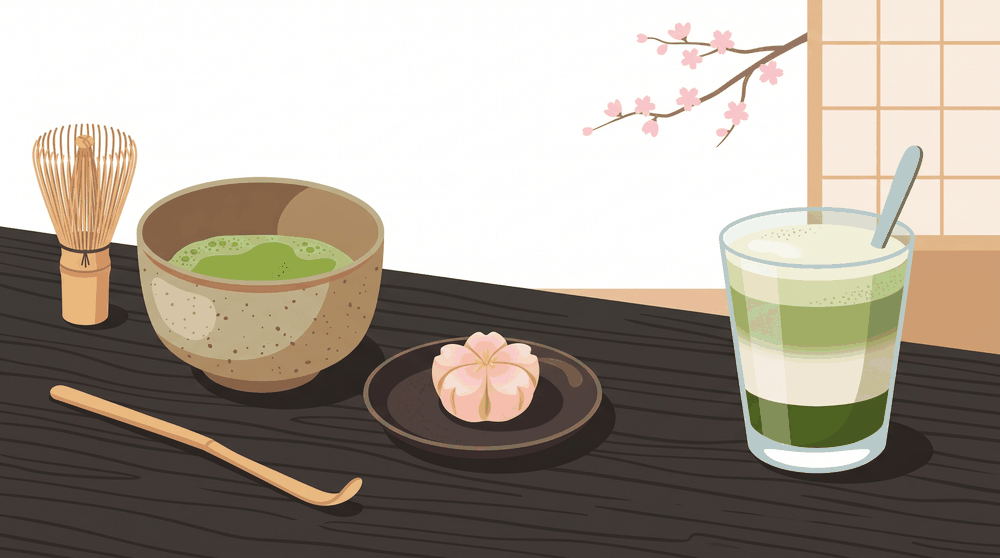
Nobody tells English-speaking buyers this and it causes real disappointment. A
chasen is split bamboo under repeated stress. Tines break. It is not a defect and it is not
misuse — the whisk wears out, like a toothbrush.
Daily use gives you somewhere between a few months and a couple of years. In Japan a well-used
whisk being retired is unremarkable; a new one is simply bought.
Making it last as long as it can
- Soak the tips in warm water for a minute before first use, and briefly before each use afterwards. Dry bamboo is brittle; damp bamboo flexes.
- Rinse in warm water only. No soap, ever. Bamboo absorbs it and you will taste it in the next bowl.
- Never put it in a dishwasher, and never leave it standing in water. Both destroy it quickly.
- Dry it on a kusenaoshi stand, tines up and open. Left lying flat, the tines collapse inward and set that way.
- Keep it out of direct sun and away from heat while drying — that is what makes bamboo brittle.
The bowl is far less fragile: hand wash, no soap on unglazed areas, dry fully before storing. Porous glazes like Hagi will stain over years, and that is considered the point rather than a problem.
Frequently Asked Questions
How do I know if a chasen is really Japanese?
The listing has to say Takayama or Nara. "Traditional", "authentic" and
"Japanese-style" say nothing about where it was made — and the majority of whisks on the market
are produced outside Japan.
Other signs: bleached white bamboo is a warning (seasoned bamboo is pale gold and
varies), and genuine Takayama whisks start around $25–$40 rather than $6.
How many tines should I get?
80 for general use, 100 if you want foam to come easily. More tines whip air in
more readily, which suits the everyday thin tea most people make.
Low counts (70 and under) are stiffer and intended for thick tea, which is kneaded rather than
whisked. They are not "stronger" versions.
Can I use a milk frother or a blender bottle instead?
You can, and it produces a different drink. An electric frother makes large
bubbles fast; a chasen makes a fine, dense, stable microfoam and lifts powder off the bottom of
the bowl as it goes.
For a matcha latte, a frother is genuinely fine. For matcha drunk on its own, the whisk
is the reason it tastes the way it should.
Why is my matcha lumpy?
Because you did not sift it. Matcha compacts in the tin, and once water is added
the lumps will not fully break up no matter how hard you whisk.
Sift the powder into the bowl through a fine mesh first. It takes ten seconds and is the most
effective ten seconds in the whole process.
How long does a chasen last?
Months to a couple of years with daily use — it is a consumable. Tines break
under repeated flexing and that is normal wear, not damage.
Soak the tips before use, rinse in warm water with no soap, and dry it on a
ceramic stand rather than lying flat. That is most of the difference between six months and two
years.
Do I need the bamboo scoop?
No. A chashaku holds roughly the same amount as half a teaspoon, and a
teaspoon is easier to level accurately.
If you are buying one thing beyond bowl and whisk, buy the sifter instead — it
changes the drink, and the scoop does not.
Final Thoughts: One Good Whisk, One Plain Bowl
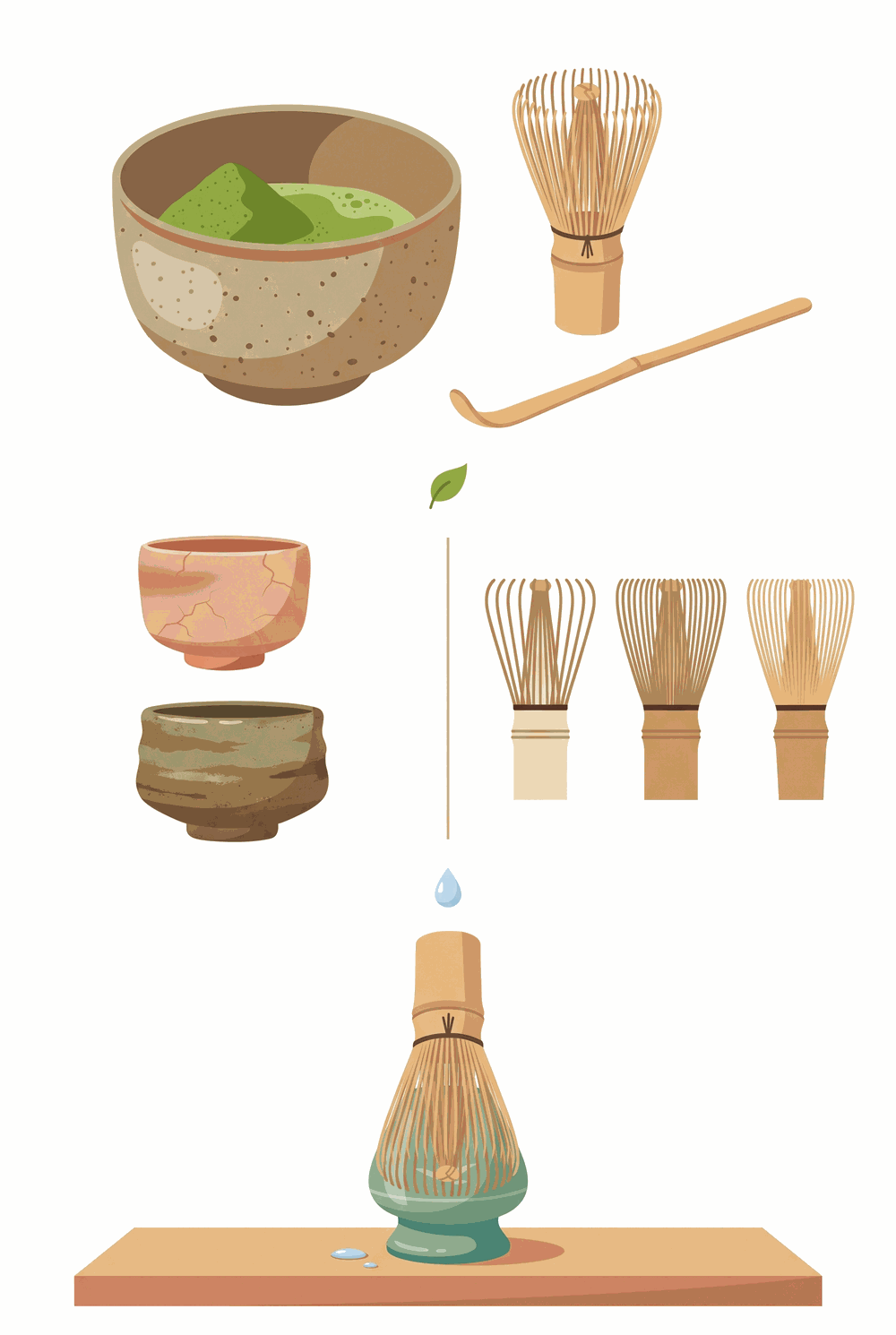
Almost everything sold as a matcha set puts the money in the wrong place. The whisk is the tool doing the work, and most whisks on the market were not made in Japan. Buy one that says Takayama or Nara on it and the difference is immediate.
Skip the bamboo scoop. Buy a sifter instead, and a $10 ceramic stand to dry the whisk on. Those two cost less than the scoop and actually change something.
And when the tines start snapping — that is the whisk having done its job, not a fault. Buy another one. It was always going to end that way.

Japanese Matcha: Grades and What to Buy
Japanese Kyusu Teapots: Which One to Buy