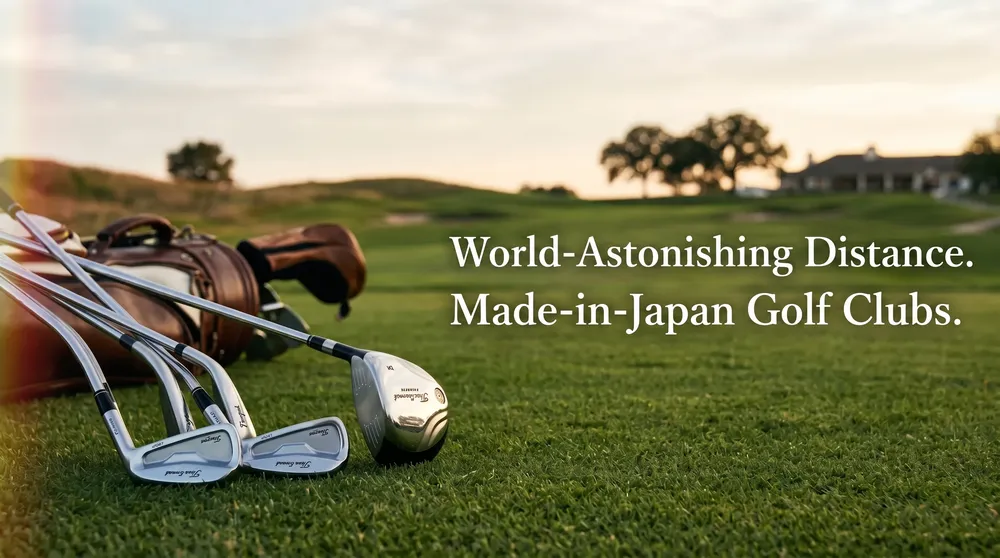
Two of the most respected iron manufacturers in golf are Japanese, and you can buy both of
them at your local pro shop this afternoon. Mizuno and Srixon are not import projects —
they are mainstream, fitted and warranted wherever you live.
So the useful questions are different from the usual ones. Which head shape actually suits
your swing — because that decision matters far more than which of the two names is on the
back — and what the Japanese domestic market offers that yours does not, if you
ever find yourself in Tokyo with a spare afternoon and an empty suitcase.
Quick Reference: Which Head Shape
| Shape | Forgiveness | Buy it if |
|---|---|---|
| Muscle back blade |
Least. Mishits are punished plainly | You strike the centre consistently and want to shape shots |
| Cavity back | More. Weight moved to the perimeter | Almost everyone. The sensible default |
| Player's distance | High, plus stronger lofts | You want a compact look and more carry |
| "Forged" does not mean "blade". Japanese makers forge cavity backs too — the construction and the shape are separate decisions. | ||
Why Japanese Irons — Forging, Briefly
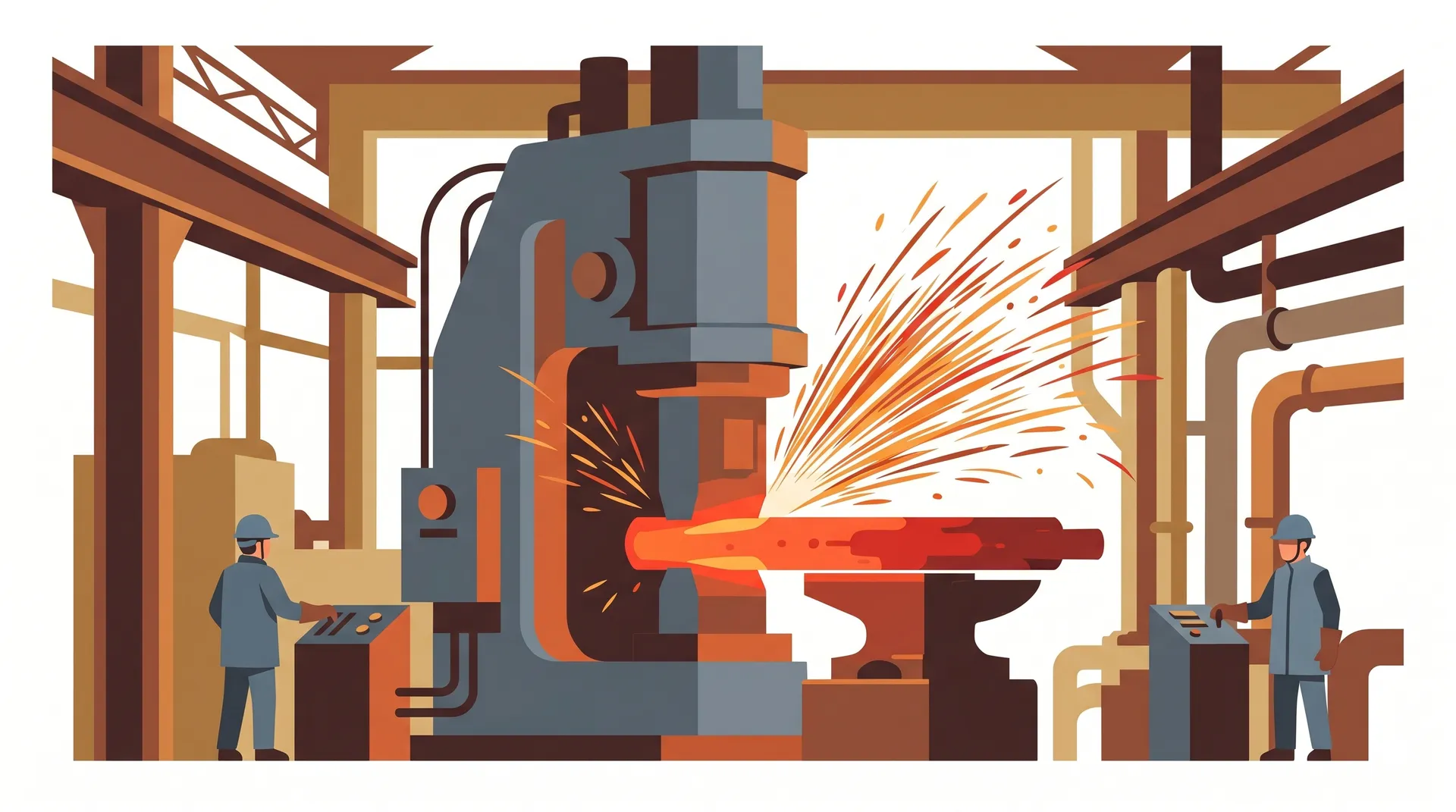
Japan's iron-making is concentrated in a few places — Ichikawa in Hyogo, and Tsubame-Sanjo in Niigata — where forging skill built up around other industries and was applied to golf.
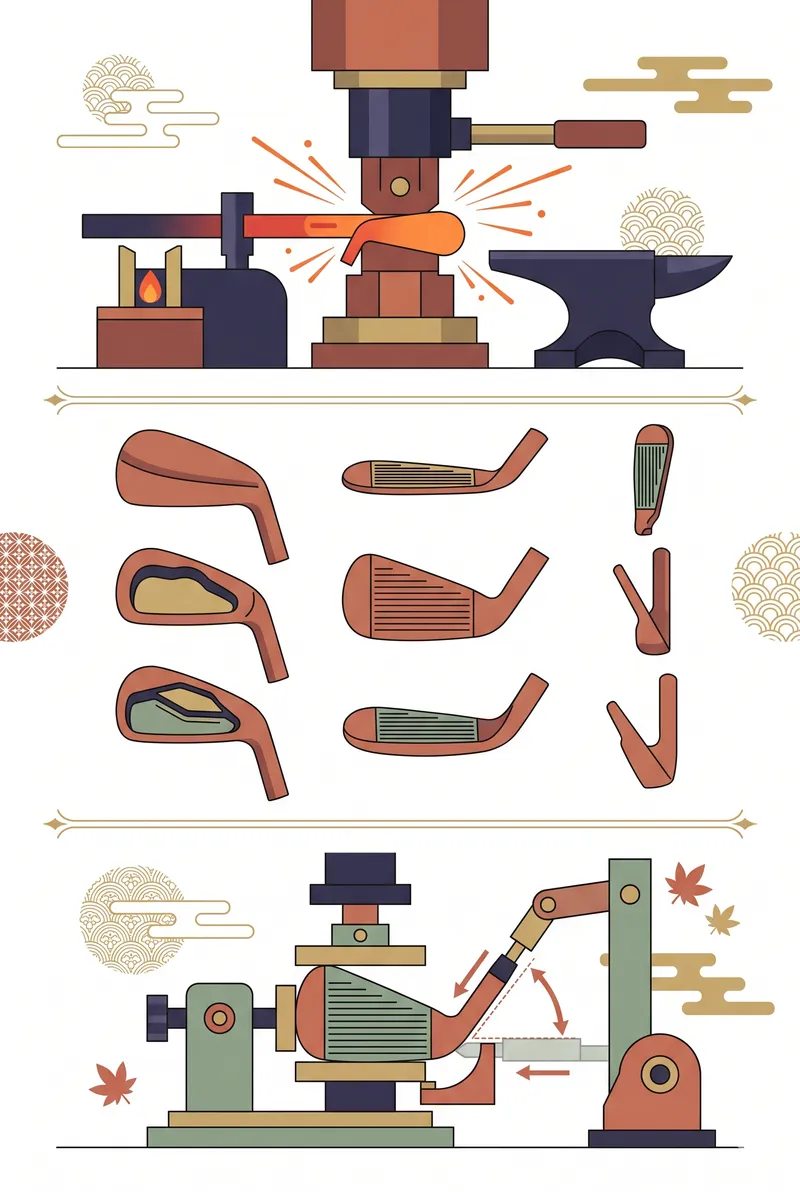
The short version of the technical argument: forging presses soft carbon steel into shape rather than cutting it, so the grain of the metal follows the form. That produces a denser, more uniform head that transmits more information at impact and resists deforming under load.
Two things worth being straight about
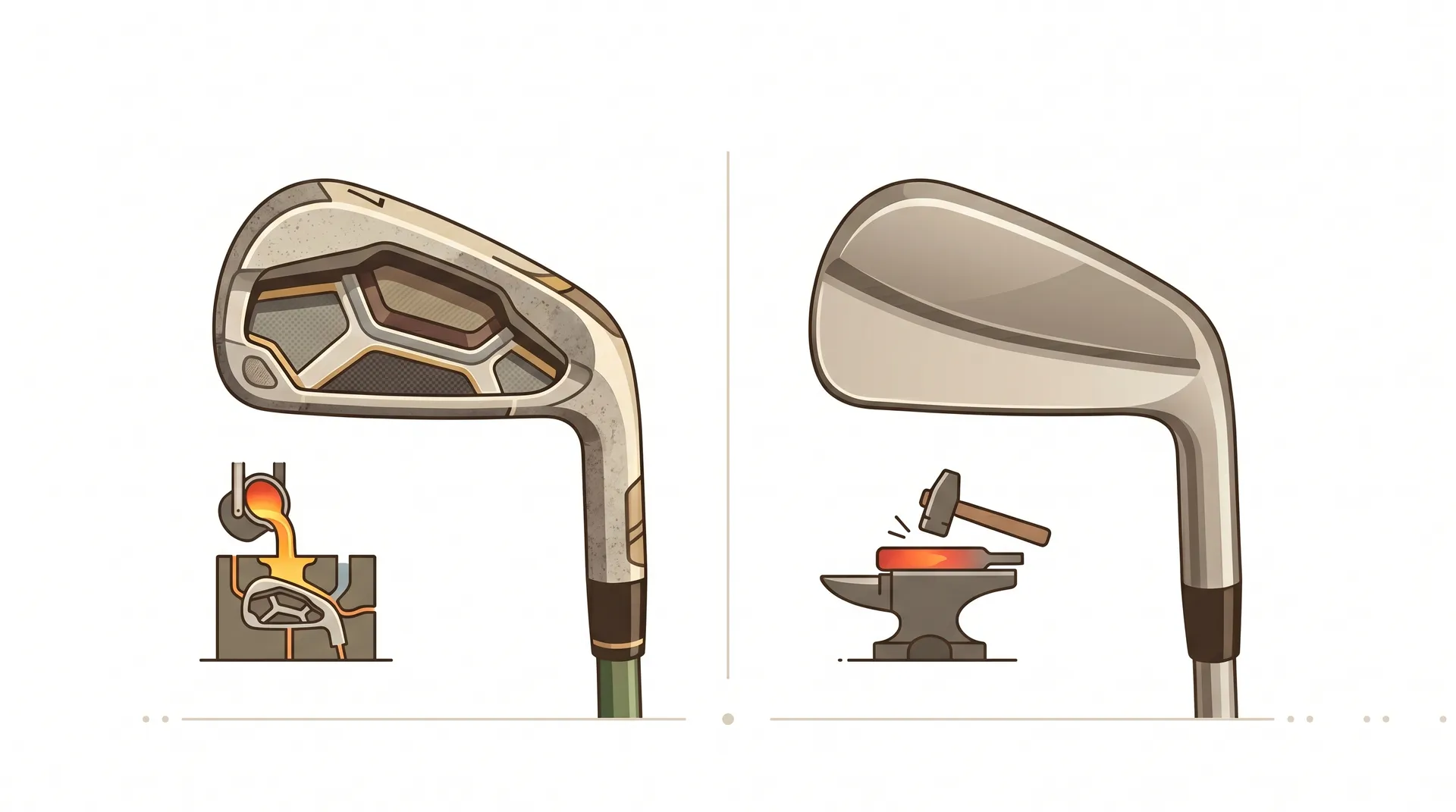
Forging does not add distance and does not add accuracy. Cast heads beat forged blades on both, which is why forgiving irons are usually cast or hollow. What forging changes is feedback — how much of the strike you feel.
"Forged" is not a synonym for "blade". Plenty of forged irons are cavity backs and are as forgiving as anything else in their category. The construction and the shape are two separate decisions, and conflating them is what scares people away from this whole area.
Beyond the mainstream brands, Japan has a tier of small independent forging houses — the ji-club makers — that sell mostly through fitters and mostly as heads only. That is a world of its own, and it is covered separately in our guide to Japanese forged irons and the ji-club makers.
Muscle Back, Cavity or Player's Distance
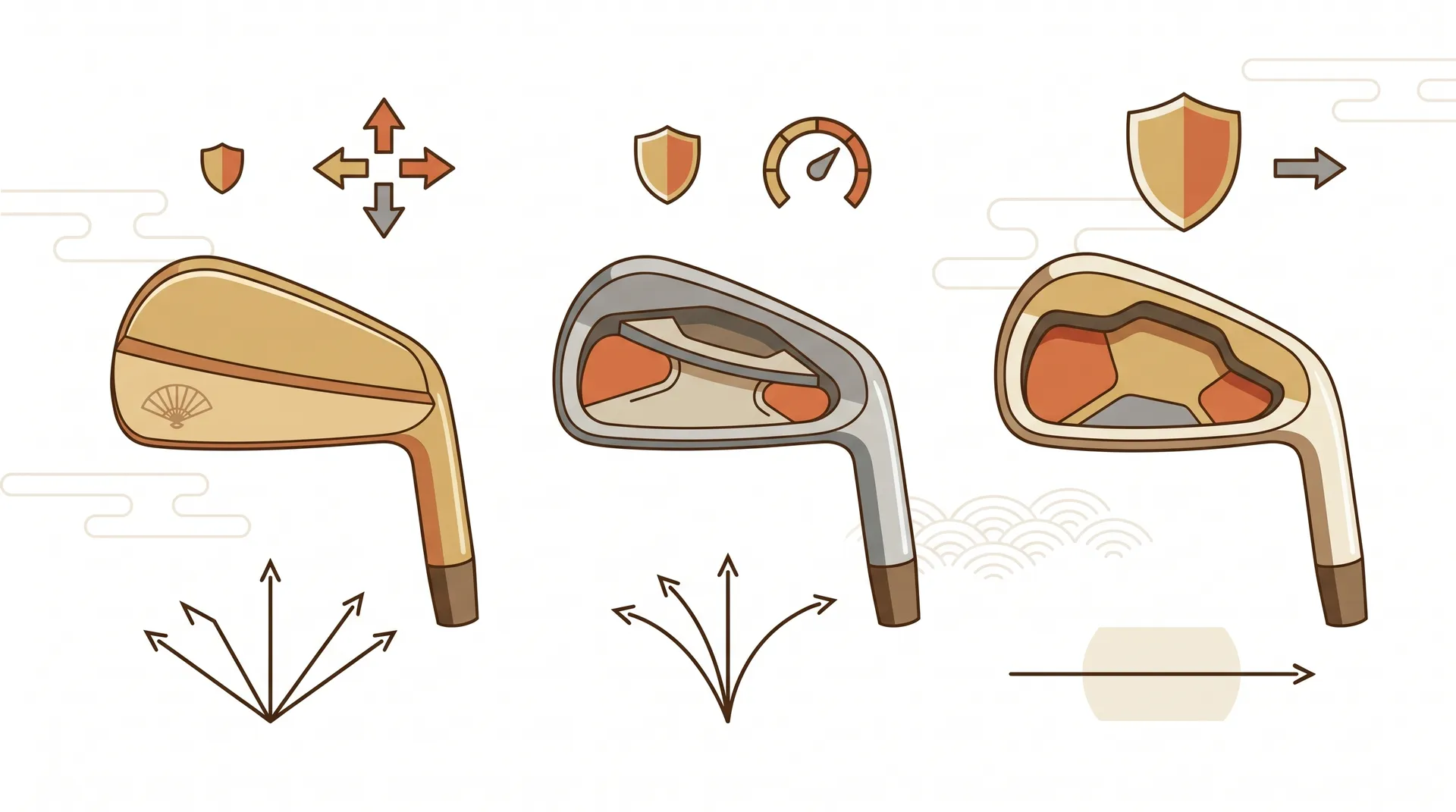
This is the decision that actually changes your golf, and it has nothing to do with which country the club came from.
Muscle back (blade)
Mass concentrated directly behind the centre of the face. A centre strike feels superb and goes exactly where you aimed. A strike 10mm towards the toe loses distance and turns left or right, and tells you about it clearly.
Buy these only if you find the centre consistently — and be honest, because everyone believes they do. If your dispersion is wide, a blade will not improve it; it will simply describe it.
Cavity back — the sensible answer
Mass hollowed out from behind the face and redistributed around the perimeter.
That resists the head twisting when you miss the centre, so off-centre strikes lose less
distance and stay closer to line.
This is what most good players use, including plenty of professionals in the
long irons. Choosing one is not a concession — it is the correct answer for almost everybody.
Player's distance
A newer category: compact from address like a blade, but hollow or heavily engineered behind, usually with a thin fast face and stronger lofts. High forgiveness and more carry in a shape that looks serious.
Check the lofts before comparing distance. A "7 iron" in this category can be lofted like a traditional 5 or 6, so the extra distance is partly geometry rather than technology — and the higher, softer landing of a traditional loft is what actually holds a green.
A combo set is usually the right answer
You do not have to choose one shape for the whole bag, and most fitted sets are
mixed: forgiving cavity or hollow heads in the long irons where mishits cost most, and
more compact heads in the short irons where control matters and you strike better anyway.
Japanese makers build these combinations as standard. Ask for it.
The Brands You Can Already Buy
Mizuno — the reference point for feel
Mizuno's forged irons are made in Hiroshima, and for decades they have been
the benchmark every reviewer reaches for when describing how an iron feels. The range spans
blades through cavity backs to player's distance, so the shape decision above
can be made entirely within one line.
Crucially for anyone reading this outside Japan: Mizuno is fitted and warranted
normally wherever you live. No import, no proxy, no grey market.
- Forged in
- Hiroshima, Japan
- Range
- Blades, cavity backs, player's distance — and combo sets
- Availability
- Excellent. Standard retail and fitting
- Price range
- $1,000–$1,700 per set
Perfect for: Anyone who wants Japanese forging without any of the buying difficulty. Get fitted; the fitting is worth more than the model choice.
Srixon — Dunlop's Japanese forging arm
Srixon is Dunlop's Japanese golf operation, and its forged irons have a
strong tour presence and an unusually good reputation for value against the equivalent
American offerings.
Like Mizuno, internationally distributed and fitted normally — and generally
a little less expensive for a comparable specification.
- Made by
- Dunlop Sports, Japan
- Known for
- Forged irons across the forgiveness range; strong value
- Availability
- Excellent
- Price range
- $900–$1,500 per set
Perfect for: Someone who wants Japanese forged irons and would rather put the difference into a fitting session or better shafts.
And the tier above
Miura and the other independent Japanese forging houses sit above this, sold through authorised dealers and fitters rather than general golf retail, and priced accordingly. They are covered properly in our guide to Japanese forged irons and the ji-club makers — including how the heads-only buying model works and whether importing is worth it.
Buying Clubs in Japan as a Visitor
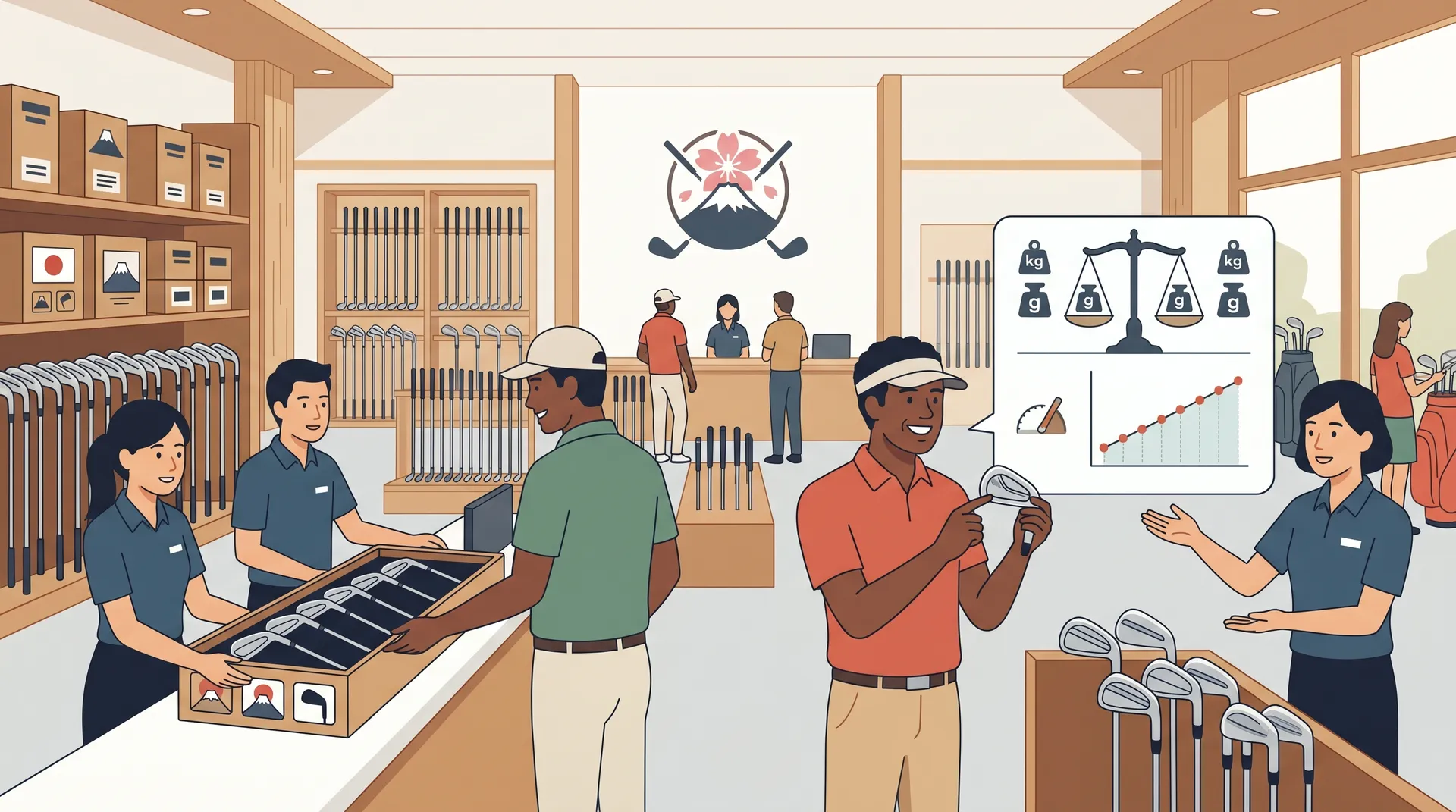
Japanese golf shops are a specific kind of pleasure, and visiting golfers do genuinely fill suitcases. Worth knowing what is actually good about it and what is not.
What is genuinely better
- Range. Japanese golf retail carries far more models, more shaft options and more shape variations than most Western shops stock.
- Fitting is normal, not a special appointment. Large shops have hitting bays and launch monitors as standard equipment.
- The used market is exceptional. Japan's second-hand golf trade is enormous, well-graded and honestly described — this is arguably the single best reason to shop there.
- Tax-free shopping is available to visitors on presentation of a passport at participating stores.
What to watch out for
- Japanese-market shafts are often lighter than what a comparably built Western golfer would be fitted into. Buy on shaft weight in grams rather than on the flex letter — the letters are not standardised between countries or even between makers.
- Warranty support at home may not apply to a Japanese-market purchase. For a mainstream brand you can buy locally anyway, this alone can outweigh the saving.
- Getting them home. Airline sports equipment rules and fees vary a great deal; check before you commit to a full set rather than a few clubs.
- Grip size. Japanese standard grips tend to run smaller. Easily changed, but factor it in.
The sensible strategy
Buy at home the things you can buy at home — a Mizuno or Srixon set, fitted, with
a warranty. Buy in Japan the things you cannot: used clubs at prices and grades
that do not exist elsewhere, unusual shaft options, and models that never reach your market.
Arriving with a plan beats arriving with an empty suitcase and enthusiasm.
Lie Angle and Rust
Two consequences of soft carbon steel, one good and one to manage.
You can bend them, and you should
Soft forged heads adjust. Any competent fitter can bend lie angle by a couple of degrees, which is exactly why the steel is chosen soft in the first place.
This matters more than most amateurs realise. A lie angle that is wrong for your height and swing sends the ball offline on a perfectly struck shot — the club is not the problem, the setup is. Get it checked; it is inexpensive and it is the cheapest accuracy you will ever buy.
And they rust
- Dry the faces before the clubs go back in the bag. This single habit prevents nearly all of it.
- Wipe with a lightly oiled cloth after wet rounds.
- Never store them in a car boot. Condensation cycles do far more damage than rain.
- Light surface rust removes with a soft brass brush or a rust eraser. Chrome-plated heads resist all of this; raw and satin finishes do not.
If you choose a raw finish, you are choosing the maintenance with it. Some players let their wedges rust deliberately, on the theory that a roughened face grips better.
Frequently Asked Questions
Are forged irons only for good players?
No — that confusion comes from equating "forged" with "blade". Japanese makers
forge cavity backs and hollow heads that are as forgiving as anything cast.
What you should be honest about is head shape, not construction. Blades punish
mishits; cavity backs do not.
Muscle back or cavity back?
Cavity back, for almost everyone — including a lot of professionals in the long
irons. Perimeter weighting resists the head twisting on off-centre strikes.
Choose a blade only if you genuinely find the centre consistently. A blade will not tighten your
dispersion; it will describe it.
Do I need to go to Japan to buy Japanese clubs?
No. Mizuno and Srixon are fitted and warranted normally wherever you live, and
both forge in Japan.
Going to Japan gets you a wider range, more shaft options and an exceptional used
market — but for a mainstream new set, buying locally with a warranty is usually the
better deal.
Will I lose distance compared with my current irons?
Compare lofts before you compare distances. Distance irons achieve their numbers
with strong lofts and fast faces; a traditionally lofted iron carries shorter with a higher,
steeper descent that actually holds a green.
Measuring distance without checking loft is measuring the wrong thing.
Should I get my lie angle adjusted?
Yes, and soft forged heads exist partly to make it possible. A wrong lie angle
sends a perfectly struck ball offline, and no amount of practice corrects for it.
It is a cheap adjustment and the most reliable accuracy gain available from equipment.
Do Japanese-market clubs have different shafts?
Often lighter, yes. Japanese stock shafts tend to be lighter and softer-tipped
than what a similarly sized Western golfer would normally be fitted into.
Buy on shaft weight in grams, not on the flex letter — flex letters are not
standardised between countries or between manufacturers.
Final Thoughts: Get Fitted, Then Choose the Shape
The best Japanese irons for most people are the ones already in your local shop. Mizuno forges in Hiroshima and Srixon is Dunlop's Japanese operation — both fitted, warranted and available without importing anything.
Spend your attention on head shape and the fitting rather than on which name is stamped on the back. Cavity back unless you truly strike the centre; a combo set if you are honest about your long irons; and get the lie angle checked.
Then, if you visit Japan — go for the used market, not the new one. That is the thing your country genuinely does not have.
Japanese Forged Irons: Beyond Miura and Mizuno
Japanese Fishing Reels: Do You Need the JDM One?