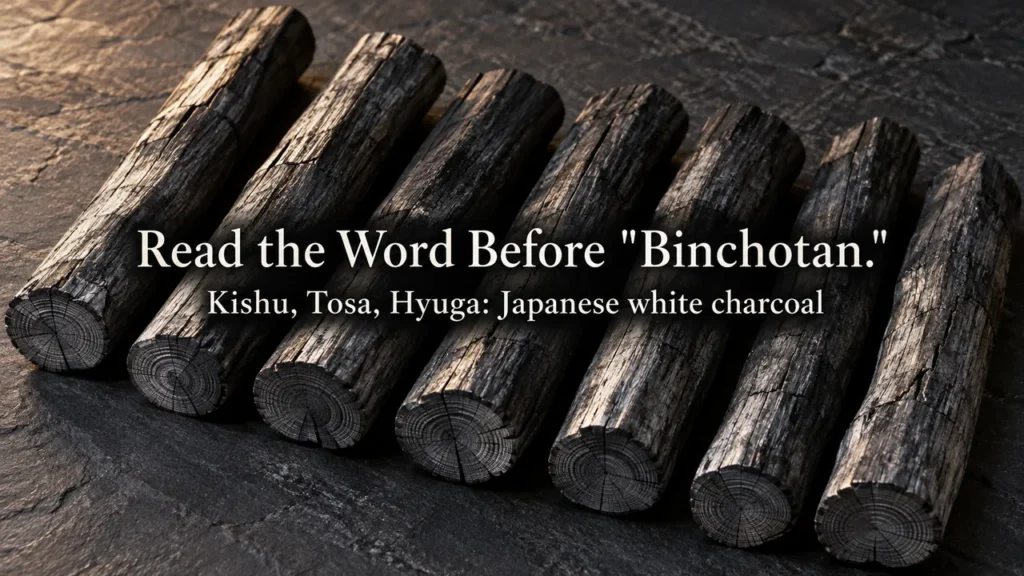
"It just tastes different over charcoal."
What makes that difference isn't how hot the fire is. It's how long it stays the same.
You can get high heat from gas. What charcoal does differently is hold that heat steady from start to finish, so food can cook through without the outside burning first. That staying power comes from how hard the charcoal is, and hardness comes down to what wood was used and how it was fired.
One thing to know before you buy: "binchotan" is a name, not a place. The word to look for on the bag is the one in front of it.
Quick Reference: Choose Binchotan by What You'll Use It For
| Use | What to buy | What to check |
|---|---|---|
| Grilling (shichirin, BBQ) ▾ | Kishu, Tosa, or Hyuga binchotan | The region name, and 1–3 kg for home use |
| In the rice pot or a water jug ▾ | Charcoal sold for food use | Small, easy-to-handle pieces |
| Left in a cupboard or fridge ▾ | Charcoal in a basket or cloth bag | A size that fits the spot |
| Remember | Only charcoal made in Wakayama or Nara may be sold as "Kishu binchotan." | |
Tap a use to jump to its section.
1. Why Japanese: Wood So Hard It Sinks, Fired for a Week
Binchotan is a kind of white charcoal
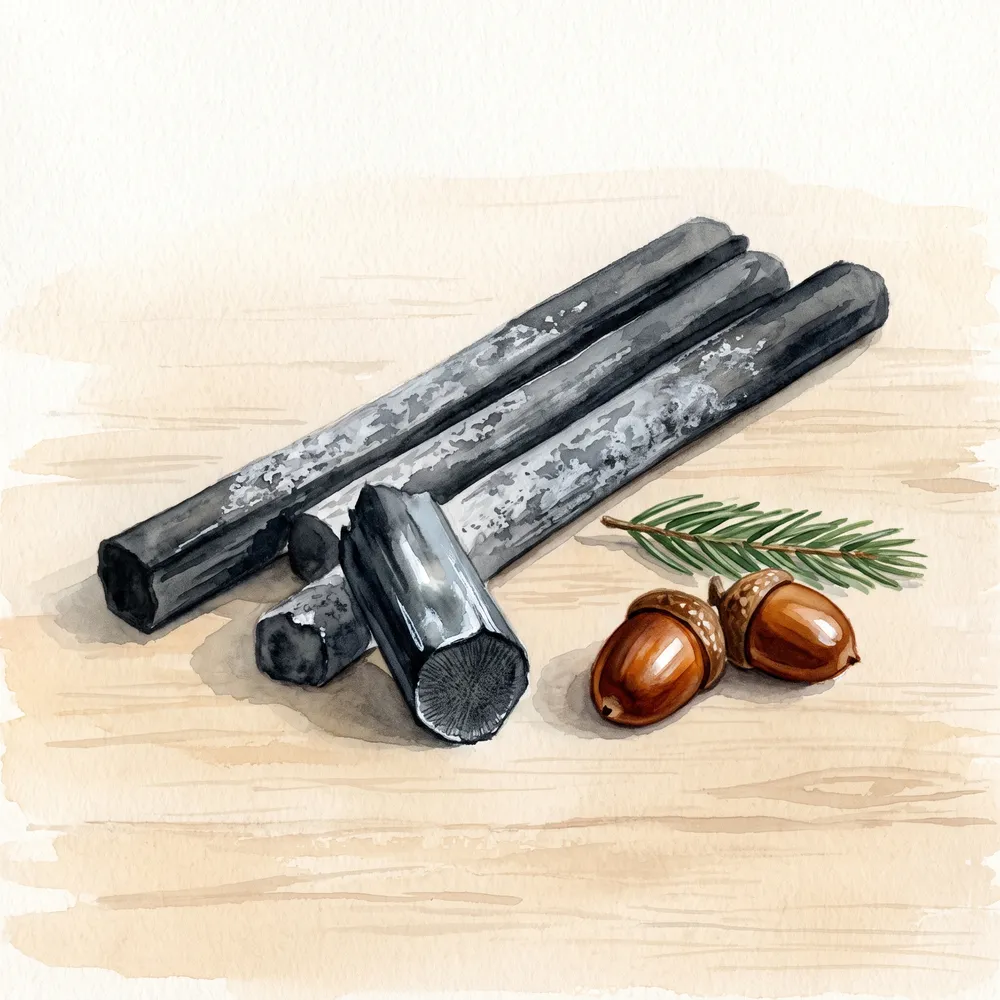
Binchotan is white charcoal (shirozumi) made mainly from ubame oak, a Japanese evergreen oak; charcoal from related oaks is included too.
Ubame oak grows on slopes near the sea, with small glossy leaves and small acorns. What sets it apart is its density: it's said to be so dense it sinks in water. It's also the prefectural tree of Wakayama, the home of binchotan.
Skilled charcoal makers fire it for about a week, working by eye and experience. When to change the kiln, when to take the charcoal out: these are judged by a person, not set by a number. Hard wood, tightened slowly over time. Those two things make the staying power.
Why it's called "white" charcoal
Charcoal falls broadly into white charcoal and black charcoal, and the difference is how it leaves the kiln.
For white charcoal, the glowing charcoal is raked out of the kiln and smothered quickly with ash and earth. The ash that clings to it makes the surface look whitish, hence the name. Cooled that fast, it sets hard and tight. Bincho Honpo, a Kishu binchotan seller, notes that because it is fully lit before being put out with ash, very little sap remains, so it gives off almost no smoke or smell.
Hard means it burns slowly. The flip side is that it's slow to catch, so be ready for that.
"Bincho" came from a person's name
It isn't named after a place or a tree. In the Edo period, a charcoal merchant called Chōzaemon of the Bicchū-ya is said to have spread this charcoal, and it came to be known as "binchō-tan" after him. Bincho Honpo adds that it was invented in Kishu and became so popular that it was a major source of income for the Kishu domain, with the method treated as a domain secret. Charcoal itself is said to have been made in the area since the Heian period, a thousand years ago. A merchant's name became the product's name, and stayed.
2. What the Word "Kishu" Tells You
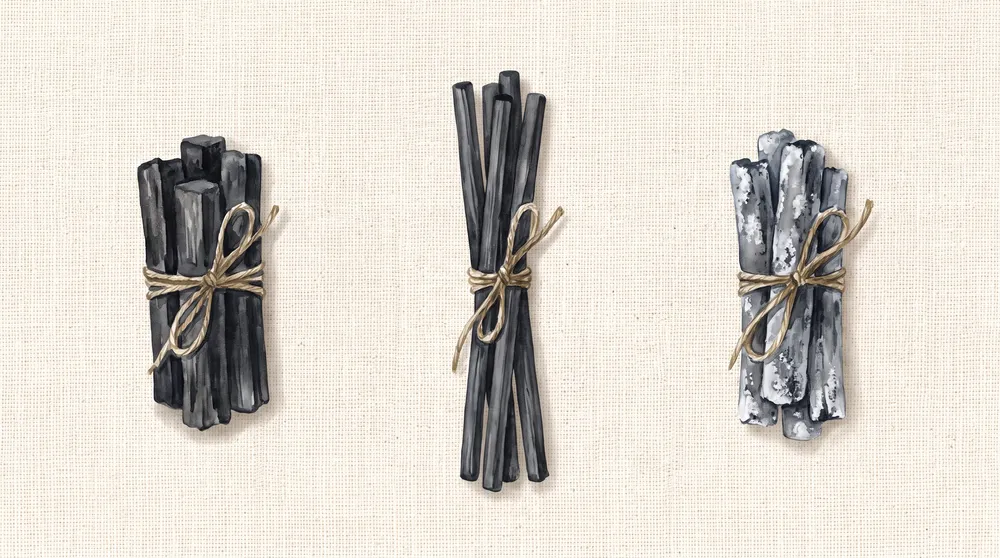
When you see a bag labelled "binchotan," look for a region name in front of the word. That's the most important thing in this guide.
The region name comes with conditions
According to Bincho Honpo (in Japanese), "Kishu binchotan" is a trademark registered by the Wakayama Charcoal Cooperative, and the name can't be used unless the charcoal is made in Kishu, today's Wakayama and Nara prefectures, by the traditional method.
This is the dividing line. "Binchotan" on its own says nothing about where it was made. "Kishu" in front of it does.
So that's the word to look for. It may be at the start of the product name, or in the origin field on the back of the bag.
Three regions to know
Kishu binchotan (Wakayama) comes from the land where binchotan began, and has long been used by traditional restaurants and charcoal grills. The town of Minabe in Wakayama alone fires about 150 tonnes a year.
Tosa binchotan (Kochi) is also widely available: since 2014, Kochi has been Japan's largest producer of white charcoal. And there's Hyuga binchotan (Miyazaki).
None of them is "the best." The trees grow in different conditions, so the density and the way the fire builds have their own character. Start with whichever is easiest to get, and find the one you like.
3. Grilling: Choose for Staying Power
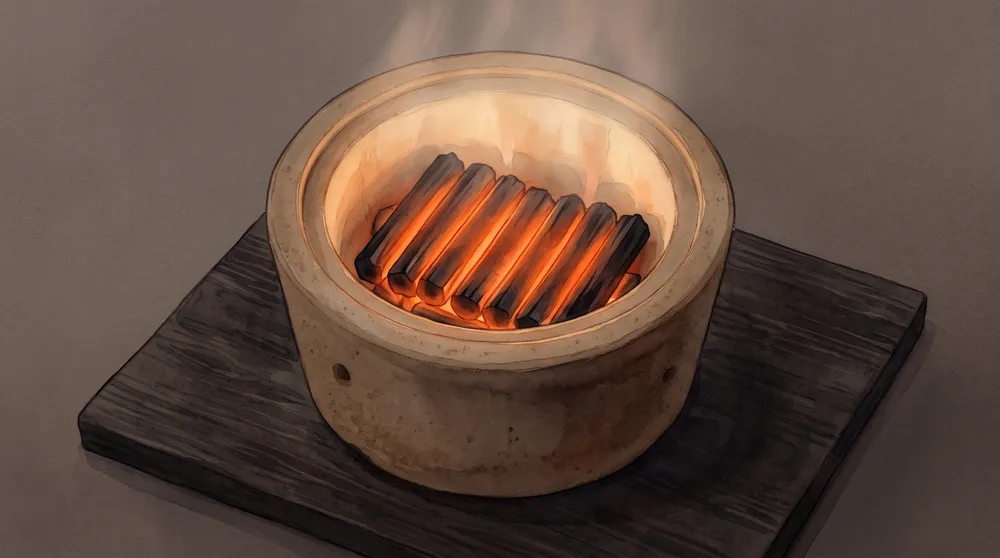
If you're buying it to cook with, check two things: the region name and the quantity.
1–3 kg for home. 15 kg is for restaurants
It's sold in units of about 1 kg, 3 kg, 10 kg and 15 kg. The 15 kg box is the restaurant size, and at home you'll struggle to find room for it.
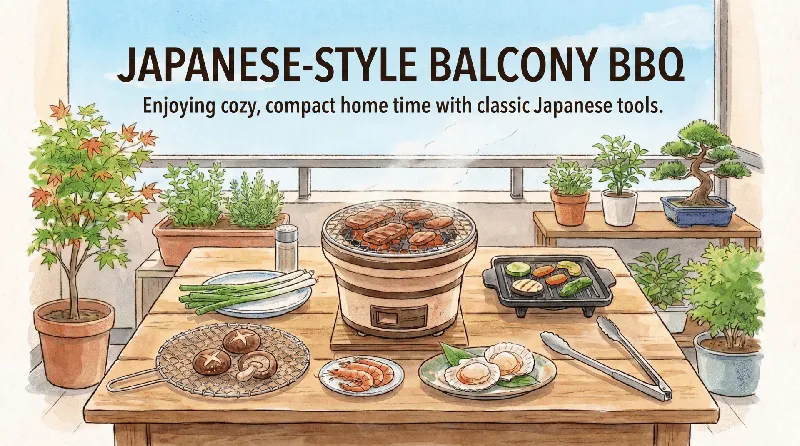
For a few sessions on a shichirin (a small Japanese tabletop grill), 1 kg; for several family barbecues, 3 kg (roughly 2 and 6.6 lb). Charcoal absorbs moisture, so buy what you'll use up rather than stockpiling.
Lighting it honestly takes effort. White charcoal is hard, so it's slow to catch. Start a bed of embers with fire starters or ordinary briquettes, then add the binchotan; that's the reliable way.
One town, 150 tonnes a year
Minabe in Wakayama fires about 150 tonnes of binchotan a year: 10,000 boxes of 15 kg. That sounds like a lot until you picture it being fired kiln by kiln, a week at a time, by people. And the wood, ubame oak, grows on coastal slopes that suit little else. The charcoal came out of land other crops couldn't use.
Kishu binchotan — with the region in the name
Charcoal that can only carry this name if it was made in Wakayama or Nara. Check that the name or description says "Wakayama" and "ubame oak"; some include the name of the producers' cooperative.
For home use, start with a small unit. Use it once and you'll know how different its staying power is.
IPPINKA Kishu Binchotan BBQ Charcoal, 3 lb
Loading product details…
Tosa and Hyuga binchotan — try a different region
Binchotan from Kochi and Miyazaki. Kochi produces the most white charcoal in Japan, which helps with availability. The same kind of wood sets differently depending on where it grows.
Grilling with different regions' charcoal and comparing is one of the pleasures of this fuel. Just don't mix several regions in one fire, or you won't be able to tell them apart.
4. Uses Beyond the Grill
Binchotan isn't only for burning. Ways to use it without lighting it have been known for a long time, too.
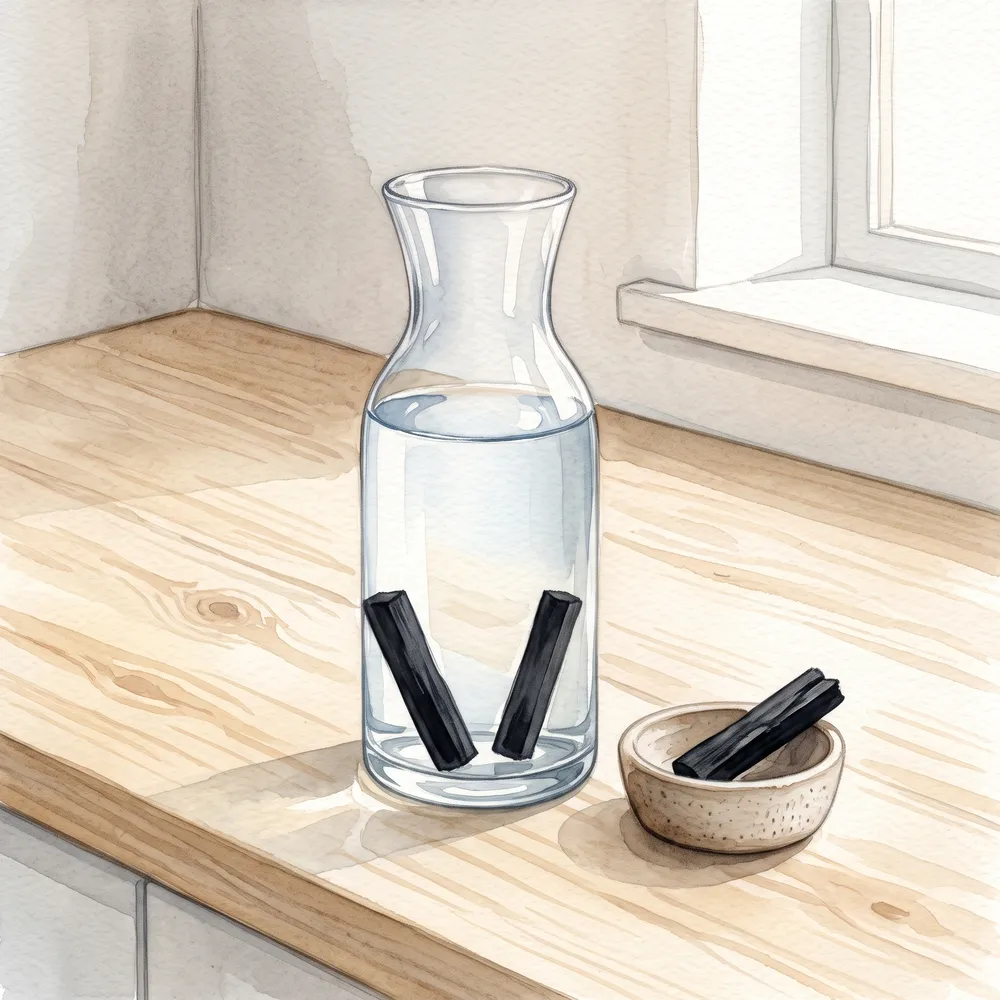
In the rice pot, and in water
Cooking a piece with rice, or leaving one in a jug of water, is a long-standing practice in Japan. The surface of the charcoal is full of tiny pores, and that's traditionally said to be what does the work.
For this, choose charcoal sold specifically for food use. Charcoal sold as fuel isn't made on the assumption that it will touch anything you eat or drink.
Before first use, wash it well and boil it, then let it dry. After a few months, boil and dry it again and it will last a long time.
Left in place: shoe cupboards, closets, the fridge
You can also simply leave it somewhere: a shoe cupboard, a closet, the fridge. It's sold in baskets or cloth bags, ready to set down as is.
When it has taken on moisture, dry it in the sun to refresh it. Repeat that and it lasts a long time. When you're done with it, it can be crushed and mixed into garden soil.
Some people use it as decoration. Black, faintly lustrous charcoal is an ornament in itself; in Japan, arranging it is called mori-zumi or kazari-zumi.
Food-use binchotan — for rice and water
If it's going near food or drink, choose charcoal labelled for food use. It's sold separately from fuel charcoal, in small, easy-to-handle pieces sized for a rice pot or water jug.
Wash, boil, and dry it before use. After a few months, boil and dry it again to refresh it.
Kishu Binchotan Water Sticks (6 Slim Sticks)
Loading product details…
Binchotan to leave in place — cupboards, closets, the fridge
Sold in baskets or cloth bags, ready to set down with no fuss. Choose a size that fits where it'll go.
When it has absorbed moisture, dry it in the sun. Repeat and it lasts a long time; at the end, crush it into the soil.
5. Using It Safely: Ventilation, a Heat Mat, and Putting It Out
Indoors, ventilation is non-negotiable
Burning charcoal produces carbon monoxide. It has no smell and no colour, so you won't notice it. Never burn charcoal in a closed room. Low smoke doesn't mean low carbon monoxide.
Open a window and run the extractor fan, ideally both. Using it inside a tent or a car is especially dangerous.
You also need something underneath. Even a shichirin gets hot on the bottom, so always put a board or a heat-resistant mat under it.
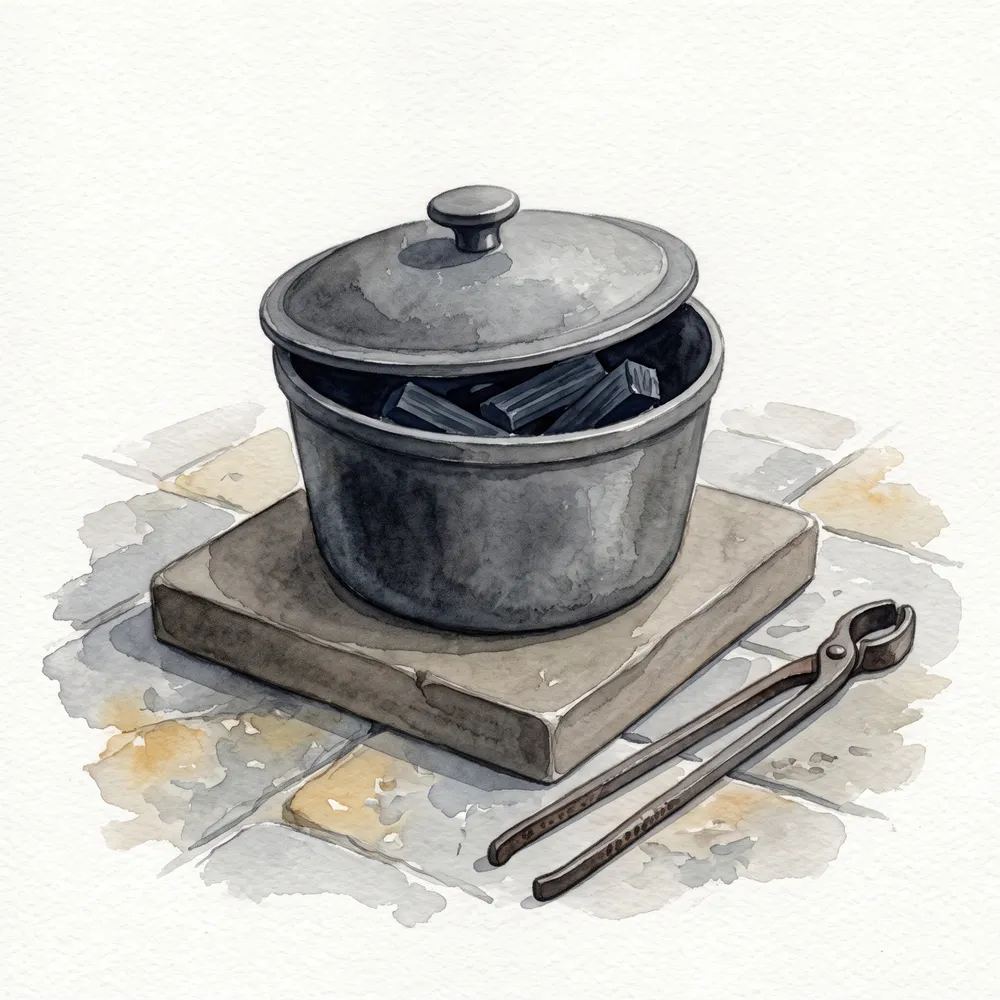
Don't put it out by pouring water
Avoid pouring water over burning charcoal. The sudden cooling can make it crack and spit, and it can damage a shichirin.
The standard tool is a hikeshi-tsubo, a lidded extinguishing pot. Put the charcoal inside, close the lid, and starve it of air. Charcoal put out this way can be dried and used again; it's called keshi-zumi, and because it lights easily, it makes a good starter next time.
Even when it looks out, it's still hot inside. Keep the lid on until it has cooled completely, and keep it away from anything flammable.
6. Buying From Outside Japan
The same rule applies wherever you shop: look for the region name. Specialist kitchen shops outside Japan do sell it by region. Chefs Armoury in Australia, for example, lists Kishu binchotan as "pure binchotan from Wakayama prefecture, Japan," made from ubame oak.
The charcoal makers in Wakayama that sell direct have Japanese-only sites, and we didn't find international shipping. If a listing just says "binchotan," check the description for Kishu, Tosa, or Hyuga, or for Wakayama, Kochi, or Miyazaki. We will add listings you can buy from abroad here as we confirm them, one product at a time.
7. Frequently Asked Questions
What's the difference between "binchotan" and "Kishu binchotan"?
Whether the origin is fixed. "Kishu binchotan" is a trademark registered by the Wakayama Charcoal Cooperative, and only charcoal made in Kishu (Wakayama and Nara prefectures) can use it. "Binchotan" alone carries no such condition. To know where it came from, look for a region name such as Kishu, Tosa, or Hyuga.
My binchotan won't light. What should I do?
Don't try to light binchotan on its own. White charcoal is dense, so it's slow to catch. Start a bed of embers with fire starters or briquettes, then add it. Until it catches, giving air a path works better than fanning: stand the pieces up so air can flow from underneath.
How much should I buy for home use?
1–3 kg. About 1 kg for a few sessions on a shichirin, 3 kg for several family barbecues. 15 kg is the restaurant size. Charcoal absorbs moisture, so buy what you'll use and store it somewhere dry.
Can I put binchotan in my rice cooker or water jug?
Choose charcoal sold for food use. Fuel charcoal isn't made to go near food or drink. Wash it well, boil it, and dry it before use; after a few months, boil and dry it again. It's meant to be reused that way.
Is it safe to use binchotan indoors?
Only somewhere you can ventilate. Burning charcoal produces carbon monoxide, which has no smell or colour. Open a window and run the extractor fan, ideally both, and never use it in a tent or a car. Always put a board or heat-resistant mat underneath.
How do I put it out when I'm done?
Put it in a lidded extinguishing pot and cut off the air. Don't pour water on it: it can crack and spit, and damage a shichirin. Charcoal put out this way, called keshi-zumi, lights easily and makes a good starter next time. Keep it away from anything flammable until it has fully cooled.
Final Thoughts: Read the Word in Front of "Binchotan"
Charcoal tastes different not because the fire is hotter, but because the heat holds steady to the end. That comes from hardness, and hardness comes from the wood and the firing: ubame oak, said to be dense enough to sink, fired for about a week by people who judge it by eye, then smothered in ash. The price is that it's slow to light.
When choosing, read the word in front of "binchotan." Kishu binchotan can only come from Wakayama or Nara, because the name is a registered trademark. Tosa means Kochi; Hyuga means Miyazaki. The region name tells you where it came from.
Buy 1–3 kg for home, always ventilate indoors, and put it out in a lidded pot, not with water. It's still fired by hand in mountain kilns. Next time you buy charcoal, check the bag for the region, and try one from Japan.
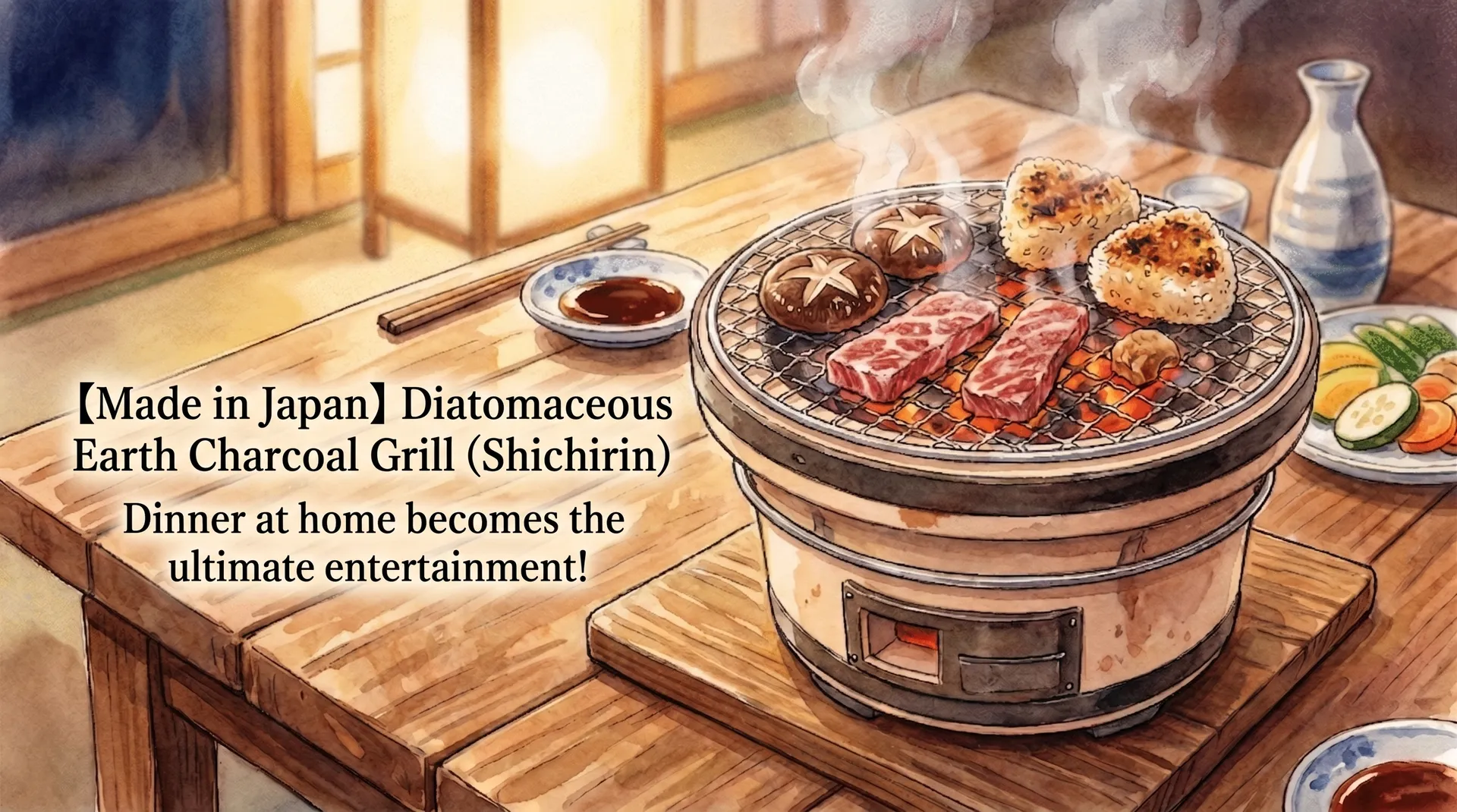
Japanese Shichirin: Noto Diatomite Charcoal Grill Guide
Balcony BBQ Guide | Compact Japanese-Style Grills for Home Use