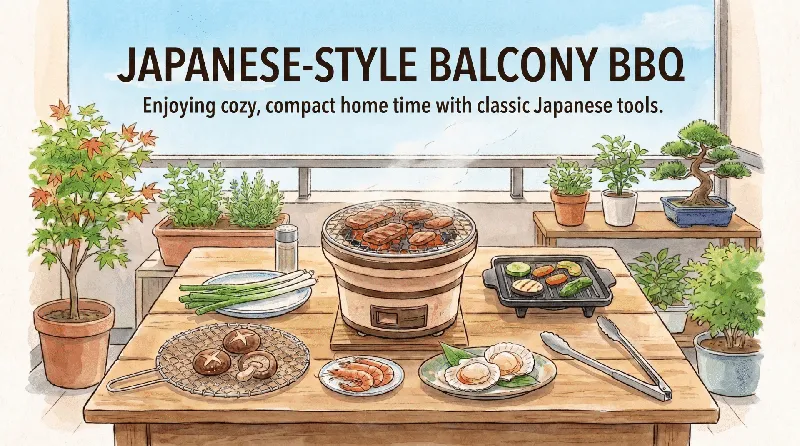
"I'd love to BBQ on the balcony, but dragging out a big grill sounds like so much work…"
"Smoke and smell complaints from the neighbors make outdoor cooking at home feel impossible."
If that sounds familiar, the answer isn't a large Western-style BBQ grill — it's a set of compact
Japanese-style outdoor cooking tools built for exactly the kind of space you have.
That oversized grill you bought on impulse? Heavy to move, a nightmare to clean, destined for the back of storage
after a couple of uses.
Japanese artisan-made tools — a diatomite (keisōdo) konro (portable charcoal stove) or a hand-woven roasting net —
fit on a tabletop, need minimal charcoal, and can be set up on a whim and cleaned up in
minutes.
This guide covers the most beautiful and practical Japanese BBQ tools for home outdoor cooking, plus the essential
etiquette you need to keep things neighborly.
Series: This article is part of the "Lifetime Kitchen Tools" collection.
Quick Reference: Balcony BBQ Styles at a Glance
| Style | Description | Recommended Grill |
|---|---|---|
| Solo Camp Vibe | A minimalist solo session — slow, campfire-style cooking just for yourself | Small diatomite shichirin / Mini iron grill |
| Casual Gathering | Relaxed time with family or friends; low smoke makes it apartment-friendly | Nambu cast iron grill plate / Cassette stove + roasting net |
| Authentic Charcoal | Far-infrared heat from binchotan charcoal unlocks maximum flavor | Noto diatomite shichirin (round or square) |
| Around-the-Table | Set the grill in the center and cook together — the classic Japanese tabletop BBQ | Tabletop shichirin with wooden base / water konro |
2. Why Japanese-Style? The Case for Compact Home BBQ Tools
When most people hear "barbecue," they picture the American approach — big cuts of meat, a full-size kettle grill, the whole production. Recreating that on a Japanese apartment balcony or small garden is a real stretch.
The Joy of Small: Easy Setup, Easy Cleanup
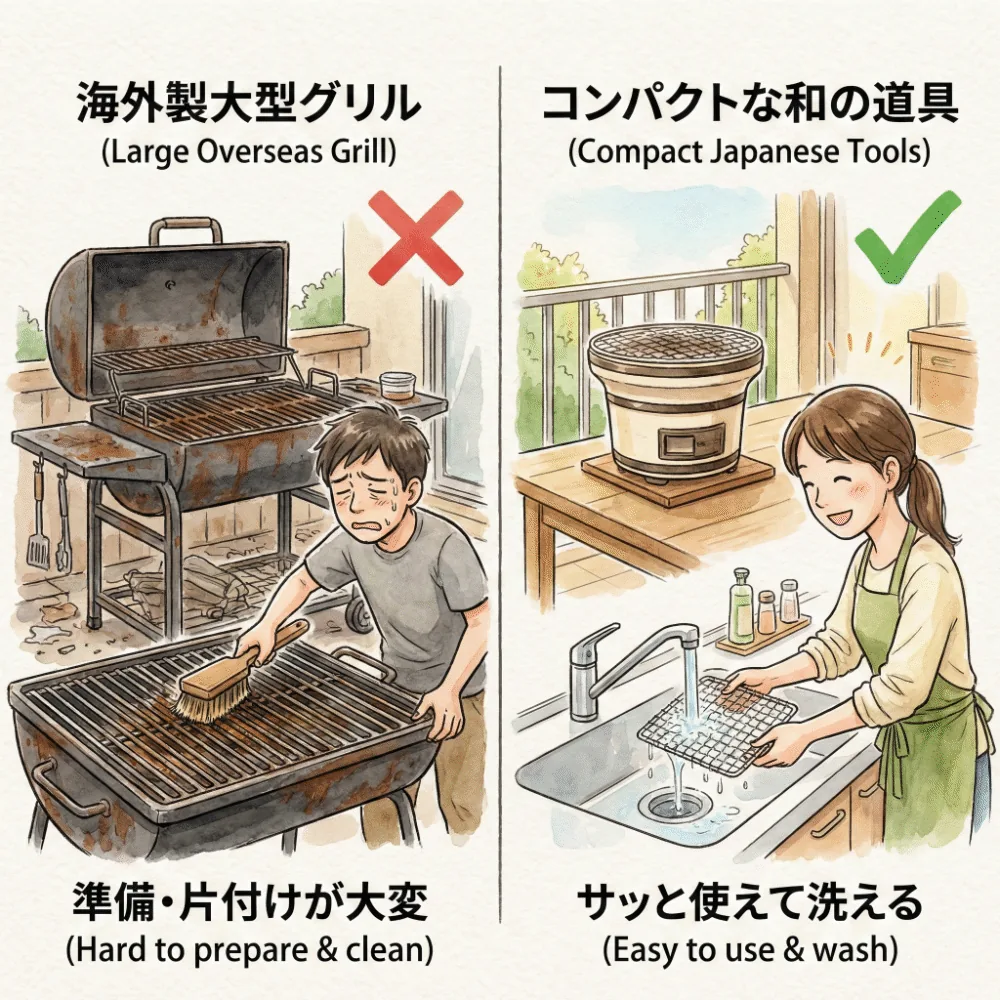
Large Western-style grills burn through charcoal quickly, and their oversized grates won't fit in a kitchen sink
— so cleanup becomes a project in itself, which is exactly why they get used twice and then sit forgotten in
storage.
A traditional Japanese shichirin (七輪, a compact charcoal stove) or water konro, by contrast, is engineered to generate efficient heat from
a small amount of charcoal, purpose-built for tabletop use.
The grate fits easily in the sink, and the whole unit slips into a cupboard when not in use. That effortless
portability is what keeps home outdoor cooking sustainable — and enjoyable — long term.
3. Main Heat Source: The Best Japanese Tabletop Grills
The centerpiece of any Japanese-style home BBQ is the heat source. From authentic charcoal konro to cassette-stove-compatible iron grills, here are the top Japanese-made options.
Kinka Tabletop BBQ Konro (Diatomite)
Exceptional heat retention and safety. A serious grill from Mikawa clay.
Made by veteran Aichi Prefecture brand Kinka, this konro is hand-formed from high-quality diatomite (keisōdo —
a natural porous sedimentary rock) and kiln-fired. Unlike metal grills, the heated clay itself radiates
far-infrared energy, so even budget ingredients cook up surprisingly juicy and tender.
The cool-bottom design and included
wooden base make it safe to use right on a balcony table — a genuinely thoughtful detail. The
clean, modern aesthetic fits right into a contemporary Japanese interior.
Oigen (OIGEN) Nambu Iron "Yakiyaki" Grill
No charcoal needed — get beautiful sear marks with a cassette stove.
If lighting charcoal sounds like more effort than you want, the cast iron grill plate from Iwate Prefecture's
traditional Nambu ironware (Nambu tekki) craft is the answer.
Take a cassette stove out to the balcony, set this iron plate on top, and you're ready. The thick iron stores heat and delivers
gorgeous crosshatch grill marks on your meat. Because there's no charcoal, smoke is minimal — far
easier on your neighbors. And the design is beautiful enough to go straight from grill to table.
4. Roasting Nets & Tools: Beautiful Japanese Accessories
Once you've chosen your grill, a few well-chosen accessories make cooking a pleasure. These are lifetime tools where Japan's metalworking craftsmanship really shines.
Tsubame-Sanjo "Self-Standing Tongs" (Clever Tong)
Ever struggled with where to rest your tongs mid-BBQ? Propping them on the edge of a plate only ends in them
sliding off and greasing the table.
These self-standing tongs, made in Niigata Prefecture's Tsubame-Sanjo metalworking district, are ingeniously designed so the tips stay off
the table when you set them down — no plate-resting required. Hygienic and precise, with narrow
tips that let you handle delicate ingredients one by one. An absolute must-have for Japanese-style BBQ.
Tsujiwakanaami (Kyoto) Hand-Woven Roasting Net
If the wire net on your konro or stove is getting old, upgrade it to a beautiful hand-woven roasting net from
a Kyoto artisan.
The fine inner mesh tempers the direct flame and distributes heat evenly, cooking ingredients to a fluffy
perfection. Equally great for toast and mochi. A beautiful lifetime tool that takes your Japanese-style BBQ
experience to a whole new level.
Want to go deeper on roasting nets? Check this out:
5. Neighbor-Friendly BBQ: Essential Etiquette & Smoke Tips
Even the most beautiful tools won't help if smoke and smell become a nuisance. Here's what you need to know to enjoy outdoor cooking at home without complaints.
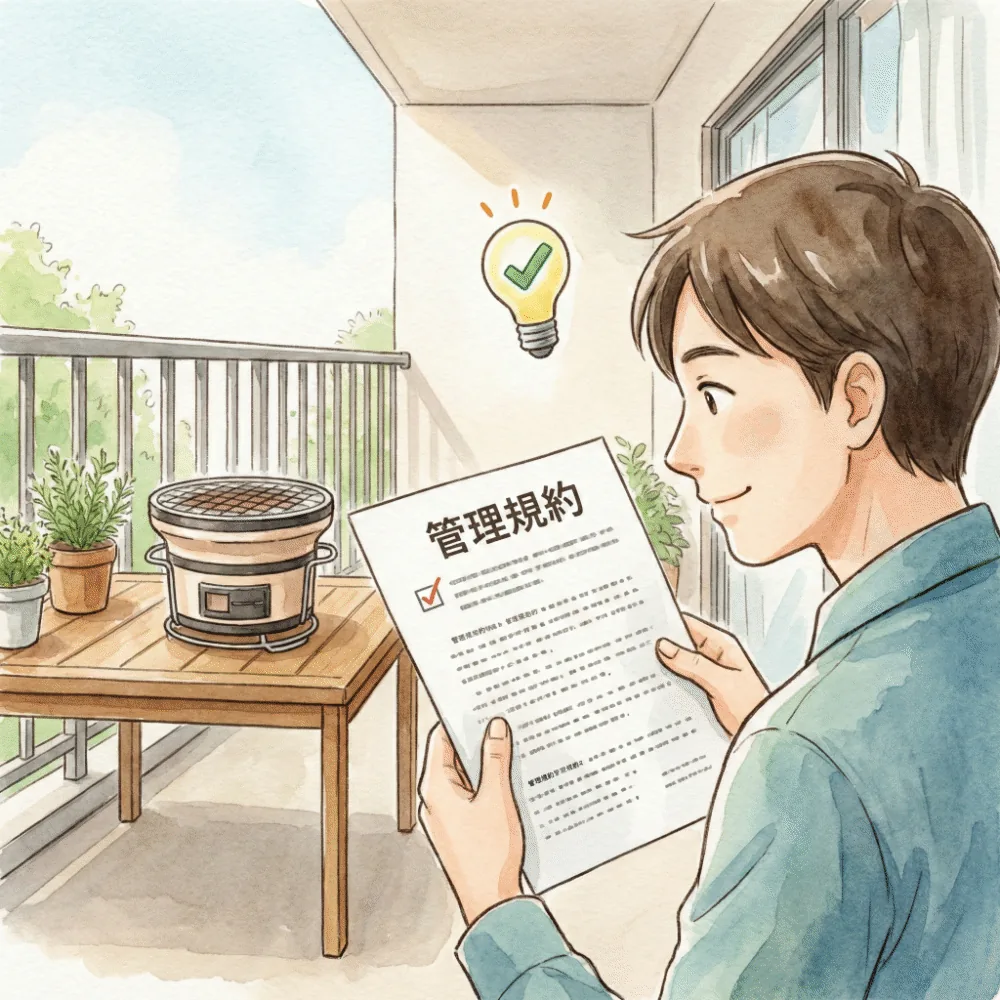
1. Always Check Your Building Rules First
In Japanese apartment buildings, balconies and terraces are legally classified as shared emergency evacuation
routes — not private space. Many buildings and fire codes explicitly prohibit open flame on balconies.
Using charcoal without permission can escalate into a serious dispute, so always check your building's
management rules before you light anything. If open flame is prohibited, switch to the indoor
cassette-stove + iron grill approach with the window cracked — the "home camp" style that still delivers a great
experience.
2. Use Domestic Binchotan — Japan's Low-Smoke White Charcoal
Smoke and smell are the most common sources of neighbor complaints about home BBQ. Your best defense is charcoal
selection.
The cheap black charcoal (kuritan, often mangrove charcoal) sold at home centers lights quickly but throws off
large amounts of smoke and embers. For balcony use, domestic binchotan (白炭, white charcoal) —
nearly free of impurities, with almost no smoke or smell — is the only real choice.
It takes a little longer to ignite, but burns steadily for a long time, which means better value per session and
genuine consideration for your neighbors.
3. Skip Fatty Meats — Focus on Vegetables & Seafood
Even with binchotan, fatty cuts like pork belly create heavy smoke when the dripping fat hits the charcoal.
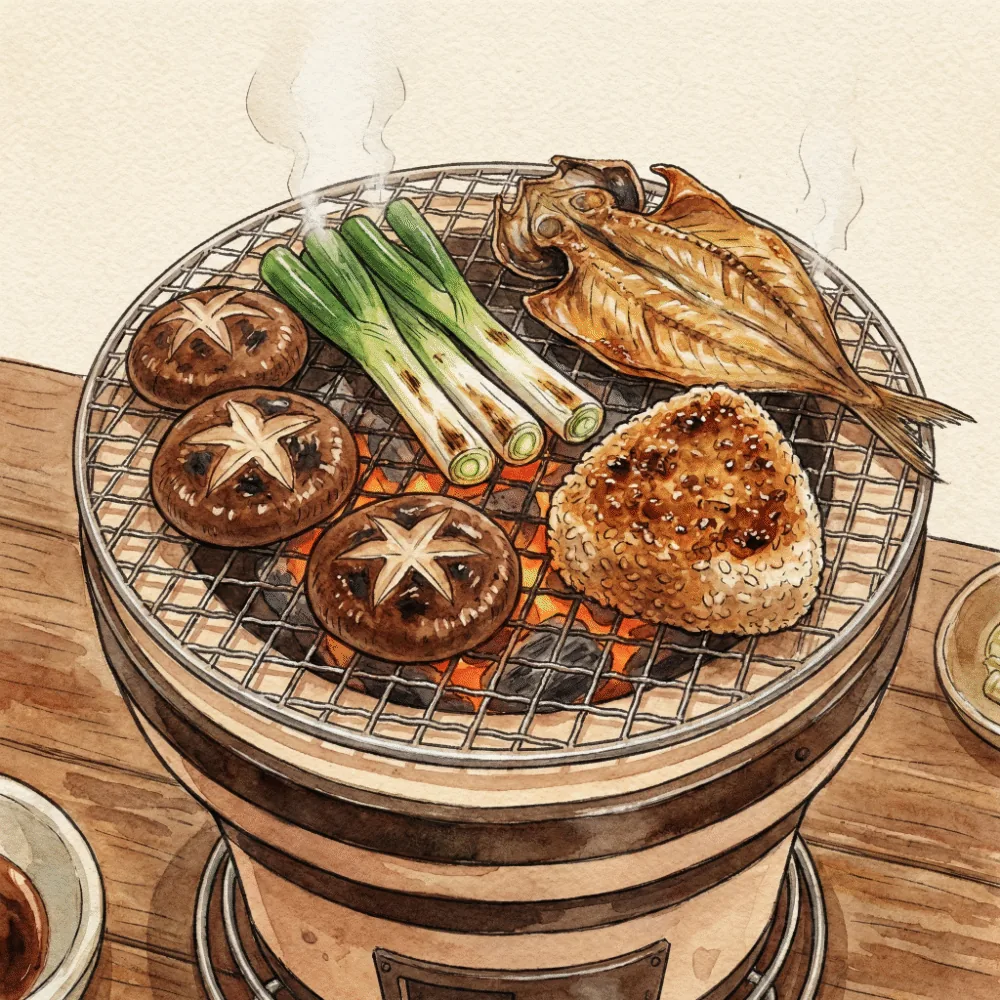
For smart, smoke-conscious Japanese-style BBQ, center your menu on vegetables — shiitake
mushrooms, leeks, peppers — and seafood — shrimp, scallops, dried fish — plus onigiri (rice
balls) and mochi (rice cakes).
Less smoke, lighter on the stomach, and the far-infrared heat draws out the natural umami of every ingredient —
a spread that pleases both kids and adults.
6. Frequently Asked Questions
My building gave the OK for using a shichirin on the balcony. What should I watch out for?
Using binchotan and being mindful of wind direction are the top priorities.
Even with permission, never use black charcoal (kuritan / mangrove charcoal) — the smoke volume is too high. Stick
to domestic binchotan, avoid standing upwind of neighbors, and keep windows closed. Stay at the grill while it's
lit, and keep a bucket of water nearby for emergencies.
How do I put out the charcoal after use?
Use a charcoal extinguisher pot (hi-keshi tsubo) — and the leftover charcoal is reusable next
session.
Never douse charcoal with water — the sudden temperature shock can crack or degrade your konro. Instead, transfer
the hot coals into a dedicated extinguisher pot, seal the lid, and they'll be out within minutes. The remaining
charcoal can be used again. A must-have accessory for shichirin users.
Can I heat a shichirin by placing it on top of a cassette stove?
No — a shichirin is designed exclusively for charcoal fire.
Placing a shichirin on a gas or cassette stove and heating it from below is structurally dangerous and can cause
breakage. If you'd rather skip charcoal, use a cast iron grill plate (like the Nambu tekki option above) directly
on the cassette stove instead.
What ingredients work best for low-smoke cooking?
Focus on low-fat options: vegetables, seafood, and onigiri.
High-fat cuts like pork belly generate heavy smoke when dripping fat hits hot charcoal. Shiitake, leek, and
pepper; shrimp, scallops, and dried fish; grilled onigiri and mochi are all excellent low-smoke choices.
I've heard binchotan is hard to light. Any beginner tips?
A charcoal chimney starter (chako-sta) lets the charcoal ignite on its own — no fanning
needed.
Binchotan is notoriously slow to catch, but a chimney starter makes it simple: place a fire starter at the bottom,
fill the chimney with charcoal, and light it. The chimney effect (a powerful upward draft) does the work for you —
in about 15–20 minutes the charcoal will be glowing red throughout. The single accessory that makes home BBQ prep
effortless.
How do I clean and maintain a shichirin (diatomite konro)?
Never wash it with water — just brush out the ash once it's fully cooled.
Diatomite absorbs water and loses structural integrity when wet, which causes crumbling and cracking. No rinsing,
no wet cloths. Once the konro is completely cool, use a small brush (available at any 100-yen shop) to sweep out
the ash inside. That's all the maintenance it needs.
7. Final Thoughts: Compact Japanese Tools for a Richer Weekend at Home
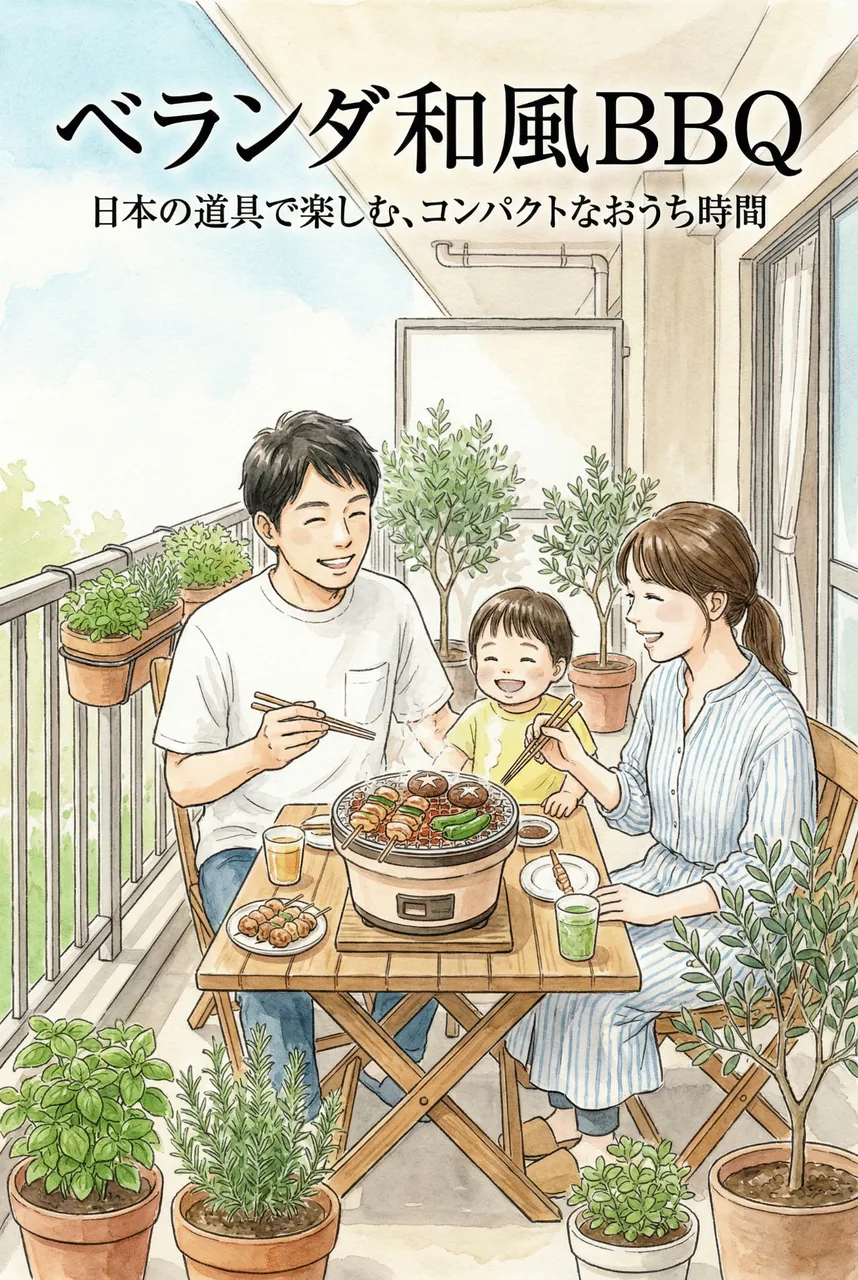
You don't need to drive to a campsite to feel that outdoor cooking magic. A small patch of balcony or garden is
enough.
"It's a beautiful day — let's cook outside!"
When that impulse strikes, a compact Japanese-style grill you can grab and go in minutes becomes one of the best tools you'll ever own for
bringing your family together.
These are tools made for Japan's living spaces — beautiful, purposeful, built to last a lifetime.
Find your favorite piece and enjoy a relaxed Japanese-style BBQ at home this weekend.
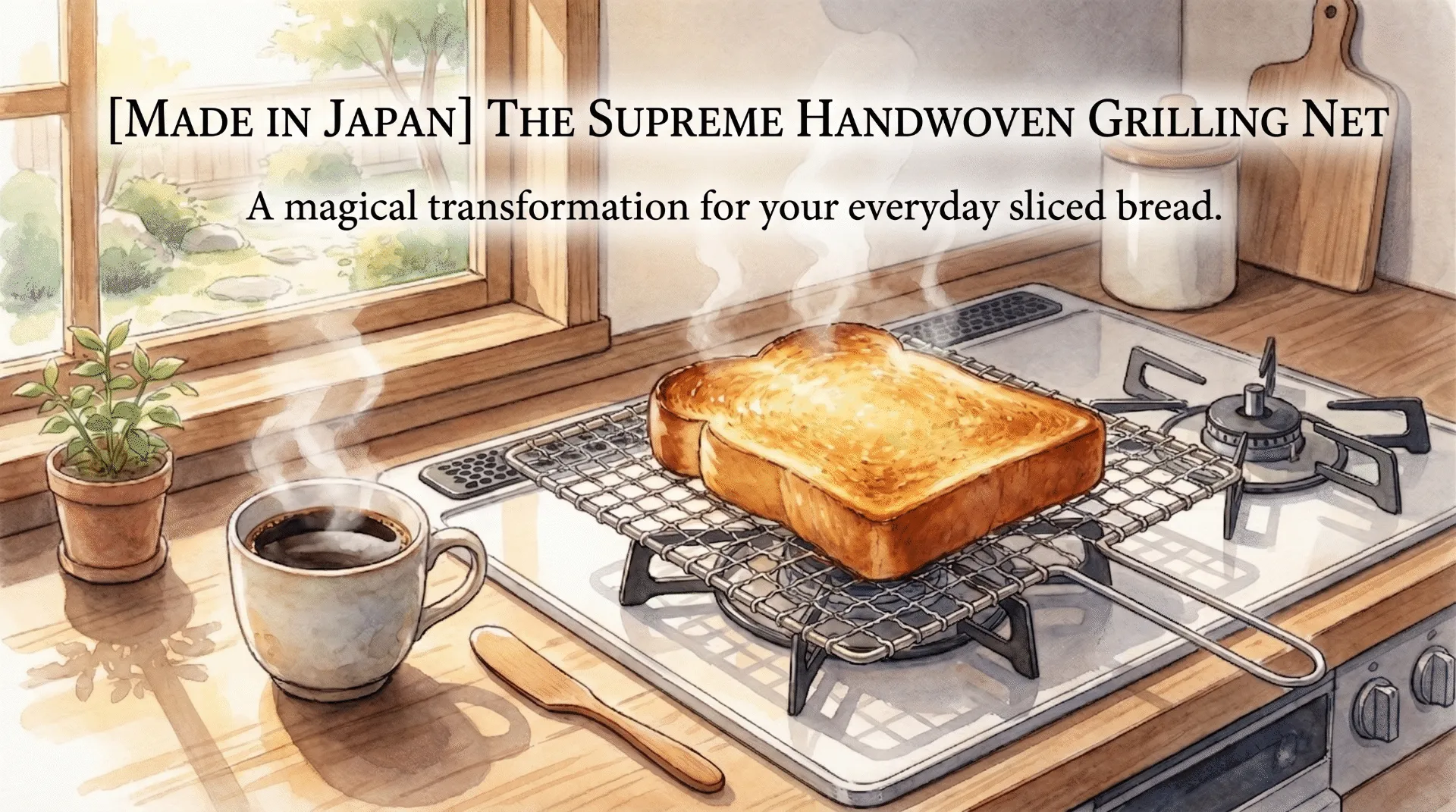
Best Japanese Roasting Nets | Hand-Woven for Perfect Toast Every Morning
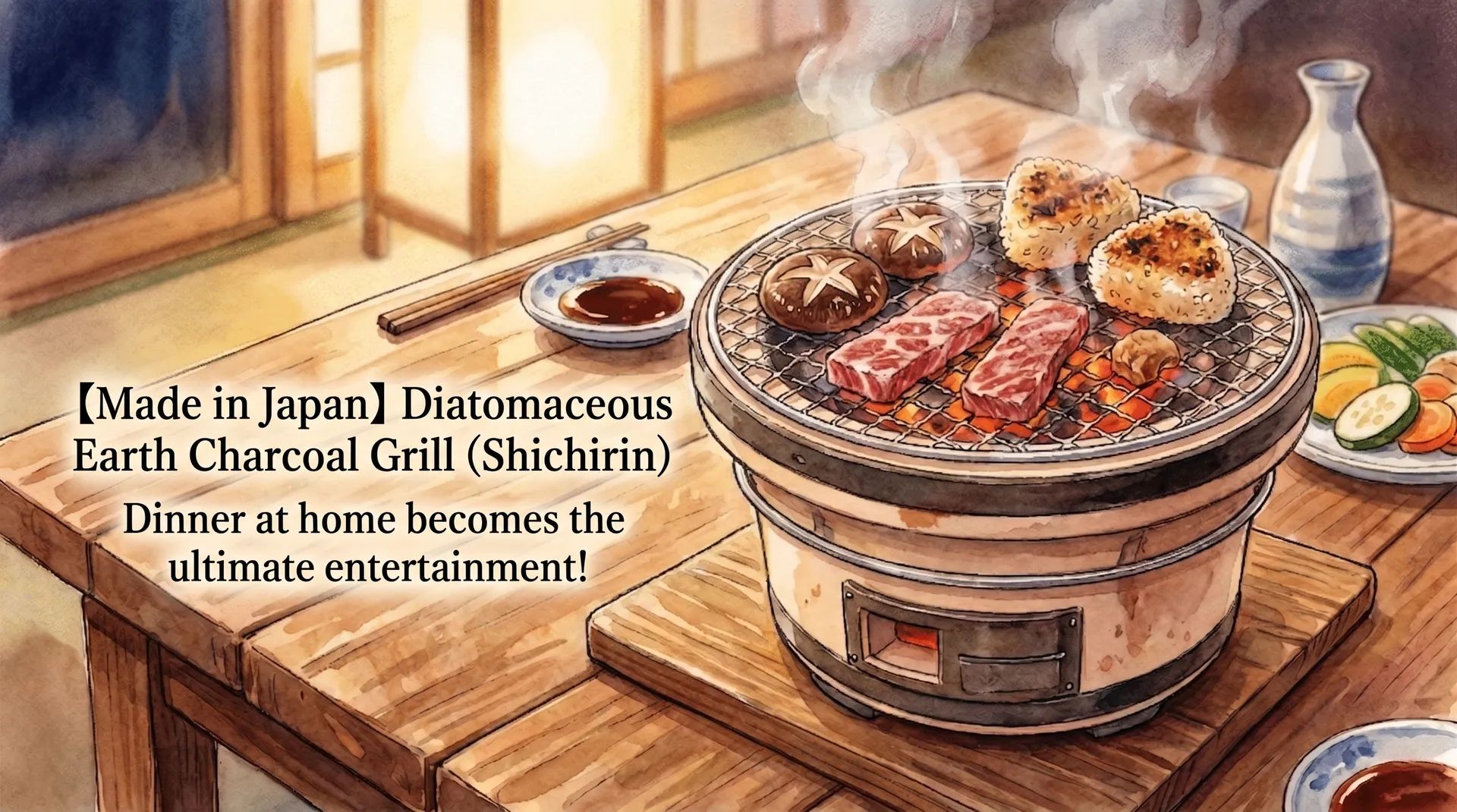
Best Japanese Shichirin | Diatomite Charcoal Grills for Tabletop BBQ