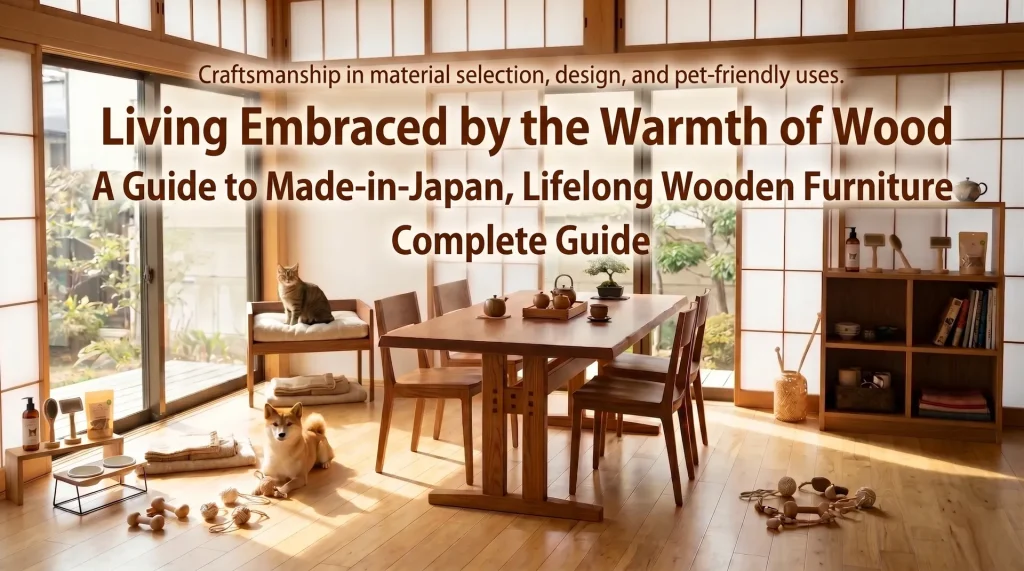
"I'm tired of replacing cheap furniture every time I move."
"My dining chair somehow makes my back hurt."
Furniture is the object you entrust your body to for more hours than almost anything else you
own. Mass-produced plywood furniture costs little and looks the part for a few years — then the
veneer peels, the fasteners loosen, and it ends up as bulk waste.
If you're looking for something to keep for life, Japanese solid-wood furniture is worth
experiencing directly. Chairs assembled by craftspeople in places like Hida-Takayama — joined
without nails, the wood read and worked with rather than forced — are built to last a century.
This guide covers Japan's four major wooden furniture makers, the techniques that distinguish
them, and how to choose a dining chair you'll still be using in thirty years.
Quick Reference: Japan's Four Major Wooden Furniture Makers
| Maker (Region) | Defining strength | Best for |
|---|---|---|
| Hida Sangyo (Hida-Takayama, Gifu) |
World-class bentwood (magemoku); solid wood worked to its limit | Those who want natural wood warmth and timeless form |
| Karimoku (Aichi) |
Japan's largest maker; ergonomics from seating research | Back pain sufferers; modern-retro interiors |
| Tendo Mokko (Tendo, Yamagata) |
Molded plywood pioneer; thin, light, supple, strong | Those who want lightweight chairs; design classics |
| Maruni Mokko (Hiroshima) |
Collaborations with world designers; sculptural smoothness | Minimalists; those who want globally recognised design icons |
1. Why Japanese Wooden Furniture Lasts Generations: Nail-Free Joinery
With so much excellent Scandinavian furniture in the world, why do designers globally fall for Japanese woodworking specifically? The answer traces back to Japan's historical temple and shrine architecture.
The design philosophy: "wood is alive"
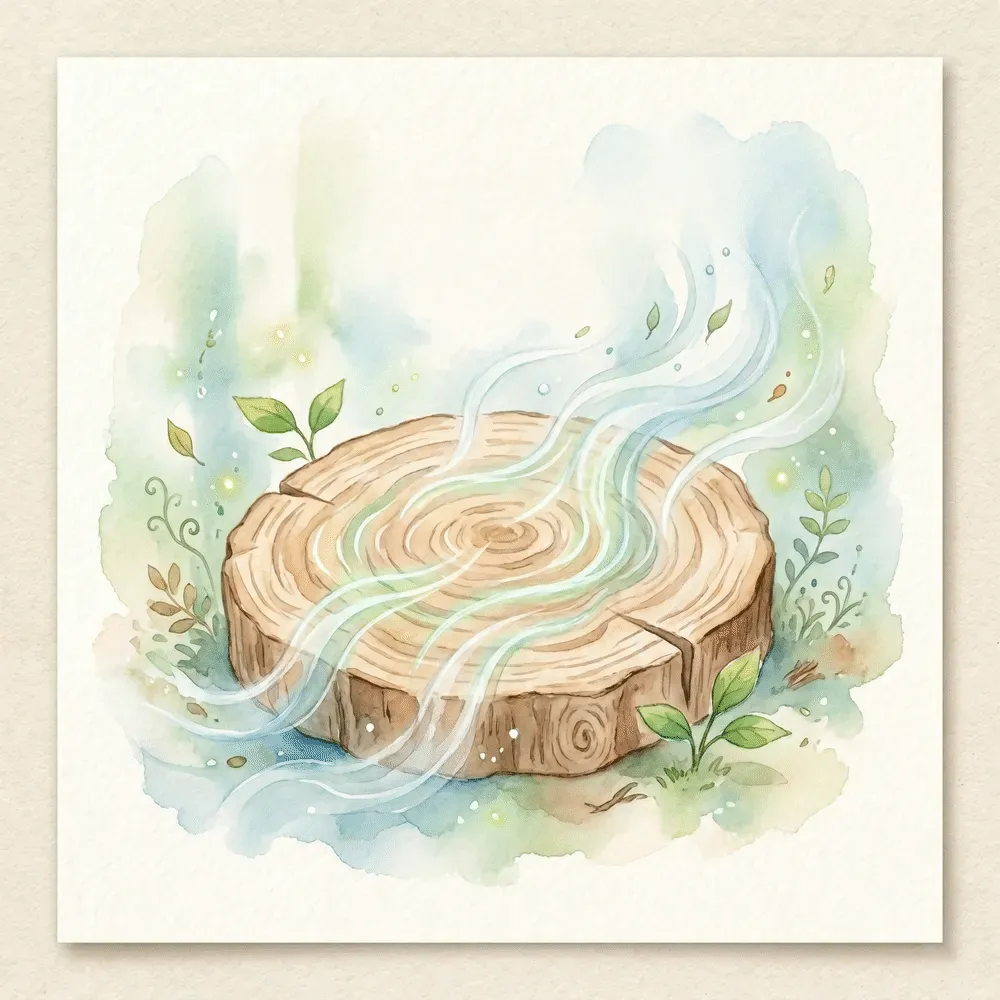
Even after a tree is felled and made into furniture, the wood continues to "breathe" —
absorbing and releasing atmospheric moisture. It expands in summer and contracts in winter.
Cheap furniture forces the joints together with screws and nails, which can't accommodate
this seasonal movement — the wood splits, screw holes crumble, and the piece develops a
wobble.
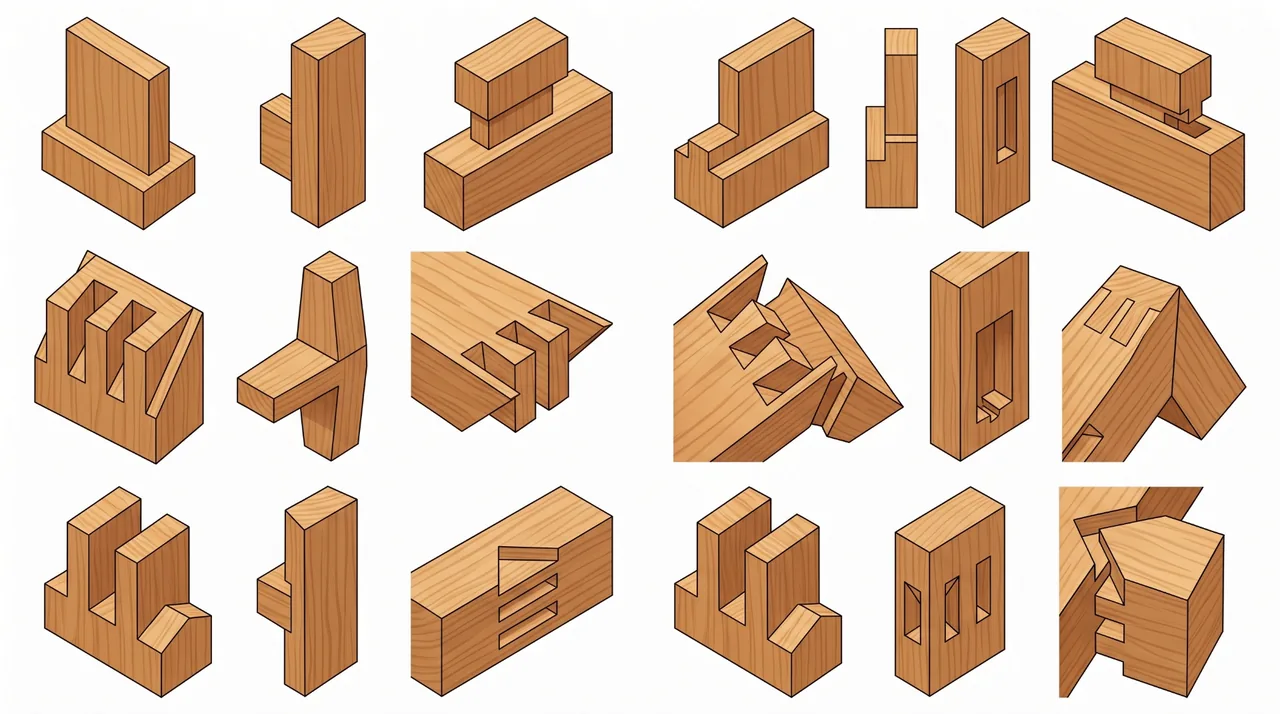
Japanese craftspeople instead use joinery (kigumi) — interlocking the wood with precise
notches rather than relying on adhesive or nails. Because the joint is designed with built-in
"give" to allow for the wood's movement, a chair can go fifty years without developing creaks
or rattles.
The magic of magemoku (steam bentwood)
Curved parts of a chair — like a backrest — are usually made either by carving the curve from a large block of wood, or by gluing wood particles into a curved form. But the bentwood (magemoku) technique, exemplified by Hida Sangyo, takes a single straight piece of hard solid wood, softens it with high-pressure steam, and bends it into a curve by force and craftsman's feel. Because the wood fibres remain unbroken, the result has extraordinary strength.
2. How to Choose a Wooden Dining Chair
When choosing a lifetime piece, the two key variables to understand are material type and weight.
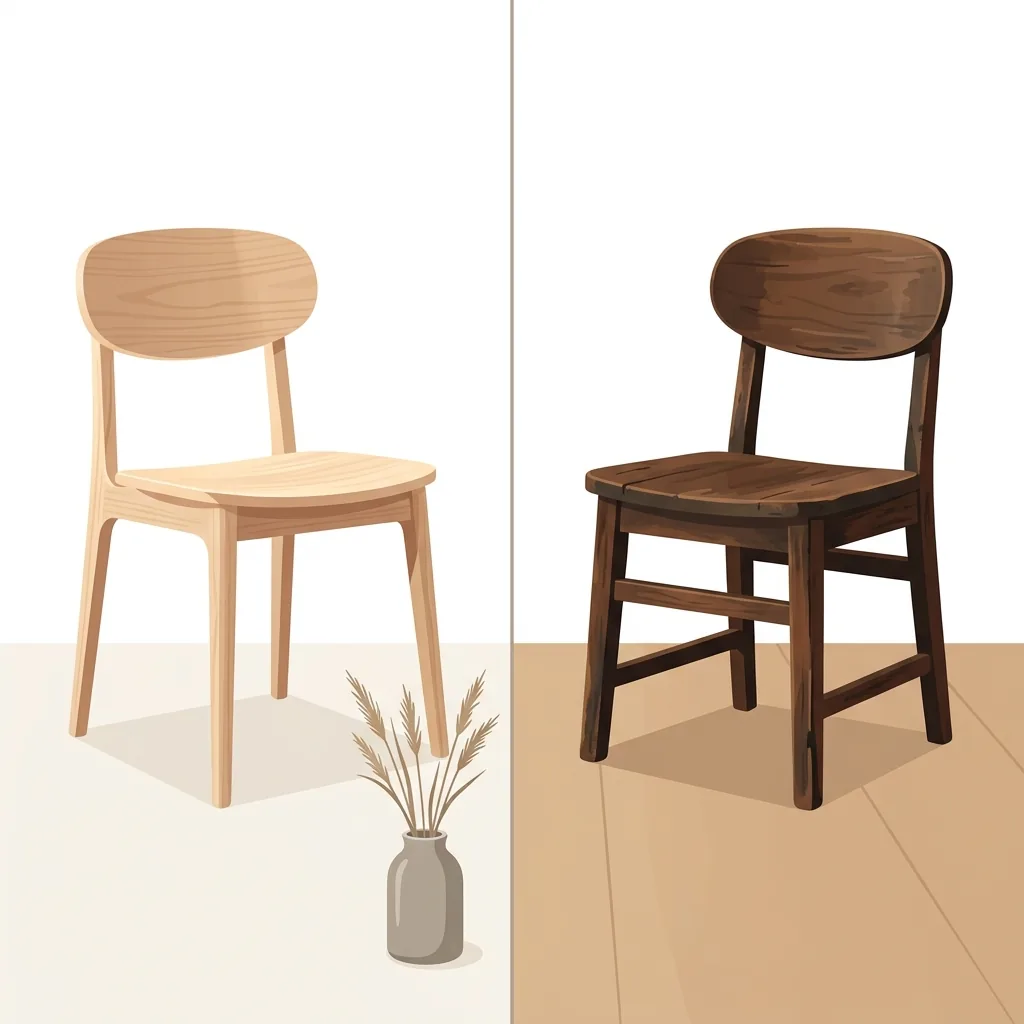
Solid wood vs molded plywood
1. Solid wood (mukuzai):
Cut directly from the log. Substantial and heavy; scratches develop into character because
the wood is the same colour all the way through. You can build patina (the amber "ame-iro")
by oiling it over the years. (Example: most Hida Sangyo pieces.)
2. Veneer / molded plywood:
Thin slices of wood laminated in layers. Dramatically lighter than solid wood, and capable
of free-flowing, beautiful curves impossible in solid timber. Makes pulling chairs out for
cleaning effortless. (Example: Tendo Mokko.)
3. Hida Sangyo: The Bentwood Masters of Hida-Takayama
If you want to furnish a dining room with genuine solid-wood furniture built to last over a century, Hida Sangyo is the answer.
Hida Sangyo — CRESCENT Armchair
A landmark of Japanese chair design from Hida Sangyo, founded in 1920. As the name "crescent" suggests, its defining feature is the smooth curve flowing from the backrest into the armrests. The steam-bending of solid wood produces a fit against your back that doesn't feel like wood at all — a sensation of being gently held. The seat is carved (zaguri) to match the contours of thighs and seat, so it stays comfortable without a cushion. Hida Sangyo's 10-year warranty is a statement of their confidence.
- Founded
- 1920, Hida-Takayama, Gifu
- Technique
- Steam bentwood (magemoku); carved seat
- Best for
- Solid-wood lovers; multi-decade dining sets; cushionless comfort
4. Karimoku: Ergonomics & Modern-Retro Design
Aichi-based Karimoku has scientifically studied what it takes to sit comfortably for long periods in Japanese living environments.
Karimoku60 — K Chair (1-Seater / Dining Chair)
The origin point of Japan's largest furniture maker, and an absolute icon fusing Showa-era retro with modernism: the K Chair, unchanged since 1962. Designed slightly compact to suit Japanese homes, it occupies a room without any sense of bulk. Beyond its looks, Karimoku has researched "fatigue-free seating" using brainwave and blood-flow studies in collaboration with medical equipment makers — so even sitting all day for remote work places remarkably little strain on the lower back. Parts are replaceable, so it can be repaired and used for life.
- Since
- 1962 (Karimoku60 line)
- Strength
- Ergonomic seating research; replaceable parts; compact footprint
- Best for
- Back pain sufferers; remote workers; modern-retro interiors
5. Tendo Mokko's Lightness & Maruni's World-Class Chairs
Two brands that fuse art-piece beauty with everyday usability at the highest level — both sought out by name from around the world.
Maruni Mokko — HIROSHIMA Armchair
Designed by product designer Naoto Fukasawa with Hiroshima's long-established Maruni Mokko, with the goal of "a Japanese chair that works on the world stage." When several thousand were installed at Apple's headquarters (Apple Park), orders flooded in from around the world. The backrest-to-arm transition is so precisely carved that you can't tell where the joint is — the surface feels like running your hand over a marble sculpture. Sitting down to a meal in one genuinely changes the quality of daily life.
- Designer
- Naoto Fukasawa × Maruni Mokko, Hiroshima
- Notable
- Adopted in the thousands at Apple Park
- Best for
- Minimalists; design icon collectors; sculptural smoothness
Tendo Mokko — Sori Yanagi Designs & Molded Plywood Chairs
Tendo Mokko's products are held in the permanent collections of the Louvre in Paris and MoMA in New York — the pinnacle of Japanese product design. Their molded plywood technique (pressing multiple thin layers of wood) achieves a thinness and astonishing lightness (you can lift a chair with one hand) that solid wood simply cannot. For a dining room where you pull chairs in and out multiple times a day, this lightness is a decisive advantage — especially for older household members.
- Region
- Tendo, Yamagata
- Technique
- Molded plywood — thin, light, in museum collections
- Best for
- Those who want lightweight chairs; design-classic admirers
6. Oil Maintenance: Keeping Wood Alive Longer
Lifetime furniture isn't "complete" the day you buy it. It reaches its true completion through use and care over the years.
The twice-yearly oil ritual
Solid wood furniture with an oil finish dries out, like human skin. Twice a year — perhaps during
a deep clean — apply a thin coat of natural furniture oil (linseed or walnut oil) to a cloth and
work it over the whole surface.
As the oil soaks into the wood, a previously dry surface becomes supple, the grain sharpens, and
the colour deepens noticeably. Making "furniture polishing day" a family activity with children
is also a way to teach care for objects.
7. Frequently Asked Questions
A child dented the wood with a toy. Can I fix it myself?
For solid wood with an oil finish, an iron can sometimes fix it. Place a damp cloth over the dent, then press a medium-to-hot iron onto it for a few seconds. The wood fibres absorb the steam and swell — minor dents can return to almost original condition. Important: never do this on urethane-coated or veneer surfaces, as the heat will cause the coating to turn cloudy white.
Should I choose oil finish or urethane coating?
Oil finish for wood warmth; urethane for easy wipe-clean maintenance. An oil finish has no surface film, so it doesn't impede the wood's breathing and offers the best feel — but water drops left from a glass can leave marks (which become part of the character). Urethane coats the surface in clear resin, making it highly resistant to stains and water, but deep scratches require a professional workshop to repair.
Armrest or no armrest?
It depends on whether you linger or get up frequently. "With armrests" is best for long, relaxed sitting — reading or having a drink after a meal — but makes it harder to slide out from the side. "Without armrests" is easier to get in and out of and tucks neatly under the table. A "half-arm" (short armrest) type gives you the best of both.
Do I need felt pads on the chair legs?
Essential if you want to protect a wood floor. Furniture usually comes with adhesive felt pads, but these shift and become sticky over time. The best option is a "hammer-in" type (driven into the leg base like a nail) or a dedicated cap. It also makes pulling chairs out remarkably smooth and quiet.
What if the fabric or leather seat tears or sags?
The brand can re-upholster the seat. Top makers like Hida Sangyo and Karimoku have complete repair systems built up over decades. You can send just the cushion portion of the seat to the factory to be re-covered in new fabric. Because the wooden frame is so durable, you can keep using the chair for decades while replacing the cushion as needed.
Final Thoughts: Furniture That Deepens Alongside Your Life
Cheap furniture is a consumable — it degrades and loses value over time. But genuine solid-wood
furniture made by Japanese craftspeople turns even scratches and sun-fading into "character"
or "antique patina," becoming a more lustrous asset the more it's used.
The chair you sit in every day to eat, read, and talk with your family — decades later, that
chair, aged to a deep amber, is something your children or grandchildren will gladly inherit.
Tens of thousands of yen per chair sounds expensive. But considered against the decades of
daily use ahead, it's an overwhelmingly economical and worthwhile investment. Find the
lifetime companion that's right for you.

Japanese Sake Cups: Material Comparison — Tin, Glass & Ceramic
Japanese Coffee Drippers: Ceramic & Copper for the Perfect Pour