
"The tweezers keep missing — three attempts before I catch the hair."
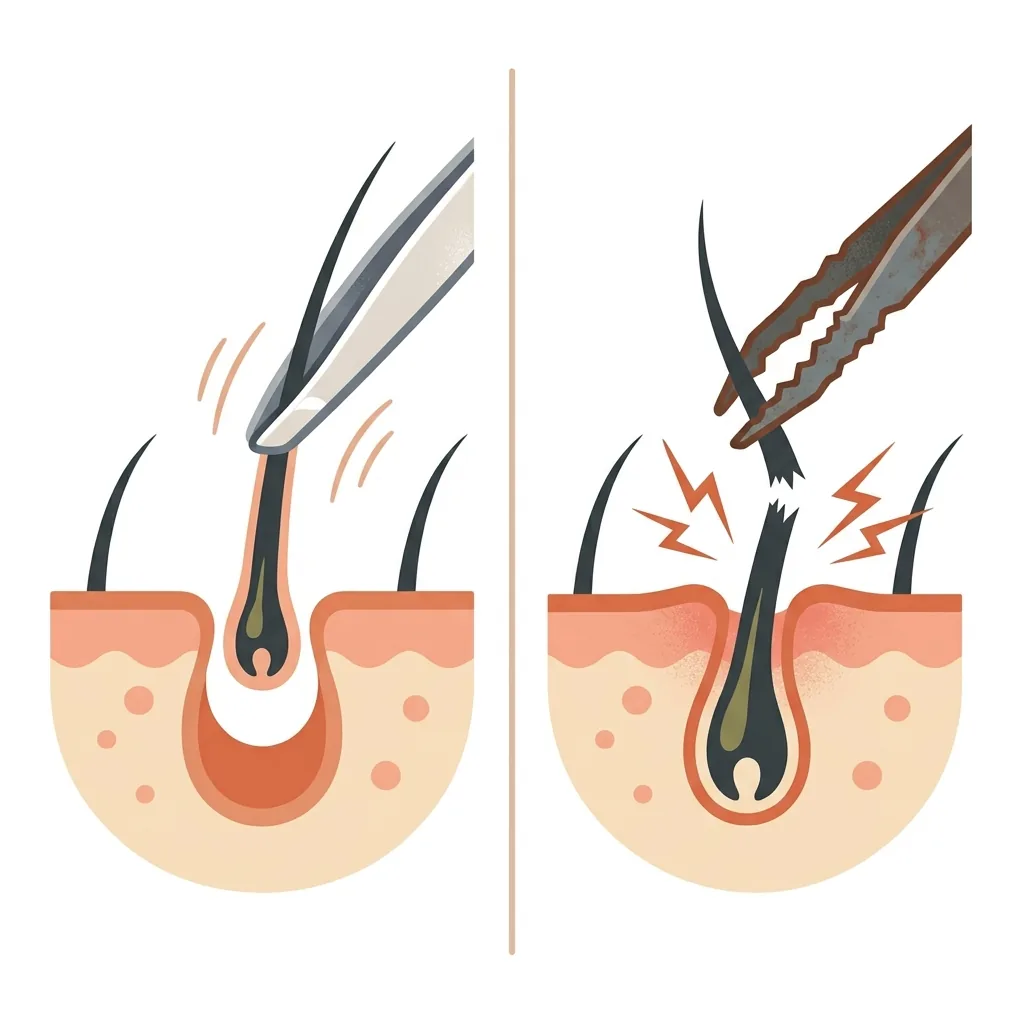
"The hair breaks halfway and the root stays in the skin."
If tweezing is painful or inefficient, the problem is almost certainly the tweezer, not your
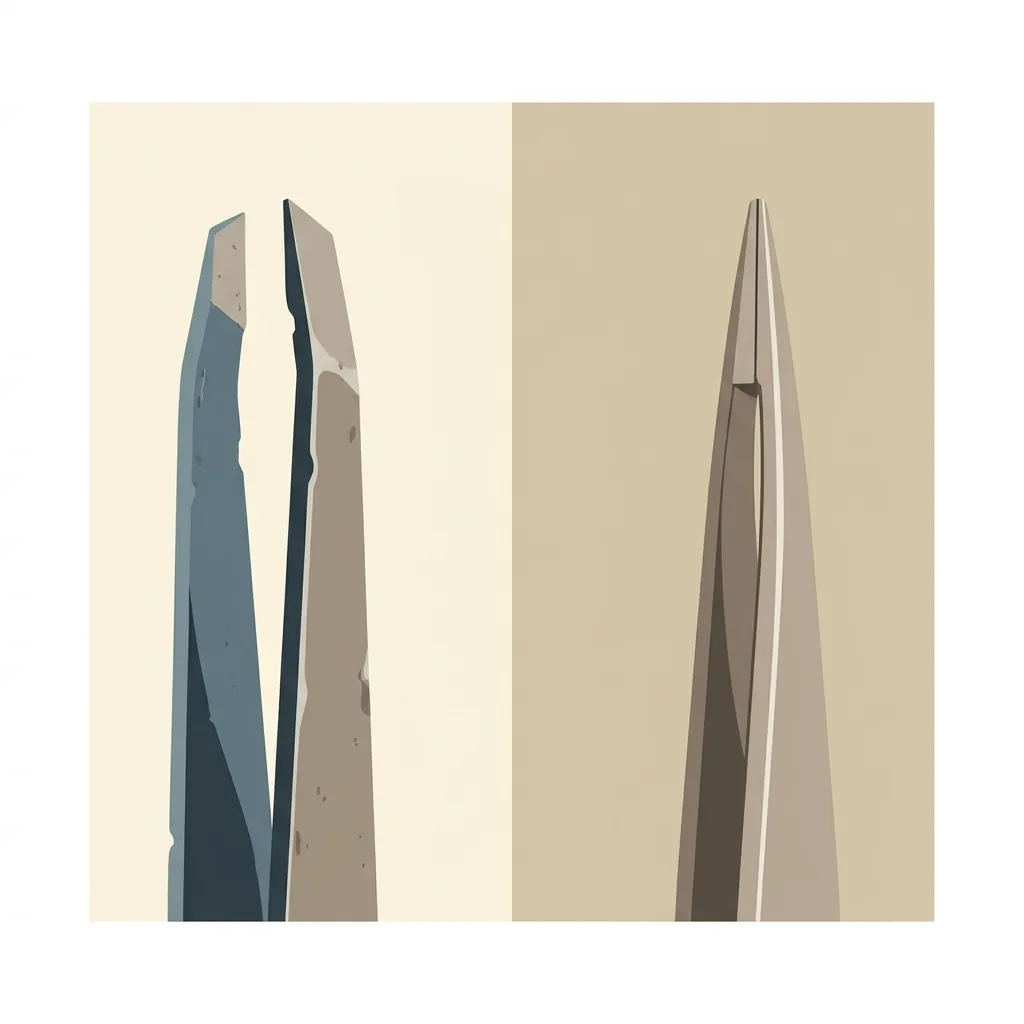
technique. An inexpensive stamped-metal tweezer has a gap at the tip when closed — too small
to see, large enough to make the jaw act like scissors when a hair is caught. The hair is cut
mid-shaft under pressure rather than gripped and pulled from the root. This causes the sharp
pain and the ingrown hairs that follow.
Japanese precision tweezers are finished by hand: the tip alignment is adjusted under visual
inspection with a file until no gap remains. The jaw closes flat and grips the full width of
the shaft. The hair slides cleanly from the root with minimal force. The difference is immediate
and permanent.
This guide covers four picks — from Kurata Manpo's legendary hand-struck tweezers to Green Bell's
Takumi no Waza, available on Amazon.com.
Quick Reference: Tweezer Tip Types
| Tip shape | Characteristics | Best for |
|---|---|---|
| Slanted (saki-naname) | Follows skin contour; clear sightline to target hair | Eyebrow shaping; facial fine hair; general use |
| Flat / wide (hira) | Wide jaw grips multiple hairs simultaneously | Body hair; coarser hair; larger areas |
| Rounded (saki-maru) | Blunt tip cannot puncture skin if hand slips | Nose hair; sensitive areas; very delicate skin |
| Pointed (saki-hoso) | Needle-precision for short hairs at skin level | Ingrown hairs; splinters; very short hairs |
1. Why Cheap Tweezers Hurt — The Gap Problem
The gap that causes everything
Mass-produced tweezers are stamped from sheet metal. The manufacturing process inherently
produces a micro-gap between the tips when closed — often invisible to the naked eye, but
mechanically significant. When a hair is caught in this gap and pulled, two things happen:
First, the grip concentrates on the hair's outer edge rather than distributing across its
full cross-section. This means higher local pressure per unit area — the hair breaks at
the narrowest point rather than sliding from the root.
Second, the metal edges act as a cutting surface. The pain follows from the abrupt severance
of the hair shaft, and the ingrown hair follows because the broken end is now trapped below
the skin surface.
A properly finished tweezer closes with zero gap. The flat jaw grips the full diameter of
the hair shaft. Applied tension releases the follicle evenly, and the hair slides out with
the root intact. This is why the pain is different.
2. How to Choose: Tip Alignment First, Everything Else Second
The light test
The only objective test that matters: close the tweezer and hold it up to a bright light
source. If light passes through the tip area when closed, the alignment is inadequate. No
light should pass through. This is the test that separates hand-finished Japanese tweezers
from machine-produced alternatives — every pair in this guide passes it.
Additionally: close the tweezer with moderate pressure and check whether the edges feel
sharp enough to cut. A properly finished precision tweezer grips without cutting. An
overly sharp edge is as problematic as a gap — it cuts rather than grips.
4. Accessible Picks: Green Bell Takumi & KAI
Green Bell Takumi no Waza — Stainless Tweezers (Made in Japan)
Green Bell's Takumi no Waza (匠の技, "artisan's skill") series has been the consistent top- selling Japanese precision grooming line on Amazon Japan for years. The tweezers use thick stainless steel rather than thin-gauge material — the additional thickness prevents the jaw from flexing under grip pressure, which is the main cause of "vibration" in cheap tweezers that lets the hair slip. Hand-finished tip alignment. Available directly on Amazon.com with international shipping. The obvious entry point if you've never used a precision tweezer: the improvement over a drugstore pair is immediately apparent.
- Material
- Thick-gauge stainless, hand-finished, made in Japan
- Best for
- First upgrade from cheap tweezers; everyday precision use
KAI Seki Magoroku — One-Touch Tweezer
KAI (貝印) of Seki, Gifu — the city with 700 years of blade-making tradition — produces a distinctive mechanical tweezer design. Where standard tweezers require you to pinch and pull simultaneously, the KAI one-touch model uses a trigger mechanism: grip the hair with the jaw, press the side trigger, and the jaw releases to pull cleanly. This eliminates the hand tremor that makes self-tweezing with standard tweezers difficult: the pull is mechanical and consistent rather than depending on a steady hand. Particularly suited to eyebrow work, where precision positioning matters before the pull is applied.
- Origin
- Seki, Gifu (700-year blade-making tradition)
- Mechanism
- Trigger release — positions then pulls cleanly
- Best for
- Eyebrow shaping; those who find standard pulling technique difficult
5. Technique: How to Reduce Pain Further
Pull in the direction of hair growth
Most of the remaining pain after upgrading to a precision tweezer comes from pulling against the growth direction. The follicle opening faces the direction the hair grows from. Pulling perpendicular or against that direction puts lateral stress on the follicle wall. Pull parallel to the skin surface, in the direction the hair lies, not straight upward.
Open pores before starting
After a hot shower or bath, the follicle is warmed and slightly dilated. Hair removal from an open follicle requires less force and causes less trauma. Alternatively, apply a warm damp cloth to the area for 30-60 seconds. Do not attempt precision tweezing on cold, dry skin — the follicle walls contract and the resistance increases significantly.
Stabilise the surrounding skin
With the free hand, lightly stretch the skin adjacent to the hair being removed. This prevents the skin from "traveling" upward with the hair, which is the main cause of post-removal redness and the sharp stinging sensation that follows a successful pull from a precision tweezer.
6. Care & Storage
The tip is a precision instrument
A precision tweezer's value is entirely in its tip alignment. Once the tip is damaged — scratched against another metal object, dropped on a hard floor tip-first, stored loose in a bag where it catches against scissors or clips — the alignment may be permanently compromised. The tweezer becomes an expensive version of a cheap tweezer.
Store with the cap on (most premium tweezers include one) or in a fabric sleeve. Do not put a precision tweezer loose in a cosmetic bag with other hard objects. This is the only care instruction that consistently matters.
Cleaning
After each use: wipe the tip with a tissue or soft cloth to remove hair and sebum. Periodically: a swipe of isopropyl alcohol on the tip surface both cleans and disinfects. For stainless steel tweezers, water rinsing is fine — dry immediately and completely to prevent water spotting. Do not use abrasive cleaners on the tip area.
7. Frequently Asked Questions
What's the difference between a ¥100 and a ¥3,000 tweezer?
The primary difference is tip alignment. A ¥100 stamped tweezer has a machine-manufactured gap at the tip that causes the jaw to cut rather than grip. A ¥3,000 hand-finished Japanese tweezer has been adjusted by hand until no gap remains. This single difference determines whether a hair is cut mid-shaft (cheap tweezer, pain, potential ingrown) or pulled cleanly from the root (precision tweezer, minimal pain, no ingrown). The material quality also differs — thicker gauge, better spring tension — but the alignment is the primary variable.
Is it safe to use tweezers on facial downy hair (vellus hair)?
Yes, with a precision slanted-tip tweezer. Fine vellus hairs require laying the tweezer nearly flat against the skin (parallel rather than perpendicular) so the flat jaw surface grips the full width of the thin shaft. A pointed tip is too small to grip vellus hair reliably; a slanted tip used at low angle is the correct approach. A precision tweezer with no gap will catch vellus hair on the first attempt.
Can tweezers be used for men's beard hairs?
Not recommended for regular use. Male beard hairs are significantly coarser and have deeper, more anchored follicles than eyebrow or body hair. Regular tweezing of beard area hairs increases the risk of folliculitis (inflamed hair follicles) and ingrown hairs considerably. If individual hairs need removal (stray beard hairs outside the desired shave line), use a precision tweezer on warm, open pores, one hair at a time, pulling cleanly in the growth direction. Do not attempt to tweeze large areas of beard.
My precision tweezer now misses hairs. Can it be fixed?
Some high-end tweezers (including Kurata Manpo and FANOUT) offer resharpening and realignment services — the tweezer is sent to the maker, who restores the tip alignment. For Green Bell Takumi models, this service is not available, but at their price point replacement is reasonable. For the premium models, confirm availability of restoration service when purchasing — it's the mechanism that makes "lifetime" a realistic description rather than marketing language.
Why does Japan make better tweezers?
The tradition of precision metalwork for personal grooming tools in Japan is deeply embedded. Seki City's 700-year blade-making heritage extends to every small precision tool category, including tweezers. The Edo period had specialist craftspeople specifically for "keba-nuki awase" — aligning tweezer tips — which reflects how seriously the category was taken. Kurata Manpo continues this tradition directly. Green Bell and KAI apply Seki and Tsubame-Sanjo's industrial precision metal heritage to the same problem. The result is a category where Japan has a sustained quality advantage over mass-production alternatives.
Are these tweezers a good gift?
Yes — particularly for recipients who use tweezers regularly for eyebrow maintenance or skincare. The Green Bell Takumi pair is appropriately priced for a practical gift. The Kurata Manpo, when available, is at a price point more appropriate for a significant personal gift or self-purchase milestone. Most people who receive a precision tweezer and use it for the first time immediately understand why the price difference exists — it's one of the more convincing demonstrations of craft quality in daily use.
Final Thoughts: A Small Tool That Changes a Daily Task
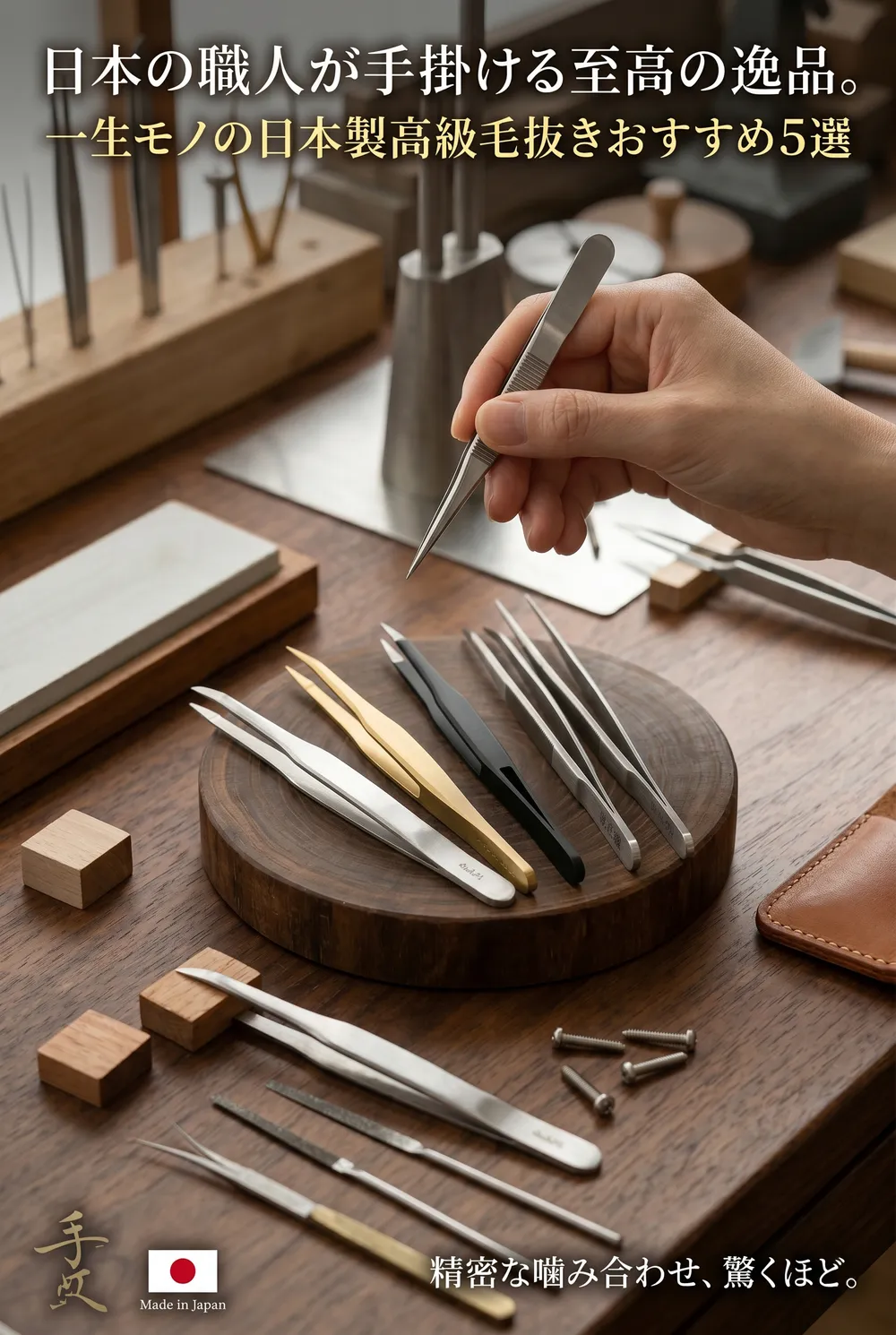
Tweezing is a small task done repeatedly. The cumulative effect of doing it with a precision
instrument rather than a cheap one is real: less pain, fewer ingrown hairs, faster results,
less time in front of the mirror frustrated by misses.
The Green Bell Takumi no Waza is the obvious starting point — available on Amazon.com, prices
clearly within an impulse-purchase range, and the improvement over a drugstore pair is
immediately apparent. The Kurata Manpo is for those who want the best that exists, and are
willing to wait for it.

Kumano Makeup Brushes: 3 to Start With & 4 Studios to Know
Japanese Nail Clippers: SUWADA & 7 That Cut Clean