
Crumbs on the desk. Dust between the keyboard keys. A shelf that needs attention but not the full
vacuum-out treatment.
For small-scale cleaning that doesn't warrant a vacuum cleaner, Japan has had a solution since the
Edo period: the shuro (棕櫚) palm fiber hand broom, paired with a
harimi — a traditional dustpan made from layered washi paper and persimmon tannin
lacquer.
These aren't antiques. They're still made by hand in Wakayama Prefecture by workshops that have
been operating for over 150 years. The shuro fiber contains natural oils that prevent static buildup,
so dust doesn't scatter — it collects. The harimi's washi surface generates a mild static charge
that draws fine particles in rather than deflecting them.
This guide explains how both tools work, how to choose by size and bristle shape, and the brands
worth knowing.
Quick Reference: Shuro Brooms & Harimi Dustpans
| Product | Type | Best for |
|---|---|---|
| Yamamoto 3-ball daruma (small) | Hand broom (shuro) | Desk, windowsill, car interior |
| Yamamoto 4-ball tosaka (medium) | Hand broom (shuro) | Shelves, entryway shoe rack |
| Takada 6-ball tosaka (23cm slim) | Hand broom (shuro) | Keyboard gaps, bookshelf crevices |
| Shirokiya Denbei harimi small | Dustpan (washi) | Paired with desk broom |
| Shirokiya Denbei harimi large | Dustpan (washi) | Room-scale floor sweeping |
1. What Is Shuro? What Is a Harimi?

Shuro (棕櫚) — Windmill Palm Fiber
Shuro is the windmill palm (Trachycarpus fortunei), native to Japan's warmer southern regions.
The fibrous bark that covers its trunk is harvested, processed, and hand-bound into brooms and
scrubbing brushes.
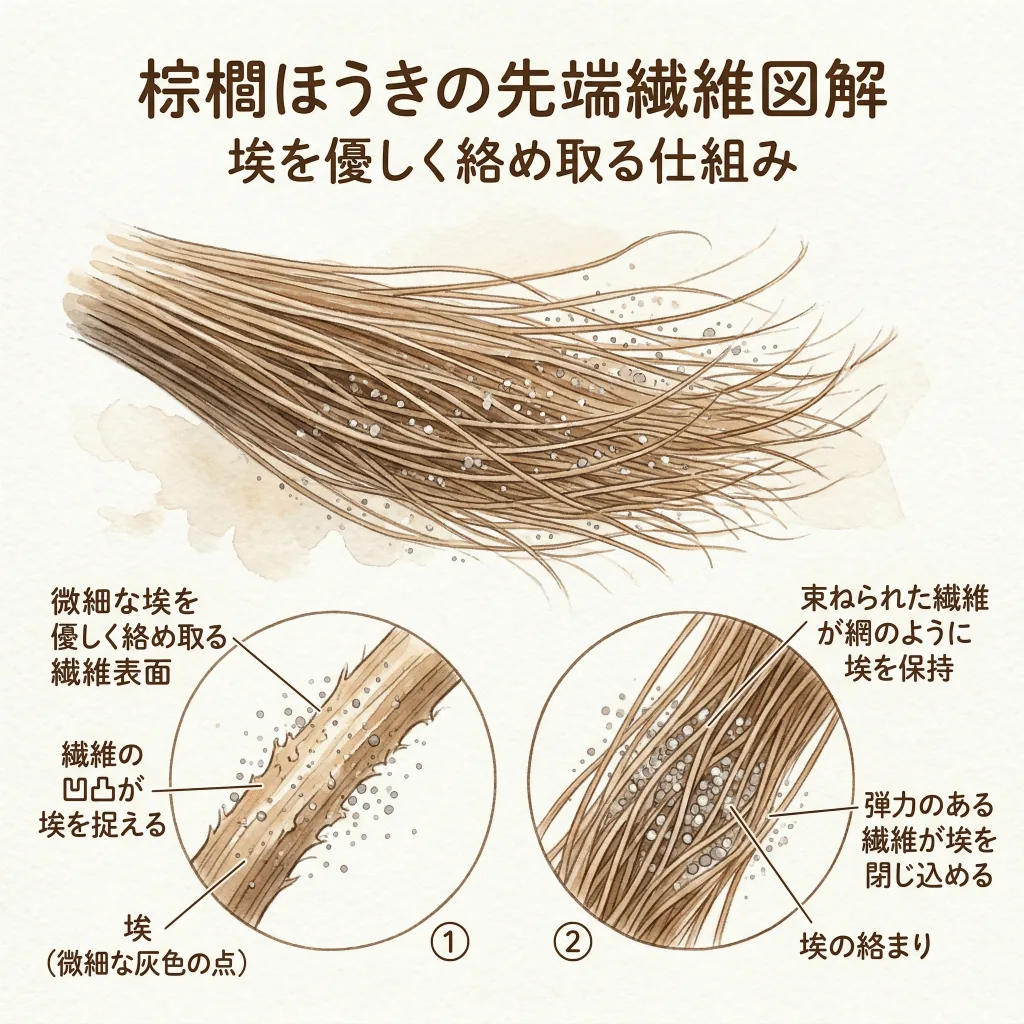
The key property is natural oil content. Shuro fibers contain plant oils that prevent electrostatic
charge from building up during sweeping — meaning dust doesn't scatter into the air, it collects
against the bristles. The fiber also has a natural spring to it that improves with use as the tips
conform to the surfaces you clean.
Wakayama Prefecture (Kainan City area) has been the center of shuro craft in Japan since the
Meiji era. Yamamoto Katsunosuke Shoten and Takada Kozosho are the two principal workshops
still making hand brooms in the traditional way.
Harimi (張り箕) — The Washi Paper Dustpan
A harimi is built from multiple layers of washi (Japanese handmade paper) laminated together,
stiffened with bamboo splints, and sealed with kakishibu — persimmon tannin lacquer. The lacquer
provides water resistance and gives the characteristic amber-brown colour that deepens with age.
The washi surface generates a slight electrostatic charge through friction. Where metal and plastic
dustpans repel fine sand and dust particles (the same static that lifts the debris away), washi
attracts them. Particles that would skitter out from under a plastic edge are held by the harimi.
Shirokiya Denbei, established in 1830 in Edo (modern Tokyo), is the most recognised maker.
2. Why These Tools Work Better Than Alternatives
Silent, static-free cleaning
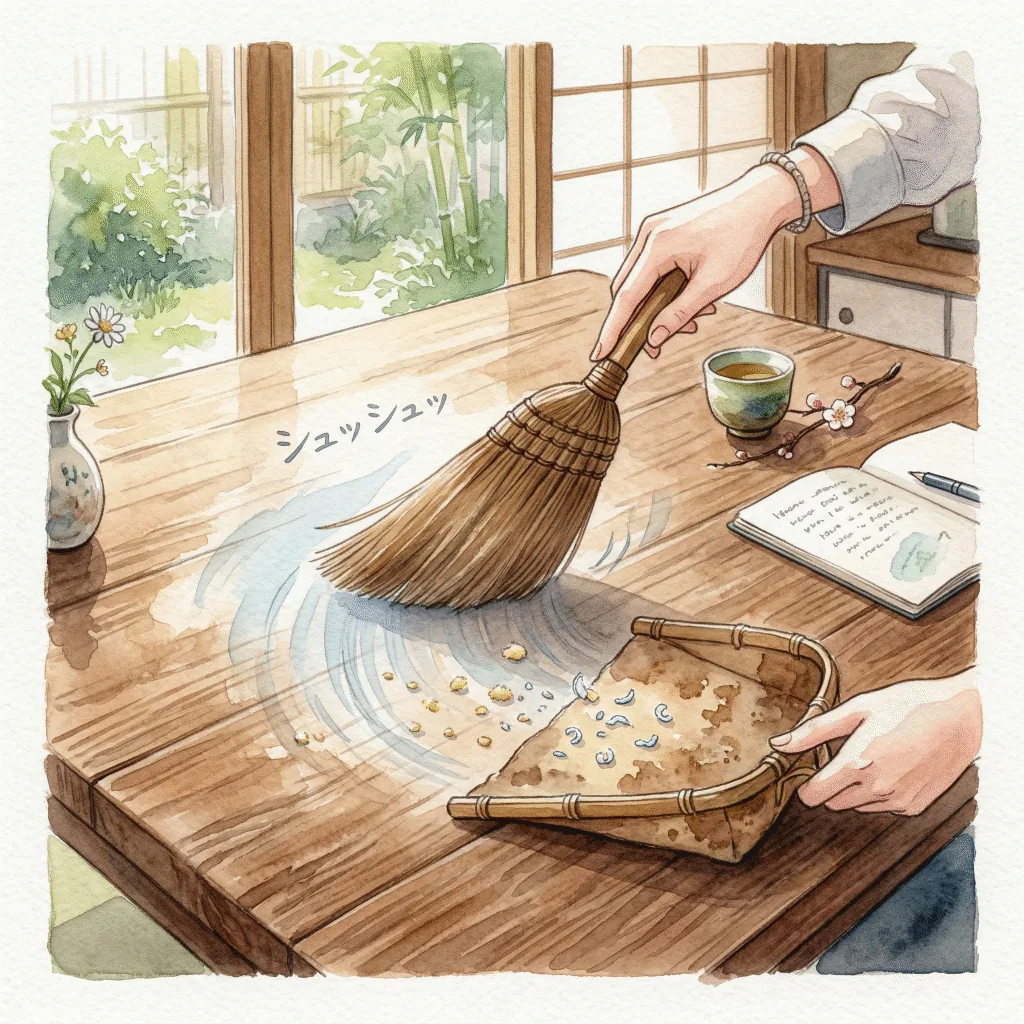
A vacuum cleaner at 70 dB wakes sleeping family members and requires setup and storage. A shuro hand broom makes a soft whisking sound — nothing more. The natural oil in the fiber prevents static, so fine dust doesn't fly into the air or cling to nearby surfaces. For PC components and precision equipment, this is the appropriate tool: no suction that pulls debris into vents, no static discharge.
Tools that improve with use
Shuro fiber stiffens slightly when new, then the tips gradually conform to the surfaces you
clean — the older the broom, the more precisely it sweeps. A well-maintained shuro broom will last
10–20 years. The harimi's kakishibu coating deepens from amber to dark brown over years of handling,
a patina that signals quality rather than wear.
These tools sit in a different category from disposable cleaning products: they're part of the
household, not supplies to be replaced annually.
3. How to Choose: Bristle Count, Shape & Size
Bristle bundles (玉数 / tama-kazu)
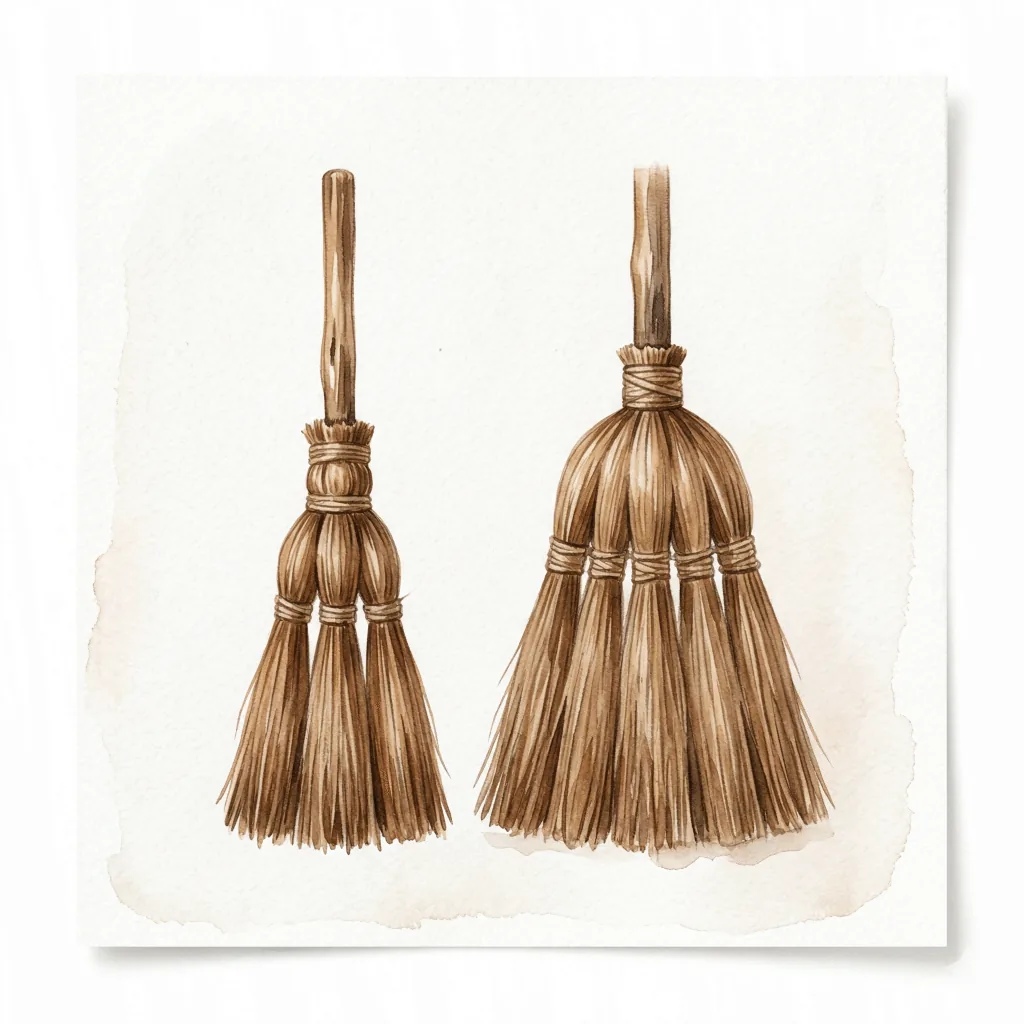
Japanese shuro brooms are measured in bundles (玉, tama). More bundles = wider sweeping surface:
- 3 bundles: Compact. Fits in a hand, fits in a drawer. Desk, windowsill, car dashboard.
- 4–5 bundles: Standard. Covers a larger area in fewer passes. Good for shelves and entryways.
- 6+ bundles: Broad sweep. Slim tip (tosaka type) for reaching into crevices.
Shape: Daruma vs Tosaka
Daruma (ダルマ / rounded): Bristles tied into a compact rounded form. Good
for sweeping flat surfaces — table tops, shelves, floors. The rounded tip covers area evenly.
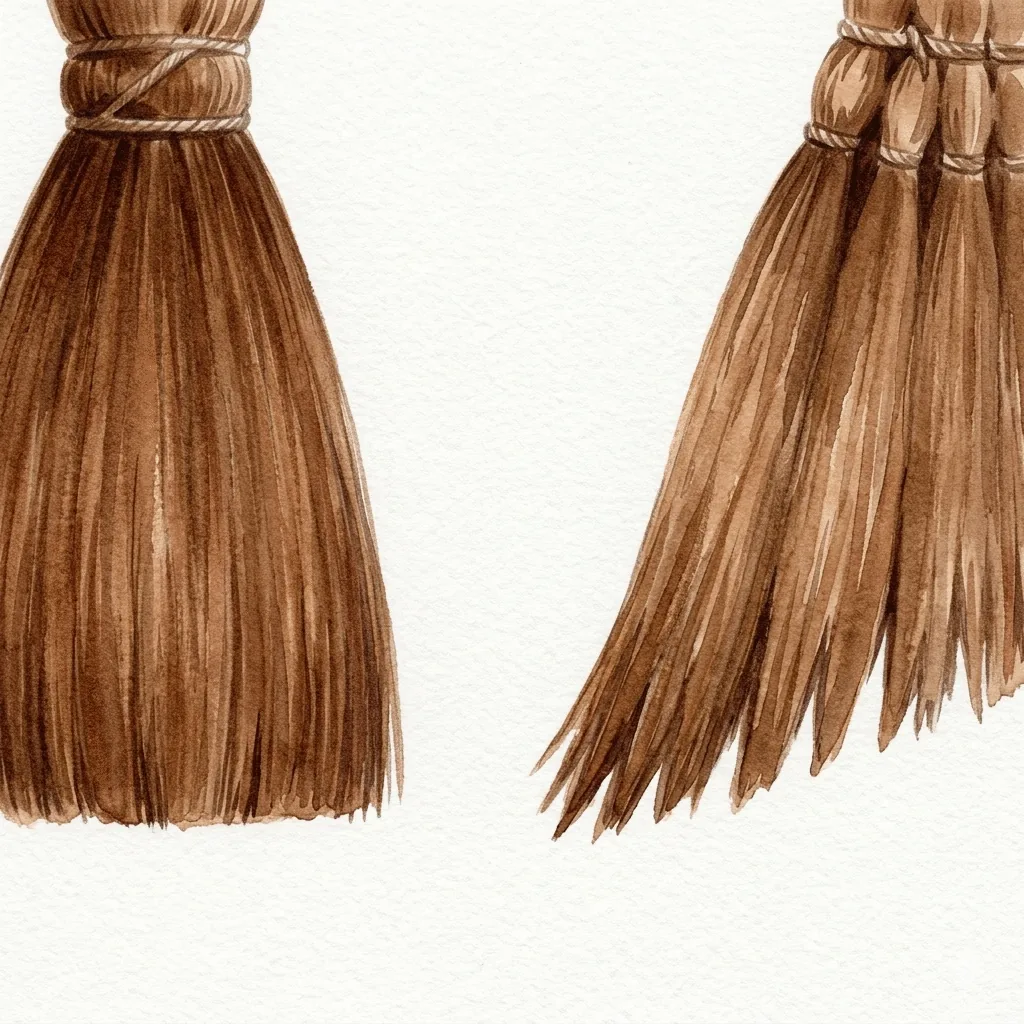
Tosaka (とさか / crested): Bristles fanned into a flat, splayed crest shape —
like a rooster's comb. The thin, spread profile inserts into narrow gaps — keyboard rows,
bookshelf crevices, window track grooves, sofa seams. If you have one specific narrow gap
in mind, tosaka is the answer.
Harimi size
Small harimi: Palm-sized oval. Paired with a desk broom for collecting debris
directly from table surfaces into a wastebasket. Hangs from the broom handle for storage.
Large harimi: For pairing with a full floor broom. One pass collects from a wider
surface. Works for entryways, corridors, and room-scale sweeping.
4. Six Picks: Hand Brooms, Harimi & Sets
No.1 — Yamamoto Katsunosuke Shoten: 3-Ball Daruma (Small)
Yamamoto Katsunosuke Shoten has been making shuro brooms by hand in Kainan, Wakayama since the Meiji era. The 3-ball daruma is their most compact whisk broom — fits in a desk drawer, sits beside a keyboard, travels in a bag. The rounded daruma form sweeps flat surfaces in wide arcs. Each broom is tied by hand: no machine has the precision to replicate the bundle tension that gives this broom its sweep. Available through The Wabi Sabi Shop (international shipping).
- Material
- Shuro (windmill palm fiber), Wakayama, handmade
- Best for
- Desk, windowsill, car interior — compact everyday tool
No.2 — Yamamoto Katsunosuke Shoten: 4-Ball Tosaka (Medium)
The medium size with a tosaka (crested) tip shape. Slightly larger surface than the 3-ball, and the fanned tosaka form lets you reach into slightly wider gaps — bookcase shelf edges, shoe rack slats, behind desk equipment. The handle is long enough to hold comfortably for a full shelf sweep without crouching. If you need one broom that covers desk and shelf use, this is it.
- Material
- Shuro (windmill palm fiber), Wakayama, handmade
- Best for
- Bookshelves, shoe racks, entryways — slightly wider coverage
No.3 — Takada Kozosho: 6-Ball Tosaka (23cm Slim)
The other major Wakayama shuro workshop. Takada Kozosho's 6-ball tosaka is 23 cm long with a narrow crested tip — designed specifically for the problem none of the rounded brooms can solve: keyboard rows, window track grooves, book spines on a packed shelf. The six bundles provide a wide enough sweep for quick shelf dusting, while the tosaka shape inserts precisely into gaps. The specialist tool for desk environments with a lot of narrow crevices.
- Material
- Shuro (windmill palm fiber), Wakayama, handmade
- Length
- Approx. 23 cm
- Best for
- Keyboard gaps, window tracks, bookshelf crevices
No.4 — Shirokiya Denbei Harimi Dustpan (Small)
Shirokiya Denbei, established in 1830 in Edo-period Tokyo, is the maker most associated with the harimi. Multiple layers of washi paper, stiffened with bamboo splints, sealed repeatedly with kakishibu (persimmon tannin lacquer). The small size is palm-sized — paired with a desk hand broom, it sits under the swept debris and carries it to the bin. The washi surface draws fine particles in by mild static attraction. A hole at the top lets it hang from a nail or hook. Available through The Wabi Sabi Shop.
- Material
- Washi paper, bamboo, kakishibu lacquer — handmade in Tokyo
- Best for
- Desk-scale cleaning; pairing with a hand broom
No.5 — Shirokiya Denbei Harimi Dustpan (Large)
The same construction as the small, one size up. The larger opening collects debris from floor sweeping — entryways, corridors, living rooms. If you're using a long-handled shuro floor broom alongside a desk broom, the large harimi handles both scales. The patina develops faster on the large version simply because it gets more use — after a year, the warm amber of new kakishibu deepens to a rich dark brown.
- Material
- Washi paper, bamboo, kakishibu lacquer — handmade in Tokyo
- Best for
- Room-scale sweeping; pairing with floor broom
No.6 — Yamamoto Shoten Broom & Harimi Starter Set
A set that combines Yamamoto Katsunosuke Shoten brooms with a Shirokiya Denbei harimi. Wakayama palm fiber craft paired with Edo washi craft — two separate regional traditions assembled into a single kit. The best option if you want to start with the complete shuro-and- harimi system without choosing each component individually. Also a meaningful gift for anyone who appreciates Japanese everyday craft objects.
- Contents
- Shuro hand brooms (various sizes) + harimi small
- Best for
- Starting out; housewarming gift; new home gift
5. Building a Daily Cleaning Habit
Keep it visible — keep it used
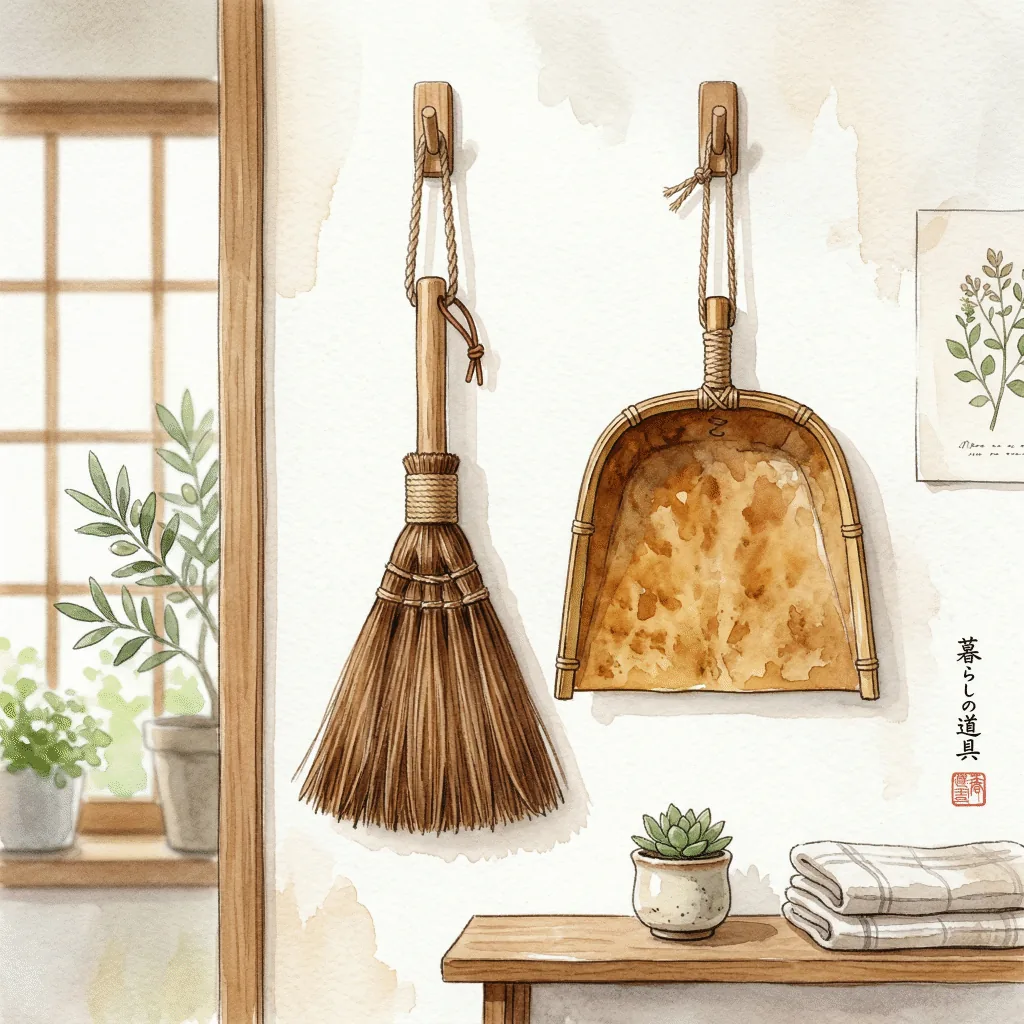
A tool in a drawer gets used twice a year. A tool hanging from the wall gets used every day. Shuro brooms and harimi dustpans are objects worth displaying — a broom on a hook beside the desk, a harimi on a nail. The moment you notice a crumb or a patch of dust, the tool is already in reach.
When to sweep
After finishing a meal at a desk. After reading a physical newspaper. When you notice the keyboard looks dusty but it's 11pm and you're not running the vacuum. The hand broom handles all of these in under 30 seconds without disturbing anyone. The habit it encourages is what Japanese domestic culture calls kogame (小掃除) — small, frequent cleaning rather than infrequent large cleaning sessions. The cumulative effect is a consistently cleaner space with minimal effort.
6. Care & Longevity
Shuro hand broom
After use, shake off collected debris or brush it away with your fingers. No washing needed. Store bristle-up (hanging or standing) — bristle-down causes the fibers to bend and lose their spring. If the broom gets wet, air-dry in shade; direct sun causes fading. Do not wring or compress the bristles.
Harimi dustpan
Wipe down with a dry cloth after use. Water damages washi — never wash or soak the harimi. If it gets wet, wipe immediately and air-dry. The kakishibu coating deepens from amber to dark brown with use — this is the intended aging process. The change in colour signals a well-used, well-maintained tool.
7. Frequently Asked Questions
How is shuro fiber different from synthetic bristles?
The key difference is static electricity. Nylon and most synthetic fibers generate electrostatic charge when swept across surfaces — this lifts dust into the air and makes fine particles scatter. Shuro's natural plant oils prevent charge buildup, so dust collects rather than disperses. For anyone with respiratory sensitivities or anyone cleaning around sensitive electronics, shuro is meaningfully better than synthetic alternatives.
Why does a washi dustpan collect dust better than metal or plastic?
Metal and plastic dustpans have smooth, hard surfaces. When fine particles encounter the leading edge, static forces (which both the plastic/metal and the fine dust particles carry) can repel particles away. Washi generates a mild, uniform static charge through friction — the opposite effect draws particles toward the surface rather than deflecting them. Sand, fine crumbs, and hair that skitter out from under a plastic dustpan collect cleanly in a harimi.
How do I choose between 3-ball and 4-ball?
By where you'll use it most. If the broom lives at a desk and cleans surfaces roughly 30–40 cm wide, 3-ball is ideal — compact and precise. If you want one broom that also sweeps shelves, countertops, or the entryway shoe rack, 4-ball covers more area per pass. The standard advice is: start with 3-ball, add a larger one later if you want wider coverage.
The harimi is turning dark — is it deteriorating?
No — this is exactly how a harimi is supposed to age. The kakishibu (persimmon tannin) coating oxidises with light, air, and use, deepening from pale amber to rich dark brown. The colour change indicates that the lacquer is curing and strengthening, not breaking down. A dark, well-used harimi is a sign of quality ownership, not neglect.
How long will these tools last?
A well-maintained shuro hand broom: 10–20 years. The fibers don't degrade — they conform.
The only replacement trigger is when the fibers become too short from natural gradual wear to
sweep effectively, which takes many years of daily use.
A harimi: indefinitely with dry storage. The washi structure doesn't wear out from normal use.
Damage only comes from water or physical crushing, both of which are easily avoided.
Are these good gifts?
Among the best housewarming, new-home, or moving gifts you can give. A shuro broom set is practical, lasts decades, and comes with a cultural backstory that adds meaning beyond function. In Japan, brooms have traditional associations with sweeping away misfortune and welcoming good fortune into a new home — some people hang a small broom in the entryway for this reason. The set format (broom + harimi) makes a complete, coherent gift with obvious purpose.
Final Thoughts: Small Tools, Long Tradition, Daily Use
The problem with disposable cleaning tools is that they solve the problem invisibly — you use
them, you replace them, you don't notice them. A shuro broom works differently. You notice it
because it looks good hanging on the wall. You use it because it's already there. You keep it
because it's getting better, not worse.
Both tools have been made the same way for over 150 years, in the same regions, by workshops
that never needed to advertise because the quality speaks clearly enough. They'll outlast
anything you'd buy as a replacement.

Japanese Dusters: Ostrich Feather & Washi Paper for Furniture Without Scratches
Kamenoko Tawashi: Japan's Iconic Scrubbing Brush for Cast Iron & Vegetables