When did you last think about your soap dish?
That plastic tray sitting on the sink — functional, yes, but quietly making the whole counter look tired.
A soap dish is a small object, but it sits at eye level every time you wash your hands. Swapping a plastic
tray for something made of Mino-yaki porcelain, Tsubame-Sanjo stainless, or hinoki cypress doesn't just
change the look — it changes the feeling of the room.
This guide covers the main materials used in Japanese-made soap dishes, how to choose by placement
(bathroom, kitchen, or wet area), and six Japan-made picks across different materials and budgets.
Quick Reference: Japanese Soap Dishes by Material
| Material | Key Strength | Best Placement |
|---|---|---|
| Diatomite (soil) | Instant absorption — soap never sits in water | Sink counter, kitchen |
| Hinoki cypress | Natural antibacterial; onsen-style warmth | Bathroom, wet area |
| Stainless (Tsubame-Sanjo) | Hygienic, rust-free, minimal modern look | Kitchen, minimalist bathroom |
| Ceramic (Mino / Hasami) | Craft character; pairs well with Japanese tableware | Sink counter, guest bathroom |
1. Why the Soap Dish Changes the Whole Sink
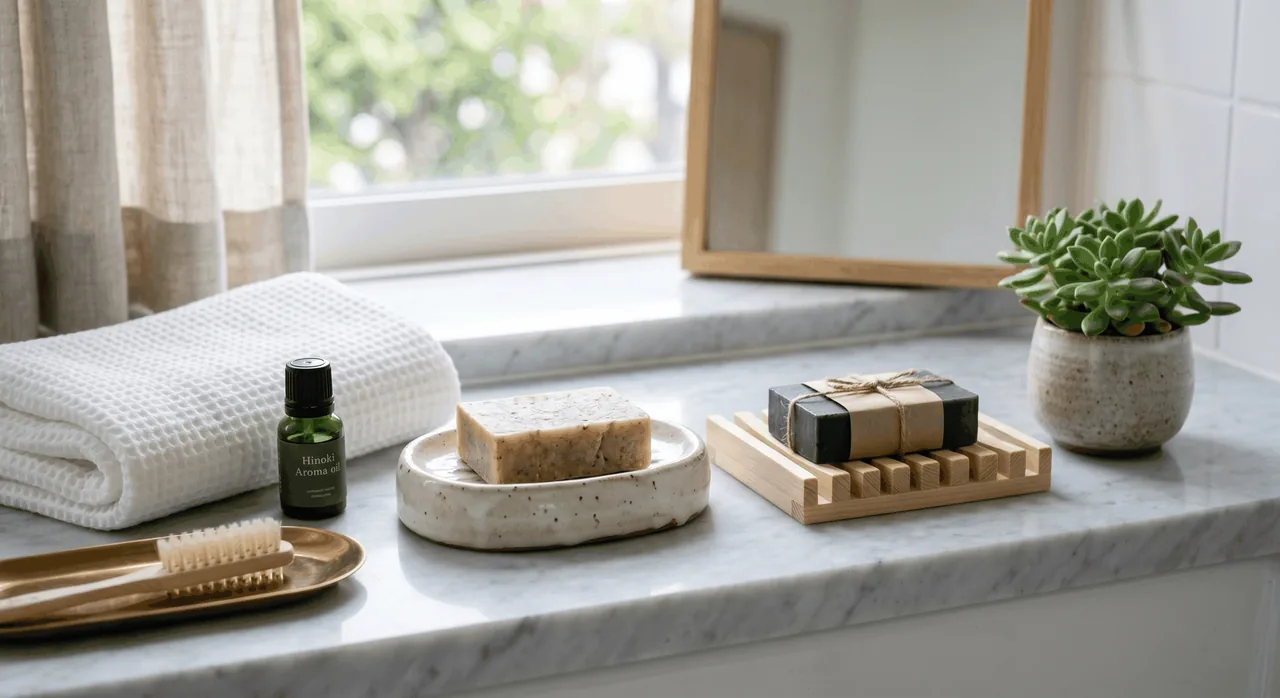
The sink counter is one of the most-seen surfaces in any home — you pass it multiple times every day.
Unlike furniture you rearrange once and forget, the soap dish is always right there in your line of sight.
That's why swapping plastic for porcelain or wood has an outsized effect. Hotels understand this: the
reason a hotel bathroom feels clean and composed isn't expensive fittings — it's the careful material
choice at every small touchpoint.
There's also a practical argument. Bar soap sitting in a puddle of water dissolves from the bottom and disappears quickly. A soap dish with drainage channels or an absorbent surface keeps soap dry between uses and extends its life significantly. A better dish pays for itself.
2. Material Guide: Diatomite, Hinoki, Stainless & Ceramic
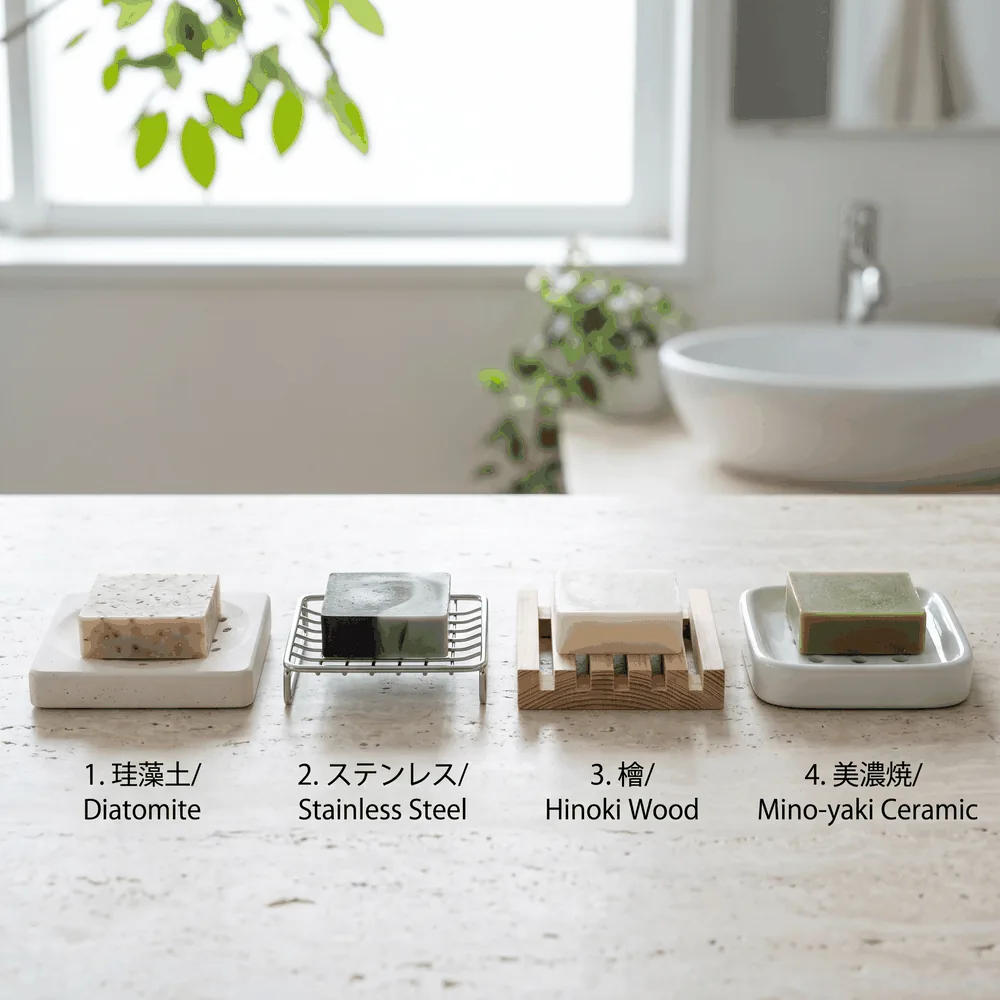
Diatomite (珪藻土 / Keisodo)
Diatomite is a sedimentary stone composed of fossilised diatom shells. It has a remarkably porous
microstructure — so absorbent that soap water vanishes into it almost instantly. The surface stays
dry, soap doesn't slip, and the mushy-bottomed bar problem is eliminated entirely.
The brand soil (石川県) pioneered diatomite lifestyle objects in Japan. Their soap dishes are made by
craftspeople using traditional plastering techniques, one at a time.
Hinoki Cypress (ひのき)
Hinoki is the wood of Japanese onsen culture. The natural oils in hinoki — hinokitiol and phytoncides —
give it inherent antibacterial and antifungal properties, making it more water-resistant than most
woods. The scent is subtle and clean, familiar from traditional bathhouses.
Japanese-made hinoki soap dishes dry quickly between uses when kept in a ventilated spot. With proper
care, a well-made hinoki piece will last a decade or more.
Stainless Steel (Tsubame-Sanjo)
Tsubame-Sanjo in Niigata is Japan's metalworking capital — the same region that supplies professional kitchen knives worldwide. Stainless soap stands from this area are precision-formed from corrosion- resistant steel. A stand-style design holds soap off the surface entirely, maximising airflow and minimising contact. Sharp-looking and zero maintenance.
Ceramic (Mino-yaki & Hasami-yaki)
Mino-yaki (Gifu) accounts for about half of all Japanese tableware production. Hasami-yaki (Nagasaki) is known for a Scandinavian-influenced minimalism rare in traditional Japanese ceramics. Both traditions make soap dishes glazed to the same standard as their best tableware — the drainage holes are cleanly finished, the glaze even. These work well on a counter where Japanese tableware is also displayed.
3. Choosing by Location: Bathroom, Kitchen & Wet Area
Bathroom sink counter
Design matters most here — this is the first thing a guest sees. Ceramic or diatomite both look deliberate and composed. Choose a drainage design (channel grooves or a raised grid) so the soap dries between morning and evening use.
Kitchen
Grease and food particles mean you need something you can scrub clean easily. Stainless or glazed porcelain are best. Avoid unfinished wood in the kitchen — oils and food acids will stain it.
Bathroom wet area (shower, bathtub edge)
Constant water exposure demands either hinoki (water-resistant, quick-drying) or stainless (impervious to moisture). Diatomite can develop cracks in permanently wet conditions. Wood needs to dry completely after each use — position it where air circulation is good.
4. Six Japan-Made Soap Dishes Worth Buying
No.1 — soil Square Soap Dish (Diatomite)
Made by Ishikawa-based soil using diatomite and traditional plasterer's craft. The surface pulls moisture out of wet soap almost immediately — no puddles, no slipping. The flat minimal form suits any counter style. Available in several neutral colours. This is the pick if soap going mushy at the bottom is your main frustration.
- Material
- Diatomite (natural sedimentary stone), made in Japan
- Best for
- Keeping soap dry; minimal modern counters; kitchen use
No.2 — EDOYA Hinoki Wood Soap Dish (Made in Japan)
A compact hinoki soap dish made in Japan. Hinoki's natural hinokitiol content gives it genuine antibacterial and antifungal properties — not a marketing claim, but the reason traditional Japanese bathhouses have been built from this wood for centuries. Ventilated slat design dries the soap bottom. The fresh, clean scent of hinoki adds a small spa-like note to the bathroom.
- Material
- Hinoki cypress, made in Japan
- Best for
- Bathroom counter or shower shelf; natural material preference
No.3 — Yamashita Kogei Hinoki Onsen-Style Soap Dish
A wider hinoki tray designed in the style of Japanese onsen (hot spring) bathing culture. The raised slat design keeps soap lifted off the surface for airflow on all sides. Works as both a soap holder and a small bath tray — place it on the edge of the tub or on the shower shelf. The dimensions work for both standard bar soap and shampoo bars.
- Material
- Hinoki cypress, made in Japan
- Best for
- Onsen-style bathroom; bath edge; shower shelf
No.4 — MUJI Stainless Steel Soap Dish
MUJI's stainless steel soap dish is a minimal wire-frame design that holds the bar above the counter on a sparse 18-8 stainless grid. Soap drains and dries from all sides — there's almost no contact area to trap water. The stainless wire resists rust and cleans in seconds. The silhouette suits the kind of pared-back bathroom MUJI design is known for, and it's the most affordable serious option on this list.
- Material
- 18-8 stainless steel wire; MUJI (Japanese brand)
- Best for
- Minimalist bathroom; kitchen sink; maximum drainage at low cost
No.5 — Yamako Hinoki Cypress Soap Box (Lidded)
From Yamako, a long-running maker of Japanese cypress goods, this lidded hinoki soap box takes a different approach: the lid closes over the soap when not in use. Useful if you travel with bar soap, or want to keep a guest bathroom looking tidy with the soap stowed inside between visits. Hinoki's natural antibacterial properties and clean cypress scent are there whether the lid is on or off — a compact piece of Japanese bath culture you can throw in a bag.
- Material
- Hinoki cypress, made in Japan (Yamako)
- Best for
- Travel; guest bathroom; covered storage between uses
No.6 — Hakusan Porcelain Small Bowl (Hasami-yaki, Nagasaki)
Hakusan Porcelain (白山陶器) is one of the most respected names in Hasami-yaki (Nagasaki) — makers of Japan's quietly modernist porcelain since 1779. This small bowl in the Tenmei deep-black glaze is sized to hold a bar of soap, with the same fine porcelain body and even glaze you'd find on their tableware. Used as a soap dish, it looks like an extension of a Japanese pottery collection rather than a generic bathroom accessory. Pair it with a counter where you also use Japanese tableware.
- Material
- Porcelain (磁器), Hasami-yaki, Hakusan Porcelain, Nagasaki Prefecture
- Best for
- Counter where Japanese tableware is also used; quiet modern bathrooms
5. Care by Material
Ceramic & Porcelain
Wash with a soft sponge and mild detergent. Avoid abrasive pads or scouring powder — they scratch the glaze. Soap scum buildup responds well to a citric acid solution (dissolve a teaspoon of citric acid or white vinegar in a cup of water, soak for 30 minutes, then scrub gently). Check whether the base is glazed before purchase — unglazed bases can absorb water and stain.
Stainless Steel
Wipe dry after use to prevent water spotting. For mineral deposits, wipe with a cloth dampened in diluted white vinegar. Avoid bleach-based cleaners — they can damage the passive oxide layer that makes stainless corrosion-resistant.
Hinoki Cypress
The single most important thing: dry it completely after each use. Standing water is the main cause of wood darkening and mould. Keep it in a well-ventilated spot — not in a closed cabinet. If the surface starts to look dry, apply a very thin coat of food-safe oil (camellia or linseed) and buff off the excess. Periodically leave it in indirect sunlight for an hour — natural UV has a gentle sterilising effect.
Diatomite
The diatomite surface self-dries quickly, but the pores will eventually clog with soap residue. When absorption slows, lightly sand the surface with fine sandpaper (400 grit). This reopens the pores and restores full absorption. Avoid soaking in water for extended periods.
6. Frequently Asked Questions
Which material is the most hygienic?
Stainless steel and glazed porcelain are the most hygienic — both have non-porous, smooth surfaces that bacteria have difficulty adhering to, and both clean easily. Diatomite is highly absorbent but its pores can harbour residue over time; periodic light sanding restores it. Hinoki's antibacterial compounds help, but wood requires thorough drying after every use to stay clean.
Soap scum has built up and won't come off.
Soap scum is alkaline — it responds to acid. Dissolve a tablespoon of citric acid (or use white vinegar diluted 1:3 with water) and soak the dish for 30 minutes to an hour. Scrub with a soft brush. For ceramic and stainless, this works reliably. For wood, use a brief soak only — do not leave wood immersed in liquid for extended periods.
I'm worried about mould on a wood soap dish.
Mould on wood happens when moisture lingers. The solution is placement and habit, not chemistry: position the dish somewhere air moves freely — not in a closed corner or a cabinet. After the last use of the day, tilt the dish on its edge so air reaches the underside too. Hinoki's natural phytoncides give it genuine resistance to mould, making it the safest wood choice for wet environments among Japanese timbers.
What's the difference between a soap dish and a soap tray?
In practice, both serve the same purpose. "Dish" usually refers to a deeper or more bowl-like form, while "tray" suggests something flatter. What matters more is the drainage design: a flat surface with no drainage channels will let water pool, regardless of what it's called. Look for a raised grid, slats, holes, or an absorbent surface material — that's what actually keeps soap dry.
Why use a bar soap instead of a pump dispenser?
Bar soap generates far less plastic waste — one bar in a paper wrapper replaces multiple pump bottles per year. Many Japanese bar soaps use simpler ingredient lists with fewer synthetic additives. Some bars cover face, body, and hand washing in one product, which reduces bathroom clutter. A good soap dish is what makes bar soap practical for daily use — without drainage, bars dissolve quickly and the experience becomes frustrating.
Can I give a soap dish as a gift?
Yes — a soap dish paired with a bar of Japanese soap makes an excellent housewarming or host gift. A Mino-yaki or Hasami-yaki soap dish with a cedar or hinoki-scented bar soap creates a cohesive Japan-made set. This combination works for any occasion: new home, birthday, or holiday. The soap dish is used every day, which means the gift is experienced repeatedly.
Final Thoughts: One Small Object, One Big Shift
Of all the objects in this guide series, a soap dish might be the most underestimated.
It costs very little relative to the change it produces. Unlike a furniture purchase, you
can swap it in an afternoon. And unlike most decorative objects, it's genuinely useful —
it makes your soap last longer.
Choose based on where it's going and what your bathroom feels like. Diatomite if you want
the soap perpetually dry. Hinoki if you want natural warmth and a quiet scent. Stainless
if clean lines and zero maintenance matter most. Ceramic if you want something that looks
like it belongs alongside your best Japanese tableware.

Japanese Bath Additives: Onsen Minerals, Hot Spring Salts & Natural Blends

Japanese Incense Guide: Awaji, Kyoto Brands & How to Burn