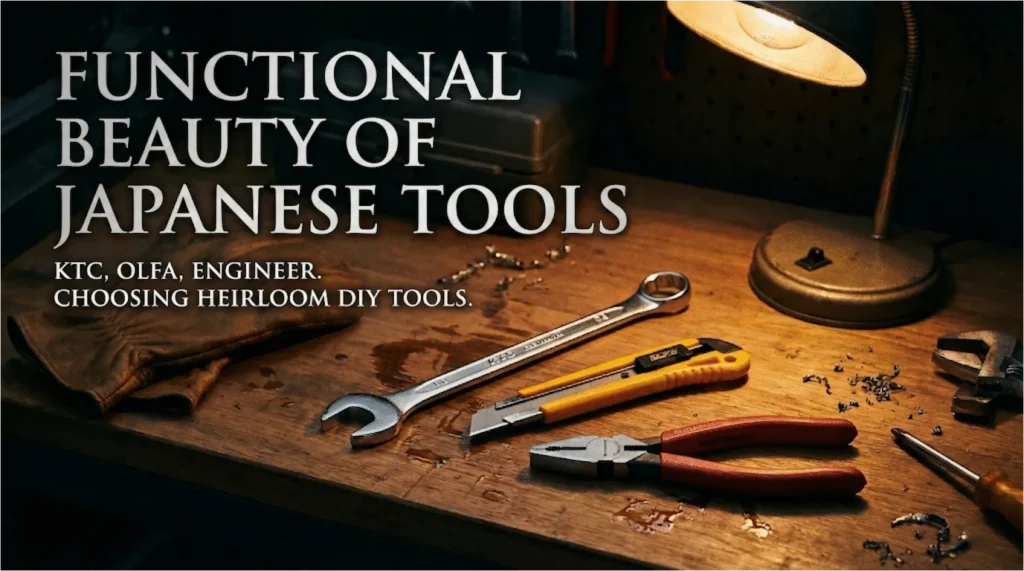
"I stripped a screw and had to walk away in defeat…"
"I bought a cheap screwdriver and the tip chipped off on the second use."
Anyone who's started DIY has been there. And while there's a saying that a skilled worker never blames his tools,
the truth is: beginners need good tools even more than experts do.
If you're looking for tools that will last decades, the answer is clear: choose Made in Japan.
From Kyoto's KTC to Osaka's OLFA, Japanese-made tools go beyond function — they
possess what the Japanese call kinō-bi: functional beauty. This guide covers the tools that make you want
to reach for them, even when you don't strictly need to.
Series: This article is part 5 of the Outdoor & Hobby Tools series.
Quick Reference: Japanese Tools by Type
| Type | Use | Material | Recommended Brand |
|---|---|---|---|
| Handsaw | Cutting wood | High-carbon steel | Zett販売 / Omi Kogyo |
| Hand Plane | Smoothing & chamfering | Steel (white/blue paper) | Tsunesaburo / Usui Kengo |
| Chisel | Mortising & carving | Steel (white/blue paper) | Ippomme / Nijo Shigemitsu |
| Genno Hammer | Nailing, chisel driving | Forged steel, wood handle | Motonobu / Musashi |
1. From Utility to Object of Desire | The Aesthetic of Japanese Tools
Tools used to live in grimy, cluttered drawers — hidden away and pulled out only when needed.
The best Japanese tools challenge that assumption entirely. They're beautiful enough to leave on display.
Precision You Can Hear
The difference between a cheap tool and a high-quality Japanese one isn't just durability — it's
precision.
Turn a quality ratchet handle and hear the crisp, tight click of well-fitted pawls. Feel a socket seat perfectly
on a bolt head.
That level of fit isn't just satisfying — it prevents rounding the fastener, which is exactly how stripped bolts
happen.
The snap of a perfectly seated socket transforms work time into something closer to a focused hobby session.
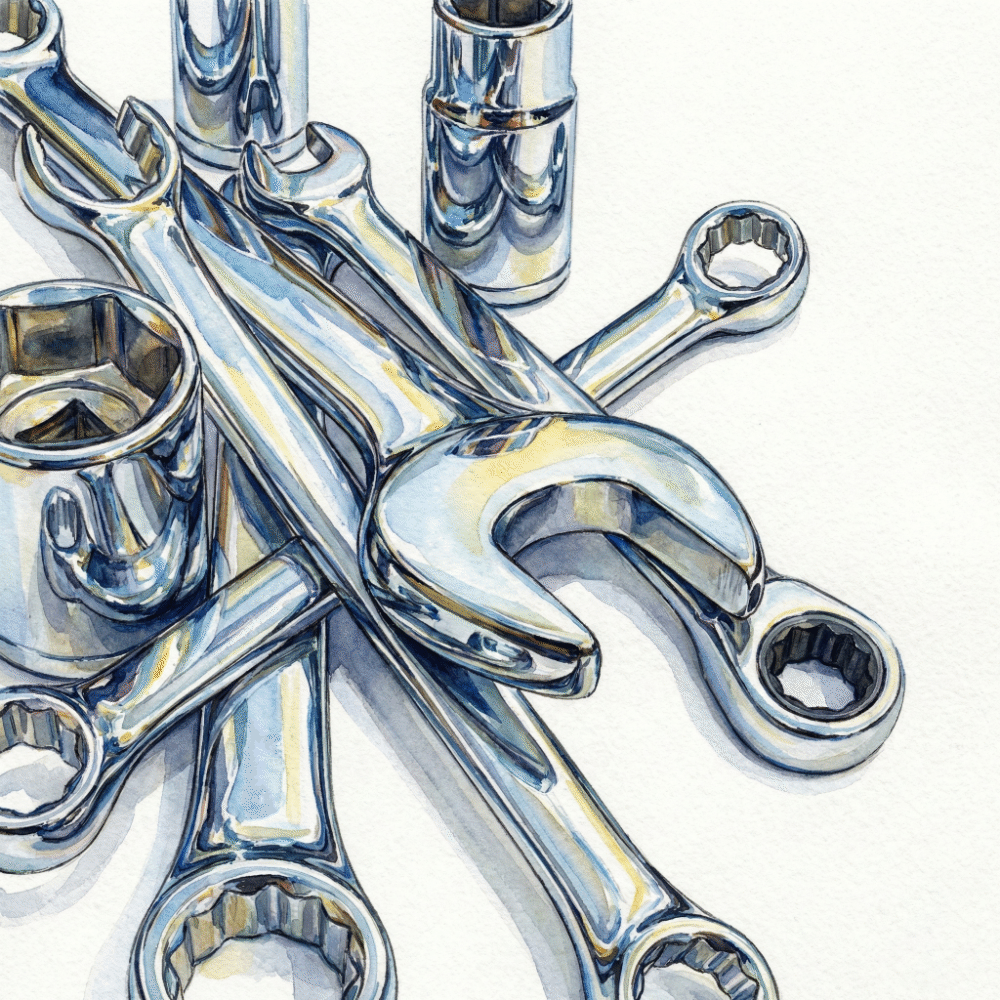
2. KTC — Japan's Workshop Standard and Its Crown Jewel, Nepros
No conversation about Japanese tools is complete without KTC (Kyoto Tool Co., Ltd.) — the brand supplied to Toyota and Nissan dealership service departments and trusted by professional mechanics across Japan.
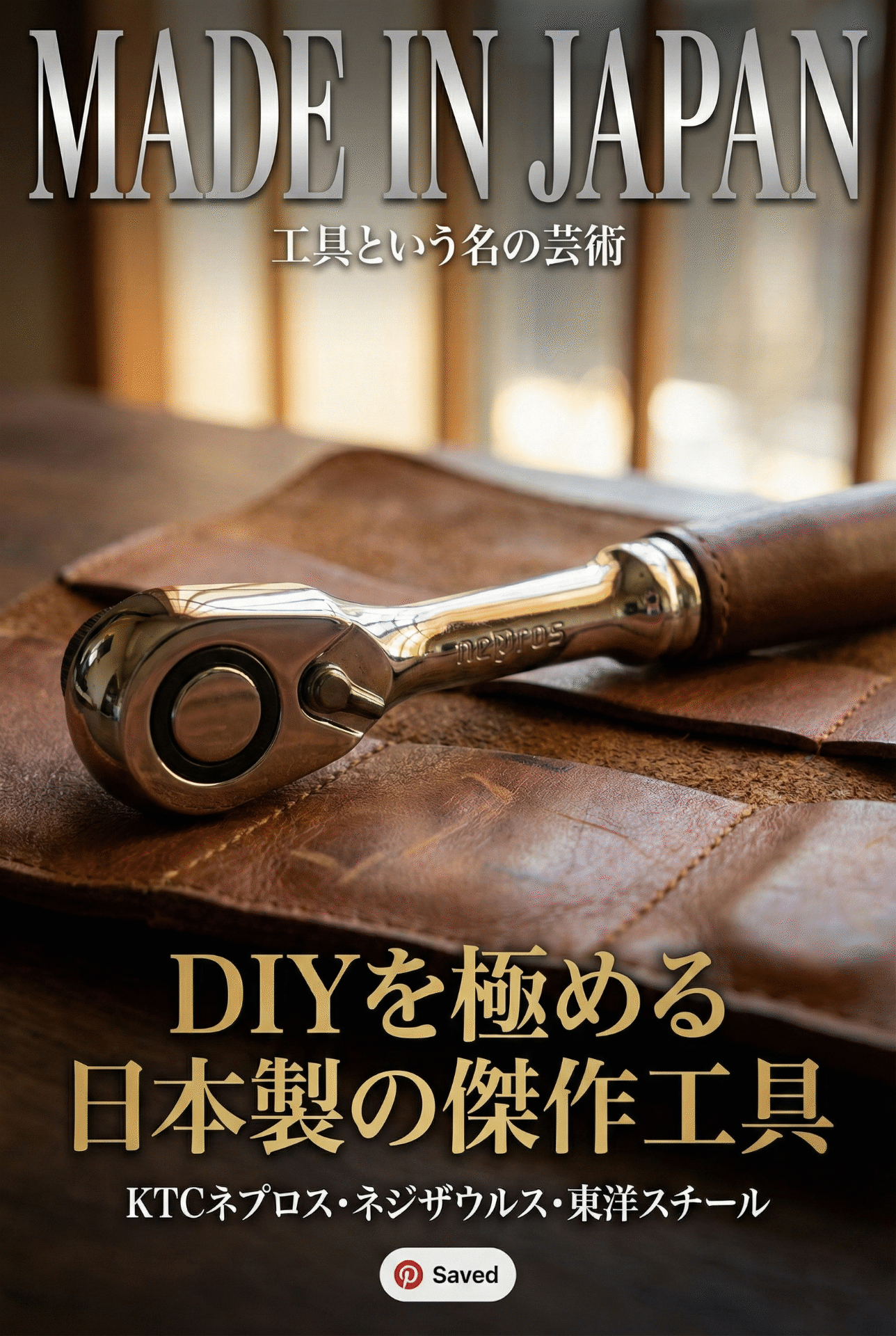
KTC's Masterpiece: nepros
Built to beat Snap-on. The obsession shows.
KTC studied the world's finest tools and set out to create a rival to American high-end brand Snap-on. The
result was nepros.
The defining feature: a jewelry-grade mirror polish on every surface.
That finish isn't cosmetic — it means grime wipes off cleanly, contact points are perfectly smooth, and the
tactile experience is unlike anything in the mid-range market.
"Someday, Nepros" is a phrase mechanics use the way guitarists talk about vintage instruments.
3. OLFA — The Snap-Blade Cutter, a Japanese Invention That Became the World Standard
Every snap-blade utility knife in the world — regardless of brand or country of manufacture — owes its existence to
a small Osaka factory.
That's where OLFA was born, and where the snap-blade concept was invented.
Inspiration from a Chocolate Bar
OLFA's founder, watching a soldier break apart a chocolate bar, had a sudden insight: if you score a blade
into sections, you can snap away a dull tip and always have a fresh edge.
The company name literally means "breaking blade" (oru ha → OLFA).
OLFA tools are yellow for a reason — so they're easy to spot in a cluttered workspace and harder to
accidentally leave somewhere dangerous.
For a premium experience, try the Limited Series with black professional blades and a silver
body that feels more instrument than utility tool.
4. Engineer Neji Saurus | The Tool That Removes Stripped Screws
Rusted bolt. Rounded screw head. DIY's most infuriating obstacle — and the one a Osaka tool maker called Engineer solved with a single product: the Neji Saurus (screw dinosaur).
Neji Saurus GT PZ-58
Over 10 million sold. The household guardian every home should have.
Ordinary pliers have horizontal jaw serrations. The Neji Saurus adds vertical grooves at the tip — oriented to
bite into a screw head and rotate it out rather than slide off it.
Furniture or appliances you had written off as broken can come apart cleanly with this single tool.
It won the Good Design Award, and the dinosaur-jaw profile isn't just branding — the shape is functional,
concentrating grip force exactly where it's needed.
5. Toyo Steel Toolboxes | Seamless Pressed-Steel Storage Built to Last
Once you have good tools, they deserve a worthy home.
Toyo Steel (also known as the manufacturer behind the iconic "mountain-shape" toolbox, sold under
Trusco Nakayama's private brand) makes steel toolboxes with a technique called deep drawing — producing a seamless,
weld-free body from a single sheet of steel.
Mountain-Shape Toolbox Y-350
No seams, no sharp edges, no weak points — just one piece of pressed steel.
The rounded corners and seamless body give it a retro charm that works as well in a workshop as it does as a
prop on a creative desk.
People use these as peg holders at campsites, sewing kits, and stationery boxes — it's that versatile.
The paint will chip and scratch over years of use. That patina just makes it look better.
6. VESSEL Screwdrivers | Maximum Torque from a Comfortable Grip
Japan's best-selling screwdriver brand is VESSEL, an Osaka institution known for a single transformative design: the ball-grip handle.
A Larger Grip Surface Means Less Effort
The ball-grip screwdriver has a large, rounded rubber handle — designed to fill the entire palm.
This lets you apply body weight downward while rotating, generating significantly more torque than a
narrow-handled driver without the wrist strain.
If you've ever had a thin screwdriver dig painfully into your hand, one session with a VESSEL ball-grip will
make it obvious what you've been missing.
VESSEL's tools carry the JIS (Japanese Industrial Standard) mark — a guarantee of dimensional accuracy and
hardness testing.
7. The Order to Build Your Toolkit | Where to Start with Japanese Tools
You don't need a hundred-piece set on day one. Build your toolkit one useful upgrade at a time.
Priority Order
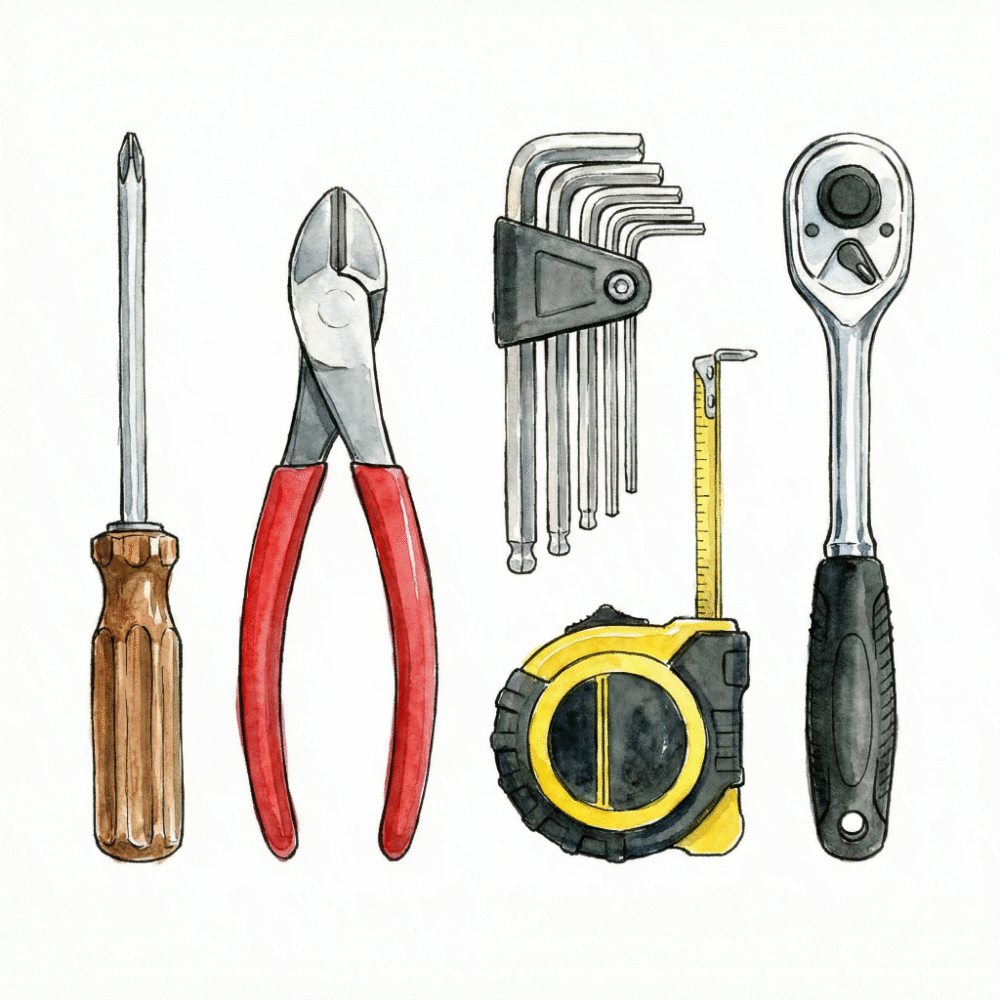
- Level 1 — Phillips screwdriver (#2): Used in almost every furniture assembly. Start with VESSEL.
- Level 2 — Needle-nose pliers & wire cutters: For bending and cutting wire. FUJIYA is the go-to brand.
- Level 3 — Hex keys (Allen wrenches): Essential for flat-pack furniture. Takagi or Eight are solid choices.
- Level 4 — Tape measure: Accurate measuring matters. Tajima is the professional standard.
- Level 5 — Ratchet wrench: When you start working with bolts and nuts, it's time for KTC.
8. Frequently Asked Questions
What's the actual difference between cheap tools and Japanese-made ones?
Metal hardness and dimensional precision — by a significant margin.
Cheap tools are made from soft alloys that deform under load, causing the tip to slip and round the screw
head.
Japanese industrial tools use hardened alloy steel that holds its geometry through years of heavy use.
Think of the price difference as insurance against destroying the fasteners you're trying to drive.
Should I buy KTC standard or Nepros?
For weekend DIY, KTC's standard line is more than sufficient.
Nepros is for professional mechanics who use tools daily, or for collectors who appreciate the mirror finish as an
end in itself.
A practical approach: buy KTC standard across the board, then upgrade one prized piece — say, a ratchet — to
Nepros when you're ready for the experience.
How do I maintain metal tools?
Wipe dry after use — that's 90% of it.
For tools stored long-term or used in damp conditions, wipe with a lightly oiled cloth (anti-rust oil or WD-40)
before putting them away.
Water left on metal surfaces is the main cause of rust.
What does the JIS mark mean?
Japanese Industrial Standards — a government-backed certification for hardness, dimensions, and
safety.
Products bearing the JIS mark have passed specified strength tests and dimensional tolerances.
When you see it on a VESSEL screwdriver or KTC wrench, it confirms the tool meets legally defined quality
criteria.
What's a good starter Japanese tool set for a beginner?
A set containing a screwdriver, ratchet handle, and combination pliers covers the widest range of tasks.
KTC and VESSEL both offer curated entry sets with consistent quality — better long-term value than buying cheap
and replacing frequently.
If you also maintain a bicycle or motorcycle, add a socket set from the start.
What Japanese tools make good gifts?
The Neji Saurus and a Nepros ratchet are both excellent gift choices.
The Neji Saurus is the kind of practical tool that solves a real problem the recipient didn't know had a solution
— universally appreciated.
A Nepros piece is the "I wouldn't buy it for myself, but I'm thrilled to receive it" tier — ideal for car or bike
enthusiasts.
Final Thoughts: Good Work Starts with Good Tools
Professional craftspeople treat their tools like extensions of their hands — because the quality of the tool
directly determines the quality of the work.
The same is true for DIY. The feel of tightening a bolt with a KTC ratchet, the clean snap of an OLFA blade, the
tiny resistance of a VESSEL driver biting into a screw head — these sensory details add up to a session you
actually enjoy.
Invite one Japanese-made tool into your workshop. Then another. The toolbox fills slowly, and every piece earns
its place.
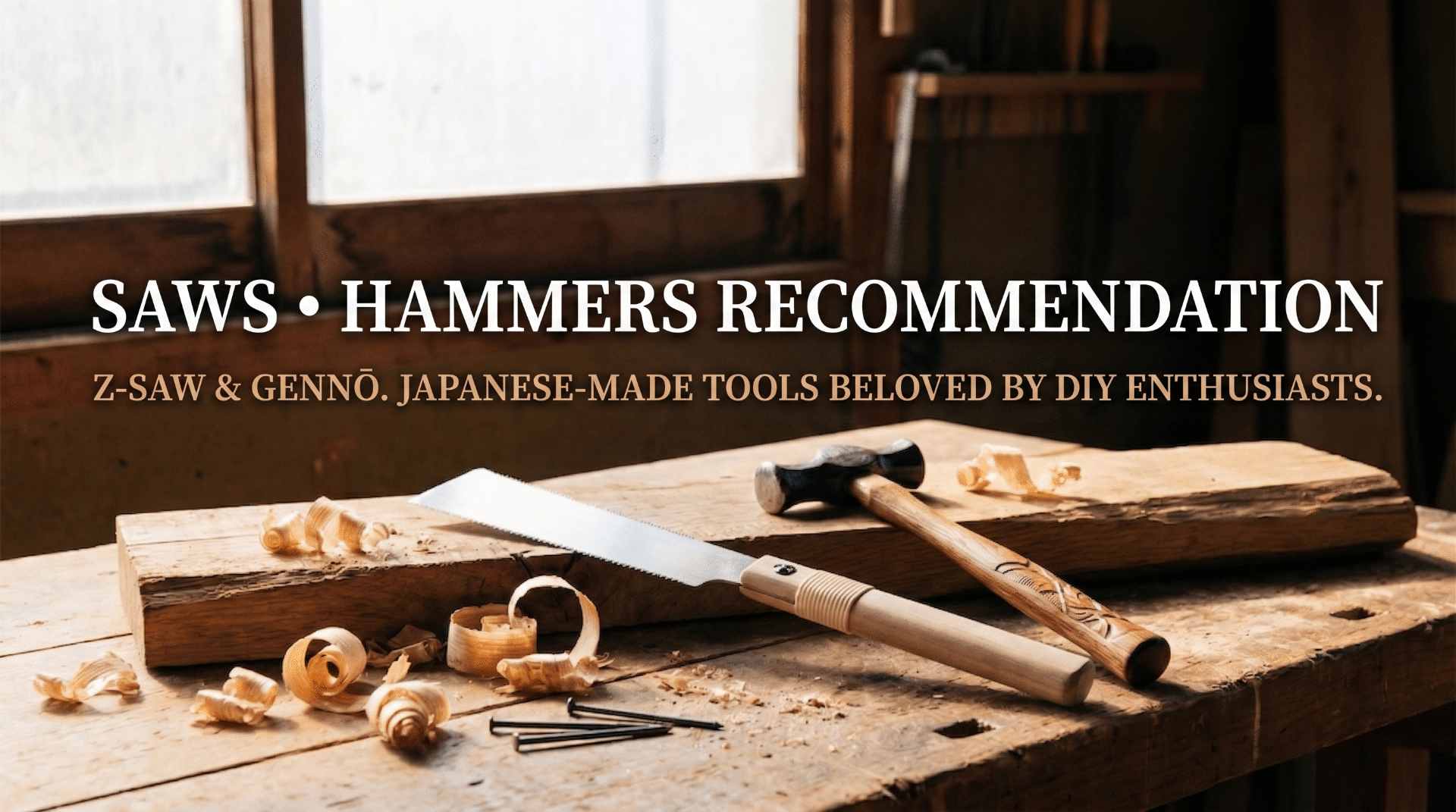
Japanese Saw & Hammer Guide | Z-SAW and Genno for DIY Woodworking
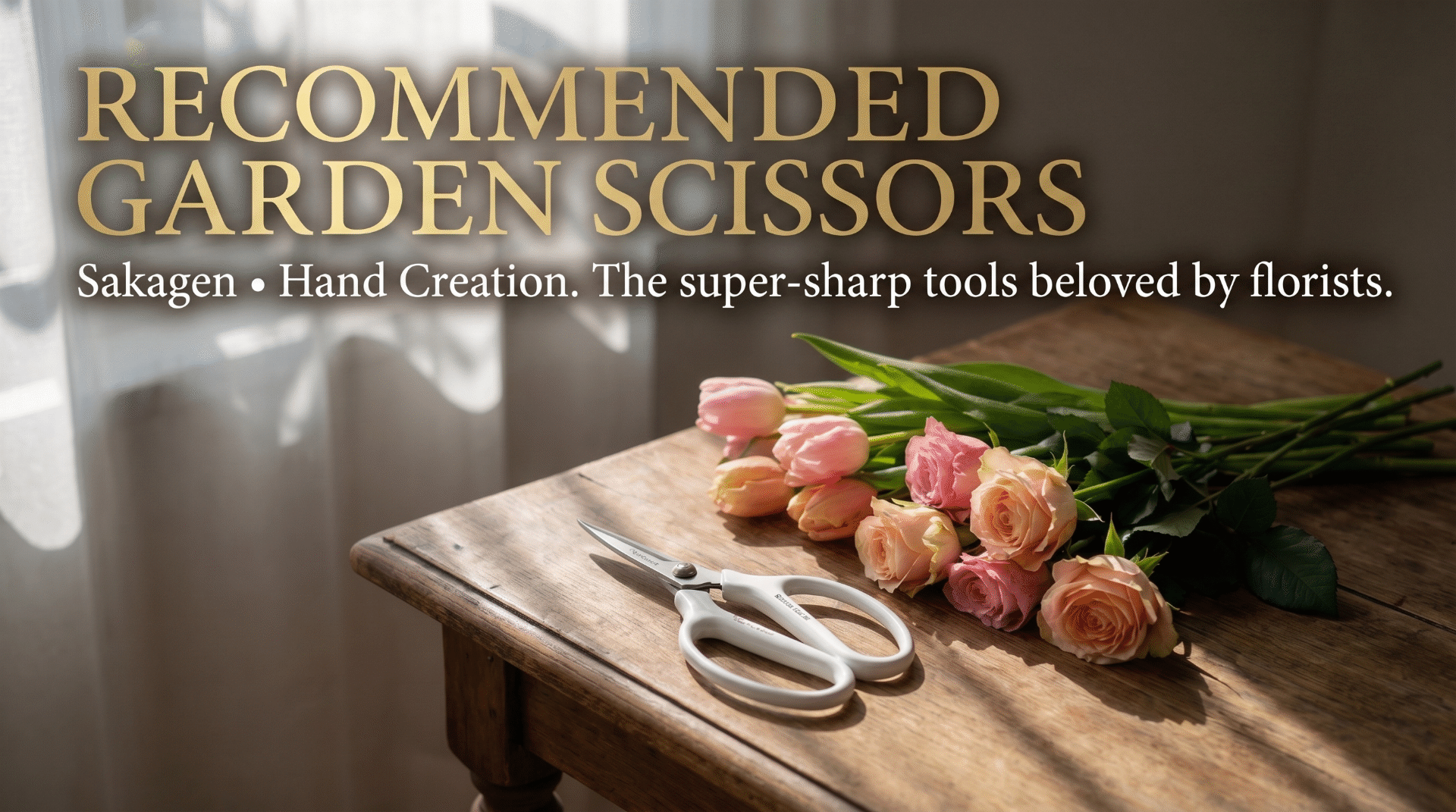
Japanese Garden Scissors Guide | Sakagen, Toyama Hamono & How to Choose