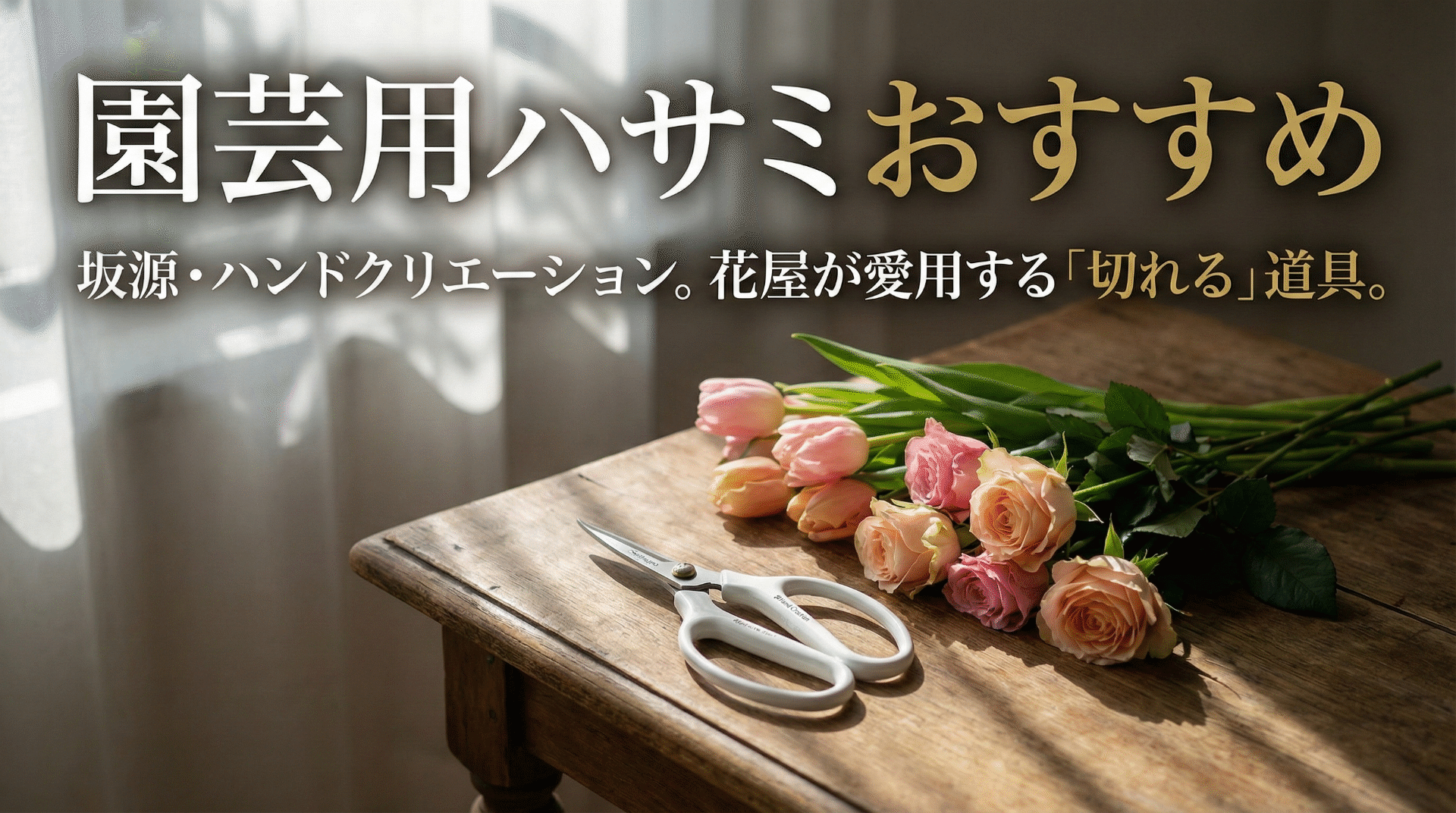
"The cut flowers I bring home wilt within a day…"
"My hand cramps up after ten minutes of pruning the garden."
Before you blame the flowers or your grip strength, consider this: the problem might be your scissors.
A plant stem is essentially a vascular system — the same principle as blood vessels. When a dull blade crushes rather than cuts, the tissue collapses and water can no longer reach the flower.
The solution is precise: choose Sakagen (坂源) — made in Sanjo City, Niigata Prefecture, by a company that has done nothing but make scissors since 1903.
The white scissors you see hanging from the belts of professional florists? That's the Sakagen Hand Creation.
This guide covers the Japanese garden scissors that are light, rust-resistant, and almost unreasonably sharp.
Series: This article is part 3 of the Outdoor & Hobby Tools series.
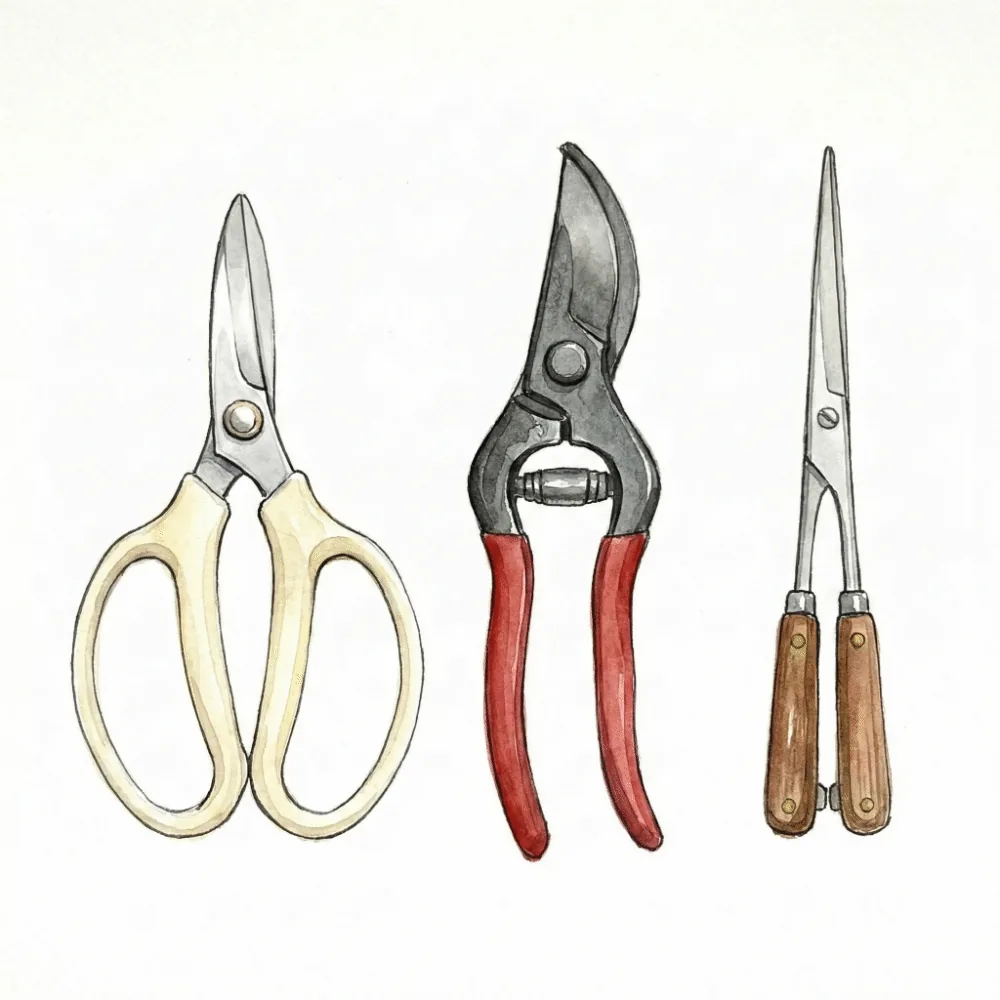
Quick Reference: Garden Scissors by Type
| Type | Best For | Blade Material | Price Range |
|---|---|---|---|
| Bypass (Florist) | Ikebana, cut flowers | Fluorine-coated steel | $15–$50 |
| Anvil (Pruning) | Thick branches, hard stems | High-carbon steel | $25–$70 |
| Garden Shear | General gardening | Stainless steel | $12–$40 |
| Long-Reach Pole Pruner | High branch trimming | High-carbon steel | $40–$170 |
1. Why Blade Sharpness Changes Flower Life | The Vascular Tissue Secret
Why do you need scissors that cost $20 or more when $1 alternatives exist?
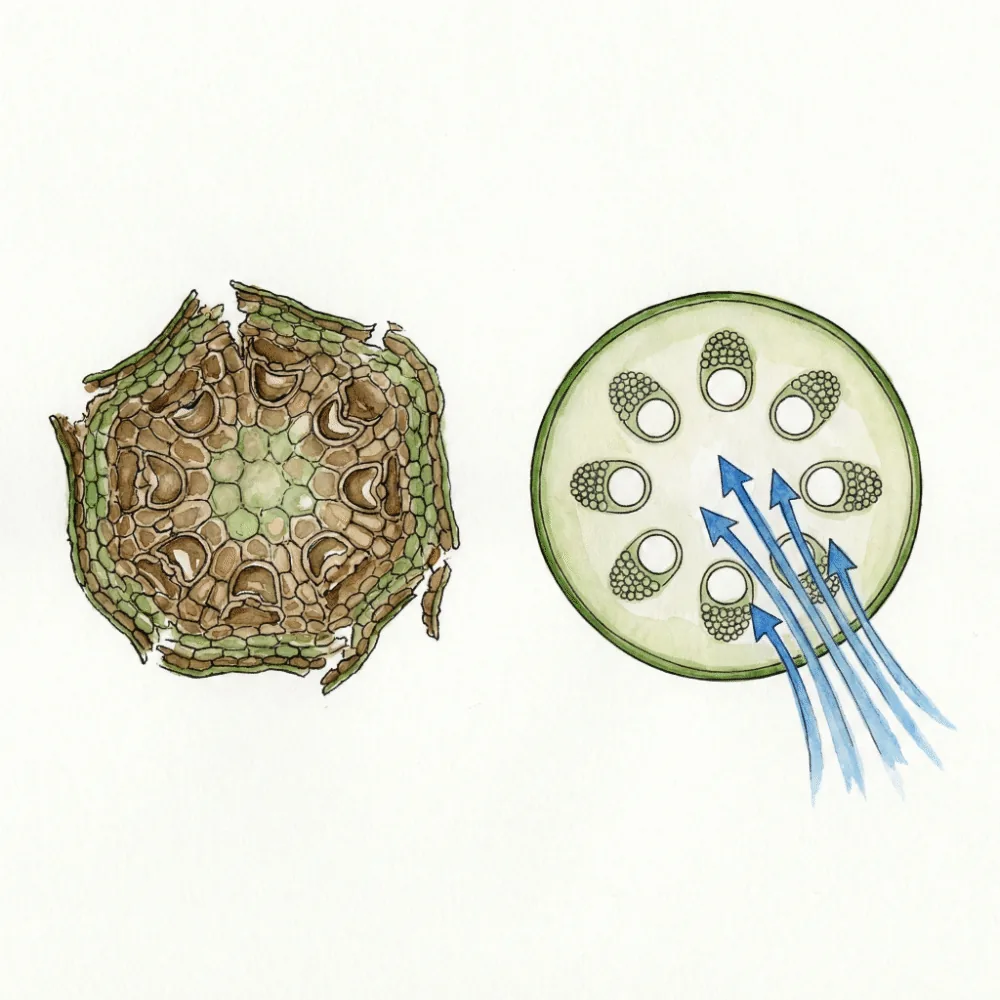
The answer is in the plant's vascular tissue — the microscopic channels that carry water from the stem to the bloom.
A Crushed Stem Is Like a Kinked Straw
When a dull blade cuts, it doesn't actually cut — it crushes and tears the fibers, collapsing the vascular channels inside the stem.
Put a stem with a crushed cut in water and almost none of it reaches the flower.
A professionally sharpened Japanese blade slices through the stem cleanly, leaving the vascular channels open and round.
Water absorption is immediate and full. The difference shows within hours.
"Switching scissors doubled how long my cut flowers last" — this claim sounds like marketing, but it's genuinely what florists report.
2. Sakagen's Hand Creation — The Florist's Favorite, Explained
Founded in 1903. Sanjo City, Niigata — the heart of Japan's blade-making region. Sakagen (坂源) has made scissors and nothing else for over 120 years.
Its Hand Creation series has sold in the millions — and you'll see it hanging from the hip of virtually every professional florist in Japan.
Hand Creation F-170
"The white scissors." Non-stick, rust-resistant, and addictively sharp.
The signature feature is a PTFE (fluorine resin) coating on the blade surface — the same material used on non-stick cookware.
Moisture and plant sap bead off instead of adhering, meaning the blade stays clean and rust-free with minimal maintenance.
The cutting action isn't a sharp snip so much as a smooth, frictionless glide — florists describe it as "addictive" once you've felt it.
A single wipe after use is all the care it usually needs.
3. The Good Design Award Handle | Why Long Sessions Don't Hurt
The Hand Creation is also a Good Design Award winner — and it's not because of the color. The award is for the handle geometry.
The Indent That Eliminates Strain
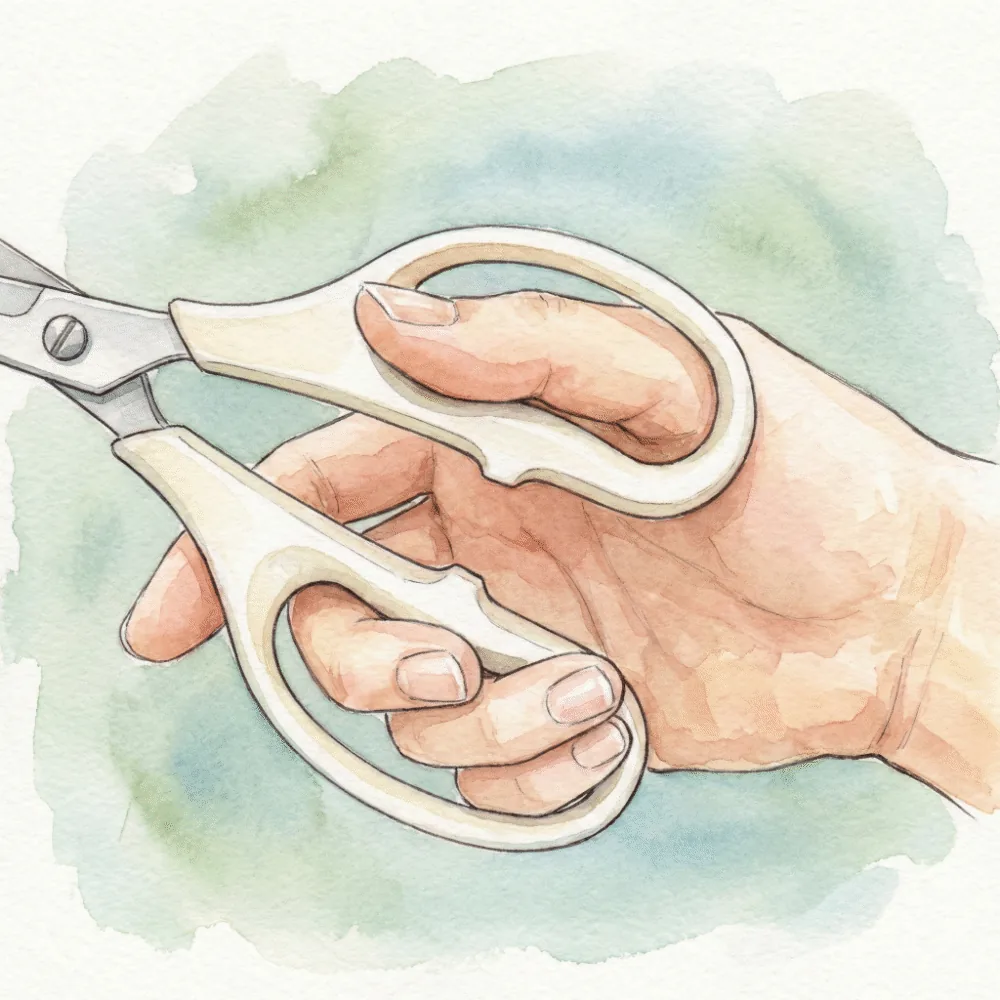
Look at the handle and you'll see a large indentation positioned for the index finger.
Hooking your finger there creates a unified grip — hand and tool become one, drastically reducing the squeeze force needed for each cut.
This design was developed in the 1980s specifically because florists who cut stems all day were developing repetitive strain injuries.
The near-symmetrical shape also makes it usable for left-handed people with minimal adjustment (a dedicated left-hand model also exists for purists).
4. Toyama Hamono Pruning Shears | The Rose Grower's Soke Hidehisa
If you're serious about roses or garden pruning, you'll want a different tool from a different Sanjo maker: Toyama Hamono (外山刃物).
Soke Hidehisa Pruning Shears
Edo-period fire-forging technique, still practiced. The professional pruner's heirloom tool.
If Sakagen stands for lightness and ease of use, Toyama Hamono stands for rigidity and cutting power.
Each blade is hammer-forged from steel (tanzo — the same technique used for traditional Japanese knives), producing a blade with dense grain structure and exceptional edge retention.
Thick branches fall with a clean, satisfying snap — no effort, no vibration transferred to the hand.
Beloved among rose enthusiasts in particular; a re-sharpening service is available, making these genuinely heirloom-quality tools.
5. Choosing by Use | Flower Arranging, Gardening & Branch Cutting
Using the wrong scissors for a task can damage both the blade and the plant. Here's a quick guide to matching tool to task.
① Flower arranging & ikebana (Hand Creation style)
For stems up to about 1 cm in diameter.
Thin blade, maximum sharpness, designed to cut cleanly without crushing the vascular tissue.
Perfect for cut flowers, houseplant maintenance, and trimming stems before arranging.
② Garden pruning (Soke Hidehisa style)
For branches 1.5–2 cm in diameter.
Thicker blade using a bypass mechanism — the two blades pass each other like scissors, creating a lever action for tough wood.
Essential for roses, shaped shrubs, and any branch that a flower scissors would damage trying to cut.
③ Harvest & bud scissors
For thin stems, harvesting vegetables, and detail work.
Narrow, pointed tip for reaching between dense growth.
Ideal for vegetable gardens, bonsai maintenance, and trimming in confined spaces.
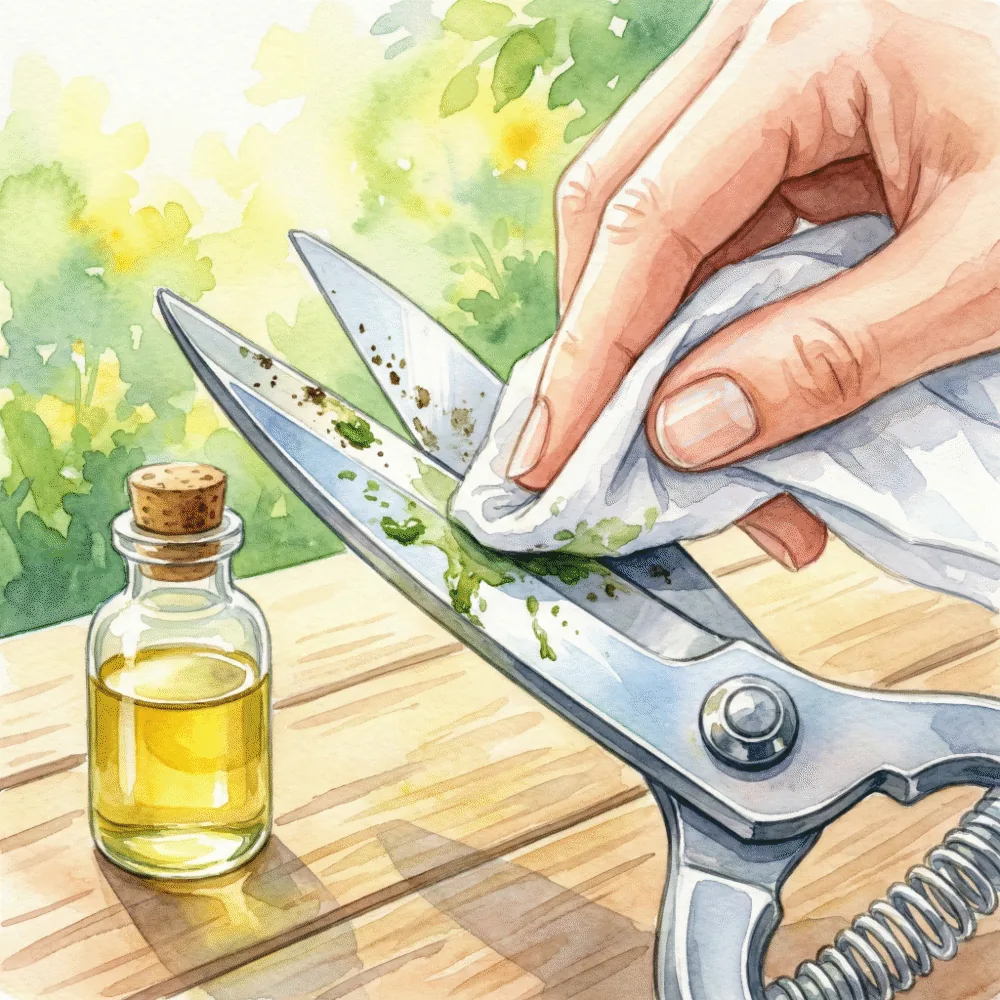
6. Removing Sap & Storing Your Scissors | Keeping the Edge Sharp
If your scissors feel slower than they used to, the edge is probably fine — the blade is just coated in hardened plant sap.
Sap and Tannins: The Hidden Enemies
Plant sap (yani) and tannins build up on blades with every cut, eventually hardening into a sticky resin layer that makes the scissors feel dull and heavy.
A quick cleaning routine after each session prevents this completely.
Simple care routine:
1. After use, wipe moisture and debris with a dry cloth or tissue.
2. For hardened sap, rub with a dedicated sap cleaner or an eraser — both remove the residue gently without scratching the blade.
3. Apply a single drop of sewing machine oil at the pivot (the kashime rivet) where the blades cross.
That's it. Sharpness restored, action smooth.
7. Garden Scissors as Gifts | Special Colors and Personalized Options
A high-quality Japanese garden scissors is one of the most thoughtful gifts you can give to someone who loves plants — practical, beautiful, and genuinely useful.
Hand Creation F-170 Blue
A fresh, vivid blue that's easy to spot in a garden or floral arrangement.
The classic red is always popular, but this blue has a practical edge: bright colors are easy to locate when put down among greenery.
The clean, modern look also works well on a windowsill or shelf as part of a curated plant setup.
Same fluorine-coated blade, same ergonomic handle — just a color that makes it feel a little more personal as a gift.
8. Frequently Asked Questions
Is there a left-handed version?
Yes — both Sakagen and Toyama Hamono make left-handed models.
The Hand Creation F-170's near-symmetrical handle works reasonably well for left-handed users, but a dedicated left-hand model (such as the F-170L) reverses the blade overlap for a clean, natural cut angle.
Left-handed users who cut seriously will notice the difference immediately — and the model is readily available.
What's the difference between the F-170 and the P-180?
Size and handle length.
The F-170 is 170mm overall — the standard size that fits most hands comfortably, including smaller hands.
The P-180 is 180mm with a slightly larger grip, better suited to larger hands or users who prefer a more solid feel.
For general home use, the F-170 is the recommended starting point.
Can I sharpen them when they get dull?
Yes, but fluorine-coated scissors need a different approach.
Running a whetstone across the full blade surface of a Hand Creation will remove the fluorine coating — not ideal.
Instead, use a purpose-made sharpener on just the bevel edge, or send them to the manufacturer's re-sharpening service (fee applies).
Toyama Hamono's forged steel blades can be sharpened on a whetstone without concern.
Can I cut wire or floral wire with these?
No — and doing so will chip the blade.
Garden scissors are sharpened to a fine angle designed for plant fiber, not metal.
For floral wire in arrangements, use the wire-cutting notch near the base of the blade if your scissors have one, or keep a dedicated wire cutter nearby.
Are there child-safe garden scissors?
Look for models with rounded tips or single-direction locking blades — these limit the risk of accidental injury.
Sakagen and similar makers offer kids' garden shears in their range.
That said, any cutting tool requires adult supervision with children — the materials and sharpness are real.
Can I wash them in the dishwasher?
No — hand wash only.
High-temperature water and strong detergent degrade the resin handles and accelerate rust at the pivot point.
Wipe clean by hand after use and allow to air dry before storing.
Final Thoughts: The Right Cut Makes Everything Flourish
"Just a pair of scissors" — but what a difference a pair makes.
Cutting is the most repeated act in any plant-care routine, and the quality of each cut shapes how long your plants thrive.
The right scissors feel like an extension of your hand. No force, no strain, just clean and quiet work.
When arranging feels that easy, the ritual of tending to your plants — the daily watering, the weekend garden sessions — becomes something you actually look forward to.
Start with the scissors that florists trust. See what changes.
Beginner Bonsai Kits | Indoor Sakura, Pine & Kokedama Moss Ball Growing Guide
Best Japanese Hand Tools | KTC Nepros, OLFA Cutters & More for Your DIY Toolbox