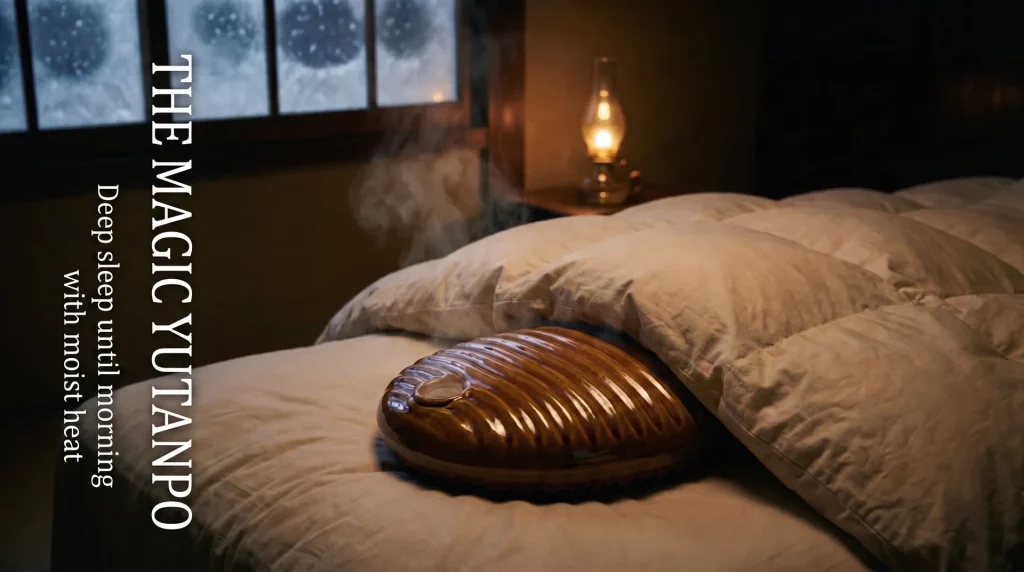
"I sleep with the heater on and wake up with a sore throat."
"My electric blanket runs too hot, and I end up kicking it off at 2am."
Winter sleep problems often trace back to two things: dryness and overheating. The Japanese solution has been the same for centuries — a yutanpo (湯たんぽ), the traditional hot water bottle.
Unlike forced-air heating, a yutanpo delivers moist heat — warmth that penetrates to the body's core rather than just heating the surface of the skin. The effect is closer to a warm bath than a hair dryer: deeper, gentler, and far more effective at inducing sleep.
This guide explores how yutanpo work, and introduces Japan's finest ceramic, copper, and tin models — including ones suitable for camping.
1. How Yutanpo Work: The Science of Moist Heat
Why does a yutanpo leave you feeling warm long after you've fallen asleep — the way a hot bath does — when a heater leaves the room warm but your body cold?
The answer is in how the heat is delivered.
Moist heat reaches internal organs — dry heat only warms the surface
An air conditioner or electric heater produces dry heat: it warms the air surrounding your skin. Dry heat heats the skin surface quickly but draws moisture from it, and doesn't penetrate deep into tissue.
A yutanpo produces moist heat — heat carried in water. Water transfers heat far more efficiently than air, and moist heat penetrates through layers of skin and muscle to reach internal organs.
It's the same principle as a sauna (dry) vs. a hot bath (moist): the bath warms you to the core in far less time. A yutanpo brings that same core-warming effect into your bed.
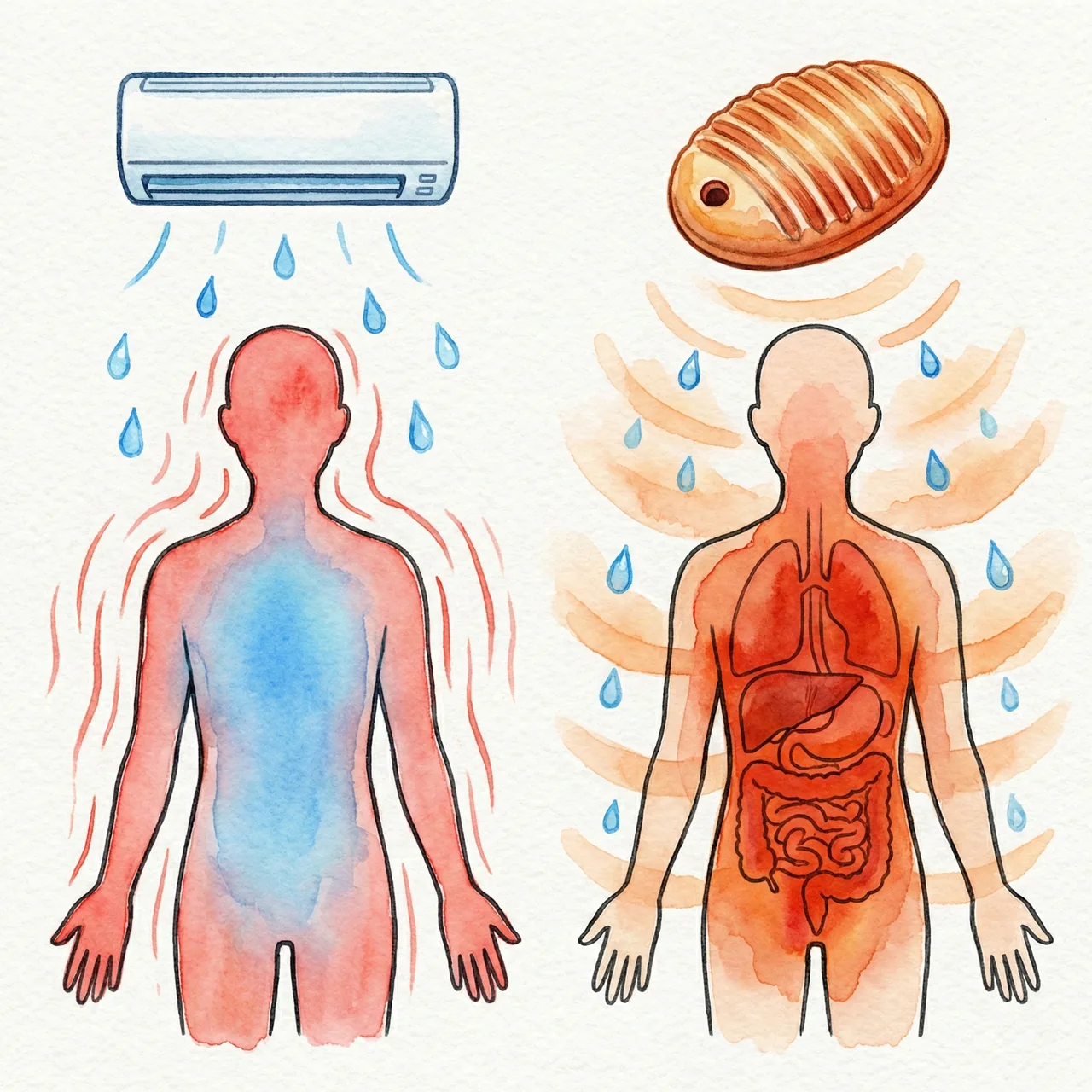
Warm feet, cool head: how a yutanpo triggers natural sleep
Many people who struggle to fall asleep have cold feet and an overactive mind — both related to blood distribution.
Placing a yutanpo at the foot of the bed draws blood toward the feet. As peripheral circulation increases, the brain receives slightly less blood flow and cools down — the physiological trigger for drowsiness.
This zukansokunetu ("cool head, warm feet") state calms the nervous system and induces natural sleep onset. No dry air, no noise, no electromagnetic field — just warmth in the right place.
2. Ceramic Yutanpo (Shigaraki Ware): Far-Infrared Heat That Lasts Until Morning
Used since the Edo period (1603–1868), ceramic yutanpo have been gaining new fans — for good reason.
Like a donabe (clay pot): thermal mass that holds heat through the night
Ceramic has the same thermal mass properties as a clay cooking pot: it stores large amounts of heat and releases it slowly and evenly. A plastic yutanpo cools to room temperature by morning; a ceramic one is still gently warm when you wake up.
Ceramic also emits far-infrared radiation — a wavelength of heat that penetrates tissue rather than just warming the air — giving it a quality of warmth that feels alive and deeply comforting.
That warmth, radiating steadily from an object with real weight, has a calming, almost companionable quality that no other material reproduces.
Heavy — but that weight becomes stability inside the bed
Filled with hot water, a ceramic yutanpo weighs close to 3 kg (6.6 lb). Inside a duvet, that weight becomes an anchor — it doesn't roll away when you move, and it presses gently against the feet with a satisfying solidity. It's a different sensory experience from lighter alternatives, and many users find it genuinely soothing.
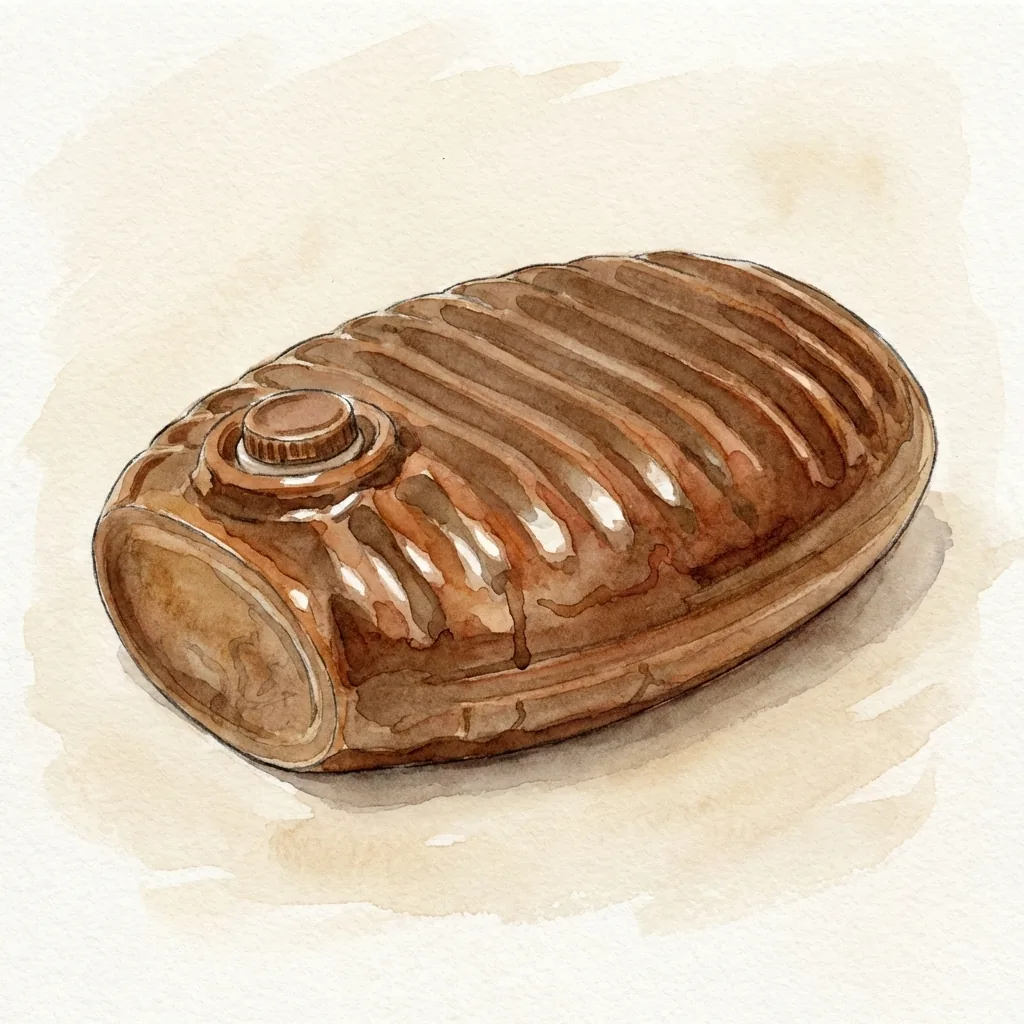
3. Metal Yutanpo (Tin & Copper): Direct-Flame Ready, Camping-Approved
The classic corrugated-metal yutanpo — a design unchanged for generations, and back in popularity thanks to outdoor culture.
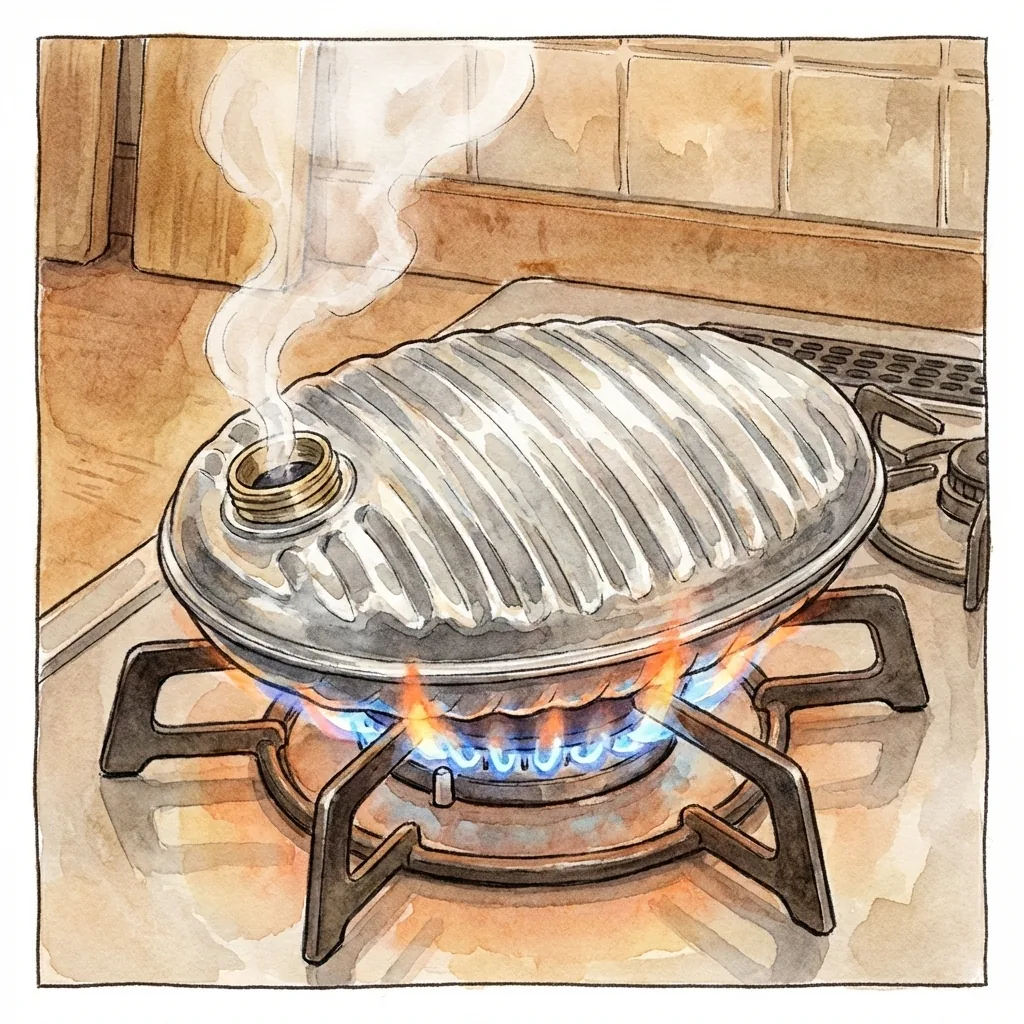
Reheat directly on the stove — no water changes required daily
The biggest advantage of a metal yutanpo is direct-flame compatibility (some models also support IH induction). When the water cools, simply remove the cap and place it directly on a gas burner or campfire to reheat — no need to drain, refill, and boil a kettle every single night.
This makes metal yutanpo particularly practical for camping, for people in off-grid situations, or as emergency preparedness gear.
Copper: legendary thermal conductivity, and a patina that tells your story
Copper conducts heat approximately five times better than iron, meaning a copper yutanpo reaches full warmth within moments of filling.
It also develops a living patina — the surface shifts from bright amber to rich tobacco-brown with use, shaped by your hands and your water. Unlike plastic, which simply degrades, a copper yutanpo improves visually with age. Replace the gasket occasionally, and it will outlast every other object in your bedroom.
4. Material Comparison: Ceramic & Metal vs. Plastic & Rubber
How does a handcrafted Japanese yutanpo compare to the polyethylene models sold at pharmacies?
Choose by what matters most to you
- Polyethylene / Rubber (affordable, lightweight): Easy to handle and inexpensive. Heat retention is modest — it will be cold by morning — and most units develop cracks or leaks within a few years. A good entry point if you want to try the concept before investing.
- Ceramic (heat retention, sensory quality): The warmest through the night, with the most calming quality of warmth. Heavy; keep it as a bedside luxury rather than something you carry around the house.
- Metal (practicality, longevity): Direct-flame reheating makes it the most convenient for daily use. Ideal for camping, outdoor winter activities, or anyone who wants a truly lifetime tool.
5. Safe Usage: How to Avoid Low-Temperature Burns
A yutanpo is deeply comfortable — but one safety consideration deserves attention.
Warm the bed before sleep, then move the yutanpo away from skin
Even at a pleasant 40–50°C (104–122°F), sustained contact with one area of skin for several hours can cause a low-temperature burn — an injury that develops slowly and can be surprisingly deep despite causing little immediate pain.
The safest approach, and the one most Japanese yutanpo users follow: place the yutanpo in the bed 30 minutes before sleeping, then remove it (or move it away from your body) before you actually get in.
The bed is already warm and comfortable. You sleep in a pre-heated space without any contact risk — all the benefit, none of the danger.
6. 3 Recommended Japanese Yutanpo: Maruka, Shinko Kinzoku & Ceramic Japan
Maruka (大阪) — Yutanpo A (Ace)
Market leader. The yutanpo that defined the category.
Founded in Osaka in 1923, Maruka has made yutanpo for over a century. Their corrugated tin model is an icon — the design that every Japanese person recognizes instantly from childhood.
An internal support column prevents the body from collapsing inward as the water cools and pressure drops — a practical detail that distinguishes it from cheaper imitations.
Direct-flame and IH-compatible. Affordably priced. If you want to start with a definitive recommendation, this is it.
Shinko Kinzoku (新光金属, Tsubame-Sanjo) — Pure Copper Yutanpo
A lifetime tool from Japan's metal-craft capital.
Crafted by artisans in Tsubame-Sanjo, Niigata — Japan's most celebrated metalworking region, home to the finest kitchen knives and lacquerware.
Copper conducts heat five times more efficiently than iron: fill it with boiling water and the entire surface is warm within seconds. Copper ions also have natural antimicrobial properties, keeping the water inside cleaner for longer between changes.
The exterior will shift color from bright amber to a deep, complex bronze over years of use. Hand it down to the next generation.
Ceramic Japan (愛知) — yutanpÖ
Good Design Award winner — the ceramic yutanpo reinvented for modern living.
Made by a ceramic manufacturer in Seto City, Aichi Prefecture — one of Japan's historic porcelain regions — the yutanpÖ looks nothing like a traditional yutanpo. Its flat, minimalist profile eliminates the usual bumps and ridges, sitting flush against the body or under a pillow with none of the awkwardness of conventional designs.
Remove the aluminum cap and it reheats in a microwave — a genuinely convenient feature for modern apartments. Its clean aesthetic makes it a thoughtful, distinctive gift for anyone who appreciates functional design.
7. Frequently Asked Questions
Does a metal yutanpo need fresh water every single night?
With direct-flame reheating, top-up use is fine — but change the water fully every 7–10 days.
The same water heated repeatedly will eventually develop scale buildup and can cause interior corrosion over time. When storing the yutanpo out of season, drain it completely, turn it upside down, and let the interior dry thoroughly — this is the most effective rust prevention measure.
Will the ceramic version crack easily?
It's thick-walled and durable in normal use — but protect it from hard drops.
Ceramic filled with 2–3 kg of hot water, dropped onto a hard floor, can crack. For everyday use inside a duvet, cracking is essentially not a risk. When carrying it to and from the bedroom, use a cover or carry it with both hands as a precaution.
Can I fill metal and ceramic yutanpo with boiling water (100°C / 212°F)?
Yes — this is normal practice for both materials.
Most plastic yutanpo have a maximum temperature of around 80°C (176°F). Metal and ceramic have no such limitation — fill them with boiling water directly from the kettle.
For metal models in particular, filling right to the brim is recommended: as the water cools, it contracts and creates negative pressure inside. A full fill minimizes this and prevents the body from denting inward.
Can I heat a metal yutanpo on an IH induction cooktop?
Only if the model is specifically rated for IH use.
Maruka makes IH-compatible models with a flat base that sits flush on the induction surface. Traditional round-bottomed tin yutanpo and ceramic models do not work on induction and require a gas burner, camp stove, or kerosene heater.
What should I do with the leftover water in the morning?
Reuse it — it's still warm and perfectly clean.
After a full night inside the duvet, the water in a ceramic or copper yutanpo is still gently warm. If you filled it with fresh tap water, it's entirely suitable for washing your face, rinsing produce, or doing dishes.
This has been common practice in Japan for generations — a small but satisfying act of zero-waste living.
Final Thoughts: The Tool That Makes Getting Into Bed a Small Delight

There's a specific kind of winter dread: the moment before you slide into a cold bed. The tense anticipation of the shock.
A yutanpo eliminates that moment entirely. The bed is already warm. Sliding in is a reward, not an ordeal.
As your feet warm, the rest of you softens. Sleep comes faster, runs deeper, and you wake up without the dry throat or the 3am chill.
It's a very simple object — water in a vessel. But that simplicity is why it's been used for hundreds of years, and why it will keep being used long after the latest electric blanket design is forgotten.
Pick the one that fits your life — the campfire-ready tin, the heirloom copper, or the quietly beautiful ceramic — and look forward to winter.