"I've been staring at a screen all day — my eyes feel like lead..."
"I love heated eye masks, but buying disposables every day feels so wasteful..."
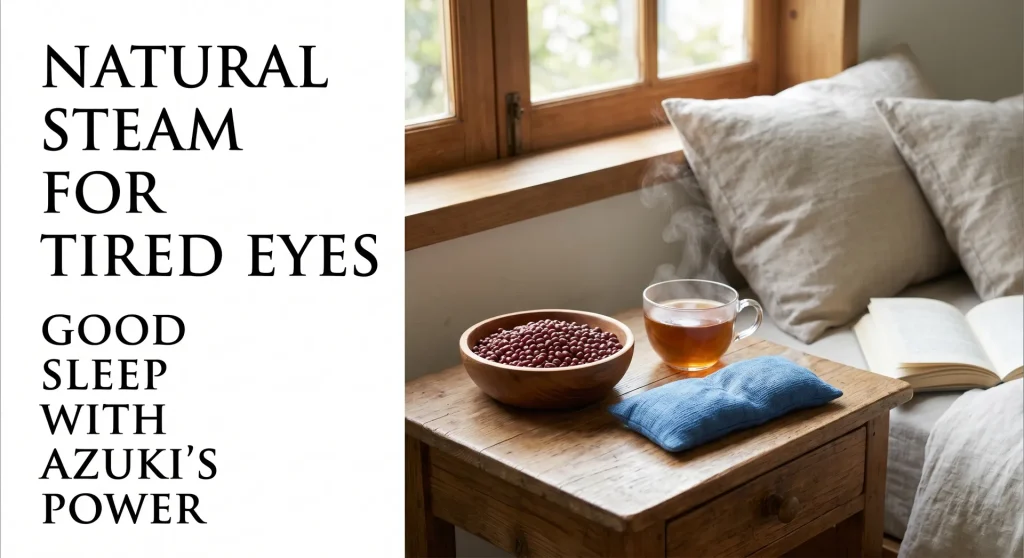
If that sounds familiar, meet the traditional Japanese solution: the azuki bean eye pillow (azuki makura).
The magic is simple: microwave it for about a minute, and the moisture locked inside the beans releases as gentle natural steam.
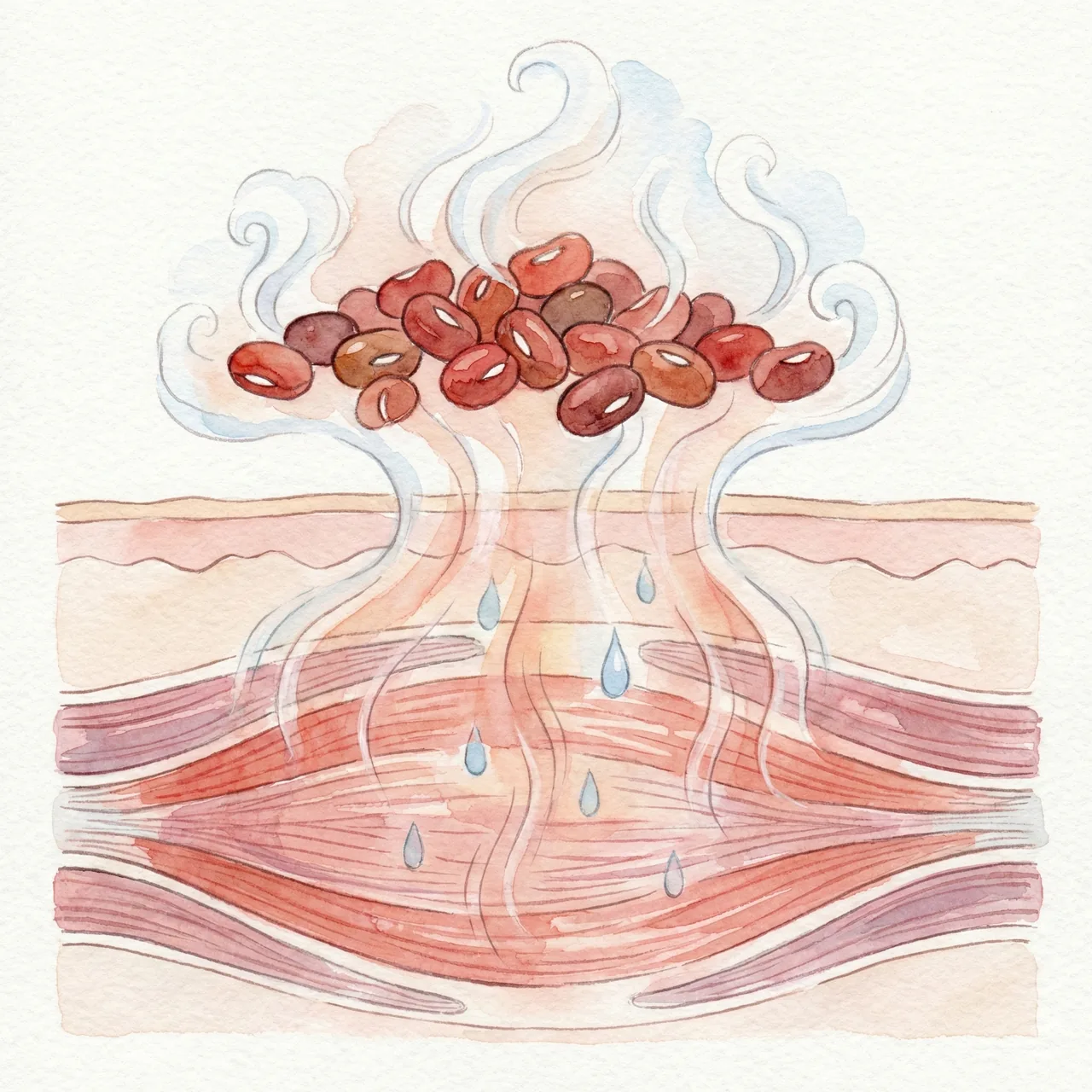
That warm, moist heat penetrates your eye muscles in a way a dry heat pack simply cannot, melting away tension in seconds.
This guide explains why moist heat (shitsunetsu) works so much better than dry heat, and introduces the best made-in-Japan azuki eye pillows you can buy today.
Quick Reference: Azuki Eye Pillow vs. Disposable Hot Mask at a Glance
| Feature | Disposable Hot Mask | Azuki Eye Pillow (reusable) |
|---|---|---|
| Heat type | Dry heat (surface only) | Moist heat (penetrates deep) |
| Uses | Single use, then discard | ~200–250 uses |
| Cost per use | ~$0.80–$1.00 | A few cents (unbeatable value) |
| How to use | Tear open and apply | Microwave ~1–2 min |
1. Why Azuki? The Science of Natural Steam for Tired Eyes
Why use azuki beans specifically — can't you just use any warm compress?
The answer lies in the quality of heat, not just the temperature.
Azuki beans as a natural steamer
Compared to other beans, azuki naturally hold more moisture inside their skin.
When microwaved, that internal moisture heats up and escapes as steam — turning your eye pillow into a miniature facial steamer.
The result is that damp, enveloping warmth you get from a hot towel, but hands-free and perfectly shaped for your eye area.
Moist heat vs. dry heat: why penetration matters
Ordinary hand warmers and electric heat packs produce dry heat — they warm the skin surface but struggle to reach the muscles underneath.
Moist steam, on the other hand, has a much higher heat-transfer rate. It reaches the ciliary muscles deep behind your eyes — the ones that do all the focusing work — and relaxes them in a way dry heat simply cannot match.
2. Better Sleep: How Warming Your Eyes Triggers the Relaxation Response
An azuki eye pillow isn't just for relieving fatigue — it's also a remarkably effective sleep aid.
Activating the parasympathetic nervous system
The skin around your eyes is extremely thin and highly sensitive to warmth.
Warming this area signals your parasympathetic ("rest and digest") nervous system to take over, releasing tension throughout your entire body.
On nights when you can't switch off, warming your eyes for just a few minutes can ease you into sleep faster than you'd expect.
The gentle weight of the beans: an acupressure effect
Beyond the steam, azuki eye pillows offer something disposable masks never can: gentle weight.
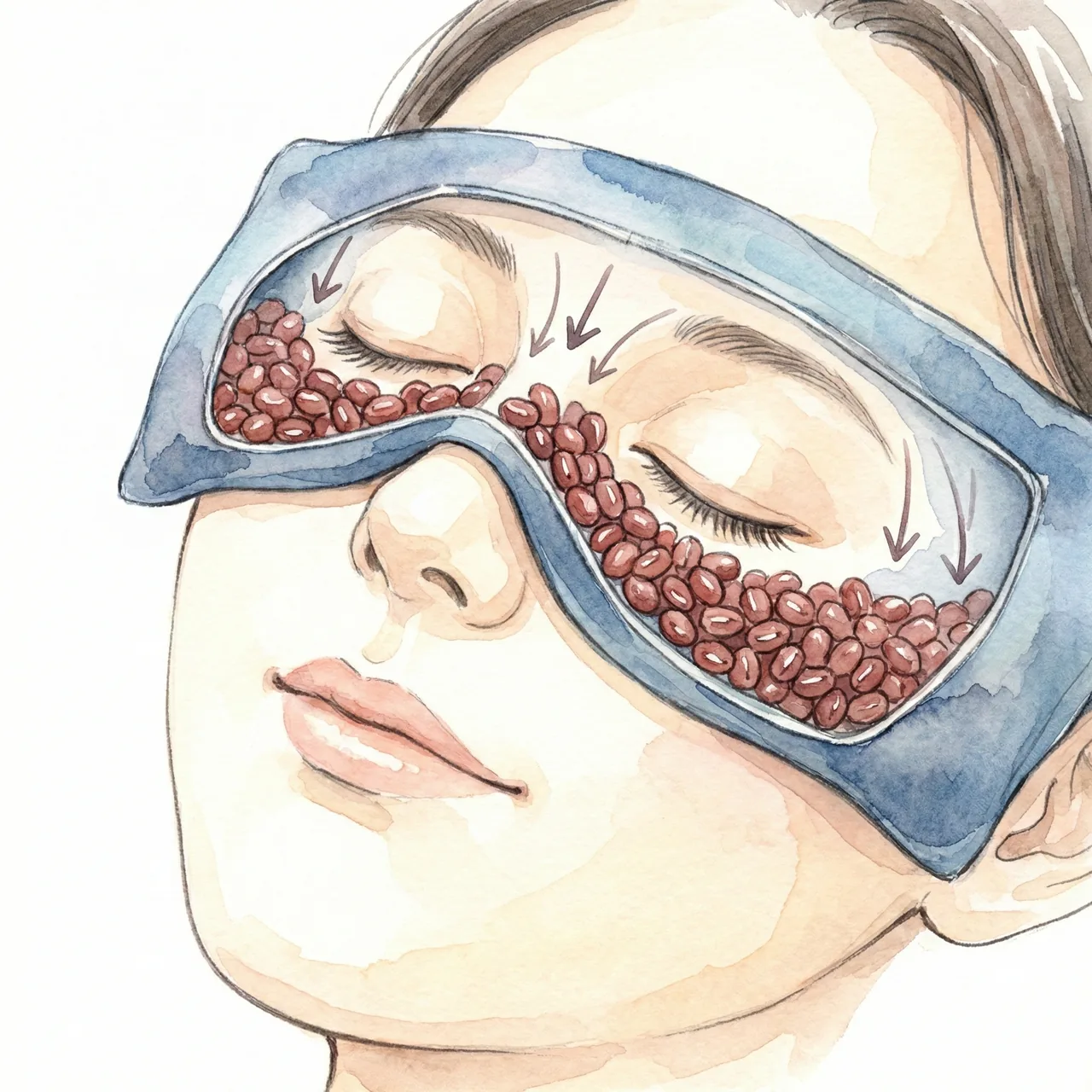
When you lay the pillow over your eyes, the individual beans conform to the contours of your eye sockets, applying a soft, acupressure-like pressure.
This sensation of being gently held creates a sense of security that supports deeper, calmer sleep.
3. How to Choose: Fabric, Size, and Hokkaido Azuki Beans
Since an eye pillow rests directly on your skin, materials matter.
Choose natural fabrics — and a washable cover
The skin around your eyes is delicate, so opt for natural materials over synthetics: cotton, linen, or silk all feel gentle and breathe well.
Because the inner pouch (containing the beans) cannot be washed, a removable, machine-washable cover is a must if you want to keep things hygienic over hundreds of uses.
Eye-mask shape vs. large face-covering style
A compact eye-mask style covers just the eyes — practical, portable, and easy to use at your desk during a break.
A larger face-mask or forehead-covering style warms the temples and brow too, improving circulation across your whole face. Great if you're looking for both beauty benefits and deeper relaxation.
4. Cost & Lifespan: 250 Uses for Pennies Each
The upfront cost is higher than a disposable pack, but over time an azuki eye pillow is far more economical.
250 uses at a few cents each — a fraction of disposables
A typical azuki eye pillow lasts around 200–250 uses.
At a purchase price of $10–$20, that works out to just a few cents per use — versus $0.80–$1.00 for every disposable hot mask.
For daily users, the savings add up quickly, and there's no packaging waste either.
The 4-hour rule: why you can't reheat immediately
One important guideline: wait at least 4 hours between uses.
Right after heating, the beans are dry — they've released their moisture as steam. Reheating in this state risks scorching or even igniting the beans.
Over four hours, the beans reabsorb moisture from the air and are ready to use again.
A morning session and an evening session before bed is the ideal rhythm.
5. Top 3 Made-in-Japan Azuki Eye Pillows
Kobayashi Pharmaceutical "Azuki no Chikara" Eye Warmer
The classic that put azuki eye pillows on the map.
This is the product that introduced the modern azuki eye pillow to everyday Japanese households, and it remains the benchmark.
Made with 100% azuki beans, it produces plenty of steam with a short microwave session and is sold at pharmacies across Japan.
The shape is designed to contour around the eyes, and a "DANGER!" indicator changes color when overheated — a thoughtful safety feature.
If you're trying an azuki eye pillow for the first time, this is the ideal starting point.
Bless Natural Material Eye Pillow
Crafted from Wakayama's finest natural fibers — gentle enough for sensitive skin.
For anyone who prioritizes materials above all else, the Bless series is the clear recommendation.
The cover uses organic cotton and linen woven in Wakayama Prefecture, along with bincho charcoal–blended fiber — all natural, all breathable.
The softness against your eyelids is on a different level from synthetic alternatives, and the clean, refined design makes it a popular gift for men too.
Cozy Company (Japan-made) Azuki Eye Pillow
Rakuten rankings staple. Hokkaido azuki beans meet Scandinavian-inspired designs.
For those who want something both pretty and practical, Cozy Company's eye pillows are perennially popular.
The filling is 100% Hokkaido-grown azuki beans; the cover is 100% soft cotton. Design options include charming floral and animal patterns that look great straight out of the box.
Good for 200 reuses, with a washable cover — and the stylish packaging makes it an effortless gift for birthdays, baby showers, or a small token of appreciation.
6. DIY vs. Ready-Made: Mold and Pests to Watch Out For
You can make your own azuki eye pillow with a cloth pouch and beans from a grocery store — but it comes with caveats.
Easy to make, but commercial pest control is worth it
Fill a small cloth bag with dried azuki beans and you have a homemade eye pillow in minutes.
However, untreated grocery-store beans carry a risk of mold in humid conditions, and because they're a natural food product, grain weevils (koku-zomushi) can appear over time.
Most commercial azuki eye pillows undergo heat treatment and careful processing to prevent these issues, making them far safer to use week after week.
If you do go DIY, plan to use the pillow within one season and discard it rather than storing it long-term.
7. Frequently Asked Questions
Can I heat it in something other than a microwave?
It's not recommended.
Azuki eye pillows work because microwave energy vibrates the water molecules inside the beans, generating heat from within. An oven or toaster oven risks scorching the fabric, and boiling the pouch will cause the beans to rot.
If you have no microwave, steaming the pillow in a bamboo steamer is technically possible, but involves effort and burn risk — a dedicated electric eye warmer is a safer alternative.
Does it smell strange?
When heated, it releases a faint, sweet aroma — like freshly made sweet red bean soup (oshiruko).
Most users find this scent soothing and nostalgic, though it's not for everyone.
Some products blend in lavender or other herbs if you'd prefer a different fragrance.
How long does the warmth last?
Roughly 10–15 minutes, depending on room temperature.
That might sound short, but it's the perfect duration for falling asleep or taking a focused break. As it gradually cools to body temperature, the risk of a low-temperature burn essentially disappears — so it's safe to drift off with it in place.
Can I chill it in the fridge and use it cold in summer?
Yes — and it works beautifully as a cool eye pillow.
Refrigerate (or gently freeze) the pillow and the beans will turn pleasantly cool without freezing solid, so they still contour softly to your eyes.
Perfect for hot summer nights or when your eyes feel overworked and inflamed.
The beans feel like powder or are crumbling — what's happening?
That's a sign the pillow has reached the end of its life — time to replace it.
After many cycles of heating and drying, the beans eventually lose all their moisture and begin to crack and crumble.
Once you feel that powdery texture or notice the pillow doesn't heat as well as it used to, it's time for a new one.
Is an azuki eye pillow a good gift?
It's an excellent gift for anyone who spends long hours looking at screens.
Office workers, new mothers recovering from exhaustion, and anyone who works digitally all tend to love it.
Cozy Company's attractively packaged designs are particularly popular for birthdays, postpartum gifts, and retirement presents — something a little unexpected and genuinely useful.
Final Thoughts: Force Yourself to Close Your Eyes
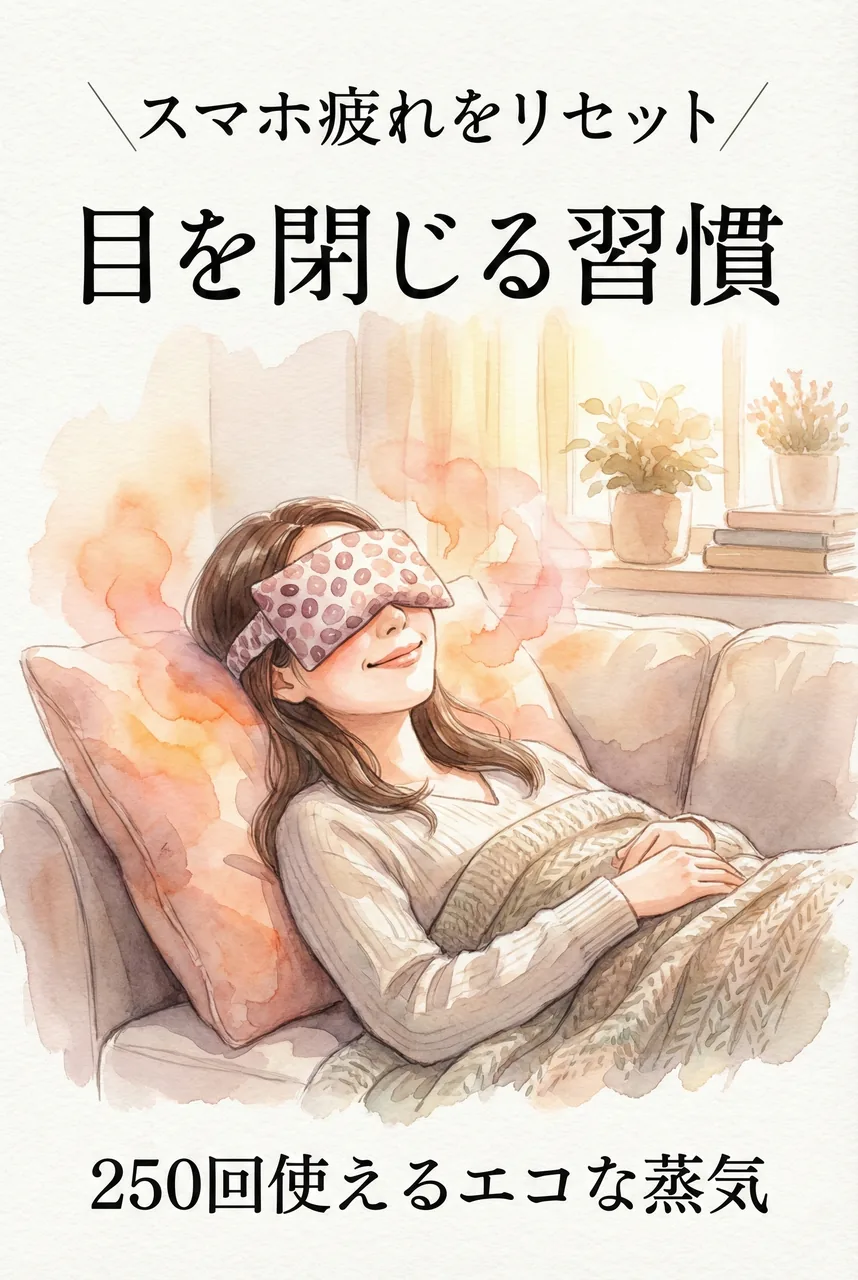
In modern life, if you don't make a deliberate choice to stop looking at things, you never will.
From the moment you wake up until you go to sleep, information pours in through your eyes nonstop.
Place an azuki eye pillow over your eyes, and you physically cannot keep them open.
That enforced darkness — the temporary shutdown of all visual input — is, for your brain, one of the deepest forms of rest possible.
Microwave it for a minute. Lie back.
Let the gentle warmth, the soft weight, and the faintly sweet scent of azuki reward your eyes for everything they've done today.


Japanese Bath Additive Guide: Onsen Minerals, Baking Soda & More

Japanese Incense Guide: Elevate Your Relaxation with Handcrafted Koh