
"My phone calendar is convenient, but I can't instantly recall what I was doing this time last year…"
"I'm just ticking off tasks — the days blur by without feeling like anything actually happened…"
If that resonates, what you may need isn't a better productivity app — it's a handwritten
planner.
Did you know that Japan's "TECHO"
(手帳) culture has earned a cult following worldwide?
A Japanese planner is far more than a schedule book.
Paper that never bleeds through — no matter what pen you use. Bindings that open flat at 180°. Leather covers that
age gracefully with every use, becoming a record of the life lived inside them.
This guide introduces the finest Japanese-made planners and notebooks — the kind worth growing alongside you.
1. Why Japanese "TECHO" Has a Cult Following Worldwide
Unlike the thick, heavy planners common in the West, Japanese planners pack extraordinary craft and user-centered
design into every detail.
Here are the two engineering breakthroughs that stunned stationery fans around the world.
Tomoe River Paper: Fountain Pen-Friendly and Feather-Light
Many premium Japanese planners — including the Hobonichi Techo — use Tomoe River paper,
developed by Tomoegawa Paper.
What makes it extraordinary is its thinness: roughly half the thickness of standard copy paper, yet fountain pen
ink sits on the surface without bleeding through to the other side.
Thanks to this paper, a one-page-per-day planner can carry an entire year's worth of entries without becoming
heavy to carry.
Thread-Sewn Binding (Itokagari): Opens Flat at 180°
No more planners that snap shut the moment you set them down.
The traditional itokagari (thread-sewn) binding used in top Japanese planners means every page opens
completely flat — no fighting the spine.
Whether you're writing or sketching, the planner stays open on the table. It makes every journaling session feel
unhurried.

2. Freedom-First: Japan's Two Iconic Planner Brands
If you're exploring Japanese planners for the first time, these two brands are the essential starting point.
Both go far beyond scheduling — each is a life companion in its own right.
Hobonichi Techo
The pioneer that gave the world one page per day.
Born from "Hobonichi" (almost-daily web magazine), the Hobonichi Techo was created by copywriter Shigesato
Itoi as a planner that refuses to tell you how to use it.
The signature feature: one full page for every single day — no pre-printed columns or rigid time blocks.
Sketch your lunch, tape in a movie ticket stub, log your baby's milestones, or just write a single sentence.
There are no wrong answers.
The annual cover collection — dozens of collaborations with artists and brands — has become a beloved ritual
for fans worldwide.
TRAVELER'S notebook
Scratches become stories. A leather notebook built for the long haul.
A simple, unassuming cowhide cover — hand-tanned in Chiang Mai, Thailand — wrapped around a slim Japanese
paper refill. That's the whole idea.
The pleasure of TRAVELER'S notebook is in the customization and the aging.
Scuff it, drop it, drag it through airports. Every mark becomes part of its history, and the leather only
grows more beautiful with time.
Add zipper pockets, brass charms, and spare refills to make it entirely your own. The process of building it
is the point.
3. Engineered for Adults: System Planners & Life-Log Diaries
If you want something more structured — a planner that works with your professional life and helps you see the bigger picture — these two are hard to beat.
PLOTTER
The obsession with thinness that reinvented the system planner.
"System planners are bulky and heavy" — PLOTTER demolished that assumption.
By shrinking the ring diameter to near-minimum and wrapping the whole thing in a single piece of leather,
PLOTTER is as slim and light as a notebook, while retaining the flexibility to swap refills in and out.
The leather options — including Italian Pueblo leather crafted by traditional methods — make it one of the
most distinguished tools you can carry into a meeting room.
Kokuyo Jibun Techo
Visualize your 24 hours. Organize your whole life.
Developed by a creative director from one of Japan's top advertising agencies, the Jibun Techo (literally "my
own planner") is a life-log system built around a 24-hour vertical layout.
At a glance, you can see exactly how your sleep, commute, meals, and deep work actually stack up throughout
the day — a revelation for anyone trying to reclaim time.
The concept is "a planner for life": a separate booklet called "LIFE" is included for family trees, long-term
goals, and bucket lists — so past, present, and future live in one place.
4. Frequently Asked Questions
How do I balance using a smartphone and a paper planner?
Use your phone for future events, your planner for past experiences.
Smartphones are better for scheduling, reminders, and anything that changes frequently.
But handwriting what you felt, thought, and noticed each day activates the brain differently — memories stick
deeper and ideas surface more easily.
Think of the planner less as an agenda and more as a journal or log. That's how most dedicated users approach it.
One page per day feels like too much pressure. What if I have nothing to write?
Think of blank space as breathing room, not failure.
You don't need to fill every line. "Nothing much today" is a perfectly valid entry.
On quieter days, use the page as a scrapbook — paste in a receipt, tear out a label you liked, or sketch something
you passed on the street.
Most Hobonichi users actively embrace blank days as part of the record.
Is caring for a leather cover (like TRAVELER'S notebook) difficult?
The best care is simply using it every day.
The natural oils from your hands condition the leather gradually, developing a personal patina over time.
When it starts to feel dry (roughly once or twice a year), a thin application of leather balm is all it needs.
If it gets scratched, rub firmly with your finger — most marks disappear. The goal is to use it freely, not
protect it. Rough use is what makes it beautiful.
Will fountain pen ink bleed through the paper?
Any planner using Tomoe River paper handles fountain pens beautifully.
The Hobonichi Techo, TRAVELER'S notebook (lightweight paper refill), and Kokuyo Jibun Techo (THIN PAPER version)
are all excellent for fountain pen writing — ink sits on the surface without spreading or bleeding through.
If you're a fountain pen user, always check the paper spec before buying from other brands — not all planner paper
is fountain pen-friendly.
When is the best time to buy a Japanese planner?
September to October, when the new lineup is released.
Japan's planner season kicks off in autumn. Popular cover designs and limited editions often sell out within days
of release.
April-start versions arrive around February, but the January-start lineup is significantly larger and more
varied.
If you have a specific design in mind, don't wait.
Final Thoughts: Smartphones Record Events — Planners Record Life
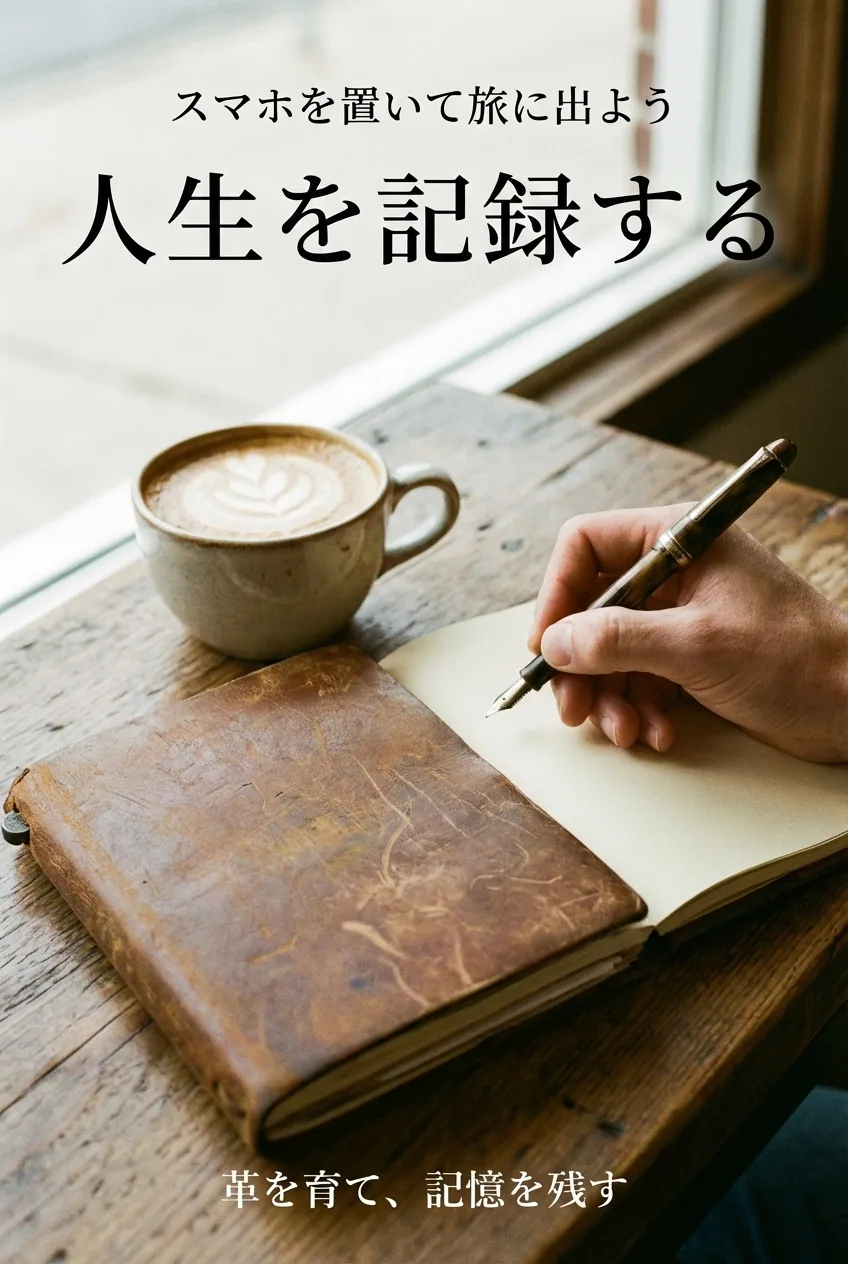
A few years ago, I went fully digital. No paper planner, just the calendar app.
At the end of that year, when I tried to look back at what had happened, all that remained were entries like
"10:00 Meeting" and "7pm Dinner." Just data.
What I'd thought, felt, worried about, and been moved by — all of it had quietly disappeared.
When I went back to handwriting, something changed. The shakiness in my letters on a rough day reminded me of a
stressful week I'd nearly forgotten. A doodle in the margin sparked an idea months later.
A paper planner doesn't just record time — it raises the resolution of your memory.
Your life deserves to be written down. These planners are built for exactly that.