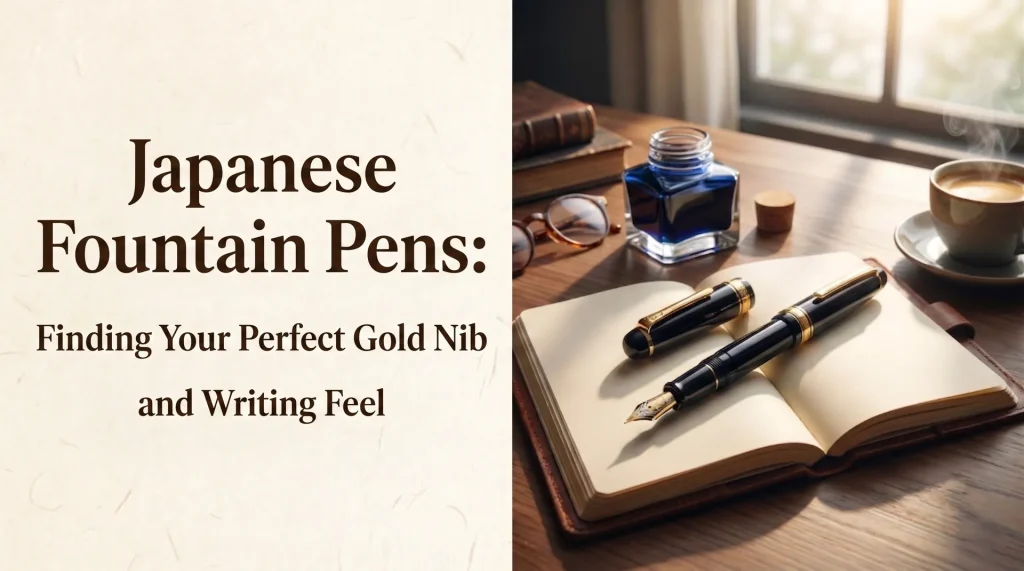
In a world of screens and keyboards, the act of writing by hand has become something worth
savoring.
"My handwriting is terrible — fountain pens aren't for me."
That's the wrong conclusion. A good fountain pen doesn't demand neat handwriting — it tends to produce it, almost
without effort.
The way ink flows through the nib by capillary action means zero pressure is required. Your hand relaxes. The line
slows down. The letters start to take care of themselves.
Add to that the ritual — uncapping, the flash of a gold nib, ink meeting paper — and you start to understand why
people describe fountain pen writing as something closer to a pleasure than a task.
This guide introduces seven Japanese fountain pens worth owning, the three brands behind them, and
everything you need to use them well.
Quick Reference: 7 Japanese Fountain Pens at a Glance
| Model | Price Range | Writing Feel | Best For | Details |
|---|---|---|---|---|
| PILOT Cocoon | ~¥3,000–5,000 | Smooth, gliding | First fountain pen | Details ↓ |
| PLATINUM #3776 Century | ¥10,000–20,000 | Firm, precise | Occasional writers | Details ↓ |
| PILOT Custom 74 | ¥20,000–30,000 | Supple, smooth | Daily writing, all styles | Details ↓ |
| SAILOR Profit 21 | ¥40,000–50,000 | Extraordinarily soft | Writing feel above all | Details ↓ |
| PILOT Capless | ¥20,000–30,000 | Smooth, practical | Business, planners | Details ↓ |
| SAILOR Professional Gear | ¥40,000–50,000 | Soft, modern | Design-conscious buyers | Details ↓ |
| PILOT Elabo (Falcon) | ¥30,000–40,000 | Flexible, pressure-sensitive | Expressive line variation | Details ↓ |
1. Why a Fountain Pen? The Case for Writing's Most Pleasurable Tool
In an age when a ballpoint costs less than a coffee, why spend twenty or fifty thousand yen on a pen?
The Pleasure of Using Something Well-Made
The act of uncapping a fountain pen, seeing the gold nib, watching ink flow onto paper — there's a quality of
attention it demands that ballpoints don't.
You slow down. You write more deliberately. The letters look better almost immediately.
"I'm someone who uses considered tools" is a quiet satisfaction that comes with no explanation
required. It's a pleasure you keep entirely to yourself — which is rather the point of it.
The Most Ergonomic Pen Ever Made
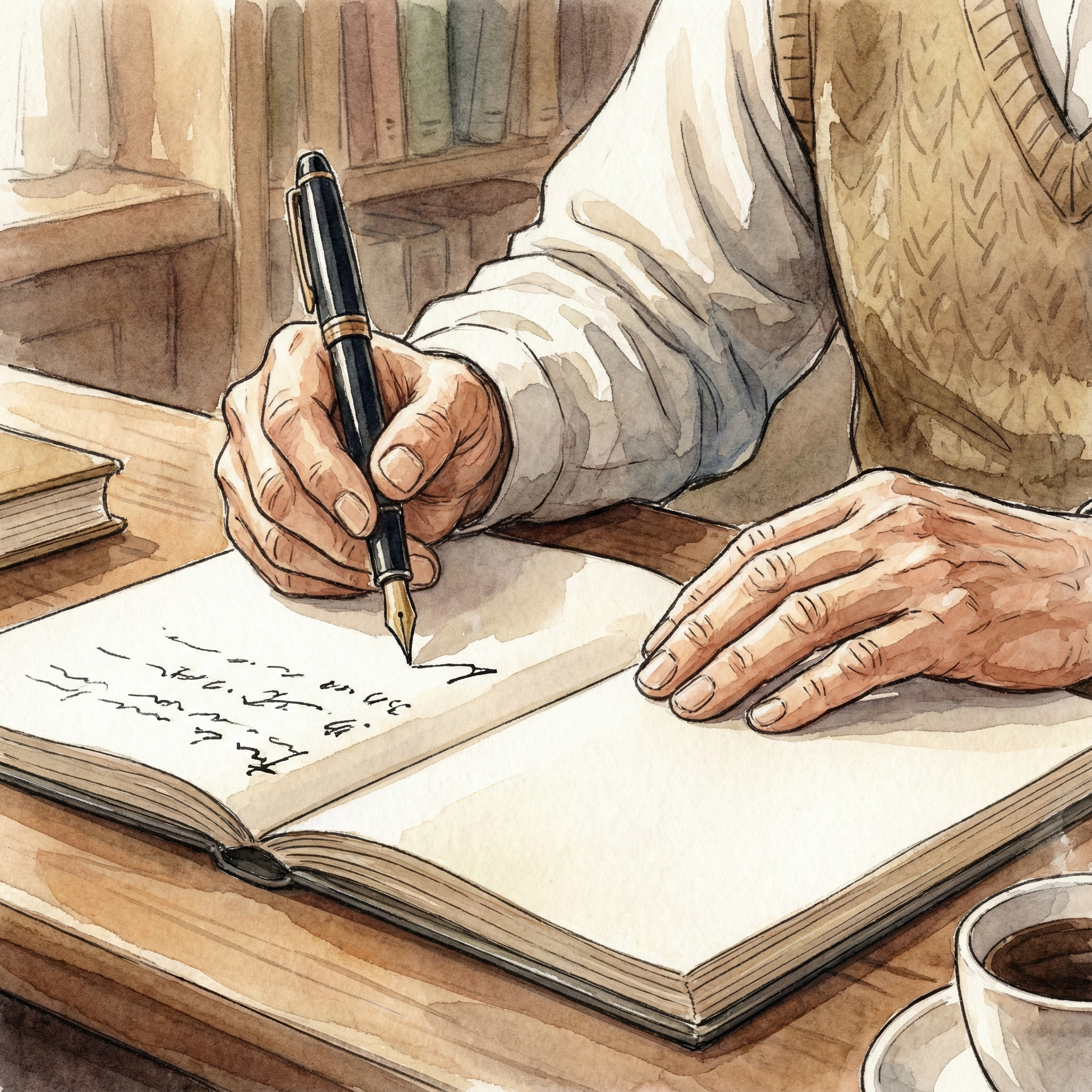
This surprises most people: fountain pens are the least physically demanding writing instrument.
Ink flows by capillary action — the pen feeds itself. No pressure is required at all.
For anyone who experiences hand fatigue from writing, switching to a fountain pen often
eliminates the problem entirely. The writing improves, the hand relaxes, and the experience stops feeling like a
chore.
2. What Makes Japanese Nibs Different
Both German makers (Montblanc, Pelikan) and Japanese makers produce excellent fountain pens — but they write differently, and for a specific reason.
Designed for Different Scripts
Western nibs are ground round and smooth for flowing cursive — they glide frictionlessly across
the page. This is ideal for joined-up Latin script but can feel slippery for precise, detailed strokes.
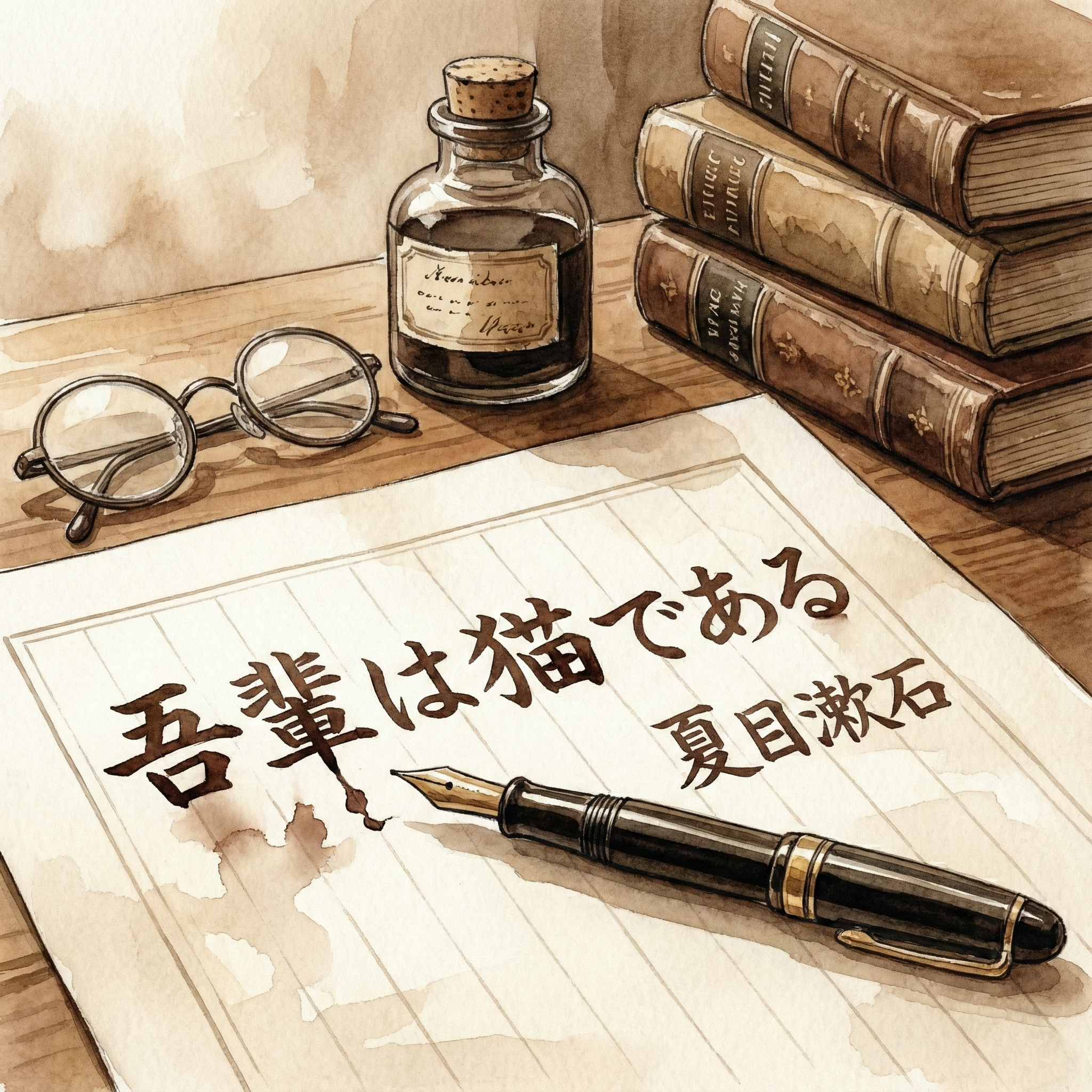
Japanese nibs retain deliberate feedback — a slight, pleasant resistance as the nib moves. This
was developed for kanji, which requires sharp stops, clean starts, and control over individual strokes.
The result: Japanese nibs give you more tactile control at every moment. Whether you're writing in English,
Japanese, or anything else, if you want feedback and precision rather than pure glide, Japanese nibs
typically win.
3. PILOT vs. Sailor vs. Platinum: Three Writing Philosophies
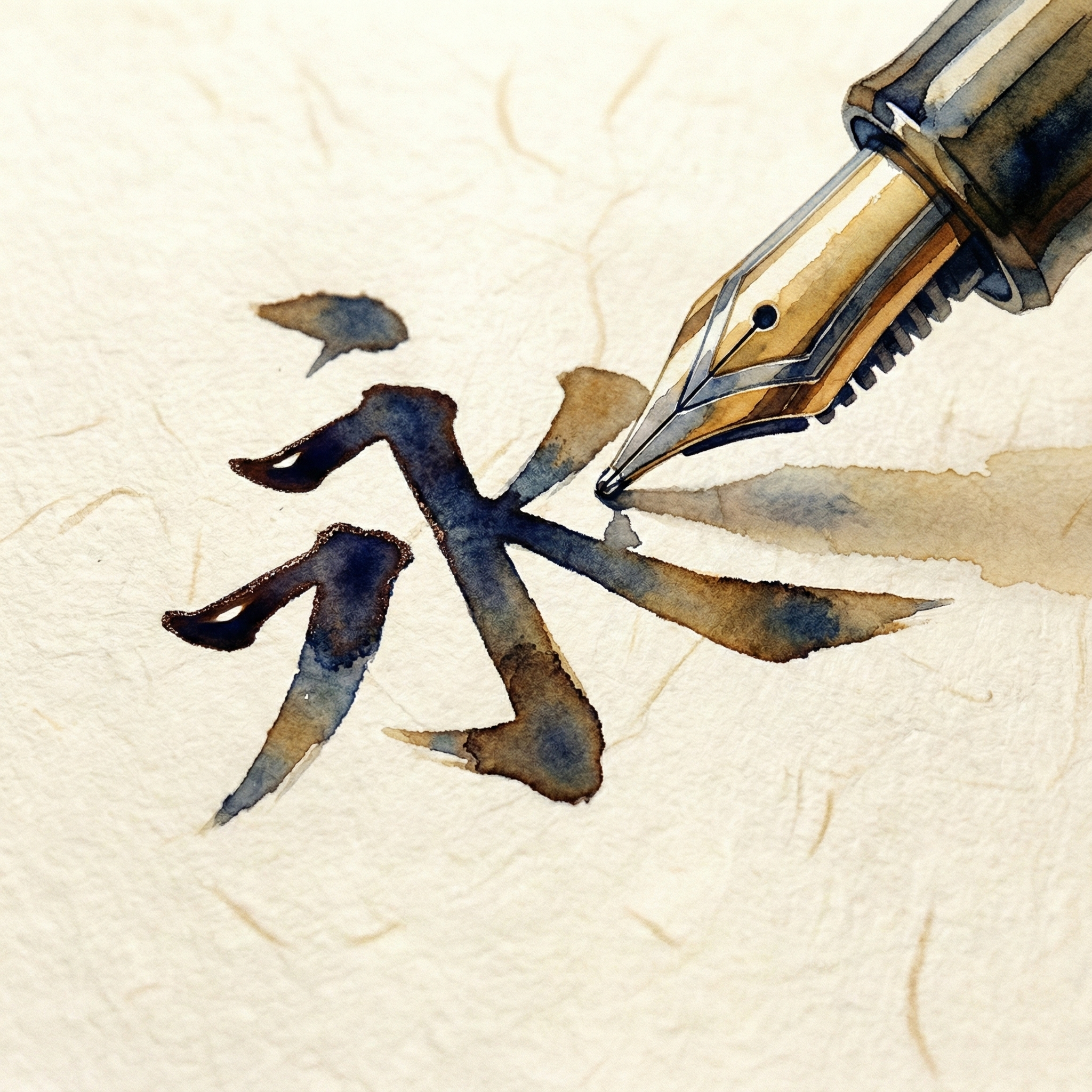
Japan's three major fountain pen makers — PILOT, SAILOR, and PLATINUM — each have nearly a century of history. They're all excellent. But they write completely differently.
① PILOT — Smooth, Consistent, Technically Perfect
Character: Industrial precision at its best.
PILOT nibs are ground to extremely tight tolerances — nib-to-nib variation is minimal. The writing feel is
described as "smooth," "gliding," "flowing" — ink seems to move without resistance.
Best for:
· Heavy-handed writers who press down naturally
· Those who want to write quickly and fluently
· First-time gold-nib buyers who want reliability above all

② SAILOR — Feedback, Craft, and a Slightly Pencil-Like Touch
Character: The artisan's pen.
Japan's oldest fountain pen maker. Sailor nibs are tuned to retain more feedback — a gentle scratch, almost like
a sharp pencil on quality paper.
Writing with a Sailor feels deliberate. Each stroke registers. It makes you write more carefully.
Best for:
· Those who want precision and expressiveness over pure glide
· Writers who enjoy the sensation of pen-on-paper contact
· Anyone who values craft and character in their tools

③ PLATINUM — Engineered for Reliability, Stiff and Clean
Character: The engineer's pen — practical, innovative.
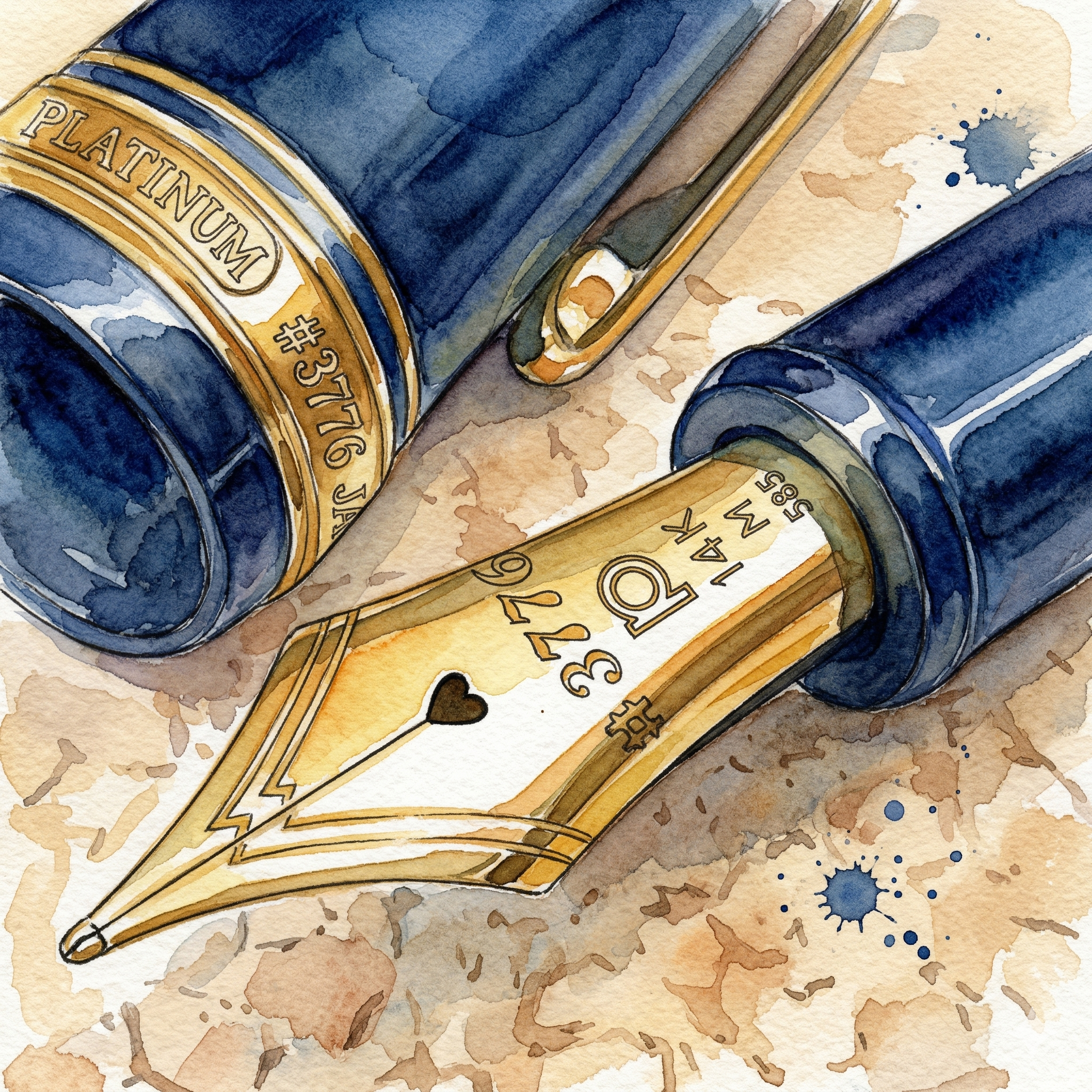
Founded in 1919. Platinum nibs are firm and produce a clean, consistent line — precise and business-ready.
Their defining innovation is the Slip-and-Seal mechanism (their patented cap design) that seals
the pen internally when capped. Ink stays wet for up to two years without drying out — even if you forget it in
a drawer.
Best for:
· Occasional writers who don't use their pen daily
· Those who want reliable starts after long gaps
· Value-seekers: genuine gold nibs in the ¥10,000–20,000 range
The Short Version
PILOT = Smooth, consistent, no-fuss. The reliable benchmark.
SAILOR = Tactile, crafted, expressive. For writers who want to feel the pen.
PLATINUM = Firm, precise, maintenance-forgiving. The practical engineer's choice.
When in doubt: start with a PILOT Cocoon (steel nib entry) → if you love it, move to a PILOT or PLATINUM gold nib
→ then explore SAILOR if you want more character.
4. Seven Japanese Fountain Pens Worth Owning
From a ¥3,000 introduction to a life-companion at ¥50,000 — seven pens the Japanese fountain pen community consistently returns to.
No.1 — PILOT Cocoon — Steel Nib Entry Pen
At around ¥3,000–5,000, the Cocoon's writing feel is far smoother than its cost suggests. The Good Design Award-winning body — shaped like a silkworm cocoon — looks appropriate in any business context. For anyone wondering if fountain pens are for them, this is the pen to find out on.
- Material / Type
- Resin body, stainless steel nib
- Made in
- Japan (PILOT Corporation)
- Best for
- First fountain pen, everyday writing
- Price range
- $25–$45
No.2 — PLATINUM #3776 Century — Two-Year Ink Retention
The Slip-and-Seal cap mechanism seals the nib when closed, keeping ink from drying for up to two years. Open it after months in a drawer and it writes immediately. The 14-karat nib has firm, precise feedback and produces a clean, consistent line. Gold nib performance at an accessible price — outstanding value for occasional writers.
- Material / Type
- Resin body, 14K gold nib
- Made in
- Japan (PLATINUM Pen Co.)
- Best for
- Occasional writers, reliable starts after long gaps
- Price range
- $80–$160
No.3 — PILOT Custom 74 — Japan's Benchmark Pen
Continuously loved since 1974. The Custom 74's 14-karat nib flexes slightly with pressure, giving your writing subtle expressiveness while staying totally controlled. Available in a wider range of nib widths than almost any other pen — from ultra-fine to stub — making it unusually easy to find your preferred line.
- Material / Type
- Resin body, 14K gold nib
- Made in
- Japan (PILOT Corporation)
- Best for
- Daily writing, all styles, versatile nib selection
- Price range
- $150–$250
No.4 — SAILOR Profit 21 — 21-Karat Feather-Touch Nib
Standard gold nibs are 14-karat. Sailor uses 21-karat — higher gold content that makes the nib more flexible and yielding. The writing feel is feather-touch: the nib gives slightly as you press, springs back cleanly, feedback rich but never rough. Sailor's best-known flagship — the pen that converts skeptics.
- Material / Type
- Resin body, 21K gold nib
- Made in
- Japan (Sailor Pen Co.)
- Best for
- Writing feel above all, soft nib lovers
- Price range
- $220–$350
No.5 — PILOT Capless (Vanishing Point) — Retractable Fountain Pen
A 60-year-old design that solves the one thing that puts people off fountain pens: the uncapping ritual. One click and the nib appears. One click and it retracts. The full writing experience of a proper 18-karat gold nib, in the convenience of a click-mechanism body. The go-to pen for planners and meeting notes.
- Material / Type
- Metal body, 18K gold nib, retractable mechanism
- Made in
- Japan (PILOT Corporation)
- Best for
- Business use, planners, daily quick writing
- Price range
- $150–$250
No.6 — SAILOR Professional Gear — Flat-Top Anchor Pen
Where the Profit 21 has a traditional rounded cap, the Professional Gear cuts the crown flat — a clean, contemporary profile. Inside: the same 21-karat nib as the Profit 21. Same exceptional softness, different visual statement. When the anchor logo peeks from a suit pocket, it's a quietly confident thing.
- Material / Type
- Resin body, 21K gold nib, flat-top design
- Made in
- Japan (Sailor Pen Co.)
- Best for
- Design-conscious buyers, business carry
- Price range
- $220–$350
No.7 — PILOT Elabo (Falcon) — Flexible Nib for Line Variation
Known internationally as the Falcon, the Elabo has a uniquely shaped, highly flexible nib that responds to writing pressure with dramatic line width changes. Press lightly: a hair-thin line. Press firmly: a broad stroke. The closest thing in a modern fountain pen to the variable line of calligraphy.
- Material / Type
- Resin body, 14K flexible gold nib
- Made in
- Japan (PILOT Corporation)
- Best for
- Expressive line variation, calligraphy-style writing
- Price range
- $180–$280
5. Choosing Ink: Types, Brand Personalities, and Rules
Half the pleasure of fountain pens is in the ink. The color range alone puts ballpoints to shame — and the behavior of different inks on different papers is its own area of discovery.
The Three Main Ink Types
① Dye-based (most common)
Vivid colors, enormous range, flows easily, least likely to clog. The standard inks from all three major brands
are dye-based. Start here.
② Pigment-based (archival, water-resistant)
Uses pigment particles rather than dissolved dye — waterproof and fade-resistant once dry. Good for important
documents and artwork. Requires more frequent cleaning as pigment can settle in the pen.
③ Iron gall (traditional, oxidizing)
An ancient formula that oxidizes and bonds to paper over time — the same type used for historical manuscripts.
Writes light, darkens as it ages. For experienced users only; the mildly acidic formula requires more pen
maintenance.
Each Brand's Ink Personality
PILOT — Iroshizuku series: 50+ colors named for Japanese natural phenomena — autumn leaves, pine
resin, winter persimmon, morning glory. Vivid, well-behaved, and broadly loved. A benchmark range.
SAILOR: Known for distinctive blues — deep sky tones that behave well on Japanese paper with
minimal feathering. Excellent for fine writing.
PLATINUM — Mix-Free system: Certain Platinum inks can be safely blended with each other. If
mixing custom colors appeals to you, Platinum is the starting point.
Three Rules for Ink Beginners
① Start with the pen maker's own ink — compatibility is guaranteed, and problems are minimal.
② Don't use iron gall in a new pen — the mild acidity can damage components if the pen isn't
cleaned regularly. Use a dedicated pen once you know what you're doing.
③ Never mix inks from different brands — chemical reactions can create sediment that clogs the
pen. When switching colors, always clean the pen thoroughly first (Platinum Mix-Free inks are the one exception).
6. Lifelong Care: It's Mostly Just Water
The Three-Month Ritual — Easier Than You Think
The biggest misconception about fountain pens is that maintenance is complicated. It isn't.
The best maintenance is simply writing with the pen regularly — daily use keeps ink flowing and
prevents clogging.
When ink flow becomes sluggish:
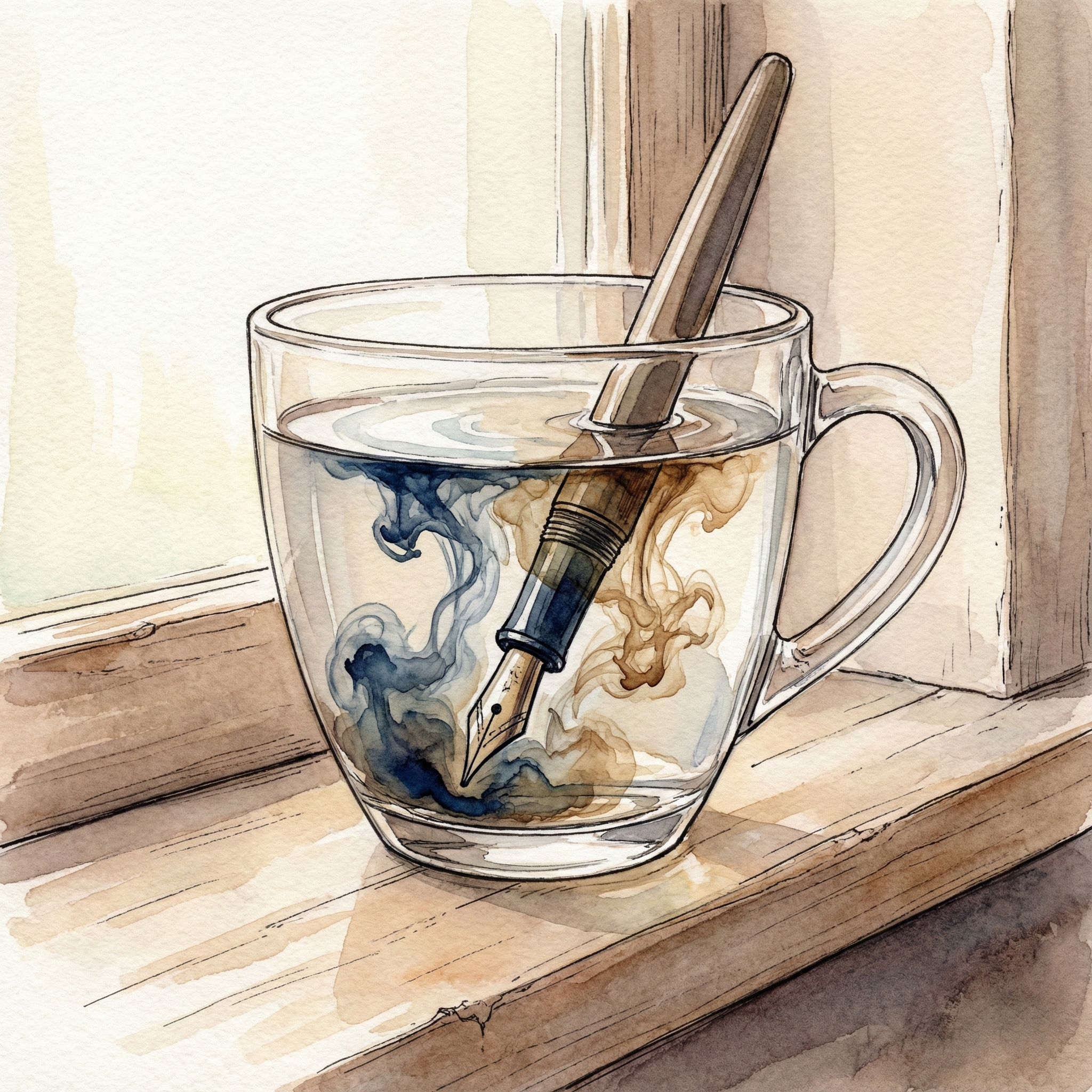
1. Fill a cup with lukewarm water
2. Soak the nib section overnight
3. Rinse under running water until the water runs clear
That's it. Even the cleaning itself becomes a quiet pleasure — attending to a tool you value.
Five Things to Avoid
① Hot water — damages nib metal and can warp resin bodies. Always use lukewarm water (30–40°C /
85–105°F).
② Leaving ink to dry inside for months — dried ink blocks the slit in the nib and takes much
longer to clear. If storing for over a month, clean and store dry.
③ Pressing hard with the nib — the nib is designed for zero pressure. Force can permanently
spring the tines open, destroying the writing feel.
④ Mixing inks from different brands mid-pen — always clean before switching.
⑤ Storing nib-down — gravity keeps ink pooling at the tip, leading to drying and leaking. Store
horizontally or nib-up.
Storage Guide by Duration
Short-term (1–2 weeks): Leave ink in the pen, store horizontally. No action needed.
Medium-term (1 month): Write a few lines weekly if you can, or store capped. PLATINUM
Slip-and-Seal pens shine here — ink won't dry regardless.
Long-term (3+ months): Clean thoroughly, dry completely, store with no ink in the pen. Keep away
from direct sunlight and heat — UV fades ink, heat warps resin bodies.
7. Frequently Asked Questions
My handwriting isn't good — can I still use a fountain pen?
Especially if your handwriting isn't good.
Zero pressure writing removes the tension from your hand. Relaxed hands produce more even, balanced letters
naturally. Many people find their handwriting improves within days of switching, simply because the pen stops
fighting them.
The ink has dried in my pen and it won't write. What do I do?
Soak the nib in lukewarm water overnight.
Place the nib section (not the whole pen) in a cup of warm water and leave it for several hours or overnight.
Flush under running water until clear. Repeat if needed.
For stubborn blockages, manufacturer-approved cleaning solution works well. If the problem persists, most brands
offer service center repairs.
Which nib width should I choose?
For English writing, "Fine (F)" or "Medium (M)" works for most people.
Japanese nib widths run noticeably narrower than their European equivalents — a Japanese "Medium" writes more like
a European "Fine." For small handwriting or journal work, start with F. For larger, more expressive writing, try
M. Extra Fine (EF) is excellent for small notebooks and planners.
I don't want to uncap a pen every time I write. Is there an option?
Yes — the PILOT Capless.
A single click deploys the nib, another retracts it. It works like a ballpoint in convenience and like a fountain
pen in quality. If that's still too much, Platinum's Slip-and-Seal pens start writing instantly even after weeks
without use — so uncapping isn't the chore it might be.
Can I take a fountain pen on a plane?
Yes, but take precautions.
Cabin pressure is lower than ground level — ink expands and can leak from the nib. Three options: fill the ink
reservoir completely (less air = less leak risk), carry nib-up, or travel with an empty pen and fill after
landing. Platinum pens with the Slip-and-Seal cap are notably more resistant to in-flight leaking.
Which pen makes the best gift?
It depends on the recipient's experience.
For a first fountain pen: PILOT Cocoon — approachable price, award-winning design, reliably
excellent.
For someone already using fountain pens: SAILOR Profit 21 or PLATINUM #3776
Century in the ¥10,000–50,000 range — both arrive beautifully boxed and will feel meaningfully
different from what they already own.
8. Final Thoughts
The fastest way to write is to type. The most efficient way to communicate is a message app.
But none of that gives you the specific quality of attention that comes from writing slowly, with a tool you've
chosen for the way it feels in your hand.
A fountain pen is permission to slow down. In a day full of notifications and tab-switching, fifteen minutes of
unhurried writing is genuinely restorative.
Start with one pen. Find the ink color you love. The rest follows naturally. Ten years from now, that pen will
have absorbed enough of your daily habits to feel irreplaceable.
Japanese Glass Pens: Craft Workshops, Ink Choices & How to Clean
Japanese Notebooks for Fountain Pens: 7 Picks That Won't Bleed Through