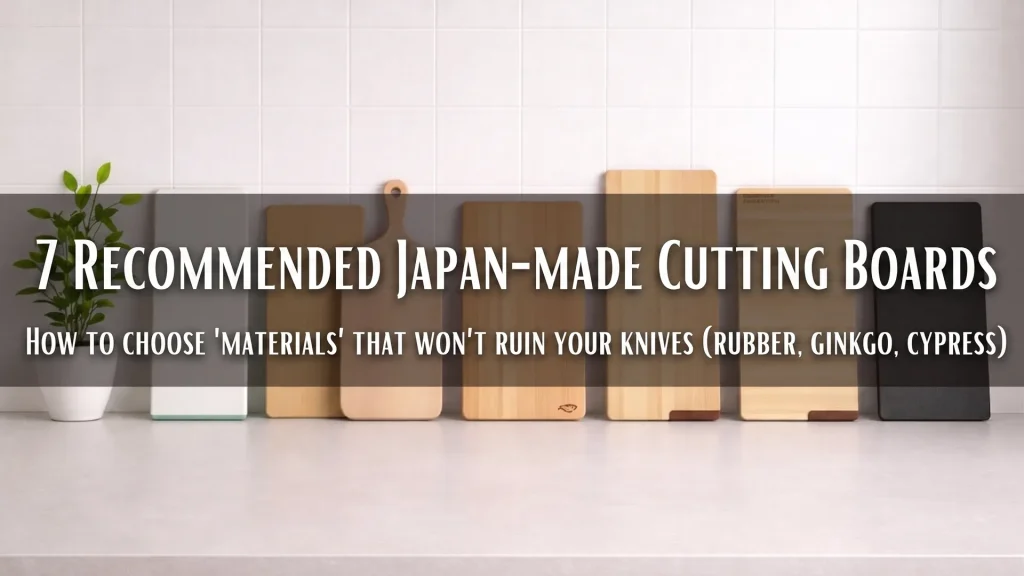
"I bought a great knife, but I'm still using a cheap plastic cutting board."
Here's a secret most home cooks don't know: whether your knife stays sharp or dulls within weeks depends almost
entirely on the cutting board underneath it.
That satisfying "tok-tok" sound when you chop, the ease on your wrists, the hygiene of a board that doesn't blacken
— it all comes down to the board.
This guide covers everything you need to know to choose a Japanese cutting board that lasts a lifetime: from
synthetic rubber (the sushi chef's standard) to ginkgo wood (the knife lover's ultimate) to hinoki cypress (the
fragrant Japanese classic) — plus seven top Japanese brands to consider.
Why Japanese Cutting Boards Are Worth It
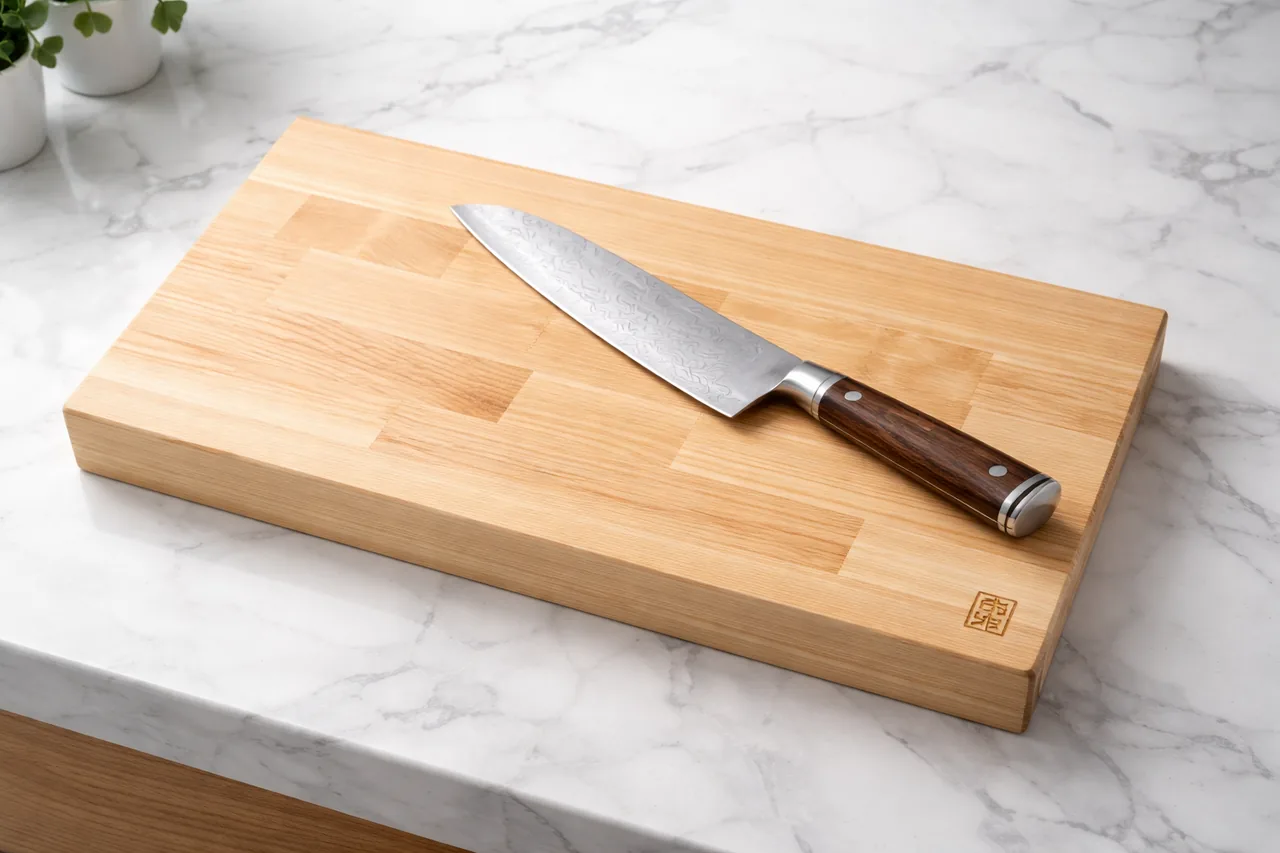
1. It Protects Your Knife Edge and Keeps It Sharp Longer
A cheap, overly hard plastic cutting board doesn't absorb the impact of each cut — it hammers the blade, causing invisible micro-chips along the edge. Japanese wooden cutting boards and premium synthetic rubber boards have just the right amount of give, so the blade lands softly. The result: your knife stays sharper far longer, and you sharpen it far less often.
2. Easier on Your Wrists — the Difference "Knife Feel" Makes
Experienced cooks consistently point to "knife feel" as the game-changer. When the board absorbs the impact of each cut, you hear a soft, satisfying thud and feel almost no shock through your wrist and forearm. For Japanese-style cooking with lots of fine chopping — shredding cabbage, mincing green onions — this difference is enormous over the course of a meal.
3. Designed for Japan's Climate — Quick-Drying and Hygienic
Mold and dark staining are the top complaints about cutting boards in Japan's humid climate. Japanese craftsmen address this through carefully selected materials (ginkgo wood and Shimanto hinoki naturally repel water), rotating drying stands built into the board, and special treatments that make some wooden boards dishwasher-safe. The engineering that goes into keeping a Japanese board clean is part of what you're paying for.
Material Comparison: Rubber vs Ginkgo vs Hinoki
Japanese cutting boards come in three main materials. Knowing what each one offers makes it easy to find the right board for how you cook.
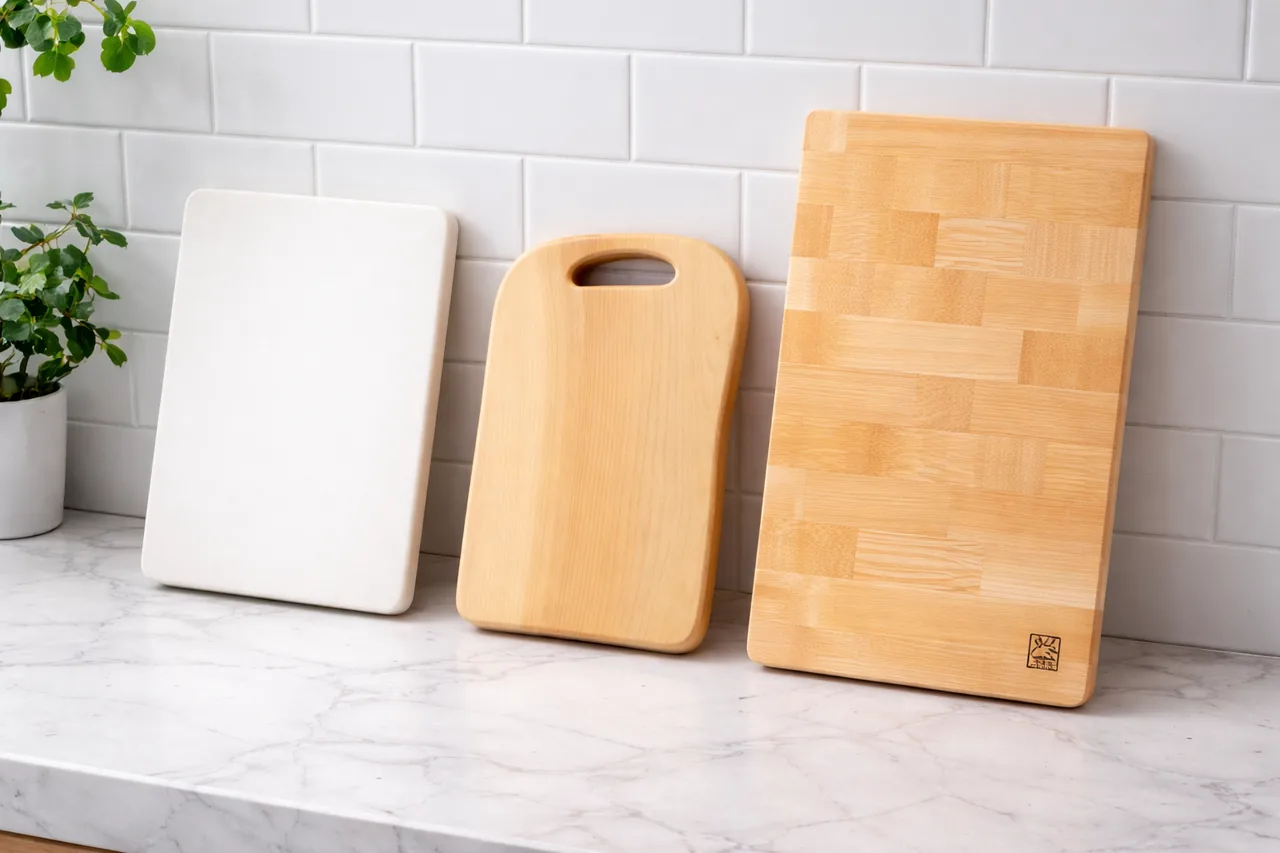
1. Synthetic Rubber — The Hygiene Champion, the Professional Standard
- What it offers
- The best of both worlds: the soft, forgiving feel of wood combined with plastic's near-zero water absorption. Rubber boards don't scratch deeply, so bacteria have nowhere to hide — virtually no mold risk. They tolerate boiling water and bleach, which is why sushi chefs swear by them.
- Best for
-
· Anyone who refuses to deal with mold — ever
· Households that regularly handle raw meat or fish
· Cooks who want minimal maintenance
2. Ginkgo Wood (Icho) — The Finest Knife Feel. The Last Board You'll Ever Need.
- What it offers
- Ginkgo wood (icho) is naturally oily, moderately soft, and springy — the material that puts the least stress on a knife edge of anything available. It even has a degree of self-healing: small knife marks gradually close as the wood's natural oils redistribute. Professional Japanese chefs say: "If you're using a quality Japanese knife, ginkgo is the only board."
- Best for
-
· Owners of quality knives (carbon steel, Damascus, etc.)
· Cooks who love the sound and sensation of a well-matched board
· Anyone who enjoys building a long-term relationship with their tools
3. Hinoki Cypress — Fragrant, Light, and Quintessentially Japanese
- What it offers
- Hinoki has a fresh, calming cedar-like fragrance and contains natural antibacterial and insect-repelling compounds (phytoncides). It's lighter than ginkgo and more affordable, making it an ideal first step into wooden cutting boards. Newer models include slim dishwasher-safe designs that push the traditional material into modern kitchens.
- Best for
-
· Anyone who wants the aromatherapy of natural wood in their kitchen
· Those who want a light, easy-to-handle wooden board
· First-time wooden cutting board buyers
Finding the Right Board for Your Kitchen Style
Case 1: "I Never Want to See Mold Again."
If hygiene is your top priority, there's only one answer: synthetic rubber (Parker Asahi). Near-zero water absorption means a quick wash and wipe is all it needs to dry completely. No odor transfer, no staining, no risk. "I thought I wanted wood, but I'm not confident I'd maintain it" — if that's you, this is where you end up, and you won't regret it.
Case 2: "I Just Bought a Nice Knife and Want the Perfect Partner."
If you own a quality Japanese kitchen knife, the board that will get the most out of it is ginkgo wood (woodpecker, Futaba Shoten). Hard boards accelerate edge wear; ginkgo cushions every stroke and keeps that edge sharp for a strikingly long time.
Case 3: "I Want a Wood Board, But I Want to Put It in the Dishwasher."
For those who love the idea of wood but not the hand-washing — dishwasher-safe hinoki (Daiwa Sangyo) and hybrid wood-core boards (Hasegawa) were made for you. These represent the best of modern Japanese manufacturing: the warmth and performance of natural materials, engineered to survive the modern kitchen.
4. Choosing the Right Size — from Single to Family
"I don't know what size to get" is one of the most common questions.
The straightforward rule: choose
a board at least twice as long as the largest thing you regularly cut.
If you ever cut a whole cabbage or a full head of napa, 45cm (about 18") is where you want to be.
Solo or Couple → approx. 30×18cm (12"×7")
Compact enough for a small kitchen, easy to store, and more than adequate for one or two portions of prep. The
Tosaryu rotating-stand models in this size range are slim, light, and perfect for a first Japanese cutting
board.
Family of 3–4 → approx. 36×24cm (14"×9.5")
The standard size that handles serious family cooking without overwhelming the sink. It fits most home kitchen
counters and sinks, which is why "when in doubt, pick this size" is the common advice.
Both Parker Asahi rubber boards and woodpecker ginkgo boards have their widest selection in this size range.
Serious Cook / Professional → 45×24cm (18"×9.5") or larger
With a larger board you can sweep cut vegetables to one side as you work — the board becomes a
workspace, not just a surface. If you want to do everything on one board without constantly
shuffling ingredients, go a size up. Futaba Shoten stocks large-format ginkgo boards finished one by one by
craftsmen.
Thickness matters too.
For wooden boards, 3–4cm (1.2"–1.6") thick gives you the softest knife feel and leaves room for
resurfacing as the board ages.
Weigh "lightness first" against "long-term use" when deciding on thickness.
Top 7 Japanese Cutting Board Brands
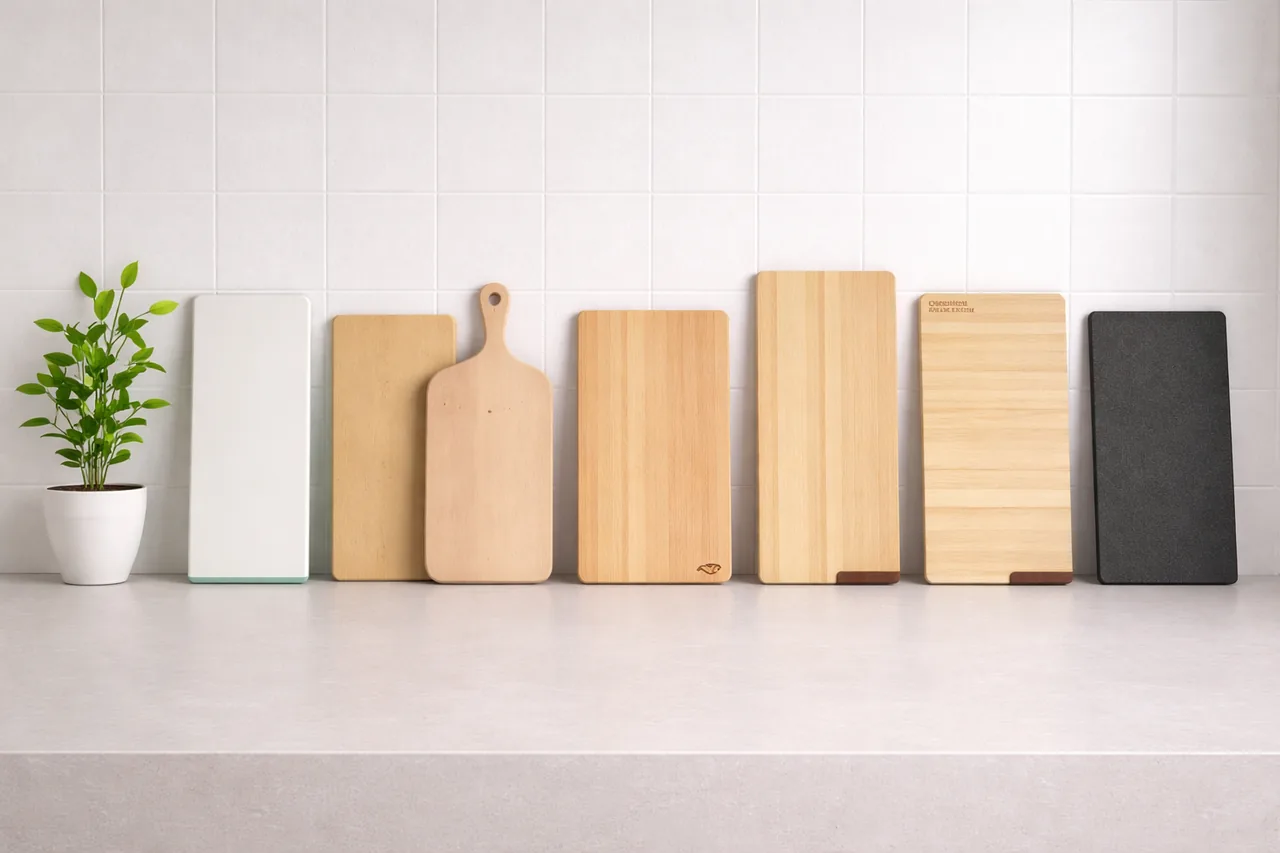
Below are the Japanese cutting board brands we're confident recommending. They're grouped by material — find the one that matches your priorities.
Quick Reference: Top 7 Japanese Cutting Boards at a Glance
| Brand | Material | Best For | Details |
|---|---|---|---|
| Parker Asahi | Synthetic Rubber | Hygiene first. Pro-grade durability. | Details ↓ |
| woodpecker | Ginkgo (Icho) Wood | Caring for a good knife. Great as a gift. | Details ↓ |
| Futaba Shoten | Ginkgo (Icho) Wood | Serious cooks who want a large, professional board. | Details ↓ |
| Tosaryu | Shimanto Hinoki Cypress | Fragrance + clever self-standing design for hygienic drying. | Details ↓ |
| Daiwa Sangyo | Hinoki Cypress (Dishwasher-Safe) | Wood aesthetic without the hand-washing. | Details ↓ |
| Hasegawa | Hybrid (Wood-Core) | Lightweight, warp-proof. Used in professional kitchens. | Details ↓ |
| Yoshikawa | Hybrid (Round Design) | Small kitchens where ingredients keep rolling off the board. | Details ↓ |
1. Synthetic Rubber — The Professional's Choice, Loved by Sushi Chefs
Parker Asahi
The definitive name in Japanese rubber cutting boards. The "Asahi Cookin' Cut" — seen on the counters of sushi restaurants across Japan — has just the right flex to protect knife edges while draining so well that bacteria have no chance to take hold. Boiling water and bleach are both fine. This is the board people mean when they say "I'll never use anything else."
Parker Asahi — Asahi Cookin' Cut Rubber Cutting Board (LL)
Japan's iconic professional synthetic rubber cutting board — gentle on knife edges, near-zero water absorption, boil- and bleach-safe. Made in Japan. The go-to board for sushi chefs and serious home cooks alike.
View on Amazon2. Ginkgo Wood (Icho) — The Finest Knife Feel Available
woodpecker
A brand founded by a family of woodturners from Gifu Prefecture. The boards are strikingly beautiful — the kind you leave on your counter because they look too good to put away. The soft, low sound they make when you chop on them is deeply satisfying, and your wrists will thank you. The elegant packaging also makes them one of the most popular wedding and housewarming gifts in Japan.
HONMAMON — Handcrafted Ginkgo Wood Cutting Board (Large)
A handcrafted Japanese professional-grade ginkgo (icho) wood cutting board — naturally oily and water-resistant, maximally gentle on knife edges, made in Japan. The closest available ginkgo alternative to woodpecker on Amazon US. (Note: woodpecker brand is not sold on Amazon.com US.)
View on AmazonFutaba Shoten
A specialist workshop located in Fukui Prefecture — the same region famous for Echizen lacquerware — that works exclusively with rare ginkgo wood. They source entire logs, dry them in-house for three to five years, and cut boards only when the timber is fully ready. The result is professional-grade stock for serious home cooks and chefs, ranging from large-format restaurant boards all the way down to household sizes.
HONMAMON — Ginkgo Wood Cutting Board (L Size)
A solid ginkgo wood chopping board made in Japan by HONMAMON, a traditional Japanese woodcraft specialist — the best available ginkgo alternative to Futaba Shoten on Amazon US. Natural oil content keeps the board water-resistant and knife-friendly. (Note: Futaba Shoten is not sold on Amazon.com US.)
View on Amazon3. Hinoki Cypress — Fragrance, Antibacterial Properties, and Smart Functionality
Tosaryu
Using oil-rich hinoki cypress from the Shimanto River watershed in Kochi Prefecture, Tosaryu's signature innovation is a section of the board that rotates to become a stand — so the board dries upright on its own. This solves the single biggest cause of blackening (moisture trapped between the board and counter) with an elegant structural solution. A clever, quintessentially Japanese piece of design.
Tosaryu — Shimanto Hinoki Cutting Board with Rotating Stand
Tosaryu's signature Shimanto hinoki cypress cutting board with the clever rotating section that converts into a self-standing drying stand — keeping the board upright and fully ventilated after washing. Made in Japan. An authentic Tosaryu product.
View on AmazonDaiwa Sangyo
A woodworking manufacturer based in Nara Prefecture. Conventional wisdom says wooden cutting boards and dishwashers don't mix — the heat warps and cracks them. Daiwa Sangyo broke this rule with a proprietary treatment that makes their hinoki boards fully dishwasher-safe. For cooks who love the look and feel of a wooden board but want the convenience of machine washing, this has been a revelation.
Daiwa Sangyo — Dishwasher-Safe Hinoki Cypress Cutting Board with Stand
Daiwa Sangyo's specially treated hinoki cypress cutting board — dishwasher safe, mildew resistant, and lightweight, with a stand for upright drying. Made in Japan. An authentic Daiwa Sangyo product.
View on Amazon4. High-Performance Hybrid — Lightweight, Warp-Proof, Modern Masterpieces
Hasegawa
A unique patented construction: a soft-grade plastic exterior surrounding a wood core. The result is dramatically lighter than solid wood, yet the board stays completely flat even under boiling water — it simply does not warp. Adopted by school cafeteria kitchens and food processing facilities across Japan, Hasegawa is the hygienic standard for professional non-restaurant environments.
Hasegawa — Karugaru Lightweight Professional Cutting Board
Hasegawa's professional-grade polyethylene cutting board used in Japanese commercial kitchens, schools, and hospitals — hygienic, heat-resistant, and dishwasher safe, made in Japan. (Note: the FSB wood-core hybrid series is not available on Amazon.com US; the Karugaru PE series is the closest available Hasegawa product.)
View on AmazonYoshikawa
Yoshikawa is best known as a Tsubame-Sanjo stainless steel manufacturer, but also produces the famous round cutting board designed with celebrated Japanese cooking personality Harumi Kurihara — a two-sided design in navy and white that stops ingredients from rolling off the edges. For smaller Japanese kitchens where counter space is tight and ingredients keep escaping, its round, contained form is a practical solution.
Yoshikawa — EA TOCO Slim Antibacterial Cutting Board
Yoshikawa's knife-friendly Japanese elastomer cutting board — antibacterial, made in Japan, from the brand associated with chef Harumi Kurihara's kitchen range. (Note: the Harumi Kurihara round cutting board model is not available on Amazon.com US; this is the closest available Yoshikawa product.)
View on Amazon6. Caring for a Wooden Cutting Board
Keeping a wooden cutting board in great shape is simpler than most people think.
Two small habits — one before you use it, one after — will keep it going for 5, 10, even 15 years.
Daily Routine: Wet It Before Use, Stand It Up After
Before using: wet the surface with water and wipe lightly with a cloth before placing food on
it.
That's all it takes to create a moisture barrier that prevents food odors and pigments from absorbing into the
wood.
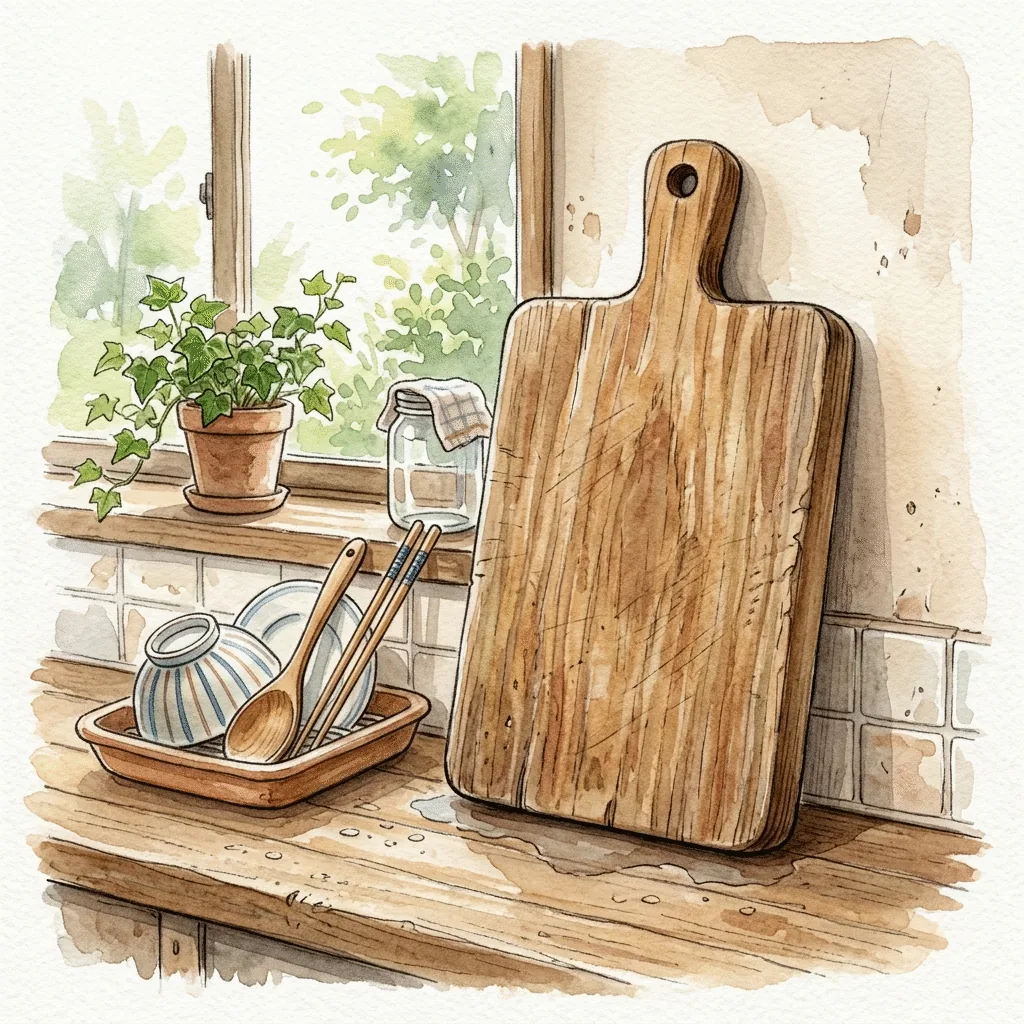
After using: wash gently with dish soap, then stand the board upright and let both sides
dry.
Lying it flat leaves one side wet for hours — the single biggest cause of warping and mold. Tosaryu's
rotating-stand design solves this structurally, which is part of what makes it so brilliant.
Monthly Reset: Salt + Lemon Scrub, Then Sun-Dry
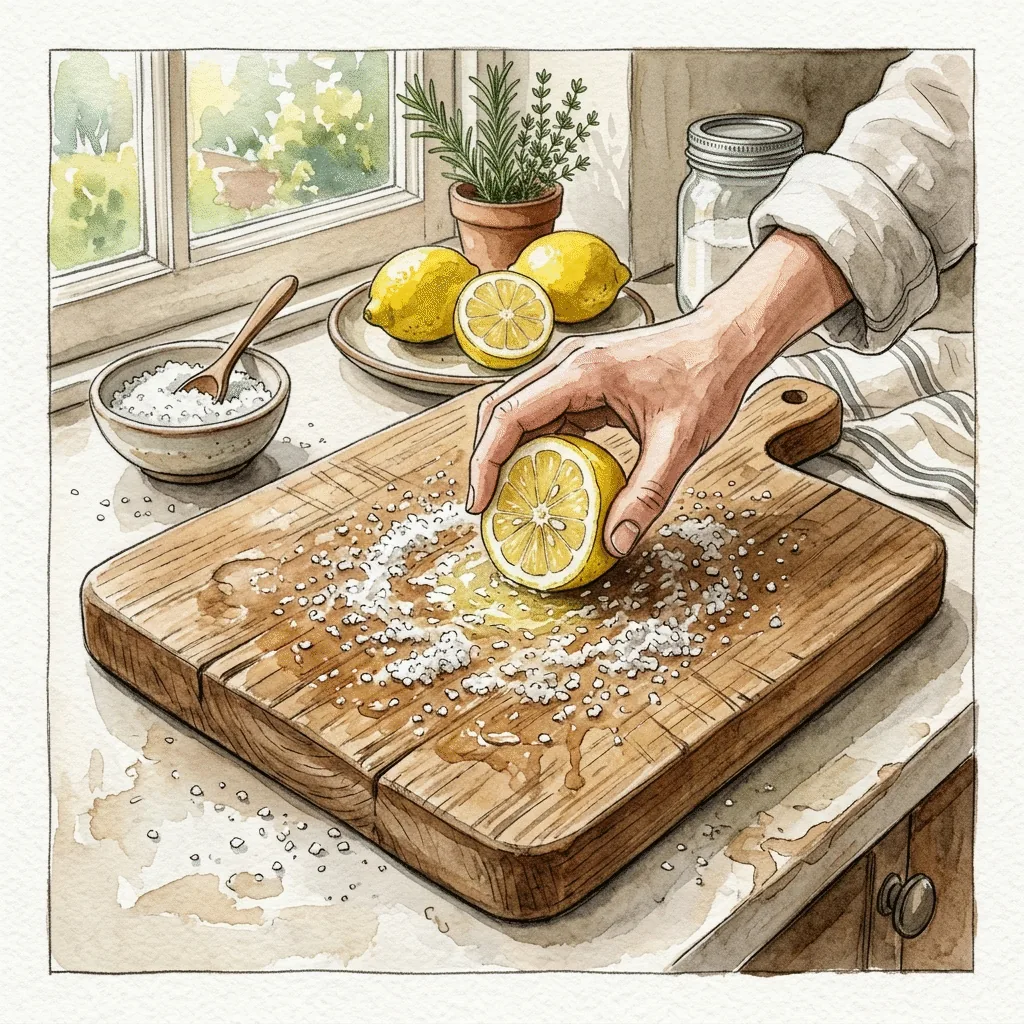
When odors or staining start to bother you, try this: sprinkle coarse salt generously over the board and
scrub with the cut face of a halved lemon.
The salt acts as a mild abrasive, lifting surface grime; the lemon's acidity deodorizes and disinfects
naturally.
Rinse thoroughly, then set it in the sun to dry. UV light kills any remaining bacteria and
gives the wood a fresh reset.
Limit direct sun exposure to 2–3 hours — extended baking causes warping.
What Not to Do
✕ Dishwasher (non-treated wood): High-temperature steam causes rapid expansion and contraction,
leading to cracks and warping.
✕ Pouring boiling water directly on it: This sets protein stains instead of loosening them. Use
warm water instead.
✕ Storing it flat: As above — one-sided drying causes warping and mold. Always stand it
upright.
✕ Extended bleach soaking: Fine for rubber boards, but wood risks discoloration and structural
damage from prolonged exposure.
When Dark Staining Won't Budge — Resurfacing
Deep blackening or grooves in a wooden board aren't the end. Resurfacing (削り直し) — having the top
layer planed away by a craftsman — brings the board back to fresh wood.
woodpecker, Tosaryu, and Futaba Shoten all offer this service, as do most quality Japanese cutting board
brands.
The ability to be resurfaced and reborn is the single biggest advantage wooden boards have over cheap plastic —
and the reason they outlast everything else.
7. Frequently Asked Questions
Should I wet a wooden cutting board before using it?
Absolutely — every time. Run water over the surface and wipe it with a clean cloth before placing any food on the board. The moisture barrier this creates stops food pigments, oils, and odors from penetrating the wood grain. It takes three seconds and makes a real difference.
My board has gone black. What can I do?
The biggest advantage of a wooden board over cheap plastic is that it can be restored. Even if the surface is black and grooved, a craftsman can plane away the top layer and return the board to fresh, clean wood — as if new. woodpecker, Tosaryu, Futaba Shoten, and many other Japanese brands offer this resurfacing service.
Plastic vs wood — which should I choose?
If protecting your knife edge matters to you, wood or quality rubber wins every time — cheap hard plastic chips knife edges fast. If you want to bleach everything and not think about it, an inexpensive plastic board works. But if you own a quality knife, pair it with a rubber (Parker Asahi) or wooden board — the difference to your knife's longevity is significant.
My board has warped. Can I fix it?
For mild warping: place the board with the warped side facing down, wet it, set a heavy weight on top,
and leave it for a day or two. The wood absorbs moisture, expands, and may flatten back out.
This works because wood is hygroscopic — it responds to water. Severe warps are harder to reverse, so preventing
them by always drying the board upright is the better strategy.
How long should a cutting board last?
With proper care, a quality Japanese wooden cutting board lasts 10 to 15 years or more.
Replace it when resurfacing still leaves it warped, cracked, or too thin to be stable. Until that point, a board
that can be resurfaced is still usable — and "repairable rather than disposable" is exactly what sets Japanese
wooden boards apart from cheap plastic alternatives.
How do I avoid choosing the wrong size?
The rule of thumb: choose a board at least twice as long as the largest item you regularly cut.
If you ever cut half a cabbage or a full head of napa, go for 36cm (14") or longer. When in
doubt, size up — a cutting board is one of those tools where "bigger than I need" is almost never a problem, and
"too small" is annoying every single meal.
In Summary: Find the One Board That Makes You Want to Cook
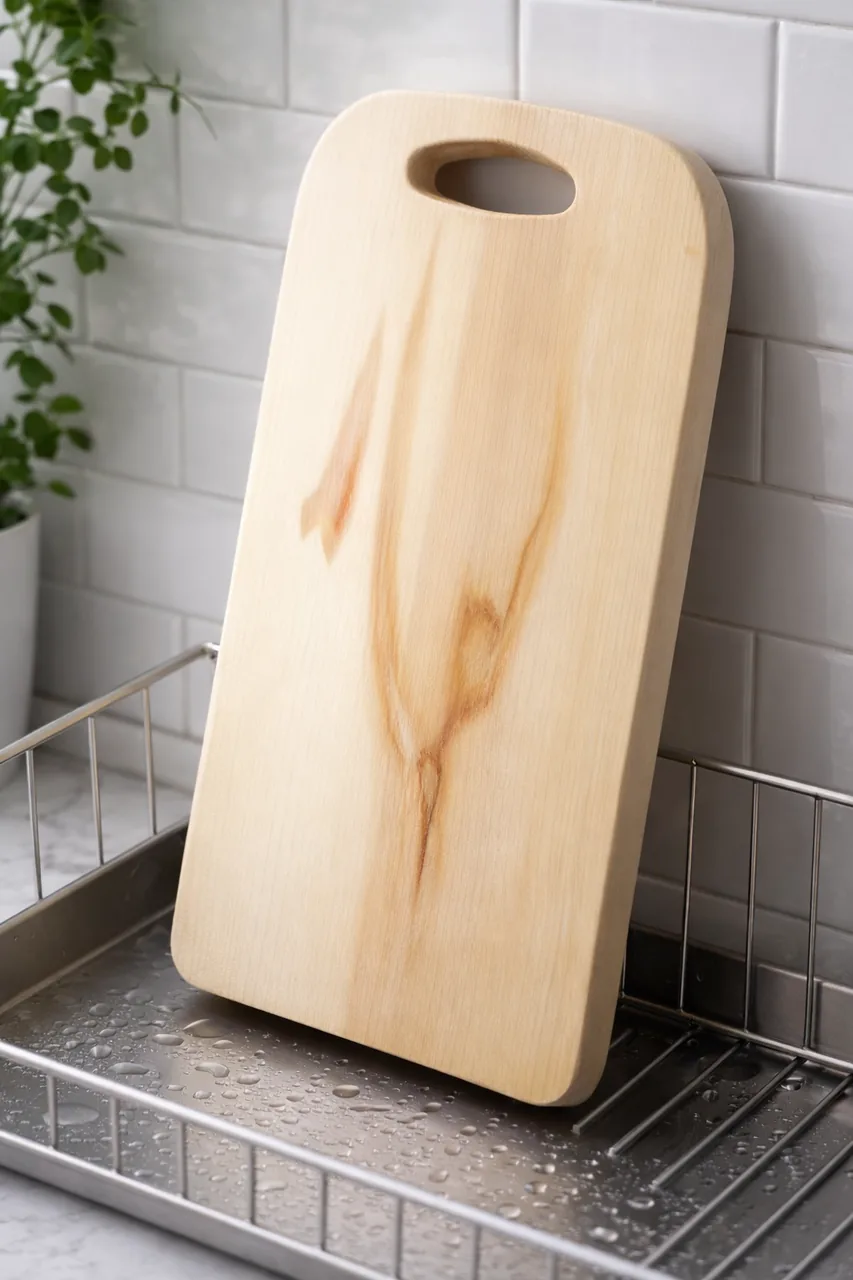
It's easy to underestimate a cutting board. But when your board has exactly the right amount of give, every chop lands with a satisfying sound and zero shock in your wrists — and suddenly prep work is something you look forward to. And a good board protects your knife, which means it's paying for itself every meal.
Quick Decision Guide
- Hygiene and low maintenance above all else
→ Synthetic rubber (Parker Asahi) - Best knife feel; a tool to use for a lifetime
→ Ginkgo wood (woodpecker · Futaba Shoten) - Fragrance, natural antibacterials, and modern convenience
→ Hinoki cypress (Tosaryu · Daiwa Sangyo)
We hope you find the board that makes your kitchen feel like the place you most want to be.
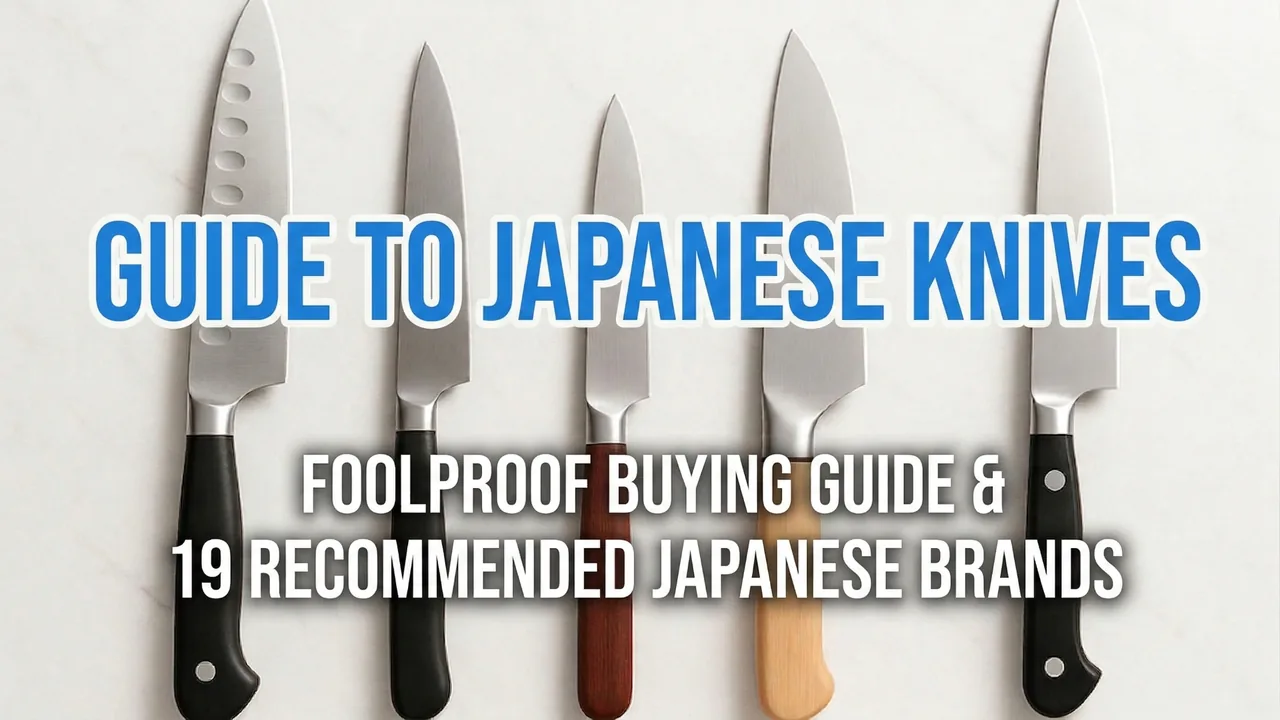
The Best Japanese Kitchen Knives: Top 19 Brands Compared
Never Struggle with a Dull Knife Again: Beginner's Guide to Sharpening