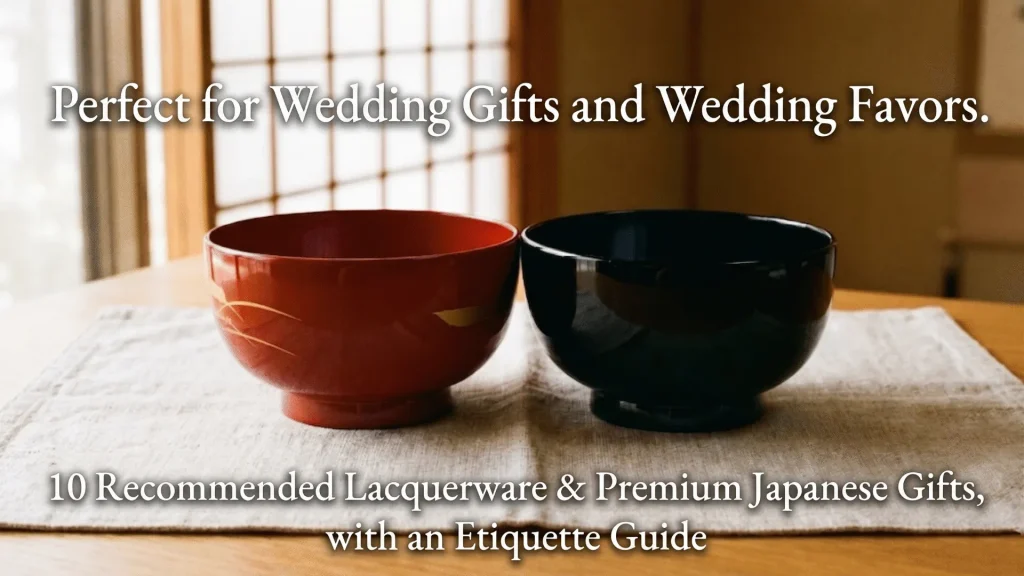
Tableware is a gift that gets used every single day — and every time the recipient sets the table, they think of the
person who gave it.
Japanese lacquerware and ceramics, with their beauty and genuine craft value, are the natural choice for
formal gifting occasions: weddings, milestone anniversaries, longevity celebrations, and
housewarming gifts that will truly be remembered.
This guide selects the best Japanese tableware and lacquerware gift brands through three lenses: price,
occasion, and auspiciousness.
It also covers the etiquette and superstitions around gifting tableware in Japan — so your well-intentioned gift
lands with exactly the grace you intend.
Quick Reference: Japanese Tableware Gifts by Occasion
| Occasion | Recommended Item | Budget | Key Point |
|---|---|---|---|
| Wedding gift | Pair soup bowls · pair chopsticks set | $70–$350 | Always give in pairs (2 pieces). Wajima lacquerware is the gold standard. |
| Wedding favor | Small bowls · yunomi cups · pair rice bowls | $20–$70 | Choose practical, timeless designs that appeal to everyone. |
| Longevity celebration (Kanreki / Koki) | Premium lacquerware set · jubako stacked box | $200–$700+ | Choose a prestigious brand — Wajima-nuri or Yamanaka-nuri. |
| Housewarming | Tableware set · Arita-yaki plates | $35–$200 | Prioritize versatile everyday designs that fit any interior. |
1. Top 5 Premium Gift Brands — Can't-Go-Wrong Picks
Curated for prestige, name recognition, and real-world gift appeal — these are the brands Japanese people reach for when the occasion truly matters.
Wajima-nuri — Giving Durability and Artistic Value
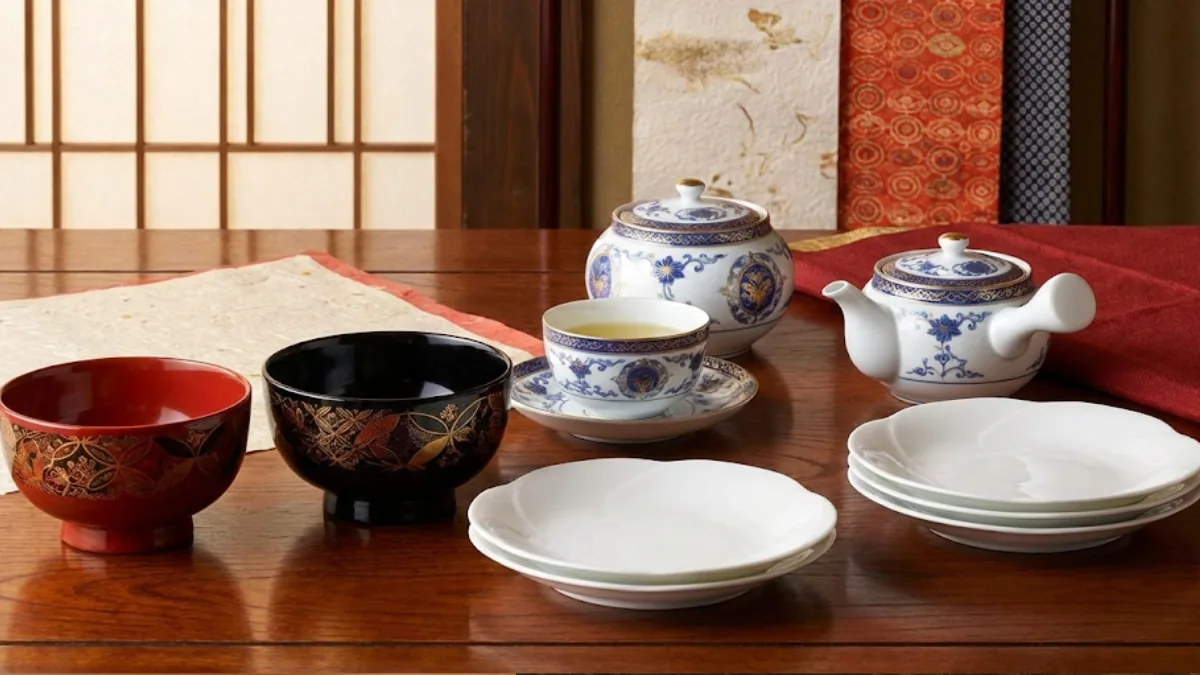
Wajima-nuri sits at the apex of Japanese lacquerware. Its defining honkataji (true solid ground) technique — involving more production stages than any other lacquerware tradition — produces pieces of extraordinary toughness and museum-worthy beauty. Soup bowls and jubako stacked boxes decorated with maki-e (gold-powder painting) or chinkin (gold inlay) carry an unmatched sense of prestige as gifts.
- Best for: Wedding gifts, longevity celebrations (kanreki, kiju), corporate commemorative gifts
- Recommended items: Pair soup bowls, individually decorated serving dishes with chinkin or maki-e
Byakudan — Handmade Urushi Lacquerware Miso Soup Bowl with Lid
A handcrafted urushi lacquer soup bowl with lid — natural urushi lacquer over a wood body, the combination that defines true hon-lacquerware. The lidded form evokes the quiet formality of a Japanese meal at its best, and makes a deeply considered gift for any formal occasion.
View on AmazonKoransha — Former Imperial Household Supplier, Arita-yaki
One of Arita's most storied porcelain houses and a longtime supplier to Japan's Imperial Household. Koransha's luminous white porcelain body and its elegant blue-and-white or polychrome sometsuke decoration convey an aristocratic refinement that makes it the definitive choice for gifts to elders or superiors.
- Best for: Gifts to parents or seniors, wedding gifts, housewarming for a formal home
- Recommended items: Tea service sets, individual serving plates, coffee cup & saucer sets
Koransha — Orchid Bloom Pair Bowl Set (2801-2HCDN)
An authentic Koransha two-piece set in the brand's iconic orchid pattern — Arita porcelain at its most refined. The Koransha brand has supplied Japan's Imperial Household for generations, making this pair set one of the most prestigious tableware gifts available.
View on AmazonYamanaka-nuri — Giving Lightness and Daily Joy
Yamanaka-nuri's mastery of ultra-thin wood-turning produces lacquerware that is remarkably light and smooth at the lip. Many designs are contemporary, making this the ideal tradition for gifting genuine lacquerware to someone who will actually use it every day — not just on special occasions.
- Best for: Wedding gifts for friends, return gifts (uchiwai), birthday presents
- Recommended items: Pair miso soup bowls, precious-wood pair cups
IPPINKA — Yamanaka Lacquerware Soup Bowls Pair (Dishwasher Safe)
A pair of Yamanaka-nuri urushi soup bowls — crafted using the region's celebrated ultra-thin wood-turning technique, with dishwasher-compatible finish for modern households. Light, smooth, beautiful, and genuinely usable every day — exactly what makes Yamanaka lacquerware the ideal everyday gift.
View on AmazonHakusan Toki — Good Design Award Functional Beauty
Hasami-ware brand from Nagasaki. Multiple Good Design Award winner. Hakusan Toki's everyday usability-first design philosophy produces clean white porcelain that works equally well with Japanese and Western table settings — making it one of the most popular gift brands among younger buyers and design-conscious recipients.
Hakusan Toki — Flat Tea Wan Rice Bowl, Blue ST-17
The iconic award-winning hira-chawan (flat rice bowl) by Hakusan Toki designer Masahiro Mori. Hasami-ware porcelain, 200+ color/pattern options available — order two in coordinating colors for a memorable pair gift. Made in Japan.
View on AmazonTachikichi — Kyoto's Curated Best-of-Japan Collection
A venerable Kyoto specialist in Japanese tableware, Tachikichi works with pottery regions across the country — Mino-yaki, Kyoto-yaki, and others — to curate a range that spans many price points and styles. The breadth of choice makes it easy to match the recipient's taste, whatever that may be.
Tachikichi — Japanese Tableware Set
An authentic Tachikichi tableware set from the Kyoto brand established in 1752 — one of Japan's most trusted names in premium Japanese ceramics. A refined gift choice for weddings, housewarmings, or any occasion that calls for traditional Japanese craft with modern sensibility.
View on Amazon2. Choosing by Occasion: Weddings, Longevity Celebrations & More
Different occasions call for different items and different levels of formality. Japanese tableware gifting carries its own set of conventions — especially around auspiciousness.
Wedding Gifts & Favors: Always Give in Pairs
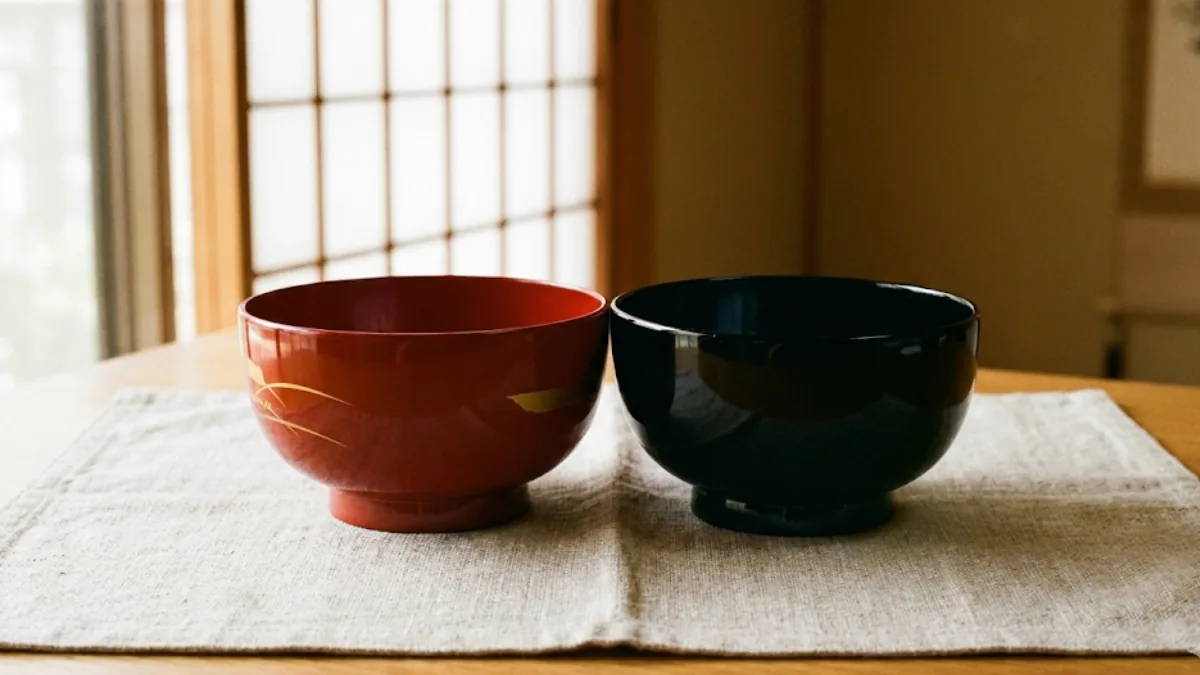
The fundamental rule: soup bowls, rice bowls, yunomi cups, and chopsticks should all be given as pairs (meoto — husband-and-wife sets), symbolizing the wish for lasting harmony between the couple. Dishwasher-safe porcelain is also particularly welcome as newlyweds set up their first home together.
- Avoid: Odd-numbered sets (5, 7, etc.). Ceramic pieces can carry a "breaking" association — a thoughtful handwritten note will address this gracefully.
Longevity Celebrations (Kanreki, Koki): Honor with Prestige
A longevity milestone — the 60th birthday (kanreki), 70th (koki), and beyond — is one of life's most significant occasions. Lacquerware or a formal Arita-yaki tea service from a prestigious brand makes a statement that matches the moment. Traditional colors for each celebration (red for kanreki, purple for koki) are a thoughtful touch.
- Key point: Always include a personal message: "Wishing you many more years of good health."
Housewarming: Prioritize Practicality and Design
Choose simple, versatile designs that will integrate with whatever interior the recipient has created. Modern porcelain — Hakusan Toki's clean white aesthetic, for example — is consistently the most popular choice because it works with everything. Avoid strongly decorative or traditional-patterned pieces unless you know the recipient's taste well.
- Good options: A set of large and small plates sized to the household, or a guest yunomi cup set for entertaining
3. Choosing by Recipient: Match the Gift to the Person
Different items send different messages. Use this framework to find the best fit.
① Formal Prestige (Superiors, Clients, Parents)
Choose a Wajima-nuri jubako, a lacquer piece decorated with chinkin or maki-e, or a Koransha tea service from one of Arita's most established houses. Let the brand's history and reputation do the talking — and select the highest quality within your budget.
② Long-Term Use (Family, Close Friends)
For lacquerware, a Yamanaka-nuri or Echizen-nuri pair soup bowl set gives a lifetime of daily pleasure at a more accessible price. For ceramics, Hakusan Toki's durable pair rice bowls are designed to be used and loved for decades. Prioritize genuine usability over formality.
③ Matching a Collector's Taste (Enthusiasts, Cooks)
For someone who already loves Japanese tableware, highly designed artisan mame-zara (small decorative plates) or pieces in unusual glazes — Oribe-yaki's dramatic green, for example — will be far more exciting than a standard pair set. This only works if you know their taste well enough to make a genuinely surprising choice.
4. Budget Guide: What to Expect at Each Price Tier
Knowing the market helps you find the best possible gift within what you want to spend.
| Price Range | Typical Items | What You Get |
|---|---|---|
| $70–$140 | Pair yunomi cups, pair small plates (porcelain), Yamanaka-nuri synthetic-resin soup bowl pair | High-quality, modern designs ideal for everyday use. The most popular casual gift tier. |
| $200–$350 | Hon-urushi pair soup bowls (Yamanaka, Echizen), premium white-porcelain tableware set (Koransha) | Entry point for genuine traditional craft. The most commonly chosen tier for formal gifts. |
| $350–$700+ | Premium Wajima-nuri soup bowl (single piece), artistically decorated tea service | A milestone gift: an art object with genuine craft value, for life's most significant occasions. |
5. Gift-Giving Etiquette: Taboos & Things to Avoid
A thoughtful gift can inadvertently land awkwardly without basic awareness of Japanese gifting conventions. Here is what to know.
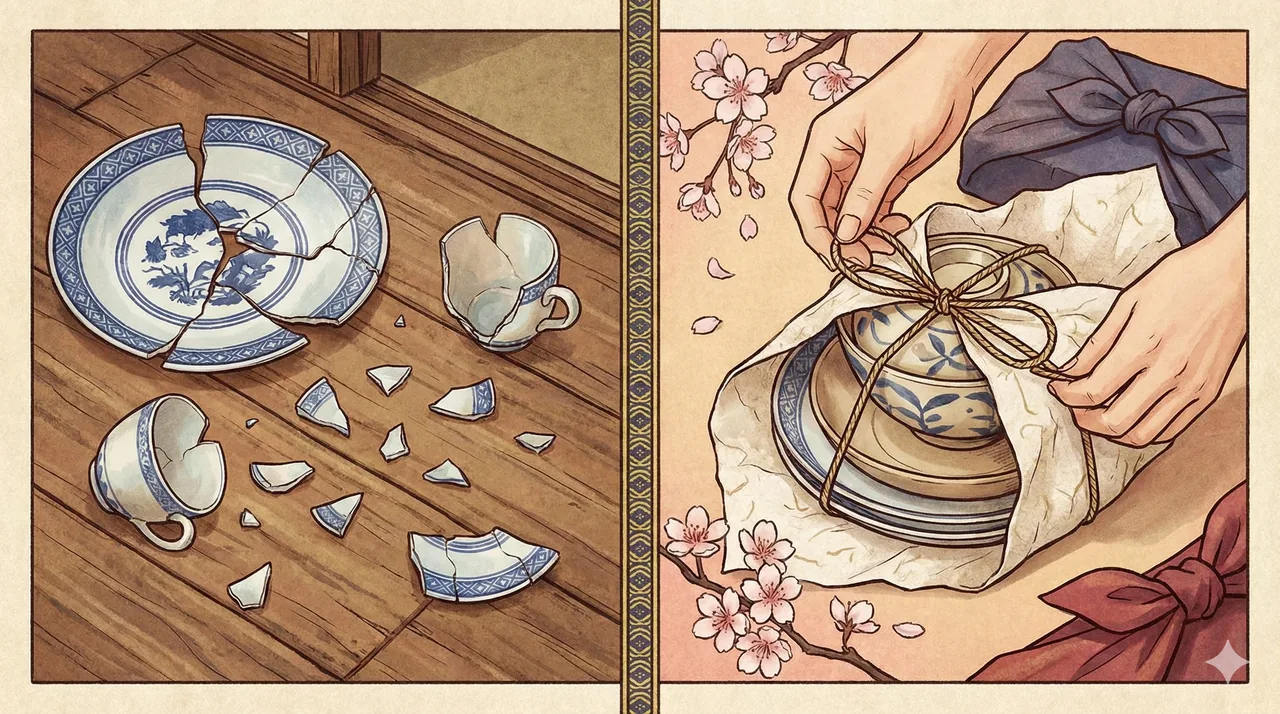
Key Taboos — Especially for Wedding and Housewarming Gifts
- Items that suggest "breaking" or "cutting": Ceramics and glass ("breaking" → broken relationship) and knives ("cutting" → severing ties) are traditionally considered inauspicious for weddings in Japan. A handwritten message card wishing the couple "a lifetime of happiness together" cleanly dissolves this concern — or choose lacquerware, which does not break.
- Sets totaling 4 (shi = death) or 9 (ku = suffering): Always choose pairs (2 pieces), or even-numbered sets of 6 or 8 pieces. Never send a set of 4 or 9.
- Overly expensive gifts to juniors: In a professional or hierarchical context, gifting something excessively costly (especially high-priced Wajima-nuri) to a subordinate can create an uncomfortable obligation. Match the gift's weight to the relationship.
Frequently Asked Questions
Is giving tableware as a wedding gift considered bad luck?
It carries a traditional association with "breaking," but a thoughtful note resolves it
entirely.
In Japan, ceramics and glass are sometimes said to suggest "breaking — like a relationship breaking apart." In
practice this is rarely a serious concern among modern couples, but adding a message card with words like "may
this serve your table for a lifetime together" removes any ambiguity and adds warmth.
Alternatively, choosing lacquerware (which does not break) sidesteps the association altogether.
Should Japanese tableware gifts include formal wrapping (noshi)?
For formal occasions, noshi paper wrapping is proper etiquette.
For weddings and longevity celebrations, the gift should be wrapped with noshi-gami (ceremonial paper) —
either an outer wrap or an inner wrap inside the box. For wedding gifts, the standard inscription is
kotobuki (寿) or go-kekkon o-iwai (御結婚御祝); for longevity celebrations, go-choju o-iwai
(御長寿御祝).
Department stores and specialist tableware shops will handle ceremonial wrapping on request.
What is the real difference between cheap and expensive lacquerware?
The materials and manufacturing process are fundamentally different.
Expensive lacquerware ($200+) is made from natural wood coated with genuine urushi lacquer applied in dozens of
layers — it grows more beautiful over decades of use and can be repaired by craftsmen.
Budget pieces ($15–$50) use a plastic body with urethane paint — they look similar at a glance but have a lifespan
of 5–10 years. For a gift, always choose pieces labeled "hon-urushi" (natural lacquer) — it is what makes the gift
meaningful.
Is Japanese tableware a good choice for a wedding favor?
Yes — it is one of the most consistently well-received wedding favors in Japan.
Branded tableware from Hakusan Toki, Arita-yaki, or Mino-yaki studios is universally practical and appeals to
guests of all tastes. When choosing a favor, prioritize timeless designs over seasonal or novelty patterns —
something the recipient will still want to use five years from now.
Catalog-style gift services that let guests choose their own Japanese tableware piece are also very popular and
well-received.
Can Japanese tableware be personalized with a name?
Yes — many brands offer personalization services.
Wajima-nuri and Yamanaka-nuri lacquerware studios can add a name in gold or red using chinkin (gold
inlay) engraving. Arita-yaki and Mino-yaki ceramics studios and specialists also offer name-inscription services
on porcelain pieces.
Personalization typically adds 2–3 weeks to the lead time, so order well ahead of the occasion.
What are the best Japanese tableware gifts under $70?
Plenty of excellent options exist at this budget.
An Arita-yaki or Hasami-yaki pair cup or pair rice bowl set ($35–$70) is practical, visually beautiful, and warmly
received. A high-quality chopstick and chopstick-rest set from a recognized lacquer tradition ($20–$55) is a
versatile gift that almost everyone will use.
Yamanaka-nuri soup bowl pairs can also be found in this range — look for "hon-urushi" labeling and a natural wood
body for the best quality at this price.
Explore Materials & Brands in Depth
Now that you have a clearer picture of the gifting landscape, dive into the specialist guides for lacquerware and ceramics to understand each brand's specific character before you buy.

Tableware Material Guide: Wajima, Arita & More — How to Choose by Region & Material

Japanese Lacquerware: Wajima vs. Yamanaka — Top 5 Urushi Brands for Bowls & Jubako