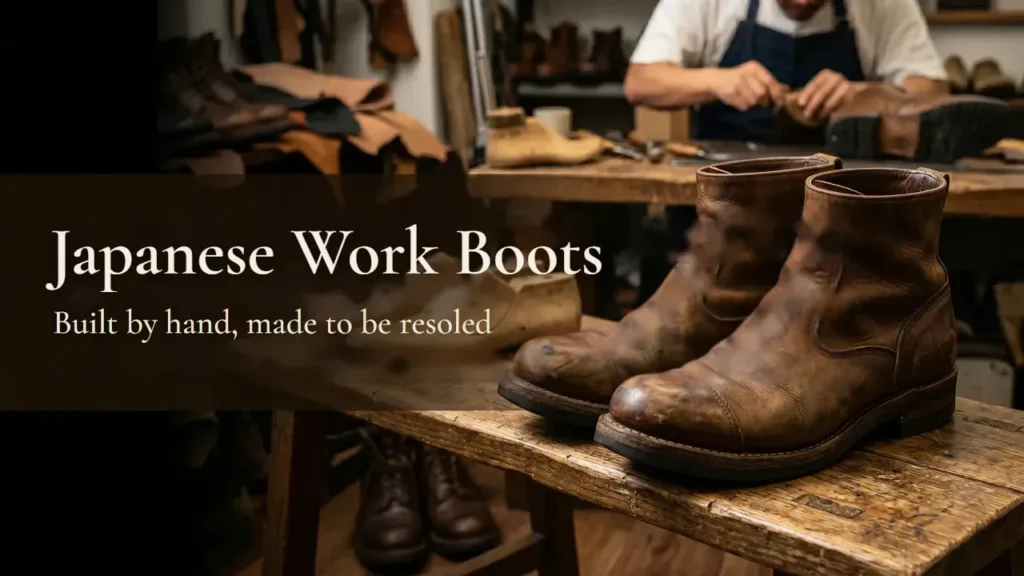
A good pair of leather work boots changes with you. The leather softens, creases where your foot bends, and after a few years no one else's pair looks like yours.
Japan has a small, devoted world of boot makers who build exactly that kind of boot: made in small batches in their own factories, stitched so the soles can be replaced again and again.
This guide covers why Japanese work boots have a following, the constructions that let a boot be resoled, the leathers that age best, three Japanese makers, and how to care for and size a pair.
Quick Reference: Three Japanese Boot Makers
| Maker | Known for | Where to buy |
|---|---|---|
| Rolling Dub Trio ▾ | Tokyo factory, rugged stitchdown boots | English web shop, US stockists |
| Brother Bridge ▾ | Vintage-sport-style boots like Henry | Sold in Japan |
| Zerrow's ▾ | Custom-ordered work boots | Sold in Japan |
1. Why Japanese: Small Factories, Boots Built to Last
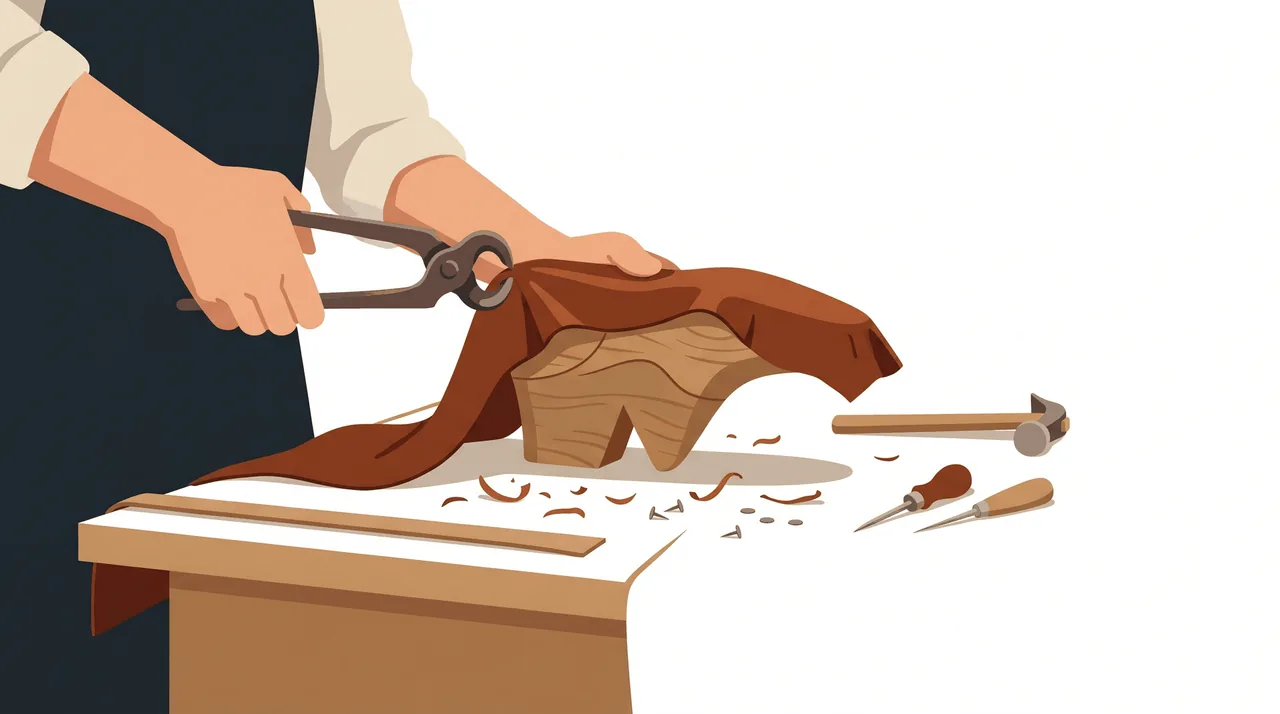
Japanese work boots are a niche, but a serious one. Rolling Dub Trio, for example, makes its boots in small batches at its own Tokyo factory, The Boots Factory, and builds them so they can be taken apart and rebuilt as they wear. That approach is the point: a boot designed from the start to be repaired, not replaced.
Many of these makers draw on vintage American work and sport boots for their designs, then build them by hand in Japan, with their own lasts and careful attention to leather. For enthusiasts, that combination is the appeal.
2. Welt and Stitchdown: Boots You Can Resole
Inexpensive boots and sneakers are often cemented: the sole is glued to the upper, and once it wears through, the shoe is usually finished.
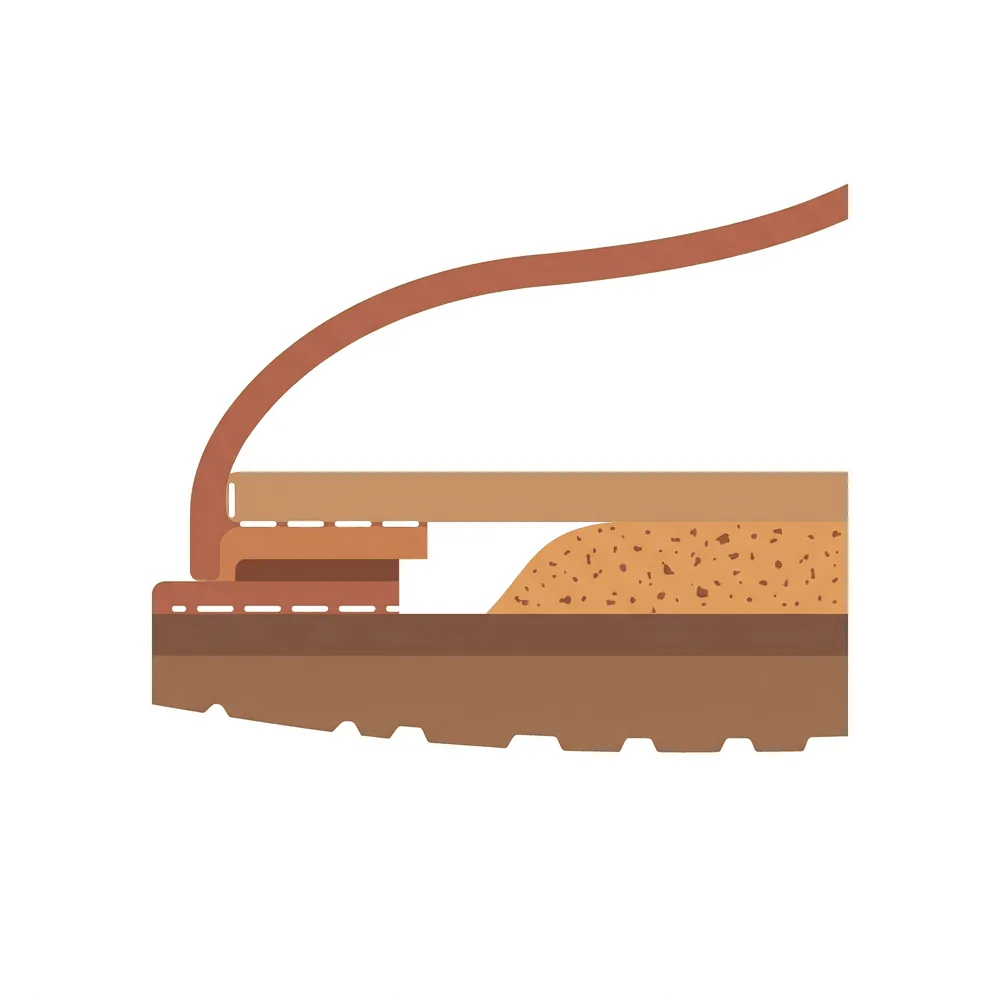
Serious work boots are stitched instead. In Goodyear welt construction, a strip of leather, the welt, is stitched to the upper and insole, and the outsole is stitched to the welt. In stitchdown construction, the upper is turned outward and stitched straight to the midsole. Either way, a cobbler can cut the stitches, remove the worn sole and sew on a new one, so a good pair can be resoled many times.
3. Leather That Ages: Oiled Leather and Chashin
· Oiled leathers such as Horween's Chromexcel (from the Chicago tannery) are heavily stuffed with oils and waxes, so they're supple and water-resistant, and the oils shift as you wear them, building a pull-up patina where the leather creases.
· Horsehide is dense and tough, and creases into its own distinctive pattern.
· Chashin ("brown core") is brown leather finished black on the surface. As it scuffs, the brown shows through at the edges, as on old vintage boots.
4. Three Japanese Makers
Rolling Dub Trio: Coupen and more, from a Tokyo factory
Rugged boots made in small batches. Rolling Dub Trio produces its boots at The Boots Factory, its own production workshop in Tokyo, and uses stitchdown and welted constructions designed to be rebuilt. The Coupen, a mid-height boot, comes in heavy oiled leathers and horsehide. It's the most accessible Japanese maker for buyers abroad, through its English web shop and US stockists such as Standard & Strange.
Brother Bridge: Henry
A Japanese factory brand. Its signature Henry takes its design from vintage athletic boots and is made in Japan. Sold in Japan.
Zerrow's: custom work boots
Boots built to your order. Zerrow's lets you choose leather, stitching color, eyelets and sole, and makes each pair in Japan. Sold in Japan.
5. Caring for Leather Boots
The most common mistake is too much oil. Over-oiled leather turns soft and floppy and loses the boot's shape. Most of the work is simpler:
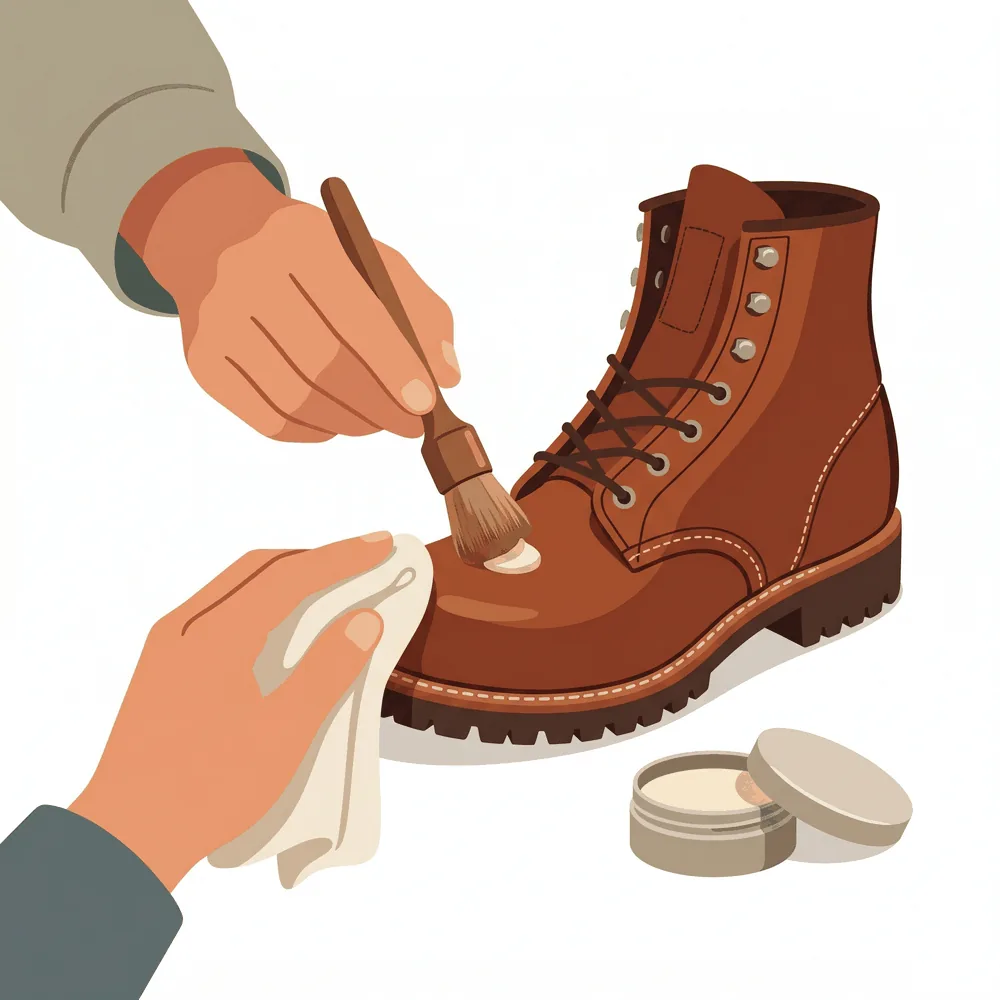
· Brush after every wear. A horsehair brush removes dust and draws the leather's own oils to the surface for a natural shine.
· Condition only when it looks dry, perhaps twice a year. Work in a thin layer of leather cream with a cloth, leave it an hour, then wipe off the excess.
· Use cedar shoe trees to hold the shape and draw out moisture.
6. Getting the Size Right
· Measure your bare foot. Sneakers are padded and run large; leather boots are sized closer to the foot. Start from your barefoot length.
· Measure the width. Wrap a tape around the widest part of your foot, from the joint behind the big toe to the joint behind the little toe, and compare it with the maker's width chart (D, E, EE and so on).
· Check the heel. Laced up, with your toes touching the front, about one fingertip, around 5 mm (0.2 in), should fit behind your heel. More than that, and your heel will slip and rub.
Japanese makers list sizes in centimeters; check each brand's conversion chart rather than assuming one fits all.
7. Frequently Asked Questions
The leather is stiff and my feet hurt. How do I break them in?
Wear them indoors first. For a week or two, wear them at home for an hour a day with thick wool socks, so the leather learns where your foot bends before you walk far.
Can I wear leather work boots in the rain?
Oiled leathers handle rain well, but drying matters. Wipe them dry, stuff them with newspaper or put in cedar shoe trees, and dry them slowly in the shade, not next to a heater.
Where can I get them resoled?
Through the maker, or a cobbler who handles welted and stitchdown boots. The worn sole is removed and a new one, often a Vibram sole, is stitched on. Expect it to take a few weeks.
What is "chashin" leather?
Brown leather finished black on the surface. As the black wears at creases and edges, the brown core shows through, like on old vintage boots.
Can I buy Japanese work boots outside Japan?
Rolling Dub Trio is the easiest: it sells through an English web shop and through stockists such as Standard & Strange in the US. Most other Japanese boot makers sell mainly in Japan.
How often should I oil my boots?
Rarely. Brush after every wear, and add a thin layer of cream only when the leather looks dry, perhaps twice a year. Too much oil softens the leather and spoils the shape.
Final Thoughts: A Boot Made to Be Rebuilt
Choose stitched construction, welt or stitchdown, so the boots can be resoled. Choose a leather that ages well. Brush often, oil rarely, and measure your bare foot and its width before you buy.
Japan's small boot factories build boots meant to be rebuilt, not replaced. Wear them long enough and they become yours alone.
Japanese Selvedge Denim: 7 Best Brands for Life
Japanese Down Jackets: Mizusawa, Nanga & 3 More Makers