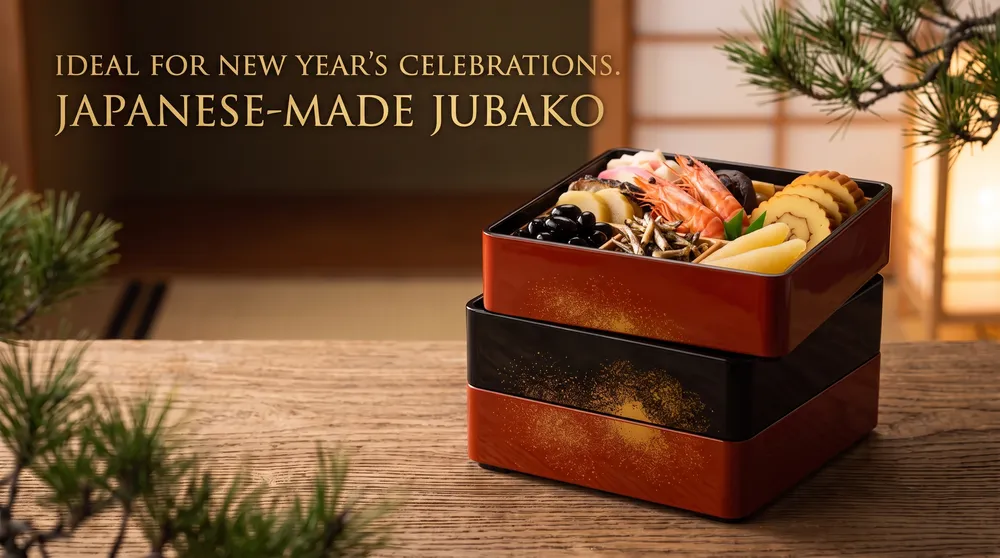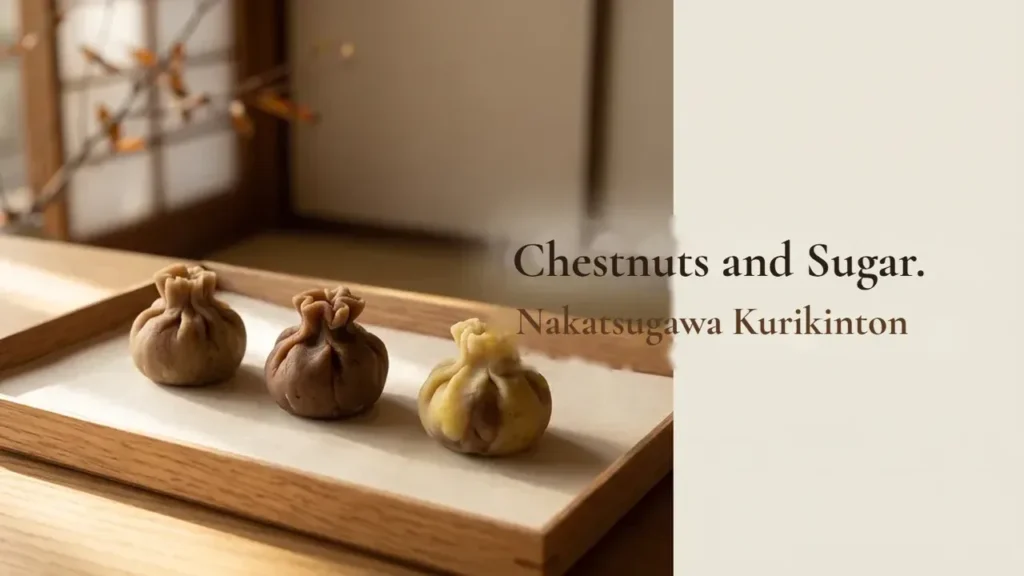
Say "kurikinton" and most people picture the golden dish in New Year's osechi. But in Nakatsugawa, Gifu, kurikinton means a completely different sweet.
It's a bite-sized wagashi of boiled chestnuts squeezed in a cloth — no sweet potato, no gardenia dye. Some have only two ingredients listed: "chestnuts, sugar." Two different things share one name, which is why a search for "kurikinton" mixes a New Year dish with an autumn sweet. This guide covers the difference, the more than 70 shops in one town that make it, and its season — from September into winter.
Quick Reference: Two "Kurikinton"
| Nakatsugawa kurikinton | New Year (osechi) kurikinton | |
|---|---|---|
| Ingredients ▾ | Chestnut is the star; some are just "chestnuts, sugar" | Sweet-potato paste + candied chestnuts |
| Form ▾ | A bite-sized sweet squeezed in cloth | A soft, glossy simmered dish |
| Colour ▾ | Natural chestnut brown to yellow | Gold, dyed with gardenia |
| Season ▾ | September into winter | Year's end |
1. Why Japanese: There Are Two Kurikinton
The golden New Year kurikinton is sweet-potato paste with candied chestnuts mixed in — a soft, glossy simmered dish coloured with gardenia. Chestnuts are in it, but the sweet potato is the star.
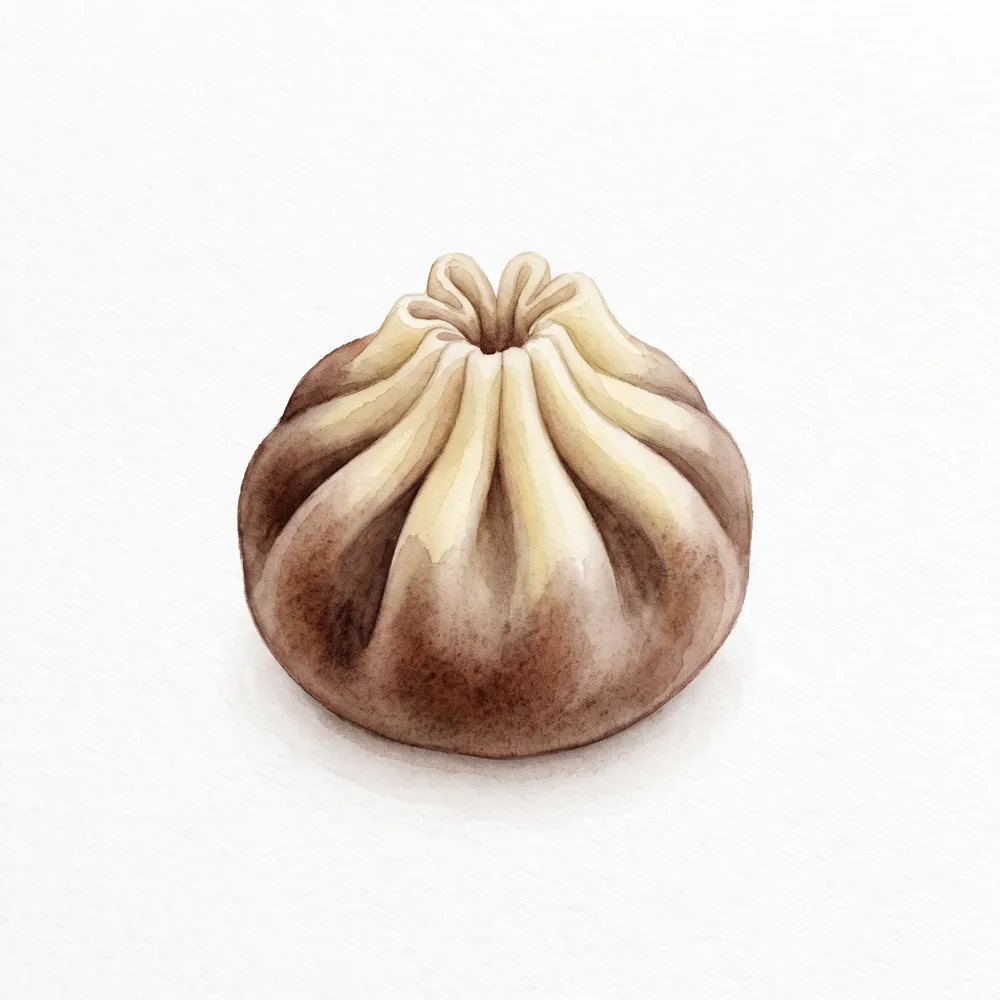
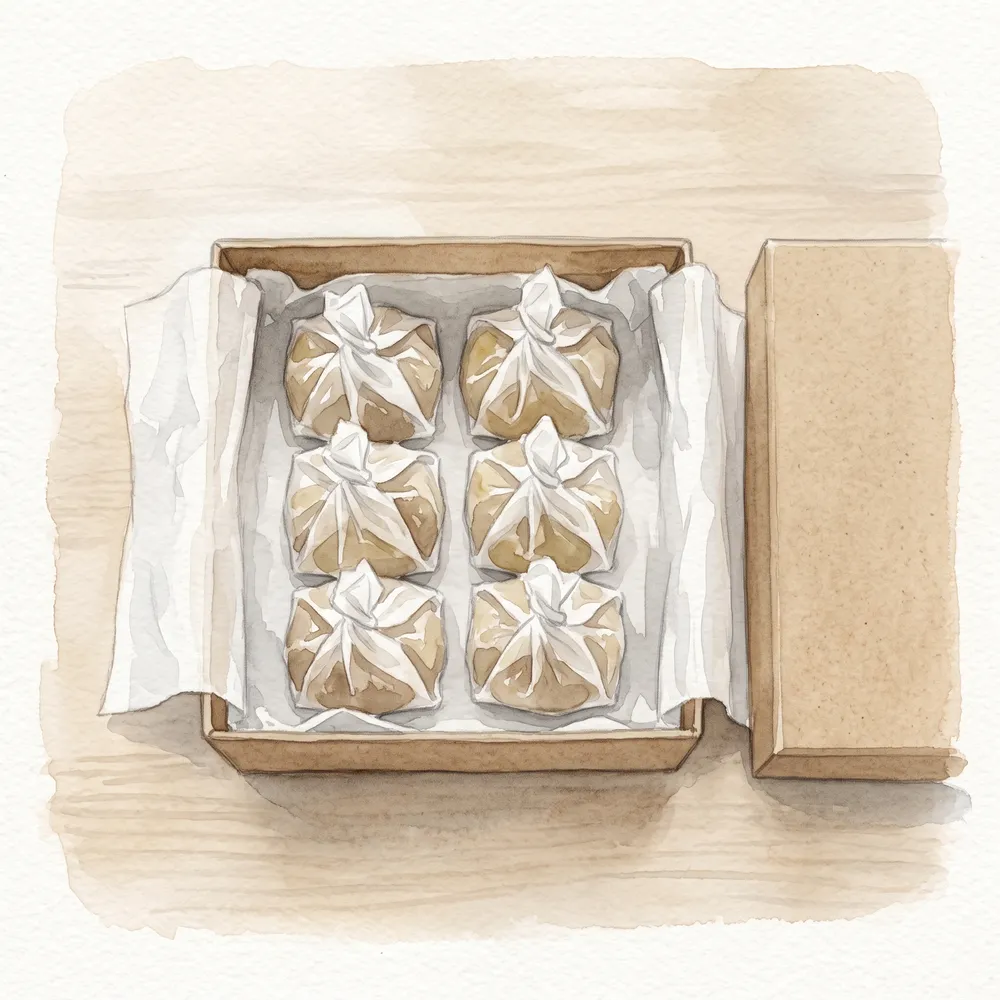
Nakatsugawa's kurikinton is nothing like that: no sweet potato, no gardenia — chestnuts worked into a paste and squeezed in a cloth into a bite-sized wagashi. Think of it as a sweet where chestnut is the star. It's the colour of the chestnut itself, brown to yellow, varying a little with each harvest since it isn't dyed; and it's round and bite-sized, keeping the pleats of the cloth — a chakin-shibori shape — each wrapped in paper and lined up in a box. Neither is the "real" one; two different sweets happen to share a name. Decide which you're looking for first.
2. Read the Ingredients Line
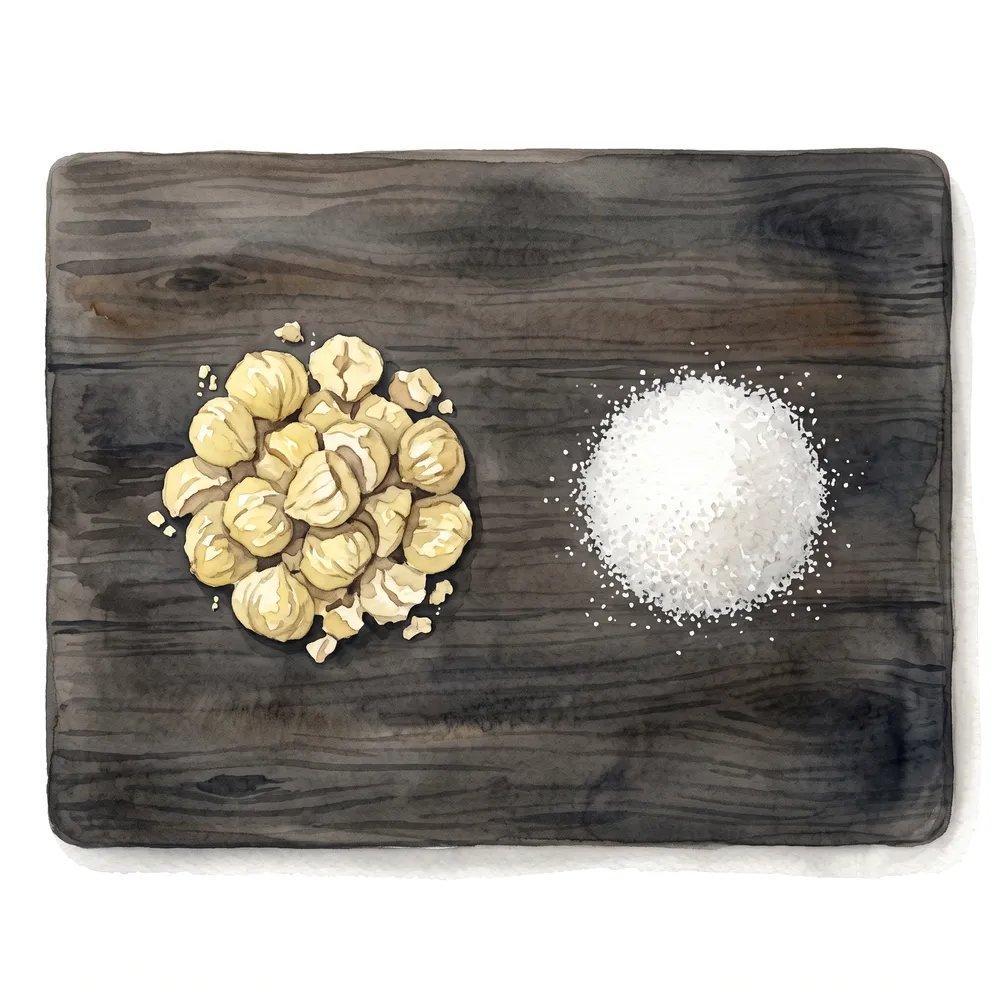
Kurikinton is listed as a Gifu regional dish in Japan's Ministry of Agriculture, Forestry and Fisheries' "Our Regional Cuisines," with its ingredients: for 30 pieces, 1 kg of raw chestnuts, 300 g of sugar and a pinch of salt. The method is short too: boil the chestnuts and scoop out the flesh, add sugar and salt and warm it, knead over low heat, then wrap in a damp cloth and shape.
That's the home version. Shop products sometimes add starch syrup or thickeners — to extend shelf life or adjust texture, and neither is "bad." But the fewer the ingredients, the more the chestnut's quality and the kneading show through, because there's nothing to hide behind. So read the ingredients before you buy: some end with just two lines, "chestnuts, sugar." And since ingredients are listed largest first, "chestnuts (Japan)" at the top tells you the origin in one line.
Did you know: 9 September was the "Chestnut Festival"
The Ministry's explanation says: "9 September is Choyo no Sekku, called the chestnut festival; since long ago people prayed for long life and ate chestnut dishes and sweets." It's one of the five seasonal festivals, also known as the chrysanthemum festival. On the old calendar, 9 September fell around today's October — just when chestnuts come in. That kurikinton starts appearing in shops in September overlaps with that season; it's less a seasonal sweet than a way of eating the season itself.
In Nakatsugawa, Kuriya Nanyoken of Tsukechi lists only "chestnuts (Japan), sugar" — in its own words, "100% Japanese chestnuts plus sugar, completely handmade, real kurikinton!" Chikori-mura's kurikinton likewise lists a chestnut paste of just Japanese chestnuts and sugar.
3. One Town, More Than 70 Shops
Nakatsugawa, Gifu, flourished in the Edo period as a post town on the Nakasendo highway. People came and went, the culture of tea arrived, and there were local chestnuts — so chestnut sweets came to be made for the tea table, it's said. But it didn't start as a confection: according to the Japan Confectionery Industry Association, in the Edo period people "cut steamed chestnuts, scooped out the flesh, mashed it in a mortar with salt or sugar, and sprinkled it over mochi or rice."
It became a commercial sweet in the mid-Meiji era, and once chestnut cultivation began in the Taisho era, "with lots of large cultivated chestnuts available, kurikinton production rose steadily." From wild chestnuts to farmed ones — that changed how many could be made, and it spread as the town's sweet.
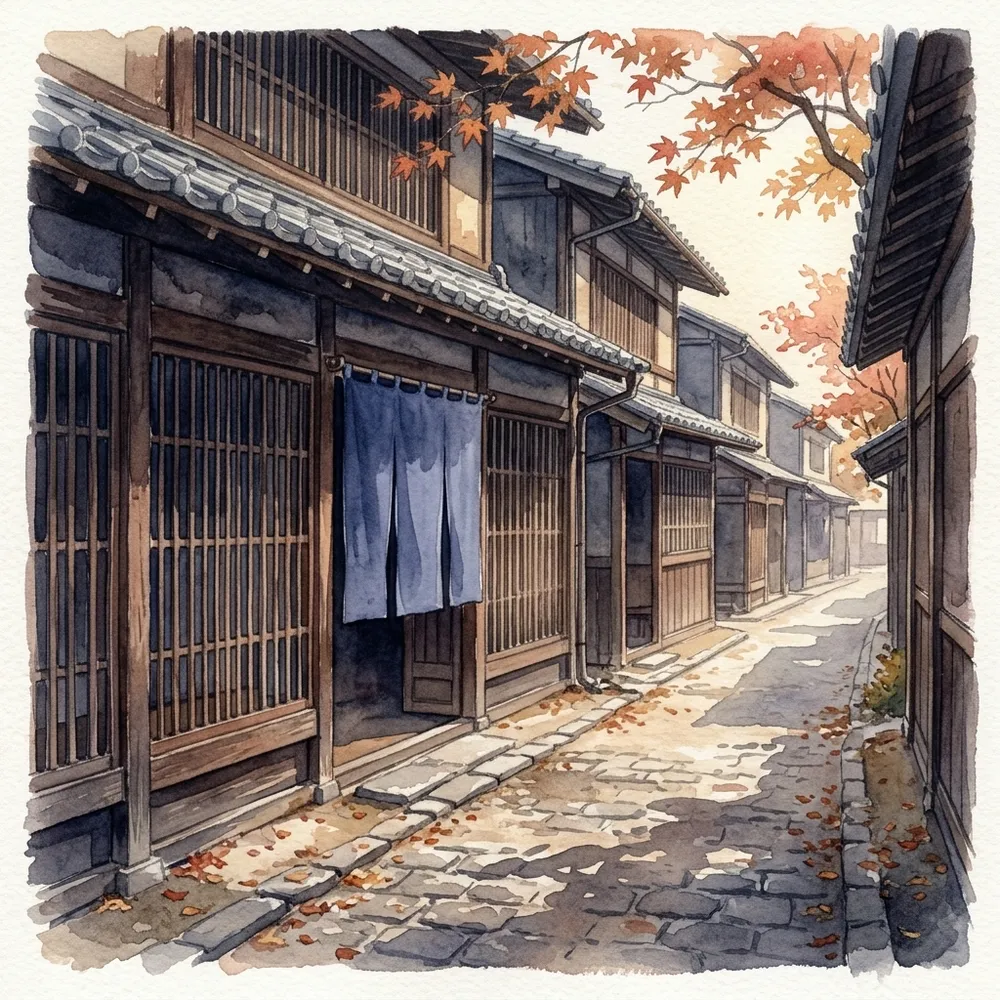
The association gives a clear number: the Nakatsugawa confectioners' guild has 23 members, many with several shops — "about forty within Nakatsugawa, and over seventy including non-members." More than 70 shops in one town for one sweet. So there's no "best": ingredients and methods are nearly the same, and every shop still tastes different. Comparing them is what makes a trip worthwhile.
4. Available From September Into Winter
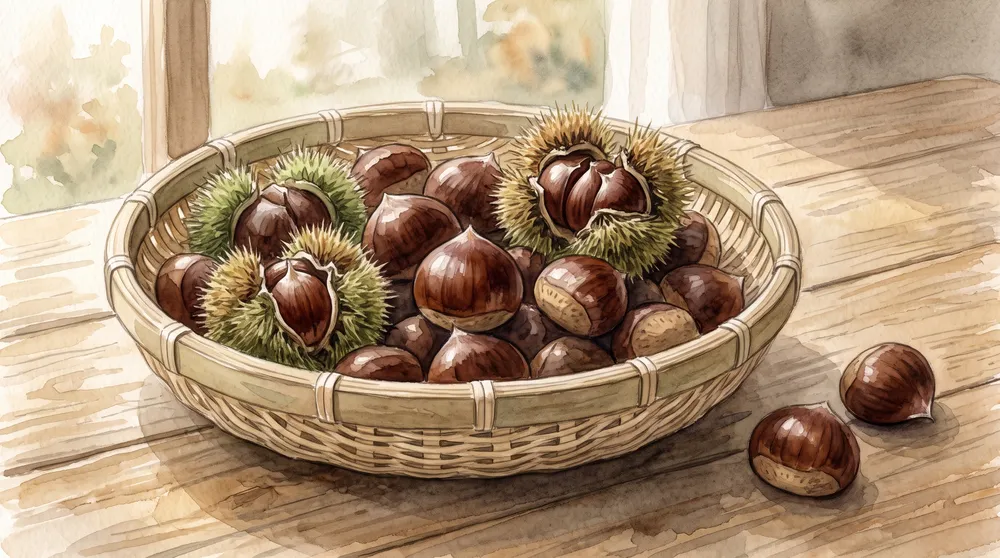
With chestnut as the star, there's no kurikinton without chestnuts — it's a clearly seasonal sweet. As the Ministry puts it: "Every year from September into winter, when chestnuts are at their best, many people still come to Nakatsugawa from inside and outside the prefecture in search of kurikinton and other chestnut sweets." Some shops state "September to February" outright.
It doesn't keep long: refrigerated, about 14 days, and a few days once opened. Some arrive frozen, keeping about a month from production and around four days after thawing — Enafukudo, founded in 1930, ships its additive-free kurikinton frozen, September to February only.
5. Sweets That Grew From Kurikinton
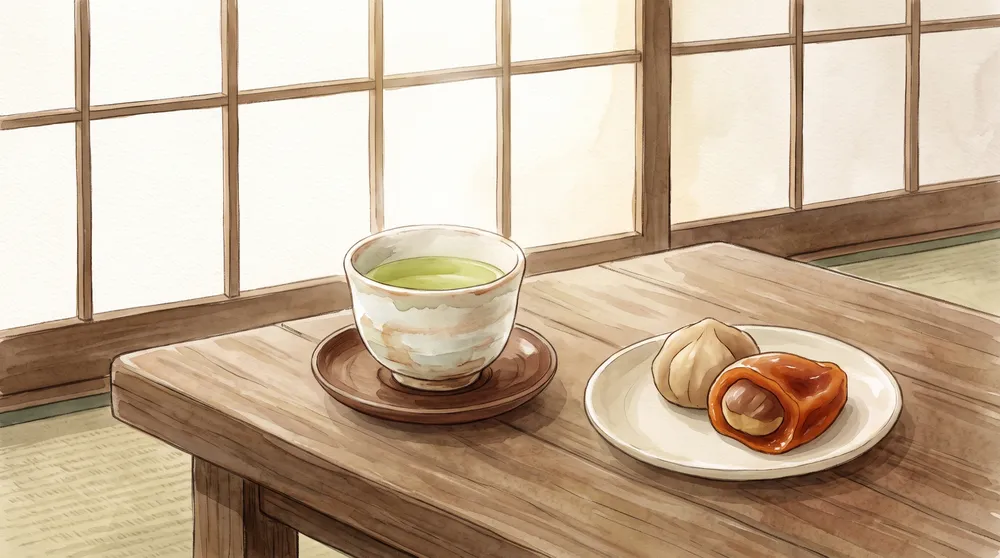
Nakatsugawa and neighbouring Ena have many sweets built on kurikinton. Since it's just "chestnuts and sugar kneaded together," the wrapping or pairing changes its shape: stuffed into dried persimmons, sprinkled over mochi, poured into yokan, turned into Western-style cakes. Kuriya Nanyoken's "kurigaki" stuffs kurikinton into an Ichida dried persimmon; Ryoheido in Ena makes "kuri-fukugaki", chestnut paste inside an Ichida persimmon — the persimmon's deep sweetness layered over the chestnut's gentle one. All are autumn-to-winter sweets; try them after kurikinton itself.
6. Tasting It From Outside Japan
Nakatsugawa kurikinton is chilled or frozen with a short shelf life, so it isn't something to order from abroad — and as of November 2026 we didn't find it on Amazon.com. It's a sweet to taste in Japan between September and winter: Nakatsugawa is on the JR Chuo Line, and in season, shop after shop lines up its own. If you'd like to make the osechi kind at home instead, you'll need sweet potatoes and candied chestnuts (kuri no kanroni); check the label for where the chestnuts were grown.
7. Frequently Asked Questions
How is it different from New Year kurikinton?
Completely different ingredients. The New Year kind is sweet-potato paste with candied chestnuts, dyed golden with gardenia. Nakatsugawa's is chestnut paste squeezed in a cloth — sometimes just "chestnuts, sugar" — and the natural colour of chestnuts.
When can I get it?
September into winter, when chestnuts are harvested. Some shops sell only September to February.
How long does it keep?
Not long — about 14 days refrigerated, three days once opened; frozen ones about a month, and around four days after thawing.
With so many shops, which should I choose?
There's no ranking — over 70 shops make nearly the same thing, each tasting different. Read the ingredients, or start with an assortment of kurikinton and kurigaki.
Frozen or chilled?
Decide by when you'll eat it. Chilled if you'll finish it in days; frozen if you want to keep some and bring them out gradually.
What other chestnut sweets are there?
Kurigaki and kuri-fukugaki stuffed in dried persimmons, kurikomochi dusted on mochi, yokan and Western-style cakes — all from Nakatsugawa and Ena, all autumn-to-winter sweets.
Final Thoughts: The Same Name, This Different
There are two kurikinton: New Year's golden sweet potato and candied chestnut, and Nakatsugawa's bite-sized sweet of chestnuts squeezed in a cloth.
Read the ingredients — some end at "chestnuts, sugar." Over 70 shops make it in one town, so there's no ranking, only tasting. And it exists only from September into winter, because it needs chestnuts.
If you're in Japan in autumn, take the Chuo Line to Nakatsugawa and taste the season.
Hoshigaki: Japanese Dried Persimmons From Four Regions
Konpeito and Wasanbon: Two Weeks to Make a Sweet