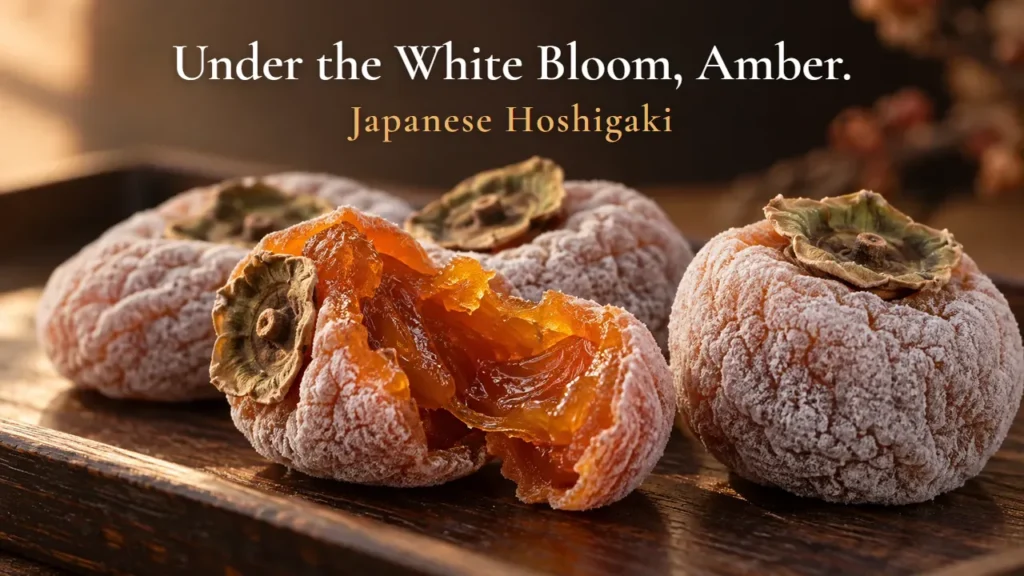
The white powder covering a hoshigaki (Japanese dried persimmon) is crystals of glucose that rose from inside the fruit.
In Nagano, small Ichida persimmons are massaged again and again until the powder reaches every crease. In Minokamo, Gifu, Dojo Hachiya persimmons are finished by gently sweeping their surface with a broom of rice straw to bring out the bloom. This guide draws on the registers of Japan's Geographical Indication (GI) system to introduce Ichida-gaki, Dojo Hachiya-gaki and anpo-gaki, plus the Saijo persimmons dried by a persimmon farm in Izumo — all of which reach the table from December.
Quick Reference: Which Region's Hoshigaki?
| Hoshigaki | Region | Size | Texture |
|---|---|---|---|
| Ichida-gaki ▾ | Minami-Shinshu, Nagano | Bite-sized (avg. 25 g) | Chewy, like yokan |
| Dojo Hachiya-gaki ▾ | Minokamo, Gifu | Large (avg. about 80 g) | Lots of jelly-like flesh, meltingly soft |
| Anpo-gaki ▾ | Date, Fukushima | Large (some around 100 g) | Semi-dried and juicy |
| Saijo-gaki ▾ | Izumo, Shimane | 30–55 g each | Moist |
1. Why Japanese: The White Powder Is the Fruit's Own Sugar
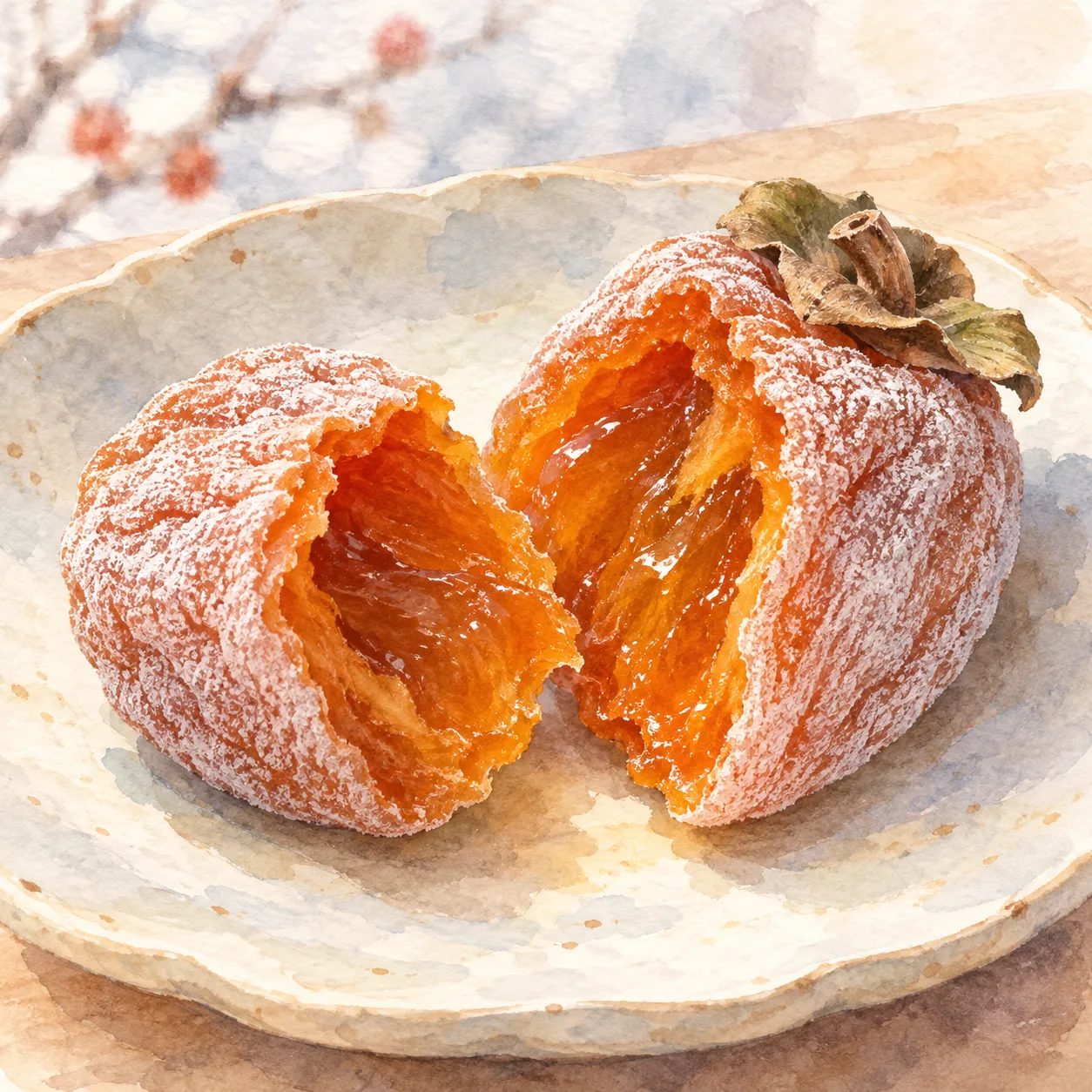
The GI register for Ichida-gaki says: "The white powder covering the surface is crystals of glucose that seeped out of the flesh together with moisture." Not mould — the persimmon's own sweetness.
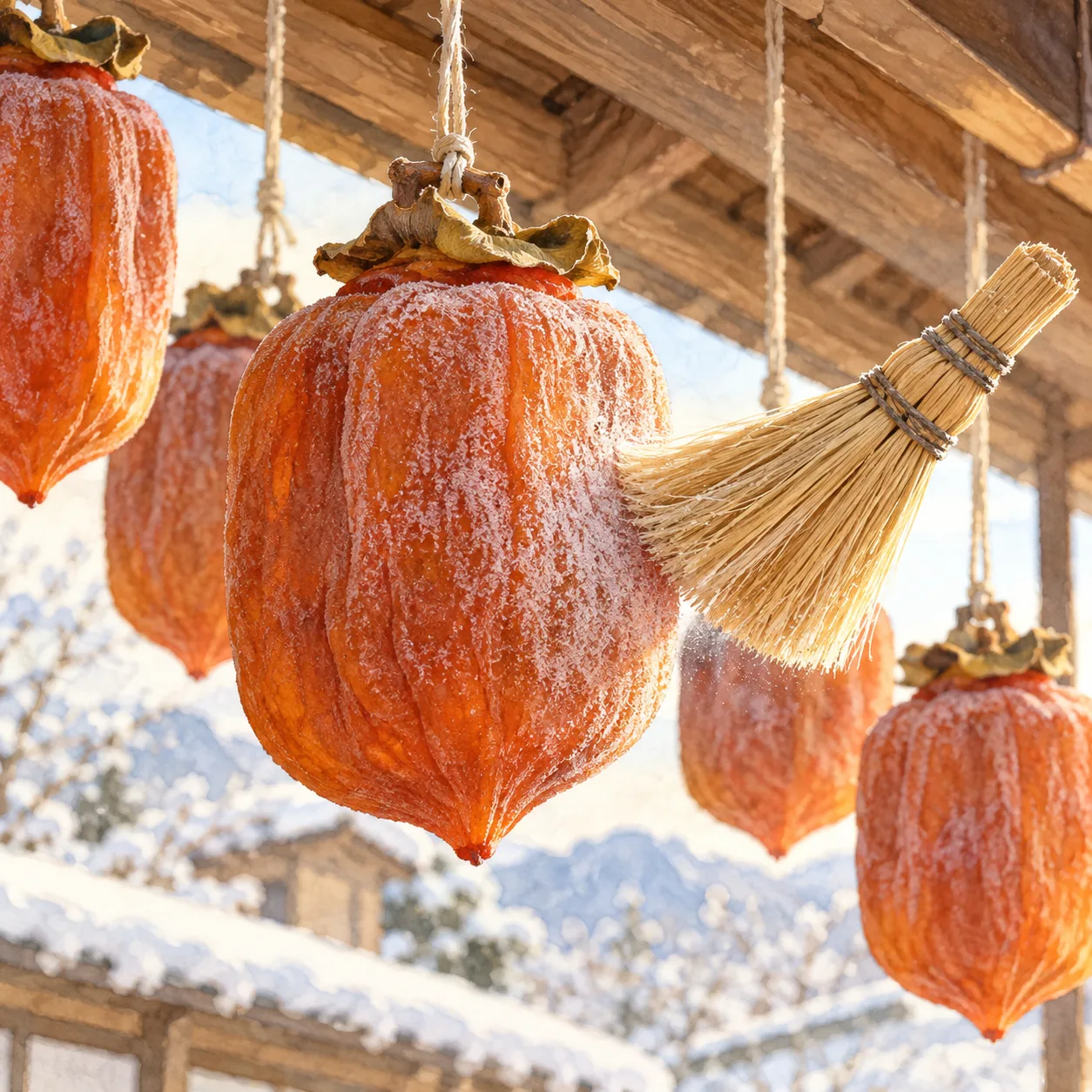
Growers take care to bring that powder out beautifully, and each region does it differently: Ichida-gaki by thorough massaging, Dojo Hachiya-gaki by sweeping with a rice-straw broom.
2. Ichida-Gaki: Small Enough to Massage Again and Again
Made in Minami-Shinshu, Nagano, Ichida-gaki dry down to an average of just 25 g — bite-sized. The register describes the flesh as "soft and chewy, like yokan" (sweet bean jelly). Because they're small, they can be massaged thoroughly; repeated massaging draws out the chewiness and spreads the white powder "until no bare skin shows, right into the hollows."
River Mist Climbing the Terraces
Ichida-gaki grow in orchards on the river terraces along both banks of the Tenryu River. From late autumn into early winter, morning and evening chill raises mist from the Tenryu and its tributaries, which climbs the terraces and creates just the right temperature and humidity for drying. According to the register, in natural drying "the touch of morning mist in the early hours gives the surface its moistness" — and even machine drying is designed to recreate the mist's effect.
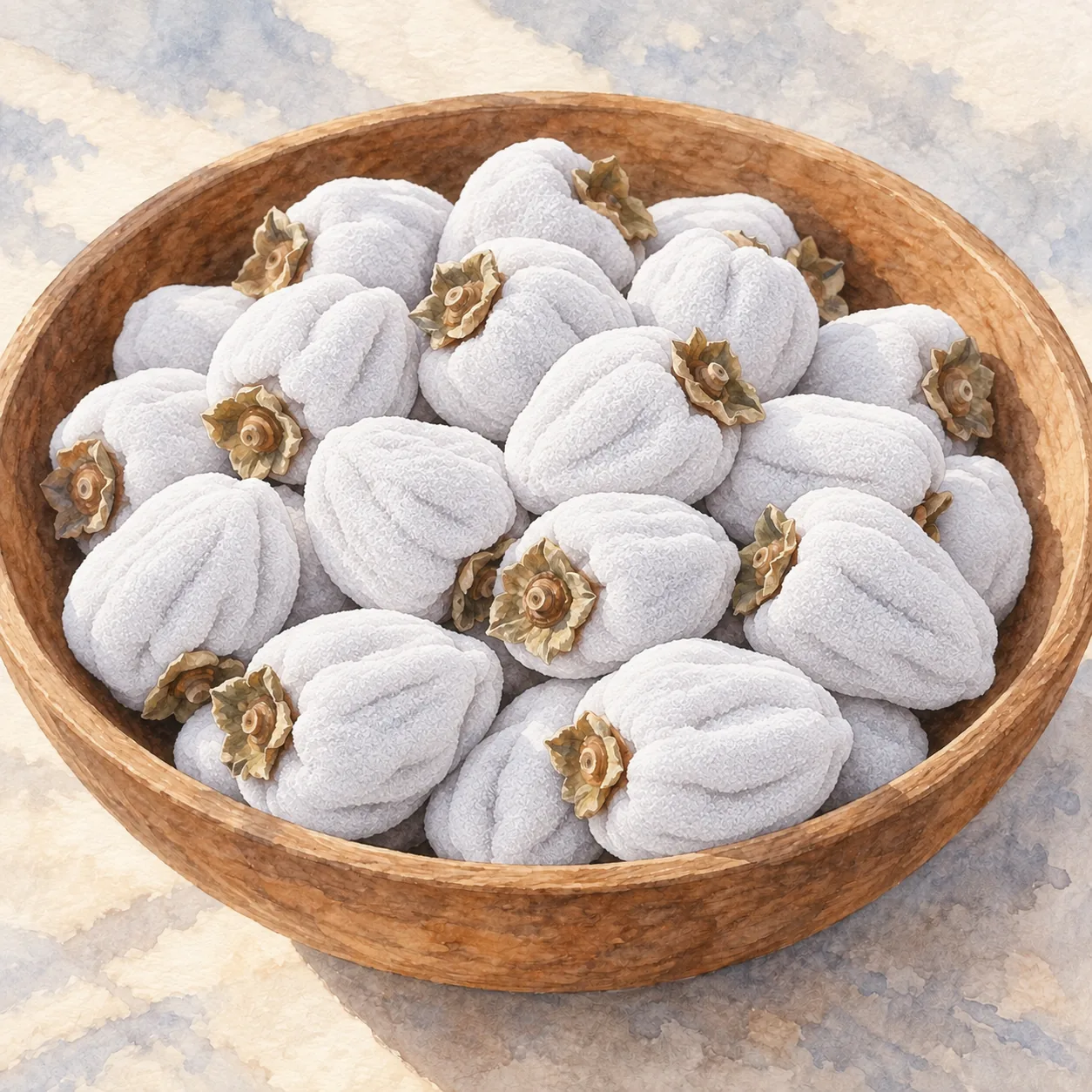
The JA Minami-Shinshu cooperative ships Ichida-gaki in individually wrapped gift boxes. One grower puts it this way: "The hardest part is timing the 'haza-oroshi' — taking the hanging persimmons down. Every year I fret until the Ichida-gaki bloom with beautiful powder."
Did you know: Ichida-gaki began with one tree at a shrine
According to the register, Ichida-gaki descend from an old persimmon tree in the grounds of the Ise shrine in Shimo-Ichida (today's Takamori) in the 1800s. Its roasted persimmons became famous for their flavour, and grafting spread it through the village. It was named "Ichida-gaki" in 1921, after its birthplace, when it was first sent to the Tokyo market.
3. Dojo Hachiya-Gaki: Massaged by Hand, Swept With Rice Straw
Dojo Hachiya-gaki from Minokamo, Gifu, are made from a square, slightly pointed astringent persimmon. As a rule, each branch is allowed to bear only one fruit, grown to over 250 g. The skin is peeled by hand to keep the square shape. Dried, they average about 80 g, and the best exceed 100 g; the flesh is amber, with plenty of jelly-like parts and a meltingly soft texture.
The register's process is meticulous. To keep the surface from drying too fast, they're dried in shade for over a day before going into the sun. During drying they're massaged by hand to even out moisture inside and out — harder where the outside has dried more, adjusting to each persimmon. Finally the surface is gently swept with a "nio-bōki," a broom of rice straw, which brings out a refined white bloom. Shipping standards are strict: nothing under 60 g, nothing with large wrinkles, nothing with powder too thick.
Did you know: Nearly lost, then rebuilt by one farmer
Dojo Hachiya-gaki are said to have been presented to the imperial court and shogunate for over a thousand years; "dōjō" refers to the courtiers who served in the palace. But as sugar became common, demand fell and almost no one made them. In 1930, one farmer started making them again, calling on neighbours to join, and gradually rebuilt the Dojo Hachiya-gaki of today, the register records.
4. Anpo-Gaki: Semi-Dried, Born in Fukushima's Isazawa
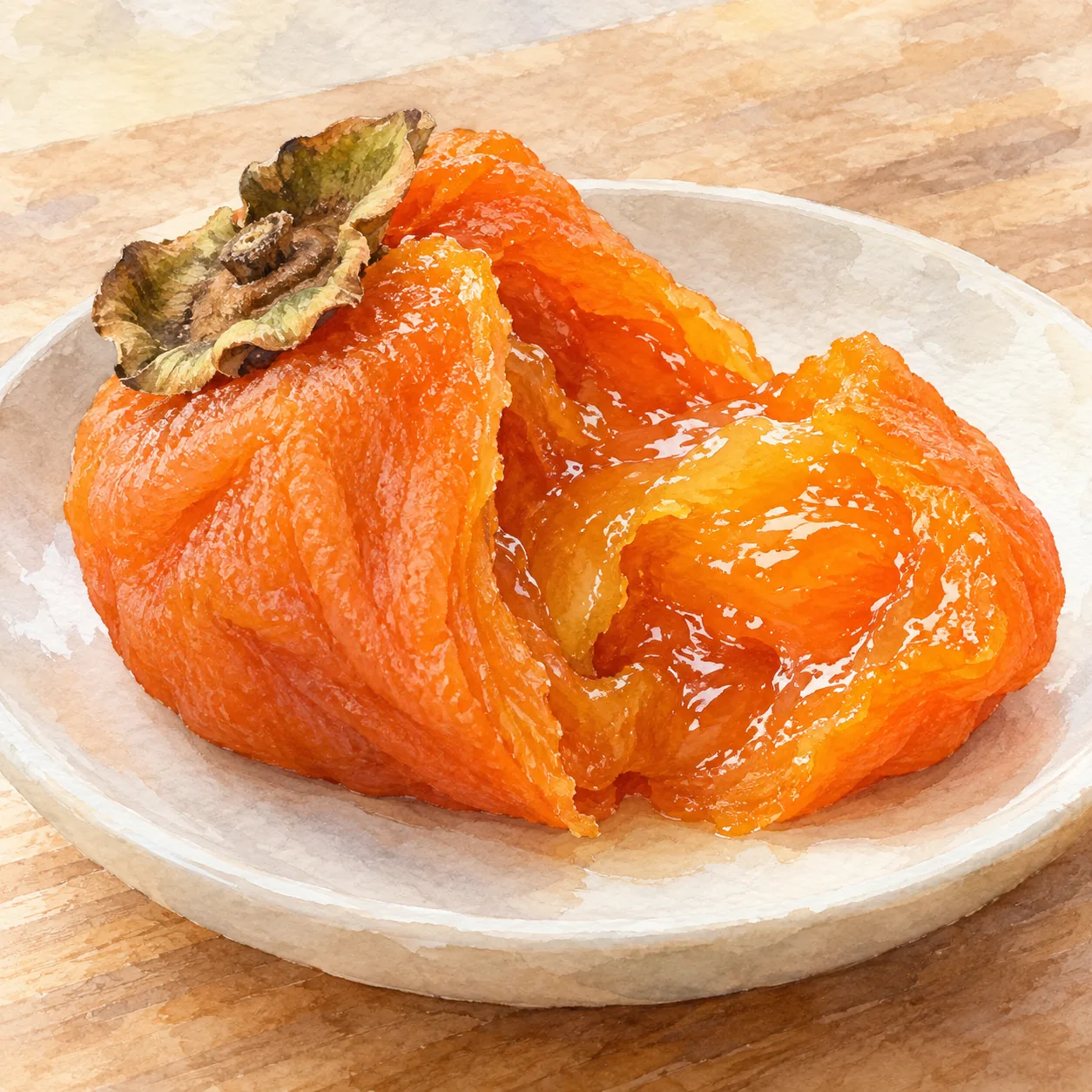
Anpo-gaki are semi-dried and juicy. The GI description of "Date no Anpo-gaki" reads: "vivid orange flesh… semi-dried, juicy, with a meltingly soft mouthfeel."
They were born in the Isazawa district of Yanagawa, Date city, Fukushima. In the Taisho era, villagers adopted a method then used in America to dry raisins, in order to keep the persimmons' colour. According to JA Fukushima Mirai, the technique was established in 1922 and a shipping cooperative was founded the following year. They can be eaten as they are, or frozen and eaten like a sorbet.
5. Saijo-Gaki: A Persimmon Good Enough to Eat Fresh, Dried
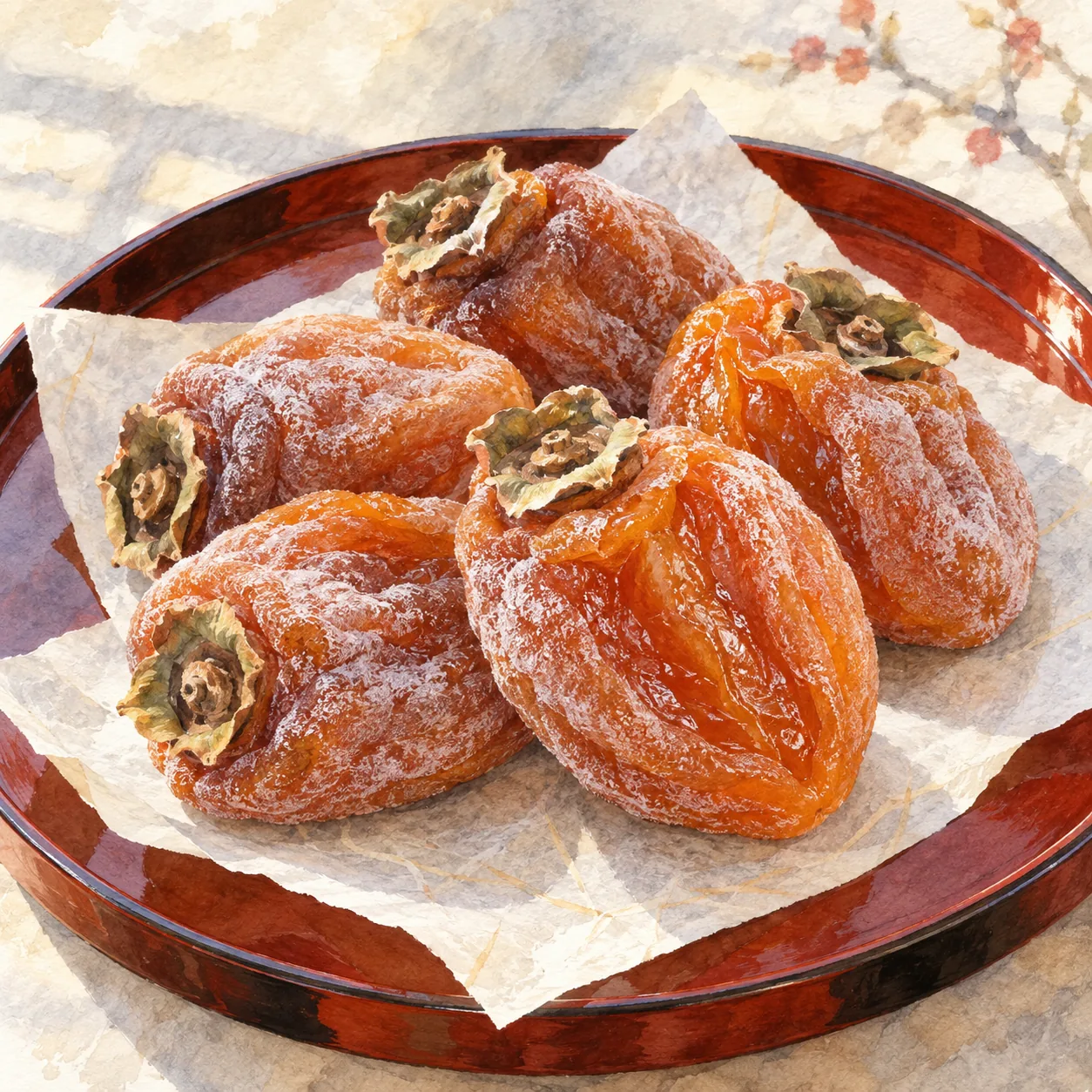
Kakitsubo of Izumo, Shimane, is a persimmon farm growing Saijo persimmons on about 7 hectares — and drying its own fruit itself. In its words: "We tend the orchard all year round, and generously turn Saijo persimmons that are delicious even fresh into hoshigaki." Particular about how much moisture to leave, they make a moist hoshigaki.
The only ingredient is "Saijo persimmon (Izumo, Shimane)," each one individually wrapped; the gift set holds eight large 50 g persimmons.
6. Buying From Outside Japan
As of November 2026, the producers above sell within Japan. On Amazon.com we found Ichida-gaki — a name protected by Japan's GI system for Minami-Shinshu, Nagano. Note that "hand-massaged hoshigaki" is also made outside Japan; if you want Japanese hoshigaki, look for a region name such as Ichida, Hachiya or Date (anpo).
Ichida-Gaki Dried Persimmons, 500 g
Nagano's bite-sized, chewy hoshigaki, coated in white bloom. Keep opened packs in the fridge or freezer.
Ichida-Gaki Dried Persimmons, 500 g
Loading product details…
7. Choosing by Texture, Season and Shelf Life
① By texture
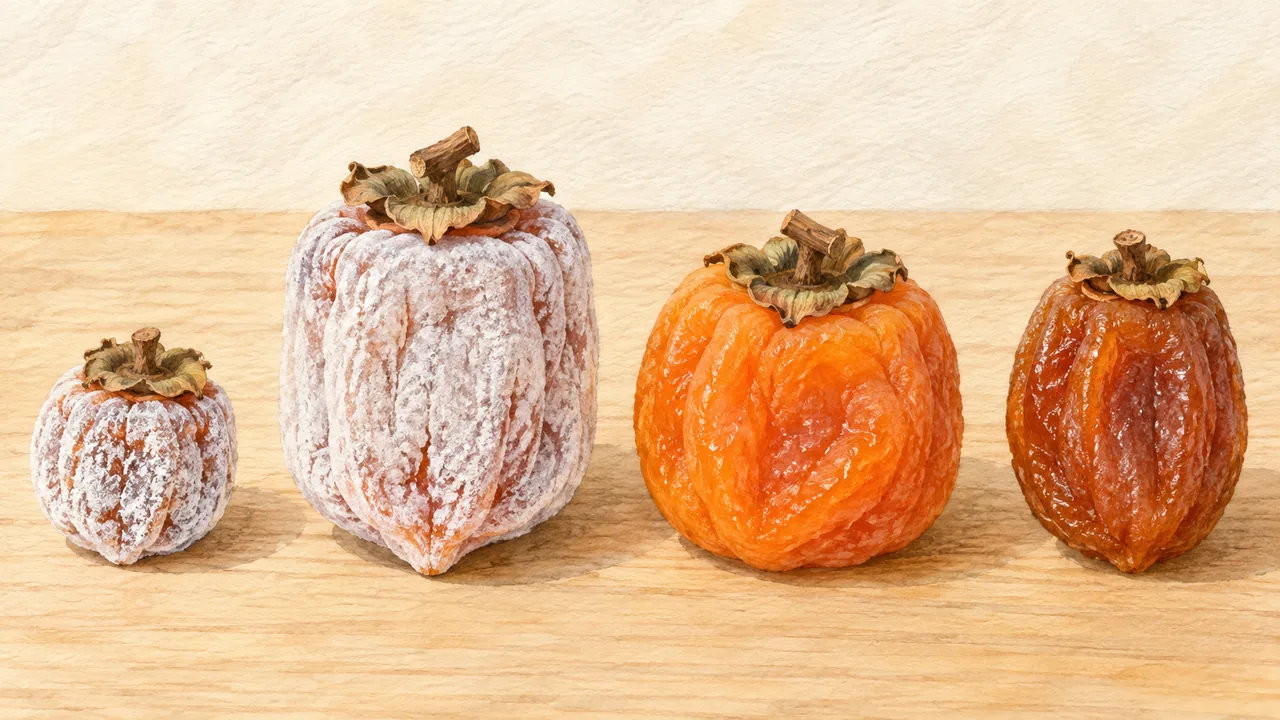
For a chewy bite, Ichida-gaki. For melting flesh, Dojo Hachiya-gaki. If firm dried fruit isn't your thing, semi-dried anpo-gaki. For the taste of a farmer's own persimmons, moist Saijo-gaki.
② They arrive from December
Persimmons harvested in autumn are dried before shipping, so every hoshigaki here ships from December in Japan: Ichida-gaki from mid-December to year's end, anpo-gaki from mid-December, Dojo Hachiya-gaki from late December to mid-March.
③ Shelf life varies a lot
Semi-dried anpo-gaki keep the shortest — from 20 days to a month at room temperature, depending on the producer. Ichida-gaki and Saijo-gaki keep 60 days from production; Dojo Hachiya-gaki, 90 days refrigerated. Once opened, keep them in the fridge or freezer — and in warm weather, refrigerate them even unopened.
8. Frequently Asked Questions
Isn't the white powder on hoshigaki mould?
No — it's glucose crystals that rose from inside the persimmon, as Ichida-gaki's GI register explains. It may melt in warm temperatures.
How is anpo-gaki different from hoshigaki?
Anpo-gaki is a hoshigaki finished semi-dried and juicy, with vivid orange flesh and a meltingly soft mouthfeel. It was born in Isazawa, Date city, Fukushima.
Why is Ichida-gaki so small?
The Ichida variety itself is small — 100–120 g fresh, about 25 g dried on average. Being small, it can be massaged many times, giving its chewy texture and even bloom.
What is the "nio-bōki" used on Hachiya-gaki?
A broom made of rice straw. Near the end of drying, the persimmons' surface is gently swept with it to bring out a refined white bloom — a technique handed down in Minokamo.
When are hoshigaki available?
From December. Ichida-gaki and anpo-gaki from mid-December; Dojo Hachiya-gaki from late December to mid-March.
How should I eat anpo-gaki?
As they are, or frozen like sorbet, as JA Fukushima Mirai suggests. They don't keep long, so enjoy them soon after they arrive.
Final Thoughts: Amber Sweetness Under the White Bloom
The white powder on hoshigaki is sweetness from inside the fruit — and each region coaxes it out its own way.
Ichida-gaki are massaged again and again and dried in the Tenryu's river mist. Dojo Hachiya-gaki, one fruit to a branch, are massaged by hand and swept with rice straw. Anpo-gaki, born in Fukushima's Isazawa, are meltingly semi-dried. Saijo-gaki are an Izumo farm's own persimmons, dried.
This winter, choose a region and try a Japanese hoshigaki. Split one open — the amber inside will surprise you.
Japanese Hoshiimo (Dried Sweet Potato): 5 Best Mail-Order Brands
Konpeito and Wasanbon: Two Weeks to Make a Sweet