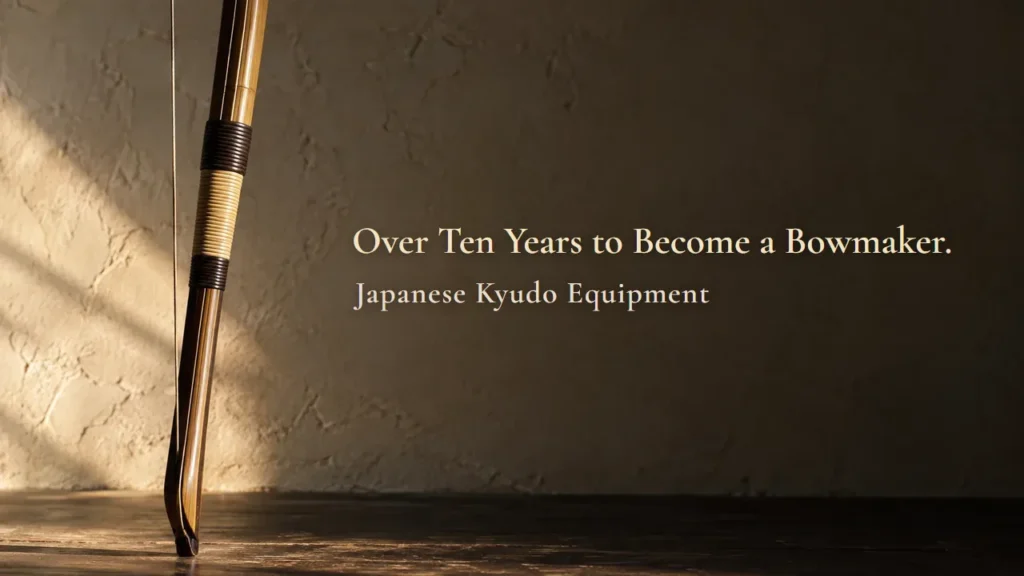
Becoming a fully fledged bowmaker is said to take more than ten years.
Miyakonojo daikyu (great bows), made in Miyakonojo, Miyazaki, are built from madake bamboo and haze (wax-tree) wood, through 200 to over 300 steps, almost all by hand; they were designated a national Traditional Craft in 1994. The arrows have their own rule too: arrows come in pairs — not two identical arrows, but two whose feathers face opposite ways. And their fletching is still real bird feather: turkey, black eagle. With usable feathers limited, practice and competition arrows are chosen differently. This guide walks through how bows are made, how arrows are paired and fletched, and the yugake glove worn on the hand.
Quick Reference: Four Tools and What to Look At
| Tool | Look at | Material |
|---|---|---|
| Yumi (bow) ▾ | Laminated bamboo, or modern laminates | Madake and haze / glass / carbon |
| Ya (arrows) ▾ | A pair, feathers facing opposite ways | Duralumin / carbon / bamboo |
| Fletching ▾ | Practice or competition | Real bird feathers |
| Yugake (glove) ▾ | A hard thumb core (katabōshi)? | Deerskin |
1. Getting Kyudo Gear Outside Japan
Short answer: most kyudo gear is bought from Japanese bow shops, usually with the help of your dojo. As of November 2026, we didn't find kyudo equipment on Amazon.com. A few things make kyudo gear different to buy from abroad:
- Length. A standard-length (namisun) bow is about 2.2 m (over 7 ft) long — shipping it is a job in itself. Arrows and strings travel far more easily.
- Climate. Bamboo bows react to humidity and temperature; glass and carbon bows are chosen partly because they're less affected. Where you live may decide the material.
- Feathers. Fletching is real bird feather. Turkey is widely available; some raptor feathers are restricted under CITES and national laws, so check your country's rules before ordering arrows fletched with them.
- Fit. Bow strength, arrow length and the yugake depend on your body. Many people order through their dojo or national kyudo federation, with a teacher's advice.
2. Why Japanese: A Bamboo Bow Takes 200+ Steps
Made From Madake and Haze
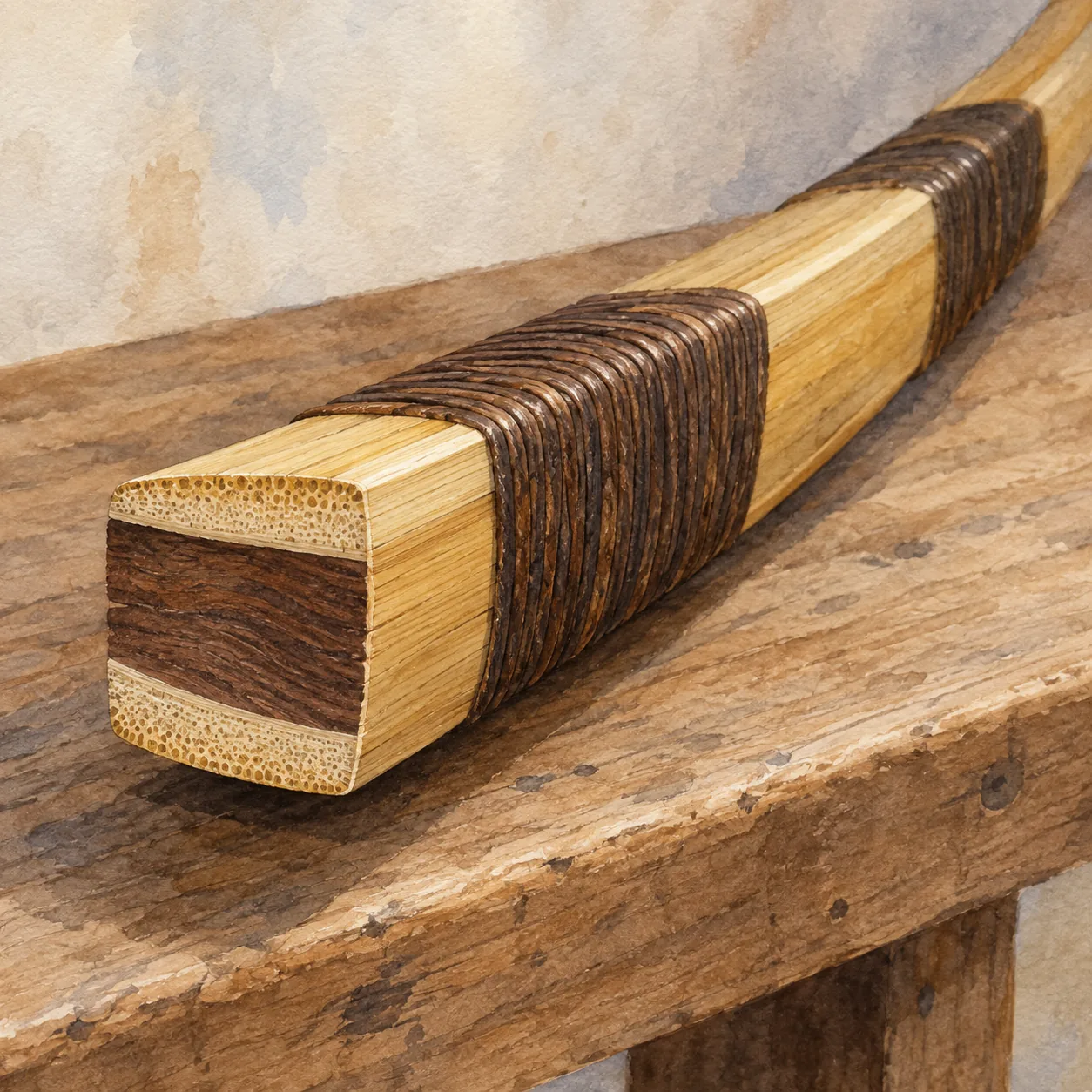
Miyakonojo city's official site says the Miyakonojo daikyu is "made from madake bamboo and haze." Not bamboo alone: bamboo and haze wood are laminated to form the bow's body, and the combination of the two gives its power to bend and return. (As in our kendo guide, madake is prized for its spring — but where a shinai splits one bamboo, a bow laminates it.)
200 to 300+ Steps, Almost All by Hand
The same page gives the count: "200 to over 300 steps, almost all by hand" — followed by "more than ten years are needed to become a fully fledged bowmaker." The number of steps and the years it takes to grow a person, side by side: a story of a tool, and of people.
Miyakonojo daikyu were designated a national Traditional Craft in 1994. According to the city, there are now five nationally certified traditional craftsmen, and Miyakonojo produces more bamboo bows than anywhere else in Japan. Bamboo bows rarely appear in ordinary shops because they're made to order.
3. Today's Bows Are Chosen by Material
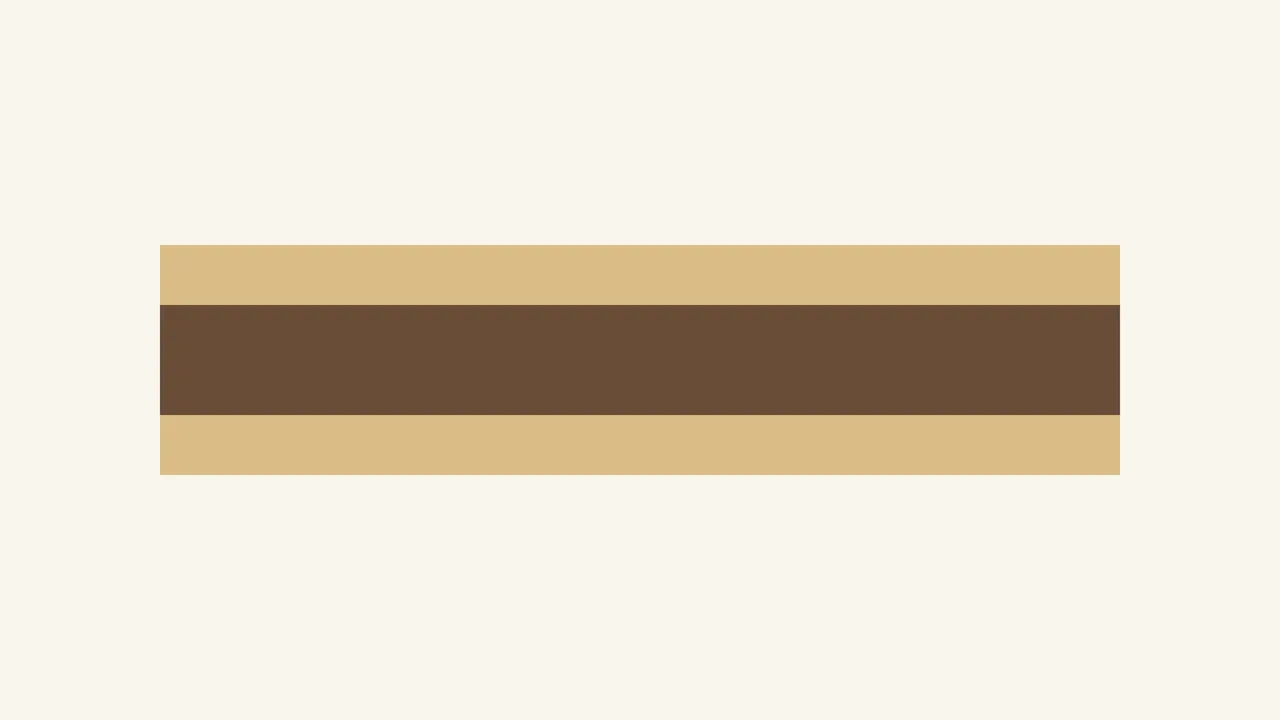
Where bamboo bows laminate bamboo and haze, the bows widely used today laminate glass fibre or carbon with a core. The idea of building a bow in laminated layers hasn't changed — only the materials. Bows also come in lengths such as namisun (standard) and nobisun (extended), and in draw weights; height decides the length, and the strength you can draw decides the weight.
Japanese bow shops offer graded lines — for example, Sanbu Kyugu of Chiba lists a beginner-and-club bow from 6 to 13 kg, a step-up model above it, and a carbon-core bow chosen for daily use because it's less affected by humidity and temperature. Bows are tools your body gets used to: start light, move to stronger later. The "three-place rattan wrap" in their names is the number of places rattan is bound around the bow for reinforcement.
4. Arrows Come in Mirrored Pairs
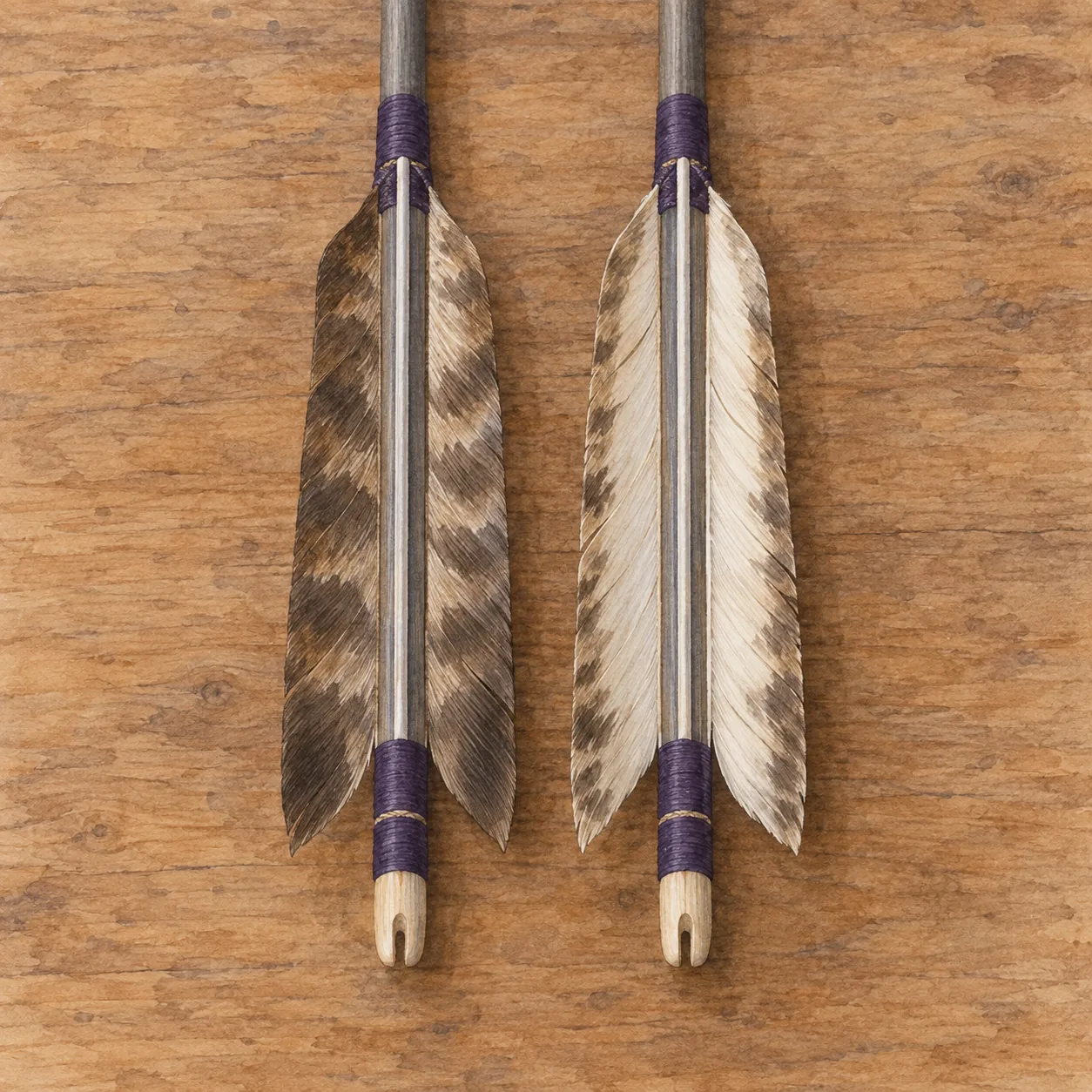
Kyudo arrows are handled as pairs: the haya (first arrow) and the otoya (second arrow), together called hitote — "one hand." The interesting part: they're not two identical arrows. When shooting, the haya shows the face of its feathers toward the front, and the otoya toward the archer. Two arrows deliberately made with their feathers facing opposite ways, paired as one. A set of six is three haya and three otoya.
The shaft size is also chosen: numbers like "1913" in product names are the shaft specification, and each has a recommended bow weight — a stronger bow needs a shaft that can take it, which is why you choose the bow first, then the arrows. Arrow length (yazuka) depends on the length of your arms.
5. Fletching Is Still Real Bird Feather
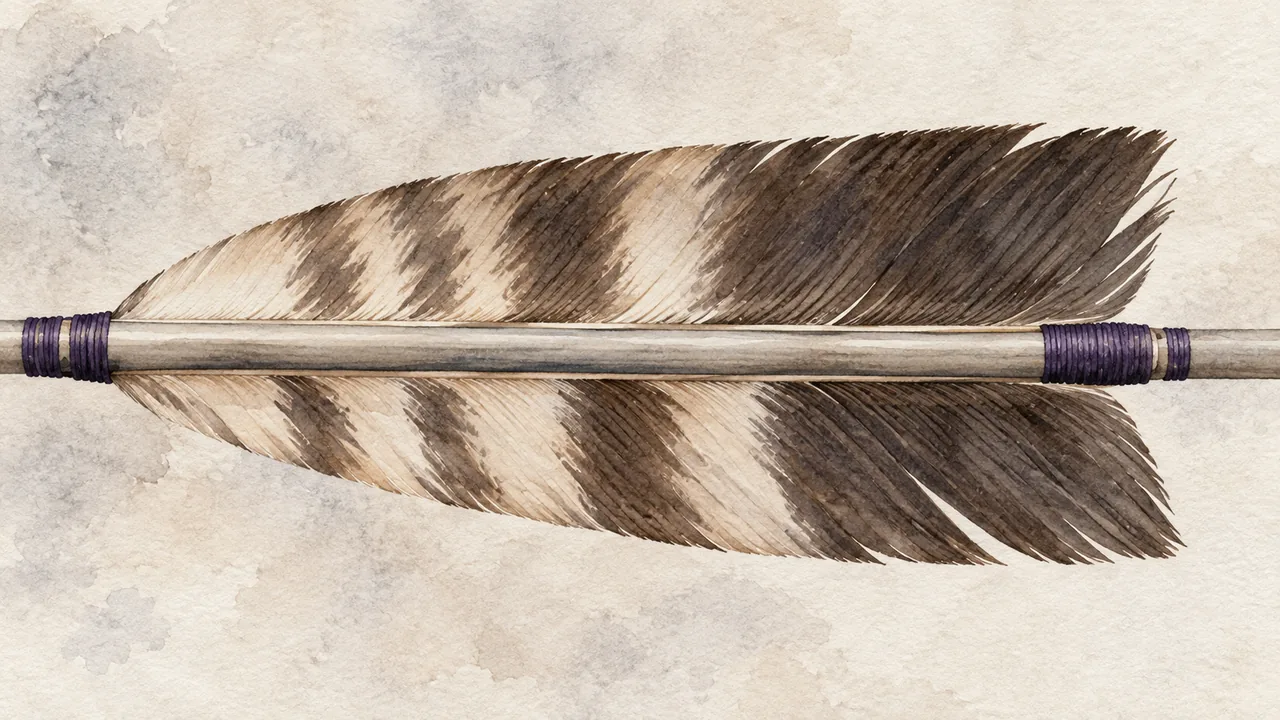
Arrow feathers are still natural: turkey, eagle, hawk, swan. The bird changes the stiffness, weight and pattern. And usable feathers are limited — some raptors are birds whose commercial trade is in principle banned under the Washington Convention (CITES), and each bird is treated differently.
Within that, practice and competition arrows are chosen apart. One Japanese shop offers the same 1913 duralumin shaft in sets of six with only the feathers changed: turkey with black-dyed tips for daily practice — readily available, the dark tip helping your eye follow the arrow toward the target — and black wing feathers, more durable and considered suited to competition because they hold their shape over many shots. Feathers wear from rubbing on the target and when arrows are collected, and many shops re-fletch them, keeping the shaft.
6. The Yugake Is Deerskin
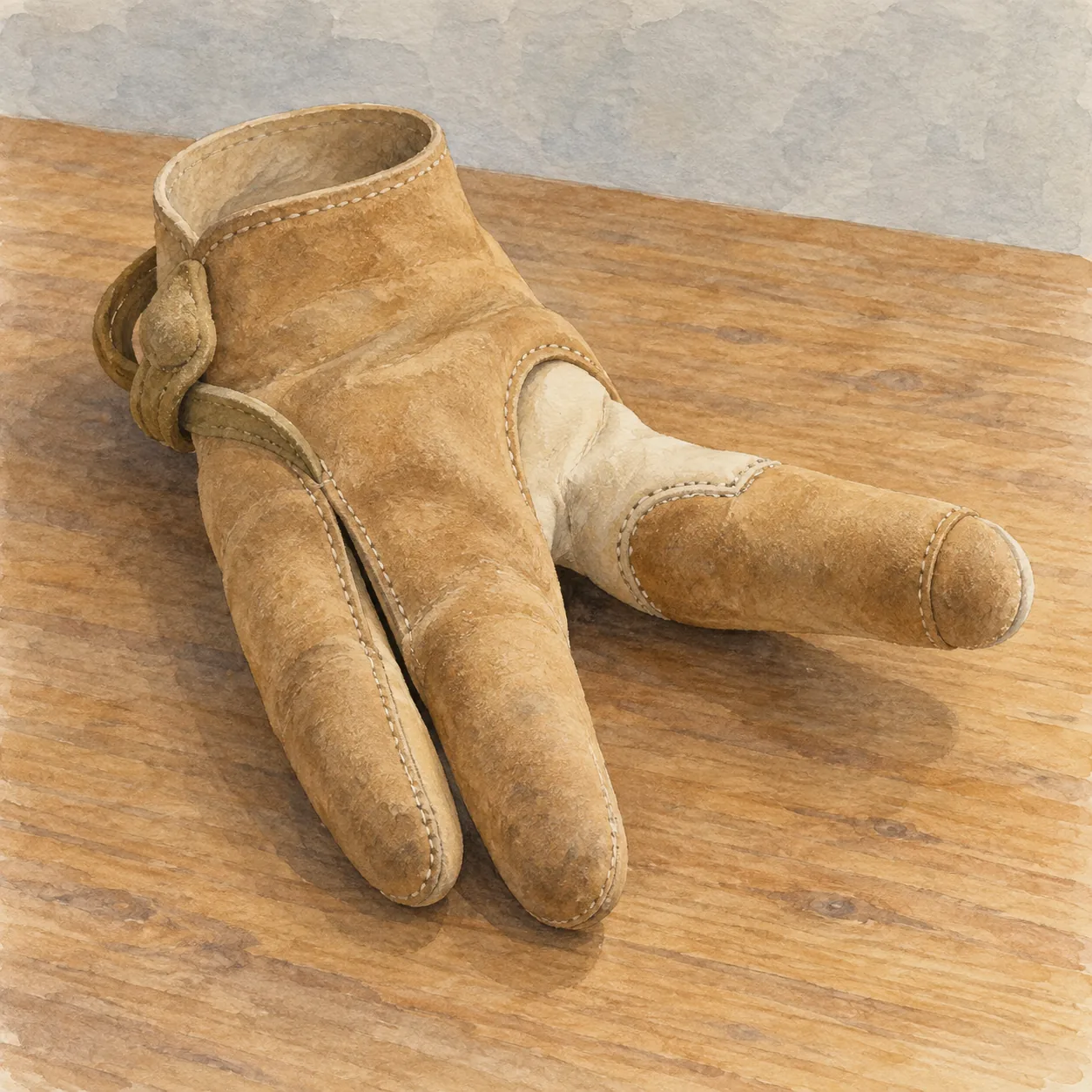
The yugake is the leather glove worn on the right hand to draw the bow, made of deerskin. Unlike an ordinary glove, its thumb holds a hard core: the katabōshi. The string bears on one point at the base of the thumb, so that point is built differently. A mitsugake covers the thumb, index and middle fingers.
The yugake is the tool closest to your body; the leather shapes itself to your hand and becomes yours with use. You wear a thin cloth shitagake inside so sweat doesn't go straight into the leather — the shitagake can be washed and replaced. Unlike bows and arrows, a yugake can't really be shared, so if you keep training you'll want your own early; beginner models exist for that.
7. The String Is Replaced Before It Breaks
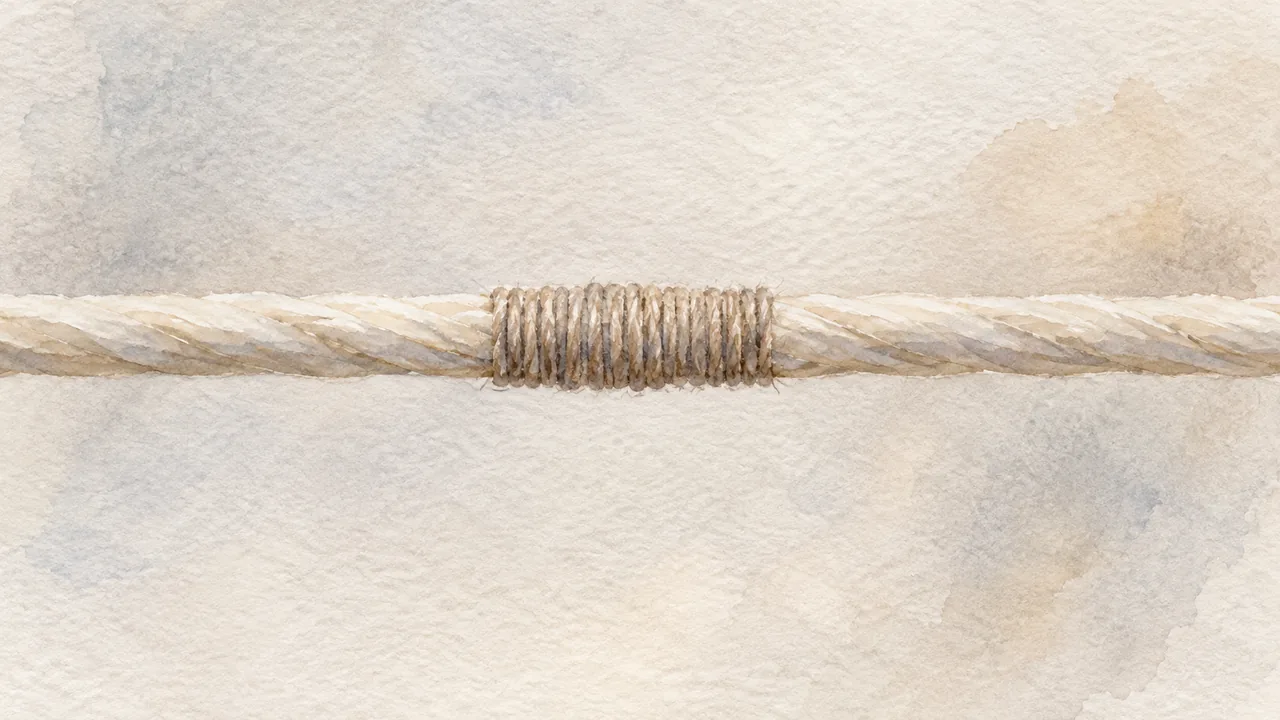
The tsuru (string) is a consumable: tension with every draw wears it a little. It's meant to be replaced before it breaks, so archers keep spares. Synthetic-fibre strings are widely used today — low-stretch and easy to handle — in namisun and nobisun lengths to match the bow. You wind the nakajikake (the nocking point) yourself, and it wears too, so check it every session. Stringing and unstringing are part of practice: unstring after use and let the bow rest.
8. Frequently Asked Questions
Where can I get a bamboo bow?
Rarely in ordinary shops — they're made to order. Miyakonojo produces the most bamboo bows in Japan and has five certified traditional craftsmen; ask a bow shop, or approach the region directly, ideally through your dojo.
How do I choose my first bow?
By draw weight and length. Height decides namisun or nobisun; then choose a weight you can draw. Too strong a bow breaks your form, so starting light is usual — your teacher can advise.
Why do arrows come in pairs?
The haya and otoya together are counted as "one hand." They aren't identical: their feathers face opposite ways when shot. A set of six is three of each.
Which feathers should I choose?
Turkey for everyday practice; more durable feathers such as eagle are considered suited to competition. Some raptor feathers are restricted under CITES, so start with practice arrows — and check import rules if ordering from abroad.
Can I borrow someone's yugake?
It's better to have your own. The leather shapes to your hand, and where force lands on the thumb core differs person to person. Wear a washable shitagake inside.
How often should I replace the string?
It wears with the number of draws — replace it before it breaks, and keep spares. Check the nakajikake every session too.
Final Thoughts: How a Tool Is Counted Shows How It's Made
Miyakonojo's bamboo bows are made of madake and haze through 200 to over 300 steps, mostly by hand — and it takes more than ten years to become a bowmaker. Laminating to create spring carries on in today's glass and carbon bows.
Arrows come in mirrored pairs, fletched with real feathers chosen for practice or competition. The deerskin yugake has a hard core in the thumb, where the string bears on one point.
Arrows counted as "one hand," rattan wraps counted in places, gloves counted by fingers — read the names, and you see why each tool took its shape.
Kendo Bogu: Stitch Spacing, Madake Shinai, Urushi Do
Shogi Sets: Tendo Pieces, Kaya Boards, and Shin-Kaya