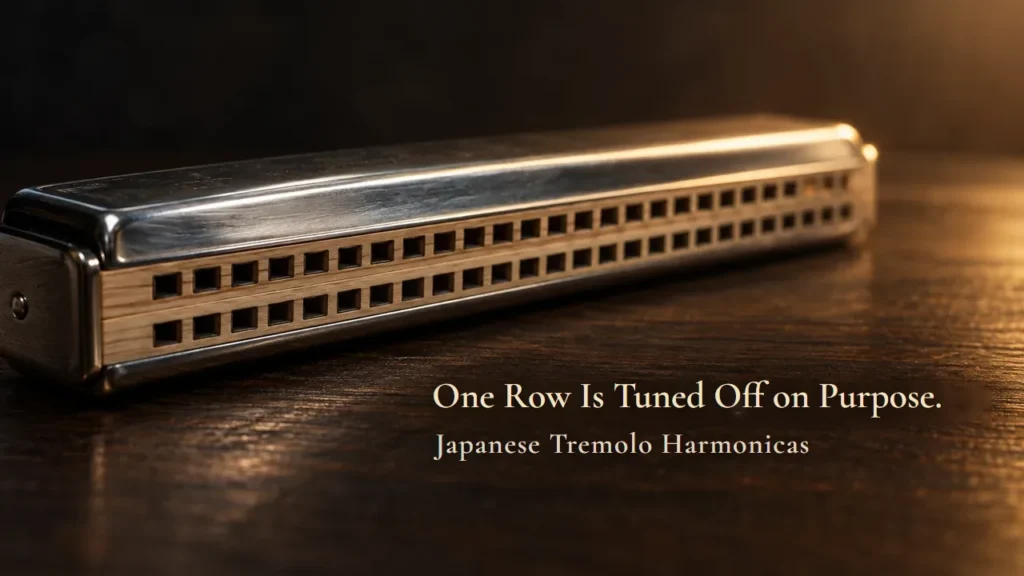
One of the two rows is tuned off — on purpose.
A Japanese tremolo harmonica (fukuon harmonica) has its holes in two rows, upper and lower, with each note doubled. But the two are never tuned exactly alike. As Suzuki Musical Instrument explains, "one row is tuned to the correct reference pitch, and the other row is tuned 'just very slightly higher.'" Two notes that don't quite match beat against each other, and the sound shimmers — that vibrato-like voice. Not matching is how this instrument is finished.
One more thing makes the shop shelf readable: a tremolo harmonica plays only one key per instrument. That's why the same model sits there in C, A, G minor and more. This guide covers how the shimmer is made, how to choose a key, and how two Japanese makers build theirs.
Quick Reference: Three Things to Decide Before You Buy
| Decide | Options | Decided by |
|---|---|---|
| Key ▾ | C / A / Gm … | The key of the songs you want to play |
| Major or minor ▾ | C (major) / Am, Gm (minor) | The mood of the song — a separate instrument |
| Maker ▾ | Tombo / Suzuki | How it feels to play |
| Remember | One instrument plays one key. Why ▾ | |
Written for the 21-hole tremolo harmonica.
1. Why Japanese: Tuning Off Makes It Shimmer
The Same Note, in Two Rows
Look into a tremolo harmonica and the holes run in two rows; upper and lower play the same notes. Suzuki's explanation: "the same notes, tuned slightly apart, line up in two rows, upper and lower." Two of each note, deliberately not matched — that's the core of how it's built.
Only One Row, Just Slightly Higher
How far apart? "One row is tuned to the correct reference pitch, and the other row is tuned 'just very slightly higher.'" Play them together and "a pleasant 'beat', like vibrato, is produced" — the sound swells and fades in a regular pulse. That's the source of the classic harmonica shimmer.
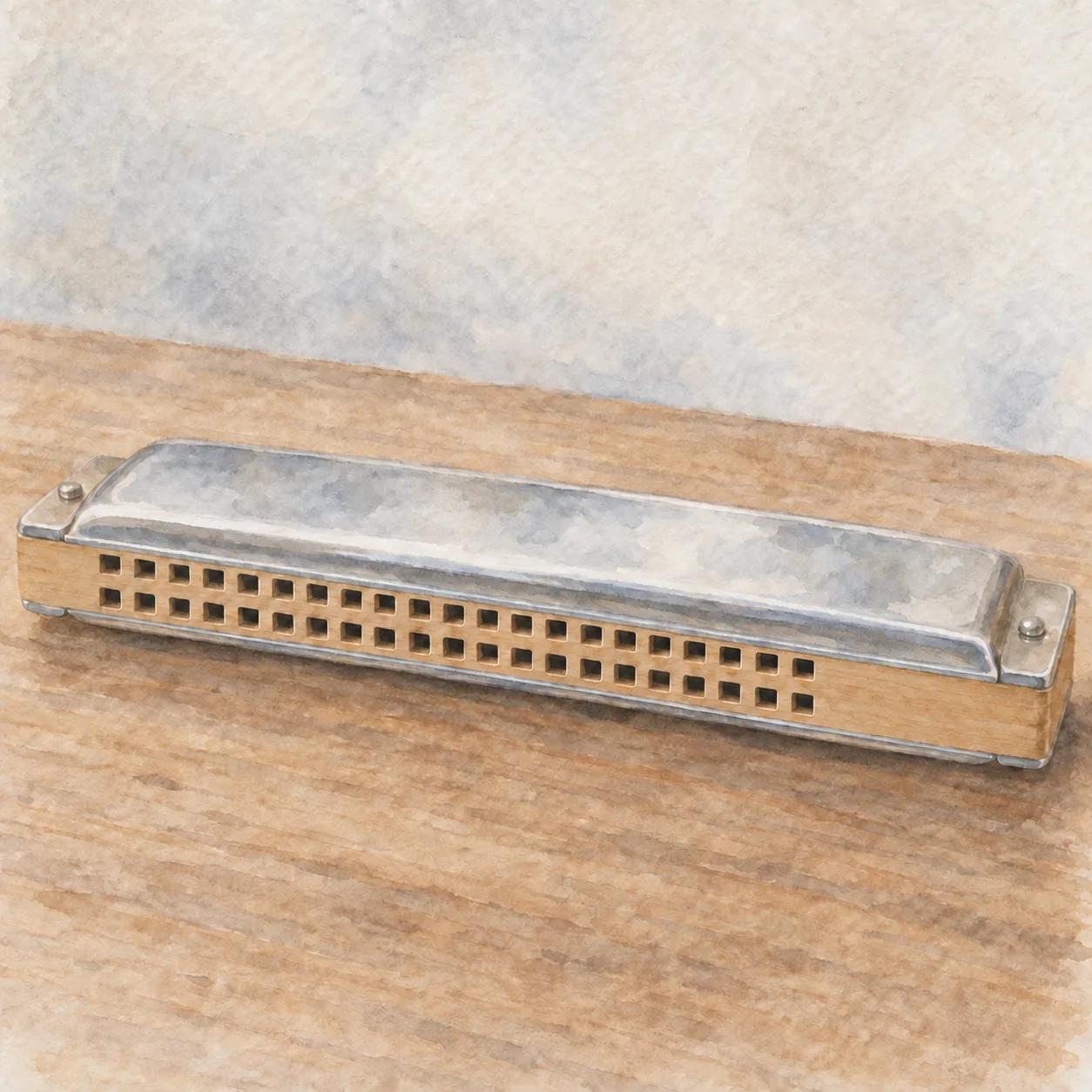
How Far Off Decides the Voice
A larger offset makes a faster shimmer, a smaller one a slower shimmer, so how much to detune is the instrument's personality. And the skill of tuning exactly and the skill of detuning exactly are the same skill: to miss by just the intended amount, you first have to hit the intended note.
2. One Instrument, One Key
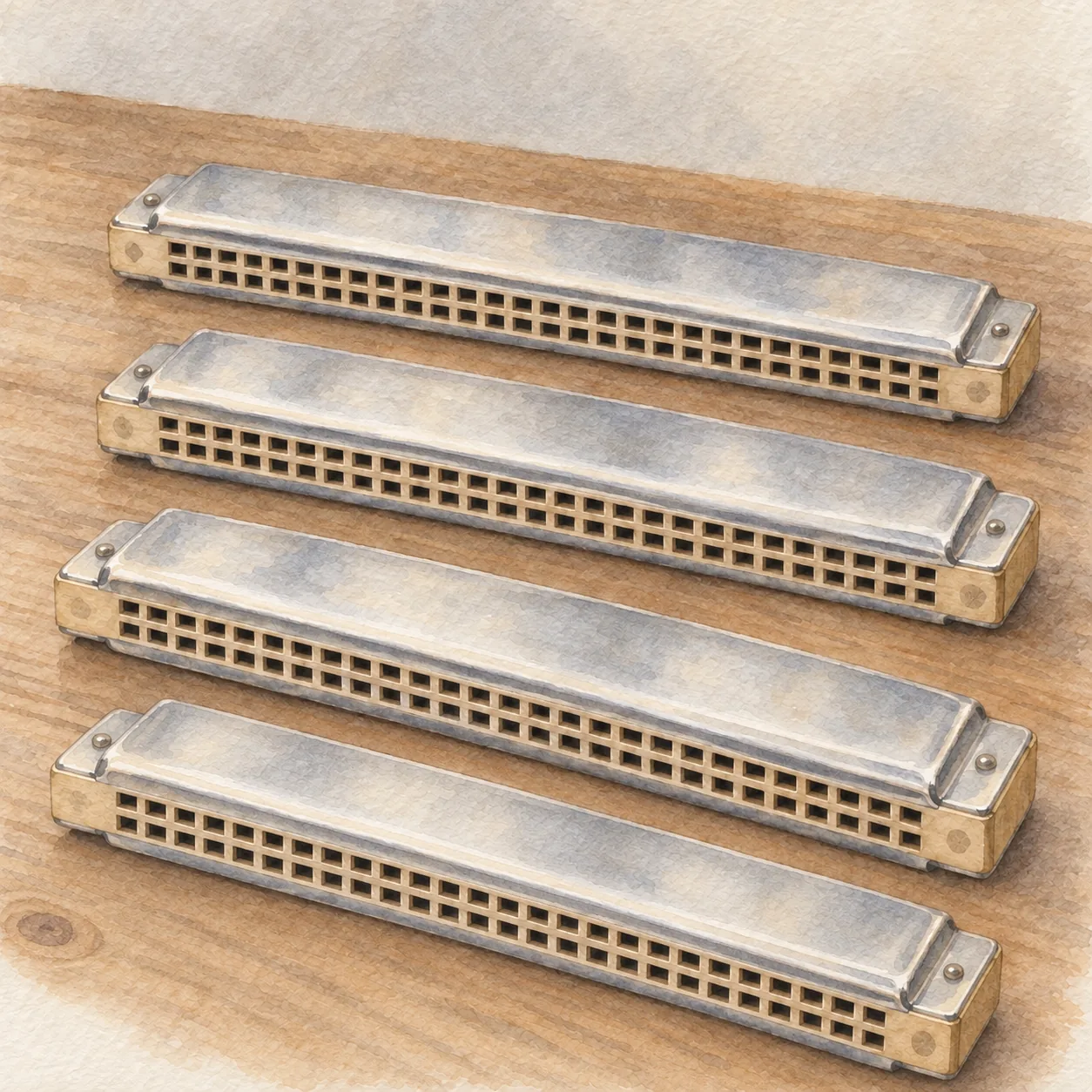
The tremolo harmonica's other big trait: "it is built so that, basically, one instrument plays one scale (key)." A piano or guitar plays any key; this doesn't. A C harmonica plays songs in C, and a song in another key needs another harmonica — so "you have to switch harmonicas during a performance to match the key of the piece." It's an instrument designed around switching mid-song.
So the shop shelf shows the same model number in key after key — same model, same holes, same price, only the key differs. It's less like buying an instrument than buying the key of the songs you want to play. If you have a song in mind, look up its key first; the key signature at the start of the score tells you.
Tombo Premium 21 No.3521, Key of C: A First Instrument
Tombo's 21-hole tremolo harmonica in C — the most-used key and the usual first choice, since many method books and songbooks assume C. Twenty-one holes in two rows, upper and lower playing the same notes with one row tuned slightly high. Tombo lists the No.3521 as made in Japan.
Tombo Premium 21 Tremolo Harmonica No.3521, Key of C
Loading product details…
3. For Minor-Key Songs, a Minor-Key Harmonica
If a different key means a different instrument, major and minor are different instruments too. On the shelf, some are marked with a capital letter only — "C" — and some with an "m" — "Am," "Gm." The "m" means minor. Melancholy, wistful songs are often written in minor keys; if those are what you want to play, choose a minor-key harmonica.
Minor-key harmonicas come in fewer varieties than major ones, yet they keep being made because there are songs people want to play in minor. Among minor keys, A minor is one of the most used, and shares its notes with C major — so it's often the second harmonica after a C.
Tombo Premium 21 No.3521, A Minor
The same No.3521 as the C above, in A minor. Same model, same structure — what changes is the row of notes. Set them side by side and you see how one instrument is made in as many keys as there are songs to play.
Tombo Premium 21 Tremolo Harmonica No.3521, A Minor
Loading product details…
4. Tombo: Making Harmonicas Since 1917
Tombo Musical Instrument's history begins in 1902 with its predecessor, Koyodo Mano Shokai. In 1917 it renamed itself the "Tombo Harmonica Works" and began making harmonicas — putting the instrument in its company name. The history notes it "built a reinforced-concrete factory in Nippori (now Nishi-Nippori, Arakawa) and started as a full-scale harmonica factory." A specialist factory.
The same history has another line: "built a woodworking factory in Toda, Saitama." A tremolo harmonica's body is wood — inside the metal covers is a wooden comb that holds the reeds. Today the head office is in Nishi-Nippori, Tokyo, and the factory in Toda; counting from 1917, Tombo has made harmonicas for over a hundred years. (Tombo is Japanese for dragonfly — hence "Dragonfly" on some listings.)
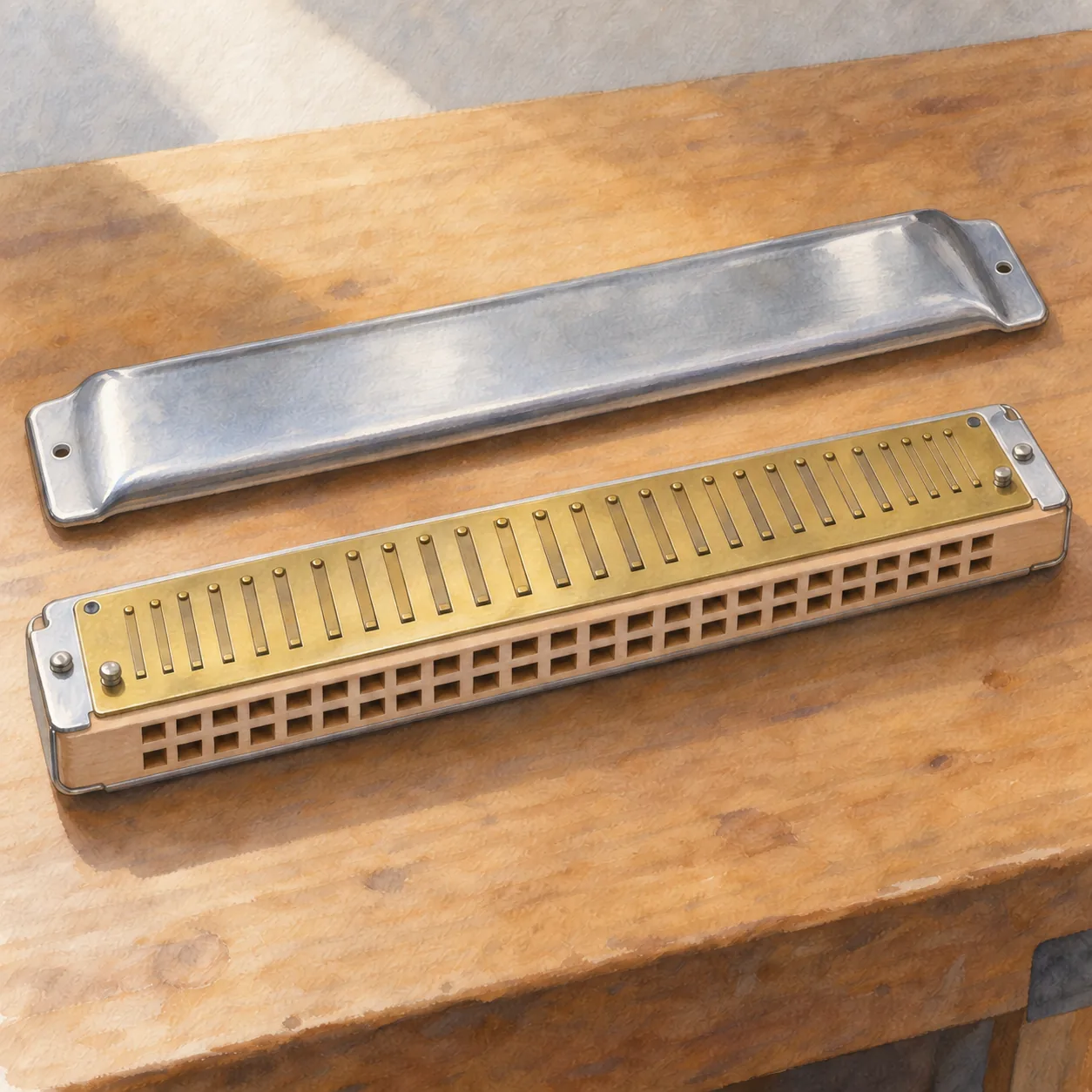
Tombo Band Deluxe 21 No.1521: The Body Turns to Wood
The same 21-hole tremolo design, with the body changed from resin to wood (covers in chrome-plated brass). Holes and two-row structure are unchanged; what changes is the comb material, which shows in the feel and the attack of the sound. Within one maker, changing just the material makes a fair comparison — start with the resin No.3521, then hear what wood does. Tombo lists the No.1521 as made in Japan.
Tombo Band Deluxe 21 Tremolo Harmonica No.1521 (Wood Body), Key of G
Loading product details…
5. Suzuki: Reeds Machined In-House
Suzuki Musical Instrument was founded in 1953 and incorporated in February 1954, headquartered in Hamamatsu, Shizuoka. Its company profile shows two factories: the head-office factory handles "machining of reeds — the heart of the Melodion — and metal parts" and "new product development and design," while the Tomori factory handles "machining and assembly of wooden products such as bars and percussion." Metal and wood, in separate factories.
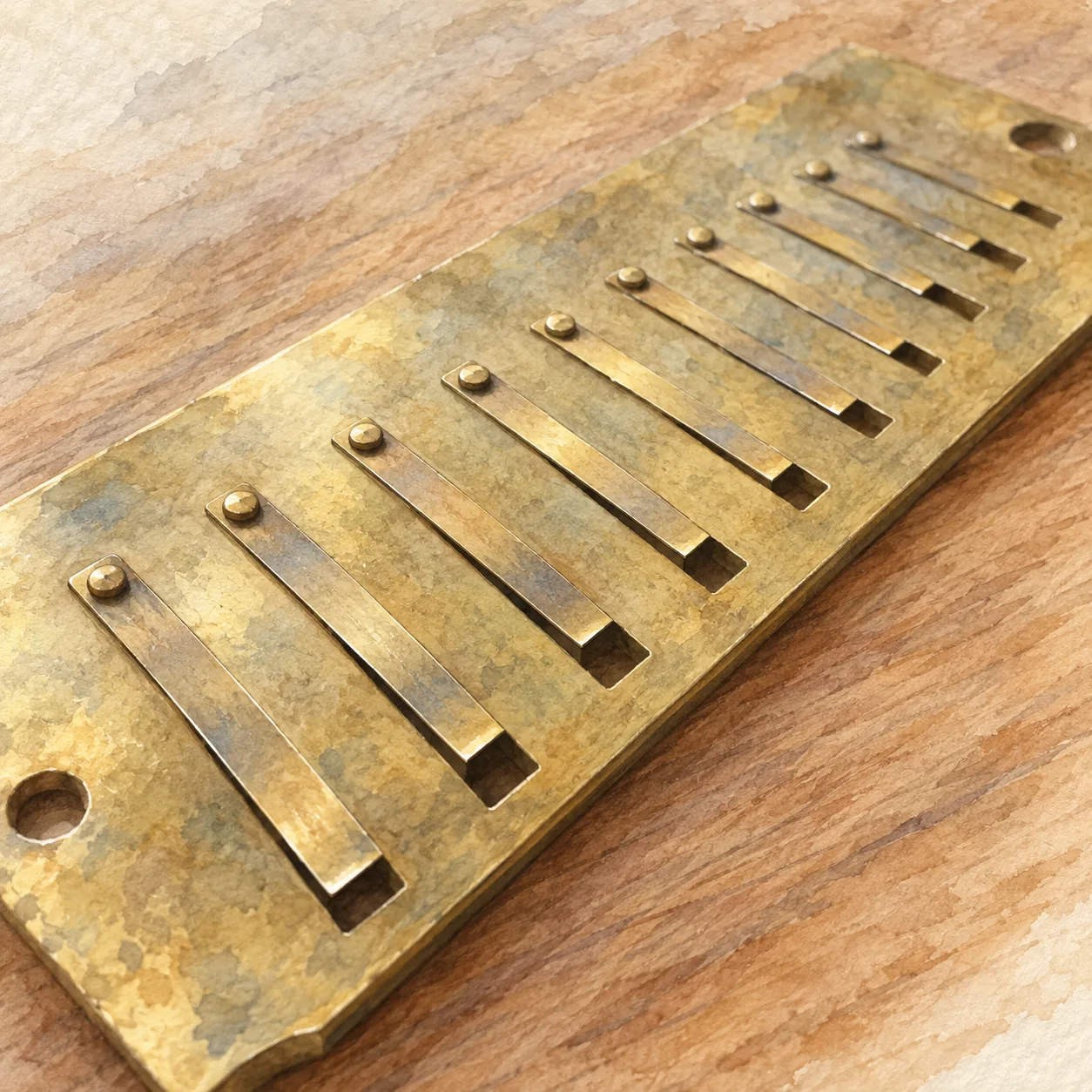
A reed is the thin metal tongue that vibrates in your breath and makes the sound — in harmonicas and Melodions alike. Suzuki states officially that it machines them in its own factory: the part that makes the sound isn't bought in. And the "just very slightly higher" tuning from section 1 is done on these reeds — filing them or adding weight, shifting each by exactly the intended amount. Suzuki's 21-hole tremolo line includes the entry SU-21SP and the higher-grade SU-21W "Humming."
Suzuki SU-21W Humming, Key of C: The Major One
Suzuki's higher-grade 21-hole tremolo harmonica in C major. Starting with C lets you use method books and songbooks as they are, since most are written for C.
Suzuki SU-21W Humming Tremolo Harmonica, Key of C
Loading product details…
Suzuki SU-21W Humming, G Minor: The Same Model in Minor
The same SU-21W in G minor (listed as "GNm"). Same model, same build — only major or minor differs. Side by side, you can see one instrument made in as many keys as there are songs.
Suzuki SU-21W Humming Tremolo Harmonica, G Minor
Loading product details…
Once you've chosen a first harmonica, adding keys from the same maker keeps the tone consistent — makers differ in how much they detune and how the instrument responds, and since you switch mid-song, a matched set keeps the character from changing.
6. After Playing, Get the Moisture Out
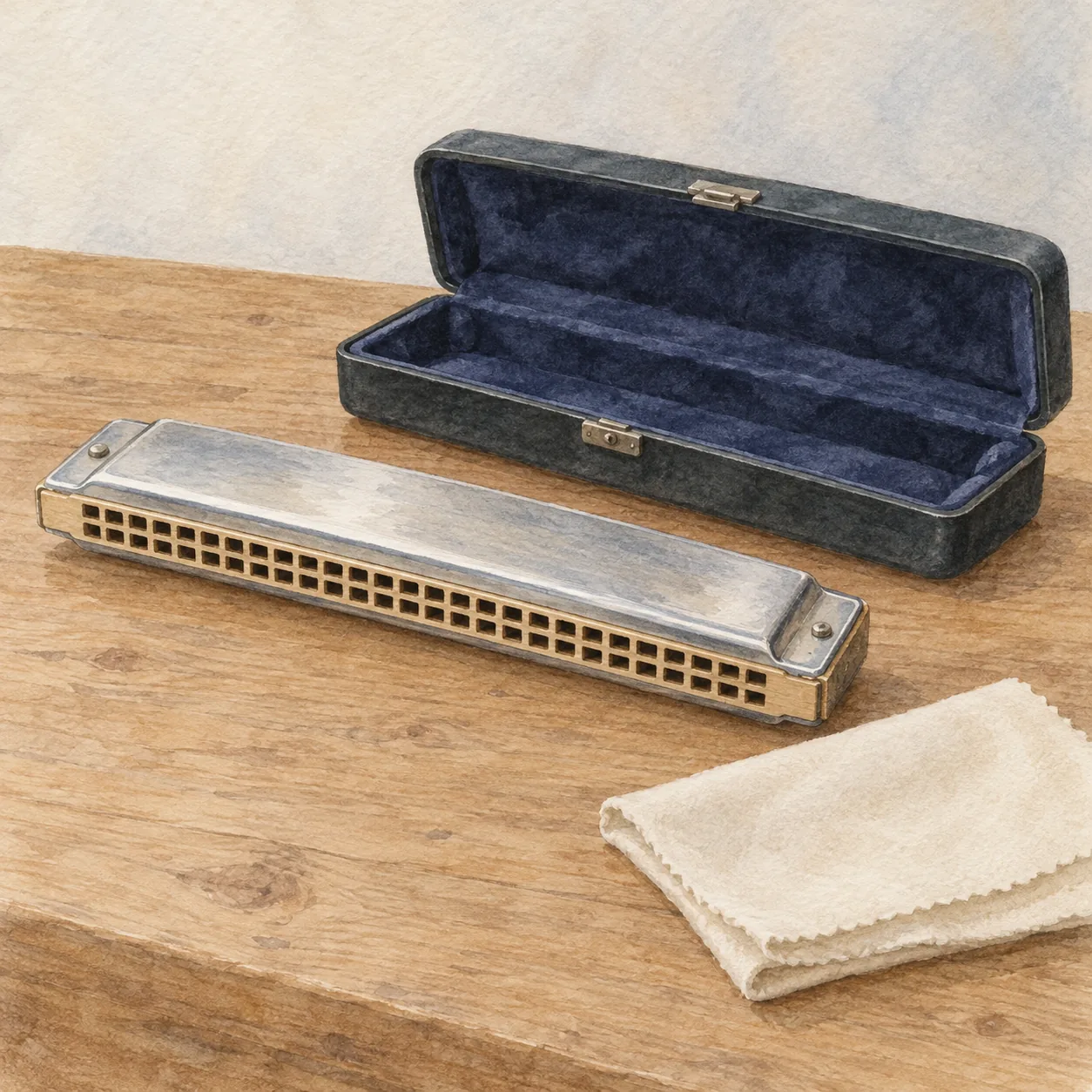
Your breath leaves moisture inside every time you play. Reeds are thin metal and the comb that holds them is wood — both dislike water. After playing, tap the harmonica gently, mouthpiece down, against your palm a few times to shake the moisture out, then wipe the outside with a dry cloth. Put it in its case only once it's dry; closed up damp, the moisture stays inside.
Rinse your mouth before playing — play straight after eating and fine particles go in. And don't wash it in water: a wooden comb that absorbs water swells and won't go back. Wipe only the outside.
7. Frequently Asked Questions
Which key should my first harmonica be?
C is the usual choice — many method books and songbooks are written for C. If you have particular songs in mind, match their key; the key signature at the start of the score tells you.
Why does one harmonica play only one key?
Its holes are laid out for one key's scale. Suzuki describes it as "built so one instrument plays one scale (key)." It's designed for switching mid-performance, and in return each one is dedicated to its key.
What does the "m" in "Am" or "Gm" mean?
Minor. Without the "m" — "C," "A" — it's major. Melancholy songs are often in minor keys; major and minor are separate instruments even under the same model number.
Which two notes in a row are both drawn?
La and ti (A and B on a C harmonica). Playing the C scale, do, mi and so are blown and re, fa, la and ti are drawn, so blow and draw alternate — except at la and ti, where two drawn notes come in a row. On a tremolo harmonica you take the upper and lower holes together and play by blowing and drawing.
Can I wash it in water?
No. The comb holding the reeds is wood; it swells when wet and doesn't recover. Tap the moisture out mouthpiece-down, wipe the outside with a dry cloth, and case it once dry.
Should my second harmonica be the same brand?
Matching keeps the tone consistent. Makers differ in detuning and response; since you switch mid-song, adding keys within the same maker's series keeps the character from changing.
Final Thoughts: Detuning Is the Finish
A tremolo harmonica doubles every note in two rows and tunes one row just slightly high — and from that comes its vibrato-like shimmer. Not matching is the finish.
And each one plays a single key, so the same model fills the shelf in C, A, G minor; major and minor are separate instruments. Tombo has made harmonicas since 1917, with its own woodworking factory; Suzuki machines its reeds in-house.
Shake out the moisture, let it dry before casing it, and add keys one at a time — that's the pleasure of this instrument.

Japanese Acoustic Guitars: Yamaha, Yairi, Fujigen
Phono Cartridge Guide: Nagaoka MP Series and Denon DL-103