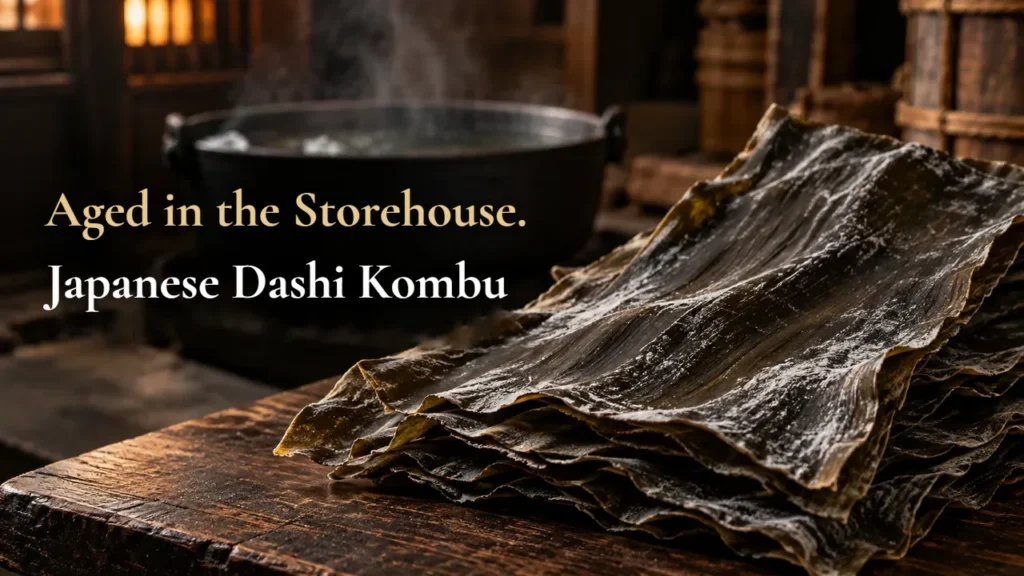
Same water, same pot, same method — and yet the dashi tastes different. The difference may not be how you made it, but where the kombu grew and how many years it was aged.
Okui Kaiseido, an old kombu merchant in Tsuruga, ages Rishiri kombu in dedicated storehouses for one, two, three years, drawing out its kelpy, sea-smell and building its umami before it ships. A Kyoto dashi shop ages its kombu a year; on Hakodate's Shirokuchi shore, ma-kombu is grown for two. This guide introduces four Japanese dashi kombu — storehouse-aged Rishiri, aged Rishiri, Shirokuchi-hama ma-kombu and Shiretoko's Rausu kombu — with how to use and store them.
Quick Reference: Four Japanese Dashi Kombu
| Kombu | Where it grew | Merchant | What's special |
|---|---|---|---|
| Four-brand kombu set ▾ | Rishiri, Hidaka, Rausu and more | Okui Kaiseido (Tsuruga, Fukui) | Kuragakoi: aged 1–3 years in storehouses |
| Aged Rishiri kombu ▾ | Rishiri | Fukushima Katsuo (Kyoto) | Aged a year, cut to 3 cm |
| Two-year ma-kombu ▾ | Shirokuchi-hama, Hakodate | Motoki Konbu (Osaka) | Grown two years before harvest |
| Wild Rausu kombu ▾ | Rausu, Shiretoko | Tenma Osaka Konbu (Osaka) | Deep umami and body |
1. Why Japanese: Kombu Changes With Its Shore and Its Years
Grown on Northern Shores, Finished in Storehouses
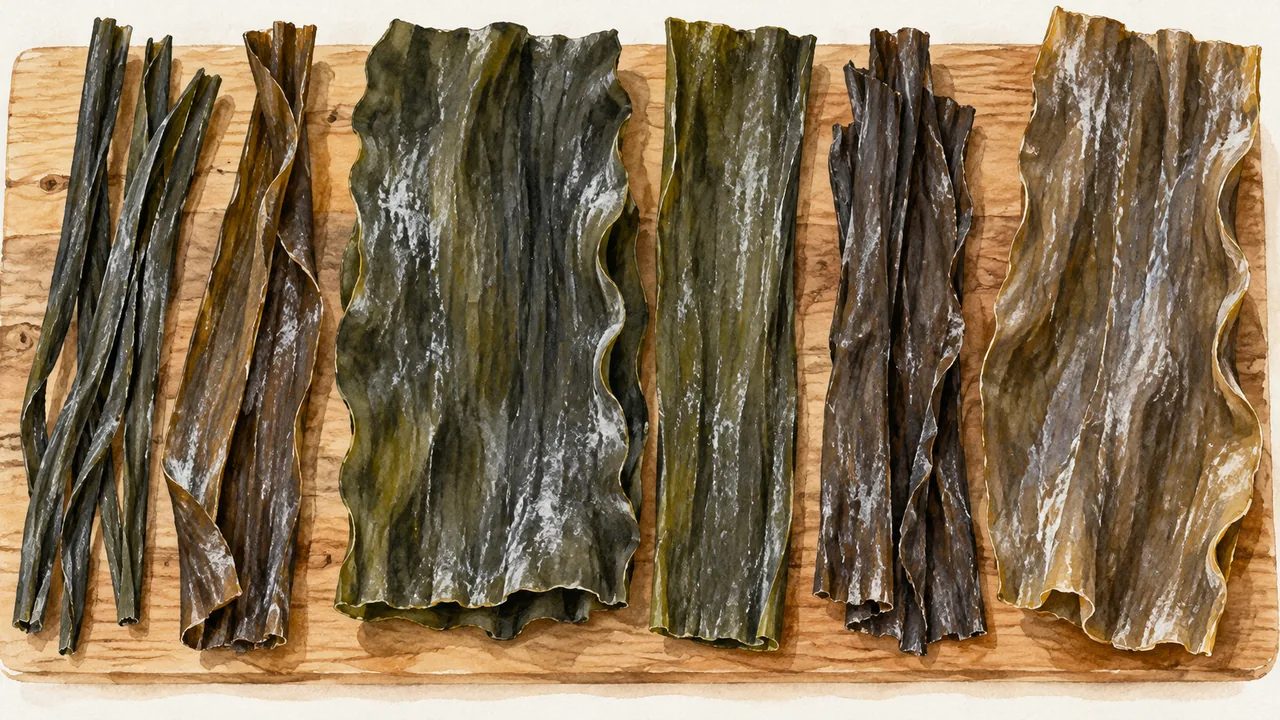
Every kombu in this guide comes from the shores of Hokkaido: Rishiri kombu from Rishiri and Rebun islands, Hidaka kombu, ma-kombu from Hakodate, Rausu kombu from Shiretoko. Change the shore, and the kombu's shape changes — and so does the dashi it gives.
The other thing that changes dashi is how long it's aged. Some old merchants don't use kombu straight after harvest, but rest it in storehouses before shipping. A Kyoto dashi shop writes that rested kombu gains depth of flavour and aroma compared with using it right after harvest. Choosing kombu means choosing a shore — and the time that kombu has spent.
2. Tsuruga's Okui Kaiseido: One, Two, Three Years in the Storehouse
The Work Called "Kuragakoi"
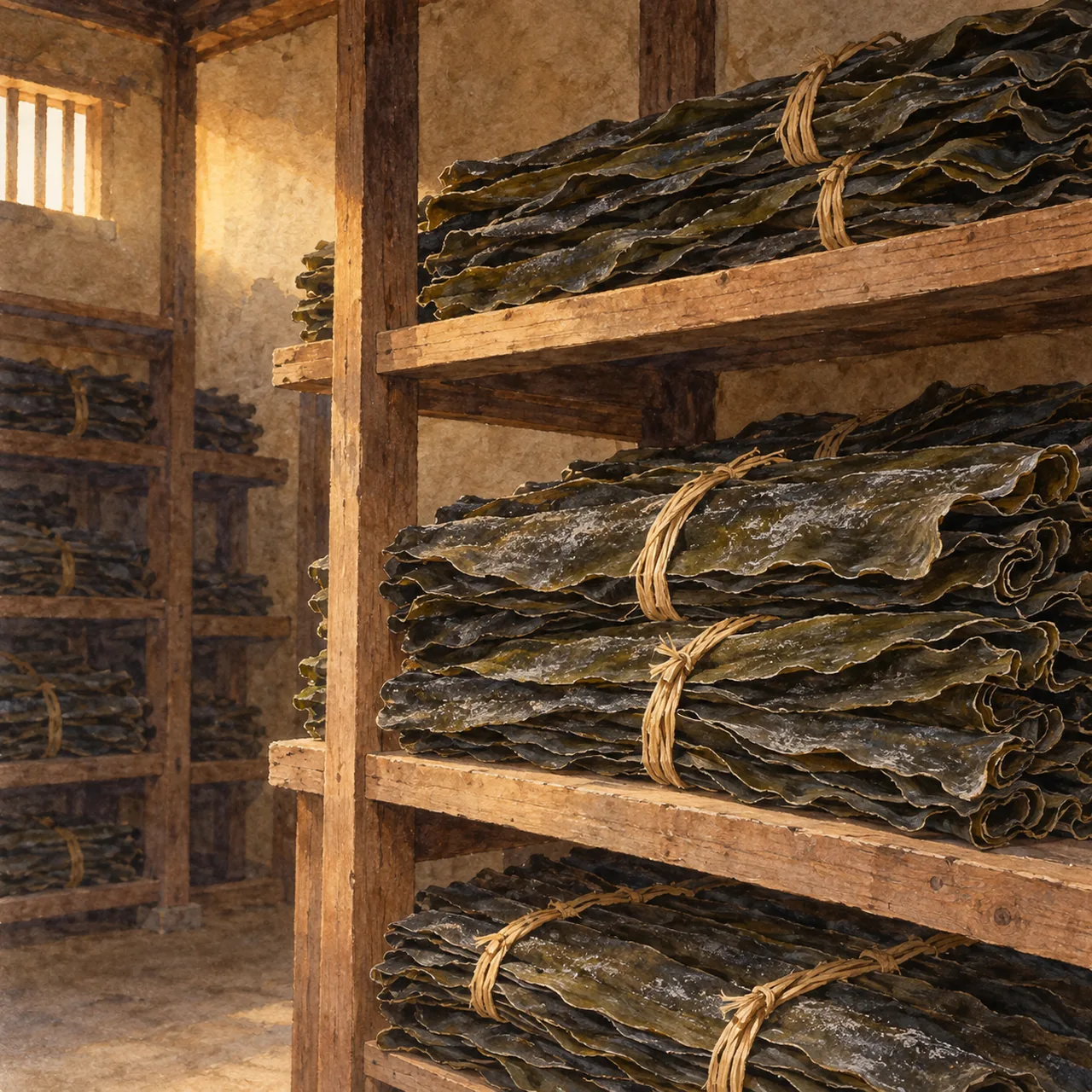
Okui Kaiseido is a kombu merchant in Tsuruga, Fukui, founded in 1871. It manages and ships its kombu from four kombu warehouses — three in Tsuruga and one in Hokkaido.
Its wild Rishiri kombu from Rishiri and Rebun islands is rested in dedicated kombu storehouses for one, two, even three years, removing the kelpy and sea smells and increasing the umami: kuragakoi kombu ("storehouse-kept kombu"). Much of Okui Kaiseido's kombu is used as dashi kombu by high-end ryotei restaurants in Kyoto and across Japan.
Did you know: The dashi of Eihei-ji's temple cooking
Okui Kaiseido's kombu is used not only by ryotei but as the dashi kombu for the shojin ryori (Buddhist vegetarian cooking) of Eihei-ji, the head temple of Soto Zen, and Zen training halls across Japan. In cooking without meat or fish, kombu holds up the base of the dashi — storehouse-aged umami shapes the taste of shojin.
Okui Kaiseido Four-Brand Kombu Set, 80 g × 4: Compare Four Shores in Dashi
Kuragakoi Rishiri, Hidaka, Rausu and Yamadashi kombu — four of Hokkaido's representative kombu, 80 g each, from Okui Kaiseido's official shop. Make dashi from each the same way and taste the difference between four shores. A first box for finding the kombu you love.
3. Kyoto's Fukushima Katsuo: Rishiri Aged a Year
Fukushima Katsuo, founded in 1922, is a dashi specialist that has walked alongside Kyoto's food culture for a hundred years, choosing its kombu with the eye of a shop tested by Kyoto's chefs and demanding customers.
This Rishiri kombu is wild Hokkaido Rishiri kombu aged for a year. Fukushima Katsuo writes that rested kombu gains depth of flavour and aroma compared with kombu used right after harvest.
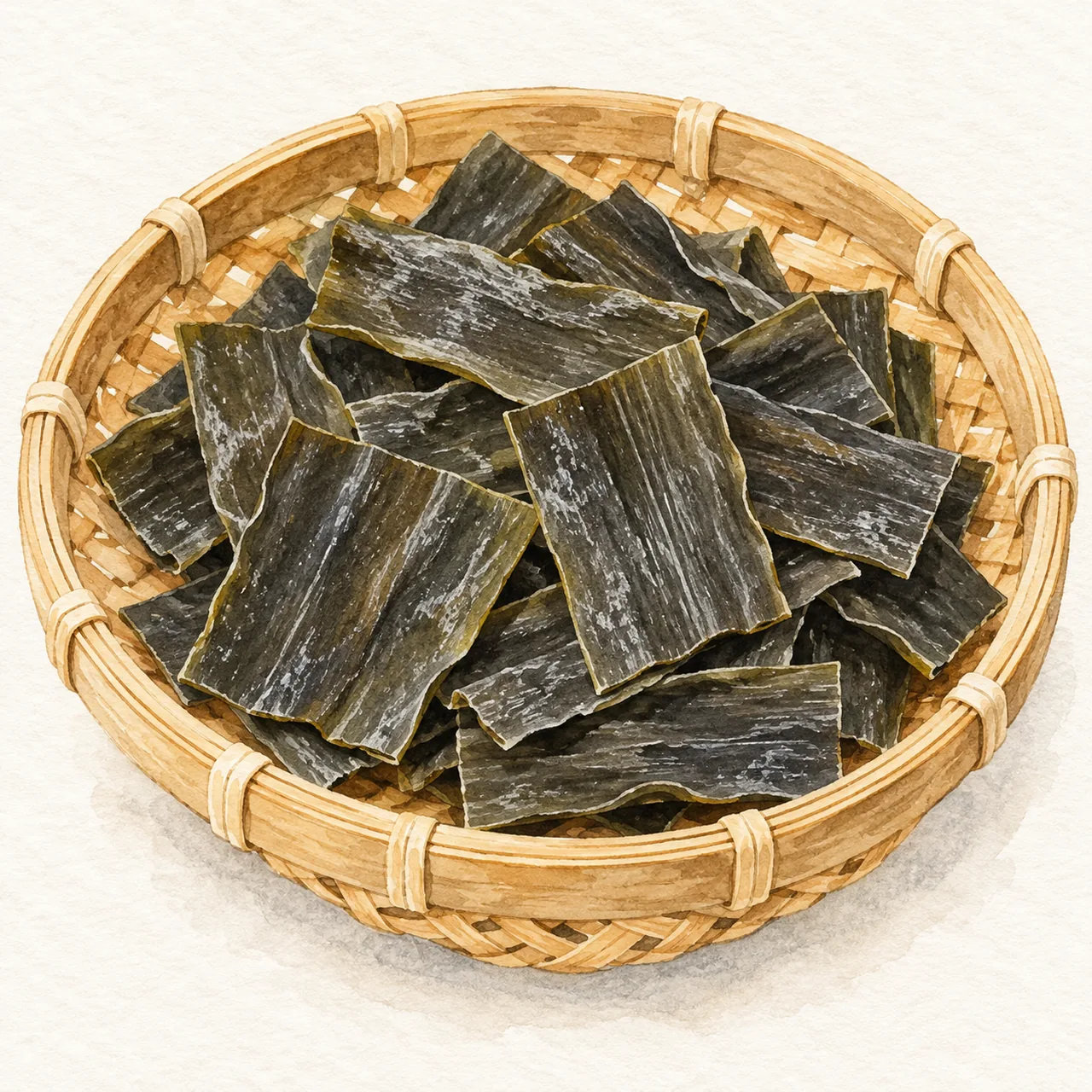
Fukushima Katsuo Aged Rishiri Kombu, Cut to One Sun
Year-aged wild Rishiri kombu cut into one-sun pieces (about 3 cm / 1.2 in), so you can drop in just what you need with no cutting. 150 g and 500 g bags — for side dishes, noodles and hot pots, a Kyoto dashi shop's taste in your everyday kitchen.
4. Hakodate's Shirokuchi-Hama Ma-Kombu: Grown Two Years
In southern Hokkaido near Hakodate lies Shirokuchi-hama, famous for ma-kombu. Motoki Konbu, which trades kombu inside Osaka's central wholesale market, handles ma-kombu from Kakkumi-hama and Osatsube within Shirokuchi-hama.
This ma-kombu is farmed and grown for two years before harvest, finishing close to wild kombu, and has long been prized in Japanese cuisine. Wild Shirokuchi-hama ma-kombu is so rare it's called phantom kombu — and according to Motoki Konbu, even two-year farmed ma-kombu has become hardly produced in recent years.
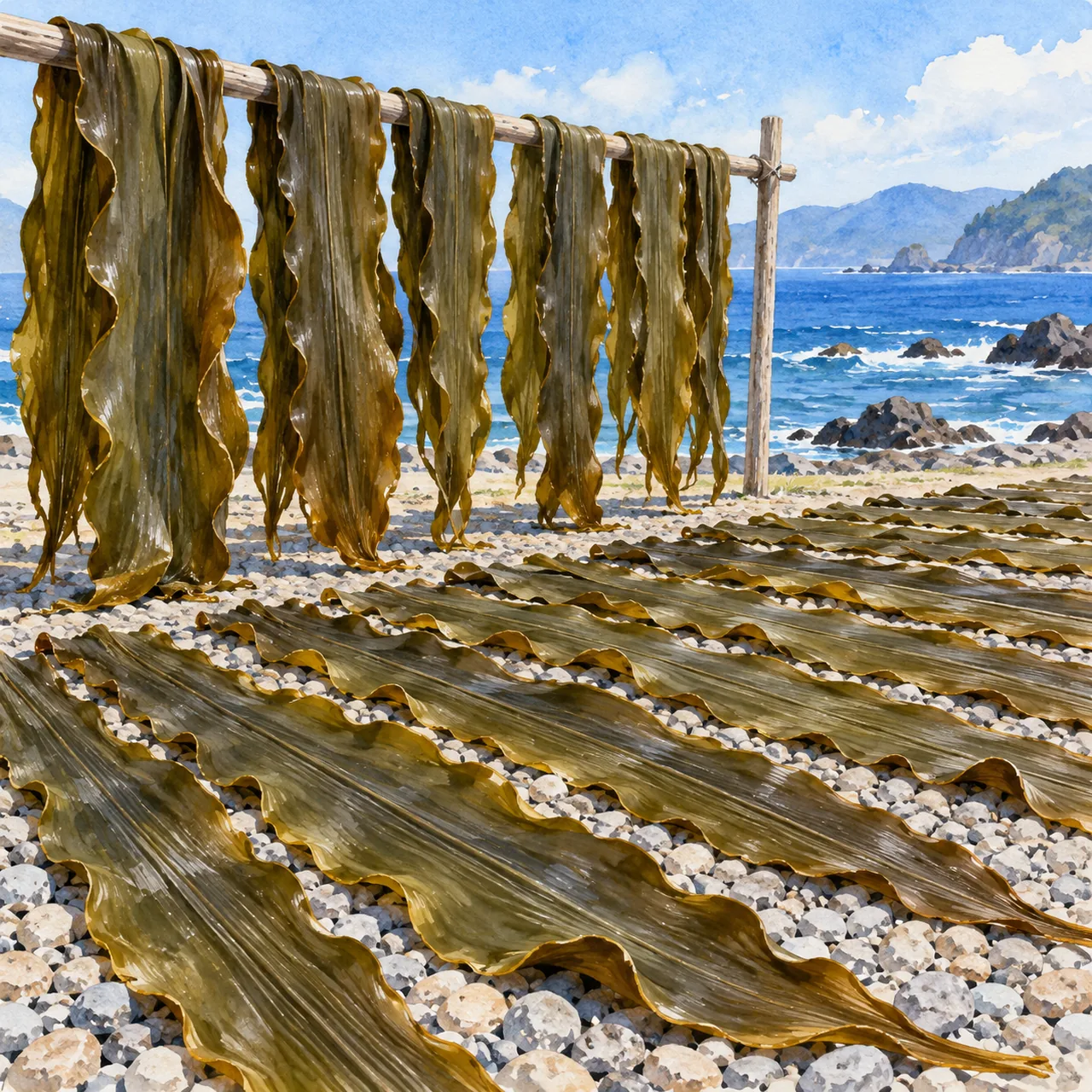
Motoki Konbu Shirokuchi-Hama Two-Year Ma-Kombu, 500 g
500 g of two-year Shirokuchi-hama ma-kombu with a near-wild finish, handled as a kombu for chefs and professionals. Plenty for homes that make a lot of dashi in the season of New Year cooking and hot pots.
5. Shiretoko's Rausu Kombu: Wild Kelp From a Narrow Coast
Rausu kombu grows only in a very limited area on the southern side of the Shiretoko Peninsula in Hokkaido. As a dashi kombu, it's known for the strength of its umami and body.
Tenma Osaka Konbu began in 1987 in Tenma, Osaka, making, wholesaling and retailing dashi kombu and kombu tsukudani for restaurants. This Rausu kombu skips the trimming and flattening steps, so the shapes are irregular — but the umami of Rausu is all there.
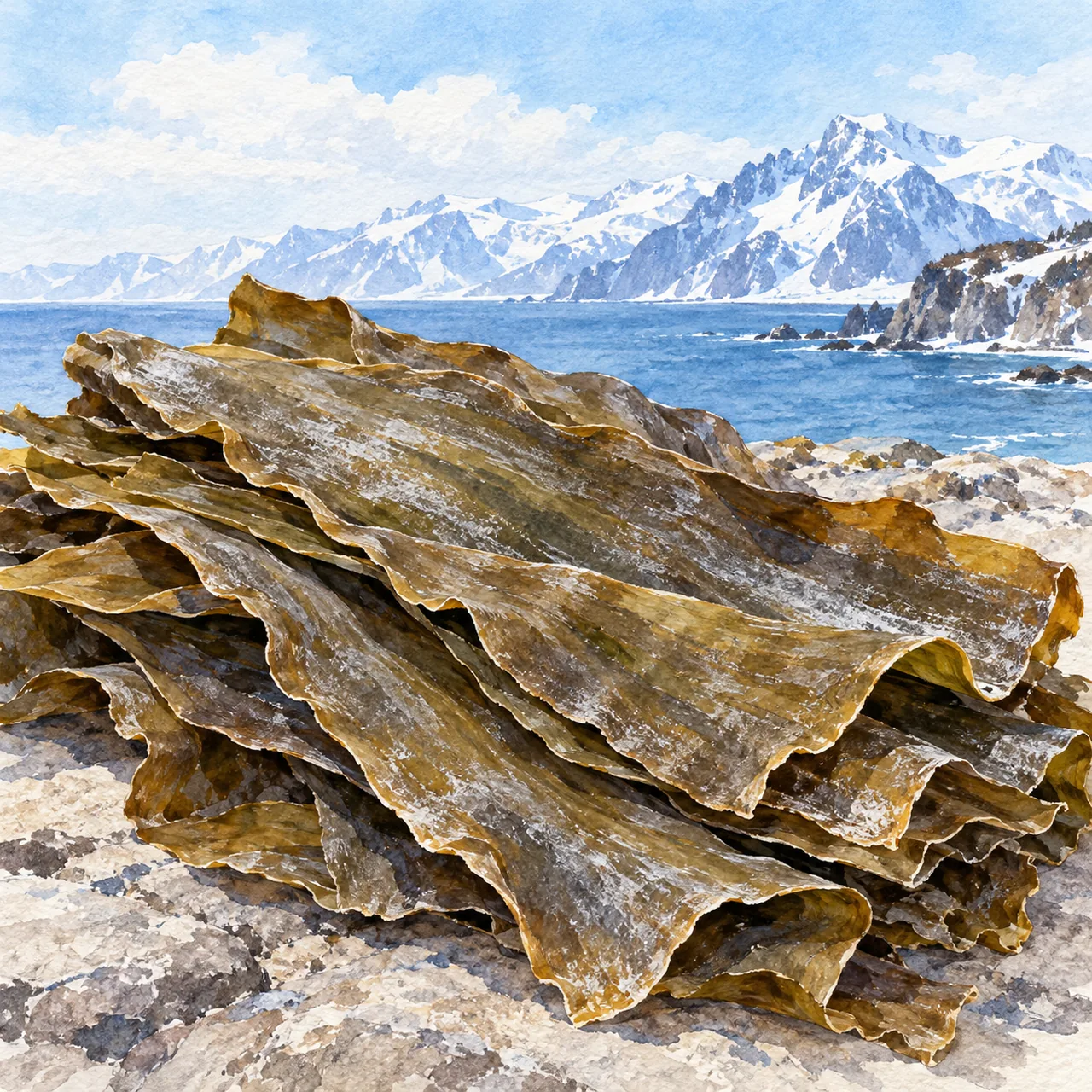
Tenma Osaka Konbu Wild Rausu Kombu, 500 g
500 g of wild Rausu kombu from Shiretoko. Irregular in shape, but it gives Rausu's full-bodied dashi. The only ingredient is Hokkaido kombu, and it keeps at room temperature. With the cosmetic steps left out, it's Rausu kombu just for dashi — to use generously in everyday soups and simmered dishes.
6. Buying From Outside Japan
As of November 2026, the four merchants above sell through Japanese shops. On Amazon.com we found Rishiri and Hidaka kombu from Hokkaido from the same seller — a simple way to taste two shores side by side, the way Okui Kaiseido's set does. When shopping elsewhere, look for the shore's name (Rishiri, Hidaka, Rausu, ma-kombu) and Hokkaido on the packet.
Rishiri Kombu From Hokkaido
Rishiri kombu for dashi — the same shore as the kombu Okui Kaiseido ages in its storehouses and Fukushima Katsuo ages for a year.
Rishiri Kombu From Hokkaido, 85 g
Loading product details…
Hidaka Kombu From Hokkaido
Hidaka kombu, one of the four in Okui Kaiseido's set. Make dashi with it and the Rishiri the same way, and compare.
Hidaka Kombu From Hokkaido, 135 g
Loading product details…
7. Using and Storing Kombu
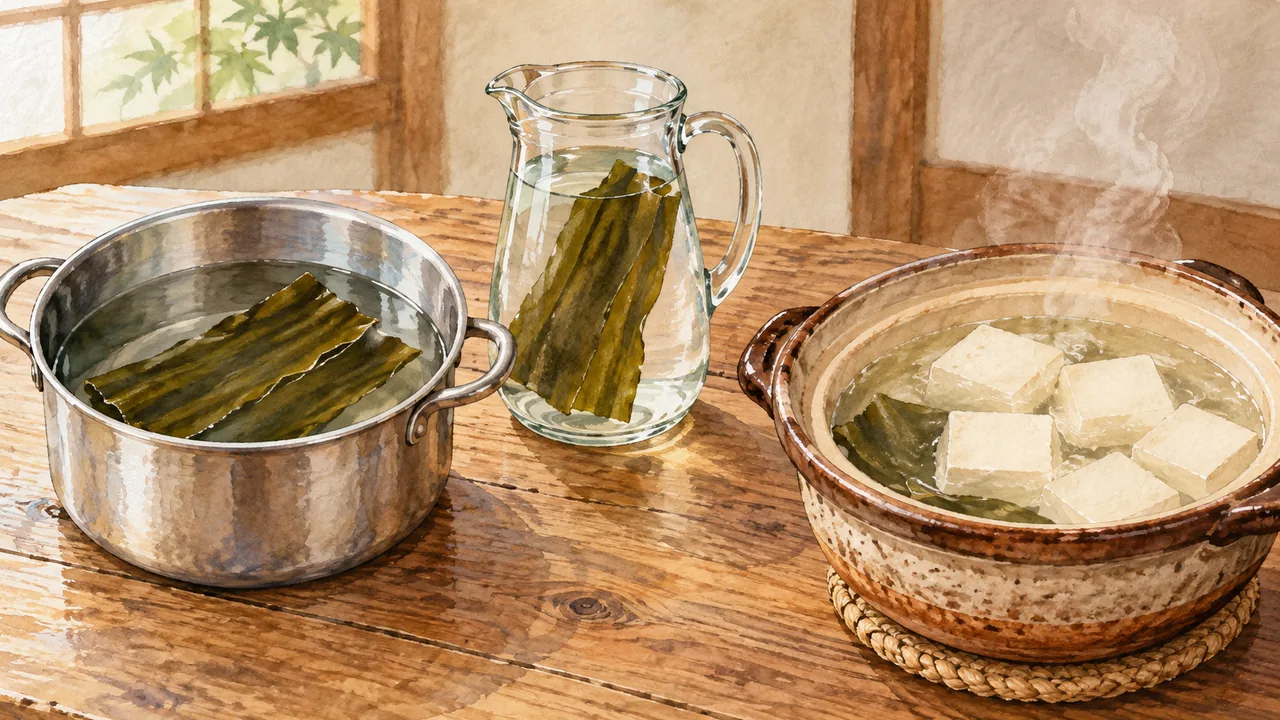
Make Dashi, Soak in Water, Lay It in the Pot
The basic kombu dashi: put kombu in water, heat it, and take the kombu out before it boils. For quantities, and for ichiban dashi with katsuobushi, see our guide to making dashi. Simply soaking kombu in water — "kombu-mizu" — is an easy use too; Tenma Osaka Konbu's third-generation owner, Kitajo Kiyomitsu, has even published a book of kombu-water recipes. For yudofu or hot pots, just laying kombu in the bottom of the donabe gives dashi.
Keep It Dry, at Room Temperature
Dashi kombu is a dried food and keeps at room temperature away from damp; close the bag tightly. You may see a white powder on the surface — that's umami, not mould. Don't rinse it off; if it looks dirty, just wipe lightly with a tightly wrung cloth.
Did you know: From northern shores to Tsuruga's storehouses
Kombu is harvested on Hokkaido's shores, but three of Okui Kaiseido's four kombu warehouses are in its home town of Tsuruga. Kombu from the north rests in Tsuruga for one, two, three years before reaching Kyoto's ryotei and Zen halls across Japan. Where kombu grows and where it's finished are different places — part of what makes kombu fascinating.
8. Frequently Asked Questions
What is kuragakoi kombu?
Kombu rested for one to three years in a dedicated storehouse. According to Okui Kaiseido, resting removes kelpy and sea smells and increases umami.
Which kombu should I try first?
To learn how shores differ, Okui Kaiseido's four-brand set — Rishiri, Hidaka, Rausu and Yamadashi, made into dashi the same way. Outside Japan, try Rishiri and Hidaka side by side.
Is the white powder on kombu mould?
No — it's the source of umami. Don't rinse it off; wipe lightly with a well-wrung cloth only if it looks dirty.
What is two-year ma-kombu?
Farmed ma-kombu grown for two years before harvest. Motoki Konbu says it finishes close to wild and has long been prized in Japanese cooking, but is hardly produced in recent years.
Where does Rausu kombu come from?
A very limited area on the southern side of the Shiretoko Peninsula, Hokkaido. It's known as a dashi kombu for its strong umami and body.
How should I store dashi kombu?
At room temperature, away from damp. Close opened bags tightly.
Final Thoughts: Taste the Shore and the Years in Your Dashi
The taste of kombu dashi changes with the shore it grew on and how long it was aged.
Okui Kaiseido's kuragakoi kombu, rested one, two, three years in Tsuruga. Fukushima Katsuo's year-aged Rishiri from Kyoto. Two-year ma-kombu from Hakodate's Shirokuchi-hama. Rausu kombu from Shiretoko's narrow coast. Dashi kombu grown by Japan's seas and the time of the people who handle it.
This winter, make your hot pot's dashi with kombu from a named shore.
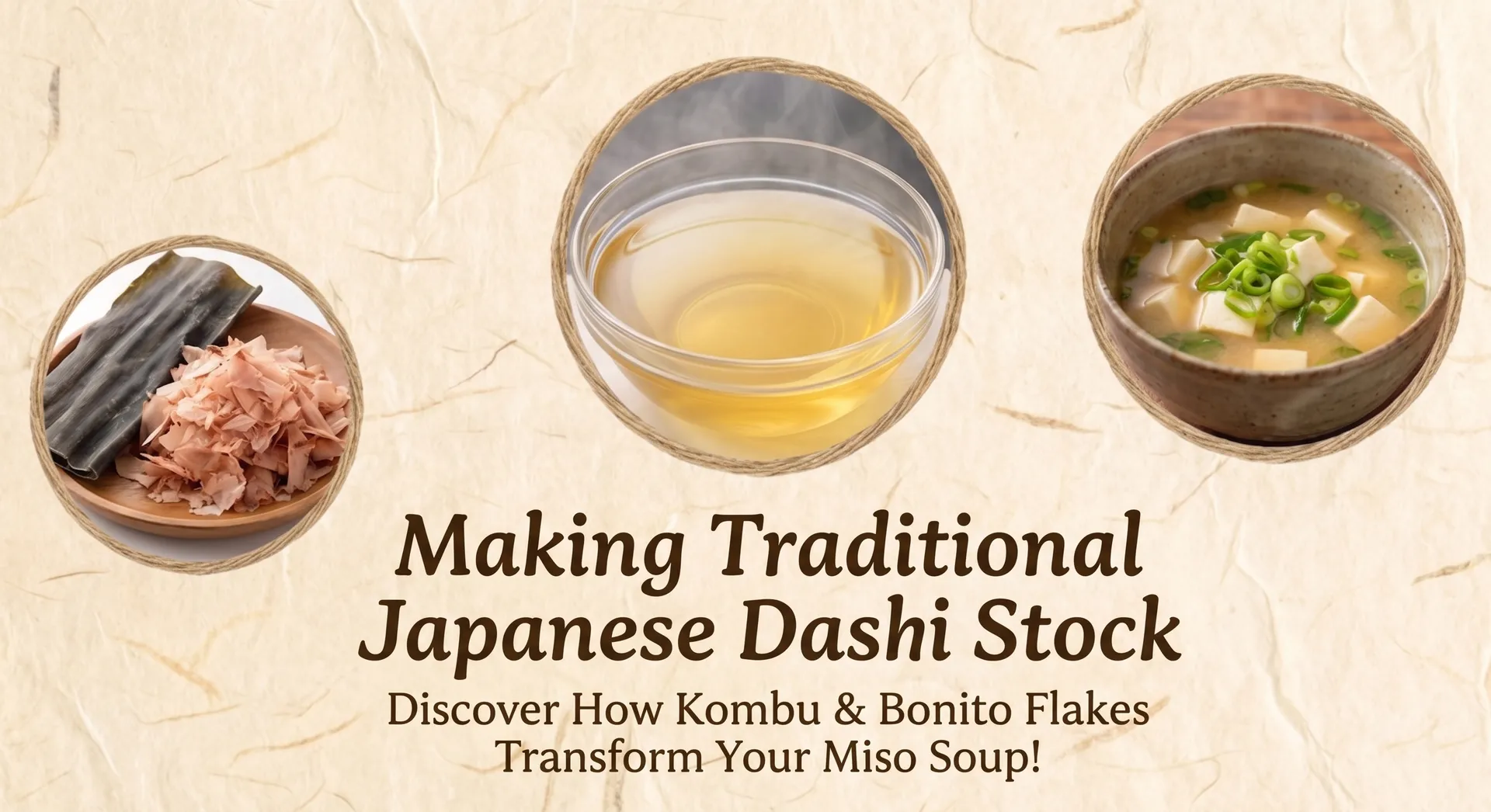
How to Make Japanese Dashi: Kombu & Katsuobushi in 4 Steps
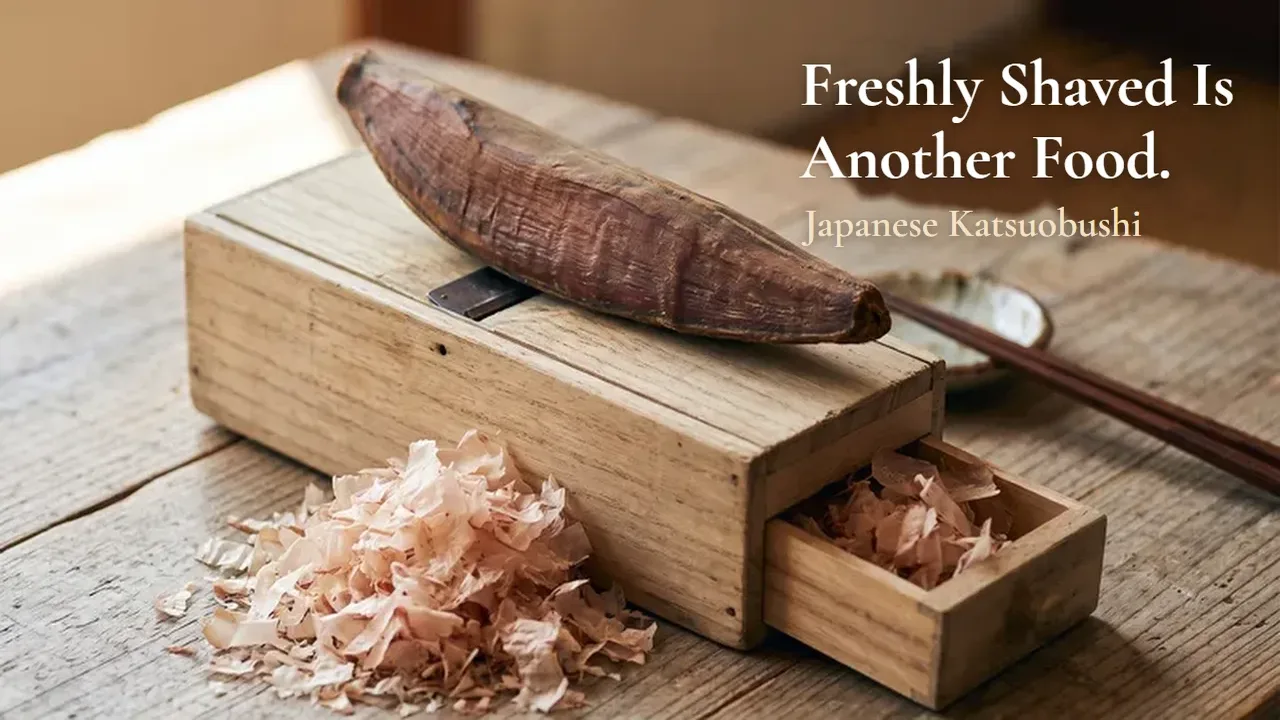
Katsuobushi: Arabushi vs Honkarebushi, and Shaving It