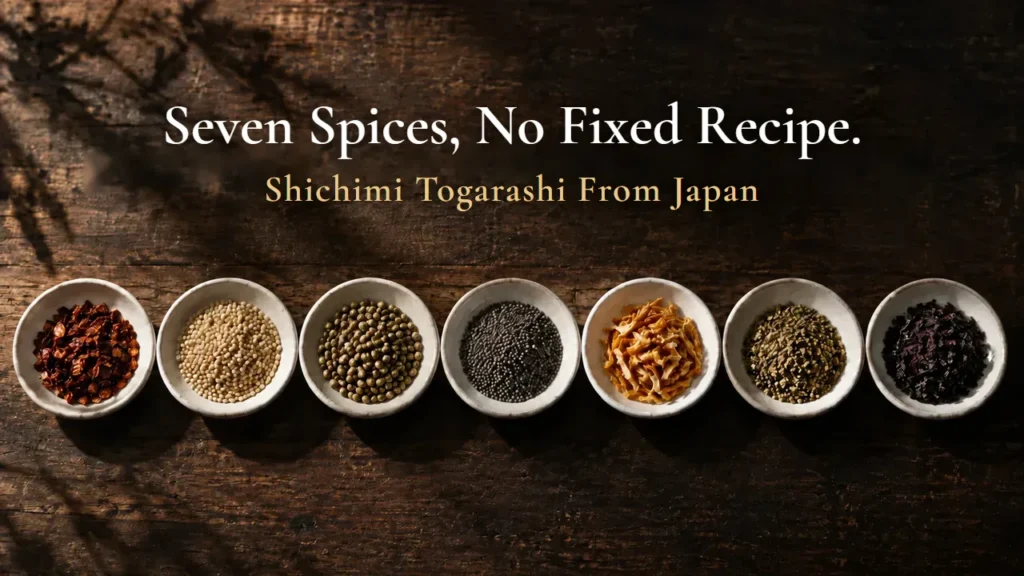
Shichimi togarashi — Japan's "seven-flavour chili" — has no fixed recipe.
Yawataya Isogoro, at Zenko-ji temple in Nagano, says so on its own site: "There is no strict definition of the ingredients that make up shichimi togarashi. Each shop has its own shichimi, and its own ideas in the blend." If there are seven ingredients, it's shichimi; which seven is the shop's call. Line up three of Japan's oldest shichimi shops — in Asakusa, Kyoto and Nagano — and they share only four ingredients. How they use the other three slots is completely different: one puts two kinds of chili in to build heat, another fills every slot but the chili with aromatics. This guide walks through the three shops' blends, the thinking behind each, a shichimi made with Mount Tsukuba's tiny fukure mandarin, and how to store it.
Quick Reference: Three Shops' "Seven"
| Shop | Founded | The seven |
|---|---|---|
| Yagenbori (Asakusa, Tokyo) ▾ | 1625 | Chili, roasted chili, black sesame, sansho, dried citrus peel, poppy seed, hemp seed |
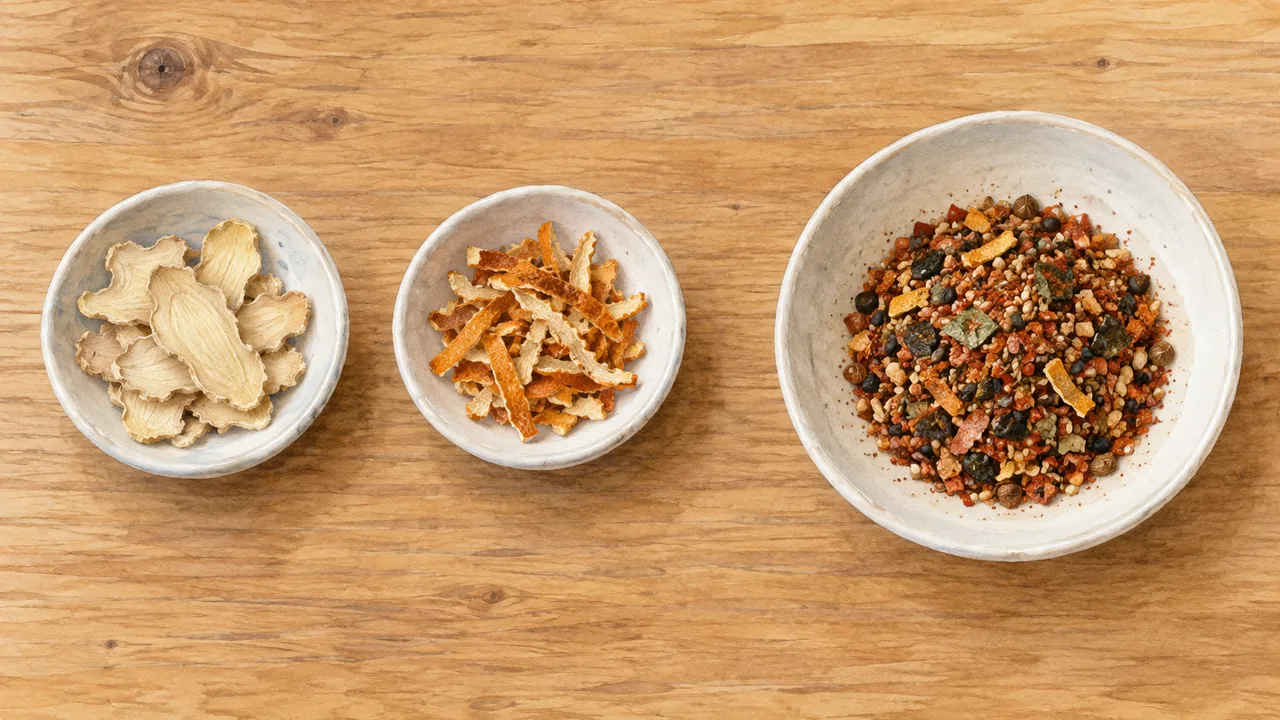
| Shichimiya Honpo (Kiyomizu, Kyoto) ▾ | 1655 | Chili, sansho, hemp seed, white sesame, black sesame, aonori, green shiso |
| Yawataya Isogoro (Zenko-ji, Nagano) ▾ | 1736 | Chili, dried citrus peel, sesame, hemp seed, shiso, sansho, ginger |
| In common | Only chili, sansho, hemp seed and sesame. The other three slots ▾ | |
| Mount Tsukuba's three ▾ | — | Local fukure mandarin peel in the citrus slot |
The three shops' ingredients are as listed on Yawataya Isogoro's "Shichimi Tale of Three Cities" page.
1. Why Japanese: Only Four Ingredients in Common
Yawataya Isogoro's official site lists the blends of three shops side by side — Asakusa, Kyoto and Nagano — not just its own, but other shops' too.
Line them up, and only four ingredients appear in all three: chili, sansho (Japanese pepper), hemp seed and sesame. Four of seven slots. The remaining three are completely different from shop to shop: Yagenbori has roasted chili and poppy seed; Shichimiya Honpo, aonori (green laver) and green shiso; Yawataya Isogoro, ginger. They don't overlap.
Seven ingredients makes it shichimi. Which seven becomes the shop's philosophy — so what you look at when you buy is the ingredient list.
2. Asakusa Uses Two Kinds of Chili
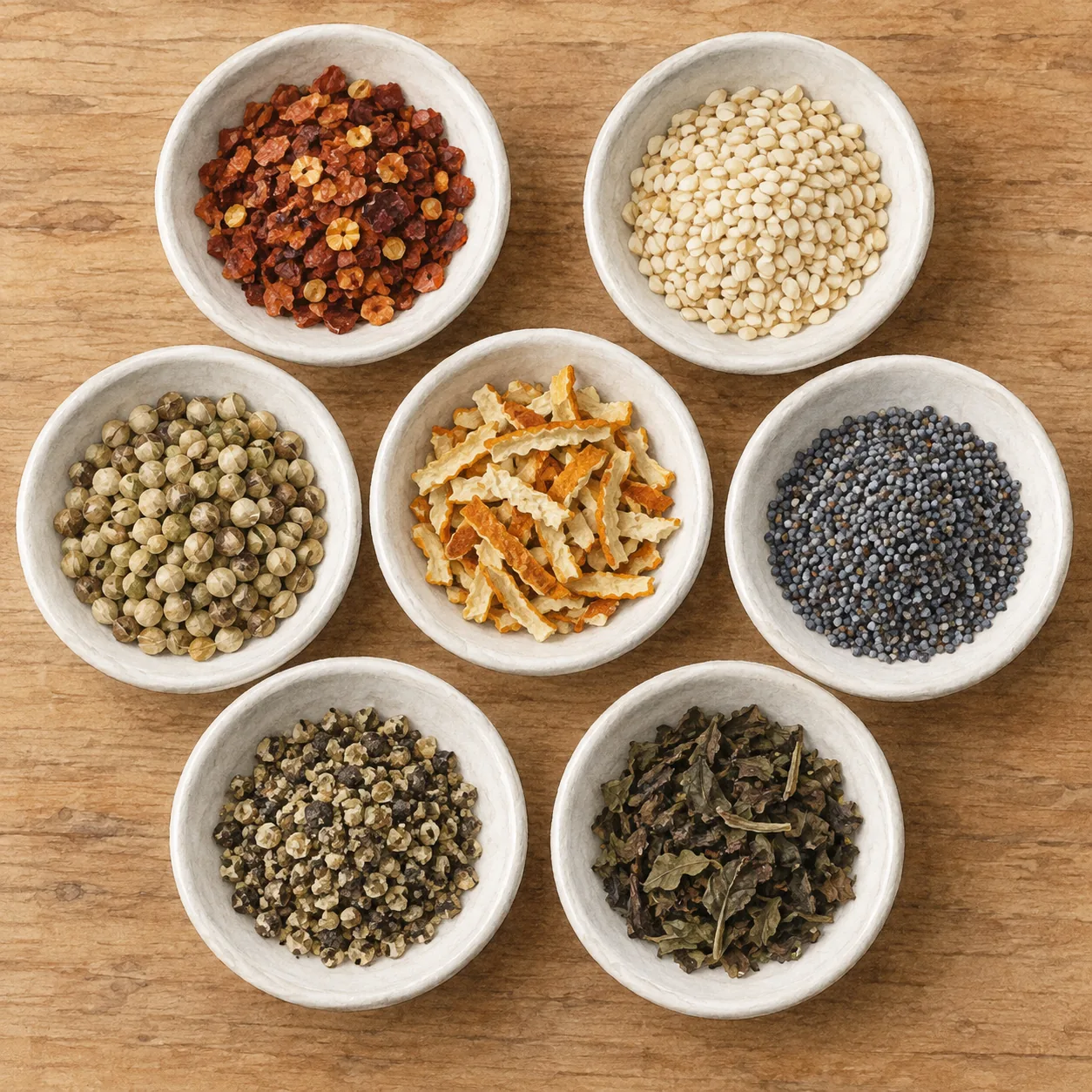
Yagenbori, in Asakusa, Tokyo, was founded in 1625. Its seven: chili, roasted chili, black sesame, sansho, dried citrus peel (chinpi), poppy seed and hemp seed. Look at the first two — chili and roasted chili. Chili takes two of the seven slots. The official description: "Two kinds of chili give depth to the heat, with the fragrance of sansho and sesame." The idea is not to build heat from a single chili.
Yagenbori Shichimi Togarashi (Nakajima Shoten, Asakusa)
Asakusa's Yagenbori shichimi, with both raw and roasted chili. It's also the only one of the three with poppy seed — tiny grains that pop when you bite them, adding texture as well as heat. Powder dislikes damp and light, so buy an amount you'll finish and the aroma will last.
3. Kyoto Gives Six Slots to Aroma
Shichimiya Honpo, in Kiyomizu, Kyoto, was founded in 1655. Its seven: chili, sansho, hemp seed, white sesame, black sesame, aonori and green shiso. Only one ingredient is hot — the chili.
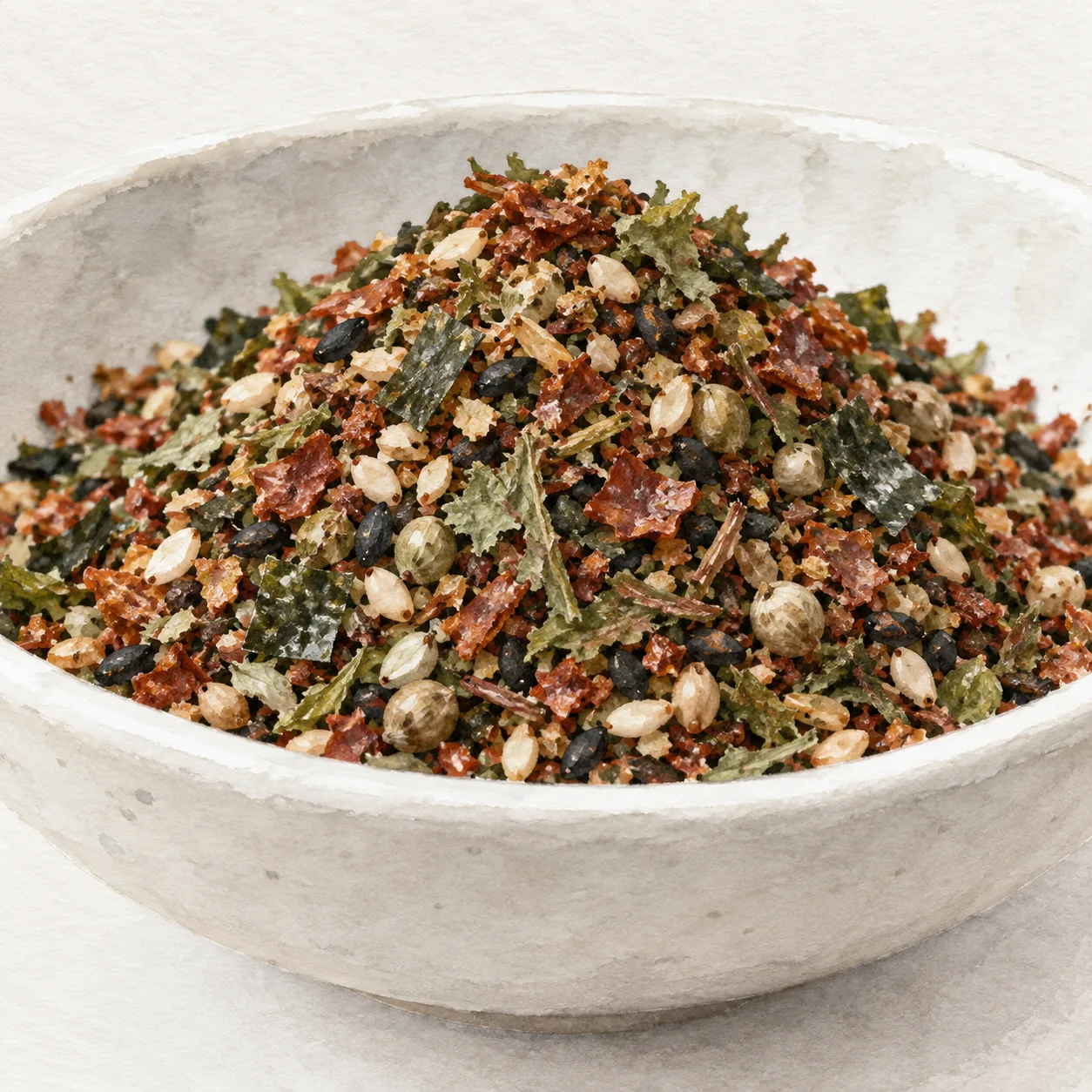
Its own description: "Every ingredient other than the chili is aromatic, to lift the fragrance." Six of seven slots go to aroma. Its shop is on Sannenzaka, the approach to Kiyomizu-dera. It's the only one of the three with aonori and green shiso — you can see it in the powder, which isn't all red but flecked with green — and it uses both white and black sesame, giving sesame two slots.
4. Nagano Adds Ginger
Yawataya Isogoro, at Zenko-ji in Nagano, was founded in 1736. Its seven: chili, dried citrus peel, sesame, hemp seed, shiso, sansho and ginger. It's the only one of the three with ginger — which carries both heat and aroma, a slot that won't be pinned to either side. The official description: "a distinctive flavour that balances heat and aroma." Asakusa gives heat two slots; Kyoto gives aroma six; Nagano adds something that has both.
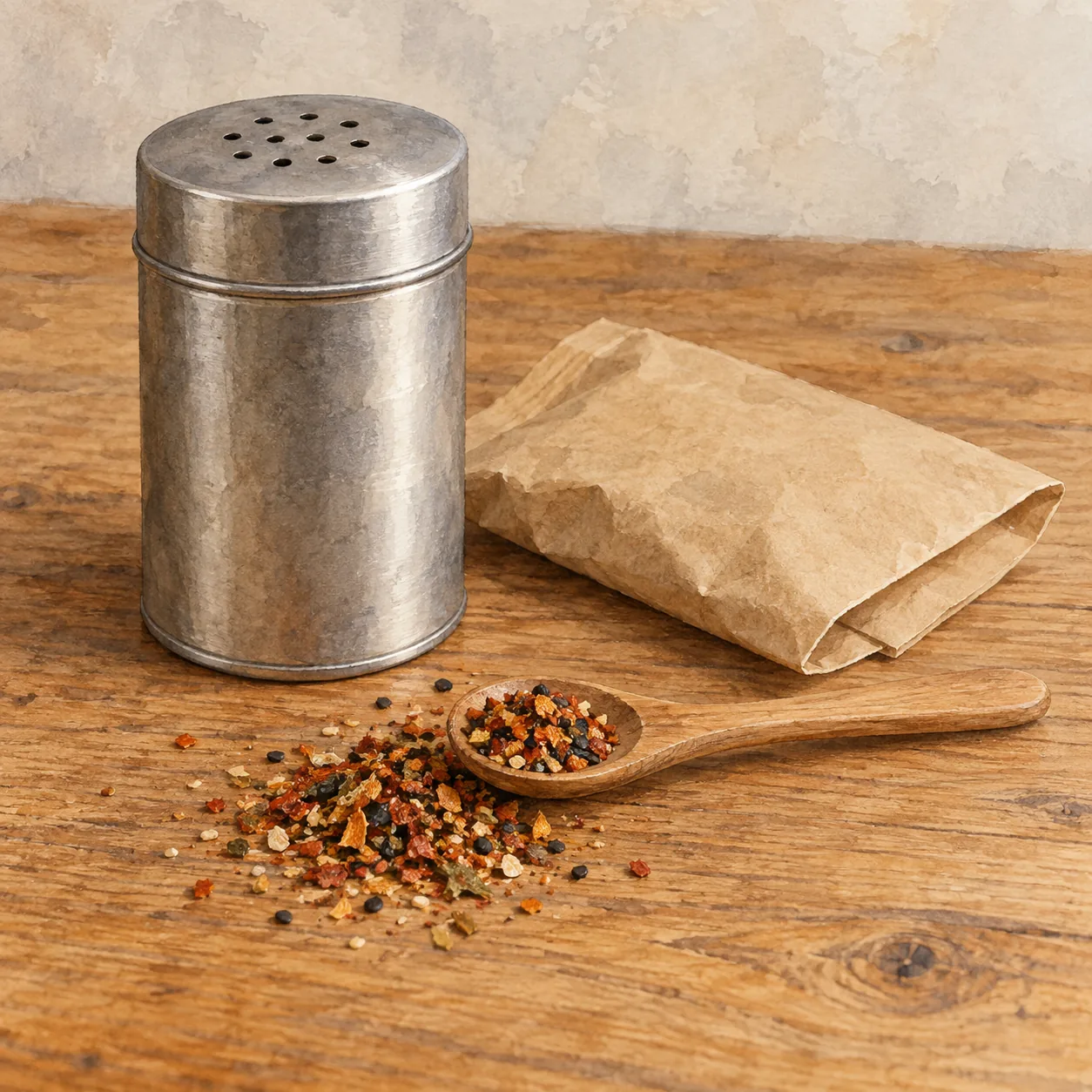
Yawataya Isogoro's shichimi has long been sold at the gate of Zenko-ji. Its classic tin has a shaker top so it can sit on the table, and because the tin keeps out light, it keeps better once opened than a bag. There's also a yuzu shichimi — the same tin with yuzu added. Shichimi is seven ingredients, but variations add something on top; having no definition means you can do that too. Yuzu lifts the aroma and lightens the impression of heat, so it suits things you drop into broth, like udon or clear soups. Both are available on Amazon.com — see Buying From Outside Japan.
5. There's Black Shichimi, Too
Shichimi usually means a red powder, but Hara Ryokaku in Gion, Kyoto, makes kuro-shichimi — black shichimi. As the name says, it's black: shake it out and a dark powder falls instead of red, and it looks completely different on the plate.
You see the difference best on pale food — tofu, udon, white fish. It's sold in small amounts such as 8 g bags, which says something about how to use it: not shaken on liberally, but a pinch at a time, lasting a long while. It also comes in a wooden tube that keeps out light and can be refilled from the bags.
6. Mount Tsukuba Adds Fukure Mandarin
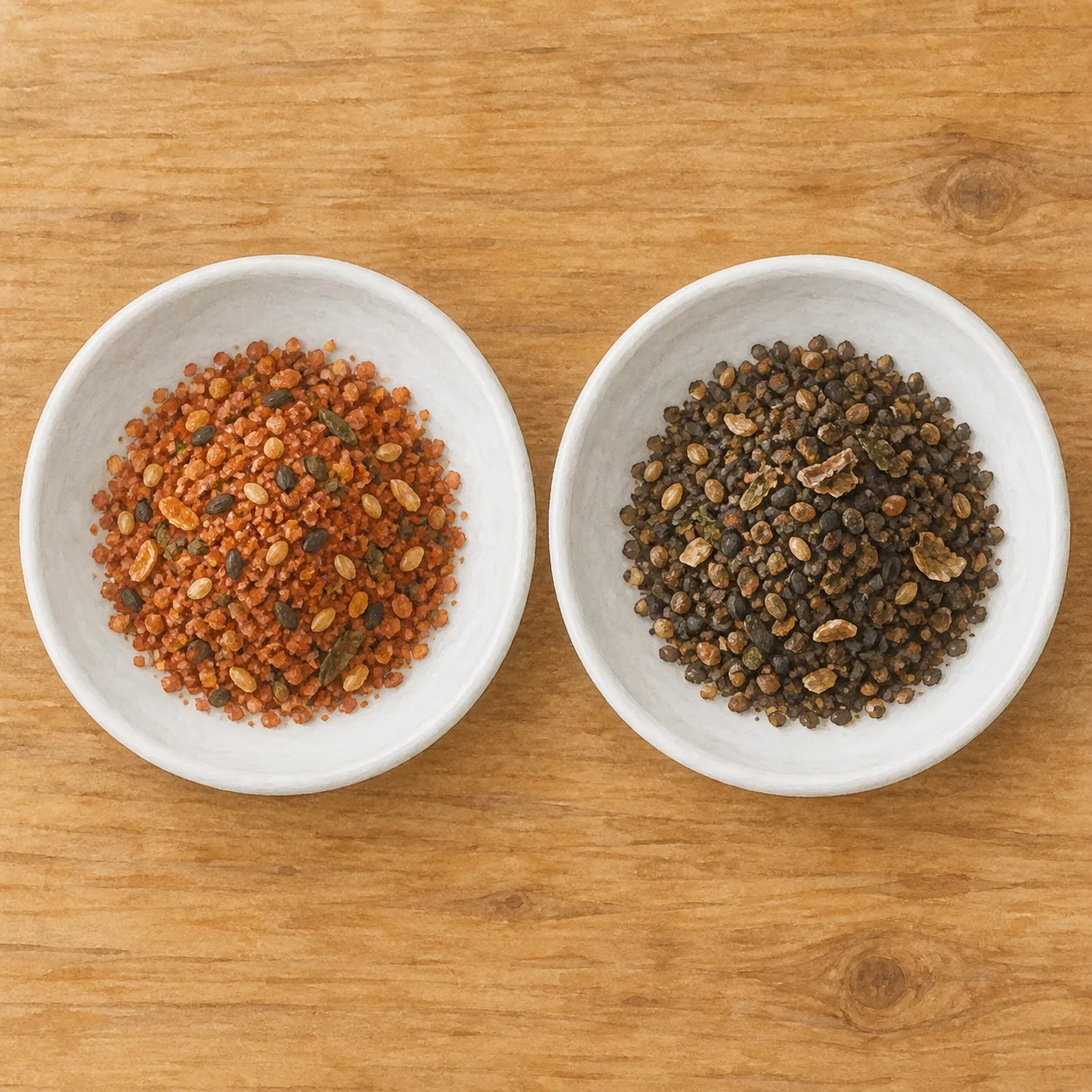
At the foot of Mount Tsukuba in Ibaraki grows the fukure mandarin, a local citrus only 3–5 cm (1–2 in) across and a specialty of Tsukuba city. It's not very sweet, with a clean acidity, and its fragrant peel has long been used as chinpi — the same dried citrus peel found in the Asakusa and Nagano blends. Tsukuba's shichimi put fukure mandarin into that citrus slot. Even among the three shops using it, how they fill the rest differs:
- Kariya Shichimi Kakosho (Tsukuba, around 70 years old) uses fukure mandarins it grows itself, finished by hand. Its ingredients: roasted sesame, chili, chinpi, sansho, aonori, hemp seed — and fukure mandarin. It has all four of the common ingredients, then adds fukure mandarin alongside the chinpi.
- Miyoko's Shichimi is handmade by Watanabe Miyoko at Shinkyotei, a souvenir shop founded in 1894 beside the sacred bridge at Tsukuba-san Shrine. Its ingredients: fukure mandarin peel, chili, and gold, black and white sesame, with aosa seaweed. No sansho and no hemp seed — three kinds of sesame instead. When it runs short of mandarin peel, the shop stops online sales and waits for the new season's.
- Eco Farm Iijima grows its own chili for its shichimi: "yatsubusa" chili, whose pods grow in bunches pointing to the sky, raised without pesticides from saved seed and sun-dried. Its shichimi won gold at the 20th Ibaraki Prefecture agricultural processed food competition.
7. Buying From Outside Japan
As of November 2026, Yawataya Isogoro's shichimi tins are available on Amazon.com. The Asakusa, Kyoto and Tsukuba shops sell through Japan; their shichimi are worth seeking out if you visit.
Yawataya Isogoro Shichimi Togarashi, 14 g Tin
Zenko-ji's classic shichimi in its shaker tin: chili, dried citrus peel, sesame, hemp seed, shiso, sansho and ginger. The tin keeps out light and moisture better than a bag once opened.
Yawataya Isogoro Shichimi Togarashi, 14 g Can
Loading product details…
Yawataya Isogoro Shichimi & Yuzu Shichimi Set
The classic tin with its yuzu variation — a simple way to taste what "adding something beyond the seven" does. Try the yuzu on udon or in soup.
Yawataya Isogoro Shichimi & Yuzu Shichimi Set
Loading product details…
8. Powder Hates Damp and Light
Many of shichimi's seven slots are aromatics — sansho, citrus peel, shiso, aonori — and aroma fades over time. It's at its best just after you buy it, so finishing small amounts quickly suits it better than keeping a big bag for ages.
Don't shake it over steam. Shaken directly above a pot or bowl, moisture gets in through the opening. Hold it a little away and let it fall in front. If you buy a bag, move it into a tin, wooden tube or airtight container, and keep it away from the stove, where heat and steam hit hardest. Kept in a cupboard and brought out to use, it holds its fragrance longer.
9. Frequently Asked Questions
Isn't there a set list of seven ingredients?
No. Yawataya Isogoro's site says there's no strict definition — each shop has its own shichimi. Across the Asakusa, Kyoto and Nagano shops, only chili, sansho, hemp seed and sesame are shared.
Which should I try first?
It depends on what you'll sprinkle it on. For heat, a blend with two kinds of chili; for aroma, one that fills the other slots with aromatics. Shichimi lists its ingredients, so you can choose by reading them.
How is it different from ichimi?
Ichimi is ground chili alone; shichimi adds six more ingredients. Ichimi if you just want heat, shichimi if you want aroma on top.
How is black shichimi different?
First, it's black. Made by Hara Ryokaku in Gion, Kyoto, it changes how a pale dish looks compared with red shichimi, and is sold in small amounts — a pinch at a time.
How long does it keep?
Rather than spoiling, it loses aroma. Many of its ingredients are there for fragrance. Finish small amounts quickly, and move bagged shichimi into a tin or tube.
Which shichimi use Japanese-grown chili?
Of the three old shops, Shichimiya Honpo in Kyoto lists "chili (domestic)." Tsukuba's three — Kariya, Miyoko's and Eco Farm Iijima — also use Japanese chili, and Eco Farm Iijima grows its own. Chili origin can differ by product even within one shop, so check the label.
Final Thoughts: Read the Seven, Then Choose
Shichimi has no fixed recipe. Asakusa, Kyoto and Nagano's old shops share only four of seven ingredients; the other three never overlap.
Asakusa uses two chilies for depth of heat; Kyoto fills six slots with aroma; Nagano adds ginger, which has both. Kyoto's Gion has a black shichimi, and Mount Tsukuba puts its own tiny mandarin in the citrus slot.
Buy small, finish it quickly, keep it in a tin, don't shake it over steam — and read the seven before you choose.
Yuzu Kosho: Three Ingredients, and Read the Label
Soba-Making Tools: Knead, Roll, Cut — 6 Japanese Picks