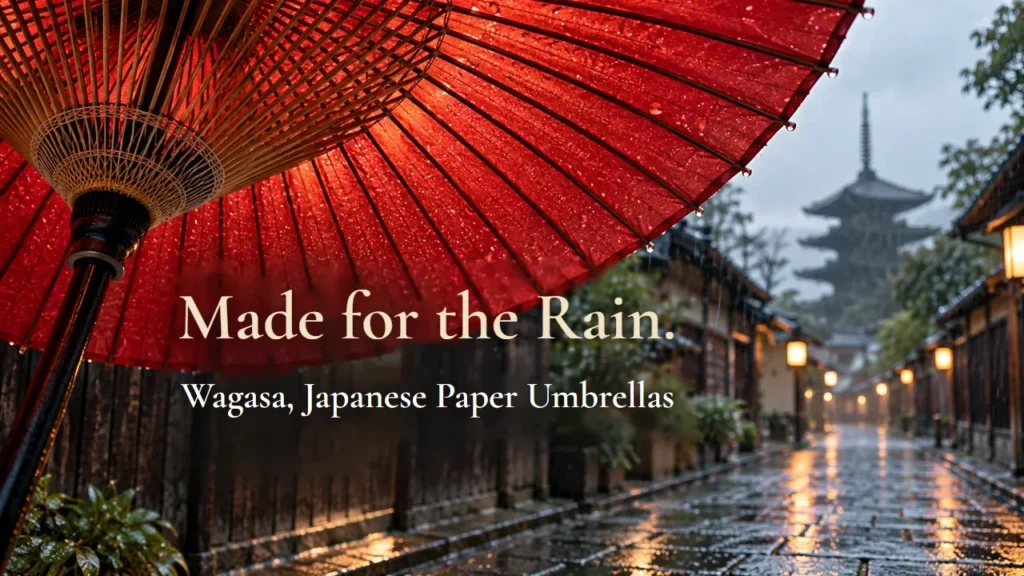
Can you actually use a wagasa (Japanese paper umbrella) in the rain? Yes. Hiyoshiya, a long-established maker of Kyoto wagasa, writes that its bangasa, janome-gasa and habutae umbrellas "can actually be used on rainy days."
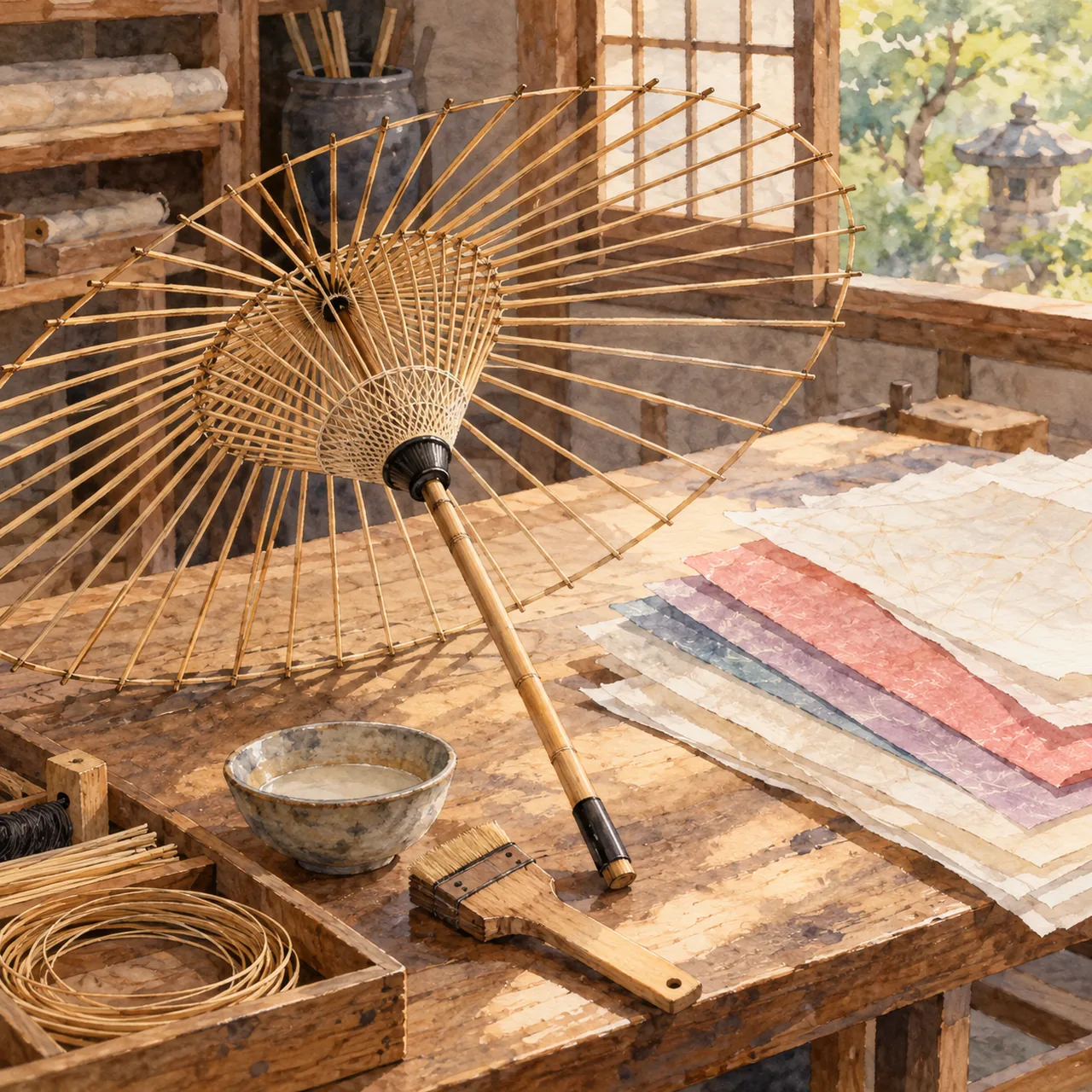
Split bamboo for the ribs, washi paper stretched over them, oil brushed on to shed the rain: a wagasa is a working tool, still made with materials and methods that have barely changed since the Edo period. Open one, and dozens of bamboo ribs fan out above you while light glows through the paper. This guide introduces four Japanese-made pieces — from Kyoto's Hiyoshiya, and from Gifu wagasa, named a national Traditional Craft in 2022 — including a janome umbrella, a parasol, and a lamp born from wagasa techniques.
Quick Reference: Japanese Wagasa at a Glance
| Wagasa | Maker / Region | In the rain? | Ribs / Size |
|---|---|---|---|
| Kyoto janome-gasa, nakaire ▾ | Hiyoshiya (Kyoto) | ◎ Rain or shine | 116 cm across |
| Gifu janome-gasa "Tsukiyakko" ▾ | Kasabiyori (Gifu) | ◎ Rain umbrella | 46 ribs, about 520 g |
| Gifu black-rib parasol ▾ | Maruto Fujisawa Shoten (Gifu) | ✕ Parasol (paper not oiled) | 40 ribs, joint handle |
| KOTORI HG pendant lamp ▾ | Hiyoshiya (Kyoto) | — (indoor lighting) | About 39 cm across |
1. Why Japanese: A Wagasa Is Made for the Rain
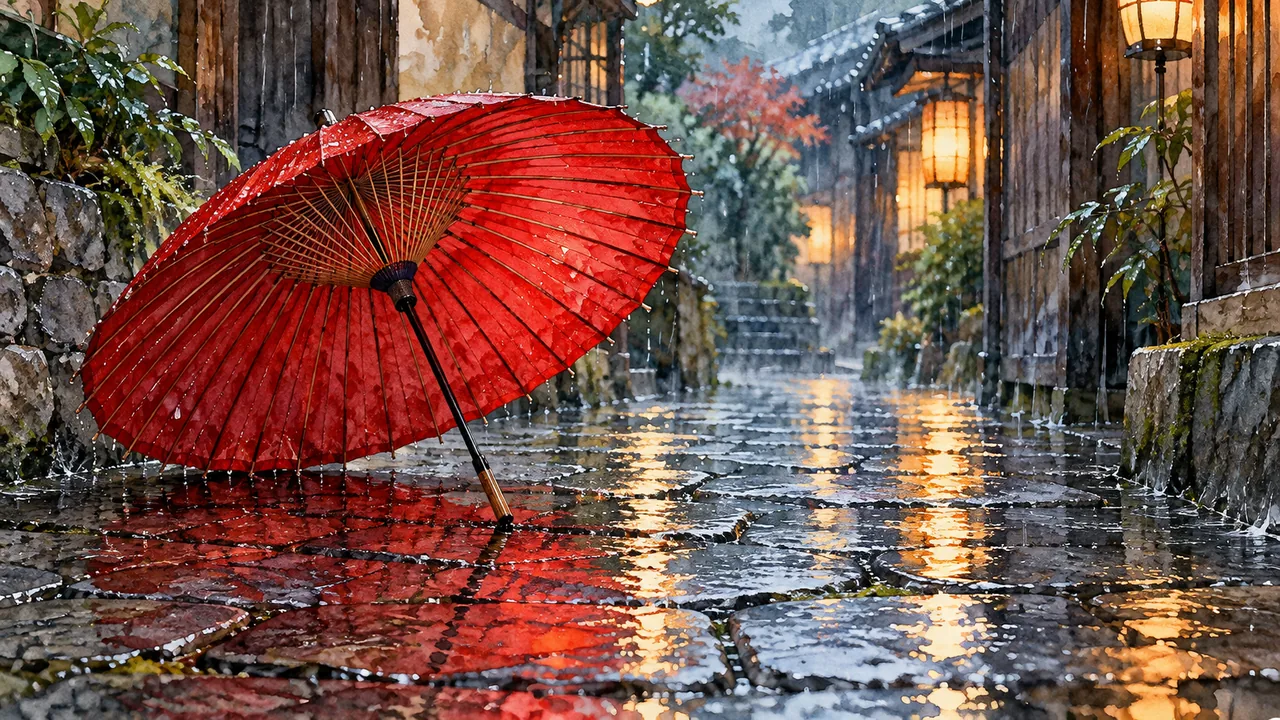
Hiyoshiya writes of its own umbrellas: "They are made with materials and methods that have hardly changed since the Edo period, so bangasa, janome-gasa, habutae and others can actually be used on rainy days."
Gifu Prefecture likewise describes Gifu wagasa as having grown up in a place rich in umbrella-making materials — good bamboo, Mino washi and perilla (egoma) oil. Washi is stretched over bamboo ribs, and the oiled paper repels water.
A wagasa looks nothing like a Western umbrella. When it opens, dozens of thinly split bamboo ribs spread out like rays, and light filtered through the washi glows on the inside of the canopy — a view only the person holding it gets to see.
2. Kyoto's Hiyoshiya: The Workshop Carrying On Kyo-Wagasa
Hiyoshiya is a Kyoto wagasa maker founded in the late Edo period. Its official site says it has made Kyoto wagasa for more than 160 years, and that it is the only workshop carrying on the techniques of "Kyo-wagasa" handed down through the generations.
It still makes bangasa, janome-gasa and nodate-gasa (large umbrellas for outdoor tea ceremonies), and restores wagasa used at temples, shrines and traditional festivals.
Did you know: From the edge of closing to 15 countries
Hiyoshiya's site says plainly that as demand for wagasa collapsed, the workshop was once on the verge of closing. Under Nishibori Kotaro, who became the fifth-generation head in 2003, it extended wagasa techniques into lighting and interiors and has expanded to more than 15 countries. Protecting the tradition while widening what it makes — that is why Kyoto wagasa are still being made today.
Hiyoshiya Kyo-Wagasa Janome-Gasa "Nakaire" (Red and White): Rain or Shine
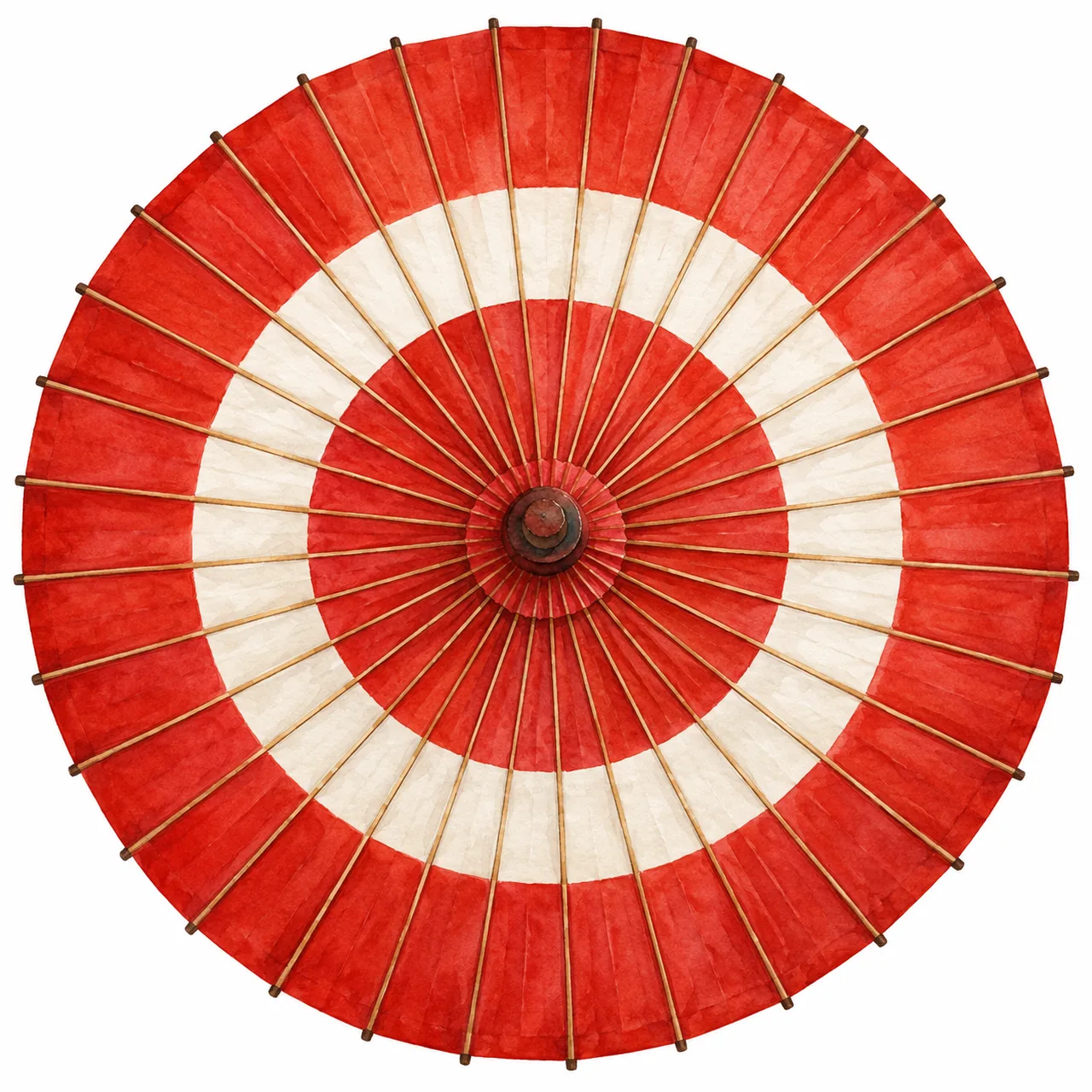
A Kyoto janome umbrella loved by maiko, too. 116 cm across and 73 cm tall, for rain or shine. A metal catch lets you set how far it opens in two stages, depending on the wind and rain; the grip is wrapped in natural rattan and the tip is brass. Open it, and the red-and-white "nakaire" pattern appears. An umbrella that makes you look forward to rain on a kimono day.
3. Gifu Wagasa: A National Traditional Craft Since 2022
Gifu wagasa were designated a national Traditional Craft by Japan's Minister of Economy, Trade and Industry on 18 March 2022. According to Gifu Prefecture, umbrella-making grew up here when the land belonged to the Kano domain in the Edo period, among plentiful bamboo, Mino washi and perilla oil.
The prefecture describes Gifu wagasa as "hosomono" — umbrellas that fold up slim. Large when open, slender when closed: the beauty of something made to be carried.
Kawai Mikiko, head of the wagasa brand Kasabiyori, grew up watching her grandmother, a wagasa artisan, at work, and entered the craft at the invitation of her uncle, who runs an old wagasa wholesaler. Today she handles almost all of the processes that were once divided among many hands, by herself (according to the Gifu tourism association).
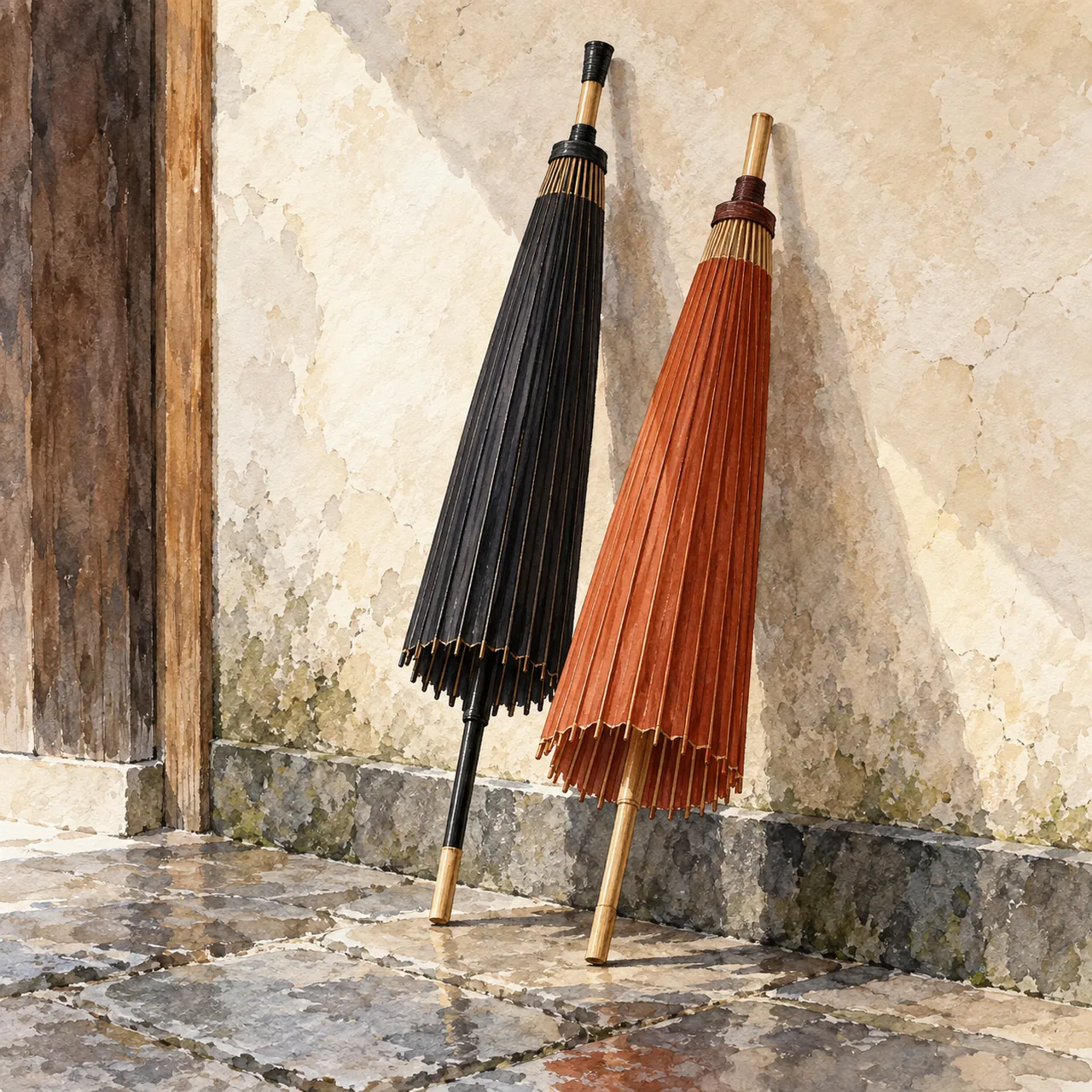
Did you know: 600 wholesalers then, three now
According to the Gifu tourism association and the Gifu Shimbun, around 1950, at the peak of Gifu wagasa, there were more than 600 wholesalers and 1.2 to 1.3 million umbrellas were made each month. Only three wholesalers are still operating. The same article says wagasa-making breaks down into nearly 100 steps, and a single umbrella was once made by more than ten craftsmen sharing the work.
Gifu Wagasa Janome-Gasa "Tsukiyakko" (Black and Persimmon): 46 Handmade Ribs by Kasabiyori
Black and persimmon-tannin washi, divided into a moon shape. Made by Kasabiyori in Gifu city: 46 ribs, about 74 cm long, about 520 g. The persimmon-dyed washi is coloured sheet by sheet by a Mino washi artisan, and the black washi is specially matched for this umbrella. Made to order.
Gifu Wagasa Black-Rib Parasol "Nokiaka": A Grown-Up Parasol by Maruto Fujisawa Shoten
Bamboo ribs dyed black, black washi, and a touch of red at the edge. By Maruto Fujisawa Shoten in Gifu city: 40 ribs, machine-made Mino washi, and a handle joined with brass so it comes apart for carrying. A parasol that looks good in a man's hand too. The paper isn't oiled, so it can't be used in the rain — it's for enjoying soft, paper-filtered shade under the summer sun.
4. Rain Umbrella or Parasol: Oiled or Not

Check Before You Buy: Rain or Sun?
Wagasa come as rain umbrellas and as parasols. Hiyoshiya says its bangasa, janome-gasa and habutae are "waterproofed, for use on rainy days." Maruto Fujisawa Shoten's parasol, on the other hand, says: "The washi is not oiled, so it cannot be used in wet weather."
They can look alike, but whether a wagasa can go out in the rain depends on whether its paper has been oiled. Always check whether the listing says rain umbrella, rain-or-shine, or parasol.
The Number of Ribs Is Part of Its Face
Even among the umbrellas in this guide, the number of ribs differs — 40, 44, 46. The count of bamboo ribs fanning out when it opens is part of each umbrella's character, so compare them when you shop.
5. Wagasa Craft, Turned Into Light
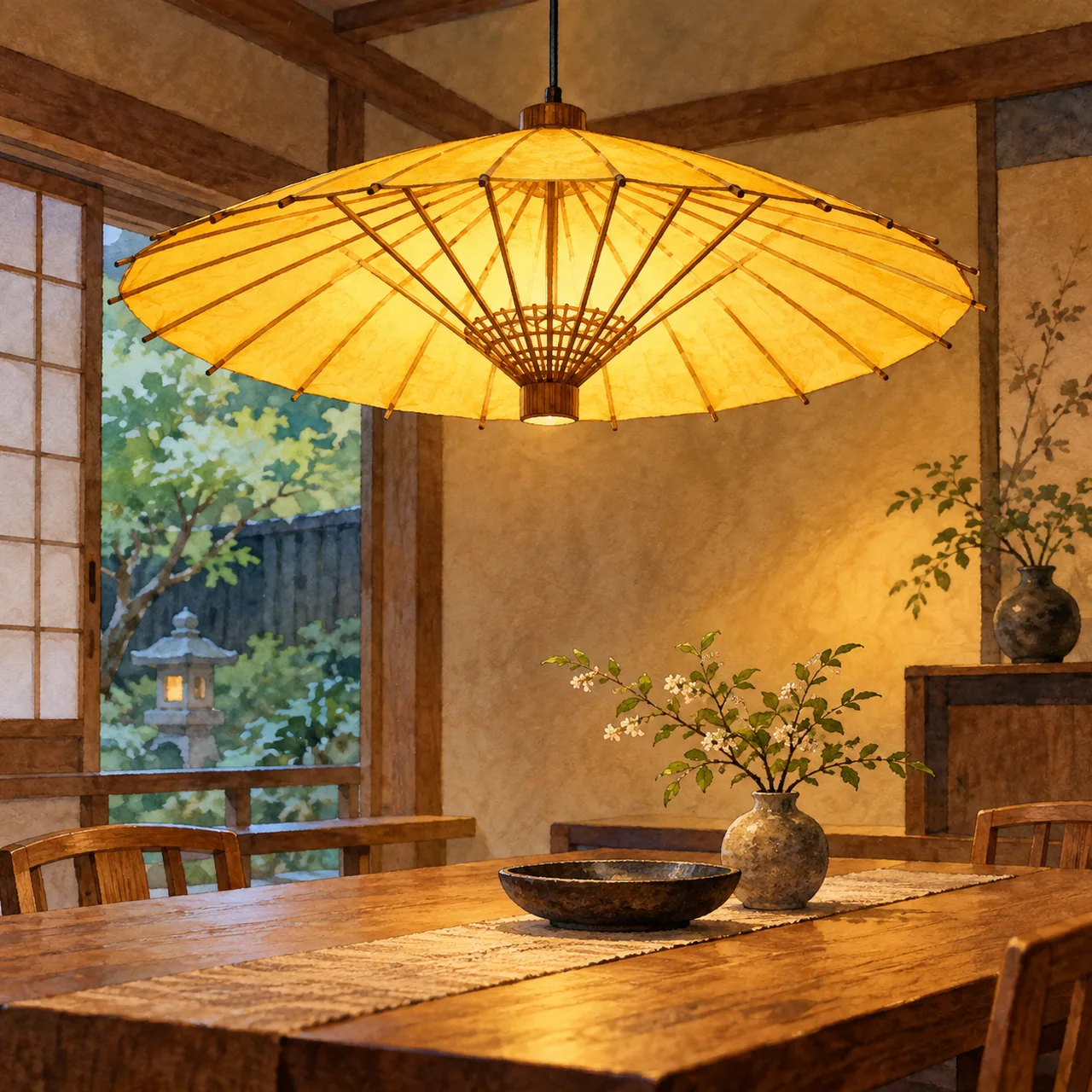
Hiyoshiya also puts wagasa techniques into designer lighting. "KOTORI" is a lamp that opens and closes like a wagasa. The High Grade series uses madake bamboo from Kyoto and handmade washi, and each rib is carefully split from a single length of bamboo. Light it, and the ribs appear through the paper.
The KOTORI HG pendant in yamabuki (golden yellow) is about 39 cm (388 mm) across. You can enjoy the bamboo's texture changing over time — a way to bring Kyoto wagasa craft into daily life even if you never carry an umbrella.
6. Buying From Outside Japan
Hiyoshiya runs an English online shop with worldwide shipping (import duties and taxes are calculated at checkout). It's the most direct way to buy Kyoto wagasa and KOTORI lamps from abroad. If you're buying a lamp, ask the shop about your country's voltage and fittings before you order — lighting sold in Japan is generally made for Japan's 100 V supply.
The two Gifu pieces in this guide are offered as furusato nozei (hometown tax donation) gifts from Gifu city, which are only open to taxpayers in Japan. When searching elsewhere, note that many "oiled paper umbrellas" sold online are decorative and don't name a maker or where they were made — look for the workshop's name and whether it's sold as a rain umbrella.
7. Using a Wagasa for Years
A wagasa can be repaired when it breaks. Besides making wagasa, Hiyoshiya accepts repairs and custom orders, and restores the umbrellas used at temples, shrines and festivals.
Washi and bamboo change character as you use them. Kasabiyori names the way a wagasa slowly turns amber as one of its pleasures. The colour when new and the colour after years of use — both are part of the joy. For drying and storing after use, follow the maker's instructions that come with your umbrella.
8. Frequently Asked Questions
Can a wagasa be used in the rain?
Yes, if it's made as a rain umbrella. Hiyoshiya says its bangasa, janome-gasa and habutae can actually be used on rainy days. Wagasa made as parasols have unoiled paper and can't be used in the rain.
What's the difference between janome-gasa and bangasa?
Both are rain umbrellas. Hiyoshiya describes the janome-gasa as an umbrella whose brightly coloured washi stands out against slender bamboo ribs, loved by maiko; it makes bangasa, janome-gasa and habutae all as rain umbrellas.
What is Gifu wagasa?
Wagasa made in Gifu, designated a national Traditional Craft on 18 March 2022. The craft grew up in the Edo-period Kano domain amid plentiful bamboo, Mino washi and perilla oil, and is known for "hosomono" umbrellas that fold up slim.
Can a wagasa be repaired?
Some makers accept repairs. Kyoto's Hiyoshiya takes repairs and custom orders as well as making wagasa and lanterns.
Can I buy a wagasa from outside Japan?
Yes — Hiyoshiya's English online shop ships worldwide. Import duties and taxes are shown at checkout.
Can I enjoy wagasa craft without owning an umbrella?
Yes, through lighting. Hiyoshiya's KOTORI lamps use Kyoto madake bamboo and handmade washi and open and close like a wagasa.
Final Thoughts: An Umbrella That Makes You Wait for Rain
A wagasa is a tool you can use in the rain — bamboo, washi and oil, made in much the same way since the Edo period.
Hiyoshiya's janome umbrella from Kyoto; Kasabiyori's janome umbrella and Maruto Fujisawa Shoten's parasol from Gifu, a Traditional Craft since 2022; and a lamp born from wagasa techniques. All made by Japanese makers carrying wagasa craft to the next generation.
Open a wagasa on a rainy day, and bamboo ribs and paper-filtered light spread out above you. Rain starts to feel like something to look forward to.

Japanese Washi Lighting: Isamu Noguchi AKARI & Gifu Lanterns
Yukata: How to Spot a Real One and Wear It Right