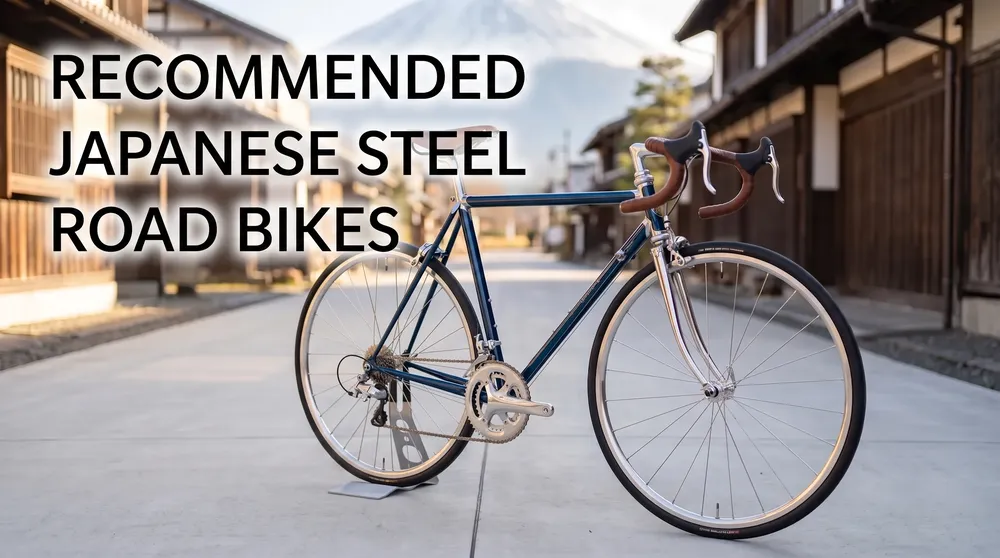
There is a reasonable chance you already own something Japanese on your bike. Nitto bars, a
Sugino crank, MKS pedals — and if any of it carries an NJS stamp, it was
approved for use in Japanese keirin racing under a certification regime with no equivalent anywhere
else.
What most English-speaking riders do not know is what that regime did to Japanese
framebuilding. Keirin created decades of guaranteed demand for hand-brazed steel frames
built to a fixed standard, and the builders who grew up in it are still working.
The other thing worth knowing: Japan industrialised custom geometry. Ordering a
made-to-measure steel frame in the West usually means joining a named builder's waiting list for
years. In Japan it has been a catalogue process for decades.
Quick Reference: The Three Routes In
| Route | What you get | How hard is it? |
|---|---|---|
| Components | Nitto, Sugino, MKS, Dia-Compe on your existing bike | Easy. Widely stocked in the West |
| Keirin / NJS frame | Track geometry, hand-brazed, often second-hand | Medium. A real export market exists |
| Custom road frame | Your geometry, built to order | Hard. Proxy service or a shop that will deal with you |
| Steel is not automatically more comfortable than carbon. Tyre width and pressure dominate ride quality — see the honest comparison below before you buy on that argument. | ||
Why Japanese Steel — What Keirin Built
Keirin is a legal betting sport in Japan, and that is the whole explanation. Because money is wagered on the outcome, the equipment has to be strictly controlled — so the NJS certification exists to approve frames, components and materials for competition.
The consequences for framebuilding were unusual:
- Guaranteed demand for hand-built steel frames, for decades. While Western framebuilding contracted through the aluminium and carbon eras, Japan's kept a floor under it.
- A fixed technical standard. Certification means specified tubing, specified joining methods, and inspection — so the skills were maintained rather than drifting.
- Components had to meet the standard too, which is why NJS-stamped Nitto, Sugino, MKS and Dia-Compe parts exist and why they are built the way they are.
Why NJS parts became collectable in English-speaking countries
When fixed-gear riding spread through Western cities, riders looking for genuinely
track-specific equipment found a Japanese supply chain that had been making exactly
that, to a documented standard, without interruption.
The NJS stamp became shorthand for "made properly to a real specification" — which is a rare
thing for a marking to actually mean. It is also why used keirin frames have an export
market at all.
Lugs and TIG, briefly
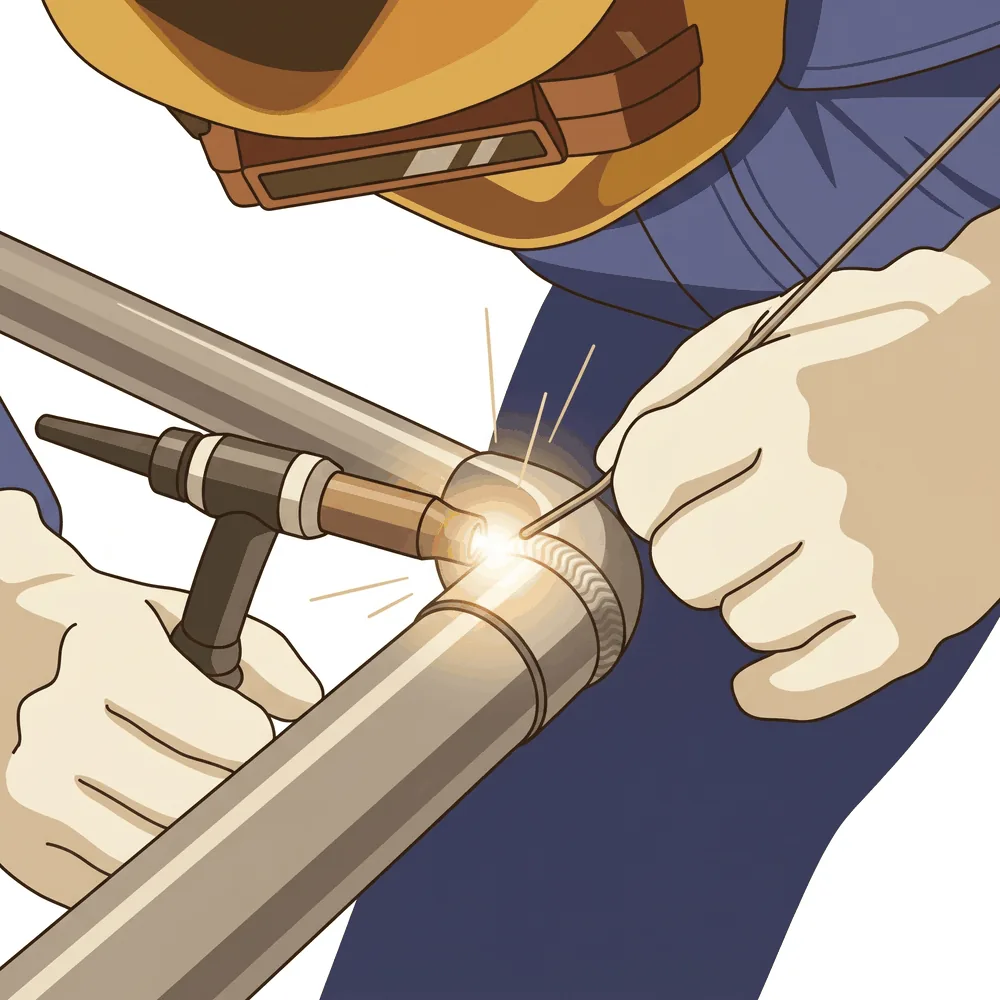
Two ways to join steel tubes, and they are aesthetic choices as much as structural ones.
- Lugged — tubes slot into cast sleeves and are brazed with brass or silver at lower temperature. Slower, more forgiving of the tubing, and it produces the ornate joints people associate with classic frames.
- TIG welded — tubes joined directly with an electric arc. Faster, allows tube shapes and angles lugs cannot accommodate, and leaves a stack-of-dimes bead instead of a sleeve.
Neither is stronger in any way that matters on a well-built frame. Lugs are chosen for looks and tradition; TIG for freedom of geometry and cost.
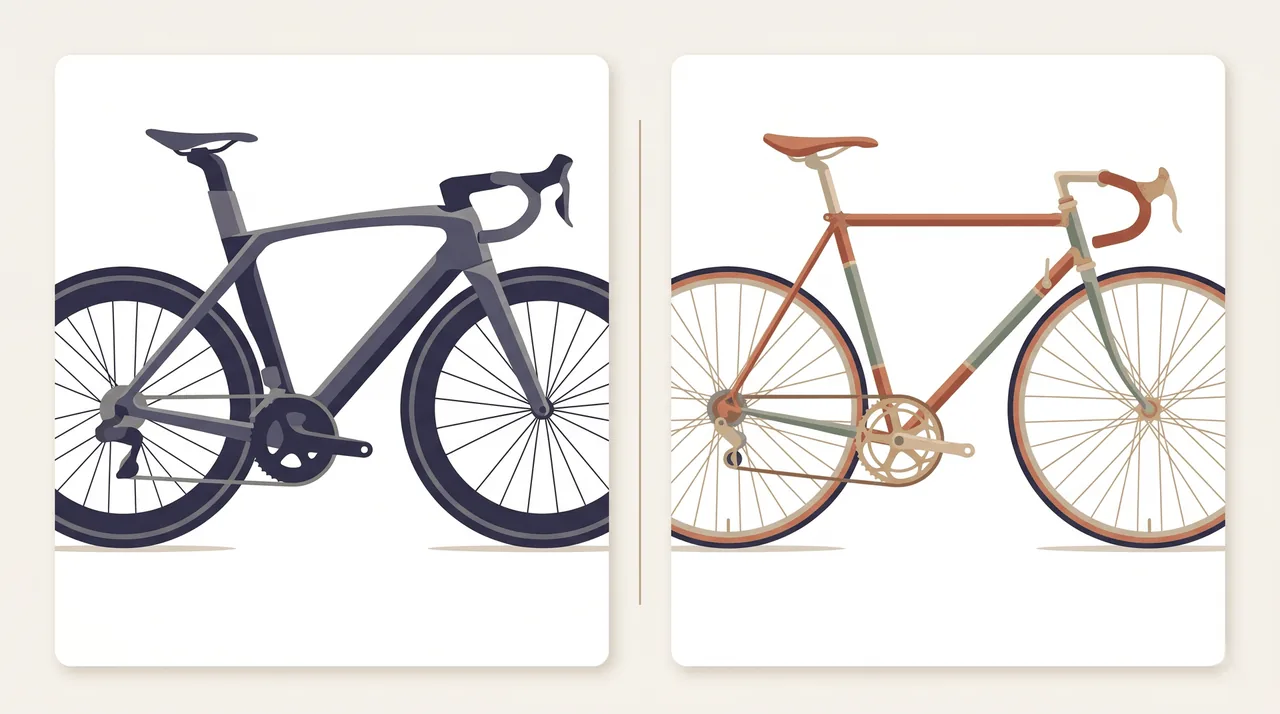
Steel vs Carbon: The Honest Version
The Japanese article this is based on opens with the familiar claim that carbon is harsh and steel is supple. That framing does not survive contact with a well-informed English-speaking cyclist, so here is the version that does.
What actually determines comfort
Tyre width and inflation pressure dominate ride comfort by a very large margin.
Frame material is a minor term in that equation, and a modern carbon frame is not "harsh" —
designers tune compliance deliberately.
If your bike is uncomfortable, wider tyres at lower pressure will change more than a new
frame will, for a fraction of the money. Anyone telling you otherwise is selling frames.
So why buy steel?
There are good reasons. They are simply not the one usually given.
- It can be repaired. A dented or cracked steel tube can be replaced by a competent framebuilder. Carbon damage is usually terminal, and always a specialist repair.
- It fails slowly. Steel bends and gives warning; carbon can look fine and then fail suddenly. For a bike that will be ridden for thirty years, that difference matters.
- Custom geometry is affordable in steel. Tubes are cut and joined individually, so a one-off frame costs a premium rather than a fortune. Custom carbon means a mould.
- It takes mounts. Racks, mudguards, bottle cages, dynamo wiring — braze-ons can be added anywhere, which is why touring and randonneur bikes are still overwhelmingly steel.
- It looks like that. A slim steel tube with a brazed lug is a specific aesthetic, and wanting it is a legitimate reason to buy one.
The weight penalty is real and smaller than people think. A good steel frame is perhaps a kilogram heavier than carbon. On a bike plus rider, that is well under one percent — noticeable when lifting it onto a rack, essentially irrelevant while riding.
Custom Geometry Without the Five-Year Wait
In the English-speaking world, a custom steel frame means finding a named builder and
waiting. The well-regarded ones have waiting lists measured in years, and the price
reflects a single craftsperson's time.
Japan solved this differently. Panasonic has run a made-to-order frame programme —
POS — for decades, where custom geometry is a catalogue process: you specify dimensions
and finish, and a factory set up for exactly this builds it.
It is custom without being bespoke, and that distinction is the point. You are not commissioning an artist; you are ordering a frame built to your measurements by an operation that does this routinely. The result is realistic lead times and prices that sit closer to good production frames than to boutique commissions.
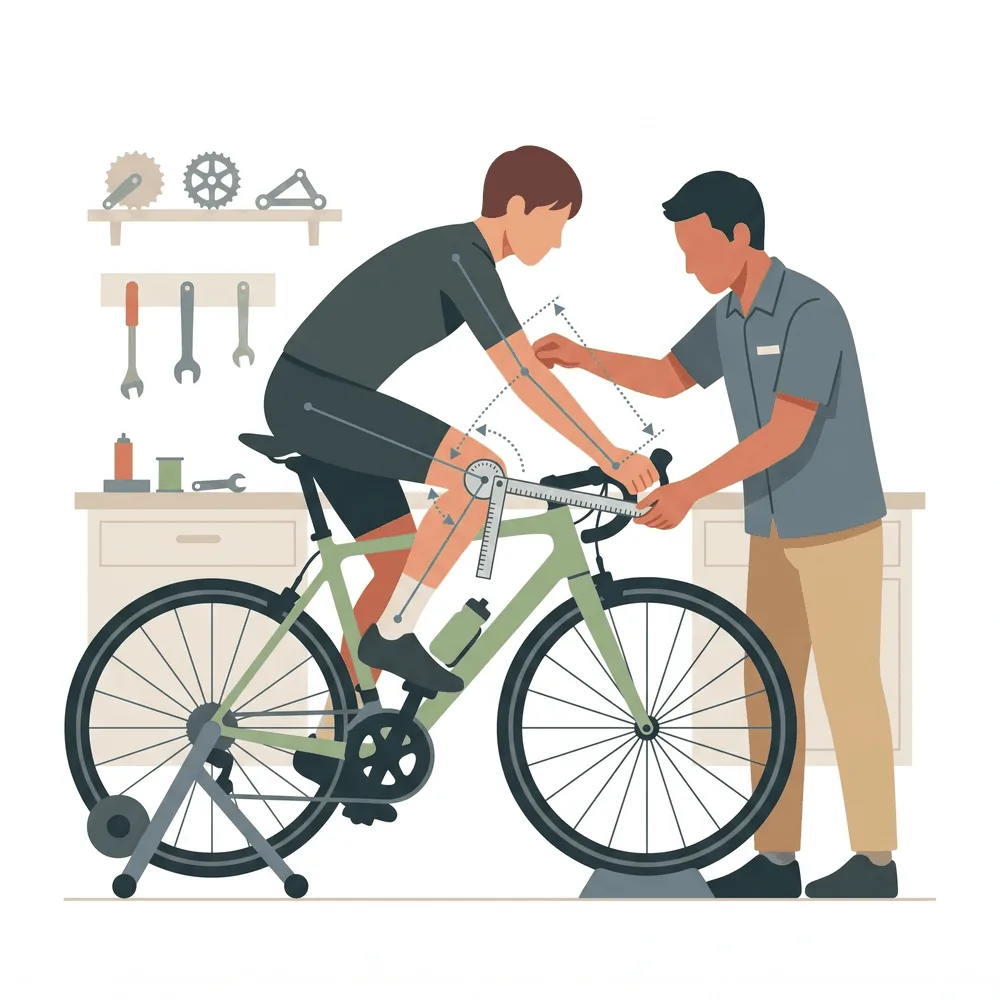
Get fitted first, then order
Custom geometry is only worth anything if the numbers are right, and you cannot derive
them from your current bike being "roughly OK". Have a proper bike fit done, take the
output — stack, reach, saddle height, saddle setback, bar drop — and order to those figures.
A custom frame built to wrong measurements is worse than a stock frame, because
at least the stock frame can be resold.
The Builders
Frames are the hard part to buy from abroad. Components are easy — start there if you want Japanese steel-era engineering without an import project.
Nitto and the component makers — start here
Nitto is the Japanese component maker with the strongest reputation in the
English-speaking world — handlebars, stems, seatposts and racks that randonneurs and touring
riders treat as the default. Sugino (cranks), MKS (pedals)
and Dia-Compe (brakes) sit alongside it.
These are stocked by bicycle shops throughout Europe and North America. No
import, no proxy, no voltage or sizing problem.
- What
- Bars, stems, posts, racks, cranks, pedals, brakes
- Why
- Made to keirin-era standards; many carry NJS approval
- Availability
- Good. Normal bicycle retail
- Price range
- $40–$250 per component
Perfect for: Anyone curious about this whole area. A Nitto stem on your existing bike costs little and explains a lot.
Panasonic POS — custom geometry, catalogue process
The made-to-order programme described above. You specify dimensions, tubing and
finish; Panasonic builds it. Road, track and touring geometries, and a paint
selection that is part of the appeal — POS frames are known for finishes you would not get
from a small builder.
Ordering from outside Japan is the obstacle, not the frame. This runs through
Japanese dealers, so expect to work with a proxy service or a shop willing to correspond.
- What
- Made-to-order chromoly frames, road and track
- Strength
- Realistic lead times and pricing for custom geometry
- Finish
- Extensive paint options
- Buying abroad
- Proxy service or direct dealer correspondence
Perfect for: Someone with a bike fit sheet and proportions that stock frames do not serve.
Toyo Frame and CHERUBIM — the builders' builders
Toyo Frame is a frame factory that has built for other people's names for
decades — the same "the factory behind the brands" pattern that runs through Japanese
manufacturing — and sells under its own name too.
CHERUBIM is the opposite: a small, celebrated workshop known for
frames that push what brazed steel can look like, including show pieces that
are closer to sculpture. The road models are entirely rideable, and priced as art objects
often are.
- Toyo
- Factory-built, OEM heritage, strong value
- CHERUBIM
- Small workshop, distinctive shapes, high prices
- Buying abroad
- Limited. Enquire directly; some export
Perfect for: Someone who has decided on Japanese steel and wants a frame with a name behind it.
Buying a used NJS keirin frame
This is the most accessible route to a Japanese hand-built frame, and there is an established
export trade in retired keirin equipment. Know what you are buying: keirin
geometry is steep, short and built for a banked track — high bottom bracket, aggressive angles, no
brake mounts, and no clearance for wide tyres.
It is not a road bike and converting it into one is a compromise. Buy it because
you want a track frame.
Rust Is the Only Real Enemy
A steel frame will outlive you if it stays dry inside. The threat is not the paint you can see — it is the inside of the tubes, where condensation collects and nobody looks.
- Treat the inside of the tubes. A frame-saver product sprayed through the tubes leaves a waxy film that stops internal corrosion. Do it once when the frame is new; repeat every few years.
- Do not store it wet. Wipe it down after wet rides — especially around the bottom bracket shell and the seat tube, where water runs and sits.
- Pull the seatpost occasionally. Water runs down the seat tube and collects at the bottom bracket. A seized seatpost in a steel frame is a genuinely serious job.
- Touch up paint chips promptly. Clear nail varnish is a perfectly acceptable field repair; bare steel starts rusting within days in humid weather.
- Salt is the accelerator. If you ride winter roads, rinse the frame afterwards. Road salt does in one season what rain does in ten.
Do these and the frame is a multi-decade object. Neglect the inside of the tubes and it is a ten-year one — and the failure will be invisible until it is not.
Frequently Asked Questions
What does NJS actually mean?
Certification for Japanese keirin racing. Because keirin is a legal betting sport,
equipment is strictly regulated — frames, components and materials must be approved to compete.
For riders elsewhere it functions as a shorthand for equipment made to a documented, inspected
standard, which is why NJS-stamped parts became collectable outside Japan.
Is steel really more comfortable than carbon?
Not in the way the claim is usually made. Tyre width and pressure dominate ride
comfort; frame material is a small contributor, and modern carbon frames are designed with
deliberate compliance.
Buy steel for repairability, custom geometry, mounting points and looks — those
arguments hold up. The comfort one mostly does not.
How much heavier is a steel frame?
Roughly a kilogram against a comparable carbon frame. On the total weight of bike
plus rider that is well under one percent.
You will notice it lifting the bike onto a rack. You will not notice it on a climb in any way you
could distinguish from having eaten lunch.
Can I order a Panasonic POS frame from abroad?
Not straightforwardly. The programme runs through Japanese dealers, so realistic
routes are a proxy buying service or finding a shop willing to correspond with you directly.
Have a professional bike fit done first and order to those numbers — custom
geometry built to guessed measurements is worse than a stock frame.
Should I buy a used keirin frame as a road bike?
Only if you want a track bike. Keirin geometry is steep and short with a high
bottom bracket, no brake mounts and minimal tyre clearance — it was designed for a banked
velodrome.
It converts badly. There is a healthy export market in retired keirin frames, and they are worth
buying for what they are.
Will it rust if I ride in the rain?
Not from the outside, if the paint is intact. The risk is inside the tubes, where
condensation collects unseen.
Spray a frame-saver product through the tubes once when new, wipe the frame down
after wet rides, and rinse off road salt in winter. Do that and rust is a non-issue for decades.
Final Thoughts: Start With a Stem
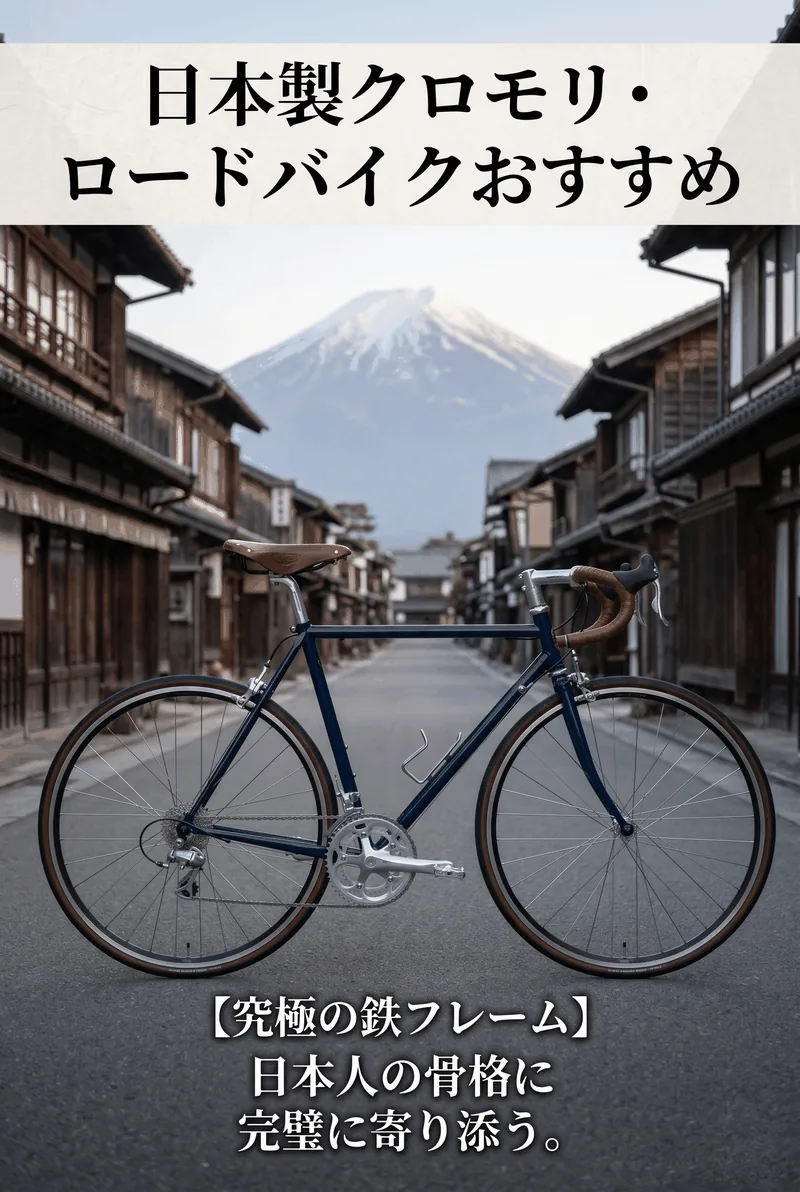
The frames are hard to buy and the components are not. A Nitto stem or a set of MKS pedals costs very little, is stocked by ordinary bike shops, and comes from exactly the manufacturing culture this article is about.
If you go further: buy steel for repairability, geometry and mounting points — not because someone told you carbon is harsh. That argument is weak, and the honest ones are strong enough on their own.
Then spray the inside of the tubes, pull the seatpost once a year, and the frame will still be working long after the components on it have been replaced twice.
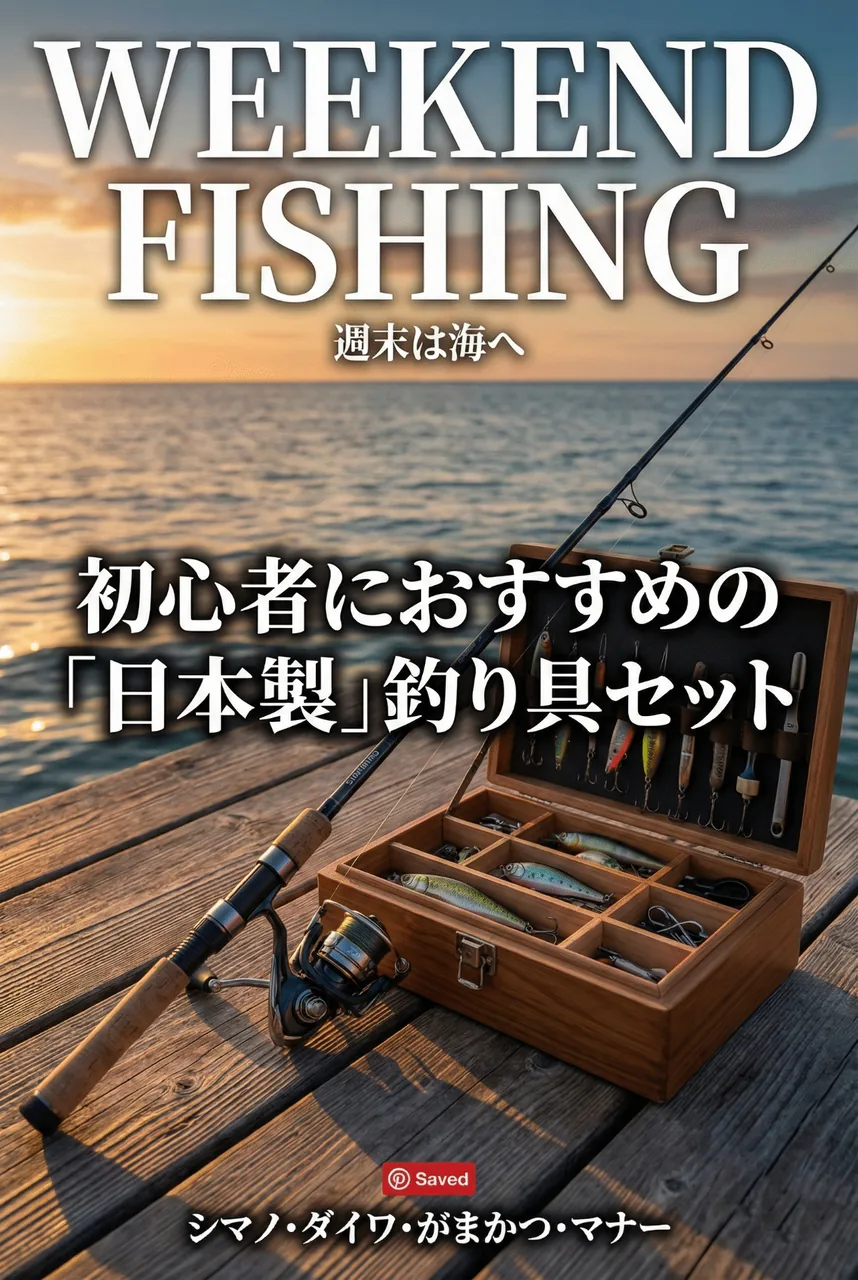
Fishing in Japan: What a Beginner Needs
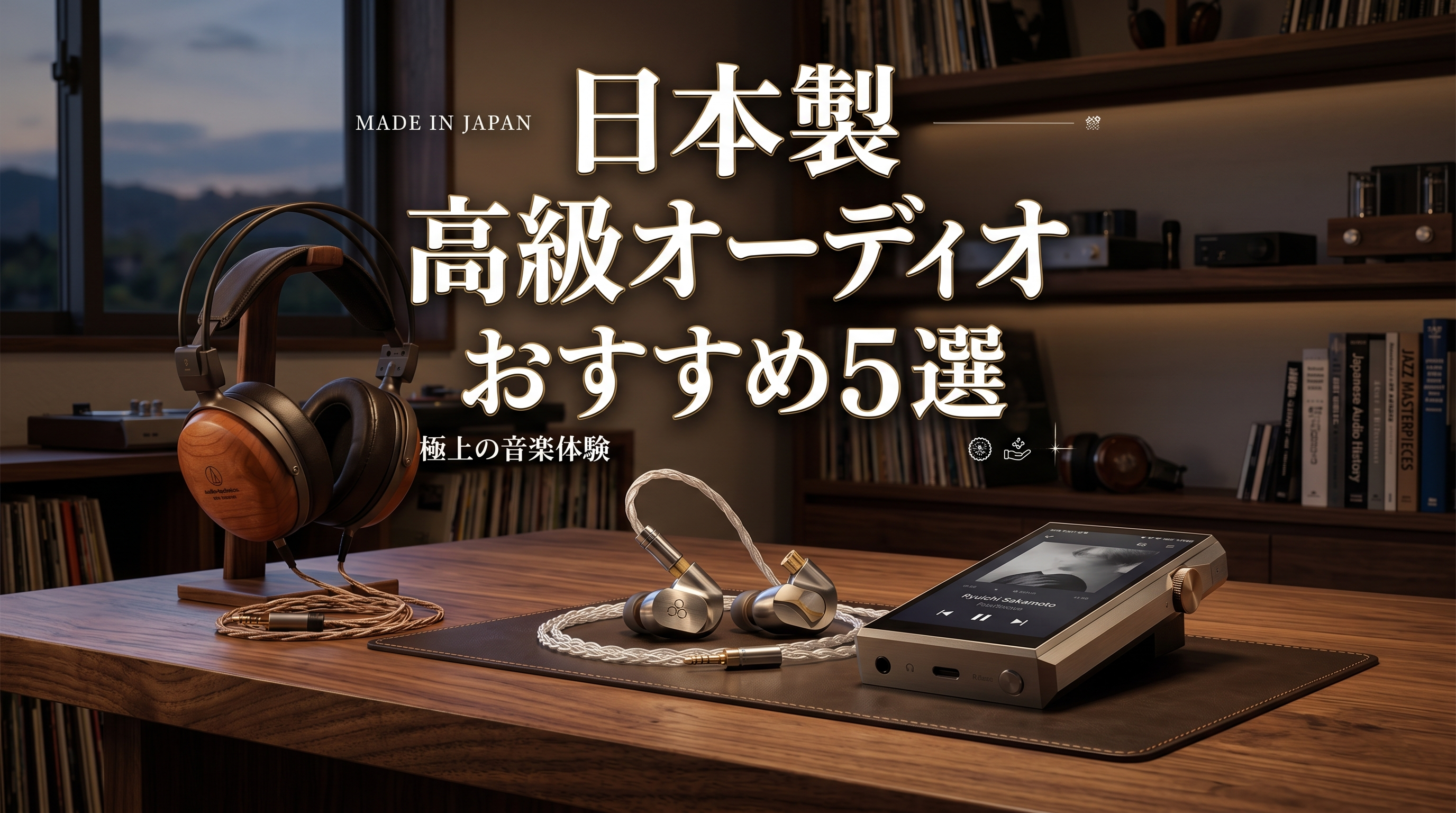
Japanese Headphones: From the E3000 to Flagships