SASE Glass Pen
A Tokyo workshop where grooves turn ink into lines.
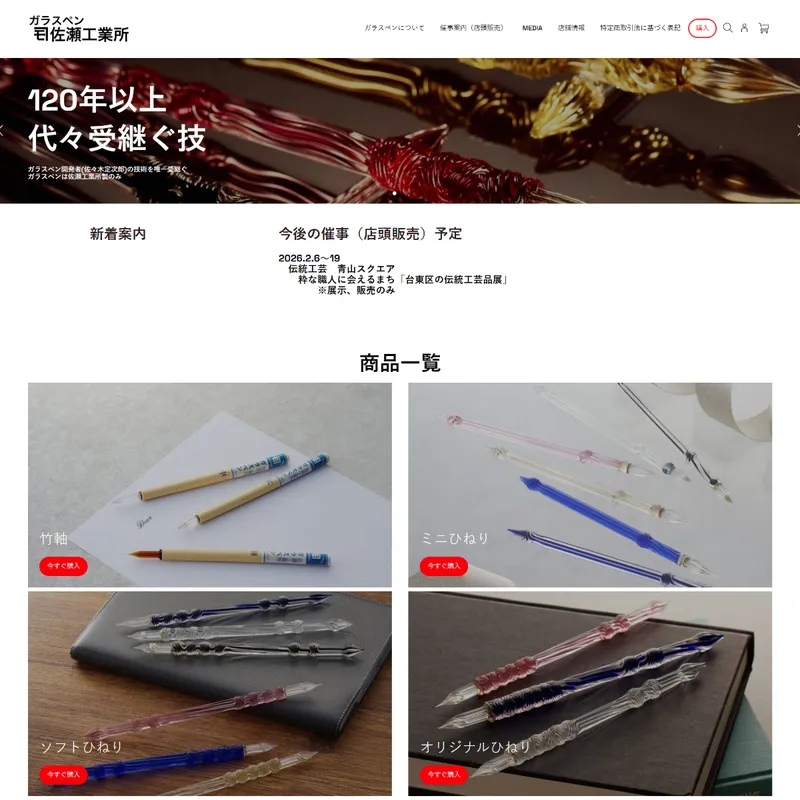
Sase Kogyosho has been making glass pens since 1912 (Taisho 1). Based in Iriya, Taito City, Tokyo, the workshop continues a lineage tied to early Japanese glass-pen craftsmanship. A glass pen holds ink in the grooves of its tip, then releases it smoothly onto paper. That simple mechanism depends on careful finishing, one piece at a time. Choose an all-glass body for pure transparency, or a bamboo shaft for a gentler grip. From clean classic forms to twisted designs with a subtle shimmer, each pen feels like a quiet invitation to write.
Why We Love It
My easiest routine is simple: keep a small ink bottle and a cup of water on the desk, switch colors freely, then rinse the tip and wipe it gently. Rest it on a pen stand and it is ready for the next page. Try different papers—smooth or slightly textured—and the line character changes in a fun way. Use it for a daily note, an address line, or quick sketches. Don't over-plan it. Treat it as a tool you touch every day, and let the time with one pen grow naturally.


PROFILE About the Company / Workshop
Sase Kogyosho has made glass pens in Tokyo for generations. The base is Iriya, Taito City—an area with deep ties to small workshops. The lineage is often discussed in relation to early Japanese glass-pen development and the transmission of technique. In a quiet corner of the city, glass becomes a writing tool.
What defines a glass pen is the tip: grooves that store ink, then release it steadily while writing. That depends on precise shaping and finishing. Each pen is adjusted with the writing experience in mind. The result is a tool that feels delicate, yet works with a clear purpose.
The lineup includes all-glass models and bamboo-shaft options. There are also twisted designs that catch light differently. Use cases are broad—short notes, journaling, addressing, and light sketching. Changing ink colors is easy, so the pen naturally fits a slow, playful writing rhythm.
Sales are centered on the online store, and the business information is clearly provided, including address and contact details. It's a small workshop, but the basics are well organized. That clarity helps when choosing one pen to keep and use over time.
Founded in 1912, rooted in Tokyo's craft tradition
Sase Kogyosho was established in 1912 (Taisho 1). The workshop is known for carrying forward techniques associated with early Japanese glass-pen making. It is a long, steady timeline—built around writing tools, not trends.
A functional tip: grooves that hold and release ink
A glass pen works by holding ink in the grooves of its tip and guiding it onto paper. The tip geometry and finishing matter most. The beauty is visible, but the goal stays practical: a pen that writes cleanly.
All-glass or bamboo shaft—choose by feel
An all-glass body highlights transparency and balance. Bamboo-shaft models add a softer touch in the hand. Twisted designs bring a different visual rhythm. The same material can still offer very different personalities.
Skill records recognized within Taito City
The workshop history includes formal skill recognition in Taito City, such as excellent artisan acknowledgements and intangible cultural property records. It reflects a long commitment to both utility and craft finishing.
PRODUCTS Featured Products & Services
Contains promotional content
Bamboo-Shaft Glass Pen Set (3 nib widths)
A bamboo-shaft set that helps you try different line widths. A nice starting point for notes, headings, and everyday writing.
Furusato Tax: All-Twisted Glass Pen
An all-glass twisted design. A good choice if you want transparency plus a subtle spiral expression.
Furusato Tax: Mini Twisted Glass Pen
A compact twisted model. Easy to handle on smaller desks or as a lighter, simpler option.
Furusato Tax: Kanemo Original Glass Pen
An "Kanemo" original model tied to the workshop's heritage. A meaningful pick if you like tools with a story behind them.