Lacquerware Workshop Suzutake
A wooden lacquerware specialty workshop in Aizu-Wakamatsu, crafted with natural wood, true lacquer, and pure gold maki-e.
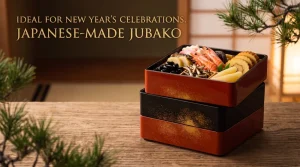
"Lacquerware Workshop Suzutake" in Aizu-Wakamatsu, Fukushima Prefecture, is a wooden true-lacquer specialty workshop founded in 1943. By layering domestic and overseas natural lacquer many times on natural wood bases, and using techniques such as pure gold hand-drawn maki-e, nuno-kise (cloth attachment), and Jomon coating, the workshop continues to create "real lacquerware you can use at the daily dining table." The workshop's directly managed online shop offers a wide lineup of vessels that enrich life — including bowls, dishes, jubako (tiered boxes), chopsticks, sake ware, and small accessory drawers.

Why We Love It
A workshop that honestly continues to make "lacquerware you can use every day" while preserving the tradition of Aizu lacquerware. In particular, "nuno-kise" — reinforcing edges by applying cloth — and "Jomon coating" — where scratches are inconspicuous — are simply sturdy! They don't wear out even when you use them roughly without hesitation. With the loveliness of maki-e hand-drawn by artisans, it's lacquerware as a "tool of life" — affection grows the more you use it.

PROFILE About the Company / Workshop
The roots of Lacquerware Workshop Suzutake are in Aizu-Wakamatsu City, Fukushima Prefecture, known as a production area for Aizu lacquerware. Since its founding in 1943, the workshop has continued making wooden true-lacquer vessels by hand at its own workshop — from wood-base making to lacquer coating and maki-e.
Even as lifestyles change with the times, the stance of committing to "handmade" and "natural materials" doesn't change. By slowly drying aged domestic wood such as horse chestnut and zelkova, turning the wood bases to suit the use, and layering true lacquer many times, the workshop achieves vessels that are light, sturdy, and able to endure daily use.
In recent years, the workshop has developed original series that look great on modern dining tables — including nuno-kise, Jomon coating, and the Ragu series. Through the workshop's directly managed online shop, exhibitions at department stores nationwide, and maki-e experience classes, the workshop continues to convey the appeal of "lacquerware that shines through use" to people both at home and abroad.
Founded in 1943, a wooden lacquerware workshop with integrated production from wood base making to finishing
A wooden lacquerware specialty workshop, rare nationwide, that handles everything in-house from wood-base drying management to true lacquer coating and pure gold maki-e. Committed to handmade work and natural materials, the workshop creates vessels that accompany the daily dining table.
Commitment to 100% natural lacquer, and engagement with domestic and Aizu-grown lacquer
For coating, the workshop uses 100% natural lacquer, carefully selecting domestic and overseas lacquer. For Aizu-grown lacquer, the workshop is involved from the "lacquer-tapping" site, taking a system of judging quality themselves. Also focusing on the antibacterial properties of natural lacquer, it contributes to creating a safe and secure food environment.
Nuno-kise, Jomon coating, Ragu — three series to enjoy with use
A diverse range of lacquerware that gains depth through daily use — including "nuno-kise" where cloth is attached to the fabric before coating is layered, "Jomon coating" where lacquer is layered dozens of times to produce a unique expression, and the simple "Ragu" series usable in both Japanese and Western styles.
Repair, maintenance, and maki-e experience — lacquerware to enjoy for a long time
The workshop accepts repairs and maintenance for its own products, centered on nuno-kise and Jomon coating. By also conducting workshop tours and maki-e experience classes, it conveys the culture of using vessels carefully for a long time while touching the scene of lacquerware making.
LINKS Official Links / Social Media
- Official Website http://www.suzutake.net/index.html
- Online Shop https://suzutake.handcrafted.jp/
- Contact Form https://thebase.com/inquiry/suzutake-handcrafted-jp
- Lacquerware Workshop Suzutake Official Site http://www.suzutake.net/index.html
- Online Shop (BASE / Lacquerware Workshop Suzutake) https://suzutake.handcrafted.jp/
- Access & Business Info https://suzutake.handcrafted.jp/p/00001
- Contact Form (THE BASE) https://thebase.com/inquiry/suzutake-handcrafted-jp
- Facebook Page "Lacquerware Workshop Suzutake" https://facebook.com/61575561077849