There's a branded tissue box sitting on your table right now — and it's probably quietly disrupting
every other considered thing in the room.
Tissue boxes are a solved problem that nobody talks about. A wooden cover slips over the box and
makes it disappear: no logo, no garish colour, just wood grain or bamboo texture sitting where the
box used to be. The tissue still feeds through a slot at the top. The room looks like someone
thought about it.
This guide covers the main materials used in Japanese wooden tissue covers — hinoki cypress, chestnut,
Aomori beech, bamboo — and picks across different styles and budgets.
Quick Reference: Japanese Tissue Covers by Material
| Material | Character | Best for |
|---|---|---|
| Hinoki cypress | Fresh scent; pale warm tone | Bedroom; Japanese interior |
| Chestnut (kuri) | Rich grain; deepens with age | Living room display piece |
| Beech (BUNACO) | Curved modern form; lightweight | Desk; Scandinavian interior |
| Shimanto hinoki (Tosaryu) | Drop-lid; long-lasting scent | Japandi or eco-conscious home |
| Plywood (Saito Wood) | Thin, seamless curves; mid-century | Design-led spaces |
1. Why a Tissue Cover Changes the Room
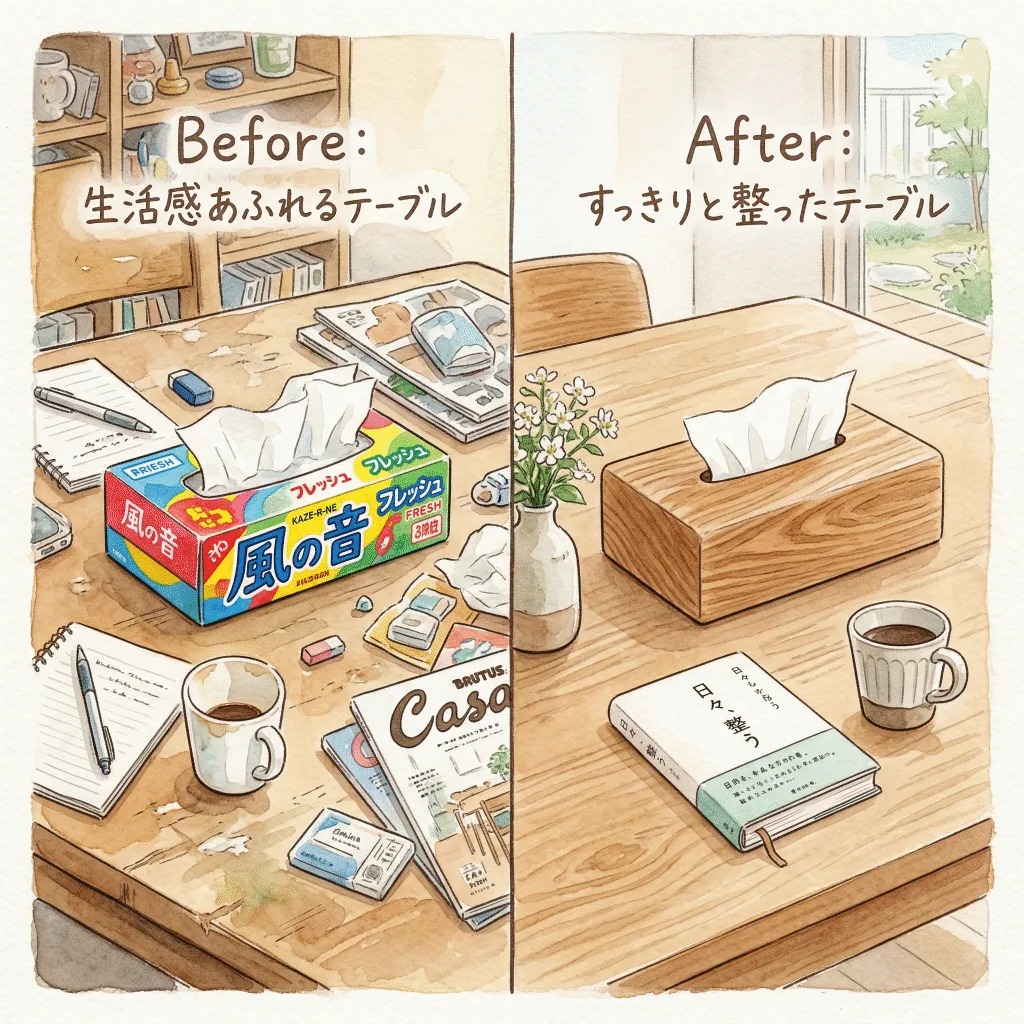
Interior design often focuses on large items — sofas, rugs, curtains. But the surfaces where your
eyes rest most often are the small objects at table height. A tissue box, a phone cable, a remote
control: these are the things that break the composed feeling of any room.
Of the three, the tissue box is the easiest to fix. A wooden cover completely conceals the branded
packaging and replaces it with a natural material that belongs in a considered space. The cost is
low. The installation takes ten seconds. The improvement is immediate.
Japanese wooden tissue covers have been part of interior culture in Japan since at least the 1980s, following the domestic tissue box becoming a household staple. The category is now well-developed: you can find covers in everything from unpainted hinoki made by hand to precision-formed plywood from design studios.
2. Material Guide: Hinoki, Chestnut, Beech, Bamboo & Plywood
Hinoki Cypress (桧)
Hinoki's defining characteristic is its scent — the same clean, slightly sweet smell you associate with Japanese hot spring bath areas and temple buildings. A hinoki tissue cover releases that scent gently into the room, making it particularly suited to bedrooms and relaxation spaces. The wood itself is pale cream with a fine grain. Left unpainted, it ages slowly to a warm amber over years of use.
Chestnut (栗 / Kuri)
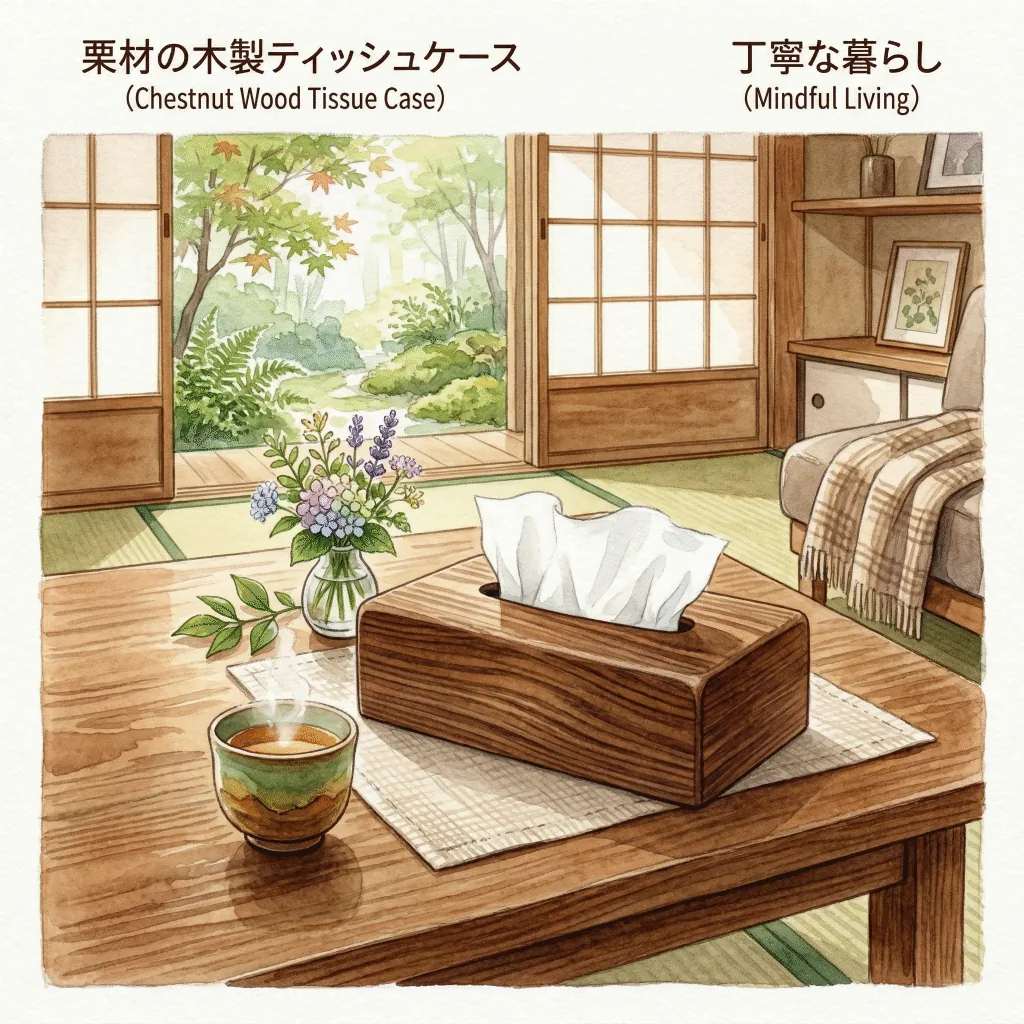
One of Japan's premium cabinet-making timbers. Chestnut has a bold, distinctive grain and a deep brown tone that grows richer with age. A chestnut tissue cover — particularly from makers like Classiky (倉敷意匠) in Okayama — reads as a considered object rather than a utility item. It works best as a living-room display piece that anchors a coffee or side table.
Beech (ブナ) — BUNACO
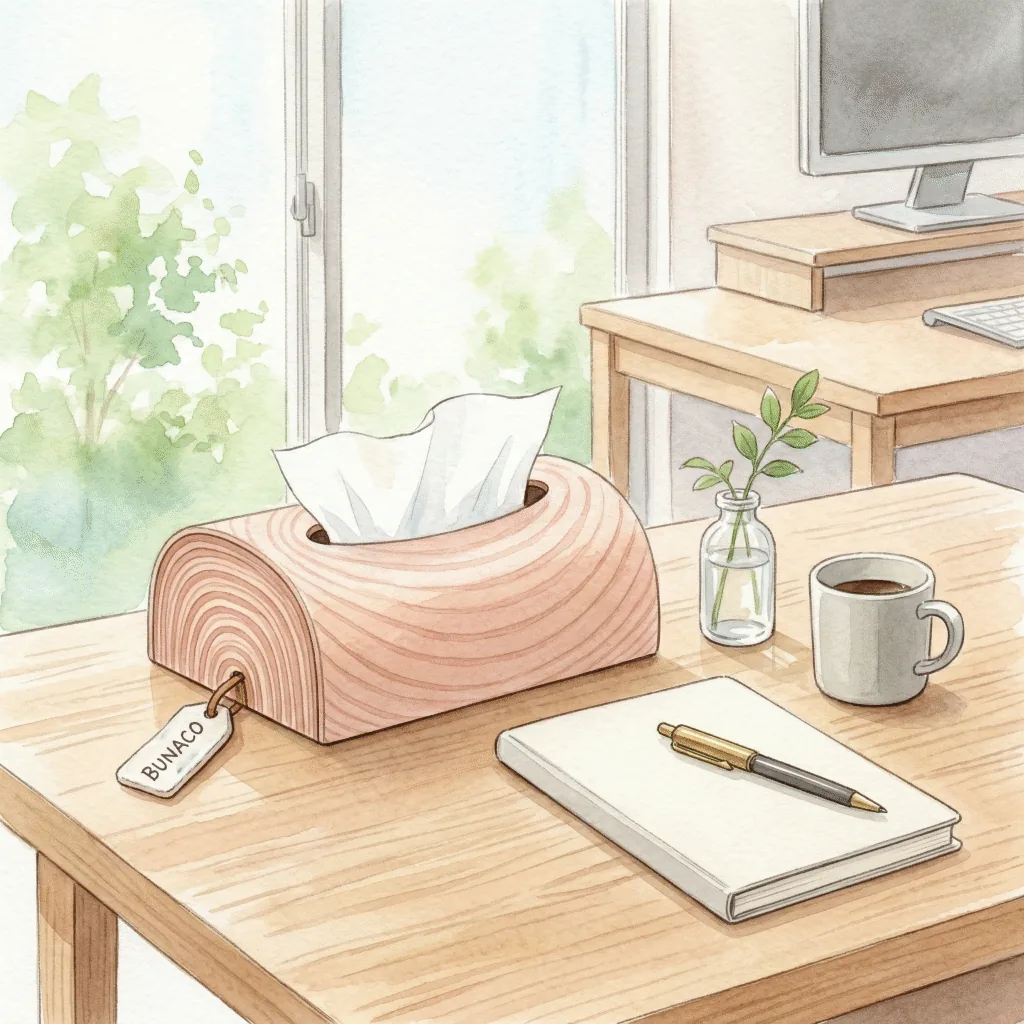
BUNACO's signature method involves shaving Aomori prefecture beech into long thin tapes, then coiling them into form. The result is an unusually smooth, seamless surface — no visible joints. The pale pinkish-cream tone of beech sits naturally in Scandinavian-influenced interiors. BUNACO pieces are lightweight and easy to move between rooms.
Shimanto Hinoki — Tosaryu
Tosaryu (土佐龍) has been working hinoki from the Shimanto river basin in Kochi since 1960. Their drop-lid construction differs from precision-joined options like Azmaya: a sliding panel sits on top of the case, lifted to swap the tissue box inside. The Shimanto hinoki is milled slowly and retains its fragrance for years longer than mass-produced cypress, making it a quiet choice for Japandi or eco-conscious interiors.
Plywood — Saito Wood
Saito Wood (Shizuoka) makes tissue covers from thin-layered moulded plywood — the same technique used in mid-century modern furniture. The curves are impossible to achieve in solid wood but natural in plywood. A Saito Wood cover has a design-conscious precision that suits graphic modern interiors.
3. Choosing by Location: Living Room, Bedroom & Desk
Living room coffee table
Guests will see it, so design and material quality matter more here than elsewhere. Chestnut or a sculptural form like BUNACO reads as a deliberate object. Match the wood tone roughly to other wooden elements in the room — furniture legs, frames, shelves.
Bedroom side table
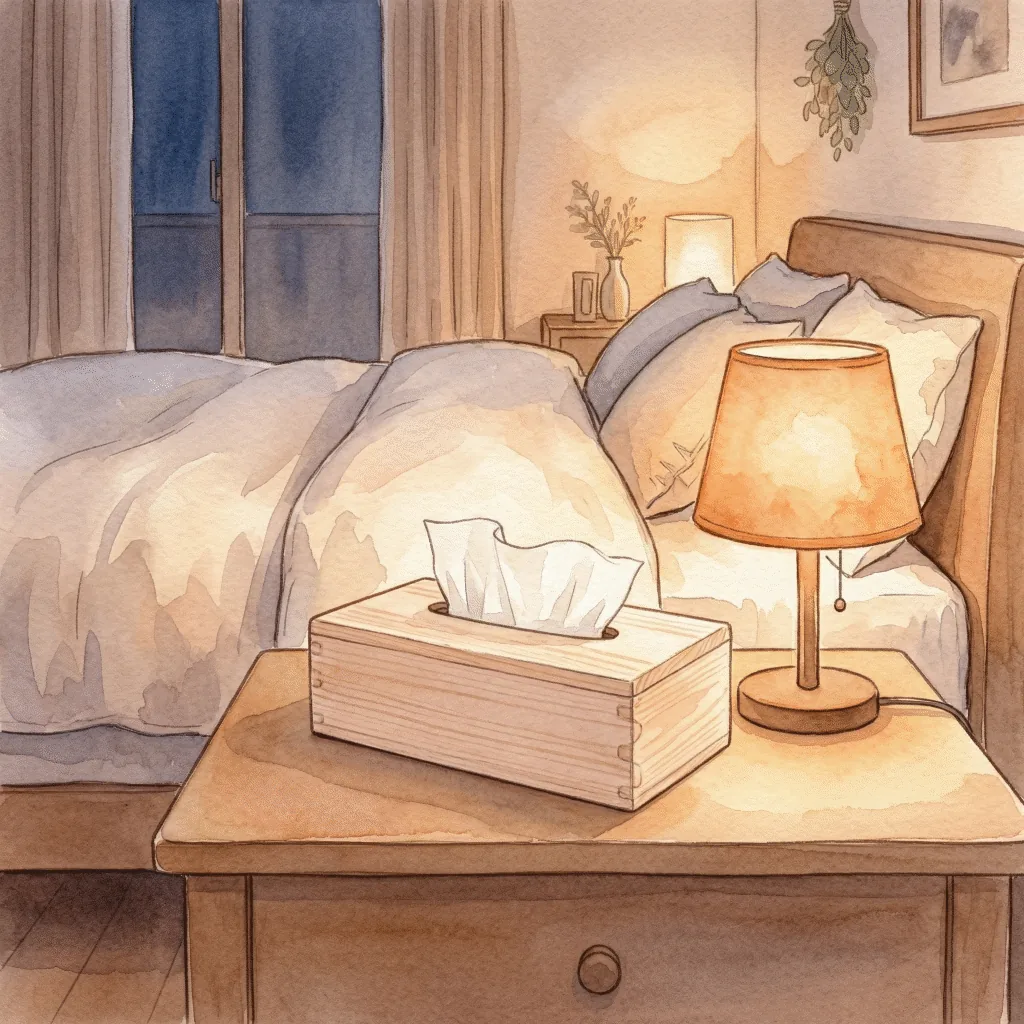
The last thing you see at night and the first in the morning. Hinoki is ideal here — its calming scent has documented relaxation properties, and the pale wood won't visually dominate a bedroom. Choose an unpainted white-wood finish so the scent is active.
Desk or workspace
Desk space is limited, so a slimmer profile matters. BUNACO's compact forms or a plywood cover take up less visual and physical space than a full rectangular box. Choose a neutral tone that won't compete with your screen or papers for attention.
4. Japan-Made Tissue Box Covers Worth Buying
No.1 — Azmaya Hinoki Cypress Tissue Box Cover (Made in Japan)
Azmaya (東屋) is one of Japan's most respected everyday object brands, working with traditional craftspeople across the country. Their hinoki tissue cover is made from cypress without nails — joined by traditional Japanese joinery. The unpainted surface lets the hinoki scent breathe freely into the room. Pale wood, precise fit, quiet presence. Available on Amazon.com — one of the few Japanese hinoki tissue covers with international stock.
- Material
- Hinoki cypress, unpainted, made in Japan
- Best for
- Bedroom; onsen-inspired bathroom; natural scent atmosphere
No.2 — Yamato Crafts Nature Box Tissue Case (Made in Japan)
Yamato Kogei (ヤマト工芸) has been designing Japanese household objects since 1997. The Nature Box tissue case uses natural wood with a simple, clean slot opening that feeds tissue smoothly. The form is restrained and contemporary — nothing that draws attention to itself, which is exactly the point. Durable everyday use. Available on Amazon.com.
- Material
- Natural wood, made in Japan
- Best for
- Living room or desk; neutral interior style
No.3 — Classiky (倉敷意匠) Chestnut Tissue Box
Classiky is a design studio in Okayama that collaborates with craftspeople across Japan to produce objects that last decades. Their chestnut (kuri) tissue box uses the same hardwood as their sewing box and stationery range — a deep-grained, durable timber that develops lustre with handling. An investment piece for a living room where the tissue box is always in view.
- Material
- Chestnut (kuri), oil finish, made in Japan
- Best for
- Living room display; lifetime ownership; gift
No.4 — BUNACO Swing Tissue Box (Aomori Beech)
BUNACO uses a proprietary tape-coiling method to turn Aomori prefecture beech into seamlessly curved forms that solid wood cannot produce. The tissue box is one of their signature designs: a smooth, rounded silhouette with no visible joints. Pale pinkish-cream colour, very light weight. This is the pick for a Scandinavian-influenced or Japandi interior where you want an object with genuine craft identity.
- Material
- Aomori beech (tape-coil technique), made in Aomori, Japan
- Best for
- Scandinavian / Japandi interiors; desk use; design-conscious spaces
No.5 — Tosaryu Shimanto Hinoki Tissue Case (Kochi)
Tosaryu has been working hinoki cypress from the Shimanto river basin in Kochi since 1960. Their drop-lid tissue case applies that long-established woodworking knowledge to a quiet, functional object: thin hinoki panels, a sliding top, and the soft fragrance that hinoki releases for years after milling. Hinoki is a slower, lower-impact wood than the bamboo or moulded options elsewhere in this guide, but the trade-off is a deeper grain, a more lasting scent, and the kind of patina that comes only with years of daily use. Suits Japandi or eco-conscious interiors without looking utilitarian.
- Material
- Shimanto hinoki cypress, made in Kochi, Japan
- Best for
- Japandi style; eco-conscious interiors; long-aging fragrant wood
5. Care & Maintenance
Everyday care
A soft dry cloth for dusting is all most tissue covers need. For marks or spills, wipe quickly with a barely damp cloth and dry immediately. Keep away from direct moisture — tissue covers sit on tables rather than in wet rooms, so most will never need more care than occasional dusting.
Unpainted (white wood) hinoki
Unpainted hinoki absorbs stains more readily than oiled or lacquered finishes. Wipe spills immediately. If the surface feels dry after extended use, a very thin coat of food-safe camellia oil (椿油) buffed into the grain will restore it. This also lightly refreshes the scent.
Oiled hardwood (chestnut, oak)
Wipe clean, and once or twice a year apply a thin coat of beeswax or linseed oil. This is what builds the slow patina that distinguishes well-kept Japanese woodwork from new. Avoid prolonged direct sunlight — it fades and checks the wood surface.
Bamboo
Bamboo is sensitive to rapid changes in humidity — very dry heating environments can cause surface cracking. Wipe clean with a dry cloth. If the surface dries out, apply a small amount of food-safe oil to the exterior and buff off the excess. Avoid prolonged sunlight exposure.
6. Frequently Asked Questions
Will standard tissue boxes fit inside these covers?
Most Japanese wooden tissue covers are designed for standard Japanese tissue boxes: approximately 23 cm wide × 12 cm deep × 6 cm tall. However, tissue box dimensions vary by brand and region — North American, European, and Japanese boxes are not always identical. Before purchasing, check the interior dimensions of the cover against your specific tissue box dimensions. Many product listings state compatible box sizes explicitly.
Are wooden tissue covers heavy?
Most are not. Typical wooden covers weigh between 250–500g. BUNACO's tape-coil beech construction is notably light. The weight actually helps — it keeps the cover from lifting when you pull tissue. At desk height, any of these covers can be moved with one hand without issue.
Will the tissue feed smoothly through the slot?
Yes, with most quality covers. The slot is the key design variable: a slot that's too narrow causes the tissue to bunch up or tear at the fold. The best Japanese covers have a slightly widened slot opening with smoothed interior edges. Read user reviews specifically for comments on tissue feeding — this is usually mentioned if it's a problem.
How do I replace the tissue box inside the cover?
Most wooden covers are a simple slip-over design with no fasteners: lift the cover, drop in a new box, lower the cover back down. Some designs have a slide-out base or a hinged bottom panel. Either way, the operation takes five seconds. This is part of the category's appeal — the cover handles the same as the naked box, just better-looking.
Is a wooden tissue cover a good gift?
Yes — it's practical, long-lasting, and appeals to anyone who cares about their living space. Tissue covers are used every day, which means the gift is experienced repeatedly. For housewarming gifts, a hinoki cover is particularly appropriate — the wood has associations with welcome and freshness in Japanese culture, and the scent creates an immediate sensory impression when unwrapped.
Can I use the same cover for pocket tissue dispensers?
Standard wooden tissue covers are sized for flat box tissue, not pocket tissue or roll dispensers. The opening dimensions are different. If you use pocket tissue, look for a cover specifically designed for pocket tissue dispensers — these do exist in the Japanese market, though they're less common than box-tissue covers. The two formats are not interchangeable.
Final Thoughts: The Smallest Fix With One of the Biggest Returns
Of all the changes you can make to a room, a wooden tissue cover might have the best
cost-to-improvement ratio. A few minutes to find the right one, ten seconds to install,
immediate result.
Hinoki if you want a living scent in the room. Chestnut if you want a display object with
genuine material depth. BUNACO beech if you want Scandinavian-clean curves. Bamboo if the
material's sustainability story matters to you. Plywood if you want something with design
lineage.
Any of these will outlast dozens of branded tissue boxes. The cover pays for itself in
the way the room feels — which is harder to quantify but easier to notice.
Japanese Wooden Clocks: Wall & Desk Clocks in Solid Timber

Japanese Luxury Notebooks: 7 Brands Worth Writing In