"No matter what I do, my homemade takoyaki comes out soggy on the outside…"
"The non-stick coating on my electric plate peeled after a year and I had to replace the whole thing."
If either of those sounds familiar, the answer is a Japanese cast iron takoyaki pan.
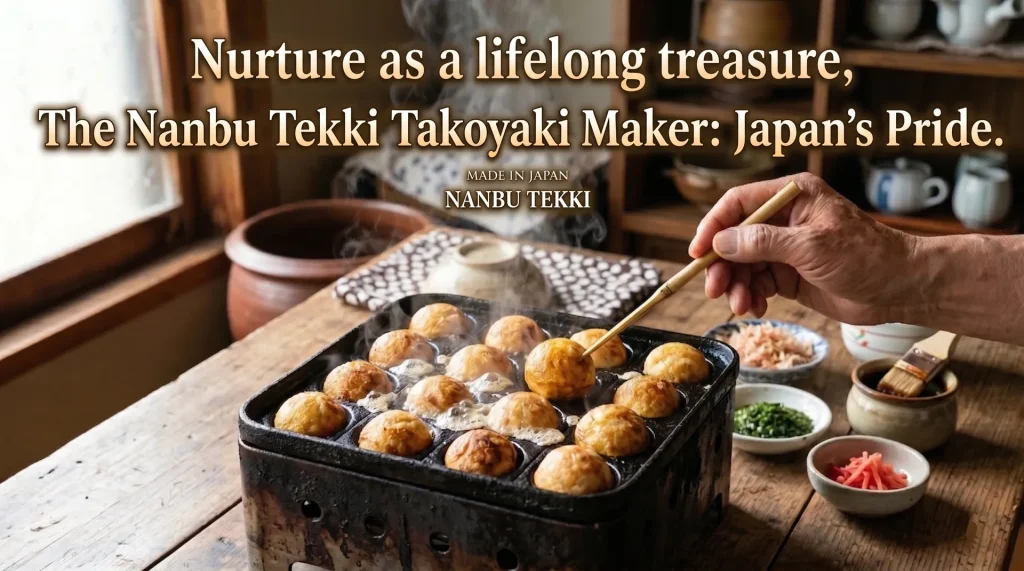
Cast iron — the same material behind Nambu Tekki ironware — stores and radiates heat so efficiently that
a single dip of batter sears instantly on contact. The result is what you get at Osaka street stalls:
a crackling golden crust with a liquid, molten centre. And unlike coated electric plates,
cast iron has no coating to chip or peel. Seasoned properly, it lasts generations.
This guide explains the science behind why cast iron produces better takoyaki, how to choose the right pan,
and the two Nambu Tekki brands worth knowing — OIGEN and Iwachu.
Quick Reference: OIGEN vs Iwachu at a Glance
1. Why Cast Iron Makes Better Takoyaki — The Science
The difference between a coated aluminium electric plate and a Nambu Tekki cast iron pan isn't just texture — it's physics.
Heat Retention: Temperature Doesn't Drop When Batter Hits the Pan
Cast iron is an alloy of iron and roughly 2–4.5% carbon, cast several millimetres thick. When cold batter
hits a thin aluminium plate, surface temperature crashes — the batter absorbs oil and the outside turns
soggy before it can sear.
Cast iron's mass keeps it at high temperature even when cold liquid batter is poured in. The surface sears
the batter the instant it makes contact, locking moisture inside and creating the
crisp shell and liquid centre that's so hard to replicate at home any other way.
Far-Infrared Heat: The Maillard Reaction at Full Power
The golden-brown crust and roasted aroma that define great takoyaki come from the Maillard reaction — sugars
and amino acids transforming under high heat into hundreds of flavour compounds.
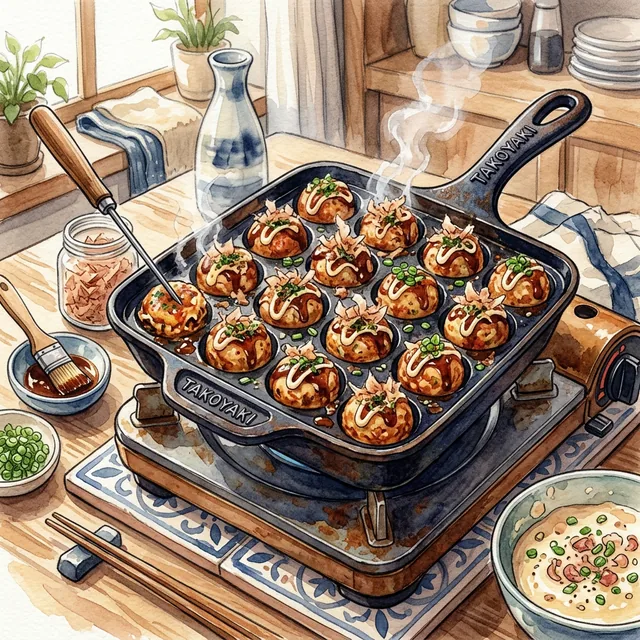
Heated cast iron radiates far-infrared energy in the same way charcoal does. The surface temperature climbs
fast and stays high, triggering the Maillard reaction across the entire surface simultaneously. The result is
the intense, smoky-savoury aroma you get from a street stall — not a pale, steamed ball from an electric
appliance.
No Coating to Peel — Improves With Every Use
Non-stick coatings scratch, peel, and eventually contaminate food. Cast iron has no coating at all.
As you cook with it, a natural polymer layer builds up in the pores of the iron — this is seasoning. Over
time the surface becomes more non-stick, not less. Maintained properly, a cast iron takoyaki pan will outlast
you and your children.
2. How to Choose: IH Compatibility, Hole Count & Handle Type
Because this is a lifetime purchase, matching the pan to your kitchen setup and cooking style matters.
IH Compatibility — Check the Voltage
Iron responds to induction heat, but not all cast iron pans work on all IH cooktops. A flat bottom that sits flush against the glass surface is essential. More importantly, IH 100V and IH 200V are different — a pan rated only for 100V can warp on a 200V hob. If your kitchen runs on 200V induction (common in newer Japanese all-electric homes, and in many North American kitchens), confirm the pan is explicitly rated for 200V. Even then, use medium heat or lower.
Hole Count — 1–2 People or Full Family?
- 14–16 holes (compact / square): Ideal for one or two people. Fits neatly on a tabletop gas burner. The smaller footprint makes it easy to store and doubles as an ajillo pan for garlic-oil dishes.
- 23 holes (large / round): Built for takoyaki parties (タコパ). Batch-cook 23 balls at once for a table of four or more.
Handle Type — All-Iron vs Wooden
An all-iron integrated handle can go straight into the oven and is indestructible outdoors — but it gets extremely hot during cooking, so a thick oven mitt is essential. A wooden handle stays cool and is easier to manage on a stovetop, but can't go in the oven. Choose based on how and where you'll use it most.
3. Two Nambu Tekki Brands Worth Knowing
Nambu Tekki (南部鉄器) from Iwate Prefecture is the benchmark for Japanese cast iron cookware. These two foundries have made takoyaki pans their signature pieces.
OIGEN CA-30L — The Stylish Square for 1–2 People
Founded in 1852 in Mizusawa, Oshu, Iwate, OIGEN (及源鋳造) has been crafting daily-use ironware for over 170 years. Their CA-30L stands out for its unusual square shape — heat travels efficiently into every corner, eliminating the cold spots you get with round pans on round burners. At roughly 2.2 kg, the thick iron mass holds temperature through an entire batter pour. 16 holes at 4.2 cm diameter fit a tabletop cassette burner perfectly, and the pan doubles as an exceptional ajillo vessel for garlic-olive oil cooking.
- Founded
- 1852, Oshu City, Iwate
- Holes / Diameter
- 16 holes / 4.2 cm
- IH compatibility
- Gas + IH 100V (not IH 200V — risk of warping)
- Best for
- 1–2 people; tabletop cooking; ajillo and snack dishes
Iwachu 24025 — IH 200V Family Pan
Founded in 1902 in Morioka, Iwate, Iwachu (岩鋳) is known for adapting Nambu Tekki craft to modern kitchen environments. The 24025 is their family flagship: 23 holes at 4.0 cm diameter, weighing approximately 2.4 kg. The flat-ground base is officially rated for both IH 100V and IH 200V — the key detail that makes it safe for all-electric homes. Cook 23 takoyaki in one batch, flip them in two rounds, and the whole table is fed in minutes. The Iwachu foundry stamp on the back is a mark of authenticity.
- Founded
- 1902, Morioka City, Iwate
- Holes / Diameter
- 23 holes / 4.0 cm
- IH compatibility
- Gas + IH 100V & 200V (use medium heat or below)
- Best for
- Families; takoyaki parties; all-electric kitchens
4. First Use & Ongoing Care: Seasoning Your Cast Iron Pan
Seasoning sounds intimidating, but the principle is simple: heat opens the iron's pores, oil polymerises inside them, and a natural non-stick layer builds up. Do this once at the start and maintain it after each use.
First-Use Seasoning (Takes About 20 Minutes)
- Rinse the pan with warm water and a soft sponge. Dry completely with a cloth.
- Place over low-to-medium heat until all moisture has evaporated.
- Fill each hole generously with neutral oil (vegetable or rice bran). Add kitchen scraps — spring onion tops work well — and cook them in each hole. This removes the metallic smell and drives oil into the iron.
- Discard the scraps. While the pan is still hot, wipe the surface with a folded paper towel, pressing the oil into the entire cooking surface.
After Each Use — No Soap, Quick Dry
Soap strips the seasoning layer you've built up. After cooking:
- Once the pan has cooled enough to handle, scrub out any residue with a natural-fibre brush or tawashi scrubber under hot water — no detergent.
- Immediately place back on the heat to drive off every trace of moisture. Air-drying causes rust.
- While still warm, wipe a thin film of oil over the cooking surface before storing.
5. Frequently Asked Questions
The batter sticks badly on my first few uses. What am I doing wrong?
New cast iron hasn't built up its seasoning layer yet. Two fixes: use significantly more oil than you think you need (almost a shallow fry in each hole), and preheat until the oil just begins to smoke before adding batter. Adding cold batter to under-heated iron is the main cause of sticking. After three or four uses, the surface will have seasoned enough that you can reduce the oil to a normal amount.
Will the pan sit stably on a tabletop cassette burner?
Yes — the 2+ kg weight of cast iron means the pan won't shift when you're turning the balls, unlike lightweight aluminium plates. The only thing to check is that the underside ridges of the pan align comfortably with the burner's grate. Most standard cassette burner grates fit both OIGEN and Iwachu pans without issue.
What if rust appears or the pan gets severely stuck? Is it ruined?
Not at all — this is one of cast iron's great advantages. Scrub the rust or burnt-on residue off completely with a steel wool pad or stiff brush. Work down to bare metal if necessary. Re-dry on the heat and re-season from scratch (the "kitchen scrap" oil treatment above). The pan will perform like new. This is why cast iron is described as a lifetime tool.
Is it true that cooking in cast iron adds iron to your food?
Yes. A small amount of iron leaches into food during cooking — specifically ferrous iron (Fe²⁺), the form most readily absorbed by the human body. It's not a substitute for a balanced diet, but it's a genuine dietary bonus, particularly for people who cook acidic or liquid-heavy dishes in the pan.
What else can I cook in a takoyaki pan besides takoyaki?
Think of it as a set of small, deep cast iron skillets. Ajillo — garlic and olive oil with seafood or mushrooms — is exceptional because the deep wells contain the oil. Baby castella (Japanese sponge cakes), bite-sized omelette rice, mini yakionigiri (grilled rice balls), and steamed dumplings using the wells as moulds all work well. The cast iron's heat retention makes the pan far more versatile than its name suggests.
Should I use a metal or plastic pick to flip the takoyaki?
Avoid plastic picks entirely. Cast iron holds heat far above what most plastics can handle — the tip will melt and contaminate the food. Metal picks work fine since there's no coating to scratch. However, the most recommended tool among serious takoyaki cooks is a plain bamboo skewer — flexible enough to slip under the ball cleanly, heat-resistant, and completely safe on cast iron.
Final Thoughts: Once You've Tasted Cast Iron Takoyaki, There's No Going Back
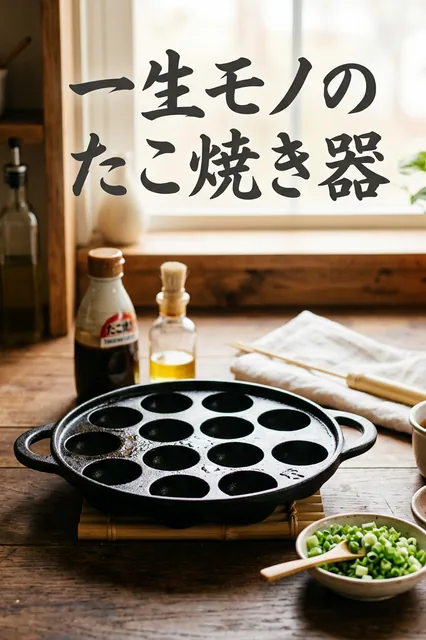
It might seem like a lot of thought to put into a takoyaki pan. But once you've eaten takoyaki
with a proper crackling crust from cast iron, the electric coated plate feels like a different
dish entirely.
The science is real: heat retention, far-infrared radiation, and the Maillard reaction all work
together in cast iron in a way no coated appliance can match. And the tool only improves with
use — the more you cook in it, the better it performs.
OIGEN's square CA-30L is the choice for one or two people who want a versatile tabletop pan. Iwachu's 24025 is the choice for families who need IH 200V compatibility and the capacity to feed a crowd. Either way, you're buying the last takoyaki pan you'll ever need.
Nambu Tekki: Japan's Cast Iron Tradition — 5 Brands & How to Choose
Cast Iron Stir-Fry: How to Get Crisp Vegetables Without a Wok