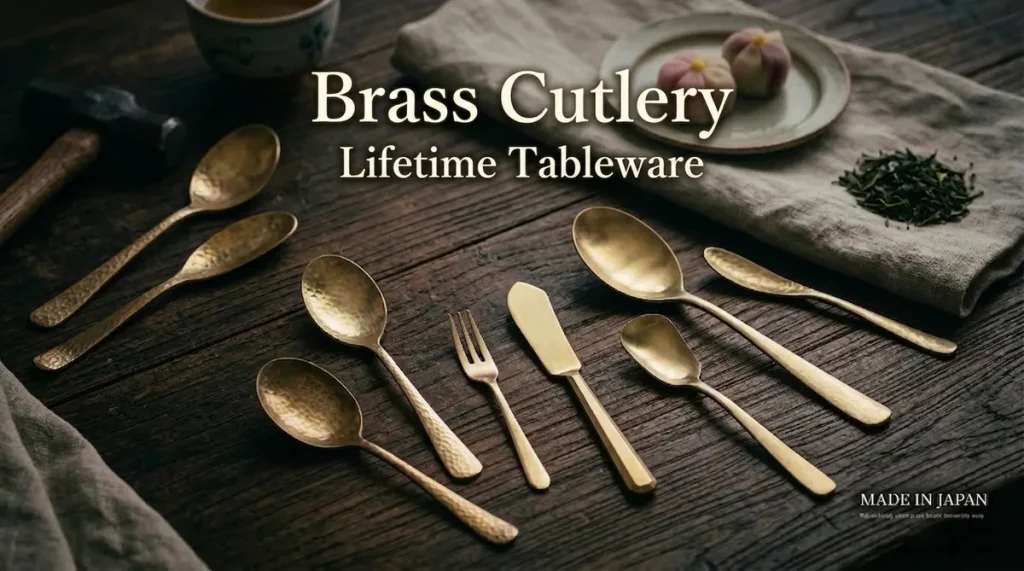
"I want the cutlery I use every day to be something I actually care about."
"Stainless is practical, but I'd love a material that ages and deepens with use."
If that sounds familiar, Japanese brass cutlery is worth your attention.
Brass — the same alloy used for Japan's 5-yen coin — starts as a warm golden color and gradually develops into a
rich antique patina the more you handle it. That process of "aging into something personal" is the central
appeal.
This guide breaks down how to choose brass cutlery and introduces the masterwork pieces from three standout Japanese
brands: FUTAGAMI, Lue, and Azumaya.
Quick Reference: Japanese Brass Cutlery Brands at a Glance
| Brand | Origin / Products | Best For | Details |
|---|---|---|---|
| FUTAGAMI | Takaoka, Toyama Butter knives, spoons, various |
Lovers of the rough, cast-surface texture. Building a matched brass cutlery set. | ↓ See below |
| Lue | Setouchi, Okayama Forks, spoons, knives, servers |
Handcrafted tsuchime warmth. Beautiful serving pieces that go straight to the table. | ↓ See below |
| Azumaya | Arakawa, Tokyo (Sakami Kogei) Hime fork, hime spoon |
Small picks for Japanese sweets, fruit, or cheese. Refined, understated elegance. | ↓ See below |
1. Why Brass Cutlery? The Science of Aging and Handcraft
More people are choosing brass cutlery over stainless or silverware — and the reasons go deeper than aesthetics.
Scientific Evidence: Copper-Ion Antibacterial Effect and the Aging Process
Brass (an alloy of copper and zinc) has two standout properties: antimicrobial activity and beautiful aging.
[Copper-Ion Effect] When brass contacts moisture, trace copper ions are released and break down
the cell membranes of bacteria — the oligodynamic (antimicrobial) effect. This keeps the surface hygienic and
explains why brass has been used for doorknobs and tableware throughout history.
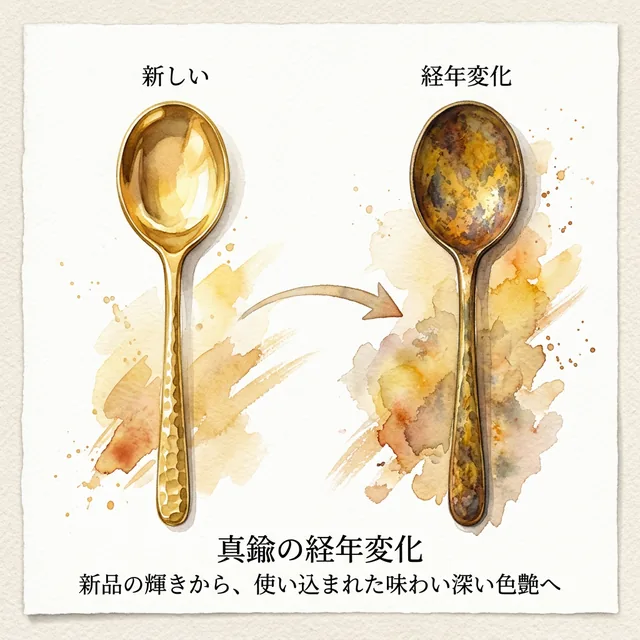
[Oxidation and Aging] The initial bright gold finish gradually reacts with oxygen and skin oils
to form a thin oxide layer. As this layer deepens, the surface softens toward a rich amber-bronze tone — the
same thermodynamic and chemical process that gives antique furniture its warmth. This is the "growing" quality
that makes brass so compelling.
The Warmth Only Handcraft Can Create
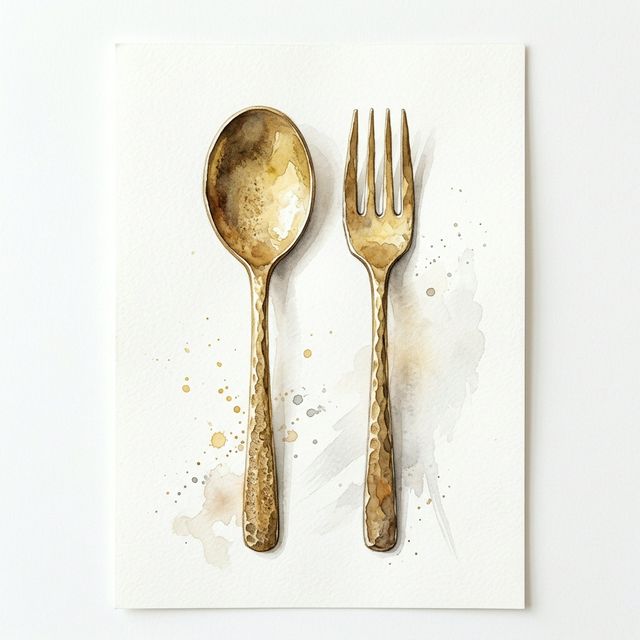
Japanese artisan brass cutlery carries something that mass production cannot replicate — the trace of the
maker's hand. The rough ihada (cast surface) left after sand casting, the individual tsuchime
(hammer marks) from forging — no two pieces are identical.
The pleasing weight in your palm and the tactile surface underfoot of your fingers can quietly elevate a meal
from ordinary to something you notice.
2. How to Choose Brass Cutlery Without Regrets
Cutlery you'll use for decades deserves careful thought before you buy. Here are the key decisions.
Solid Brass vs. Coated Brass
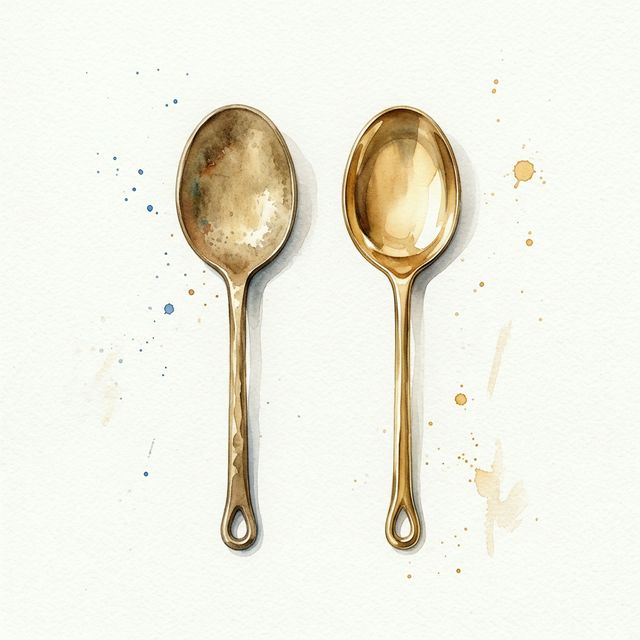
Some brass products are coated with a clear lacquer to prevent tarnishing. This preserves the initial shine but
eliminates the aging experience that makes brass special.
Most serious Japanese brass cutlery is intentionally left uncoated ("solid" or "unplated"). If
patina and aging matter to you — and they should — look for pieces described as "solid brass," "no coating," or
"unplated."
Check Whether the Mouthpiece Is Silver-Plated
Cutlery touches your lips directly, so the finish matters for both taste and safety.
FUTAGAMI, for example, leaves the handle in raw cast brass but silver-plates the bowl of spoons and tips
of forks — the parts that contact the mouth — which reduces any metallic flavor and adds a food-safe
layer. Lue, on the other hand, offers the full aging experience by leaving the entire piece in solid brass.
If you're sensitive to metallic flavors, choose silver-plated tips. If you want the complete patina experience,
go for full solid brass.
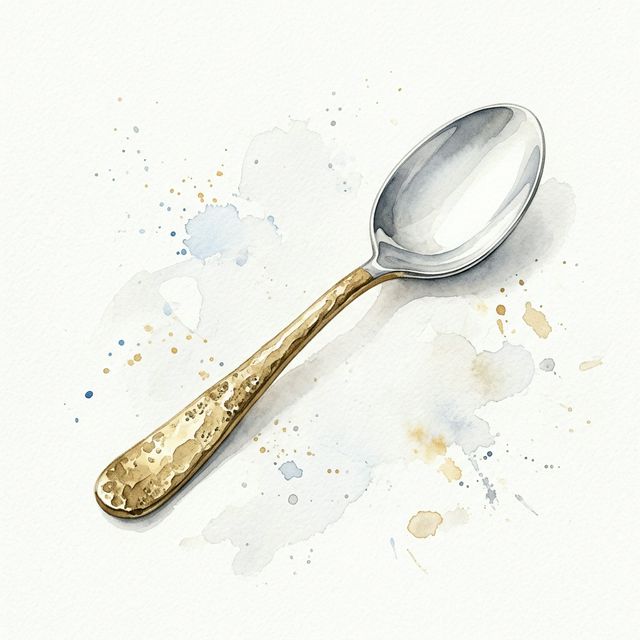
Match Size to Use Case
Brass cutlery comes in a wide range of sizes and purposes.
For everyday meals, look at dinner spoons and soup spoons. For coffee or dessert, a teaspoon or dessert fork.
For Japanese sweets or small bites, Azumaya's hime fork is perfect. For butter and spreads, a butter
knife is a luxurious daily indulgence. Serving spoons for table-side presentation are also popular.

3. Top 3 Japanese Brass Cutlery Brands
Handpicked from Japan's most admired metalworking studios — each with a distinct character.
Cast Surface Meets Silver Tip: FUTAGAMI
FUTAGAMI is a lifestyle brand launched in 2009 through a collaboration between Futagami Seisakusho — a brass
casting foundry in Takaoka, Toyama founded in 1897 — and designer Masanori Oji.
The defining characteristic: the handle retains the rough ihada (cast surface) texture of the sand mold,
while the spoon bowl and fork tips are finished with silver plating. Warm brass and cool silver in one piece. The
brass used is lead-free (muen), food-safe. Octagonal cross-section handles sit naturally in the hand.
Extensive lineup: butter knife, small/medium/large spoons, soup spoon, cocktail spoon, spice spoon, and more.
- Origin
- Takaoka City, Toyama Prefecture — foundry est. 1897, brand launched 2009
- Signature feature
- Cast-surface brass handle + silver-plated mouthpiece; lead-free brass
- Handle shape
- Octagonal cross-section — comfortable grip, distinctive look
Hammer-Forged Warmth in Every Strike: Lue
Lue is the brass brand of metalsmith Ryuka Kikuchi, working out of Setouchi City, Okayama. Every piece uses
tankin (forging) — shaping metal by hammering rather than casting. The countless hammer marks
(tsuchime) left on each surface scatter light in a way that feels alive and organic.
Contrasting with FUTAGAMI's heavy, cast gravitas, Lue has a lightness and gentle irregularity that makes each
piece feel personal. Available in a handcraft line (fully hand-made) and an industrial-product line. Forks,
teaspoons, dessert spoons, curry spoons, serving spoons, dessert knives, and more — all stunning on the table.
- Origin
- Setouchi City, Okayama Prefecture — handcraft metalsmithing studio
- Technique
- Tankin forging with tsuchime hammer finish — no two pieces identical
- Finish
- Solid uncoated brass — full aging experience from first use
Inspired by the Tea Ceremony Pick: Azumaya Hime Fork
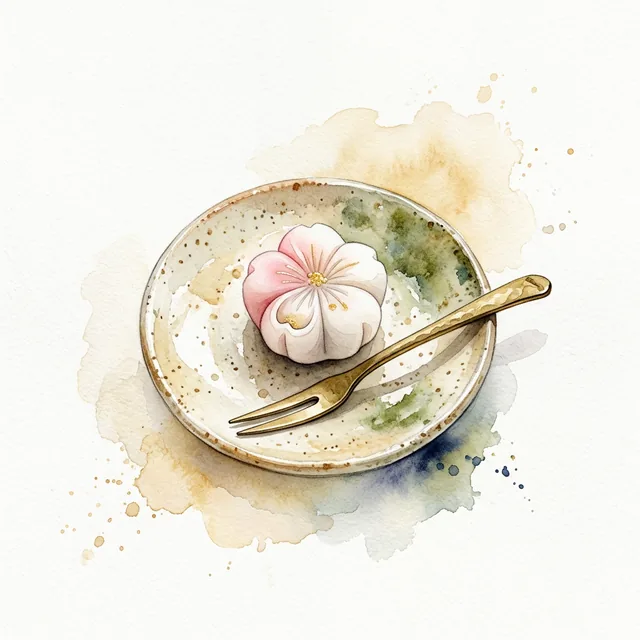
Azumaya's hime fork (hime = "princess") draws its form from the kuro-moji (blackwood) picks
used to eat Japanese sweets in the tea ceremony. Designer Osamu Saruyama and maker Sakami Kogei in Arakawa,
Tokyo handle the full production chain in Japan.
Two narrow tines make it perfect for spearing a small wagashi sweet, a piece of fruit, cheese, or an olive.
Unpretentious in size yet refined in presence — it brings a quiet elegance to any table setting. Available in
solid brass and in silver-plated versions. Pairs beautifully with the matching hime spoon.
Three marks are engraved on the back: Azumaya, Saruyama, and Sakami Kogei — the designer, the brand, and the maker. A rare commitment to transparency in craft. Sold individually or in sets of five. A popular gift choice.
- Origin
- Arakawa, Tokyo (Sakami Kogei) — all processes made in Japan
- Signature feature
- Inspired by kuro-moji tea ceremony picks; two-tine fork for small bites
- Versions
- Solid brass and silver-plated; matching hime spoon available
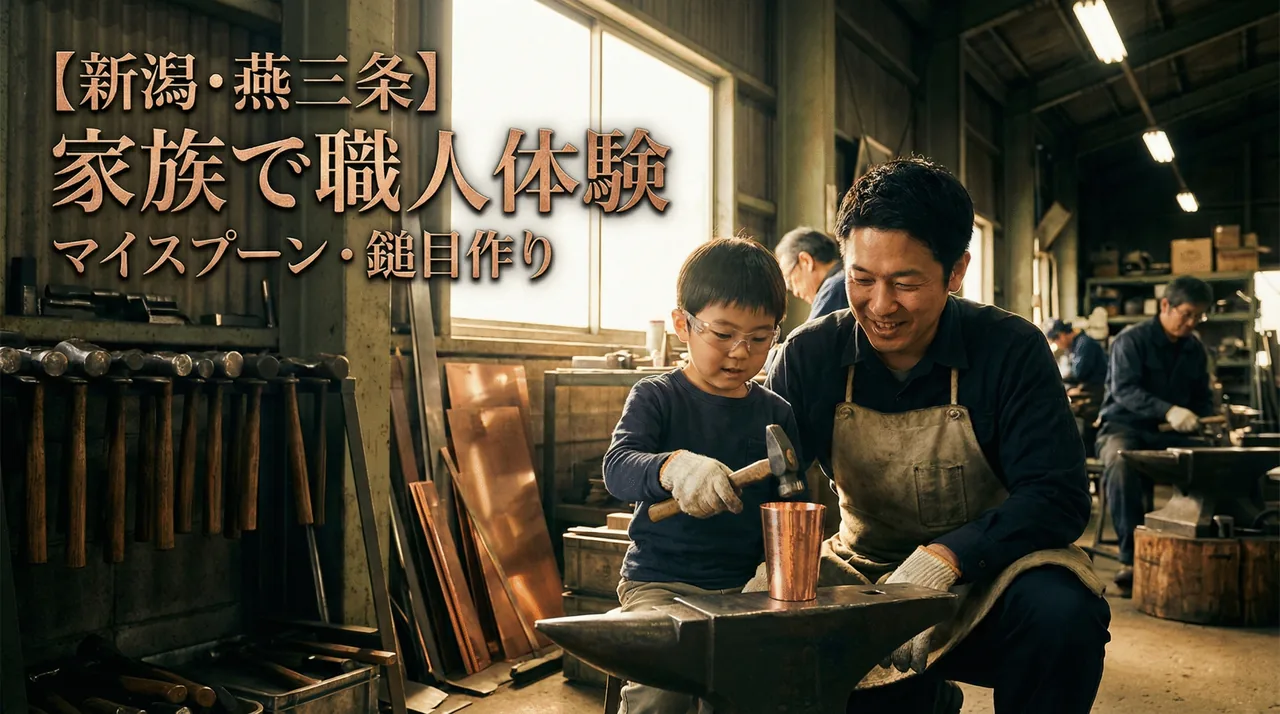
✨ You might also like: Make your own spoon or hammered metalwork!
4. Care and Maintenance: How to Enjoy the Patina
Brass deepens in color and character the more you use it. Daily care is straightforward.
The Only Absolute Rule: Dry Immediately After Washing
Wash with mild dish soap and a soft sponge after each use. (No abrasive pads or metal scrubbers — they scratch
the surface.)
The single non-negotiable rule: wipe dry immediately and completely. Water left sitting on
brass causes water spots — dark irregular marks from tap water minerals. These are harmless but harder to remove
than the natural patina.
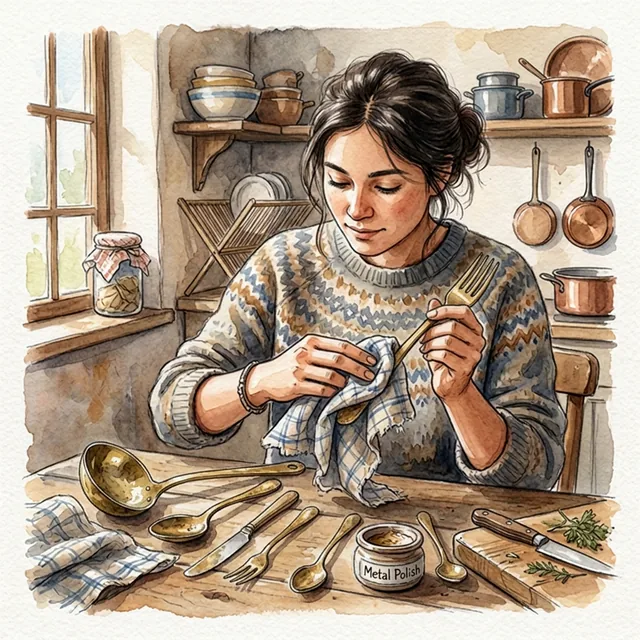
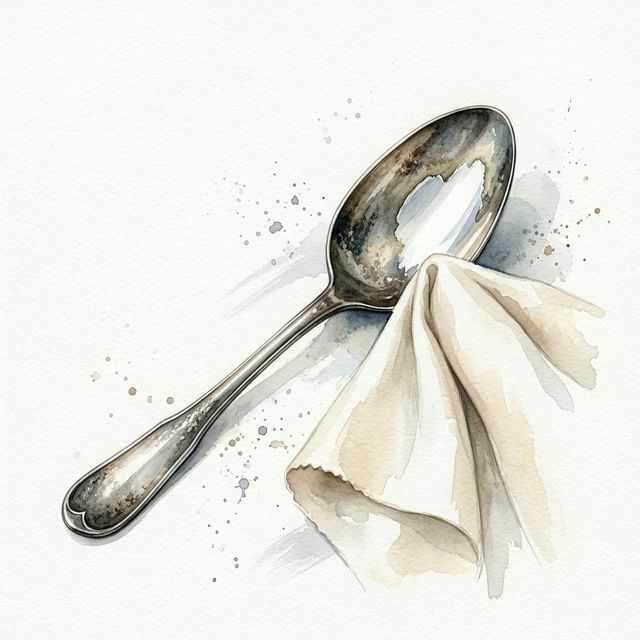
Treating Tarnish on Silver-Plated Tips
On pieces with silver-plated mouthpieces (like FUTAGAMI or the silver version of Azumaya), the silver may
darken over time — a natural reaction with sulfur in the air called sulfidation. It's harmless.
To restore shine, gently buff with a silver polishing cloth or a small amount of non-abrasive
toothpaste (no grit, no salt) on a soft cloth. Don't over-polish — heavy buffing thins the plating layer.
If Verdigris (Green Patina) Appears
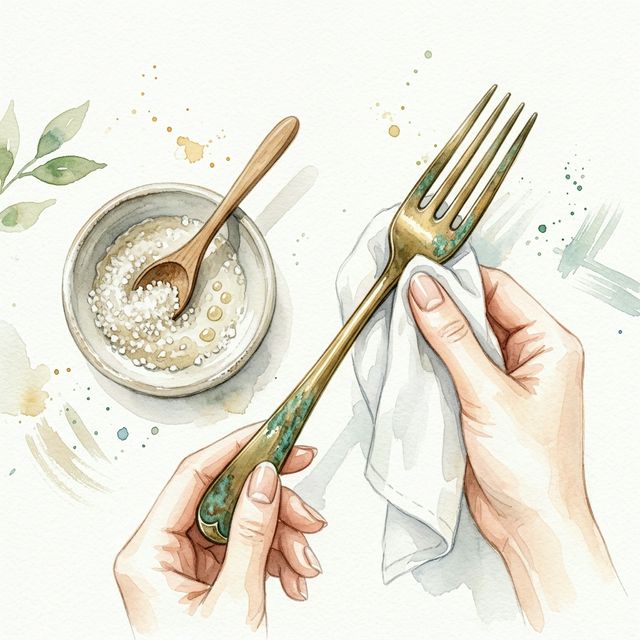
Extended contact with acidic foods (tomato, citrus) or storage in humid conditions can produce green verdigris.
Once thought toxic, verdigris has been confirmed harmless by Japan's Ministry of Health and Labor.
To remove it, rub with a paste of equal parts vinegar and salt on a cloth, rinse thoroughly, and dry completely.
It comes off cleanly.
5. Frequently Asked Questions
Will I taste metal when I eat with brass cutlery?
For silver-plated tip versions like FUTAGAMI, you'll taste almost nothing metallic — the silver separates the brass from direct oral contact. With fully solid brass, you may notice a faint metallic note when the piece is new, but once the surface oxidizes and forms a patina layer with regular use, it fades to essentially nothing.
Can I wash brass cutlery in the dishwasher?
Hand washing is strongly recommended. Some brands allow household dishwashers, but the strong alkaline detergents used in commercial dishwashers will rapidly discolor brass and damage any silver plating. To get the most life from your investment: mild soap, hand wash, dry immediately.
Is brass cutlery safe for young children?
FUTAGAMI's brass is lead-free and meets Japan's Food Sanitation Act standards. That said, brass cutlery tends to be heavier than plastic or lightweight stainless, so small children may find it uncomfortable. Starting with something small like the hime fork is a gentler introduction.
Can I restore the original gold color after it has aged?
Yes. Commercial brass polish (such as Pikal) or a gentle rub with lemon juice and baking soda removes the oxide layer and returns the piece to its original brightness. For cast-surface pieces like FUTAGAMI, be gentle — too much polishing will eventually wear down the textured ihada finish.
How should I store brass cutlery?
Brass is sensitive to moisture, so always store it fully dry. Storing mixed with other metal cutlery is fine, though stacking can cause surface scratches. Wrapping in soft cloth or using a cutlery stand keeps each piece safe. (Brass cutlery stands are also available from brands like FUTAGAMI.)
Why is a brass butter knife worth it?
Brass has much higher thermal conductivity than stainless steel (roughly 8× higher). The warmth from your hand transfers quickly to the blade, softening cold butter from the fridge so it spreads smoothly without tearing bread. It's a small functional advantage that you notice every single morning.
Final Thoughts: Bring Brass Cutlery to Your Daily Table
If you only care about practicality, stainless steel gets the job done. But Japanese brass cutlery is chosen for a different reason: the romance of building something alongside you over time.
FUTAGAMI's cast surface with its silver-tipped contrast. Lue's hammer-struck lightness. Azumaya's hime fork with
its quiet, collected elegance. None of these could come from a machine.
Brass cutlery that ages over years into a patina that belongs to you — that's what it means to choose tools that
grow with you.