
"Goma-ae is just store-bought ground sesame mixed in, right?"
If that's your approach, you're missing out on the best part.
The magic of suribachi cooking is the explosive burst of aroma the moment it reaches the table.
Bagged ground sesame from the supermarket begins oxidizing the moment it's opened, and its fragrance slowly fades.
"Toast it fresh, then grind it right before serving."
This one step transforms your everyday spinach goma-ae into an exquisite side dish worthy of a kaiseki restaurant.
In this guide, you'll learn the re-toasting technique that unlocks maximum aroma, the hangoroshi (half-crush) grinding method that delivers the best texture, and the foolproof golden ratio recipe for perfect goma-ae.
1. Prep: The 1-Minute Re-Toast That Wakes Up the Aroma
Before you pick up the suribachi, there's one thing you must do first:
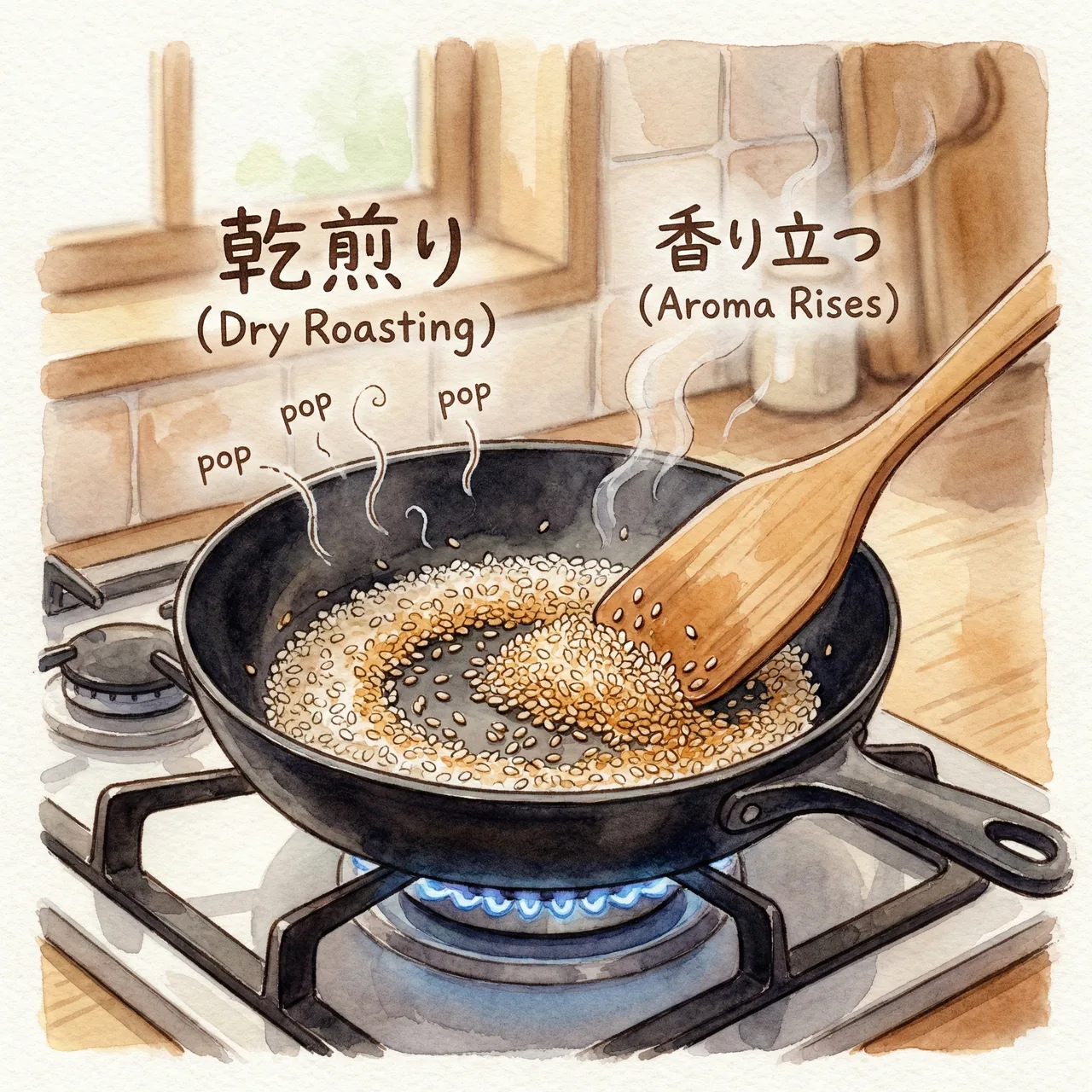
lightly re-toast the store-bought roasted sesame in a dry pan.
Reviving the Dormant Fragrance
Even packaged "iri-goma" (roasted sesame) loses moisture over time, causing its fragrance to close up.
Add the sesame to a dry pan with no oil, and toast over low heat for about 1 minute until it starts to pop and release a nutty aroma.
Transfer to the suribachi while still warm and grind immediately. The warmth allows the sesame's natural oils to release smoothly, creating a strikingly rich paste.
The difference in aromatic intensity between cold grinding and warm grinding is night and day.
2. Technique: What Is Hangoroshi — and Why It Tastes Best
Hold the surikogi (pestle) lightly like a pencil — not gripped from above. And the most important question: how far should you grind?
Why Hangoroshi Tastes the Best
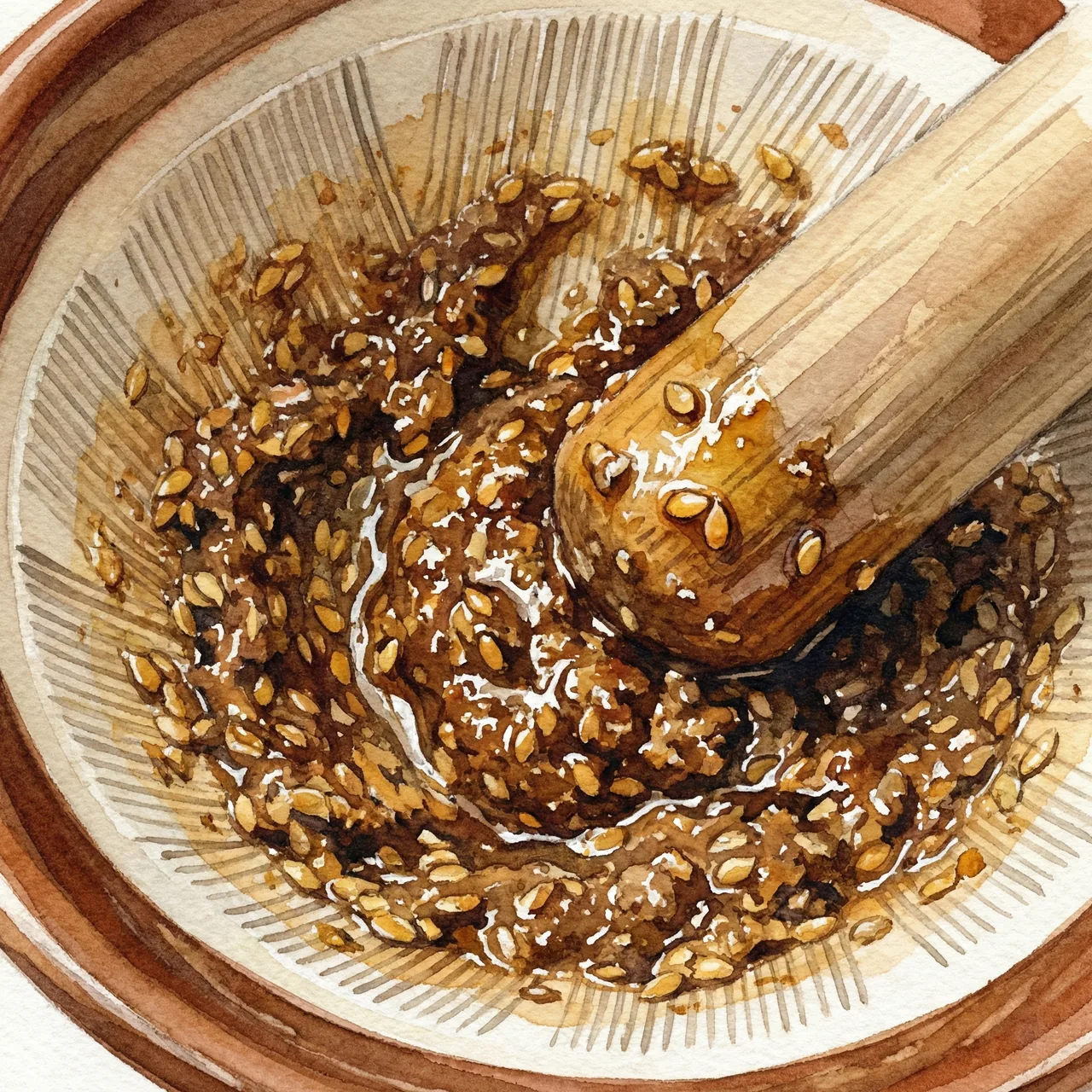
In Japanese culinary language, leaving the sesame partially crushed — with some whole grains remaining — is called hangoroshi (literally "half-killed").
Grinding all the way to a fine powder creates a smooth texture but removes any textural contrast.
By intentionally leaving about half the grains intact, you get a burst of aroma when you bite and a moist, velvety coating — the best of both worlds.
The target: roughly 50–70% of the sesame is ground and glistening with released oil.
3. Recipe: Foolproof Spinach Goma-ae with the Golden Ratio
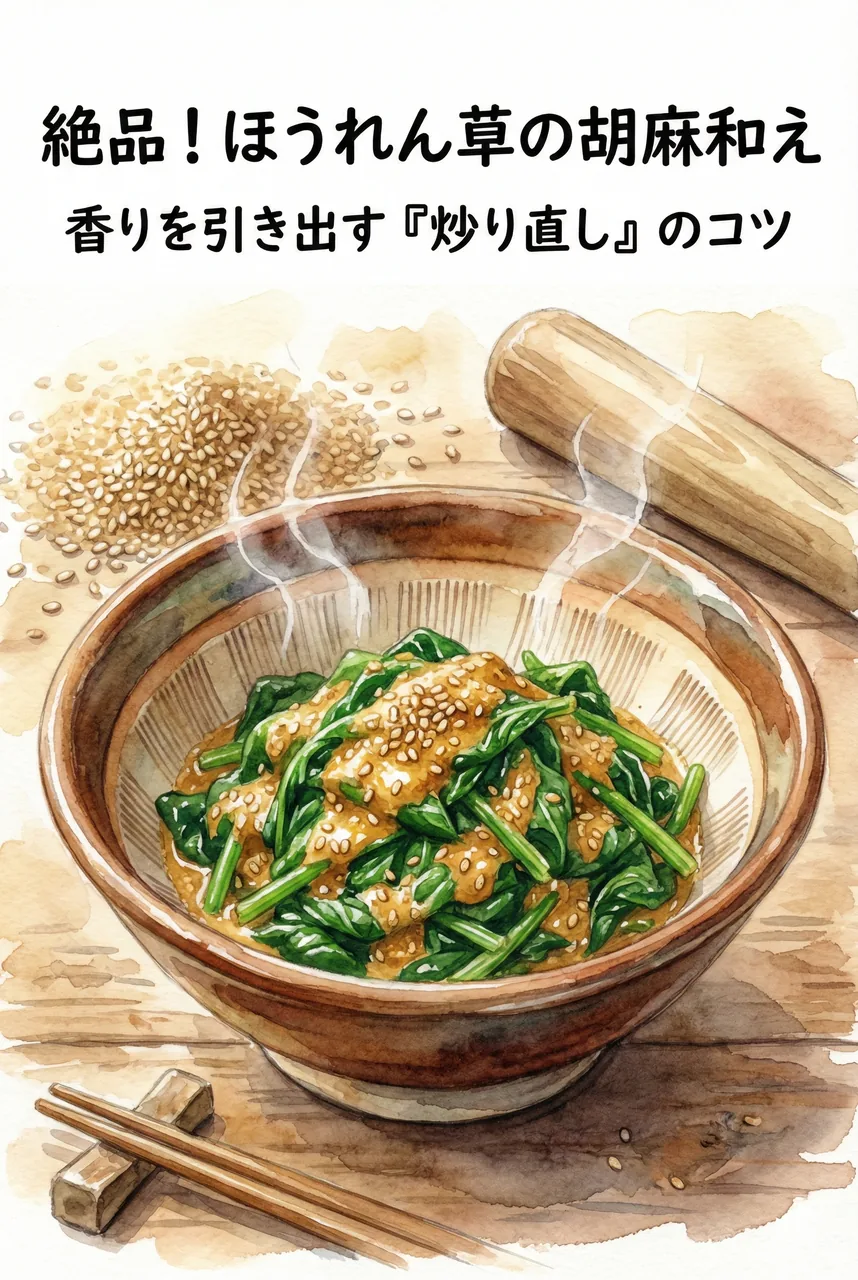
Goma-ae is the signature suribachi dish.
"The flavor turns watery and bland" — that problem is solved by the right ratio and thorough squeezing.
The Golden Ratio: Sesame 3 : Soy Sauce 1 : Sugar 1
Memorize this easy ratio and adjust to taste from there.
Ingredients (serves 2)
- Spinach: 1 bunch
- White sesame: 3 tablespoons (★)
- Soy sauce: 1 tablespoon (★)
- Sugar: 1 tablespoon (★)
Method: 4 Steps
Here's the full process in four steps.
The two most important moments are Step 3 (squeezing) and Step 4 (dressing just before serving).
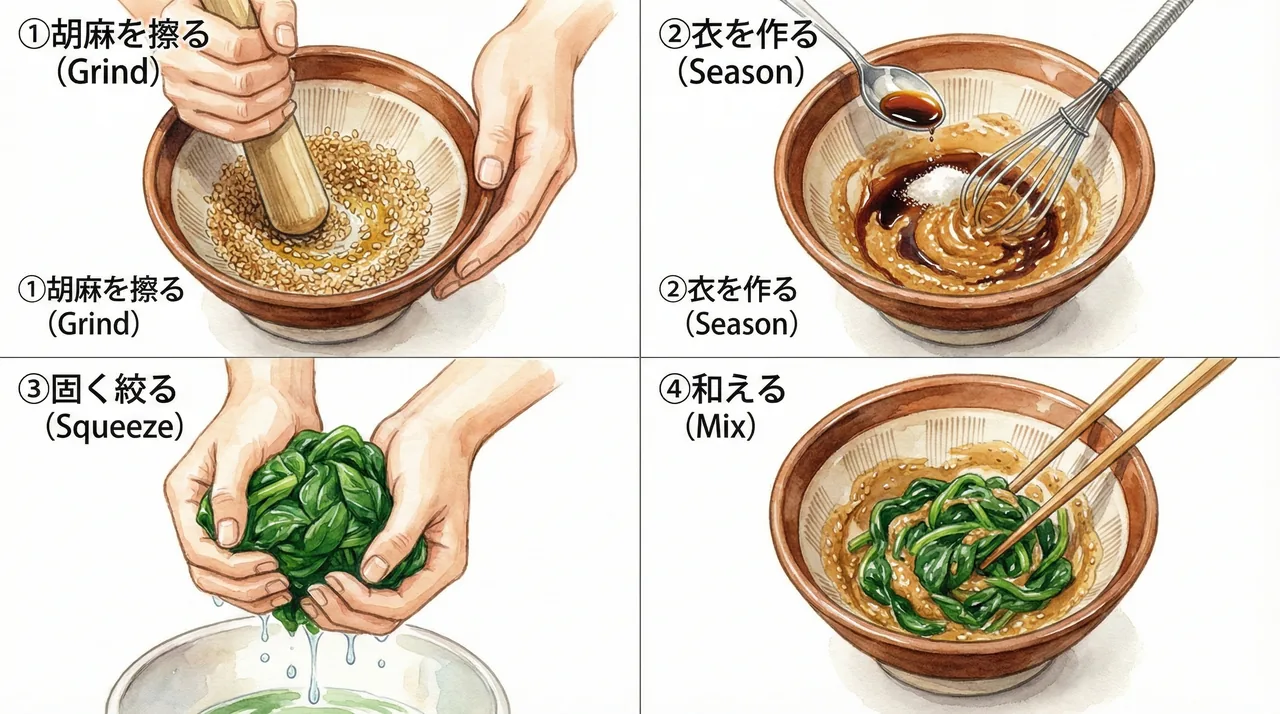
- ① Grind the sesame: Add re-toasted sesame to the suribachi. Grind to hangoroshi — partially crushed, with a few whole grains remaining.
- ② Make the dressing: Add soy sauce and sugar. Mix thoroughly with the sesame paste to form a rich, concentrated coating.
- ③ Squeeze out water: Squeeze the blanched spinach as firmly as you possibly can. Remaining water dilutes the flavor.
- ④ Dress and serve: Add the spinach just before serving and fold gently to coat it in the sesame dressing.
Tip: The key is to build the thick dressing first, then add the vegetables — not the other way around.
Level Up: The "Soy Sauce Wash" Pro Technique
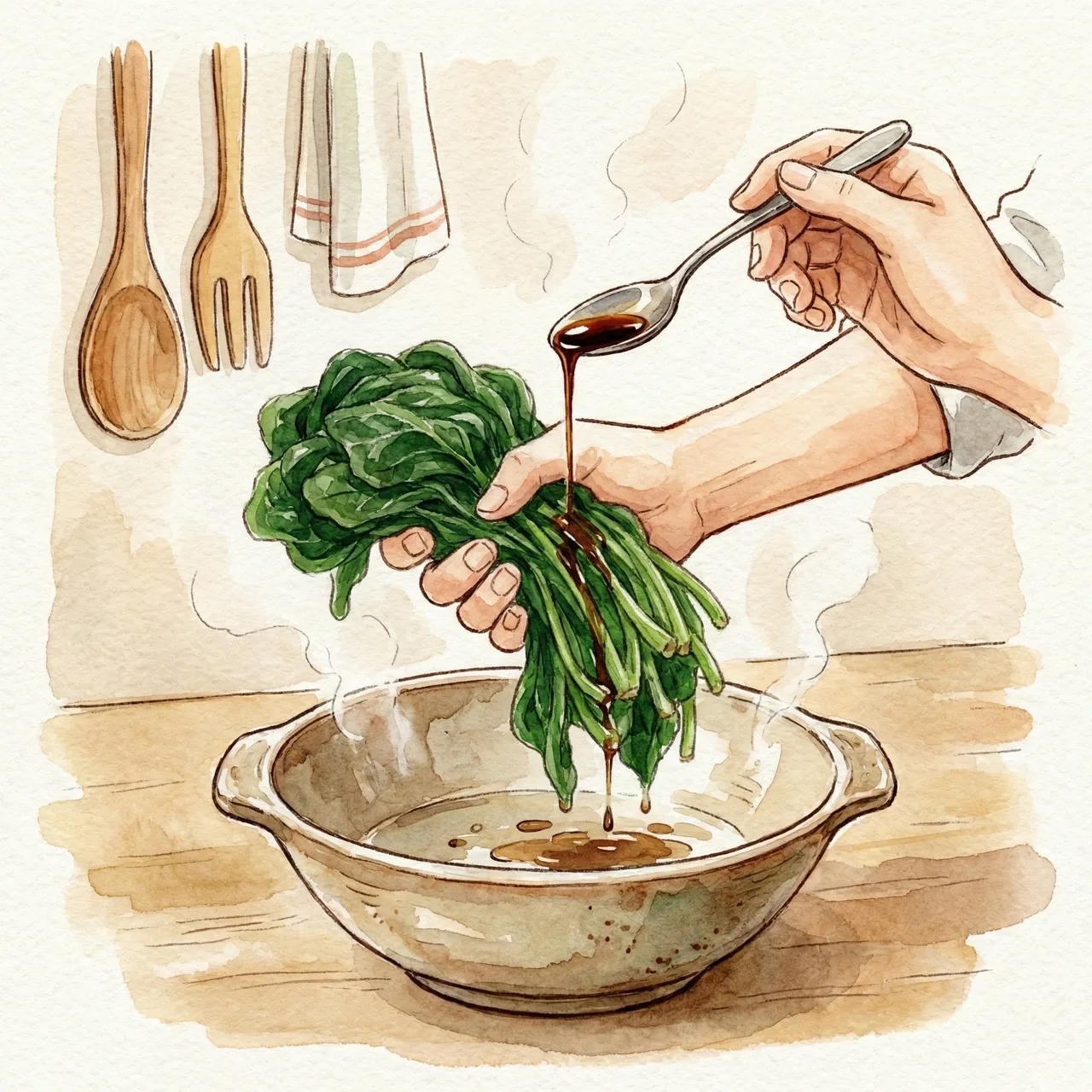
For an even more refined result, try the shoyu-arai (soy sauce wash) technique:
After squeezing the spinach, drizzle 1 teaspoon of soy sauce (not counted in the recipe) over it, knead briefly, then squeeze again.
This removes excess moisture, seasons the vegetable from within, and produces a clean, well-defined flavor rather than a muddled one.
4. Waste Nothing: The Cleanup Trick That Uses the Last Drop of Flavor
"It seems wasteful to wash all that sesame stuck in the grooves down the drain…"
Rinsing it away does feel like a loss. Here's a better approach:
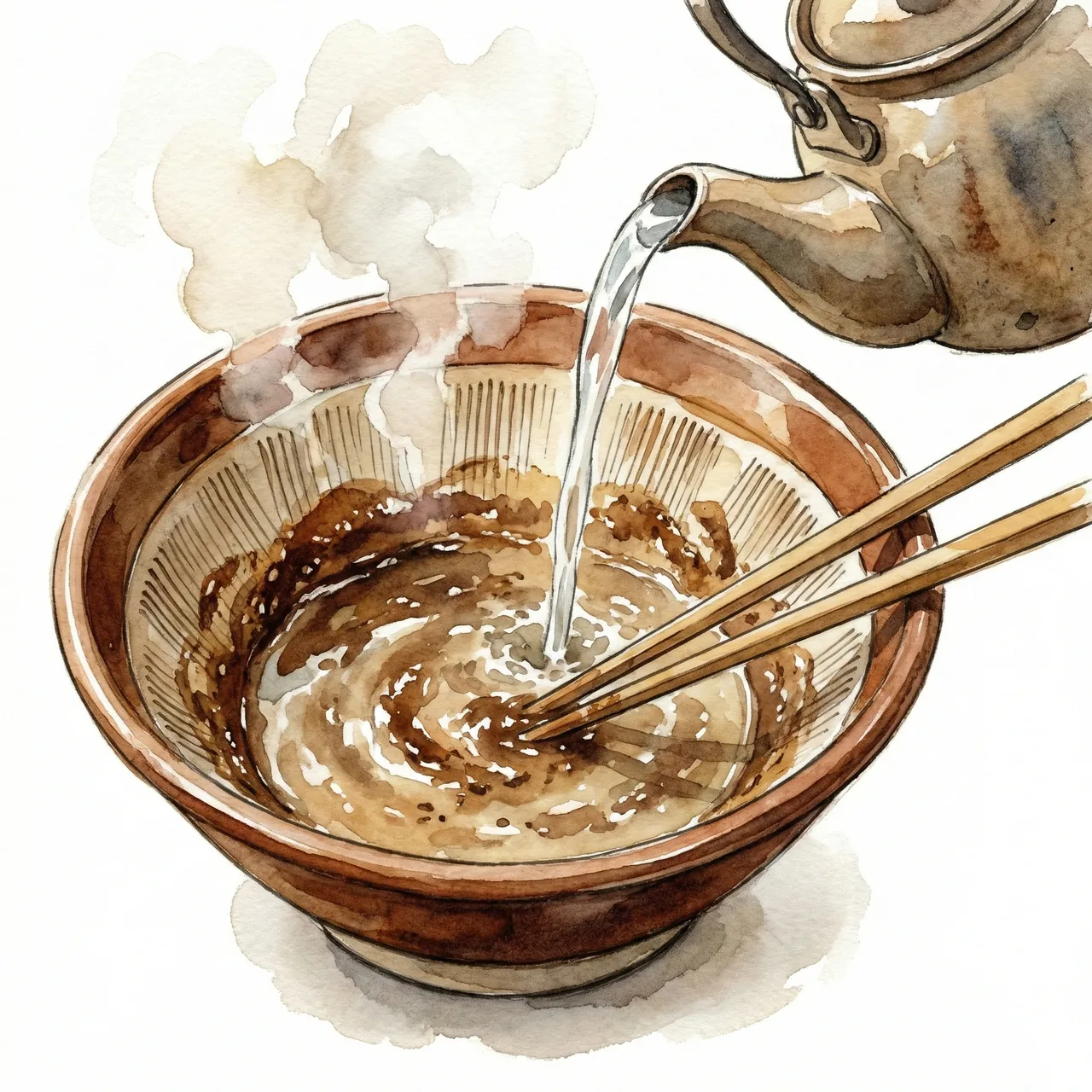
Add steamed rice directly to the used suribachi and mix it in, or pour in hot water, dissolve a little miso or tofu kombu, and make instant soup.
Every last bit of umami gets used, and the suribachi becomes dramatically easier to wash afterward.
Traditional wisdom — still perfectly relevant today.
Frequently Asked Questions
When should I use white sesame vs. black sesame?
White for oil and mildness; black for fragrance and depth.
White sesame has more oil and a gentler flavor, making it ideal for spinach, shiraae, and other dishes where you want the vegetable's color and taste to shine.
Black sesame has a stronger aroma and firmer skin, pairing well with bold-flavored dishes like daigakuimo (candied sweet potatoes) or sesame dumplings.
Can I use a surikogi in a regular bowl if I don't have a suribachi?
It's not ideal.
A smooth bowl creates no friction — the sesame just slides around and won't grind properly. It can also scratch the bowl or slip and be dangerous.
Even a small suribachi from a dollar store will do. What matters is having a surface with grooves.
The sesame keeps flying out while I grind. How do I stop it?
Create a shield with your free hand.
Form a "C" shape with the thumb and index finger of your non-pestle hand, encircle the base of the surikogi, and cover the upper rim of the suribachi. This catches the popping grains.
Also, don't overfill — work in smaller batches if needed.
What else can I make in a suribachi besides goma-ae?
Potato salad and basil pesto (genovese) are outstanding.
Mashing boiled potatoes in the suribachi produces a wonderfully smooth, slightly sticky texture — mix in your other ingredients and serve directly from the bowl to save on washing up.
Grinding basil and pine nuts for pesto in a suribachi produces a more vibrant color and far superior aroma compared to a blender.
Can I store ground sesame for later?
Not recommended — it oxidizes and loses flavor quickly.
The moment sesame is ground, its exposed surface area multiplies and oxidation accelerates rapidly.
The whole point of using a suribachi is to grind fresh, right before eating. That's the real luxury.
If you must save leftovers, store in an airtight container in the freezer and use in miso soup as soon as possible.
Final Thoughts: The Tool That Makes Cooking Meaningful
Yes, using a suribachi adds one more thing to wash.
But the crackle of toasting sesame and the rich fragrance released as you grind make time in the kitchen feel genuinely happy — not like a chore.
From assembling ready-made ingredients to actually creating flavor from scratch.
Try it tonight with a single side dish.