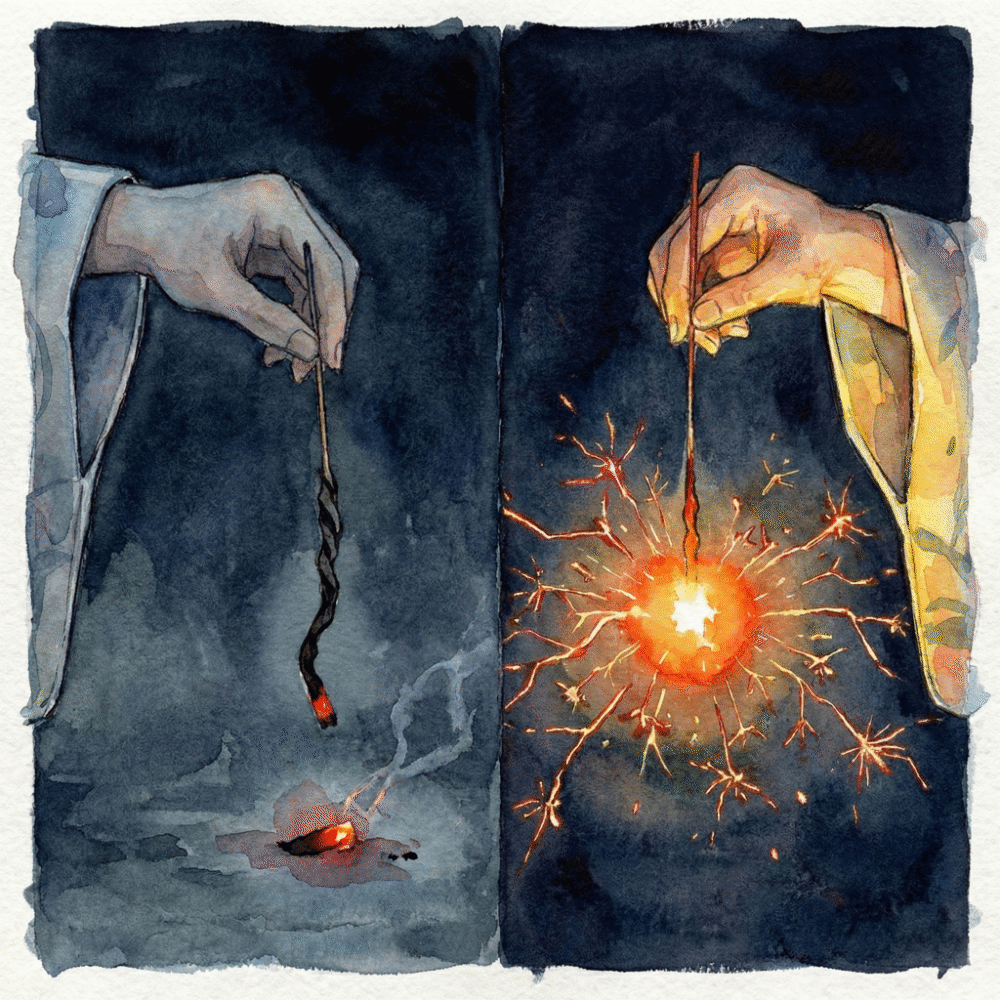
"I lit it and the fireball just dropped immediately…"
If you've had that disappointing experience with convenience store sparklers, you know exactly what we mean.
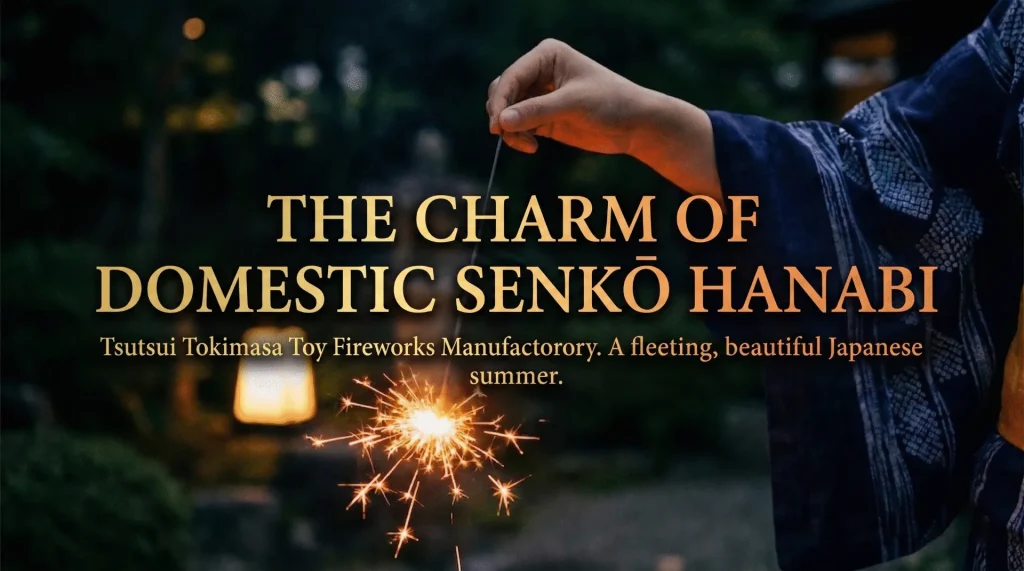
If you want to see truly beautiful fireworks this summer, try
Japanese-made senko hanabi (線香花火, sparklers).
Today, 99% of fireworks sold in Japan are imported. The rare 1% that remains is kept alive by
Tsutsui Tokimasa Toy Fireworks Manufacturing (筒井時正玩具花火製造所) in Fukuoka Prefecture.
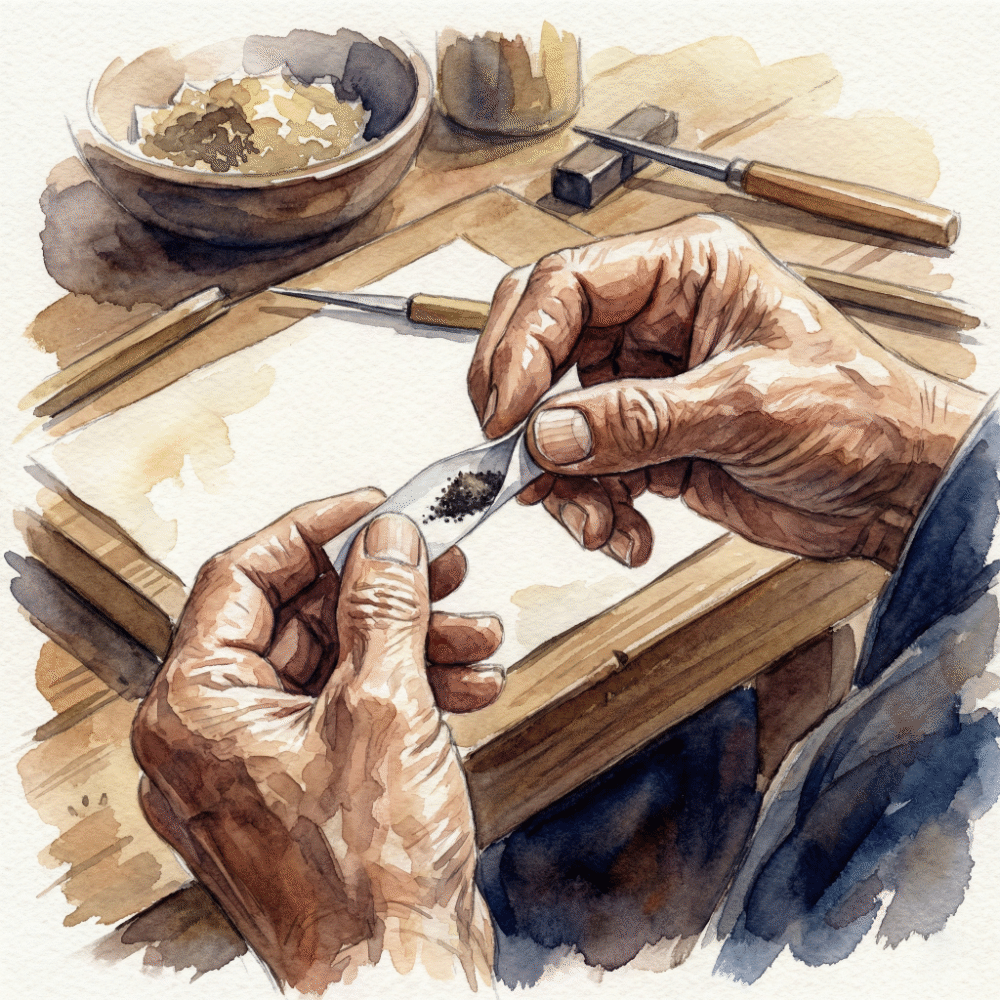
Each sparkler is twisted by hand — washi paper wrapped tightly around gunpowder by a craftsperson's fingertips.
The result never drops early. Instead it scatters sparks like pine needles, burning beautifully to the very end.
This guide introduces Japan's handcrafted fireworks: fragile, powerful, and unforgettable on a summer night.
Series: This article is part 8 of the "Outdoor & Hobby Tools" collection.
Quick Reference: Japanese Fireworks Types at a Glance
| Type | Character | Best Setting | Safety |
|---|---|---|---|
| Senko Hanabi (sparkler) | Delicate sparks; slow and contemplative | Garden, balcony | ★★★ (High) |
| Nezumi Hanabi (spinning) | Spinning rotation for a lively show | Open garden, park | ★★☆ (Moderate) |
| Launch type | Large aerial burst; dramatic display | Open outdoor only | ★☆☆ (Caution required) |
| Fountain type | Continuous shower of sparks | Garden, open square | ★★☆ (Moderate) |
1. What a ¥100 Sparkler Can Teach You | The Decisive Difference
Mass-produced imported fireworks versus sparklers made by hand. The biggest difference comes down to how long the fireball holds and how delicate the sparks are.
The Craftsperson's Twist Holds the Fireball in Place
Most early-drop failures come from loosely wrapped paper or poorly balanced gunpowder.
Domestic sparklers are made by master craftspeople who wrap the finest washi paper around the powder using
only the sensitivity of their fingertips — a technique called yori (縒り, twisting).
That precise degree of tension keeps the paper from crumbling to ash as it burns, maintaining a strong
enough structure to support the fireball against gravity.
The sound is a gentle crackle rather than a pop, and the sparks radiate evenly in all directions.
2. Tsutsui Tokimasa | Rekindling Japan's Nearly Extinguished Flame
In the 1990s, cheap imports pushed Japanese sparkler workshops out of business one by one.
The craftsperson who inherited the nearly lost tradition and revived it in Miyama City, Fukuoka, is
Tsutsui Tokimasa Toy Fireworks Manufacturing.
Elevating Tradition into Something Contemporary
Third-generation owner Ryota Tsutsui isn't simply preserving tradition — he's proposing a new kind of
fireworks that belong in modern life.
The gunpowder uses pine soot (shoen) sourced from Miyazaki Prefecture; the paper is Yame handmade washi
from Fukuoka.
This commitment to materials has allowed him to recreate the traditional warm amber-orange spark color that
defined old Japanese summers.
His work has been featured in NHK documentaries and international media, and Tsutsui sparklers have become
the definitive Japanese summer gift.
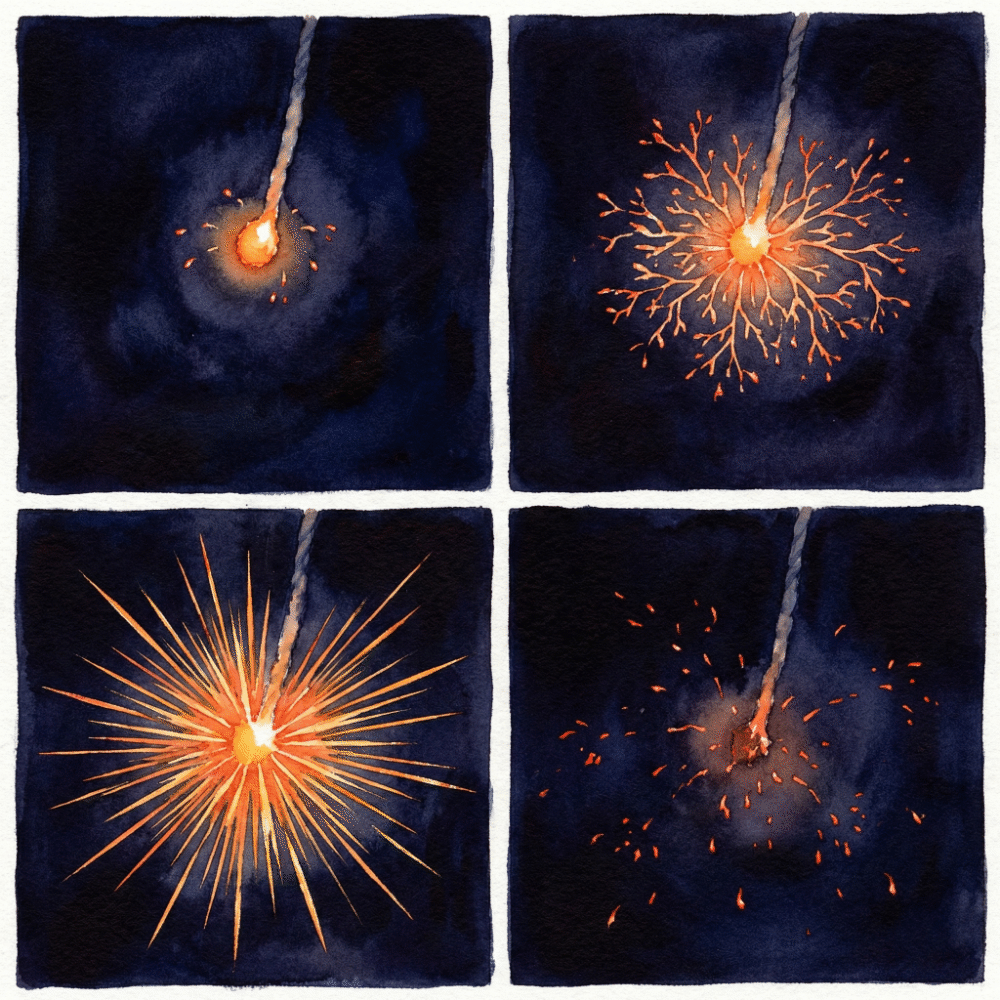
3. The Life of a Sparkler | Four Stages: Bud, Peony, Pine Needles, Chrysanthemum
A sparkler burns for only a matter of seconds. But within that time, it moves through four dramatic stages that have long been compared to the arc of a human life.
A Story Told in Sparks
- Tsubomi (Bud): Right after lighting. The fireball forms and swells — a moment of quiet before the bloom.
- Botan (Peony): Individual sparks begin to pop outward, one by one, with confident energy.
- Matsuba (Pine Needles): Peak glory. Sparks fly outward in every direction at once, resembling the needles of a pine branch.
- Chiri-giku (Scattered Chrysanthemum): The finale. Sparks thin out one by one and glow red as they quietly fade.
A domestic sparkler shows all four stages distinctly.
Being able to savor the final lingering glow of chiri-giku is the mark of the real thing.
4. West vs. East | Subo-te and Naga-te — Two Regional Sparkler Traditions
Did you know there are two completely different forms of senko hanabi depending on the region?
Tsutsui Tokimasa Toy Fireworks Manufacturing is the only producer in Japan that makes both.
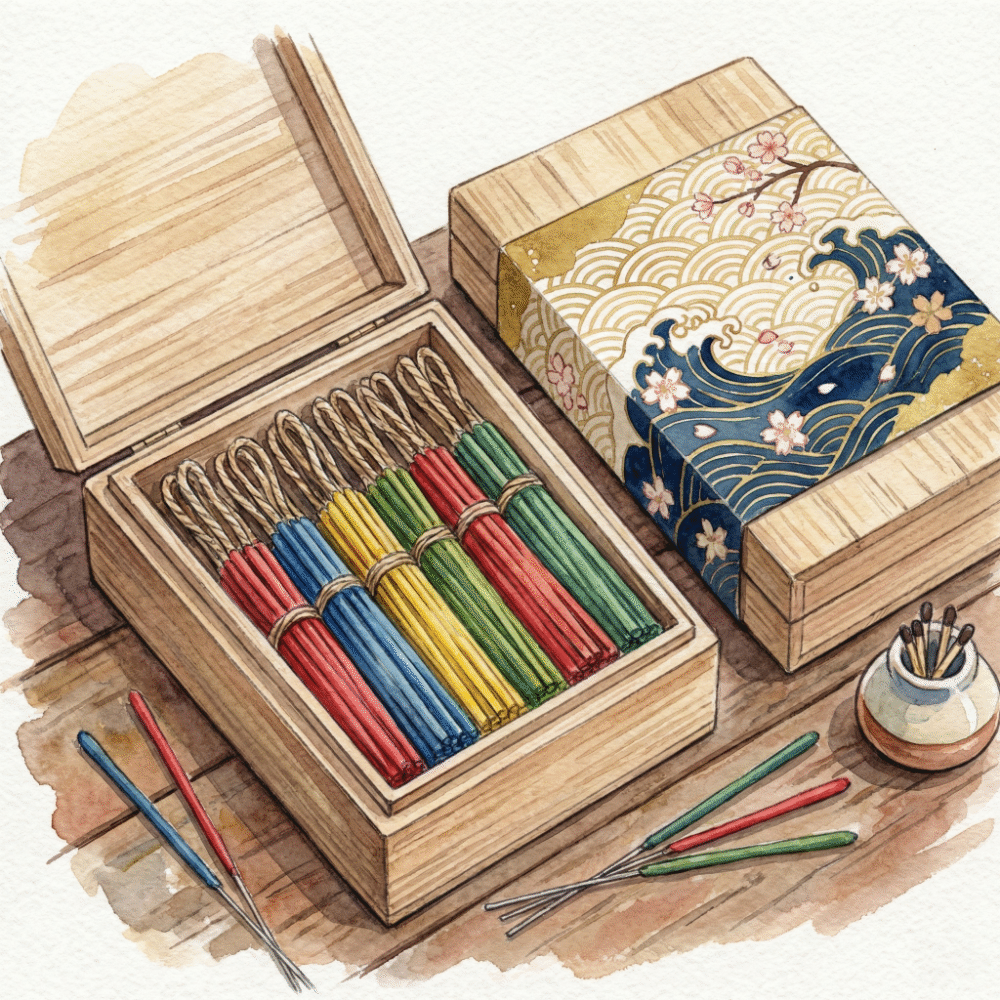
East-West Sparkler Set
Rice country of the West, paper country of the East — enjoying the difference in cultures.
Western sparkler (Subo-te Botan):
The style beloved in the Kansai region. The handle is made from rice straw (wara).
Born from Japan's rice-growing heartland, it has a toasted straw scent and burns upward with a distinctive
charm unlike anything in the East.
Eastern sparkler (Naga-te Botan):
The style from the Kanto region — the twisted washi form that most people picture today.
It developed in areas where papermaking thrived. The fireball hangs downward, and its beauty lies in the
graceful droop of the flame.
A set that contains both is the finest introduction to Japan's regional culture and history.
5. Premium Fireworks Sets for Adults | Low Smoke, Beautiful Color
Domestic handheld fireworks are in a different class from the cheap sets sold at convenience stores.
Less smoke, vivid and long-lasting color — these are fireworks that photograph beautifully and won't bother
your neighbors.
Tsutsui Tokimasa Hanahana (花々)
Handheld fireworks with colors as beautiful as fresh flowers.
The metal powder blend is carefully calibrated to produce warm, restrained "wa-bi" tones rather than the
harsh flash of magnesium-heavy fireworks.
Low smoke makes them perfect for backyards and photo shoots without worrying about neighbors.
Even the handles are beautifully designed — almost too lovely to light.
6. Fine Packaging | The Art of a Summer Gift
Tsutsui Tokimasa's products are as beautiful before you light them as after.
They work equally well as Obon gifts, homecoming souvenirs, and presents for any age.
Fireworks Worth Displaying
Presentation sets in paulownia boxes, packaging that showcases the texture of handmade washi — they look
more like fine confectionery than fireworks.
"Gifting fireworks" carries a beautiful meaning: gifting summer memories.
They've grown in popularity as a distinctive choice for weddings, housewarmings, and other landmark occasions.
7. Frequently Asked Questions
How should I hold a sparkler to make it last longer?
Tilt it at a 45-degree angle — that's the key.
Holding it vertically makes the fireball hang straight down, where gravity pulls it off more easily.
At 45 degrees, the contact area between the fireball and the washi paper increases, giving it more support.
Also: stand with your back to the wind so the flame isn't disturbed by gusts.
My sparklers from last summer got damp. Can I still use them?
Sun-drying them can bring them back to life.
Spread the sparklers on dark newspaper or a dark vinyl sheet and leave them in direct sunlight for about
half a day on a clear day.
Once the moisture is gone, you should be able to enjoy them again.
If they're discolored or fail to ignite after drying, soak them in water before disposing of them safely.
Are they safe for children?
Yes — the amount of powder is appropriate and the risk is low with proper supervision.
Domestic handheld fireworks typically have long, sturdy handles that reduce the risk of burns.
Always have an adult present and keep a bucket of water nearby.
Where can I buy them?
Select boutiques and online shops are the most reliable source.
You won't find Tsutsui Tokimasa products at convenience stores or supermarkets.
The official Tsutsui Tokimasa online shop and major e-commerce platforms like Rakuten and Amazon carry them
through authorized sellers.
Are they a good gift or souvenir?
Extremely popular — both as summer gifts and as Japanese souvenirs for international visitors.
The "SENKO HANABI" series comes in beautiful washi paper packaging that makes it immediately gift-ready.
They're a thoughtful choice for Obon, and a genuinely memorable gift from Japan for friends abroad.
How do you hold a subo-te (Western) sparkler?
Point it slightly upward, like a candle.
Unlike the Eastern naga-te style, which droops downward, the subo-te has the powder at the tip of a straw
handle — so it burns upward (or horizontally) rather than hanging down.
That regional difference in how you hold it is part of the fun.
Final Thoughts: Fleeting and Beautiful — A Hallmark of the Japanese Summer
The soft crackle of sparks. The faint smell of sulfur. And then, the small quiet drop of the fireball at
the very end.
Watching a sparkler burn somehow slows time — and memories of childhood summers come flooding back.
Tsutsui Tokimasa's fireworks aren't just toys. They are artwork — a physical embodiment of the Japanese summer.
Holding one while you feel the craftsmanship behind it, sharing the flame with someone important to you.
That's the kind of summer evening worth having.
Japanese Mosquito Coils | Natural Pyrethrum & Summer Home Décor
Japanese Wind Chimes & Orin Bells | Summer Sounds and Wa-Style Décor