If you have been reading about the Panasonic Lamdash, you may already be able to buy
it — under a different name.
Lamdash is what Panasonic calls the line in Japan. Outside Japan the same shavers are sold
as the Arc. Arc5 is the five-blade Lamdash; Arc6 is the six. Same blades, same motor, same
engineering — a different badge and a local warranty.
Which makes this one of the few Japanese appliances where the import question answers
itself. This guide covers what the blades actually do, why foil and rotary are the real
choice, and the maintenance point that is a safety issue rather than a sales pitch.
Quick Reference: Before You Import Anything
| Question | Answer |
|---|---|
| Is Lamdash sold in my country? | Yes — as the Arc5 and Arc6 |
| Will a Japanese model work on my voltage? | Usually yes. Premium chargers are 100–240V |
| Foil or rotary? | Japanese makers are all foil. Rotary is Philips |
| What makes the blades different? | Honed to a 30° edge, forged, nano-finished |
| ⚠ Replace the outer foil every year. A worn foil can tear, and then the inner blades meet your skin directly. This is a safety interval, not an upsell. | |
Voltage: The Category Where It Does Not Matter
Japanese rice cookers and hair dryers run on 100V and defeat most attempts to use them abroad. Shavers are not like that, for three separate reasons.
| Reason | What it means |
|---|---|
| It runs on a battery | The shaver never touches mains power. Only the charger does |
| The chargers are universal | Premium Japanese models ship 100–240V auto-switching chargers |
| Panasonic is already there | The Lamdash line is sold locally as the Arc |
So a plug-shape adapter is all you need, and often not even that. Maxell Izumi state 100–240V compatibility directly on the product pages for models such as the IZF-V991, IZF-V931 and IZF-V559, and Panasonic's premium line is built the same way.
Two things to check anyway
Read the charger, not the shaver. The voltage rating is printed on the adapter or
the charging stand, and budget models are more likely to be 100V only.
And set the travel lock before you pack it. Every good shaver has one. Without
it, the switch presses against the inside of a bag, the motor runs for hours in the dark, and you
arrive with a flat battery and a warm shaver.
Why Japanese — Thirty Degrees
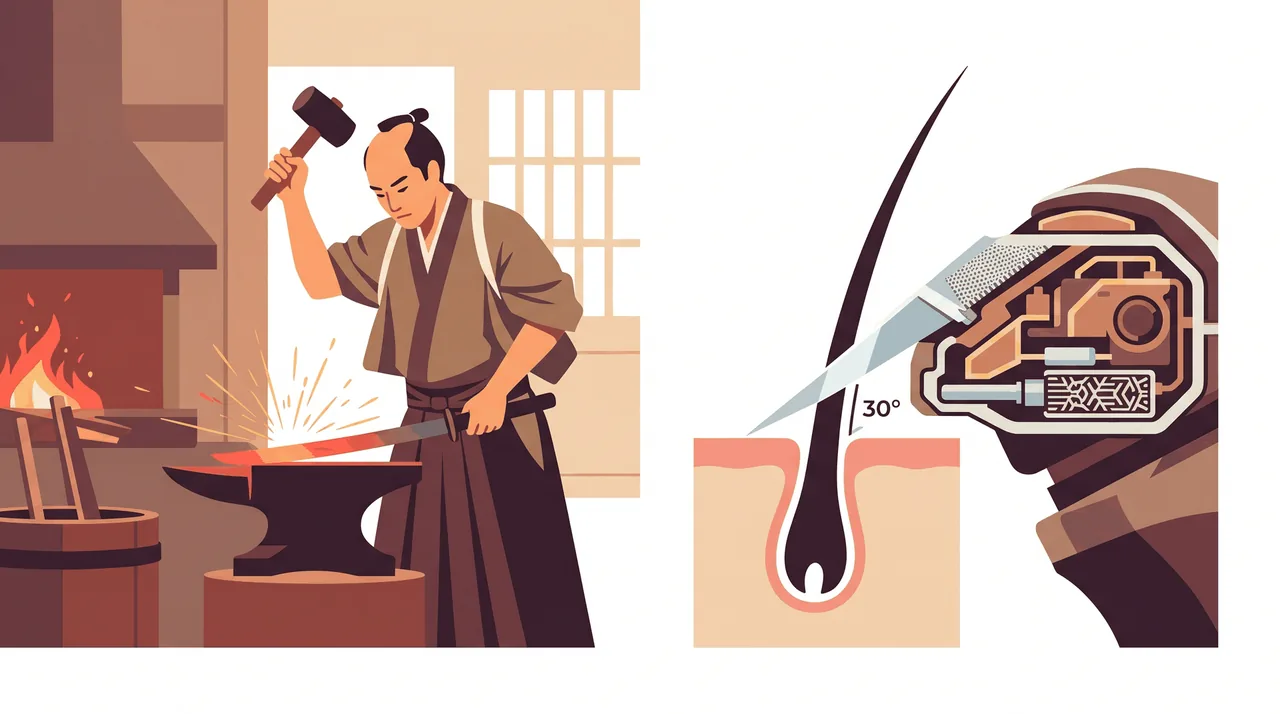
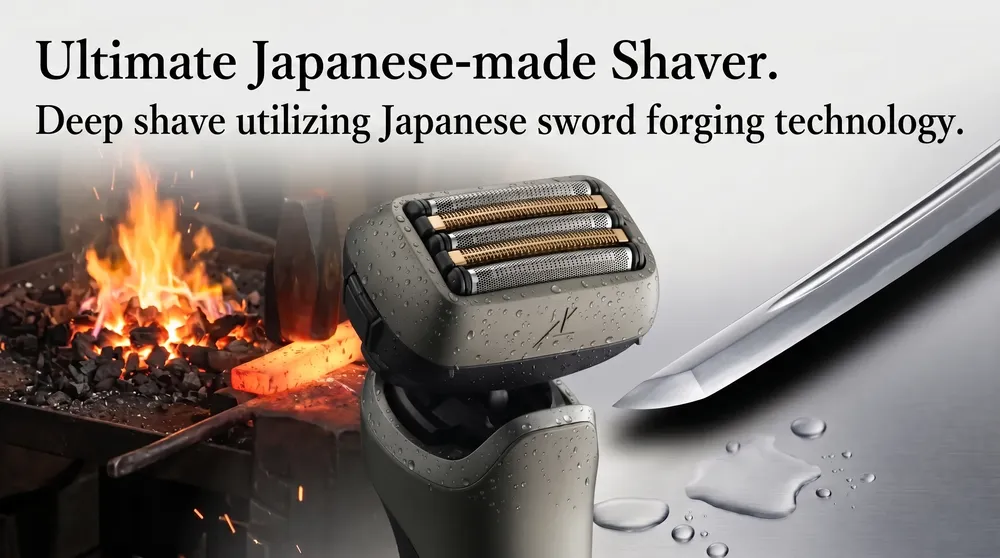
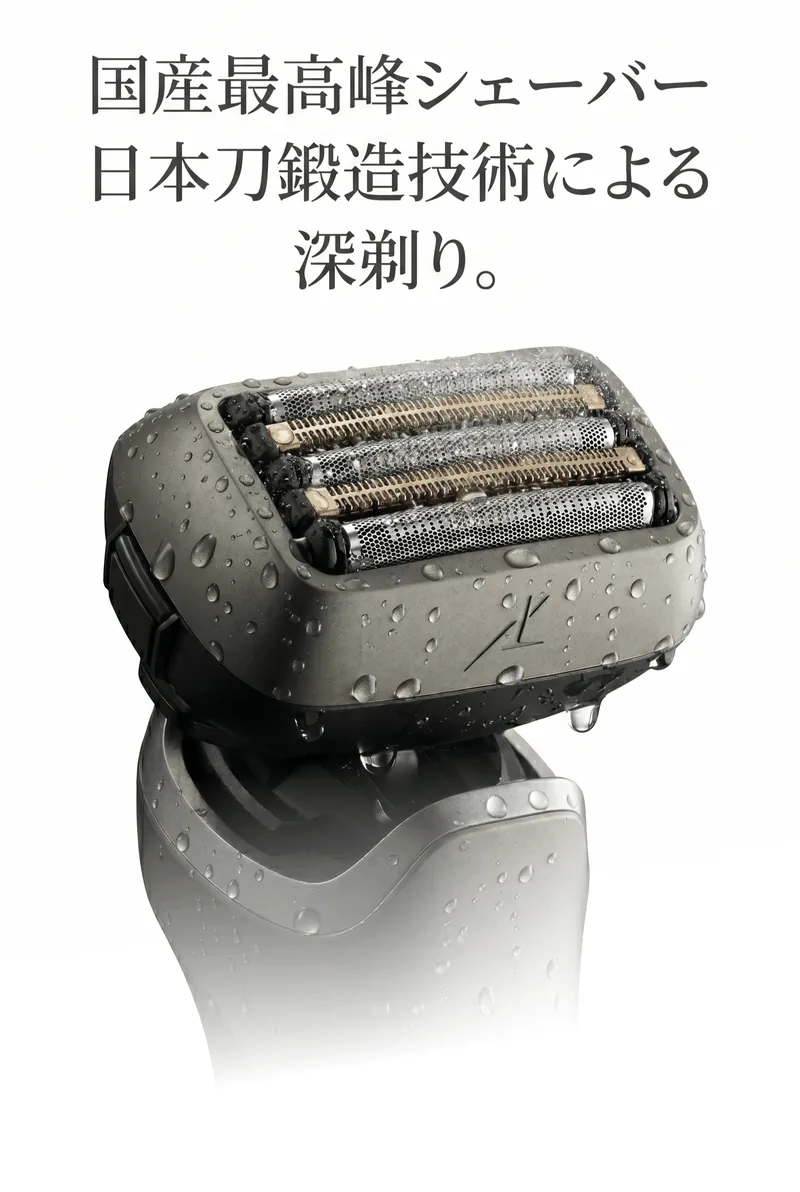
Panasonic's claim is specific and checkable: the inner blades are forged from Japanese stainless steel and honed to a 30-degree cutting edge, finished at nano-level precision. The number appears in their own English marketing, so you can verify it on the box rather than taking a review's word for it.
What matters is why a sharper angle helps, and it is a chain rather than a boast:
- A more acute edge meets less cutting resistance.
- Less resistance means the hair is severed rather than tugged and released.
- Which means you do not have to press. And pressing is what actually causes shaving irritation — the foil is dragged into the skin, taking the top of it with each pass.
So "sharper blades" is not really a claim about closeness. It is a claim about how hard you have to push — and that is the variable that decides whether your neck is sore afterwards.
And the motor that keeps the edge working
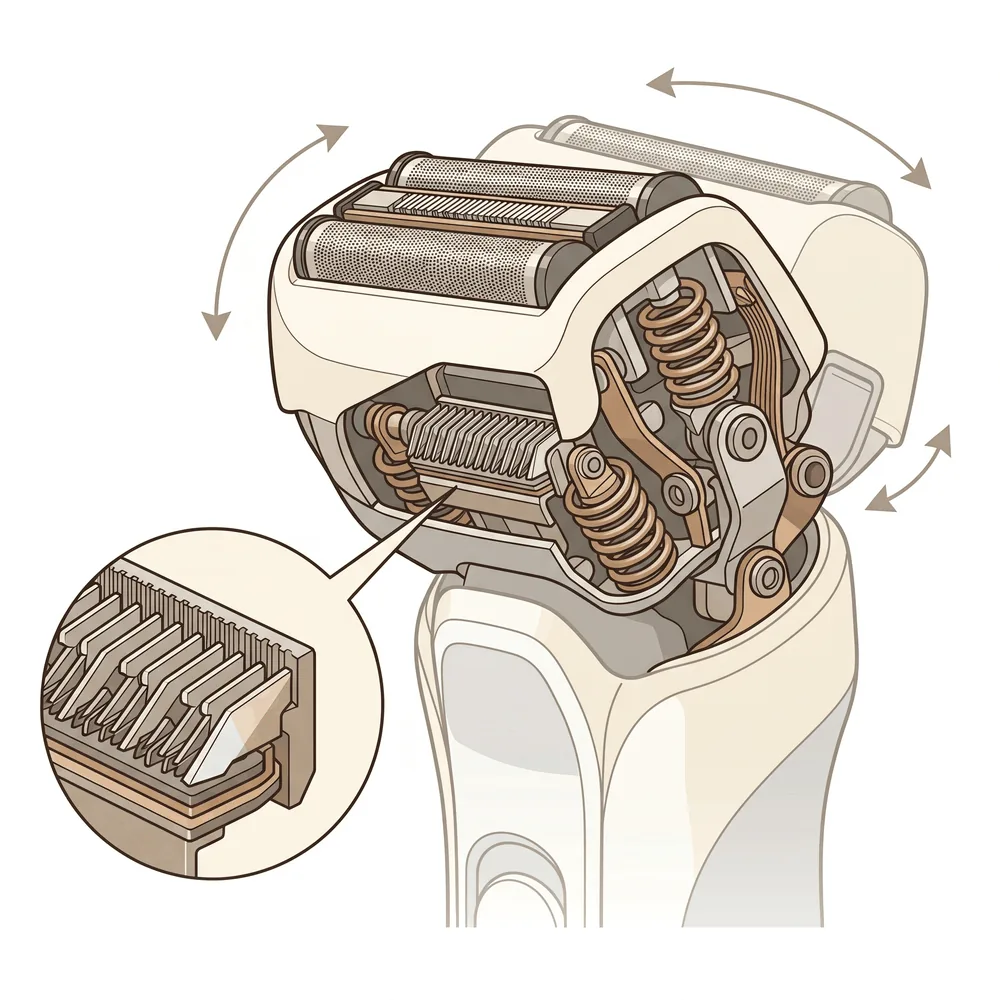
A sharp blade is useless if it slows down against a dense patch. Japanese premium shavers use linear motors running at roughly 13,000 to 14,000 strokes per minute — Panasonic quotes up to 70,000 cross-cutting actions per minute for the five-blade Arc5 — and, more usefully, the motor is designed to hold that speed as load increases instead of bogging down where the beard is thickest.
You will see the blades compared to Japanese swordmaking. Treat that as an analogy rather than a lineage — what is verifiable is that the blades are forged rather than stamped, and honed to a stated 30 degrees. That is a real manufacturing claim, and it is enough on its own.
Foil or Rotary: The Actual Decision
This is the choice that changes your shave, and it is not a Japan-versus-elsewhere question. Braun is German and makes foil shavers; Philips is Dutch and owns the rotary category. What is true is that Japanese manufacturers have committed entirely to foil.
| Foil | Rotary | |
|---|---|---|
| Action | Blades oscillate side to side | Circular heads spin |
| Motion | Straight strokes, with the grain | Small circles |
| Strength | Closer and faster on coarse hair | Gentler; follows an irregular jaw |
| Suits | Daily shavers, dense beards, flat planes | Sensitive skin, shaving every few days |
If you shave daily and want it over quickly, foil. If your skin objects to everything and you shave every second or third day, rotary is the kinder machine — and in that case a Japanese shaver is not what you want, which is worth saying plainly.
What to Buy
Panasonic Arc5 — the sensible one
The five-blade Lamdash, sold internationally as the Arc5. This is the model
most people should buy: the blade technology is the same as the flagship, and five cutting
elements is already more than the shave needs on most faces.
Sold in several versions — ES-ALV6HR in the Advanced line, and the PRO models
ES-L550WS and ES-L580WS, the latter including a cleaning
station.
- Blades
- 5, honed to 30°
- Motor
- 14,000 CPM linear; up to 70,000 cross-cuts/min
- Power
- Rechargeable; wet and dry use
- Also called
- Lamdash 5 in Japan
- Price range
- $180–$350
Perfect for: Daily shavers with a normal-to-heavy beard who want this decision made once.
Panasonic Arc6 — the flagship
The world's first six-blade shaver, and the Lamdash PRO in Japanese
terms. The extra elements cover more area per pass and the head assembly floats more freely
over the jaw.
Whether the sixth blade is worth the jump in price is a genuine question.
It is faster on a heavy beard and the head handles awkward contours better; on an average face
the Arc5 gets to the same finish with one more pass.
- Blades
- 6 — the first of its kind
- Head
- Multi-axis float, wider coverage per stroke
- Also called
- Lamdash PRO 6 in Japan
- Price range
- $350–$600
Perfect for: Heavy, fast-growing beards, and anyone shaving a strong jawline who finds five blades keep missing the same spot.
Maxell Izumi — the one you have not heard of
A long-established Japanese maker with almost no brand presence in English, which is precisely
why it is interesting: you get Japanese multi-blade foil engineering without paying
for the recognition.
The product pages state 100–240V compatibility outright — models such as the
six-blade IZF-V991, the four-blade IZF-V931 and the
IZF-V559 — so the import route is straightforward.
- Range
- 3, 4, 5 and 6-blade foil shavers
- Voltage
- 100–240V stated on the listings
- Washable
- Yes — rinse under the tap
- Where
- English-language Japanese export retailers
- Price range
- $60–$180
Perfect for: Getting most of the Panasonic experience for half the money, if you do not mind an unfamiliar name and a Japanese manual.
⚠ The Foil Is a Safety Part
Replace the outer foil about once a year, and the inner blades about every two. Those are the manufacturer's intervals, and they are not a way of selling you consumables.
The outer foil is a sheet of metal perforated with thousands of holes, and it is thin — because it has to be, for the blades beneath it to reach hair close to the skin. It wears from the inside as the blades sweep across it.
A worn foil can tear. When it does, the inner blades — running at 14,000 strokes a minute — contact your skin directly, and the result is not a nick. This is the actual reason for the replacement interval.
- The warning sign is tugging. If the shaver starts catching hairs and pulling rather than cutting, or you find yourself pressing harder to get the same result, the edge is gone.
- New blades restore the shave completely. A shaver that feels finished is usually a shaver that needs a $30 part — which is also the argument for buying a model whose replacements are stocked where you live.
- Never clean the foil with a brush. Brushing distorts and weakens it. Rinse it, or tap the debris out.
- Replace foil and inner blades as a set when both are due. A new foil against worn blades wears out fast.
Shaving and Cleaning
- Do not press. This is the whole technique. The blades cut at the base already; pressure only pushes the foil into your skin. Hold it at 90 degrees to the face and let the weight of the head do it.
- Go with the grain first, across it second. Against the grain is where ingrown hairs come from.
- Stretch the skin with your free hand on the neck and jaw, so the hairs stand up and the surface is flat.
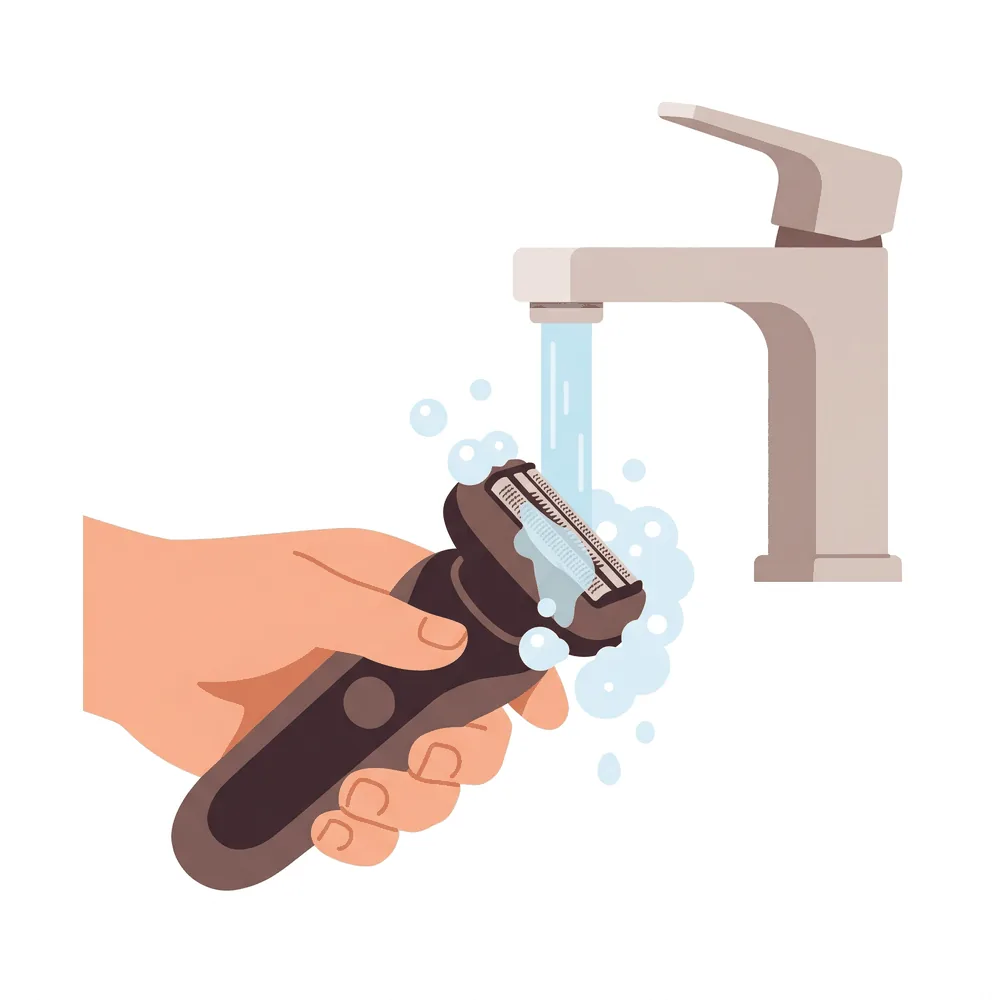
- Rinse it after every shave if the model is washable — nearly all Japanese ones are. Stubble left inside dulls the blades and smells.
- Oil it weekly. One drop on the foil, run for a few seconds. Metal running against metal at 14,000 strokes a minute needs lubrication, and this single habit does more for blade life than anything else. A cleaning station does it automatically, which is most of what you are paying for.
Frequently Asked Questions
Is the Panasonic Arc the same as the Lamdash?
Yes. Lamdash is the Japanese name, Arc is the international one. The Arc5 is the
five-blade Lamdash and the Arc6 is the six-blade Lamdash PRO.
Buy the local version — you get the same engineering with a warranty that works
and replacement foils on the shelf.
Will a Japanese shaver work on my voltage?
Almost certainly. The shaver runs on a battery, so only the charger touches mains
power — and premium Japanese models ship 100–240V auto-switching chargers. Maxell
Izumi state it on the listings.
Check the printing on the charger rather than the shaver, and expect budget
models to be 100V only.
How often do I replace the blades?
Outer foil once a year, inner blades every two. And this is a safety interval:
a worn foil can tear, putting the inner blades against your skin at full speed.
The sign is tugging rather than cutting. New parts restore the shave to new.
What is the difference between foil and rotary?
Foil blades oscillate side to side; rotary heads spin. Foil is closer and faster
on coarse hair and is used in straight strokes; rotary is gentler and follows an irregular
jawline better, used in small circles.
All Japanese makers build foil shavers. If rotary suits your skin better, you
want Philips — that is a fair answer.
Can I use it in the shower with foam?
Yes, if the model is rated for wet use — most Japanese premium shavers are. A
wet shave with foam is gentler on the skin and gives a slightly closer result.
Rinse it properly afterwards, because dried foam inside the head is worse for the
blades than stubble.
Is a cleaning station worth it?
It is worth it for the oiling, not the cleaning. Rinsing under a tap takes ten
seconds and works — but almost nobody remembers to oil the blades weekly, and
that is what actually determines how long they last.
If you know you will not do it by hand, the station pays for itself in blade life.
Final Thoughts: Buy It Locally, Then Stop Pressing
This is a rare category where the answer is not to import anything. Panasonic already sells the Lamdash where you live, badged as the Arc, with local warranty and replacement foils in stock. Buy the Arc5 unless your beard is genuinely heavy.
What you are buying is a 30-degree edge, and what a 30-degree edge really gives you is permission to stop pressing. Irritation is caused by pressure, not by blades — so the sharper machine is the gentler one.
Then replace the foil every year. Not because the shave degrades, though it does — but because a worn foil eventually tears, and there are 14,000 strokes a minute behind it.

Japanese Hair Dryers: Which Models Work Abroad

Japanese Skincare: What the FDA Will Not Approve