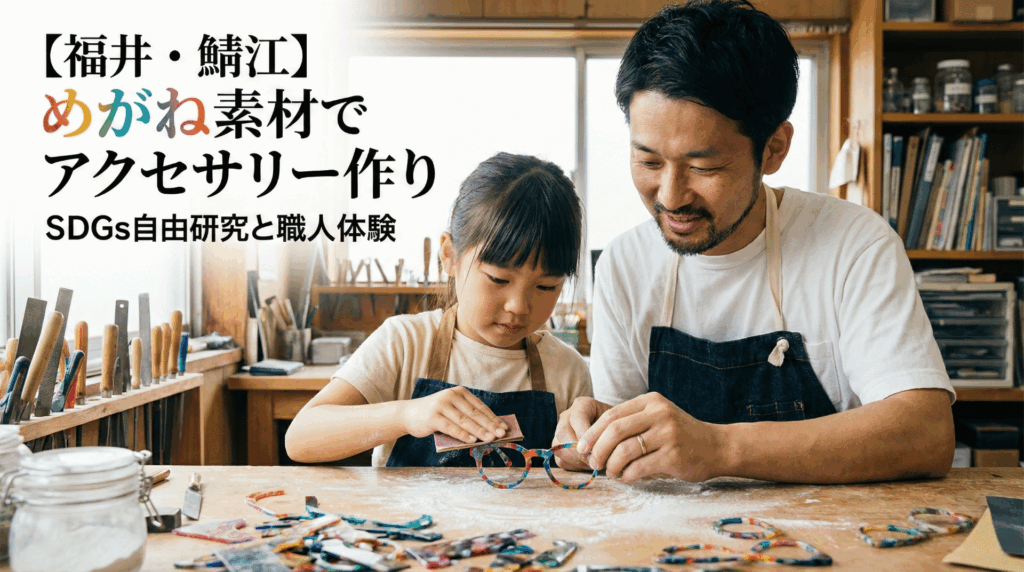
"It's plastic, but it smells kind of sweet and tangy!"
Sabae City in Fukui Prefecture produces approximately 96% of all eyeglass frames made in Japan, making it one of the world's three great eyeglass production regions.
The activity that is absolutely exploding in popularity with families visiting this town is the "keychain and accessory making experience" using eyeglass frame materials.
The premium frame materials imported from Italy and elsewhere are as colorful and vibrant as gemstones or stained glass — children are captivated in an instant. You sand and polish them relentlessly to create your own shining original goods.
In fact, this experience is not just fun. It is packed with elements that make it a perfect summer science project theme — the SDGs perspective of making use of "offcuts" that would otherwise be discarded, and the secrets of a "naturally derived mysterious material" that differs completely from petroleum-based plastics.
In this article, we cover everything from fascinating eyeglass secrets you won't find in regular tourist guides to the ultimate Fukui day-trip plan pairing Sabae with the Dinosaur Museum.
Tips for Enjoying the Sabae Eyeglass Experience with Your Family (30 seconds)
- Just sand and polish!: No dangerous blades are involved — the main work is filing, so it's enjoyable from toddlers through to elementary-age children
- Waste material becomes treasure (SDGs): You use the "offcuts" left over from punching out the lens holes — the ultimate upcycling experience
- You'll get covered in white powder: The sanding dust gets on clothes — it brushes off, but it's best to avoid dark-colored clothing
- The classic Fukui route: "Dinosaur Museum" in the morning, eyeglass experience in Sabae in the afternoon — the staple itinerary for families!
- Moms and dads get seriously into it too: Adults become totally absorbed in swapping sandpaper grits to achieve the most brilliant possible shine
1. [Before You Go] Sanding is a test of endurance! What to wear and things to note
Making accessories from eyeglass material is a simple yet deeply satisfying process of "just keep polishing."
Absolutely essential! 3 golden rules
- ① Be ready to get covered in white powder — face and clothes alike
Sanding produces a large amount of fine white dust from the material. It brushes off easily by hand, but powder gets trapped in dark or knitted fabrics and shows up clearly, so smooth-textured casual clothing is best. - ② Keep your nails trimmed short
You press small pieces firmly between your fingertips as you rub them against the sandpaper, so long nails can get sanded down or make it hard to apply pressure. - ③ Watch out for Dad's "serious mode" (laughs)
The process of working through progressively finer grits of sandpaper has a satisfying quality similar to waxing a car or polishing shoes. Dads often go completely silent and absorbed — more so than the children — and time tends to run over!
2. [Fascinating Background Knowledge] Plastic made from cotton? The secret of the sweet smell and "walnut shells"
Secrets of the material that only eyeglass craftsmen know — secrets you won't find in regular tourist guides. Knowing these beforehand will multiply children's wonder during the experience tenfold, and take a science project to a whole new level!
It's actually made from "cotton"!?
The material used for plastic eyeglass frames is called "cellulose acetate."
But this is not ordinary plastic made from petroleum. It is a biomass plastic of natural origin, made from plant fibers such as "cotton" and "wood pulp"!
That is why it is gentle on the skin, less likely to cause allergic reactions, and has a beautiful translucency. It's the ultimate eco-material — bury it in soil and it breaks down naturally by microorganisms.
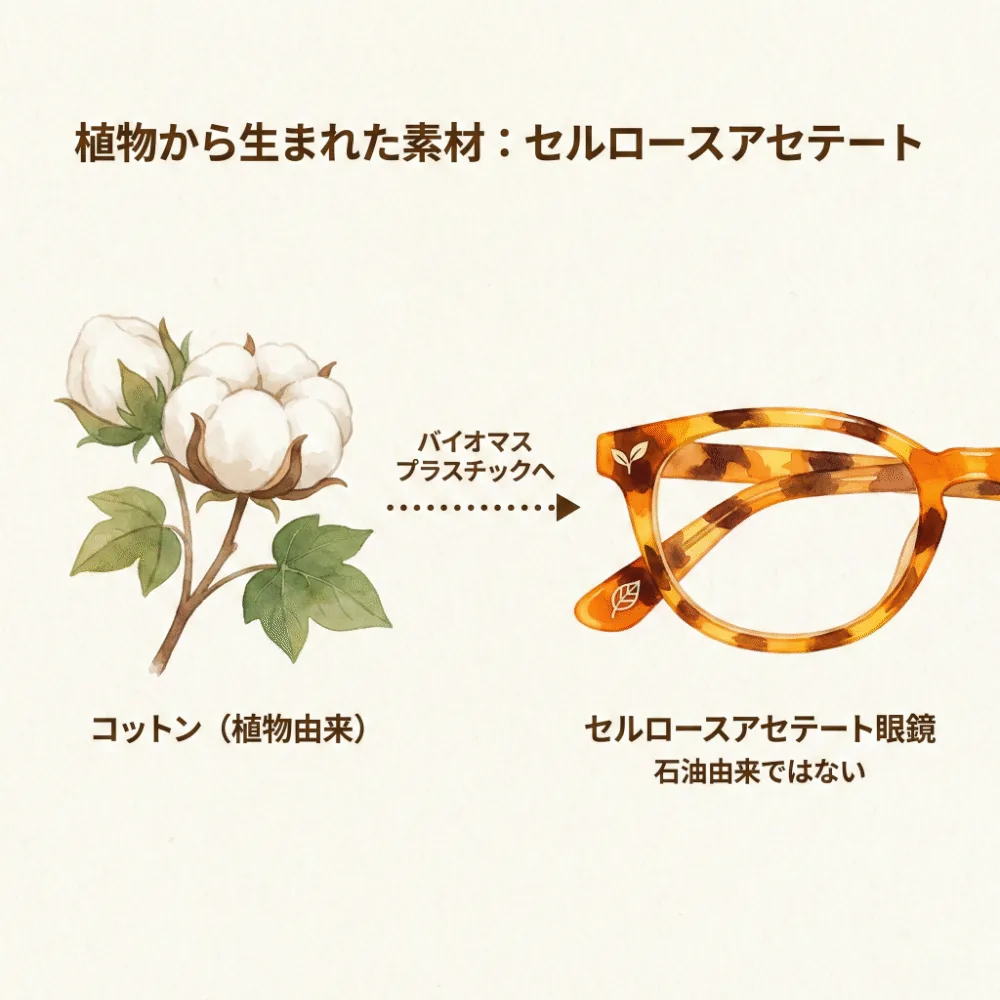
💡 Fascinating Trivia Sanding it gives off a "sour smell"!
During the experience, as you grind away with the sandpaper, a smell like vinegar — slightly sweet and tangy — will emerge. (※ This is because acetic acid, the component of vinegar, is used to process the cotton.) This is something petroleum-based plastic would absolutely never do — it's proof of natural origins! Try smelling it together with your child.
💡 Fascinating Trivia The professionals polish with "walnut shells"!?
In the experience you polish with sandpaper and abrasive compound, but actual factories in Sabae use a process called "gara-ire" (tumbling). Eyeglass frames are loaded into a giant barrel resembling a washing machine along with "bamboo chips" and "walnut shells", then kept tumbling continuously for a full week! It's an incredible feat of craftsmanship — using the power of nature to remove every last rough edge.
3. Choose by your child's age! Recommended experience menus (Keychain vs. Ring)
What you can make varies by facility, but here are three representative menus.
| Menu | Features and recommended age |
|---|---|
| Megane de Collage (Keychain) |
[Toddlers to elementary school] Combine colorful acetate pieces (offcuts) like a puzzle to create an original keychain in the shape of a face or other design. A hugely popular menu where children's free-spirited imaginations run wild. |
| Eyeglass pin badge | [Elementary school to adults] Polish a cute eyeglass-shaped pin badge. Often combined with a factory tour, the finished badge can be pinned to a hat or bag for long-lasting enjoyment. |
| Ring | [Elementary school to adults] Polish a beautiful marbled material to create a proper accessory. Girls and moms are guaranteed to be captivated by the gemstone-like sparkling finish. |
4. [Fukui / Sabae] Top 3 family-friendly eyeglass experience spots (with map)
※ Pins on the map indicate spots introduced in this article. Please check the official websites for the latest information on prices and opening days.
① Megane Museum (Experience Workshop) | If you're not sure where to go, start here! The headquarters of Sabae eyeglasses
A vast facility covering everything from the history of Sabae's eyeglasses to purchasing the latest models. The "Experience Workshop" here is spacious and comfortable, making it the go-to spot for families with children.
Currently hugely popular is "Megane de Collage" (¥2,000) — combining colorful acetate pieces to create an original face keychain. Like a puzzle game, it lets you freely create something resembling a favorite character or a family member's face.
👨👩👧👦 Family checklist
- Creativity unleashed: Combining pieces to build a face means even small children can succeed and enjoy it
- Souvenirs: Moms and dads can seriously try on and choose their own eyeglasses in the in-museum shop
- Photo spot: The giant eyeglass monument outside the building is the classic spot for a commemorative photo
Basic Information (approximate)
- Experience: Megane de Collage (keychain making)
- Duration: Approx. 60 minutes
- Price range: ¥2,000
- Reservation: Advance reservations preferred (walk-ins accepted if space is available)
② Plus Jack | A must for enthusiasts! A factory tour where you make a "pin badge"
If you want something a little more niche and special than the usual options, this is the place! An eyeglass frame manufacturer opens its factory as an "open factory."
Here, after touring the factory with real machines running, you get to polish a cute eyeglass-shaped pin badge to your own liking. The hands-on experience right beside craftsmen at work powerfully stimulates the intellectual curiosity of dads and children who love authenticity.
👨👩👧👦 Family checklist
- Real workplace: You can do the experience right alongside the machines where craftsmen are actually working
- Practicality: The pin badge you polish yourself makes a great accent on a hat or backpack!
- Science project: Combined with a factory tour, it's ideal as an inquiry-based learning activity
Basic Information (approximate)
- Experience: Factory tour + eyeglass pin badge making
- Duration: Approx. 90 minutes (30 min tour + 60 min experience)
- Price range: Approx. ¥2,000
- Reservation: Advance reservation required
③ KISSO | Glowing like a gemstone! Ring-making experience
KISSO is a beautiful accessory brand that makes the most of eyeglass materials. They also run a hugely popular experience program called "KISSO LAND."
Choose a colorful, beautiful acetate cut ring, sand it relentlessly with sandpaper, and finally have a craftsman buff it to a gemstone-like shine. "I can't believe something I polished myself turned into such a beautiful ring!" — girls and moms are guaranteed to be completely overwhelmed with delight.
👨👩👧👦 Family checklist
- Beauty: Creating a brand-quality accessory means an incomparably high level of satisfaction
- Shopping: The attached directly-operated store is also great for Dad choosing a gift for Mom!
- 💡 Trivia In addition to rings, bangle-making and other menus are sometimes offered
Basic Information (approximate)
- Experience: Ring polishing experience (KISSO LAND)
- Duration: Approx. 60–90 minutes
- Price range: From ¥2,200 (※ varies depending on material)
- Reservation: Advance reservation required
✨ Shining like gemstones! Acetate accessories from Sabae
For those who can't make it to Sabae but want beautiful acetate accessories! The rings, bangles, and shoehorns from "KISSO," introduced in this article, can be ordered online. And stylish PC glasses and reading glasses crafted by Sabae's artisans make a wonderful lifelong gift for moms and dads!
5. [Model Course] From dinosaurs to eyeglasses! Fukui day-trip timetable
The classic Fukui itinerary! The golden route that pairs the "Dinosaur Museum" in Katsuyama City with Sabae — children's excitement never drops all day. (※ Assumes travel by car)
- 09:00 | Arrive at Fukui Prefectural Dinosaur Museum (Katsuyama City)
(Get wildly excited by moving dinosaur robots and fossil excavation experiences!) - 12:00 | Leave the museum. Drive toward Sabae (approx. 1 hour)
- 13:00 | Lunch at a restaurant near Sabae — try the local specialty "sauce katsu don"
- 14:30 | Keychain making experience at the "Megane Museum"
(Confirm that sweet smell while sanding! Get covered in white powder and lose yourself in the process) - 16:00 | Browse the museum shop and "KISSO" for souvenirs, then head home
6. Things to do and eat after the experience! Nearby spots recommended for families
① Fukui Prefectural Dinosaur Museum (Katsuyama City)
About an hour by car from Sabae, but one of the world's leading dinosaur museums — an absolute must when visiting Fukui.
With realistically moving tyrannosaurus robots and exhibits where you can touch real fossils, it's a dreamlike space for children. Do the "fossil excavation experience" and the "eyeglass polishing experience" in a single day and you'll have covered both Fukui's history and its manufacturing culture!
② Yo-roppa-ken (Sauce Katsu Don)
Fukui's lunch scene is famous for "Echizen oroshi soba" (soba topped with grated daikon radish), but it can taste a little sharp for children.
That's why we recommend the Fukui soul food "sauce katsu don." Thin, tender cutlets are dipped in a sweet-tangy special sauce — a superb dish. Famous restaurants like "Yo-roppa-ken" have branches near Sabae, and both children and adults are guaranteed to finish every last bite.
7. Enjoy dinosaurs and craftsmanship to the fullest! Recommended family accommodations in Fukui
The "Dinosaur Museum (Katsuyama City)" and the "eyeglass experience (Sabae City)" are Fukui's most powerful combination, but there is some distance between them — doing both in a single day will exhaust adults and children alike.
The best approach is to stay one night and enjoy Fukui's delicious seafood and hot springs in a "2-day, 1-night plan" — the ultimate way to enjoy everything without the parents getting too tired!
🦖 Katsuyama area (Just a short drive from the Dinosaur Museum!)
JAM Fukui Katsuyama Tokyu Hotel & Resorts (formerly Hotel Harvest Ski Jam Katsuyama)
A resort hotel boasting the most powerful location for a family Fukui trip — just about 10 minutes by car from the Dinosaur Museum.
With dinosaur-themed rooms and fossil excavation experiences within the grounds, the entire hotel is an entertainment space designed to delight children! A spacious natural hot spring large bath (Hoenji Onsen) and a wide-ranging buffet using Fukui ingredients are guaranteed to satisfy moms and dads too.
♨️ Awara Onsen area (Fukui's celebrated hot spring for crab and seafood)
Awara Onsen Grandia Housen
"Awara Onsen" — a renowned hot spring immensely popular as a base for Fukui sightseeing. This large inn enjoys overwhelming support from families among all properties in the area.
Tatami-floored Japanese-style rooms where children can tumble about safely, rooms with open-air private hot spring baths — a range of room styles to suit any family. You can enjoy fresh Hokuriku seafood (including Echizen crab in winter!), and the easy access to Sabae makes it perfect for a luxurious family trip.
8. [After You Get Home] When it goes dull, you can "re-raise" it!
The acetate accessory you worked so hard to polish. Because it's a naturally derived material, there's a whole extra dimension of enjoyment in caring for it.
Caring for acetate material
- Wipe away sweat and skin oils (Being a natural material, the surface can sometimes turn white and dull if left for a long time. Wipe it quickly with a soft cloth like a lens cloth)
- What to do when the shine fades? (Unlike plastic that merely has a coating applied on the outside, acetate is a solid block of the same material all the way through. That means applying a plastic polishing compound and buffing it again will restore the like-new shine as many times as you like!)
📝 Tip Hold a regular parent-child "polishing contest"
About twice a year, we recommend setting aside time for a parent-child competition: "Who can get theirs the most shiny?" The joy of maintaining something yourself and "raising" a tool is an education unlike any other.
🧽 Restore that brilliant shine as many times as you like! The magic "polishing items"
Your acetate accessory that you polished yourself. When the surface starts to turn dull and white after regular use, that's the signal for "re-raising" it! Just apply a small amount of fine-grade plastic polishing compound to a cloth and buff — and the gemstone-like luster from the day you made it will be restored, again and again. Pair it with a large, high-quality lens cloth for wiping away everyday oil and grime.
Summary: A scrap destined for the bin becomes a one-of-a-kind treasure
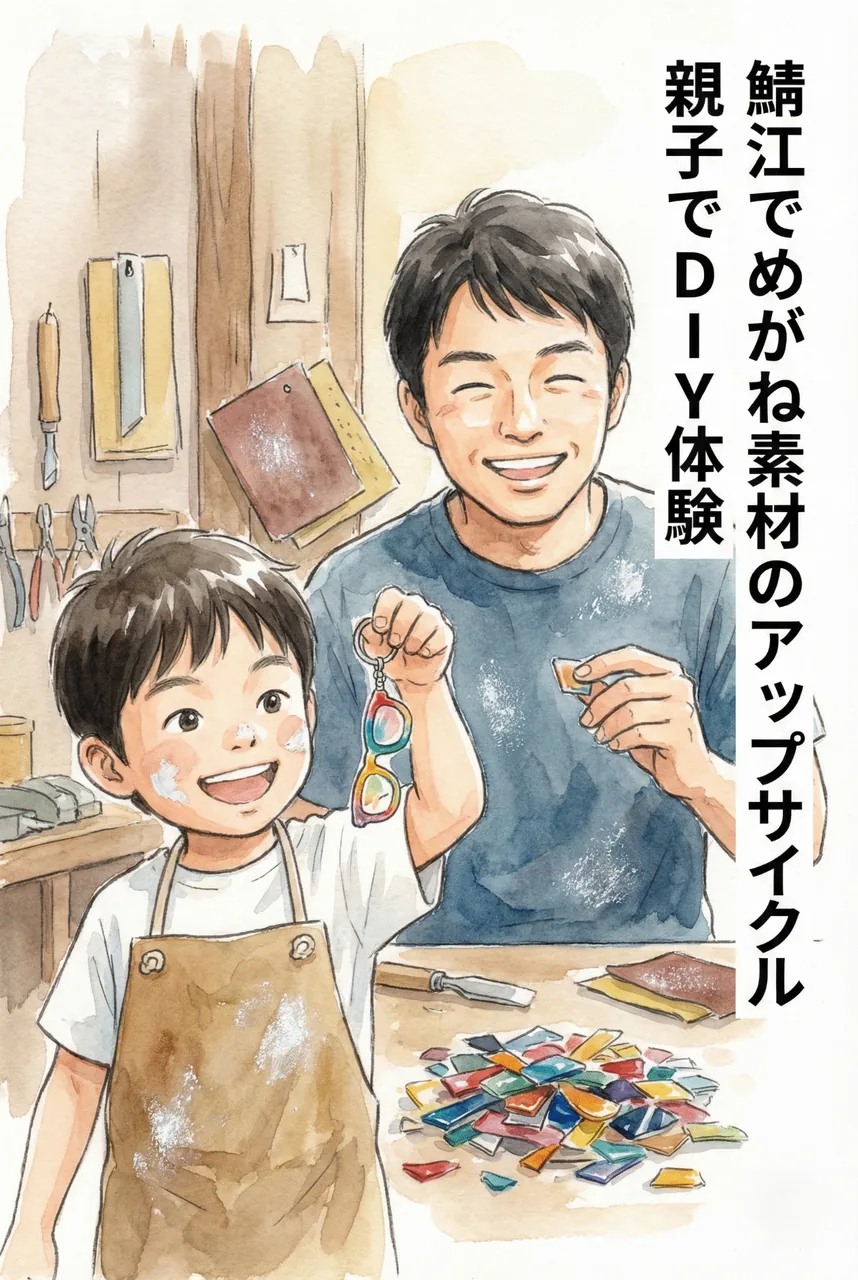
"Feel this! It's so smooth now!"
The moment a rough plastic offcut — polished relentlessly with sandpaper — begins to emit a gemstone-like luster. A child's eyes light up with the same kind of sparkle.
Little scraps punched out from eyeglass lens holes, destined to be discarded.
Breathing life into them and transforming them into one-of-a-kind keychains and accessories — this "upcycling" experience is a wonderful SDGs activity that rediscovers the value of things.
When you visit Fukui, make sure the whole family gets covered in white powder together and savors both the incredible skill of the craftsmen and the sheer joy of polishing!