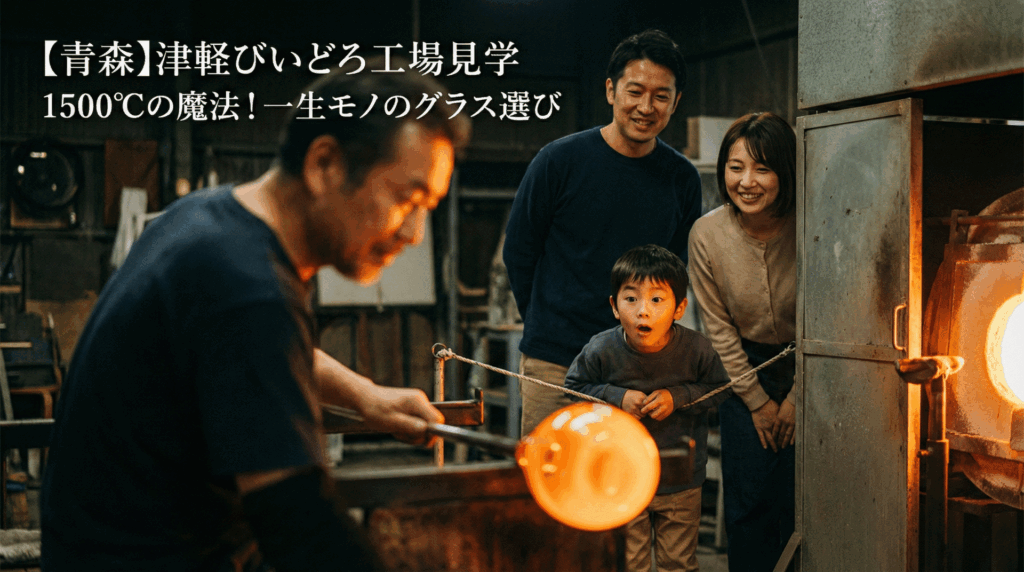
"Tsugaru Vidro" is a beloved traditional craft that seems to capture Aomori's rich nature — the red of apples, the blue of sea and sky — right inside the glass.
Did you know that at Hokuyo Glass (Hokuyo Garasu) in Aomori City, the factory where Tsugaru Vidro is actually made, you can watch real craftspeople up close?
Drawing molten red glass from a crucible heated to over 1,500°C, the craftsperson blows air into it while spinning it through the air with centrifugal force to shape it — it looks like pure magic.
Children can't blow glass themselves for safety reasons, but witnessing "the overwhelming skill and effort of professionals" firsthand sparks a deep sense of wonder: "So that's how a cup is made!" — and an intense respect for objects.
After the tour, you browse the adjacent directly-managed shop to seriously pick out "your very own personal glass."
Deliberately letting a child carry real glass — something that will actually break if dropped — becomes the ultimate "tool education" for nurturing the mindset of "handle things with care."
In this guide, we cover everything from the history of Tsugaru Vidro to the thunderous Nebuta Festival and ancient Jomon ruins — a richly packed family trip plan showcasing the wonders of Aomori to the world!
Tips for Enjoying the Tsugaru Vidro Factory Tour as a Family (30-second read)
- Dress for the heat!: The factory is extremely hot, so layering (easy to remove) is recommended even in winter
- Absolutely no running: Craftspeople move around carrying hot glass. Follow tour rules at all times!
- Come with pocket money ready: The directly-managed shop stocks outlet pieces too — hidden treasures even a child's allowance can reach
- A "glass education" opportunity: Graduate from unbreakable plastic and introduce children to the real weight and coolness of glass
- All within Aomori City: The factory, Nebuta museum, market, and art museum are all clustered together in Aomori City — very easy to get around
1. [Before You Go] Don't Distract the Craftspeople! Absolute Rules for the Factory Tour
The Hokuyo Glass factory is not a theme park built for tourists — it is a real manufacturing workplace. Teach children the rules before you go.
Three Absolute Rules You Must Follow
- ① Absolutely no running or touching inside the factory!
This is a workspace where 1,500°C glass is being handled. Craftspeople may walk past carrying long blowing pipes, so never step outside the designated viewing area (marked lines, etc.). - ② Protect against heat, and dress in layers
The massive furnaces are always burning, so the factory interior is intensely hot — even in winter, let alone summer. Even if it's snowing outside, dress in layers (cardigans, hoodies) that can be removed once inside. - ③ Follow the rules on photography
Photography is generally permitted inside the factory, but flash photography is absolutely prohibited as it can break a craftsperson's concentration. Always follow the rules provided in the briefing.
2. [Deep-dive Knowledge] Its Roots Are Fishing Floats! The Magic of Free-Blown Glass
Tsugaru Vidro is known for its vivid, colorful glassware — but when you learn its origins, both parents will be amazed!
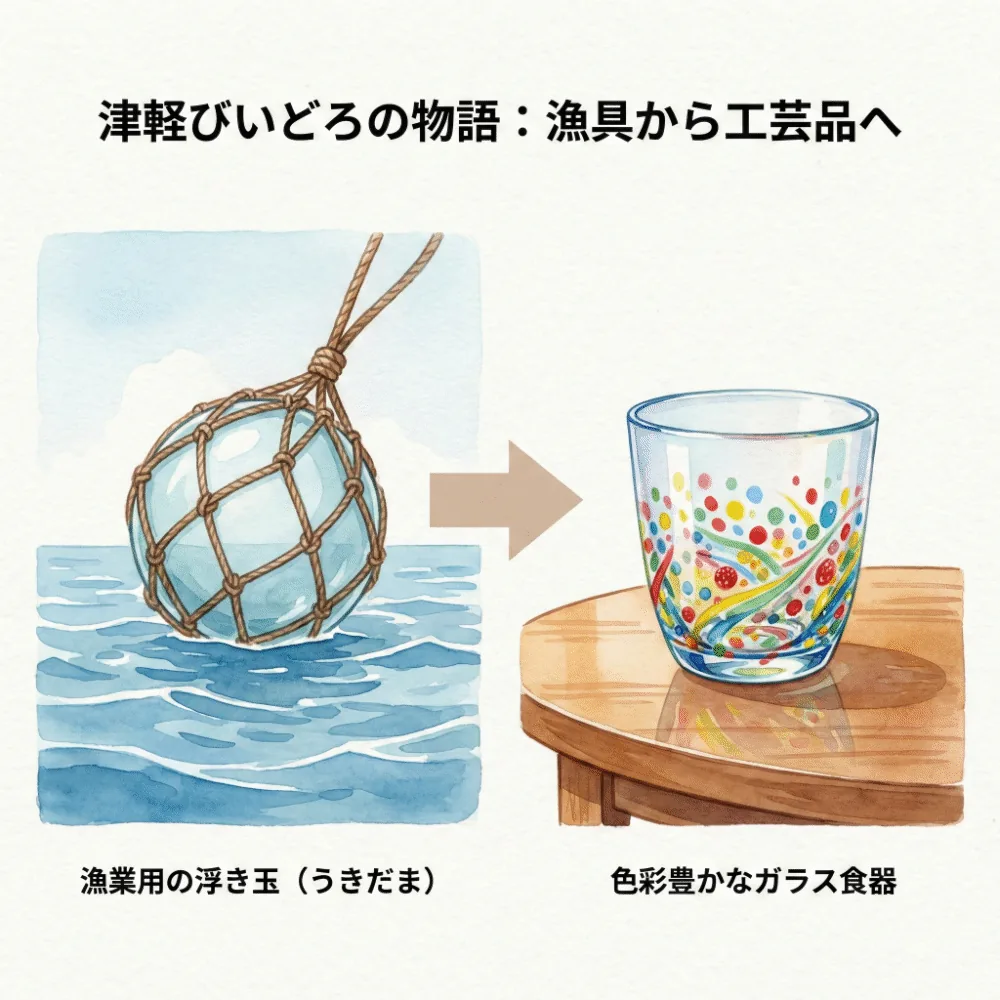
It all began with "round glass balls" floating on the sea
Hokuyo Glass, the maker of Tsugaru Vidro, originally started as a factory producing glass fishing floats — the glass balls used to keep fishing nets afloat. Before plastic became widespread, craftspeople would blow air into each glass sphere one by one.
The advanced technique of shaping glass in mid-air using only centrifugal force and breath — spinning the pipe while the glass hangs free — is called "chu-buki" (free-blowing). The craftsmanship cultivated through float-making, combined with the beautiful "colored glass" formulation techniques that evoke the natural scenery of Aomori, came together to produce the artistic Tsugaru Vidro of today.
3. Precious Because It Breaks. A Case for Giving Children Real Glass ("Glass Education")
Many households give children plastic cups so there's nothing to worry about. But after the factory tour, please let them choose a real glass of their own.
Three Benefits of "Tool Education" (Glass Education)
- ① The tension naturally teaches beautiful manners
The knowledge that "it will break if dropped" naturally encourages children to cradle the cup in both hands, to set it down gently on the table — instilling beautiful habits without a word of instruction. - ② The weight teaches the craftsperson's effort
That cup was made in a sweltering factory by craftspeople soaked in sweat. Feeling its weight and coolness against the lips plants a deep sense of "someone made this for me" — the spirit of truly caring for objects. - ③ Drinks taste incomparably better
Glass has a smoother mouthfeel than plastic and keeps drinks beautifully cold. Drinking Aomori's 100% apple juice from a Tsugaru Vidro glass is, honestly, absolutely delicious!
4. [Aomori City] Hokuyo Glass (Tsugaru Vidro) Factory Tour & Directly-Managed Shop
* The pin on the map marks the Hokuyo Glass factory. Please check the official website for the latest information on tour availability and operating days.
A glowing magic circle! Hokuyo Glass Factory Tour & Factory Shop
About 15 minutes by car from Aomori Station, the Hokuyo Glass factory — where all Tsugaru Vidro is created — offers visitors the chance to watch craftspeople at work up close, primarily on weekdays.
Molten red glass inflates like a balloon at the tip of the blowing pipe, then transforms in an instant into a beautiful glass or plate — more spectacular than any magic show!
After the tour, head into the adjacent factory shop (directly-managed store). Colorful glasses evoking Aomori's "Nebuta Festival," pink dishes reminiscent of cherry blossoms, and countless other beautiful items fill the shelves. Watching a child make a serious, treasure-hunting face as they pick out "their glass" is a sign of real growth.
👨👩👧👦 Family Checkpoint
- Wow factor: Children get to experience the science fun of watching glass transform from liquid to solid right before their eyes
- Shopping: The directly-managed store has a selection you won't find elsewhere! Slightly irregular outlet pieces are available at great prices — perfect for a child's first "real glass purchase"
Basic Information (Approximate)
- Tour: Advance phone reservation required.
- Duration: Approx. 60–90 min including tour and shopping
- Price: Tour is free
✨ Bring Aomori's colors home! Tsugaru Vidro & exceptional apple juice
"Aomori is too far for us…" — this one's for you. "Tsugaru Vidro" glassware capturing the seasons of Japan and the landscapes of Aomori is also available to order online. Pour rich, 100% Aomori-grown apple juice into a handcrafted glass and instantly transform your everyday table into a bright home cafe!
5. [Model Itinerary] From the Market to Nebuta! Classic Aomori City Day-Trip Timeline
Aomori City has excellent access from the airport and Shinkansen station, with top-tier sightseeing spots all clustered together. Here's the perfect plan for savoring great seafood and art.
- 09:30 | Arrive near Aomori Station at the "Aomori Sakanamachi Center" (Furukawa Market)
- 10:00 | Breakfast as a family with tickets in hand — build your own bowl with your favorite toppings in the famous "Nokkedon" bowl experience!
- 11:00 | Drive over to Hokuyo Glass for the Tsugaru Vidro factory tour & personal glass selection
(Be moved by the craftsperson's godlike skill, then seriously pick your glass) - 13:00 | Head back to Aomori Station. Tour the massive, awe-inspiring Nebuta floats at "Wa-Rasse — the Nebuta House"
- 14:30 | Next door at "A-FACTORY," enjoy apple gelato with a sea view and browse for souvenirs
- 16:00 | (If time allows) Extend the trip to Sannai-Maruyama Ruins or the Aomori Museum of Art
6. Play Here After the Tour! Top 4 Must-See Sightseeing Spots in Aomori City
The most powerful Aomori attractions to pair with the Tsugaru Vidro factory tour — places that absolutely ignite Aomori's magic!
① Aomori Sakanamachi Center (Furukawa Market) | Japan's greatest food-as-entertainment: the "Nokkedon" bowl
This isn't just eating a seafood bowl — it's Japan's finest dining entertainment!
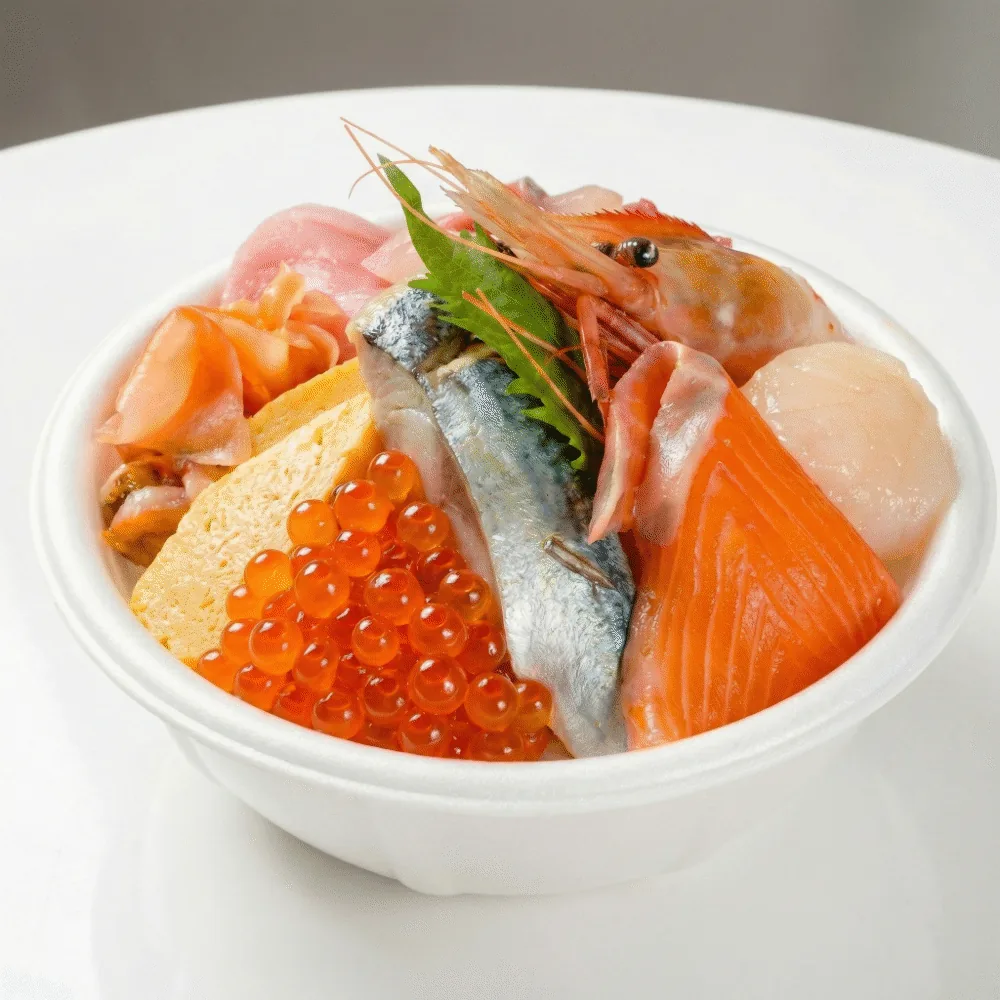
Buy tickets (food coupons) at the counter and first get a bowl of steaming rice from the entrance stall. Then walk around the market, shouting to the vendors: "One slice of tuna, please!" "Pile on some salmon roe!" — trade your coupons for your favorite toppings and build your own ultimate seafood bowl (nokkedon).
👨👩👧👦 Family & Food Education Checkpoint
- Food education at its best: Talking directly with the market vendors while shopping is a priceless social lesson that no supermarket can replicate.
- Picky eaters welcome: Children can choose only what they love (there are also tamagoyaki and meat side dishes!) so even kids who don't like raw fish will be satisfied!
② Wa-Rasse — the Nebuta House | Feel the excitement year-round!
The distinctively red building right in front of Aomori Station. Step inside and you're transported into the world of the Aomori Nebuta Festival!
In the darkened interior, enormous "Nebuta" floats — actual floats that participated in the festival — are on permanent display, and children stare up at them slack-jawed at the sheer scale and intensity of the colors. At certain times, you can also experience being a "Haneto" (dancer) yourself, shouting "Rassera!" and joining the festive frenzy.
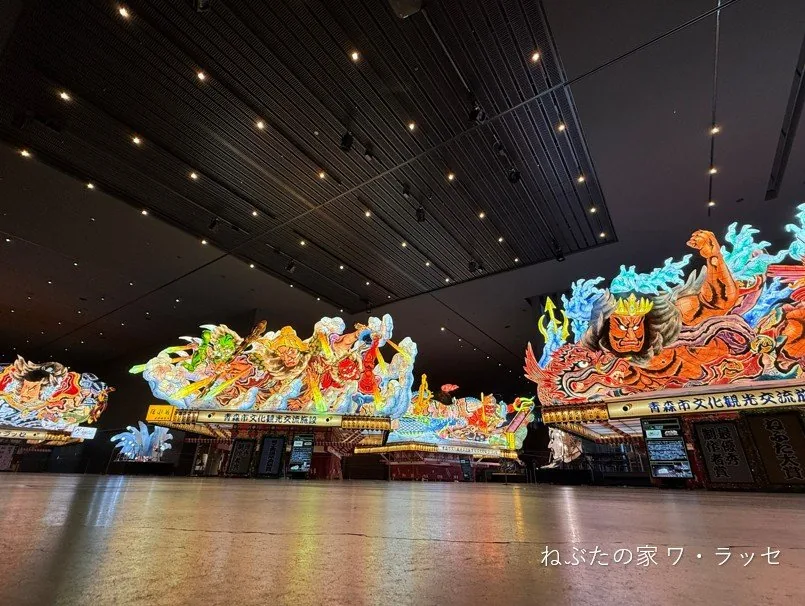
©Wa-Rasse — the Nebuta House
👨👩👧👦 Family & Photo Checkpoint
- Interactive art: There are hands-on areas like "paper pasting" where you paste washi paper onto a Nebuta frame — a great way to learn about washi paper and the structural design (art) of Nebuta.
- Unbeatable access: 1-minute walk from Aomori Station. A superb indoor venue that's totally unaffected by rain or snow.
③ A-FACTORY | The stylish mecca for Aomori souvenirs
This chic commercial complex right next door to Wa-Rasse houses a cider (apple sparkling wine) brewery.
Inside, high-design Aomori souvenirs — apple juice, sweets, craft goods — line the shelves in abundance, and Mom's shopping excitement hits its peak! There's also a gelato shop and a burger joint, and you can enjoy a sophisticated cafe break watching the Aomori Bay bridge while looking out at the sea.
👨👩👧👦 Family & Shopping Checkpoint
- Treat yourself: Gelato loaded with Aomori-grown apples is absolutely exquisite!
- Dad's treat: You can watch the cider fermenting through the glass, and of course taste and buy the delicious cider too.
🍾 The hugely popular cider made at the A-FACTORY brewery is also available via furusato nozei (hometown tax donation)!
④ Special Historic Site: Sannai-Maruyama Ruins | Time-travel to the Jomon Period!
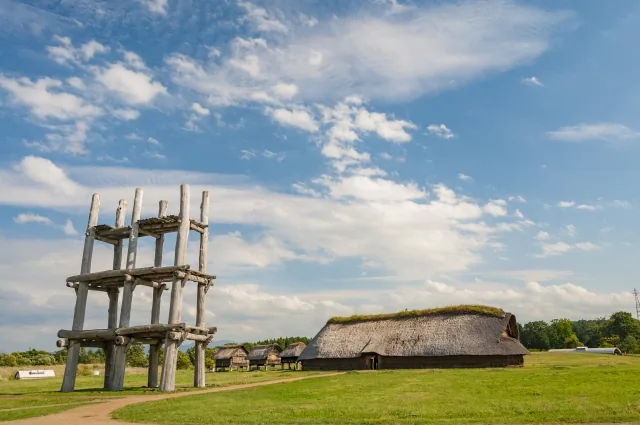
About 20 minutes by bus or car from Aomori Station. Japan's largest Jomon-era settlement, registered as a UNESCO World Heritage Site.
This is no ordinary "open field"! The vast grounds feature realistically reconstructed massive six-pillared structures and pit dwellings that you can actually enter and experience the life of Jomon people. For children it feels like a giant adventure playground — the best kind of outdoor history lesson. It pairs perfectly with the adjacent Aomori Museum of Art (famous for its "Aomori Dog" sculpture).
👨👩👧👦 Family & History Checkpoint
- Immersive learning: You can actually enter the reconstructed buildings, making the Jomon period feel many times more real than any textbook page.
- Well-equipped: The grounds are vast, but most paths are paved, making stroller navigation smooth (stroller rentals also available).
7. Immerse Yourself in Tsugaru Culture and the Sea! Recommended Family Accommodations in Aomori
Aomori City's sightseeing spots are compact, but there's simply too much to cover in one day!
Choose between a cutting-edge hotel in Aomori City where you can bask in the afterglow of Nebuta, or venturing a little further to the Asamushi Onsen hot springs — known as "Aomori's inner parlor" — to feast on fresh seafood. Pick based on your family's style.
🏮 Misawa Area (Worth the extra distance — a full theme park of Aomori culture)
Hoshino Resorts Aomoriya
It's about an hour-plus drive from central Aomori City, but if you want to "experience all of Aomori's festivals and culture in one place," this wildly popular resort is unmissable.
Year-round Nebuta festival excitement in Michinoku Festival shows, a spectacular open-air bath "Ukiyu," and apple juice flowing straight from the tap — the resort is packed with surprises that keep children's excitement levels running non-stop! It's the ultimate family travel resort inn — well worth the journey.
♨️ Asamushi Onsen Area (Breathtaking sea views & live Tsugaru shamisen!)
Asamushi Onsen Nanbuya Kaisenkaku
About 30 minutes by car from central Aomori City. A large, representative onsen ryokan of the Asamushi Onsen area, set directly overlooking Mutsu Bay.
From the observatory open-air bath on the top floor, you can enjoy a sweeping view of the beautiful sunset over the sea. Each evening, live Tsugaru shamisen performances take place in the lobby! The half-buffet featuring fresh local seafood is hugely popular with families — the perfect way to spend a luxurious Aomori evening.
8. [After You Return] Gently Wash Your Glass and Toast with Apple Juice
Back from the trip, set out the "Tsugaru Vidro glass" that your child chose at the table. This is where the real "tool education" begins.
Three promises for caring for your precious glassware
- No dishwasher — wash by hand (Tsugaru Vidro is not heat-resistant glass and is vulnerable to sudden temperature changes. Use a soft sponge without abrasives and wash gently with a neutral detergent)
- Add ice "gently" (Tossing ice into the glass can scratch the inside and eventually cause cracks. Tell children: "Slide the ice in like it's going down a slide")
- No boiling water (It's for cold drinks only. This knowledge of "using the right tool for the right purpose" is a valuable form of education in itself)
🧽 Care for your precious glass without scratching it! Gentle care items & kitchen tools
A lifelong glass you chose yourself. Why not turn washing time into a lesson in "caring for objects"? We recommend 100% natural soft sponges that won't scratch glass, beautiful mosquito-net cloths that absorb water droplets instantly, and wooden coasters that cradle the base of your glass gently — Japanese kitchen tools for a more mindful, beautiful everyday life.
Conclusion: The Heat of 1,500°C and a Craftsperson's Breath — Brought to Your Table
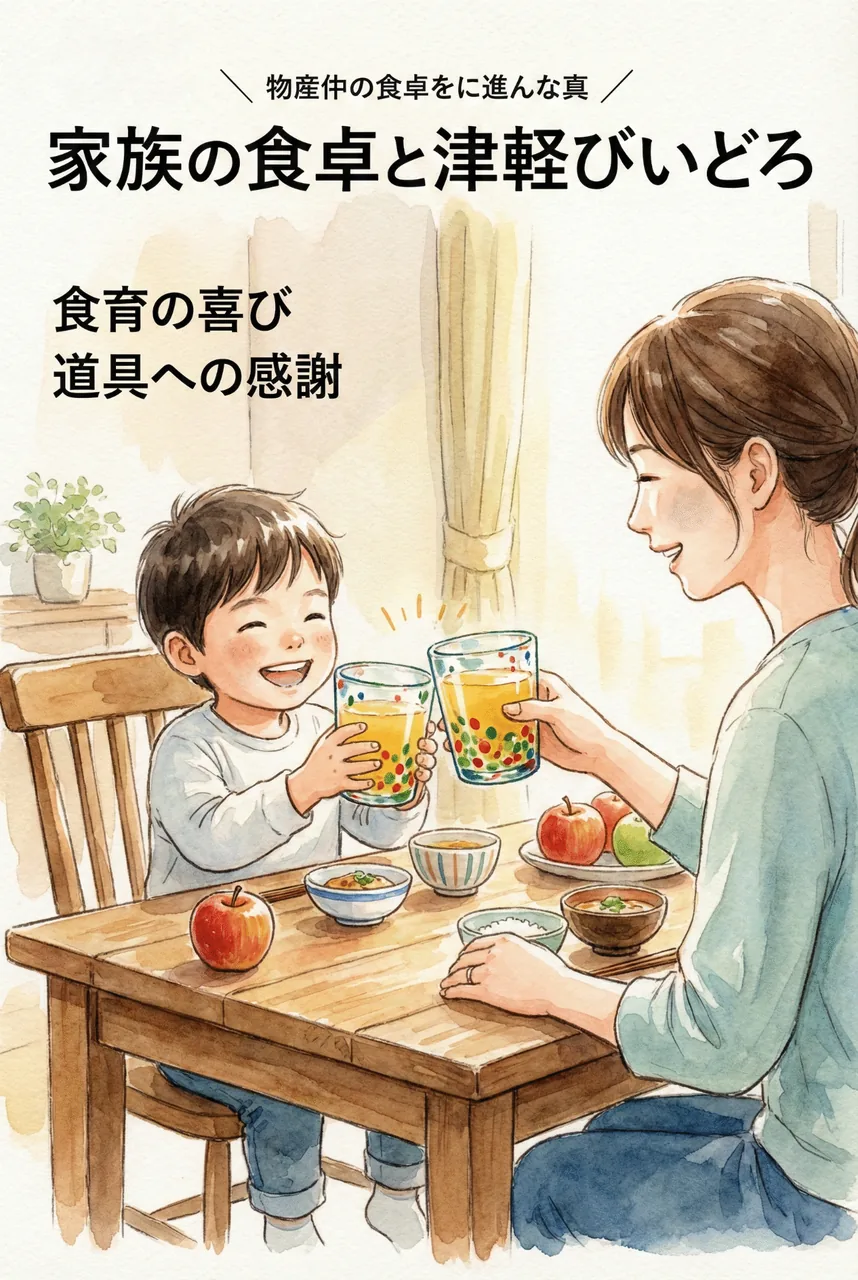
"This glass — that was the factory guy who puffed it up, right!"
Barley tea from home, or 100% apple juice from the store.
Even an everyday drink tastes mysteriously, many times better when you pour it into the "Tsugaru Vidro" glass made in that blazing factory.
There's none of the easy confidence you get from a plastic cup that won't break no matter how carelessly you handle it. But lifting the glass gently in both hands, feeling the coolness and weight of the glass against your lips — that one sip quietly teaches children "the value of things" and "a sense of gratitude."
For your next family trip, head to Aomori — where overwhelming Japanese craftsmanship and the best entertainment await. Set off on a journey to find a lifelong glass.