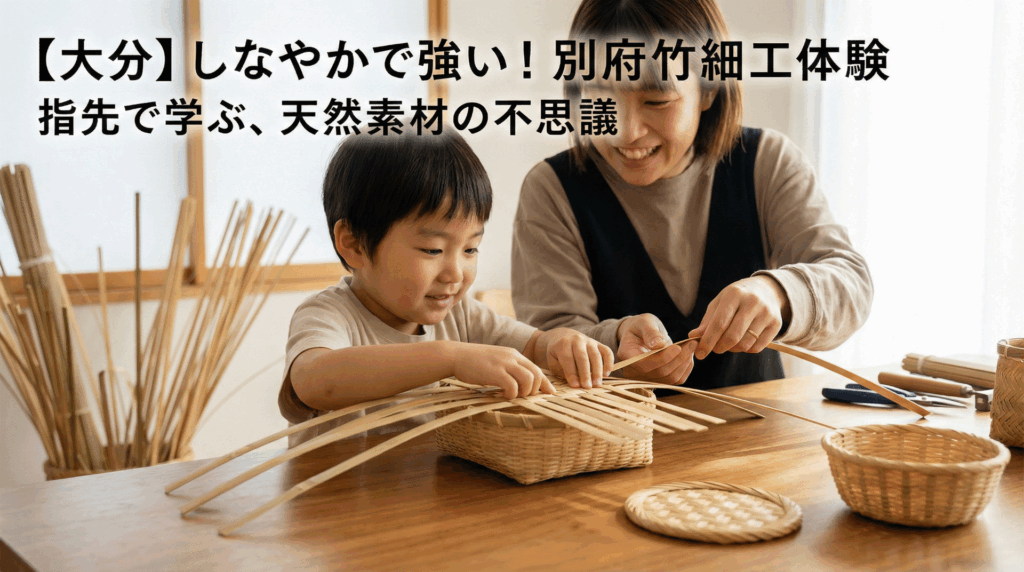
Most of the toys and tableware that surround children today are made of plastic.
While plastic is "convenient because it won't break if dropped, and cheap," opportunities to experience the true wonder and warmth of natural materials have dramatically decreased.
If you want to teach your child about "the wonder of natural materials," a "Beppu Bamboo Craft basket weaving experience" in Beppu, Oita Prefecture makes for the perfect family trip.
At the craft workshop, you'll receive thin, straight strips of bamboo called "takehigo."
You weave them together like a puzzle, alternating over and under, then bend them by hand to shape the basket.
"If I bend it this much, won't it snap?... Wait, it doesn't snap!?"
The moment children feel the spring-like "flexibility and resilience" of natural bamboo in their fingertips, their eyes go wide with amazement.
In this article, we'll fully guide you through the charm of bamboo craft experiences in Beppu — Japan's top hot spring destination — and the ultimate sightseeing itinerary to savor the brilliance of "bamboo kitchen tools" amid the steam.
Tips for Enjoying Bamboo Craft as a Family (30 sec read)
- Perfect for children's intellectual development: Weaving bamboo strips by the rule "over, under, over, under..." is like a puzzle and builds children's concentration.
- Experience the wonder of unbreakable bends: At angles that would snap plastic, bamboo bends gracefully. You can feel a plant's life force firsthand.
- "Tool education" combined with Jigoku Mushi cooking: Beppu's famous "Jigoku Mushi" (hell steaming) uses bamboo baskets inside high-temperature steam to cook food. A wonderful food and tool education to learn about bamboo's heat and water resistance.
- Easy to combine with a hot spring trip: It's close to Beppu's must-see sightseeing area (Jigoku Meguri), making it easy to incorporate into a model itinerary.
1. [Fun Science] Why Doesn't Bamboo Break When You Bend It?
Before the experience, let's explain to children the natural wonder: "How does straight bamboo become a round basket?"
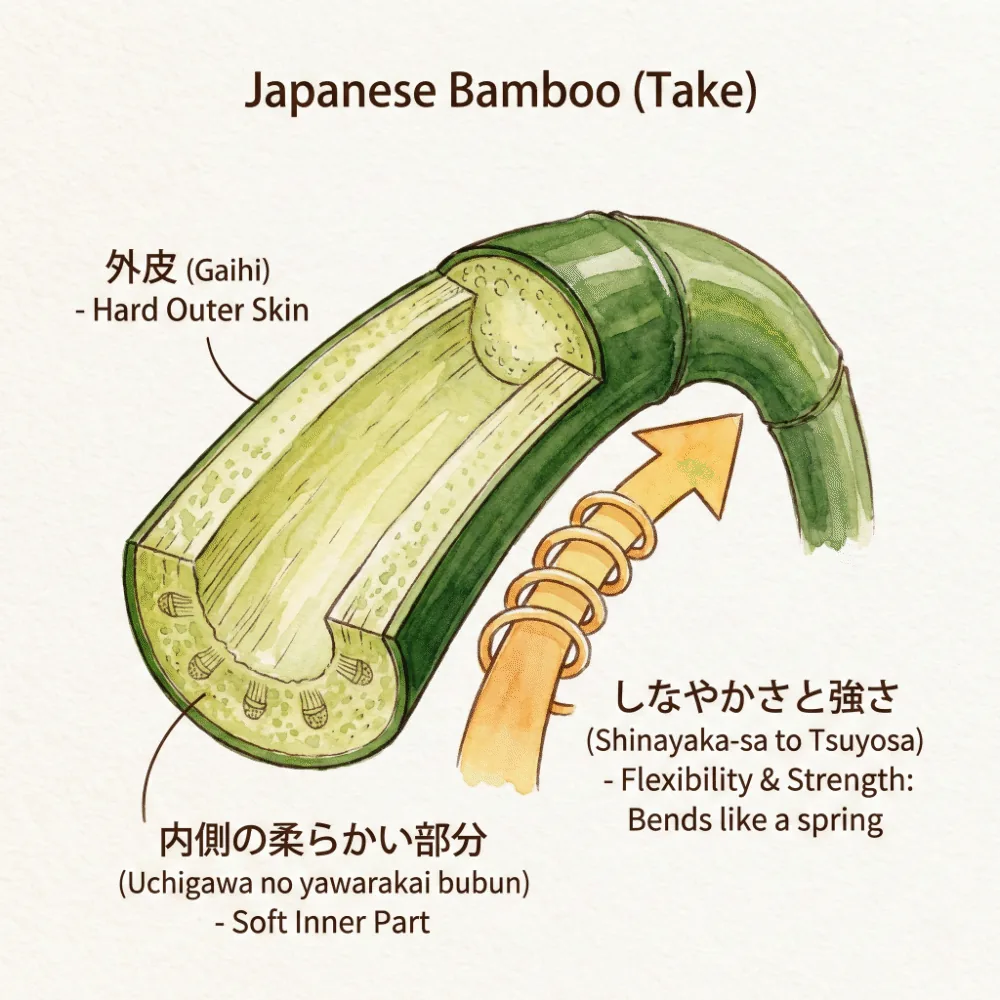
A "Dual Structure" of Hard Outer Skin and Soft Interior
If you try to forcefully bend wooden chopsticks, they snap with a "crack," right?
Bamboo, however, has an excellent dual structure: the outer skin is very "hard and tough," while the inner flesh is "soft and moisture-absorbent" like a sponge.
The combination of these two properties creates the ultimate "spring-like resilience" that bends in strong wind without breaking. Furthermore, when craftspeople split bamboo into millimeter-thin strips (takehigo), they can weave beautiful curved baskets without any breaking.
2. Over, Under, Over, Under! 3 Fun Steps to Completing a Basket
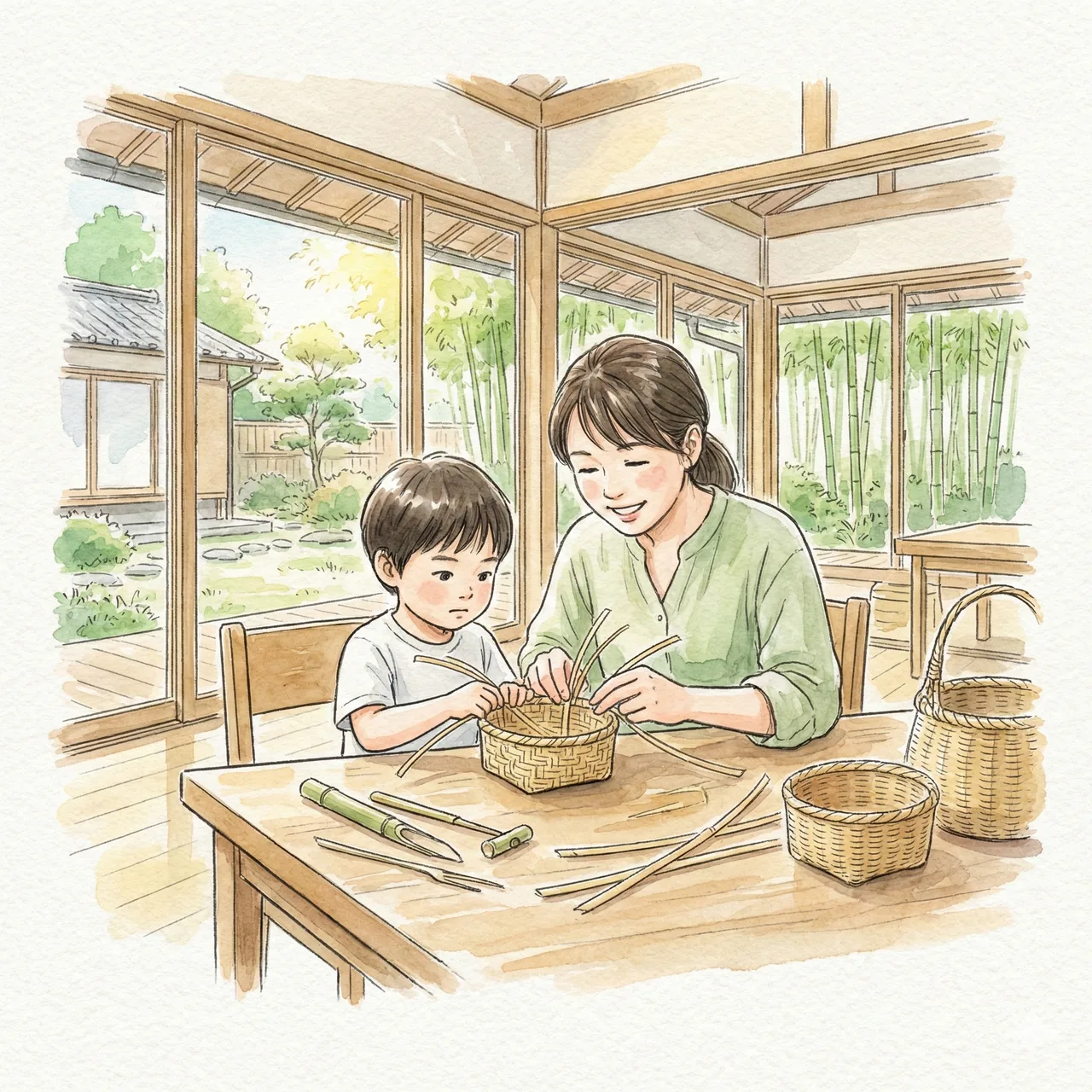
In the experience, you'll try making a "Shikainami (four-seas wave) basket" — one of the signature weaving styles of Beppu Bamboo Craft. Here are the fun puzzle-like steps.
| Step | What Happens & Key Points |
|---|---|
| ① Lay Out the Bamboo Strips |
[First: Make a Flat Mat] Lay several thin split bamboo strips on the table, then cross other strips over and under them alternately — "over, under, over, under..." — to weave a flat square sheet. Your concentration will be tested! |
| ② Press Up to Stand |
[Feel the Wonder of Unbreakable Bends!] Once the flat sheet is done, lift the corners of the bamboo strips upward. At angles that would snap plastic, bamboo traces a beautiful curve and "stands up into a basket shape." |
| ③ Tuck In the Ends to Finish |
[Parent and Child Cooperate to Finish] Fold the protruding ends of the bamboo strips into the basket rim to secure them. This requires a bit of strength and technique — time for mom or dad to step in! A beautiful wave-patterned (Shikainami) small basket is complete. |
3. [Oita/Beppu] 2 Recommended Bamboo Craft Experience Spots for Families
※ The pins on the map are spots featured in this article. Please check the official website for the latest information on prices and opening days.
① Beppu City Bamboo Craft Traditional Industry Hall | The Mecca of Beppu Bamboo Craft
An absolute must-visit museum displaying the history of Beppu bamboo craft and the unbelievably delicate works created by master craftspeople.
In the hands-on learning room, weaving experiences such as "bamboo bells" and "Shikainami baskets" are held daily. With patient instruction from craftspeople, even young elementary school children can complete a fine basket with parental support.
(※ Extremely popular — advance reservation by phone or similar is strongly recommended)
👨👩👧👦 Family & Fun Checklist
- Café and shop on site: The museum features a stylish shop and café where you can purchase lifelong bamboo kitchen tools (strainers, bento boxes, etc.).
Basic Info (Approximate)
- Experience: Shikainami flower basket, bamboo bell, etc. (※ Separate admission fee required)
- Duration: Approx. 40–60 minutes
- Price range: ¥800–¥2,000 (depending on item)
- Reservation: Advance booking recommended
4. [Model Itinerary] Jigoku Meguri & Basket Weaving! Beppu Day-Trip Schedule
Beppu's "onsen (heat and steam)" and "bamboo craft" are inseparably linked. Here is an exhilarating route to experience both at once!
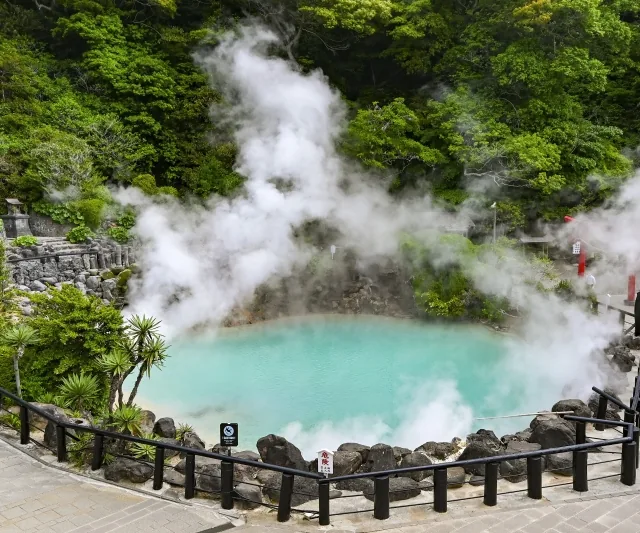
- 10:00 | Head to the classic Beppu sightseeing activity, "Jigoku Meguri"! Start with a visit to "Umi Jigoku (Sea Hell)", famous for its stunning cobalt blue waters
- 11:30 | Delicious lunch at "Jigoku Mushi Kitchen Kannawa".
(★ Vegetables and meat placed on bamboo baskets are steamed all at once by high-temperature hot spring steam! Experience the power of bamboo firsthand) - 13:30 | Drive to "Beppu City Bamboo Craft Traditional Industry Hall"!
(Weave bamboo strips together like a puzzle and experience making a Shikainami basket) - 15:30 | Head to the aquarium "Umitamago" that kids love — get excited watching walrus and dolphin shows
- 17:00 | Soak in a local Beppu day-use hot spring bath and head home warm and refreshed
5. Where to Play After the Experience! 3 Powerful Nearby Sightseeing & Dining Spots
① Jigoku Mushi Kitchen Kannawa | Taste the Power of Bamboo Baskets!
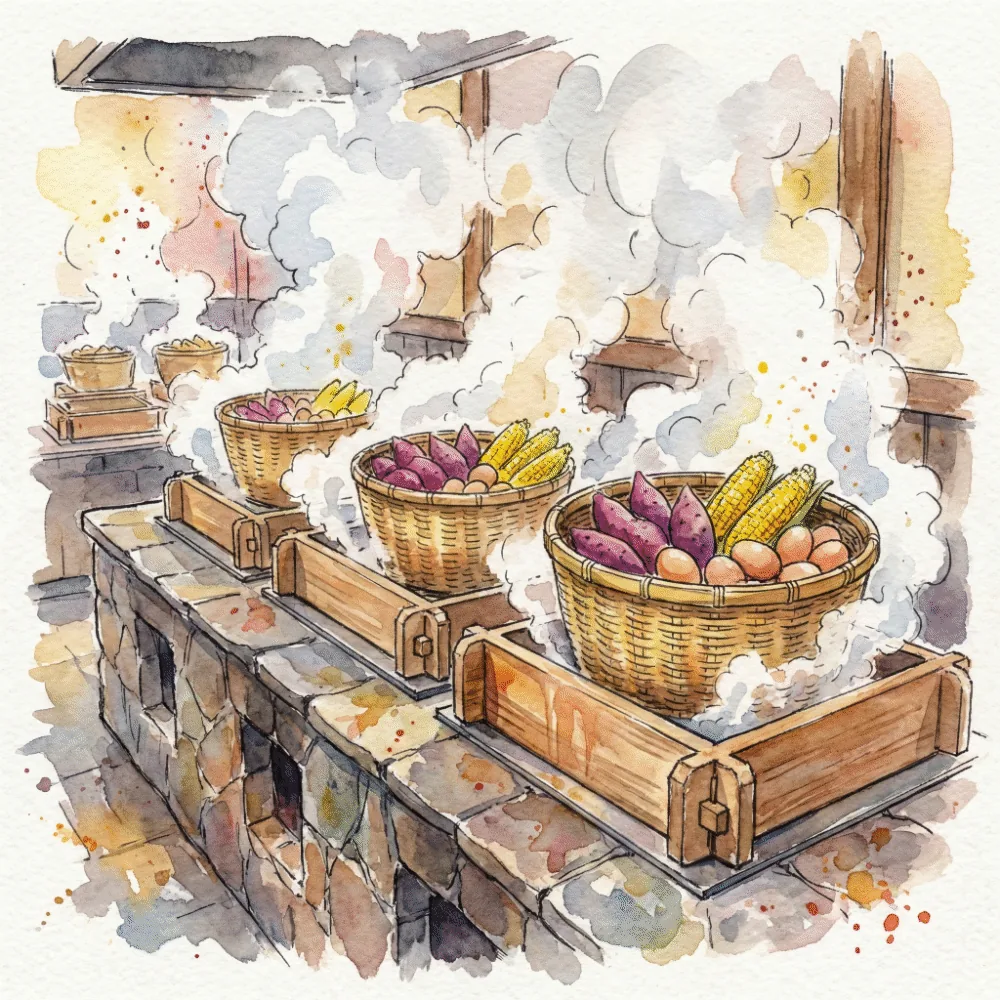
When visiting Beppu, you absolutely cannot miss "Jigoku Mushi" (hell steaming) — a cooking method dating back to the Edo period.
Fresh vegetables and meat laid on large bamboo baskets are placed inside approximately 100°C steam from the hot springs and cooked all at once.
Witnessing the toughness of bamboo baskets that repel water droplets and never melt or deform even at high temperatures, then eating the fluffy sweet potatoes and eggs steamed in those baskets, makes for outstanding food and tool education.
② Beppu Jigoku Meguri (Umi Jigoku, etc.) | Feel the Earth's Breath
A classic sightseeing route through the naturally spouting hot spring sources with spectacular appearances scattered around Beppu.
"Umi Jigoku (Sea Hell)" is particularly impressive — boiling water at about 98°C gushes from a surface of cool cobalt blue that belies its temperature, and the billowing white steam is breathtaking! There's also a foot bath in the grounds, making it perfect for a relaxed family stroll with towels in hand.
③ Oita Marine Palace Aquarium "Umitamago" | Interact with Animals
A hugely popular aquarium along Beppu Bay, famous for its incredibly close proximity to marine mammals such as walruses and dolphins.
In particular, the "Asobi-ichi Beach" area features an artificial sandy beach where dolphins and penguins come to play, and you can observe them right up close. After immersing yourself in "Japanese culture" through bamboo craft and Jigoku Meguri, this is the perfect finale spot to bring children's excitement to its peak.

6. After Basket Weaving, Relax in Famous Hot Springs! Recommended Beppu Hotels for Families
After fully concentrating on bending bamboo strips, and playing plenty at Umitamago and Jigoku Meguri, refresh in Beppu's hot springs — Japan's top hot spring destination by flow volume!
We've picked the most popular accommodations: "mega resort hotels" with pools and buffets beyond all expectations, and "family-friendly classic hot spring hotels" that are perfect as sightseeing base camps.
♨️ Kankaiji Onsen Area (THE Place for Family Stays in Beppu! An Extraordinary Resort)
Beppu Onsen Suginoi Hotel (ORIX HOTELS & RESORTS)
This is the first name that comes to mind for family trips to Beppu — a nationally acclaimed, ultra-popular entertainment hotel.
The panoramic open-air bath "Tanayuyu," the outdoor hot spring facility "Aqua Garden" where you can swim in swimwear, plus fountain shows and projection mapping — the entire hotel is a giant theme park! The luxurious buffet is also highly praised, and if you stay here after the bamboo craft experience, it will become an unforgettable trip for your children.
🏨 Beppu Station / City Center Area (Excellent Access to Jigoku Meguri! Best Value Hotel)
Kamenoi Hotel Beppu
A large hotel extremely popular with families for its excellent access within walking distance of Beppu Station and its affordable pricing.
In addition to spacious large baths and outdoor hot spring baths, the hotel features a candy shop area and festival game space inside, with plenty of things to delight children! The evening buffet also includes Oita local specialties like "Tori Ten (chicken tempura)" and "Jigoku Mushi," making it a highly convenient base for Beppu sightseeing.
🏨 KAI Beppu (Hoshino Resorts) | A Luxurious Local Experience
We recommend staying at "KAI Beppu," a hot spring inn operated by Hoshino Resorts.
The guest rooms with stunning views of Beppu Bay are "local-themed rooms" featuring Beppu bamboo craft throughout. Additionally, for guests there are exclusive activities such as "Gotochi-gaku (local culture learning)" that combines learning about Beppu Onsen's history with bamboo craft, and bamboo workshops may be available.
Surrounded by exquisite hot springs and traditional crafts, the family's memories will deepen even further.
Basic Info (Approximate)
- Access: Approx. 10 minutes on foot from Beppu Station
- Features: Space with modern arrangements of Beppu bamboo craft, interior modeled after the hot spring town
7. [After Returning Home] No Dishwasher! How to Care for Bamboo Strainers & Baskets Without Mold
Many families who fall in love with bamboo's strength and beauty buy a "bamboo strainer" or "bamboo bento box" as a souvenir. Here are the rules for enjoying natural bamboo items for a long time.
3 Promises to Make Bamboo Products Last a Lifetime
- ① Absolutely NO dishwasher or dryer! (High heat and rapid drying cause bamboo to split and crack. Wash gently by hand with a regular sponge and dish soap)
- ② "Dry thoroughly" after washing (Bamboo's only weakness is "mold from moisture." After washing, wipe off water with a cloth and dry thoroughly in a well-ventilated, shaded area)
- ③ Do not store in plastic bags (Poor ventilation causes mold. The best secret to longevity is hanging them on the kitchen wall as "display storage"!)
🧺 Dramatically Improve Your Kitchen! Recommended "Bamboo Tools"
Unlike stainless steel strainers, bamboo strainers drain water so well that soba and udon noodles never get soggy — dramatically improving the flavor. And bamboo bento boxes (such as Ajiro weave) absorb just the right amount of moisture from rice so it stays delicious even when cold. Why not welcome into your home these lifelong tools born of Japan's natural environment, brimming with functional beauty?
Summary: The "Flexibility" Plastic Can't Match Nurtures Sensitivity
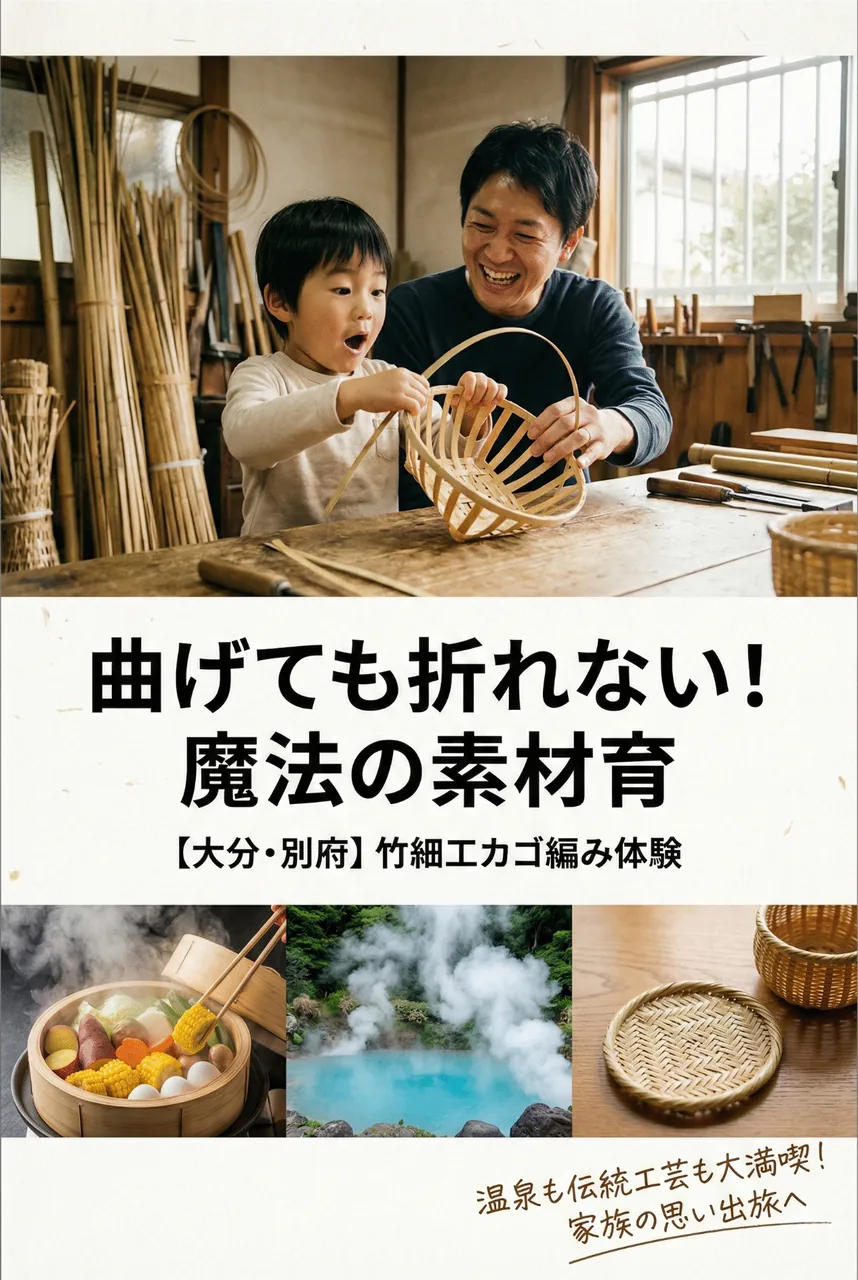
"Dad, look! The bamboo bent this much!"
In a Beppu workshop, the moment a hard, straight "bamboo strip" transforms into a round, supple "basket" through the power of your own fingertips —
that is an emotion with texture that you can never get from a digital everyday life of just swiping a screen.
Using plastic dishes so nothing breaks is certainly convenient, but sometimes try using a natural tool that requires care (such as a bamboo strainer) — one that needs to be "hung in a well-ventilated spot to dry" after washing so it won't mold.
That "time spent looking after your tools" is what nurtures in children both a heart that treasures things, and a rich, sensitive spirit.
On your next holiday, why not set out on a trip to Oita and Beppu — where you can soak in warm, wonderful hot springs, savor the exquisite Jigoku Mushi cuisine, and connect with Japan's strong and beautiful "bamboo"?