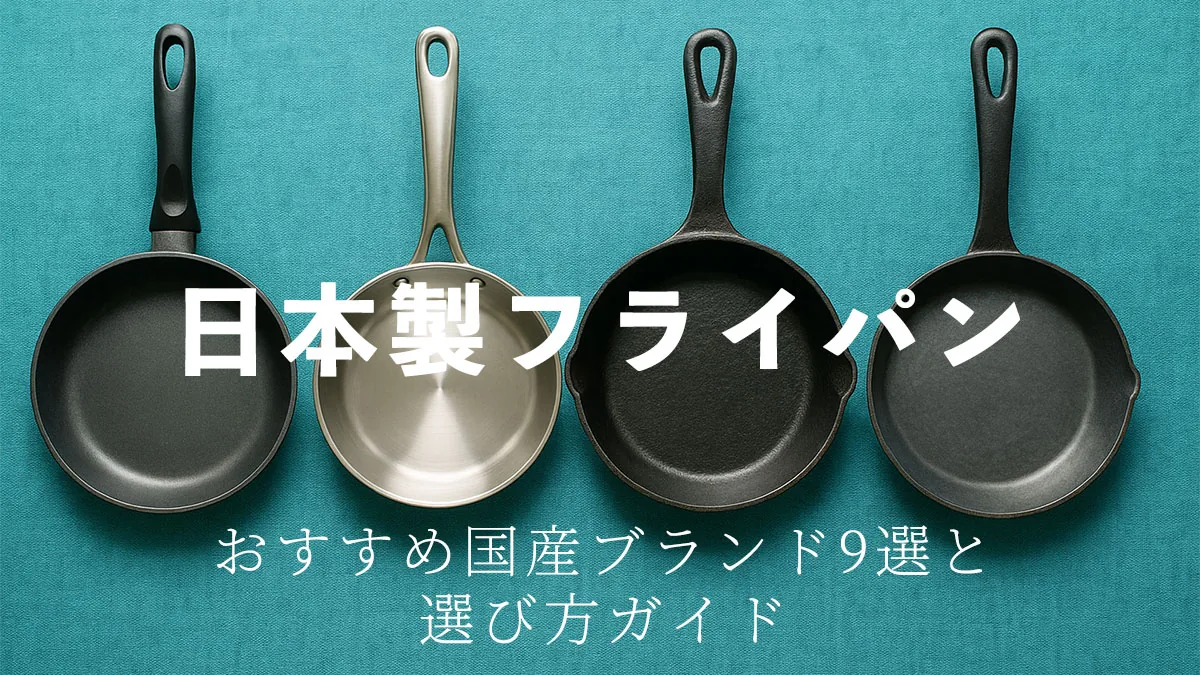
The best detachable handle pan from Japan is the COCOpan 極SONS for iron cooking performance, the Miyazaki Seisakusho Zutto (十得鍋) for stainless versatility, or the Hokuriku Aluminium CAST VARIUS for a lightweight non-stick option. All three are made in Japan and designed around the same idea: one handle, multiple pots and pans, compact enough to stack in a small cabinet.
This guide explains what makes a detachable handle pan worth buying, how to choose the right material, and which Japanese brands deliver genuine quality — not just a clever marketing concept.
Quick Reference: Detachable Handle Pan Materials Compared
| Material | Weight | Non-stick | Oven safe | Best for |
|---|---|---|---|---|
| Iron (nitrided) | Heavy | Improves over time | Yes (any temp) | Steak, searing, long-term use |
| Stainless (multi-ply) | Medium | Needs preheat technique | Yes | Versatile cooking, sauces, soups |
| Cast aluminum (coated) | Light | Excellent (new) | Check limit (≤200°C) | Everyday cooking, eggs, fish |
Why choose a detachable handle pan?
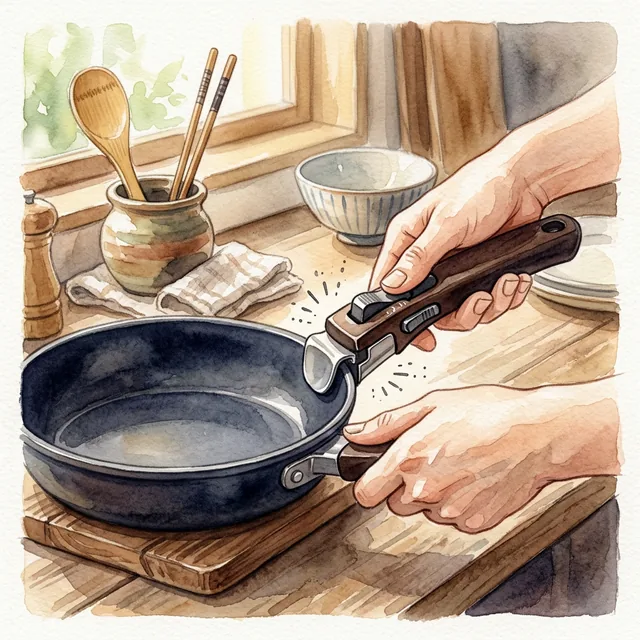
A detachable handle pan solves three problems at once:
- Storage
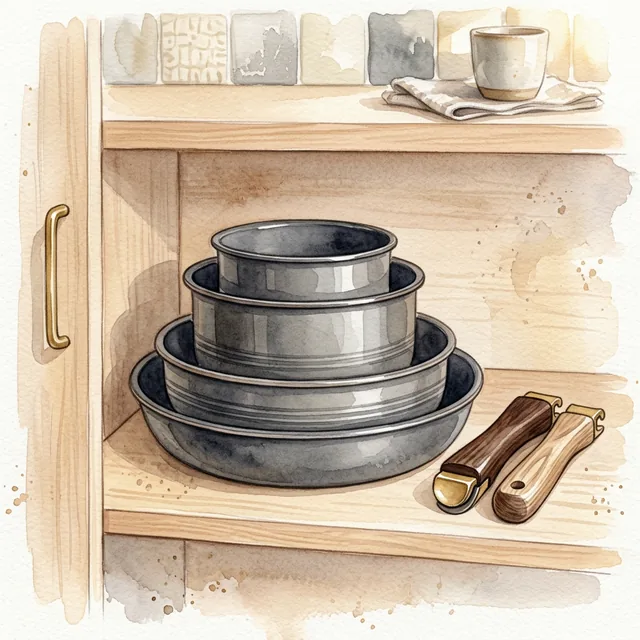
- Without a handle sticking out, pans stack flat like plates. A full set fits in the space of one conventional pan.
- Oven cooking
- Silicone or resin handles can't go in the oven. A bare handleless pan can. Start a dish on the stove, finish it under the broiler — no transferring.
- Serve at the table
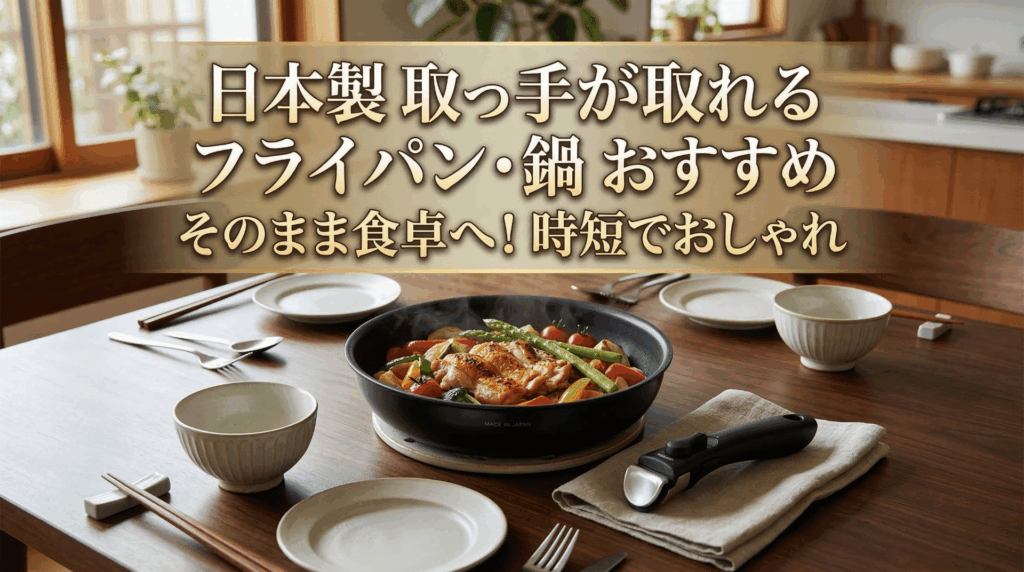
- A hot pan without a handle is safer and more presentable on the table. The pan doubles as a serving vessel, especially for dishes like gratins or frittatas.
The concept is common in Europe (especially France), but Japanese manufacturers have refined the handle mechanism itself — tighter tolerances, more secure locking, and more durable materials — resulting in pans that feel solid even under high heat.
Why Japanese-made?
Japan's cookware manufacturing centers — Tsubame-Sanjo in Niigata, Takaoka in Toyama, and the Kanto industrial belt — are known for precision metalworking with roots going back centuries. But what sets Japanese detachable handle pans apart isn't just heritage; it's the mechanism engineering.
The handle attachment point is the most stress-concentrated part of any pan. Cheap versions wobble after a few months; the locking ring loosens; the pan feels unsafe. Japanese manufacturers treat the attachment mechanism with the same precision they apply to the pan body itself. COCOpan uses a hand-inspected engagement ring on every unit. Miyazaki Seisakusho's Zutto (十得鍋) system uses a single-motion lock that holds firm even with a heavy pot of boiling water.
Additionally, Japanese-made versions are typically available in multiple sizes that share the same handle — meaning one handle fits all your pots and pans in the set. This cross-compatibility within a brand's lineup is well-engineered and reliable, not an afterthought.
Did you know? The city of Tsubame-Sanjo, where Miyazaki Seisakusho is based, has been a metalworking hub since the Edo period (1603–1868). Originally famous for producing nails, the region evolved into one of the world's top clusters for precision metal goods. Today it exports cutlery, cookware, and hardware to over 100 countries.
How to choose the right material
Iron: if you want one pan to last a lifetime
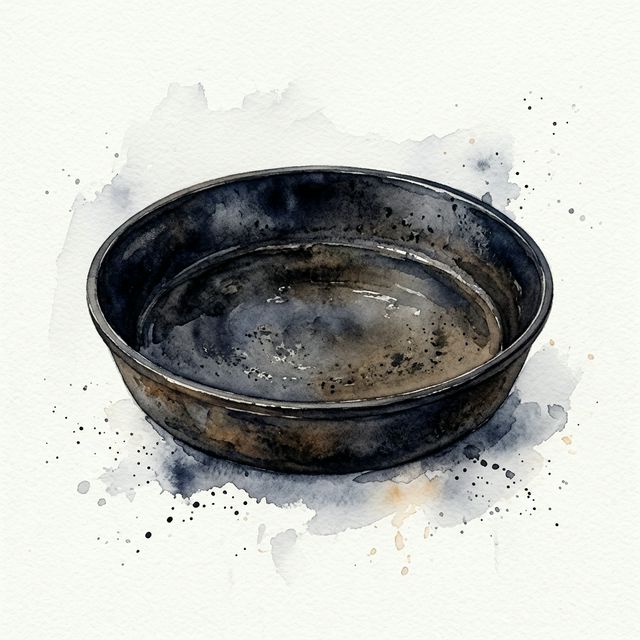
Iron detachable handle pans are the most demanding to learn but the most rewarding long-term. They get better with use as the seasoning layer builds up, and they can handle any heat source including induction.
Best for: Home cooks who already like iron pans, high-heat cooking (steak, stir-fry), and people who want a forever pan.
Consider if: You're willing to learn basic care (no soaking, dry after washing). Modern nitrided iron pans like COCOpan require much less maintenance than traditional iron.
Stainless: if you want versatility without restrictions
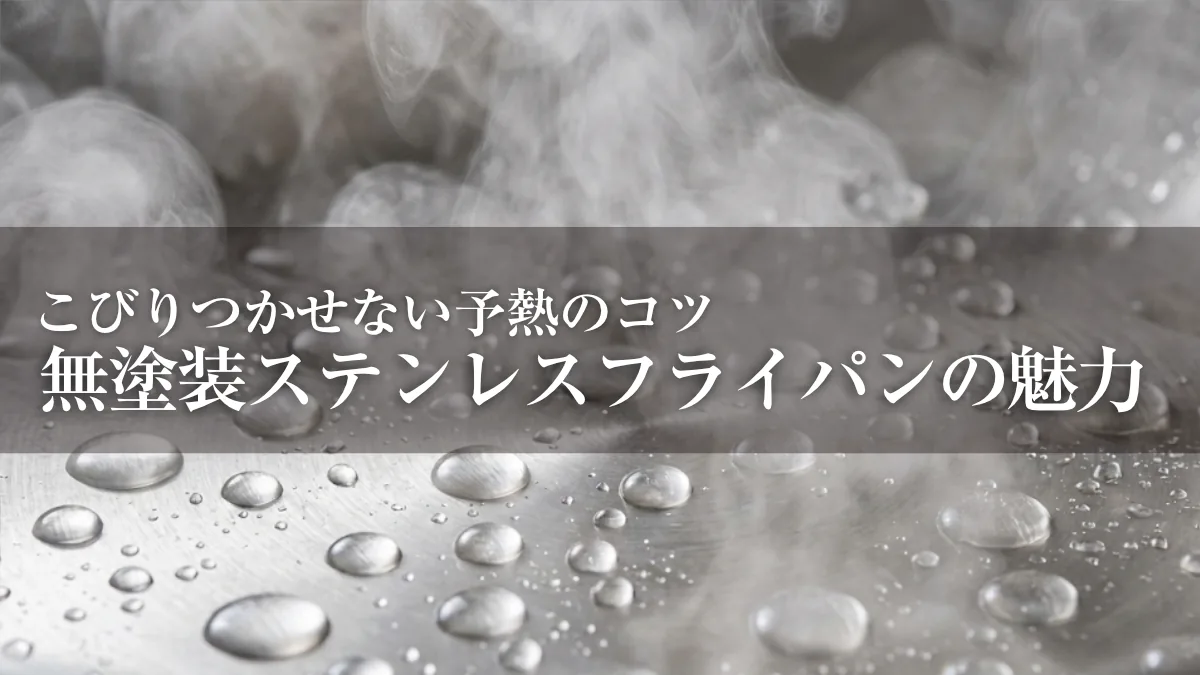
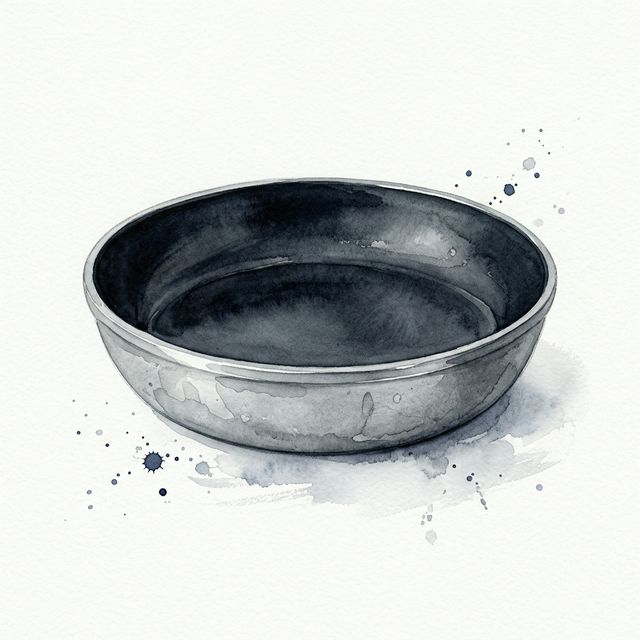
Multi-ply stainless pans work on all heat sources, go in the dishwasher (depending on the brand), and can handle acidic foods without reaction. The trade-off is the learning curve: food sticks if you don't preheat correctly.
Best for: Cooks who want one set for everything — stir-frying, simmering soups, pasta sauces, and oven baking.
Consider if: You're comfortable with the preheat-then-add-oil technique, or willing to learn it. The Leidenfrost water bead test (explained here) removes the guesswork.
Cast aluminum (coated): if you want low-effort everyday cooking
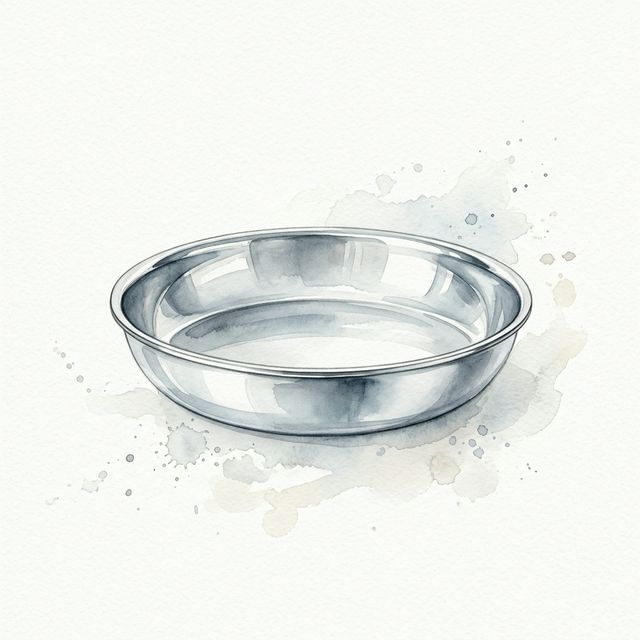
Coated cast aluminum is the easiest to use: food releases without any special technique, cleanup takes seconds, and the pan is light enough to handle one-handed. The coating will eventually wear — typically 3–5 years with daily use.
Best for: Everyday cooking, eggs, fish, pancakes, anyone transitioning away from older non-stick pans.
Consider if: You want minimal fuss and are fine with replacing the pan in a few years. Look for PFAS-free coatings (like Silkware EZ used by Hokuriku Aluminium).
Size: what fits your household?
Most Japanese detachable handle pan sets are built around two or three core sizes. A common lineup:
- 20 cm (8 in): Perfect for 1–2 people, eggs, small portions
- 24 cm (9.5 in): Standard for 2–3 people, the most versatile size
- 26 cm (10 in): Family cooking, larger proteins, shallow braises
If you're buying a set, start with a 20 cm and 24 cm. One handle fits both — that's the point.
Top Japanese detachable handle pans
COCOpan 極SONS — Iron (Nitrided)
COCOpan is made by Riverlight, the Chiba-based manufacturer behind the popular Kiwame JAPAN iron pan line. The 極SONS (Kiwame SONS) applies the same nitriding technology — a heat treatment that forms a rust-resistant surface layer in the iron itself — to a detachable handle design.
Each pan has a serial number engraved on the body, reflecting a commitment to traceability and quality control. The handle mechanism clicks firmly into place and has no wobble under load. The nitrided surface means you don't need to season the pan before first use, and cleanup is simpler than traditional iron.
- Material
- Nitrided iron
- Made in
- Shiroi City, Chiba Prefecture
- IH compatible
- Yes
- Oven safe
- Yes (handle removed)
- Best for
- Searing, stir-fry, long-term use
Perfect for: Anyone who wants the performance and longevity of iron without the heavy initial seasoning process. The nitrided surface is more beginner-friendly than traditional iron while still improving with use.
Miyazaki Seisakusho 十得鍋 (Zutto) — Stainless Multi-Ply
Miyazaki Seisakusho has been producing cookware in Tsubame City, Niigata since 1974. Their 十得鍋 (Zutto — meaning "always") is a three-ply stainless-aluminum-stainless pan system where a single detachable handle works across the entire lineup: frying pans, saucepans, and stewpots.
The mirror-polished interior gives the pan a premium look and makes it easy to spot residue during cleaning. The brand offers a "Zutto Care" long-term maintenance service — if your pan is damaged or develops issues, Miyazaki Seisakusho will repair or refinish it. That kind of after-service commitment is rare.
- Material
- 3-ply stainless-aluminum-stainless
- Made in
- Tsubame City, Niigata Prefecture
- IH compatible
- Yes
- Oven safe
- Yes (handle removed)
- Dishwasher safe
- Yes
- Best for
- Versatile cooking, families, long-term ownership
Perfect for: Cooks who want one system for everything — from morning eggs to weekend braises. The stainless construction handles acidic sauces without reaction, and the dishwasher compatibility makes daily cleanup easy.
Hokuriku Aluminium CAST VARIUS — Cast Aluminum (PFAS-Free)
Hokuriku Aluminium has been manufacturing cookware in Takaoka City, Toyama since 1948. The CAST VARIUS line uses cast aluminum — thicker and more heat-stable than pressed aluminum — with a Silkware EZ non-stick coating that is PFOA and PFAS free.
The handle mechanism uses a Trident 3-point locking system that clicks into place from three contact points simultaneously, distributing the load more evenly than a single-point lock. The result is a pan that feels more secure under a full load. The cast body gives even heat distribution that pressed aluminum can't match.
- Material
- Cast aluminum with Silkware EZ PFAS-free coating
- Made in
- Takaoka City, Toyama Prefecture
- IH compatible
- Check product listing (gas and IH versions available)
- Oven safe
- Up to 200°C (392°F) with handle removed
- Best for
- Lightweight cooking, PFAS-free households, everyday use
Perfect for: Anyone looking to upgrade from standard non-stick without giving up convenience. The PFAS-free coating and Japanese manufacturing standards offer better peace of mind than imported budget non-stick pans.
Care by material
Iron (COCOpan 極SONS)
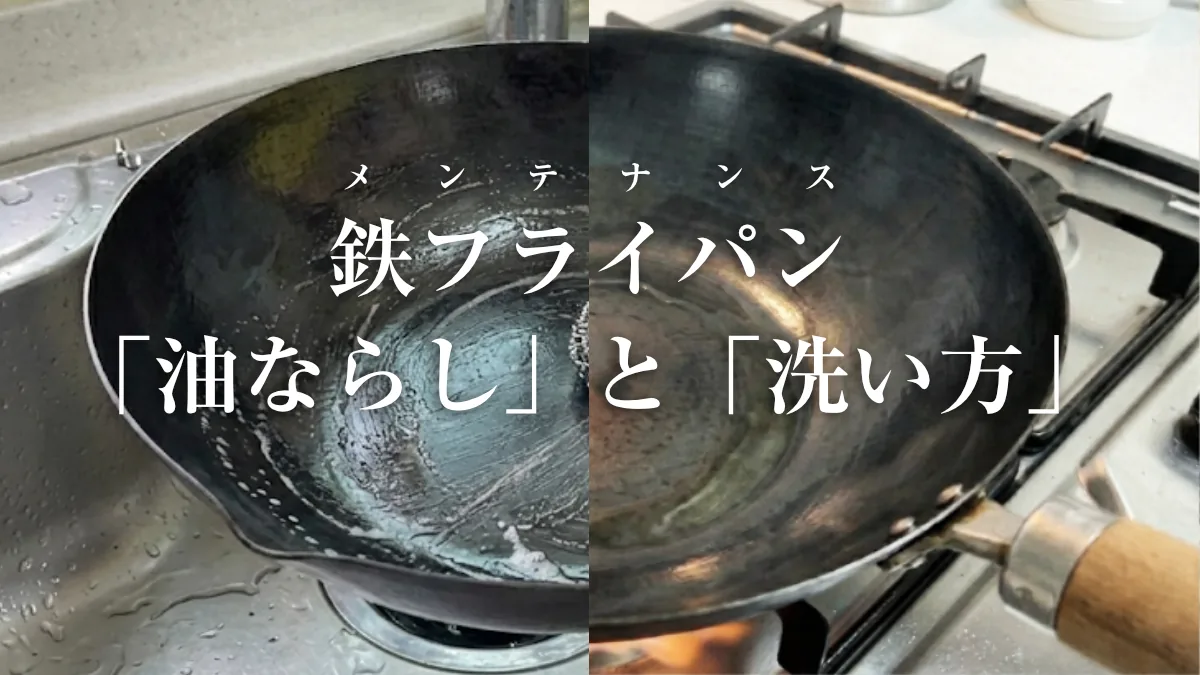
- Wash with hot water while still warm. For nitrided iron, a small amount of dish soap is generally fine — check your brand's instructions. Avoid soaking.
- Heat-dry on the stove for 1–2 minutes. This is the most important step. Residual moisture is the main cause of rust, even on nitrided surfaces.
- Apply a thin film of cooking oil with a paper towel while still warm. Wipe off any excess — you want a very thin coat, not a puddle.
If rust does appear, scrub with a fine sponge or chain mail scrubber, wash, dry thoroughly on the stove, and re-oil. Most iron pan rust issues resolve in under five minutes.
Stainless (Miyazaki Seisakusho Zutto)
- Soap and water after every use — stainless has no seasoning layer to protect.
- For stubborn stuck food, deglaze with water while the pan is still warm. Most residue loosens immediately.
- Avoid metal scourers on the mirror interior. A soft sponge or Bar Keepers Friend (oxalic acid powder) keeps the polish clean.
- Dishwasher safe — but hand washing extends the life of the mirror finish.
Cast aluminum / PFAS-free coating (CAST VARIUS)
- Use soft sponge only. Abrasive pads scratch the coating and shorten its life.
- Medium heat or below — high heat accelerates coating degradation.
- Never heat an empty coated pan. Always add oil or food before turning on the heat.
- When the coating shows visible damage (peeling, deep scratches), it's time to replace. The non-stick performance will have already declined significantly before that point.
Handle maintenance
Regardless of the pan material, check the handle mechanism every few months. If the lock feels loose, wipe both the pan ring and handle connection point clean of any grease buildup. Most "wobbly handle" issues are caused by oil residue in the locking groove, not mechanical wear.
FAQ
Are detachable handle pans safe to use?
Yes, when the handle mechanism is properly engaged. The key is always confirming the lock is fully clicked before lifting a heavy or full pan. Japanese-made versions from brands like COCOpan and Miyazaki Seisakusho have tighter tolerances than most imported options, which reduces the risk of accidental disengagement. Never try to force the handle onto a bent or warped attachment ring.
Can I put a detachable handle pan in the oven?
Yes — that's one of the main advantages. Remove the handle, and the pan body itself is oven-safe. For iron and stainless, there is no temperature limit (within normal oven ranges). For coated aluminum like the CAST VARIUS, check the manufacturer's limit — typically 200°C (392°F). Always use oven mitts when handling a handleless pan in or out of the oven.
Is one handle compatible across different pan sizes in the same brand?
Yes, within the same product line. Miyazaki Seisakusho's Zutto system is specifically designed so one handle fits all pots and pans in the lineup, from small saucepans to large frying pans. COCOpan 極SONS also follows this model. Always verify compatibility before mixing sizes or buying replacement handles.
How do I store detachable handle pans?
Stack them directly on top of each other, like plates or lids. Without a handle sticking out, they take up minimal drawer or cabinet space. For coated pans, place a soft cloth or pan protector between each pan to avoid scratching the coating during storage. Iron and stainless pans can stack directly — no scratch risk.
Which material is the most beginner-friendly?
Cast aluminum with a non-stick coating (like the Hokuriku Aluminium CAST VARIUS) is the most beginner-friendly — food releases without special technique and cleanup is instant. Nitrided iron (COCOpan 極SONS) is more beginner-friendly than traditional iron because it doesn't require initial seasoning. Stainless requires the most technique (preheat-then-oil) but delivers the most cooking versatility once mastered.
Can I buy replacement handles separately?
Yes, most Japanese brands sell replacement handles separately. Miyazaki Seisakusho's Zutto system and COCOpan both have handles available individually. This is actually one of the long-term advantages of a Japanese-made system: the brand's commitment to after-service means parts remain available years after purchase. Miyazaki Seisakusho offers "Zutto Care" maintenance support specifically for this reason.
Summary
Detachable handle pans solve real problems — storage, oven flexibility, and serving directly from pan to table — without forcing any cooking compromises. The best Japanese options go further by engineering the handle mechanism itself with the same precision as the pan body.
Choose COCOpan 極SONS if you want iron performance without the traditional iron learning curve. Choose Miyazaki Seisakusho Zutto (十得鍋) if you want a stainless system that handles everything and comes with genuine long-term manufacturer support. Choose Hokuriku Aluminium CAST VARIUS if you want the simplest daily cooking experience with a PFAS-free coating made to Japanese standards.