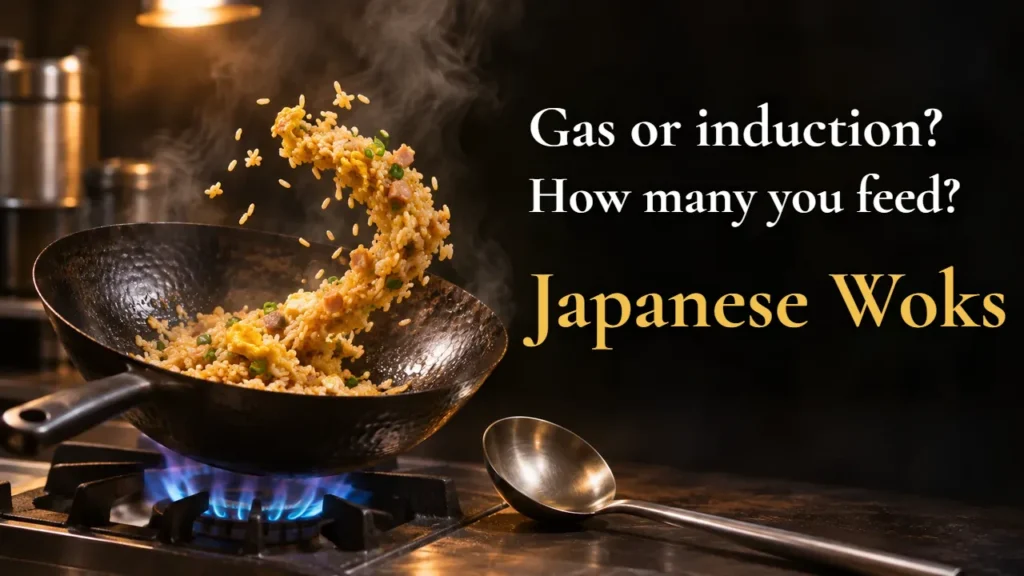
A wok has a round bottom so heat spreads evenly through the food and you can stir-fry over a fierce flame. The curve of a ladle follows the curve of the pan, so tossing never stops mid-motion.
The catch: a round-bottomed wok won't work on induction. So before you choose a maker, answer one question: gas, or induction and electric? Then decide how many you cook for (about 24 cm for one or two, around 30 cm for a family), and whether you'll toss the pan with one handle or cook steadily with two. Once those three are settled, the right wok almost picks itself.
In Japan, a wok is a chukanabe, "Chinese pan." This guide covers ten made in Japan: the hand-hammered iron of Yamada Kogyosho in Yokohama, titanium and iron from Tsubame-Sanjo, rust-resistant nitrided iron, and Nambu cast iron from Morioka. Seven of them can be bought on Amazon.com.
Quick Reference: Which Japanese Wok Fits Your Kitchen
| If you want... | Pick | Heat | Why |
|---|---|---|---|
| Tossing fried rice over gas | |||
| The hand-hammered wok chefs use | Yamada Kogyosho One-Handle Wok 30 cm ▾ | Gas | One sheet of iron, hammered into shape; about 980 g |
| Your arm tires when you toss | Hasegen Titanium Beijing Wok 30 cm ▾ | Gas | 660 g at 30 cm; sold in Japan |
| Cooking for one or two | |||
| A small wok, still hand-hammered | Yamada Kogyosho One-Handle Wok 24 cm ▾ | Gas | About 670 g, right for one or two |
| Induction, ready to use on day one | Fujita Kinzoku Swing Pan Mini Wok ▾ | Gas, induction | 20 cm, no seasoning needed; sold in Japan |
| Induction or electric cooktops | |||
| Iron, but worried about rust | Riverlight Kiwame Wok 28 cm ▾ | Gas, induction | Nitrided iron resists rust; oven-safe without the handle |
| To toss a wok on induction | enzo Iron Wok 26 cm ▾ | Gas, induction | Iron pared down to 770 g |
| To wash it with dish soap | Fujinos Triple-Layer Wok 31 cm ▾ | Gas, induction | Stainless and aluminum, no seasoning to keep up |
| Family meals, deep-frying, braising (two handles) | |||
| Stir-fry to deep-fry, one wok, gas | Yamada Kogyosho Two-Handle Wok ▾ | Gas | Food moves without tossing |
| A big two-handled wok on induction | Fujita Kinzoku Two-Handle Wok 33 cm ▾ | Gas, induction | 6.6 L to the brim; sold in Japan |
| A wok that holds its heat | Iwachu Nambu Cast Iron Wok ▾ | Gas | About 4 mm thick; the temperature barely drops |
Tap a name to jump to its review.
1. Why Japanese: Iron Hammered Thousands of Times
Most woks are pressed: a die stamps a sheet of steel into shape in one go. Yamada Kogyosho in Yokohama makes its woks by uchidashi, hammering a single sheet of iron into shape with a machine-driven hammer. One wok takes about 5,000 blows, and a large one up to 8,000, according to Japanese press coverage of the workshop.
Hammering lets the maker vary the thickness: thicker at the bottom, thinner up the sides where the flame licks. The result heats evenly and takes high heat, and the fine dimpled surface helps oil cling as the wok seasons.
Around it, other Japanese makers have solved the problems a home cook actually has: Tsubame-Sanjo titanium that halves the weight, iron nitrided against rust, a stainless-and-aluminum wok you can wash with soap, and Nambu cast iron that holds heat for deep-frying. Each one is shaped around a way of cooking.
2. How to Choose: Heat Source, Size, One Handle or Two
1) Heat source: round bottom for gas, flat bottom for induction
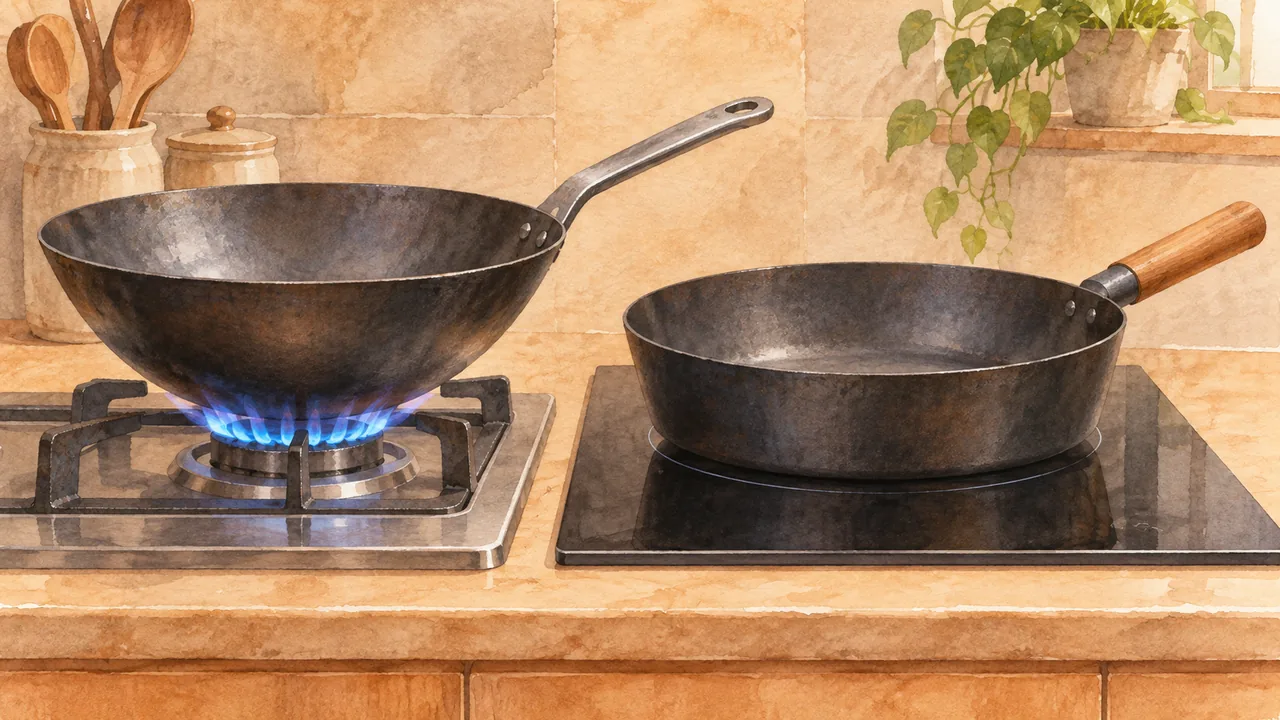
A traditional round-bottomed wok is for gas only. On induction, choose a wok made with a flat bottom and marked as induction-compatible; on an electric coil or glass-top stove, a flat bottom also keeps the pan in contact with the heat. Even on gas, a round bottom can rock a little on the burner grate.
2) Size: 24 cm for one or two, 30 cm for three or four
Shops that sell Yamada's woks suggest 24 cm for one or two people and 30 cm for three or four. Because the bottom is round, a wok gives you less flat area than a frying pan of the same diameter, so go one size up from the frying pan you use now. (24 cm is about 9.5 inches; 30 cm is about 12.)
3) Handles: one to toss, two to do everything
A wok with one long handle is called a Beijing wok (pekin-nabe) in Japan, made for tossing fried rice and stir-fries. A wok with two loop handles is a Cantonese wok (kanton-nabe). It sits steady on the stove and handles stir-frying, braising and deep-frying.
4) Material and care: season iron, or skip the upkeep
An iron wok gets easier to use as oil builds up on it, but it needs drying over heat after each wash. To cut the care, choose Riverlight's nitrided iron or Fujinos's triple-layer wok, which takes dish soap. For a wok that stores heat, even if it's heavy, choose Iwachu's Nambu cast iron.
3. Tossing Over Gas: Hammered Iron and Light Titanium
Yamada Kogyosho Hand-Hammered Wok, One Handle, 30 cm: one sheet of iron, about 5,000 blows
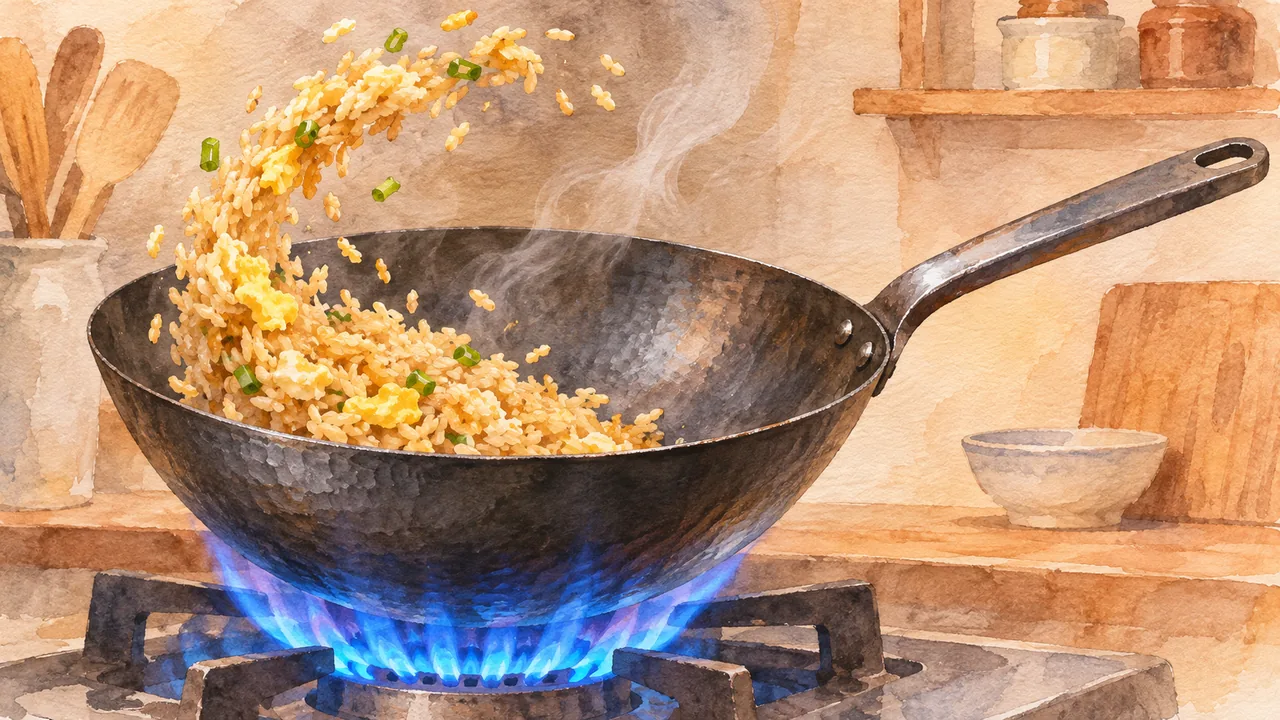
For cooking in the wok chefs use: Yamada's hammered Beijing wok. One sheet of iron is struck into shape, thicker at the base and thinner at the sides, so it heats evenly and handles a fierce flame. The hammered surface helps oil take hold.
This one is 1.2 mm iron and weighs about 980 g, big enough for fried rice and stir-fries for three or four. In Japan, Yamada also sells versions already burned off at the factory; check the listing for whether yours needs the first burn-off (see section 7). Gas only.
Yamada Kogyosho Hand-Hammered Iron Wok, One Handle, 30 cm (1.2 mm)
Loading product details…
Hasegen Pure Titanium Beijing Wok 30 cm: 660 g, easy on the arm
For anyone whose arm gives out mid-toss: a titanium Beijing wok from Hasegen in Tsubame-Sanjo. Titanium weighs about half as much as stainless steel. At 30 cm this wok weighs about 660 g, roughly a third lighter than Yamada's iron wok of the same size.
It resists rust and doesn't give off a metallic smell. The handle is titanium too, made in one piece with the body. It also comes in 27, 33 and 36 cm, for gas only. We couldn't find it on Amazon.com; it is sold in Japan.
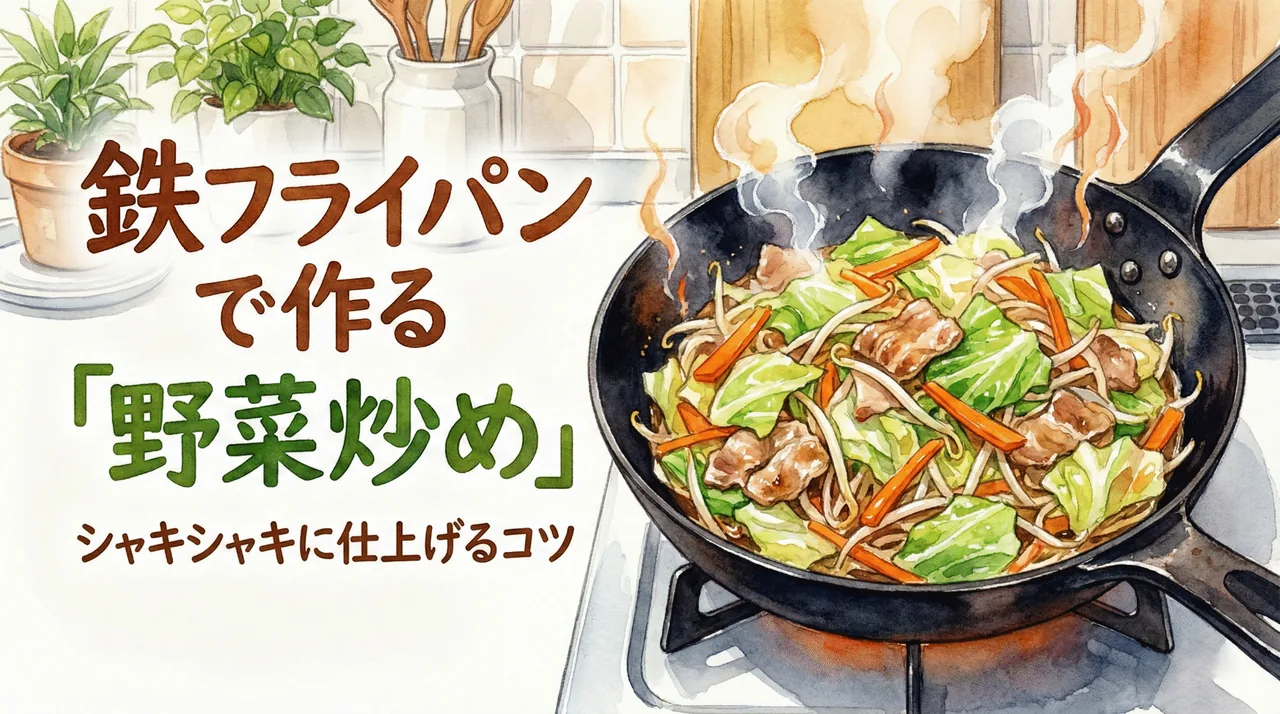
4. For One or Two: 24 cm and 20 cm Woks
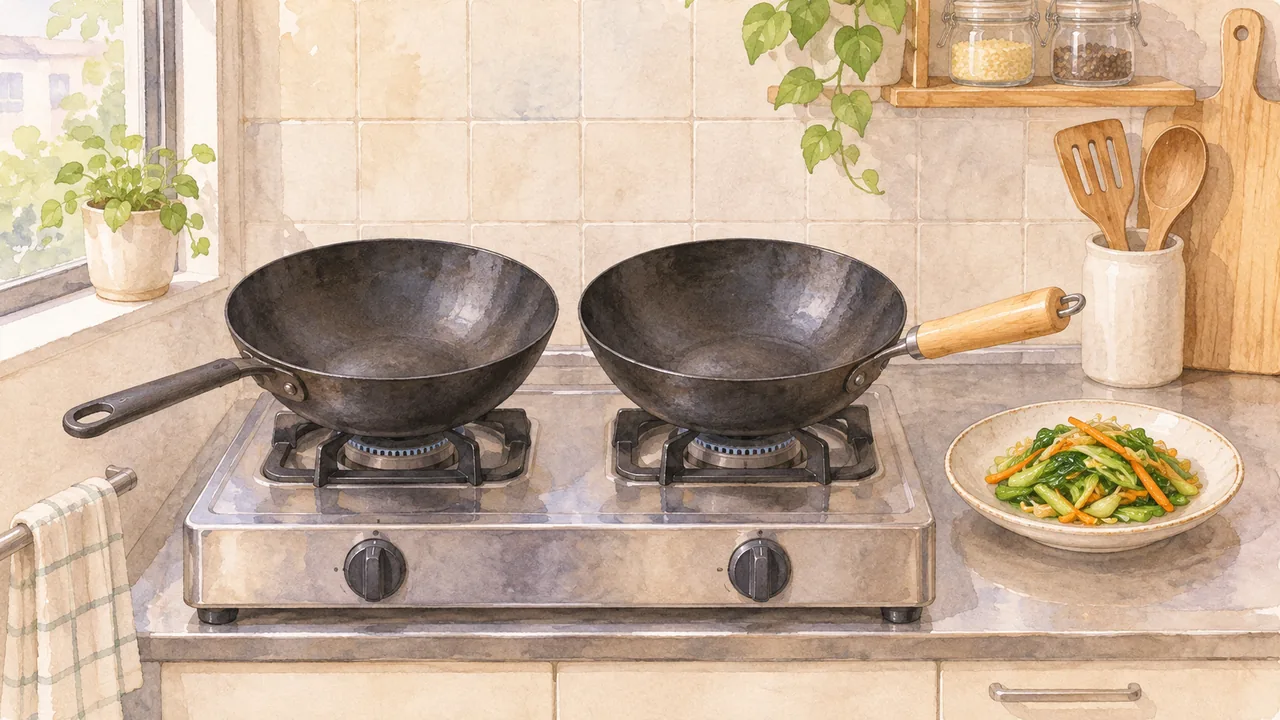
Yamada Kogyosho Hand-Hammered Wok, One Handle, 24 cm: one or two portions
For a small wok that is still hand-hammered. The same Yokohama work in a 24 cm size, about 670 g, which shops recommend for cooking for one or two. It is nimble enough for side dishes and small batches of frying, and deep enough (about 7 cm) for oil and braising.
This listing is the 1.6 mm plate. Round-bottomed and gas only; on induction, look at the Swing Pan below.
Yamada Kogyosho Hand-Hammered Iron Wok, One Handle, 24 cm (1.6 mm)
Loading product details…
Fujita Kinzoku Swing Pan Mini Wok: a handle made from bat wood
For induction, and ready the day it arrives: a small wok made by Fujita Kinzoku of Osaka with the sports maker Mizuno. The handle uses wood that didn't make the grade for Mizuno's wooden baseball bats.
About 20 cm across, it suits one or two portions. It has been heat-treated at high temperature, so it needs no seasoning before first use. It works on gas and induction and weighs about 854 g: an easy first iron wok. Sold in Japan.
5. For Induction and Electric: Flat-Bottomed Woks
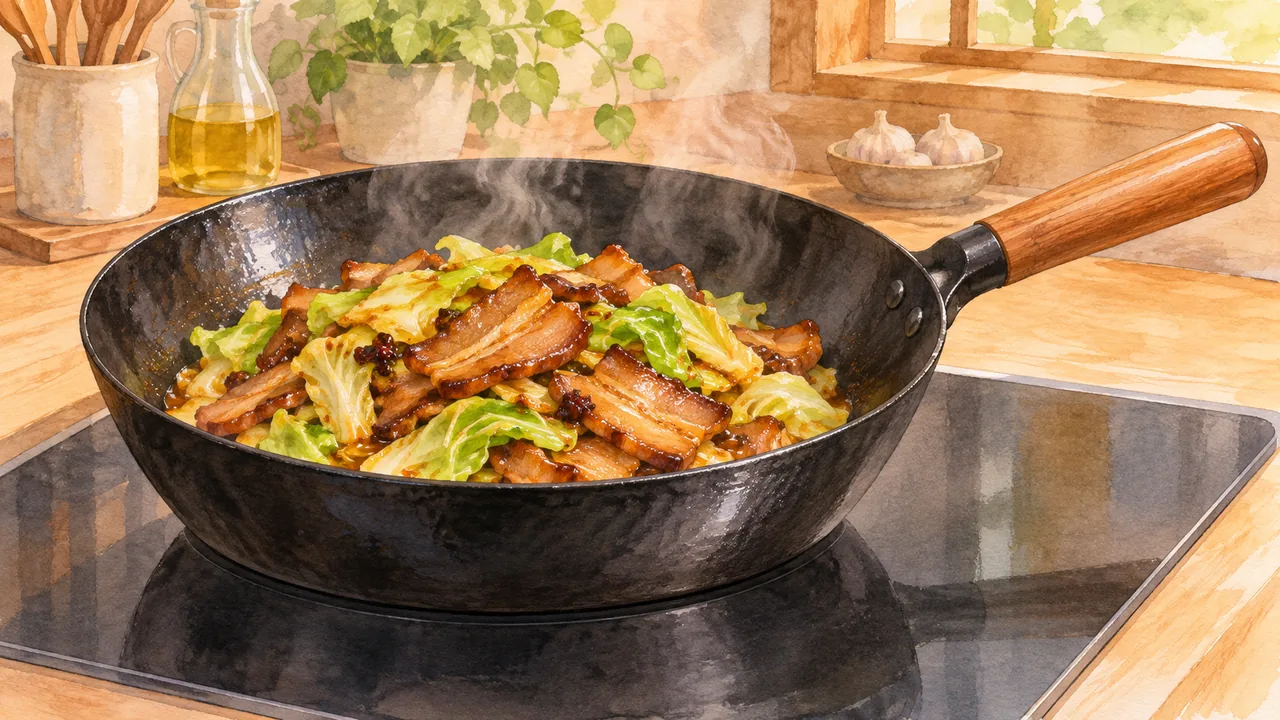
Riverlight Kiwame Iron Wok 28 cm: iron that resists rust
For anyone who wants iron but dreads rust. Riverlight treats the iron with nitriding, a hardening process also used on aircraft parts, so it rusts far less easily. The maker recommends it to people new to iron pans.
It sears, stir-fries, deep-fries and simmers, and handles tossed fried rice too. It works on induction and gas, and with the handle removed it goes in the oven. The 28 cm weighs about 1,130 g with a 1.6 mm base; this listing comes with a lid.
Riverlight Kiwame Iron Wok 28 cm with Lid, Induction Compatible
Loading product details…
enzo Iron Wok 26 cm: iron pared down so you can toss it on induction
For tossing a wok on an induction cooktop: an iron wok from Wahei Freiz in Tsubame-Sanjo. The aim was an iron wok light enough for anyone to toss. Iron suits stir-frying because it takes high heat, but it is heavy, so the maker cut the weight as far as it could: 770 g at 26 cm.
The base is 1.2 mm and it is about 8.5 cm deep. It works on induction and gas, and also comes in 22 and 28 cm.
Wahei Freiz enzo Iron Wok EN-012, 26 cm, Induction Compatible
Loading product details…
Fujinos Aluminum Clad Triple-Layer Wok 31 cm: a real wok without iron care
For washing a wok like any other pan, with dish soap. Fujinos reworked a professional wok for home kitchens: aluminum sandwiched between stainless steel, so it is light, heats quickly and works on induction. No seasoning or special care; if food sticks, a scrub brush takes it off.
It is 31 cm across and about 1 kg, with an angled "up handle" that makes it easier to toss. Fujinos made induction-ready pots for professional kitchens as early as 1985, and this wok carries a 20-year maker's warranty.
Fujinos Aluminum Clad Triple-Layer Wok 170026 (31 cm)
Loading product details…
6. For Families and Frying: Two Handles and Cast Iron
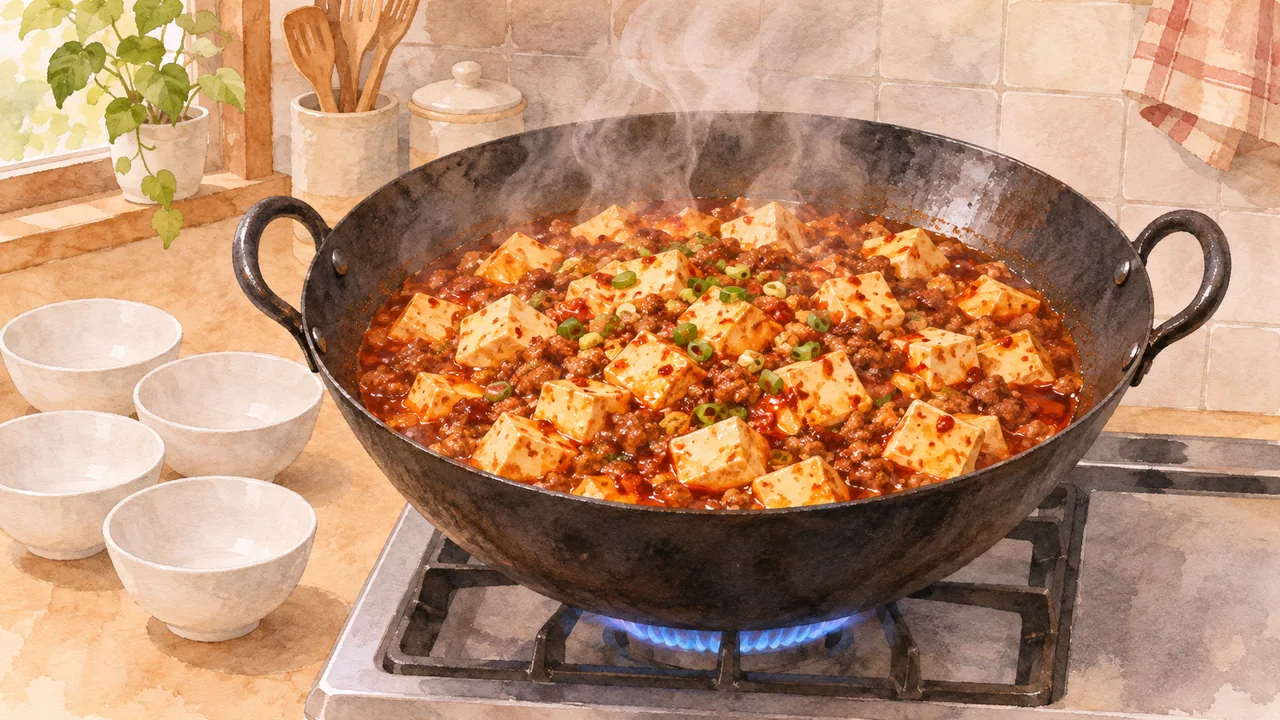
Yamada Kogyosho Hand-Hammered Wok, Two Handles: food moves without tossing
For one gas wok that does stir-fries through deep-frying. Stir-fried vegetables and fried rice, braises like mapo tofu, oil-blanching for sweet-and-sour pork, and deep-frying all happen in this one pan. It is shallower and wider at the base than the one-handled wok, so food turns over without tossing.
Two handles keep it steady on the burner, and it hangs on a hook when not in use. In Japan the 30 cm (three or four portions, about 920 g) is the home size; on Amazon.com we found it from 36 cm, a large wok for big batches. Gas only.
Yamada Kogyosho Hand-Hammered Iron Cantonese Wok, Two Handles, 36 cm
Loading product details…
Fujita Kinzoku Takumi no Waza Two-Handle Wok 33 cm: 6.6 liters, on induction
For a big two-handled wok on an induction cooktop. An iron wok that works on gas and on Japan's 100 V and 200 V induction cooktops. 33 cm across, 9.5 cm deep, about 6.6 L to the brim, big enough for fried rice and mapo tofu, paella, or deep-frying.
It is 1.4 mm iron and weighs about 1,485 g; the depth keeps food from spilling as you stir. Season it before first use and store it with a thin coat of oil against rust. Sold in Japan.
Iwachu Nambu Cast Iron Wok, Deep, Small: 4 mm walls that hold the heat
For a wok that stores heat, even if it's heavy: Nambu cast iron from Iwachu in Morioka, Iwate. The walls are about 4 mm thick, so the pan holds a lot of heat and barely cools when a big load of food goes in. Stir-fries lose their water fast and stay crisp; deep-fried food comes out crisp because the oil temperature holds.
About 28 cm inside and 8.5 cm deep, holding 3 liters, it handles spring rolls, karaage and tempura as well as stir-fries. At about 2.6 kg it is a wok you leave on the burner rather than toss. It works on gas, charcoal and in the oven, but not on induction.
Iwachu Nambu Cast Iron Wok, Deep, Small 21053
Loading product details…
7. First Use and Everyday Care
First use: each wok needs different steps
An iron wok usually needs a burn-off (heating it to burn away the factory's anti-rust coating) and then seasoning (working oil into the surface) before you cook. The woks in this guide differ:
- Yamada Kogyosho: if the listing says it was burned off at the factory, skip that step; wash it with soap, dry it, then season it. Otherwise, burn it off first.
- Swing Pan: heat-treated at the factory, so it needs no seasoning.
- Fujita Kinzoku Takumi no Waza: season before first use, and store it with a thin coat of oil.
- Fujinos: triple-layer steel, so no special care; wash it with soap.
Every day: wash it warm without soap, dry it over heat
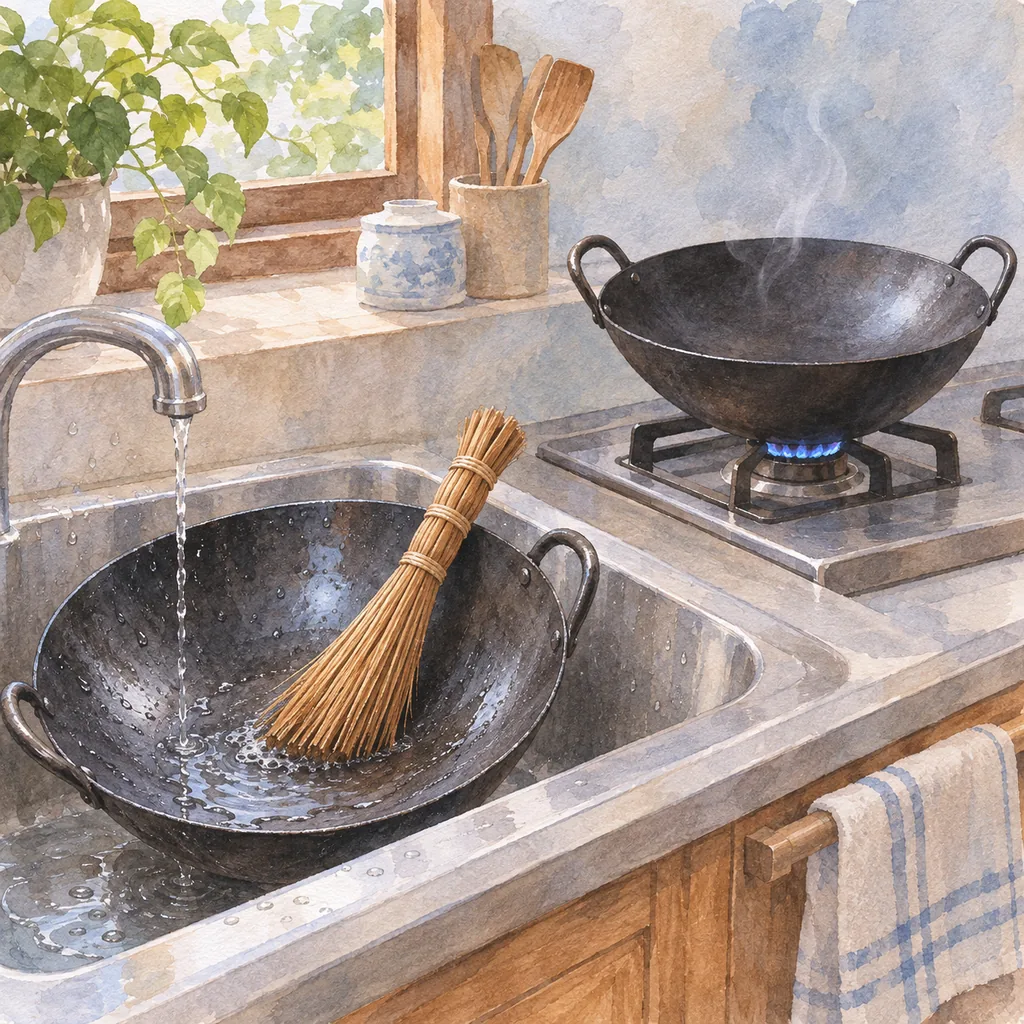
For an iron wok, wash it while it is still warm, without dish soap, using a scrub brush or a bamboo whisk, because soap tends to strip the oil film you have built up. Wipe off the water and set it over the flame until it is completely dry. Don't leave food sitting in the wok; it invites rust and damage, so move it to a dish once it's cooked.
The pleasure of an iron wok is that oil builds up with use and food sticks less and less. Our guide to iron pan care covers seasoning and fixing a scorched pan step by step.
8. Frequently Asked Questions
How is a wok different from a frying pan?
Depth and the round bottom. A wok is deep and curved, so food stays in when you toss it and a ladle follows the curve as you stir. The depth also suits deep-frying and braising. In return, it has less flat area than a frying pan, so for searing, a frying pan is the better tool.
Can I use a round-bottomed wok on induction?
No. Round-bottomed woks are for gas only. On induction, choose a flat-bottomed wok marked induction-compatible, such as the Riverlight Kiwame, enzo, Fujinos, Fujita's Takumi no Waza or the Swing Pan. Even Yamada's flat-bottomed wok is listed as for open flame only, not induction.
What size wok should I buy?
About 24 cm (9.5 in) for one or two, about 30 cm (12 in) for three or four. Because the bottom is round, a size up from your usual frying pan feels right. If you'll toss it, check the weight: Yamada's one-handled wok is about 670 g at 24 cm and about 980 g at 30 cm.
What's the difference between a Beijing wok and a Cantonese wok?
A Beijing wok has one long handle; a Cantonese wok has two loop handles. To toss fried rice, choose the Beijing wok. To stir-fry, deep-fry and braise with the pan resting on the burner, the Cantonese wok is steadier.
Iron woks are too heavy for me to toss. What should I do?
Choose a lighter material or a smaller size. Hasegen's titanium wok is about 660 g at 30 cm, and the enzo iron wok is about 770 g at 26 cm. For one or two, Yamada's 24 cm (about 670 g) is easy to handle. Or skip tossing altogether with a two-handled wok.
My iron wok has rusted. Is it ruined?
Usually not. Scrub off the red rust with a brush and season it again, and it will often be good to use. To prevent rust, wipe it dry right after washing, heat it until fully dry, and don't leave food in it. If rust worries you, Riverlight's nitrided iron or Fujinos's stainless triple-layer wok are good alternatives.
9. Final Thoughts: Gas or Induction, How Many, Then One Wok
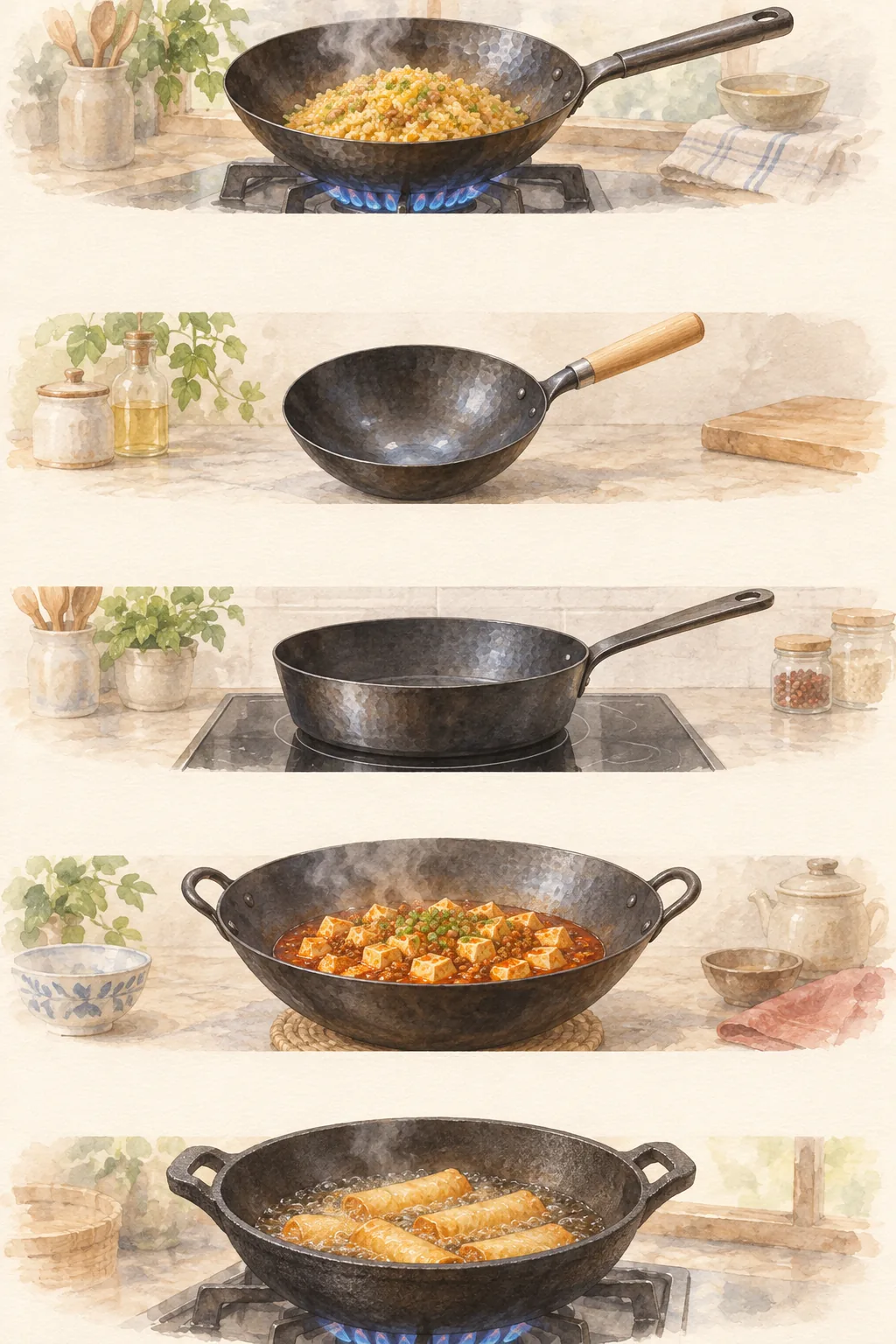
A wok is chosen by your stove and by how much you cook.
For tossing over gas, Yamada's iron hammered in Yokohama, or Hasegen's 660 g titanium. For one or two, Yamada's 24 cm, or the Swing Pan with its baseball-bat handle. On induction, Riverlight's rust-resistant iron, the light enzo, or Fujinos's soap-washable triple layer. For a family that stir-fries, fries and braises, a two-handled wok; to fry without losing heat, Iwachu's Nambu cast iron. Makers in Yokohama, Tsubame-Sanjo, Osaka and Morioka each shaped their wok around a way of cooking.
Gas or induction, how many you feed: pick one wok, and season it for years.
Japanese Iron Pan Care: Seasoning, Cleaning & Rust Rescue
Tempura Pot: 7 Japanese Deep-Frying Pots That Hold Heat