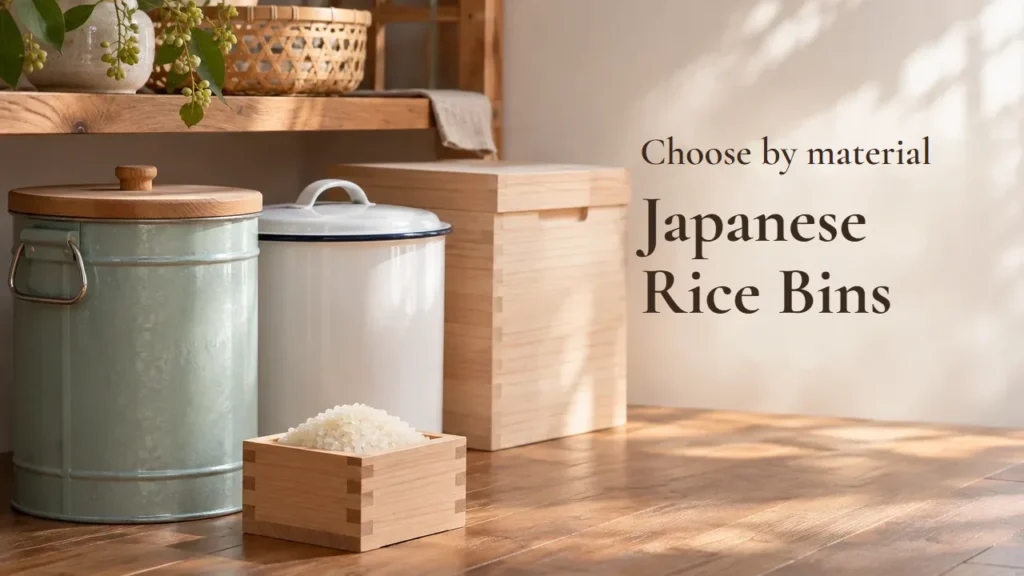
"We just keep the rice in the bag, on the kitchen floor." It will still cook, but what dulls rice is light, damp and bugs.
A kome-bitsu, a rice bin, is a box that protects rice from all three, and each material does it differently. Galvanized steel and enamel block light; paulownia and cedar breathe moisture in and out; measuring bins dispense one cup at a time. In Japan, where rice is the daily staple, makers have built rice bins around the strengths of each material.
This guide covers three you can buy on Amazon.com, Noda Horo enamel, OBAKETSU galvanized steel from Himeji and Masuda Kiribakoten paulownia, plus three more sold in Japan, and how to use and care for a rice bin.
Quick Reference: Japanese Rice Bins at a Glance
| Rice bin | Material | Holds | What stands out |
|---|---|---|---|
| Metal | |||
| Noda Horo Round Stocker 21 cm ▾ | Enamel | About 5 kg (7 L) | No smells, washes clean; Amazon.com |
| OBAKETSU Rice Stocker ▾ | Galvanized steel | 20 kg (10 kg in Japan) | Blocks light, rolls on casters; Amazon.com |
| Wood | |||
| Masuda Kiribakoten Paulownia ▾ | Paulownia | 5 kg | See how much is left; Amazon.com |
| Maeda Kobo Chabako ▾ | Cedar, lined with tin | 5 kg | Keeps out damp and light; sold in Japan |
| Measuring bins | |||
| Takemoto Kibakoten Komegura ▾ | All paulownia | 10 kg | One cup into a drawer; sold in Japan |
| Hizer Measuring Rice Bin ▾ | Painted steel | 12 kg | 20 cm wide, fits under the sink; sold in Japan |
Tap a name to jump to its review.
1. Why Japanese: A Box Made for the Daily Staple
Rice is Japan's daily staple and is usually sold in 5 or 10 kg bags, so the rice bin is an ordinary piece of kitchen furniture. Japanese makers have adapted the materials of their own crafts to it: the galvanized steel of a Himeji bucket workshop, the enamel of Noda Horo, a maker founded in 1934, paulownia, the wood of the traditional kimono chest, and the cedar tea chest of Shizuoka, first made to ship tea overseas.
Each solves the same problem differently, so the choice comes down to where it will stand, how much rice you buy, and whether you'd rather wash it or wipe it.
2. Protecting Rice from Light, Damp and Bugs
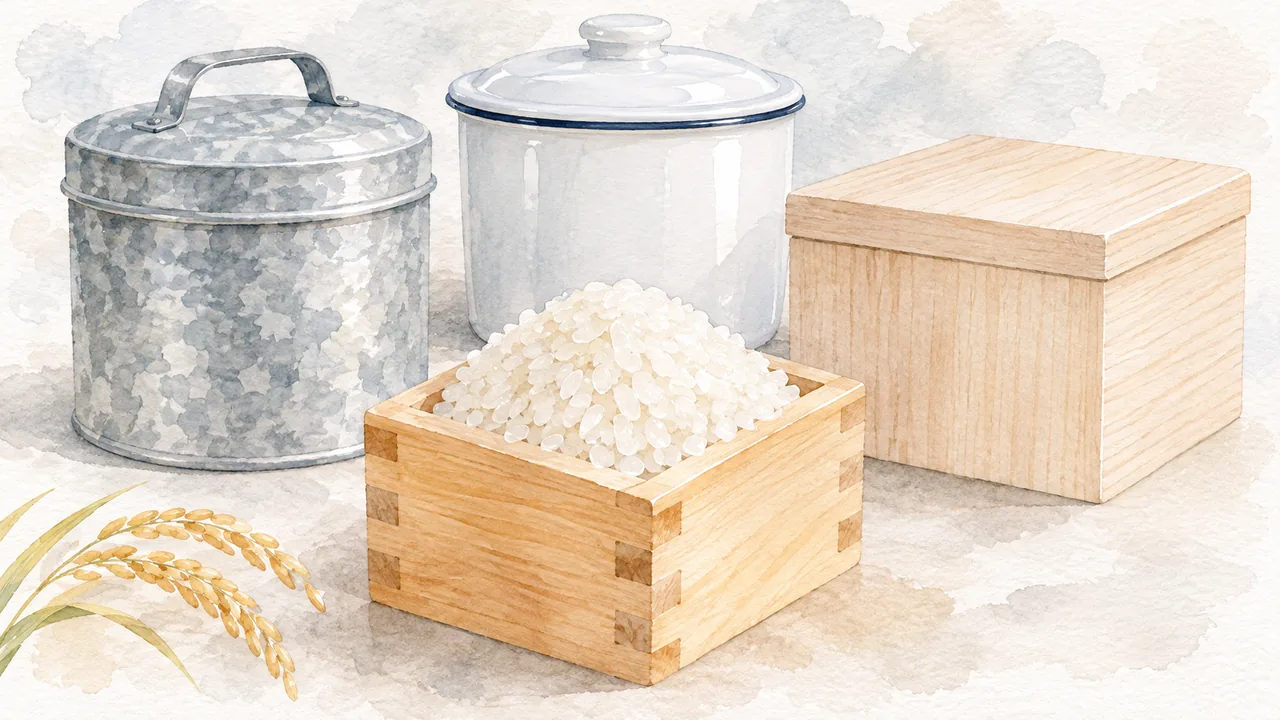
Rice likes it cool and dark
Milled rice is said to lose flavor quickly in heat, humidity and light, and bugs can appear in humid seasons. So the basics are a cool, dark place and a lidded container.
You can keep rice in its bag, but rice bags often have small holes to let air out, so they don't fully keep out smells, damp or bugs. That's where a rice bin comes in.
The material changes how it protects
- Galvanized steel and enamel (metal): block light, don't take on smells, wash easily.
- Paulownia and cedar (wood): take in and release moisture to keep conditions inside steady. Paulownia is the traditional wood of kimono chests.
- Measuring bins: a lever or drawer dispenses one cup at a time, so no measuring.
Size it to the bag you buy: 5 kg bags, a 5 kg bin; 10 kg bags, a 10 kg bin, ideally with a little room to spare.
3. Metal Rice Bins: Himeji Galvanized Steel, Noda Horo Enamel
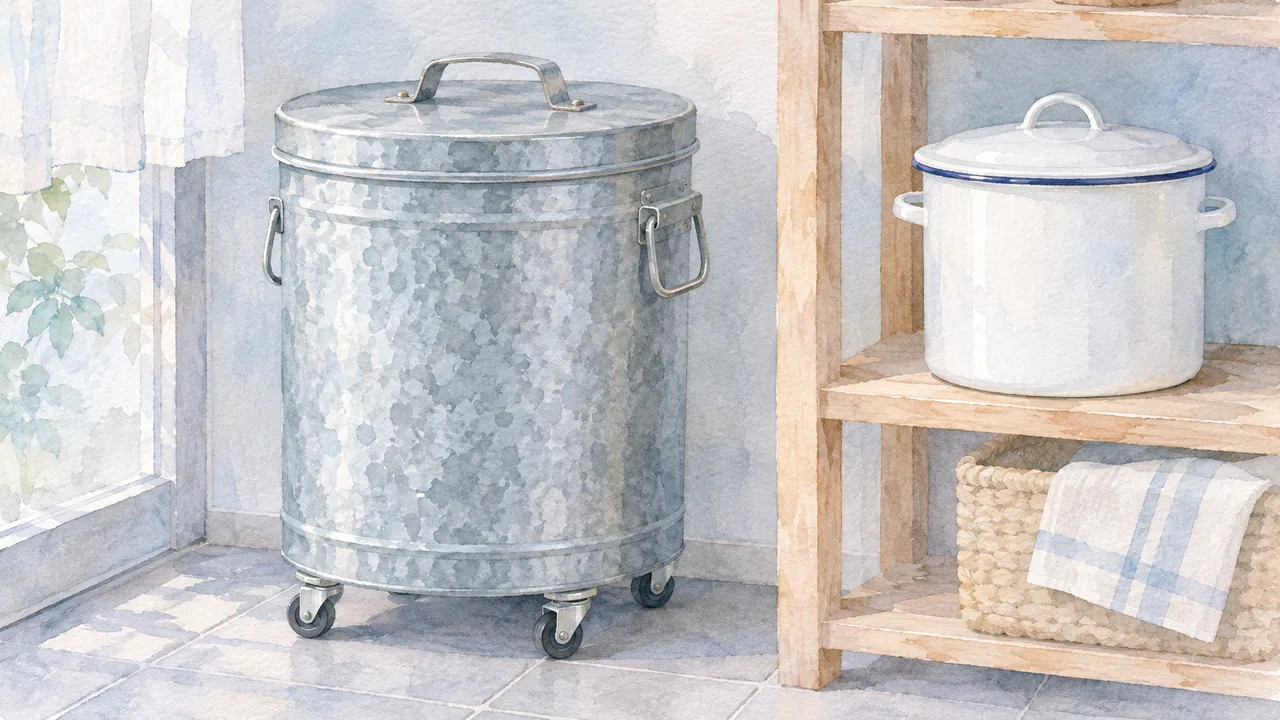
Noda Horo Round Stocker 21 cm: enamel that holds 5 kg of rice
A tough enamel container that doesn't take on colors or smells. Round Stockers are known in Japan for nukazuke (rice-bran pickles), umeboshi and miso, and the 21 cm size holds about 5 kg of rice. It has an inner seal lid for strong-smelling foods; the outer lid is flat so containers stack, and flipped over it doubles as a tray.
The enamel body is dishwasher-safe, so when the rice runs out you can wash it and start fresh. Enamel is glass-like, so it can chip if dropped.
Noda Horo Round Stocker WRS-21, Enamel, 7 L (about 5 kg of rice)
Loading product details…
OBAKETSU Rice Stocker: Himeji galvanized steel, on casters
A galvanized steel rice bin from Watanabe Kinzoku Kogyo, a small factory in Himeji, Hyogo. Galvanized steel lets in no light and buffers the bin from outside air, and casters underneath let you pull it out one-handed even when full. The 10 kg model sold in Japan has a double lid with a holder for an insect repellent or desiccant.
Its retro look makes it a rice bin you can leave out. Amazon.com carries the 20 kg size; in Japan a 10 kg version is also sold. Our guide to OBAKETSU galvanized buckets covers how they are made.
OBAKETSU Rice Stocker RS20A, Galvanized Steel, 20 kg, with Casters
Loading product details…
4. Wooden Rice Bins: Paulownia and the Shizuoka Tea Chest
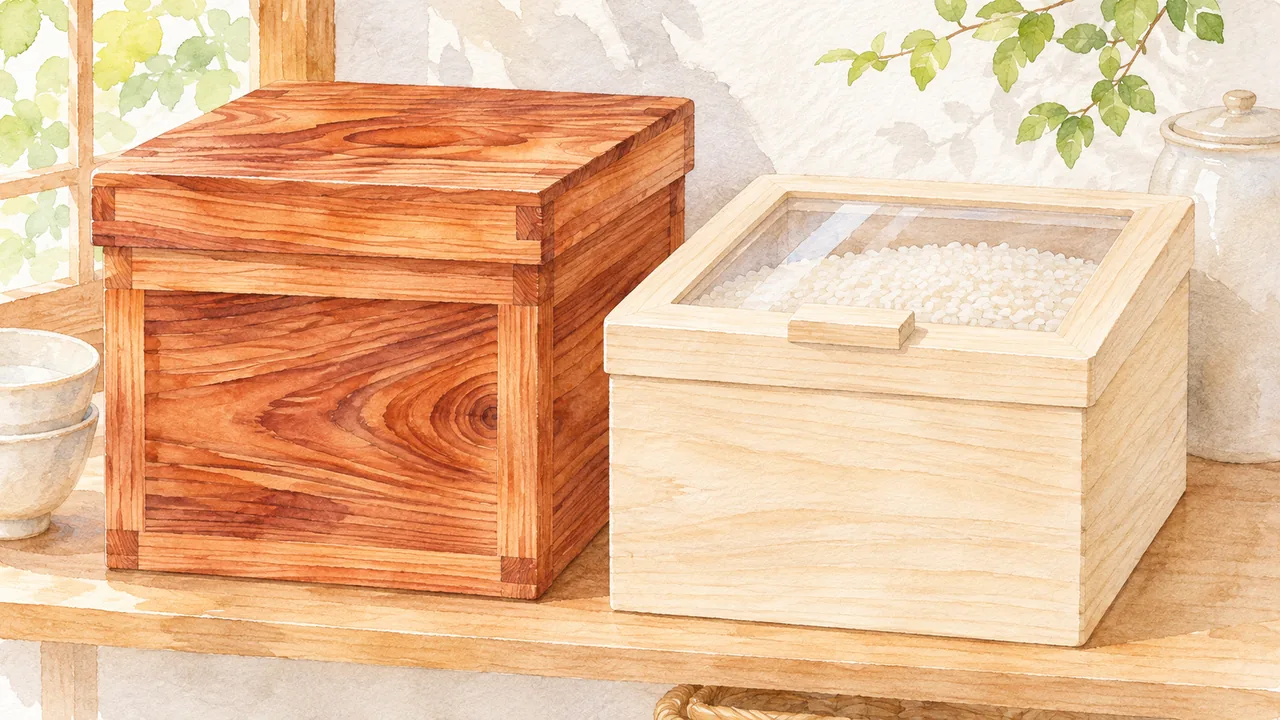
Wooden rice bins use wood's habit of absorbing and releasing moisture to keep the humidity inside steadier. Our guide to tea chests and paulownia boxes goes deeper; here are two used as rice bins.
Masuda Kiribakoten Paulownia Rice Box 5 kg: a rice bin to show off
A long-established paulownia box maker in Koga, Fukuoka, reworked the traditional box for today's kitchen. Part of the lid is clear acrylic, so you can see at a glance how much rice is left, and the lid catches on the rim of the box. The design has won a Good Design Award.
Pale paulownia looks at home left out on the counter. For 5 kg of rice kept where you can see it.
Masuda Kiribakoten Paulownia Rice Box, 5 kg, Natural
Loading product details…
Maeda Kobo Chabako 5 kg, Cedar: cedar outside, tin inside (sold in Japan)
Shizuoka's tea chest, born to ship tea abroad, used as a rice bin. The outside is cedar board; the inside is lined with tin without gaps, the joints sealed with washi paper. It keeps out damp, light, bugs and smells, so it suits rice and dried foods.
Maeda Kobo in Kawane, Shizuoka, makes each one by hand. The 5 kg flat box fits on a kitchen shelf, and the unfinished cedar deepens in color with use. Sold in Japan.
5. Measuring Rice Bins: Paulownia and a Slim Steel Bin
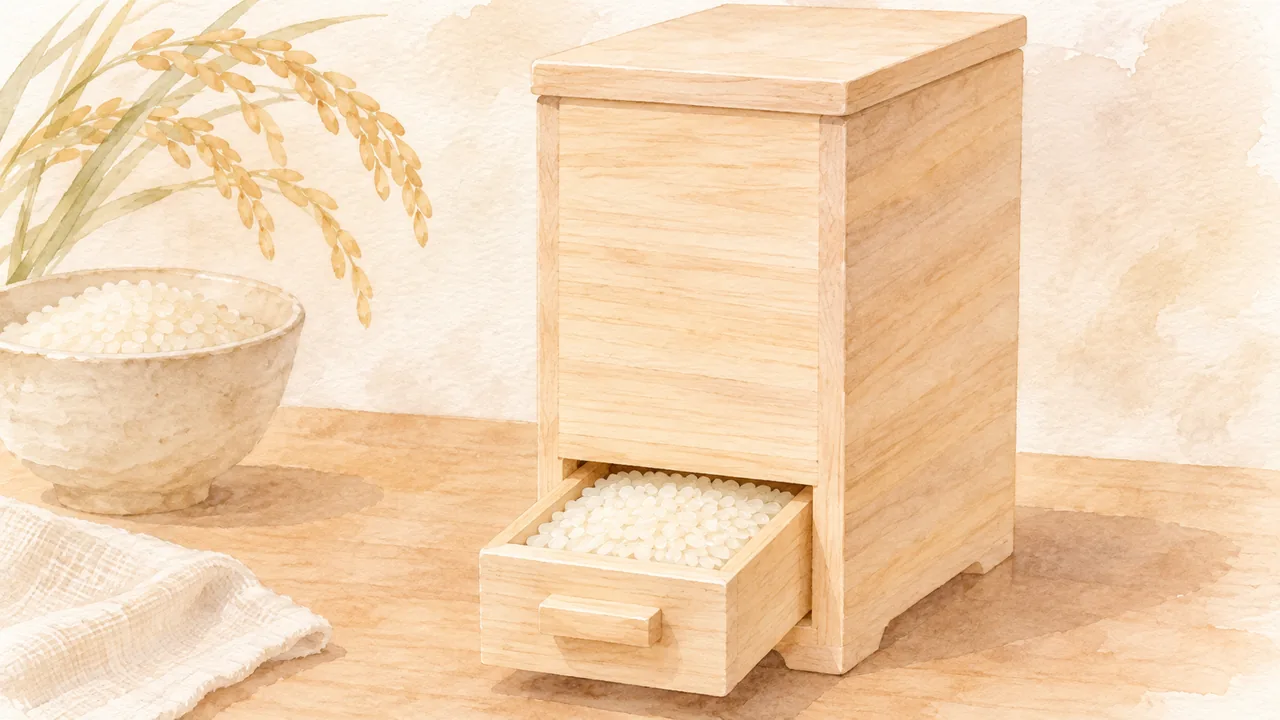
If you cook rice every day, a measuring bin that dispenses one cup at a time saves a step. (The Japanese cup, one go, is 180 ml, a little smaller than a US cup.) Both of these are sold in Japan.
Takemoto Kibakoten Paulownia Measuring Rice Bin "Komegura" 10 kg: no nails, no plastic (sold in Japan)
Made entirely of paulownia, without nails or plastic, by Takemoto, a joiner and box craftsman. Pull the knob and one go of rice drops into the drawer. The inside slopes so the last grains come out, and the drawer has about 5 mm of play on each side so rice never jams.
The maker says paulownia keeps humidity at around 60% in any season. The wood is carefully chosen imported paulownia, assembled in a workshop in Toyama with tested tape and glue in place of nails. 23 x 43 x 45 cm, about 2.5 kg. Sold in Japan.
Hizer Measuring Rice Bin 12 kg, Slim: 20 cm wide, one or two go at a press (sold in Japan)
A slim 20 cm bin that holds up to 12 kg. Press the lever for one or two go. It is narrow enough to fit under the sink, takes a whole 10 kg bag, has a small window to check the level and comes with an adapter for rinse-free rice.
Painted steel body; 20 x 37 x 46.5 cm, about 3.1 kg. Refill through the removable top. Sold in Japan.
6. How to Use It, and Care
Don't top up: empty it first
The basic rule is not to pour new rice on top of old. Old grains and bran left at the bottom are said to invite spoilage and bugs. Finish the rice, clean the bin, then fill it again.
Keep it somewhere cool, away from the stove and sunny windows. In hot summers, moving a small amount to the refrigerator's vegetable drawer is also often recommended.
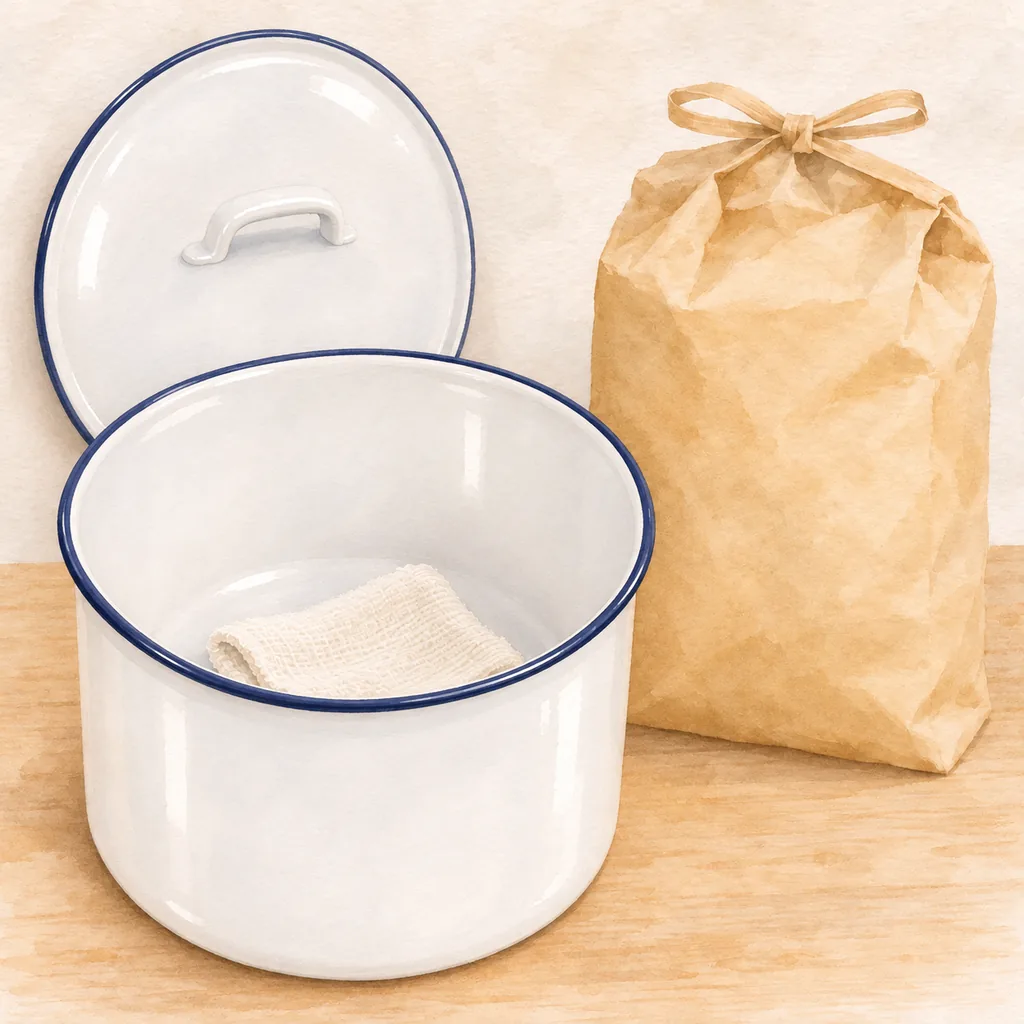
Care by material
- Enamel: washable, and the body is dishwasher-safe. Avoid scouring pads and powders, which scratch.
- Galvanized steel: brush out leftover bran and wipe with a dry cloth. If you wash it, dry it thoroughly.
- Paulownia and cedar: don't wash with water; brush out the bran and wipe dry. Air the box now and then and it will last.
7. Frequently Asked Questions
What size rice bin should I get?
Match the bag you buy: 5 kg (about 11 lb) for 5 kg bags, 10 kg (22 lb) for 10 kg bags, ideally with a little room to spare.
Metal or wood?
Metal to block light and wash easily; wood to steady the humidity. Enamel and galvanized steel let in no light and don't take on smells. Paulownia and cedar breathe moisture in and out, and the tea chest's tin lining adds a barrier against damp and light.
How do I keep bugs out of rice?
Store it somewhere cool, don't top up, and keep the bin clean. In humid seasons, a rice-bin insect repellent can help.
Do measuring bins dispense exactly one cup?
They are designed to dispense one go (180 ml) at a time. For best accuracy, follow the maker's instructions; Hizer, for example, says to hold the button until it stops making a sound.
Is an enamel container OK as a rice bin?
Yes. Noda Horo's 21 cm Round Stocker holds about 5 kg of rice. It doesn't take on smells and the body is dishwasher-safe, so it is easy to wash between bags.
I want a rice bin I can leave out. Which?
Masuda Kiribakoten's paulownia box, OBAKETSU's retro galvanized steel or Noda Horo's white enamel. All three look good on a counter or kitchen floor.
8. Final Thoughts: Choose by How It Protects
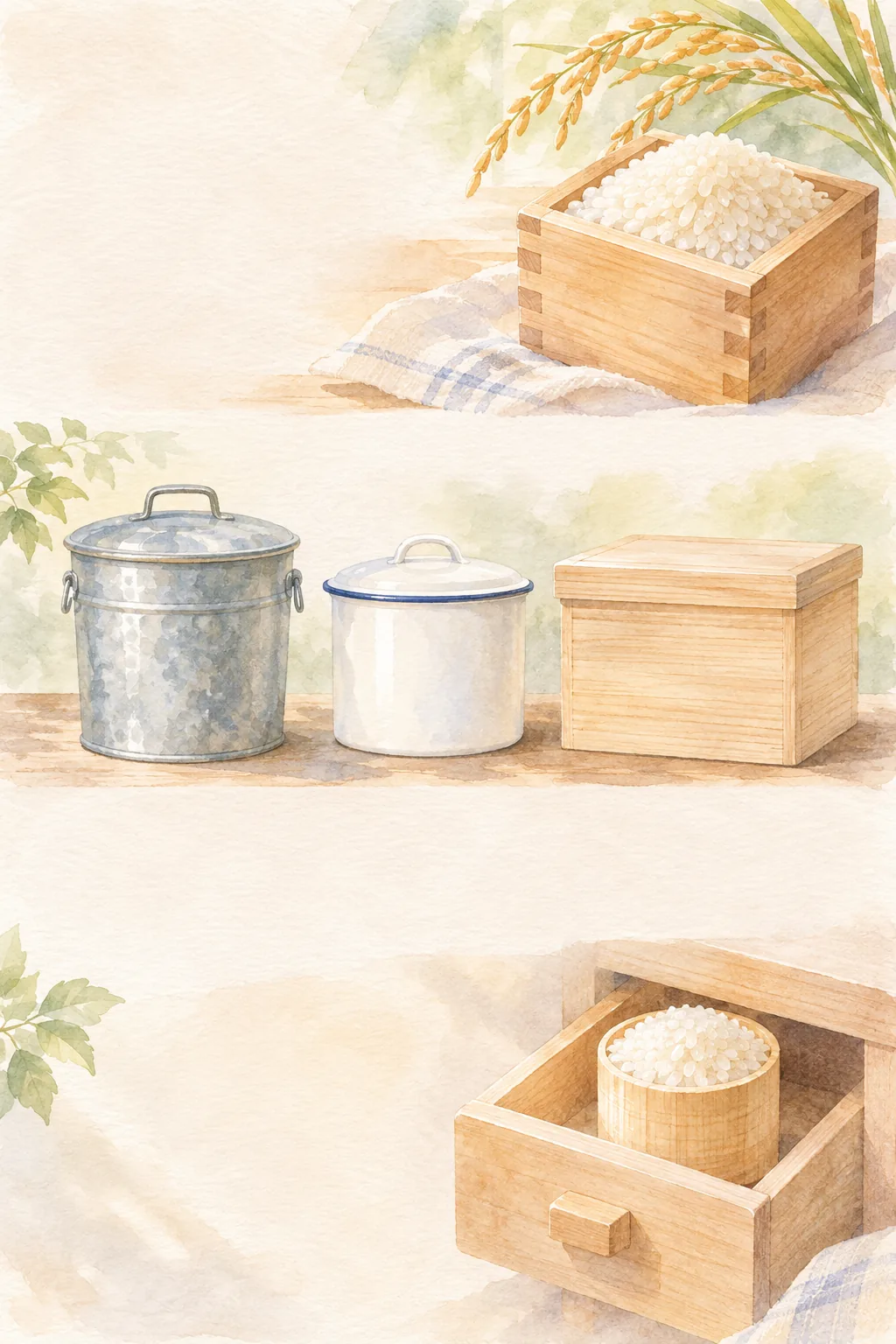
A rice bin is chosen by how its material protects the rice.
Noda Horo's washable enamel, OBAKETSU's light-tight galvanized steel from Himeji and Masuda Kiribakoten's paulownia with a window in the lid. In Japan, Maeda Kobo's tin-lined cedar tea chest, Takemoto's all-paulownia measuring bin and Hizer's slim steel bin. All made in Japan, for a staple cooked every day.
Keep it cool and dark, and don't top up.

Japanese Rice Cookers: Buy the 120V Model

Ohitsu: The Wooden Tub That Replaces Keep-Warm