In Japan, you wash before you soak. At a public bath or a hot spring, and at home too, the body is scrubbed clean at the faucet before anyone steps into the tub. The tool for that is a long, narrow body towel: what English speakers call a Japanese washcloth.
How it feels on your skin comes down to the fiber. Nylon lathers up and dries fast, cotton is soft, hemp is crisp and brisk, silk is smooth, and washi paper leaves you feeling squeaky clean. For each one, there is a Japanese maker fussing over the weave and the yarn.
This guide covers three nylon washcloths you can buy on Amazon.com, starting with Salux, the Japanese original, plus the made-in-Japan cotton, hemp, silk and washi towels sold in Japan, and how to wash without scrubbing too hard.
Quick Reference: Japanese Washcloths at a Glance
| Washcloth | Fiber | How it feels | Where to buy |
|---|---|---|---|
| Salux Beauty Skin Cloth ▾ | Nylon and polyester | Firm, brisk, lathers well | Amazon.com |
| Marna Exfoliating Washcloth ▾ | Nylon | Balanced scrub, dries fast | Amazon.com |
| aisen Gentle Shower Towel ▾ | Nylon | Soft, long enough for the back | Amazon.com |
| Oboro Towel Senshin Towel ▾ | Cotton | Even softer when wet | Sold in Japan |
| Kamenoko Tawashi Hemp Body Towel ▾ | Hemp | Crisp and refreshing | Sold in Japan |
| Kinukko Silk / Knit Kobo.h Washi ▾ | Silk; washi paper | Smooth; squeaky clean | Sold in Japan |
Tap a name to jump to its review.
1. Why Japanese: Wash First, Then Soak
In a Japanese bath, the tub is for soaking, not for washing. You sit on a small stool at the faucet, lather up and rinse off, and only then get in, so the hot water stays clean for the next person. That habit made the body towel an everyday tool, and Japanese makers shaped it for the job: long, about 90 to 100 cm, so you can hold both ends and scrub your back, and made in a range of fibers and firmness so each person in a family can pick their own.
The long nylon washcloth that English speakers now call a "Japanese washcloth" goes back to Salux, a Japanese washcloth first made in 1966. Today it sits alongside towels woven by cotton mills in Mie and Imabari, a hemp towel from the maker of the famous Kamenoko scrub brush, silk from Gunma's silkworms and yarn spun from washi paper.
2. The Fiber Decides How It Feels
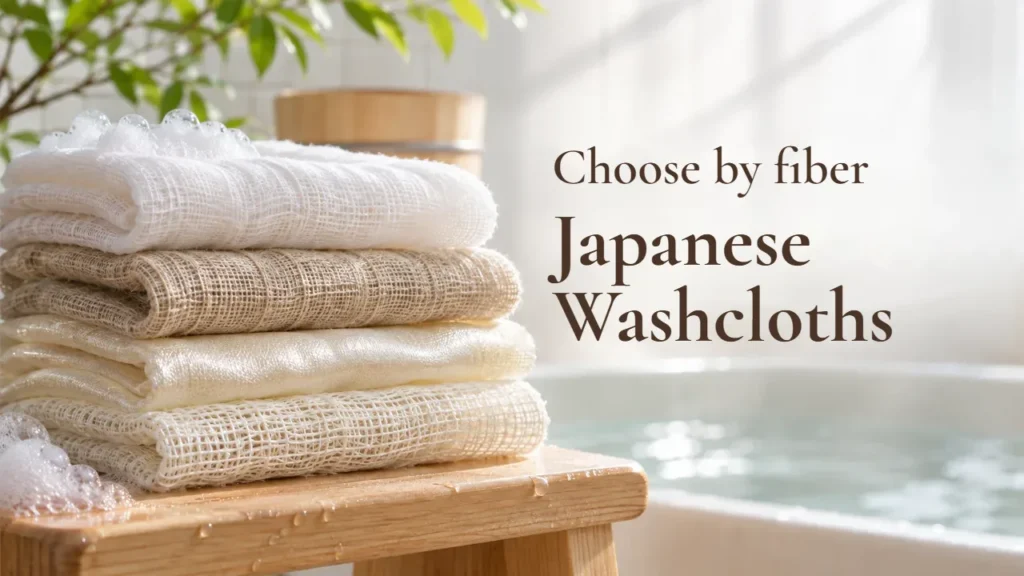
Choose by fiber
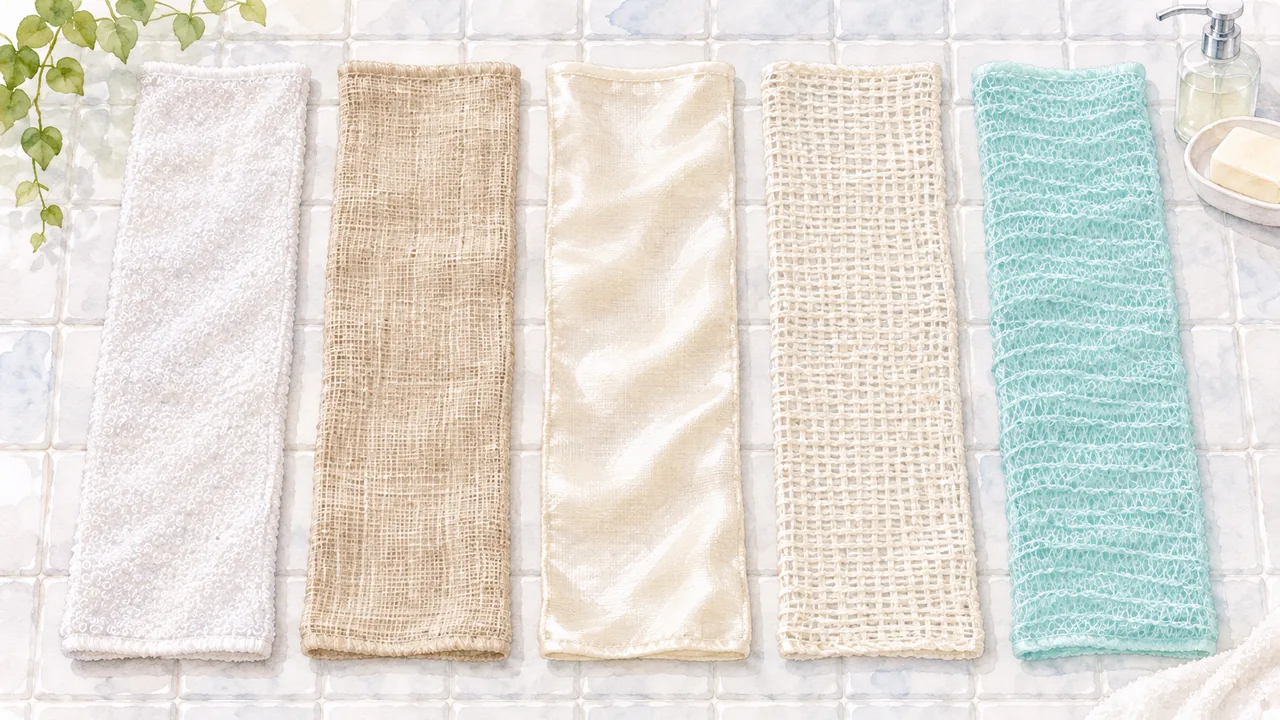
Nylon lathers richly and dries fast. Cotton is soft and gentle; gauze or terry weaves change how it feels. Hemp has a springy fiber with a crisp feel that leaves you refreshed. Silk is prized for its smoothness. Washi, Japanese paper spun into yarn, takes up skin oil for a clean, light finish.
Firmness and lather
Even in one fiber, the yarn and weave change the firmness. Soft for sensitive skin and children; firm if you like a brisk scrub. If your family disagrees, keep towels of different firmness, in different colors.
Lather matters too. A good, thick lather is said to cushion the towel so it doesn't rub the skin directly.
3. Nylon: Salux and the Washcloths You Can Buy Abroad
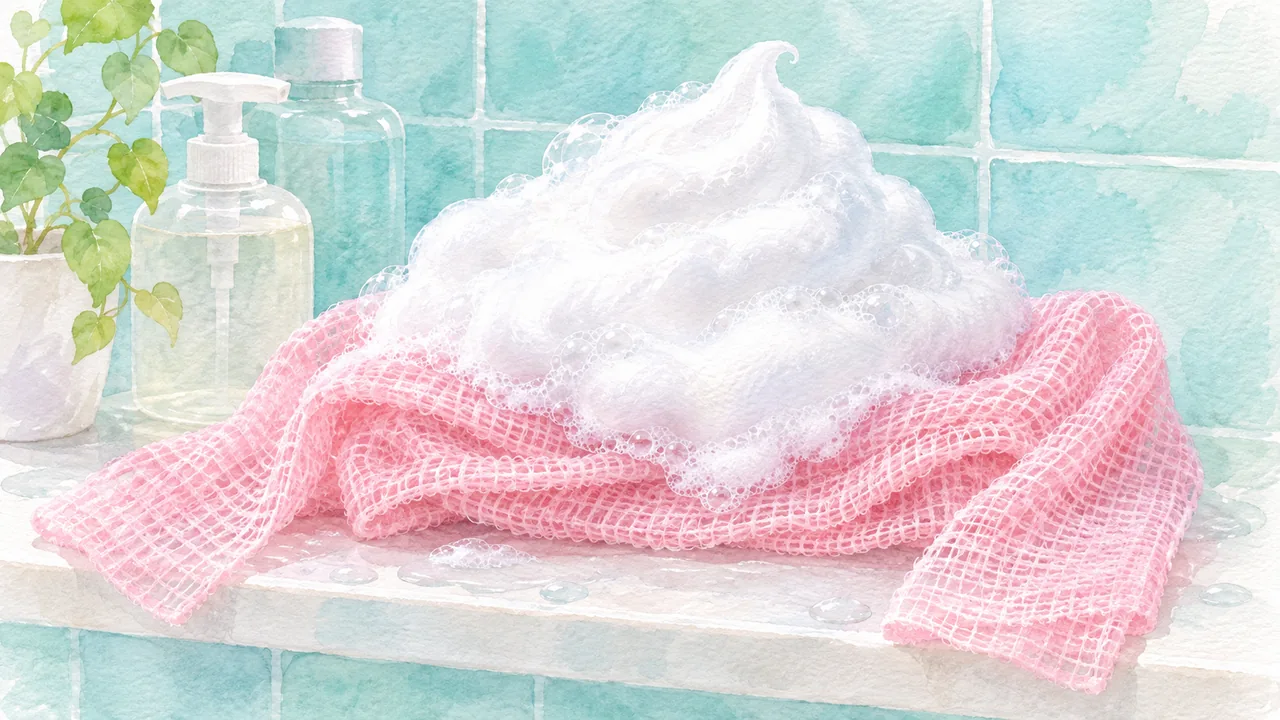
Nylon is the fiber most Japanese washcloths sold abroad are made of, and the one that lathers best. All three below are long enough for your back.
Salux Beauty Skin Cloth: the Japanese original, since 1966
The washcloth that made "Japanese washcloth" a phrase in English. Salux has been made in Japan since 1966: a long cloth of nylon and polyester that works soap into a lather and reaches across your back.
In Japan it comes in regular, firm and "super hard" grades; the regular one below is the place to start. It gives a brisk scrub, so if you have sensitive skin, use a light hand, or start with the soft aisen towel instead.
SALUX Nylon Japanese Beauty Skin Bath Wash Cloth, Blue
Loading product details…
Marna Japanese Exfoliating Washcloth: a balanced scrub
From Marna, a Japanese housewares maker known for practical kitchen and bath tools. A nylon washcloth, 27 by 100 cm, made in Japan and pitched between soft and hard for an everyday scrub. Nylon drains and dries quickly after use.
Marna Japanese Exfoliating Washcloth, Nylon, 27 x 100 cm
Loading product details…
aisen Gentle Exfoliating Shower Towel: soft nylon, extra long
For anyone who finds the classic washcloths too rough. A soft nylon towel made in Japan, about 47 inches long, so it reaches comfortably across your back. It dries quickly and comes in several colors, handy for giving each person in the house their own.
aisen Gentle Exfoliating Shower Towel, Ultra-Soft Nylon, 47 in
Loading product details…
Sugoawa Nylon Towel with Pure Silver Thread: a lather like whipped cream (sold in Japan)
A Japanese nylon towel built around lather. The fabric is woven unevenly to hold air, and the nylon yarn is fine, so a dense, springy foam rises quickly, with body wash or bar soap alike. A pure-silver thread woven in keeps bacteria from multiplying on the fibers. It rinses easily and dries fast, and comes in five firmness levels. Sold in Japan.
4. Cotton: Oboro Towel and Imabari Gauze
Oboro Towel Senshin Towel: a towel made only for washing, studied with a university
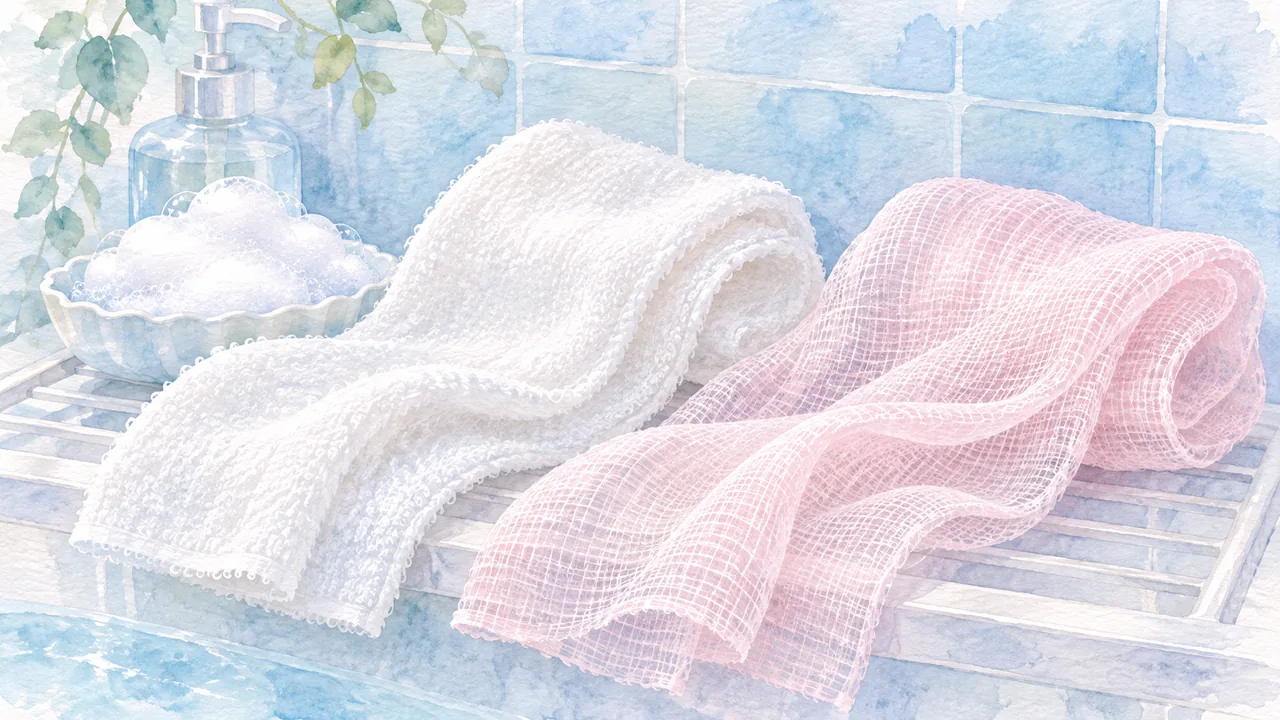
Oboro Towel of Tsu, Mie, developed this towel for washing the body through joint research with the Kyoto Institute of Technology. Dry, it is as soft as a baby's skin; wet and lathered, it turns softer still, a softness the maker compares to being held in a mother's arms. The maker measures that softness as it designs.
Founded in 1908, Oboro Towel is known for oborozome, a dyeing method in which only the weft is dyed, so the pattern looks hazy when dry and sharpens when wet. The Senshin towel is 100% cotton, made for everyone from babies at bath time to older people. Wash it in a laundry net and skip fabric softener. Sold in Japan.
Imabari Smooth Gauze Body Towel: a leno-style back for silky lather
A 100% cotton gauze body towel from Imabari, Ehime, Japan's best-known towel town. The back is woven in a special moshaori (imitation leno) weave that pulls in air, so the lather comes out moist and smooth. Blue, pink and green, for a different color for each person; about 34 by 90 cm. Sold in Japan.
5. Hemp: From the Maker of Kamenoko Tawashi
Kamenoko Tawashi Hemp Body Towel, Firm: a leno weave that holds its shape
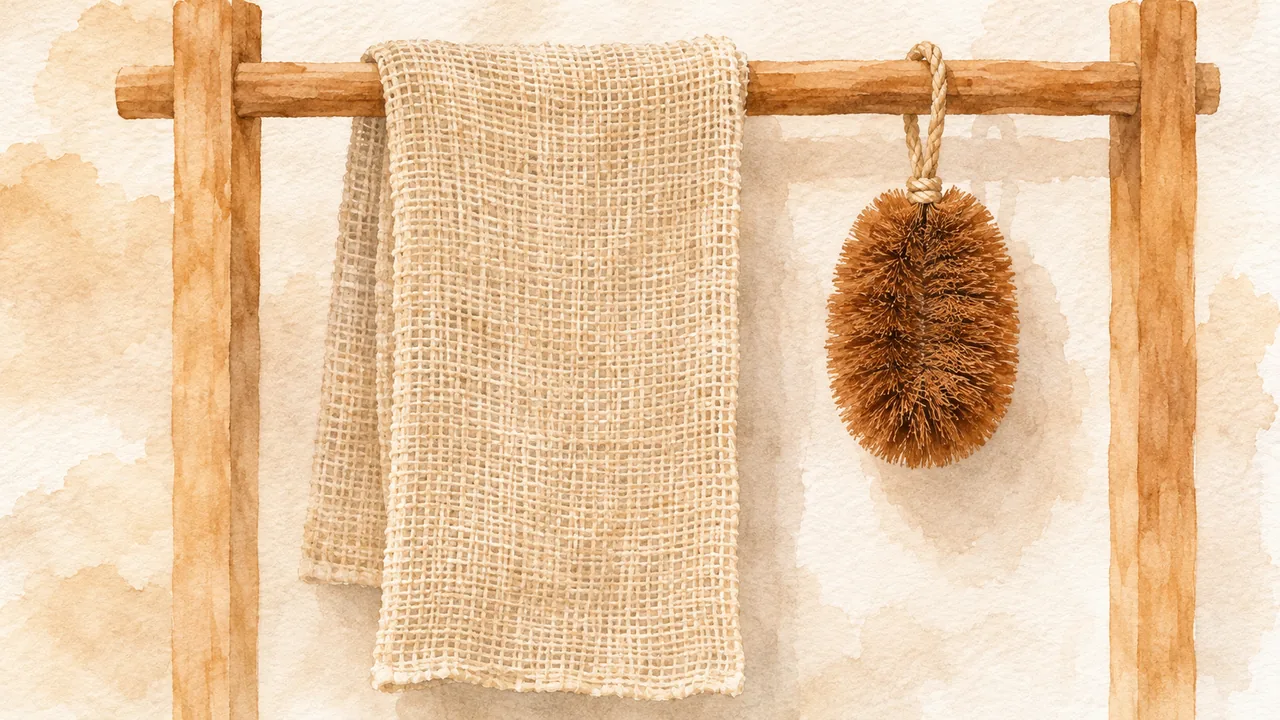
A 100% hemp body towel from Nishio Shoten, the company behind the Kamenoko tawashi scrub brush. It is woven in a karami-ori (leno) weave that doesn't slip out of shape, which gives hemp its crisp feel and extra scrubbing power. The open weave breathes and feels good on the skin, with a moderate lather and a pleasant bit of grip.
It comes in three firmness levels set by the yarn thickness; "firm" is the most popular. At 100 cm long, it reaches your back easily. Sold in Japan.
6. Silk and Washi Paper
Kinukko Silk Body Towel: silk from Gunma's own silkworm, Gunma 200
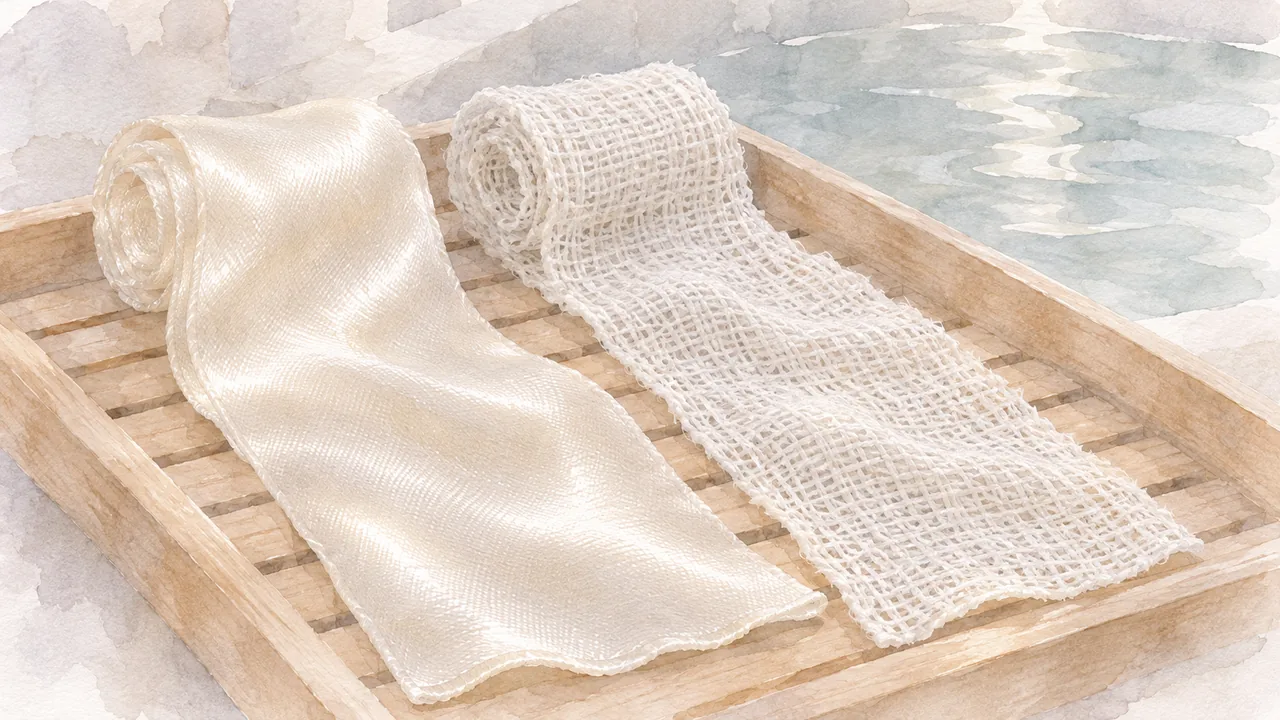
The face of this towel is raw silk from "Gunma 200," a silkworm variety bred in Gunma, Japan's silk country, and raised by Gunma sericulturists. The back is lyocell, a plant-based fiber. It is very smooth on the skin and suits everyone from babies to older people.
It leaves skin feeling fresh and smooth. It lathers less than cotton, and it is thin, so it may feel unfamiliar at first. Don't scrub one spot too long; use it gently. Sold in Japan.
Knit Kobo.h Natural-Fiber Body Towel: washi, hemp or binchotan
A body towel in your choice of three natural fibers. The washi version is 70% washi paper and 30% cotton; it takes up skin oil well for a clean, light feel and grows softer the more you use it.
The hemp version is 100% hemp; the binchotan version blends cotton with a fiber made from Kishu binchotan charcoal. Each is about 100 cm long. Sold in Japan.
7. How to Wash Gently, and Caring for the Towel
Let the lather do the work
Work the towel into a full lather first, then wash as if wrapping your skin in foam. Scrubbing hard is said to strain the skin, so even with a firm towel, keep the pressure light.
Go a little firmer on thick skin like elbows and heels, and gentler on soft areas like the neck and inner arms. Adjusting the pressure by area makes washing more comfortable.
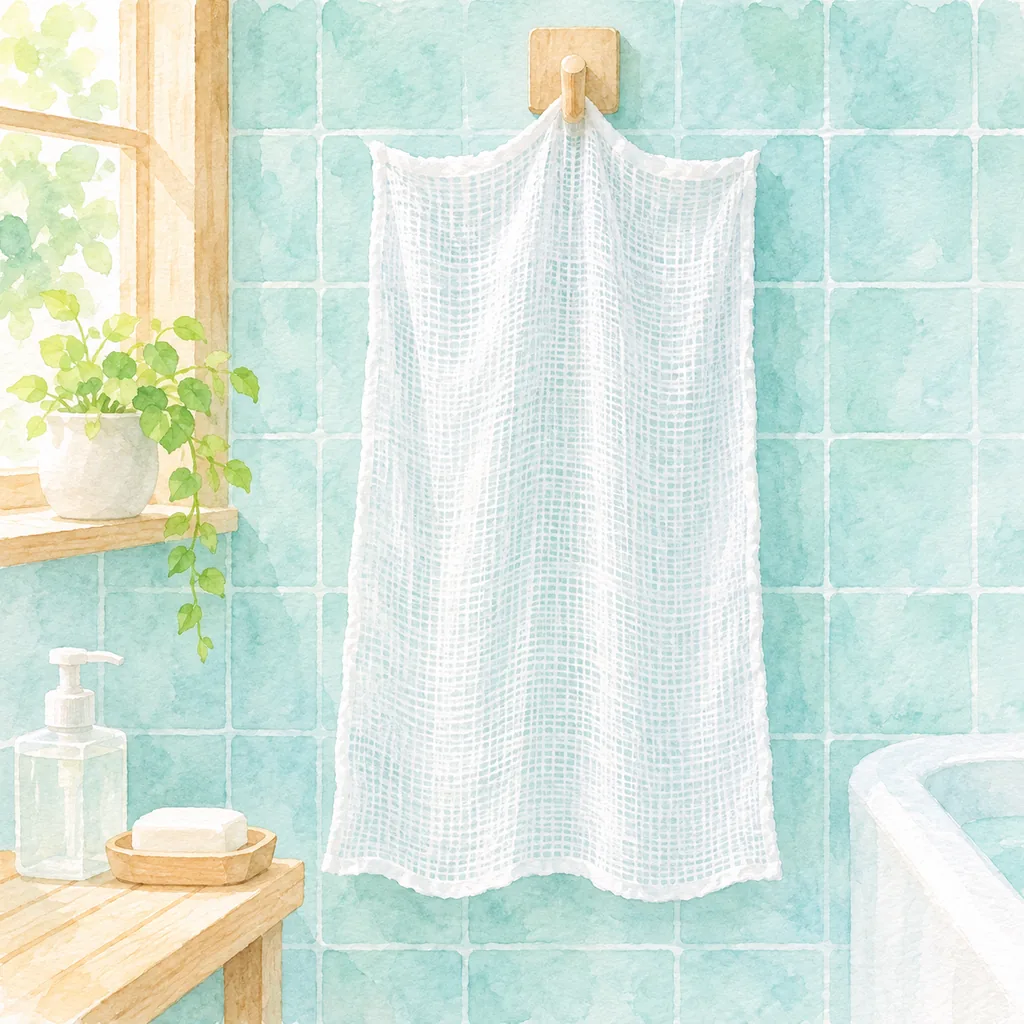
Rinse, wring, hang it open
After use, rinse out all the soap, wring it well and hang it open to dry. Balled up wet, it dries slowly. Launder cotton towels now and then; delicate ones like Oboro's go in a laundry net, without fabric softener.
8. Frequently Asked Questions
What is a Japanese washcloth?
A long, narrow body towel, usually nylon, used to lather up and scrub the whole body. At about 90 to 100 cm, you can hold it by both ends to wash your back. Salux, first made in Japan in 1966, is a well-known example.
Which fiber is best for sensitive skin?
Soft cotton or silk. Oboro Towel's Senshin towel and Imabari's gauze towel are gentle enough for babies. Among the nylon towels you can buy abroad, choose a soft one like aisen's, avoid the firmest grades, and wash with lather rather than pressure.
Which one lathers best?
Nylon. Among cotton towels, ones with a clever weave, like Imabari's gauze towel, also make a smooth lather. Silk lathers less.
I want a brisk, refreshing scrub. Which should I pick?
A firm nylon like Salux, or hemp or washi. The Kamenoko hemp towel has a crisp leno weave, and washi takes up skin oil for a clean feel.
How often should I replace a body towel?
When it goes limp or starts to smell. It depends on the fiber and how you use it, so watch for fraying and weaker lather. Rinsing and drying it after every use makes it last.
Which makes a good gift?
Kinukko's Gunma silk or Oboro Towel's Senshin towel if you are shopping in Japan. A body towel is something people rarely replace for themselves, so a good one is a welcome present.
9. Final Thoughts: A Fiber That Suits Your Skin
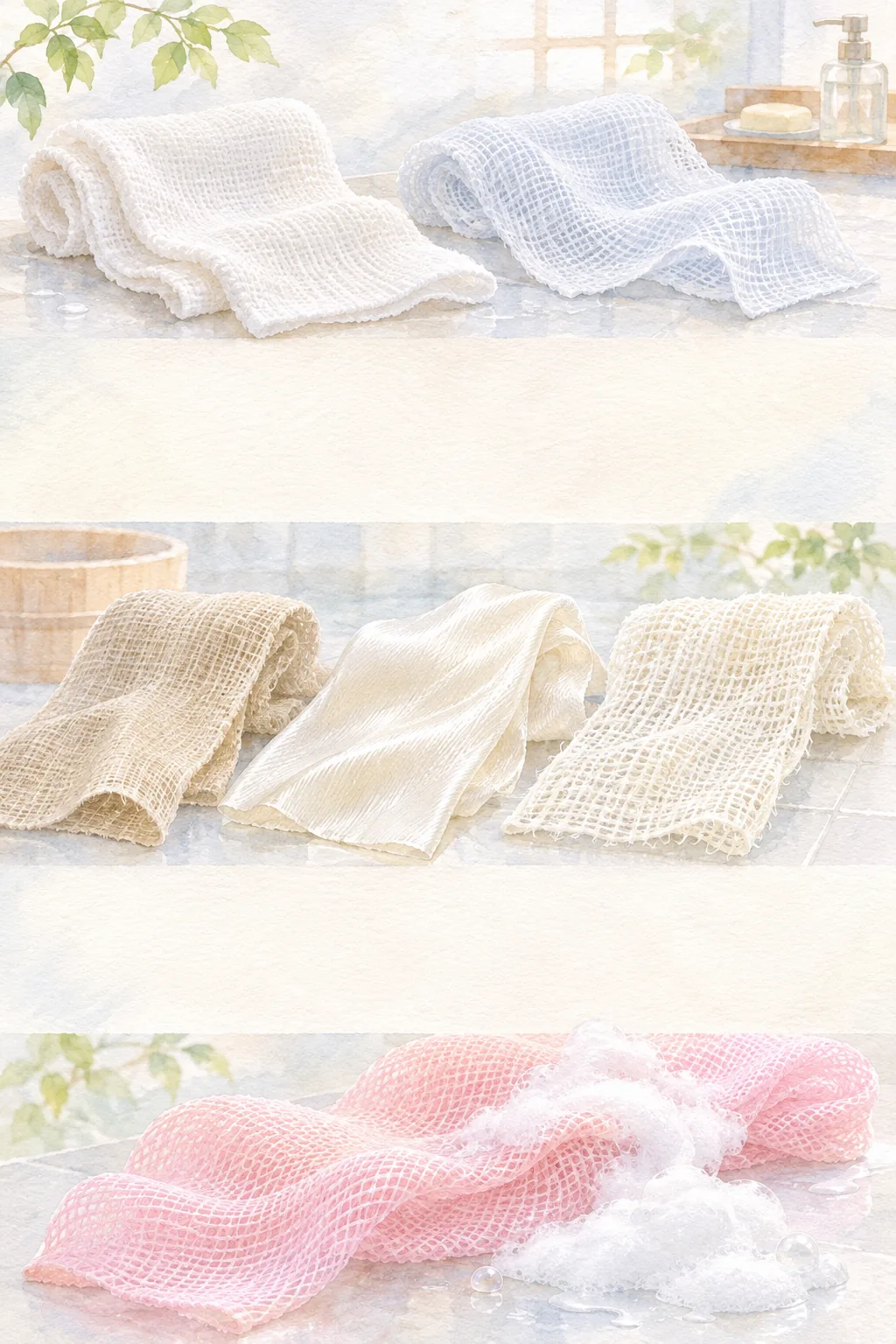
How a body towel feels comes down to its fiber.
Salux and the long nylon washcloths, for lather and a brisk scrub. Oboro Towel's cotton that softens when wet, and Imabari gauze with its smooth foam. The Kamenoko maker's crisp hemp. Silk from Gunma's own silkworm, and washi that leaves you squeaky clean. All made in Japan, for a country that washes before it soaks.
You use it every day, so choose the one that suits your skin.
Imabari vs. Senshu Towels: What's the Real Difference?
Japanese Soap: 7 Bars Compared, Cow Brand to Tamanohada