"Our cat stopped finishing her bowl — we think she doesn't like how she has to reach for the food."
"The cardboard scratcher lasted three weeks. The cat's still going strong."
The premise behind Japanese pet product design is the same as Japanese daily goods design: the
object should serve its purpose completely, for a long time, without compromise on materials or
finish. A food bowl should hold the right height for the animal's spine. A cat scratcher should
last years rather than weeks. A lead should soften with use rather than chafe.
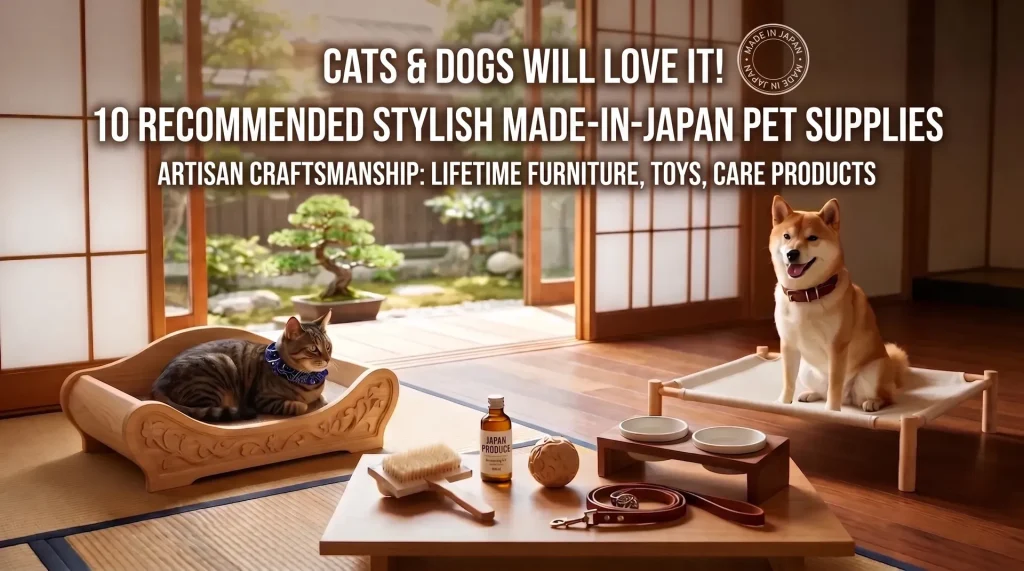
This guide covers seven Japan-made pet products — two food bowls, two treats, one cat scratcher,
one leather collar and one leather lead — with notes on what each one actually does better than
the generic alternatives.
Quick Reference: Where Japanese Pet Products Make the Most Difference
| Category | Common problem with cheap alternatives | What Japanese products solve |
|---|---|---|
| Food bowls | Too light; bowl moves while eating; floor-level causes neck strain | Anodised aluminium or ceramics at correct ergonomic height; non-slip; hygienic surface |
| Treats / food | Additives, artificial colours, preservatives; unknown ingredient origin | Human-grade standards; single-ingredient or clearly sourced; domestic production verified |
| Cat scratchers | Cardboard debris everywhere; falls apart within weeks | Patent ultra-dense reinforced cardboard that lasts years; minimal debris |
| Collars / leads | Nylon abrades fur; cheap metal fittings fail | Vegetable-tanned leather hand-stitched by craftspeople; softens with wear |
1. Why the Same Craft Logic Applies to Pet Products
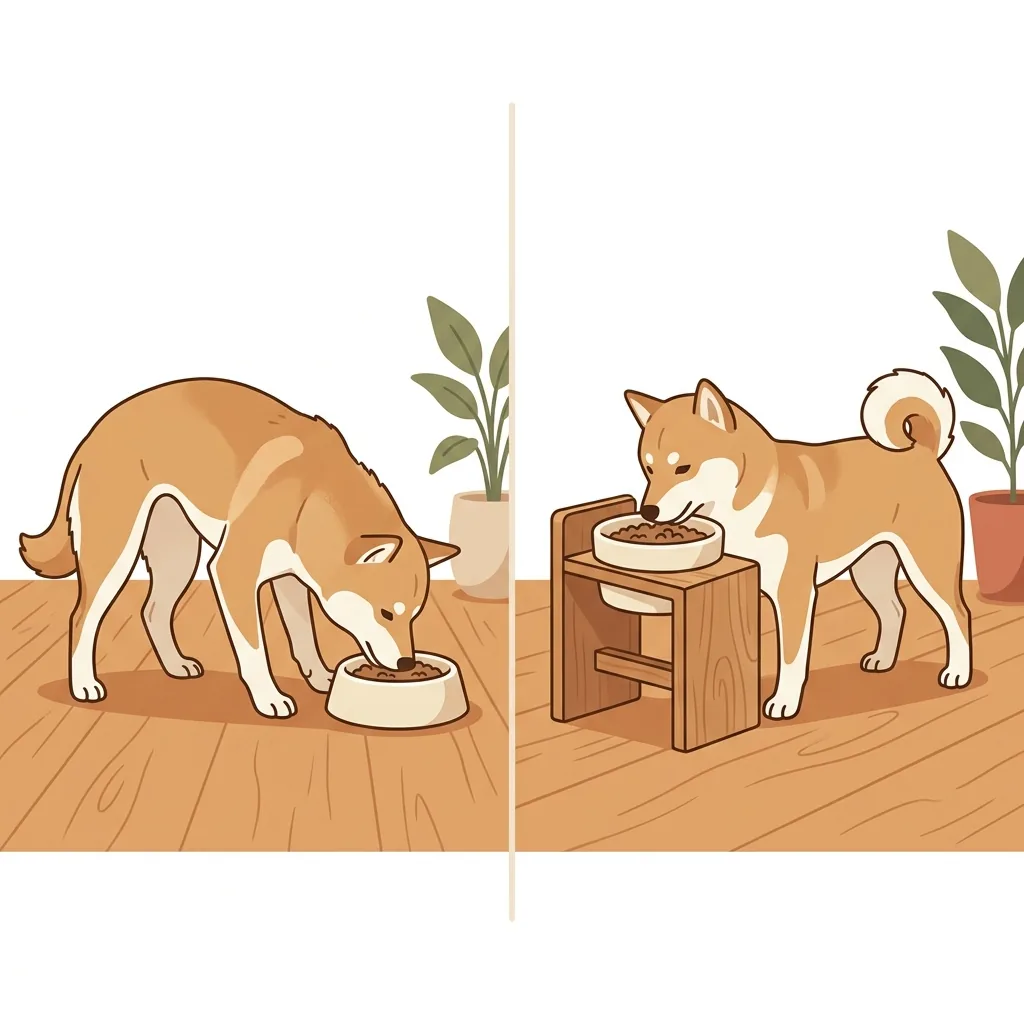
The ergonomics of eating: posture matters
Dogs and cats eating from floor-level bowls have to crane their necks downward at a significant
angle. In senior animals particularly, this contributes to neck muscle strain and digestive
issues — the oesophagus doesn't align correctly for smooth swallowing when the head is angled
sharply down.
Japanese food bowl designers have studied this. The correct height for the bowl's base is at
the animal's chest level (measured at natural standing posture), which allows the neck a slight
natural downward angle without straining. Bowls with adjustable or fixed-height stands account
for this. A bowl that moves while the animal is eating compounds the problem — adequate weight
or non-slip base is not optional.
2. Choosing: Bowls, Treats, Scratchers & Leads
Bowls: anodised aluminium or ceramic over plastic
Plastic bowls develop micro-scratches that harbour bacteria — this is a documented cause of feline chin acne (small comedones around the jaw). Anodised aluminium and glazed ceramic/porcelain have smooth, non-porous surfaces that clean completely. Both are safe for heat sterilisation. Choose based on your cleaning routine: anodised aluminium is lighter and impact-resistant; ceramic has more design options and tends to be heavier (better for larger dogs who push bowls).
Treats: read the ingredient list first
The ingredient list on pet treats follows the same rules as human food labelling in Japan. A trustworthy Japanese no-additive treat has a short, readable ingredient list with domestic origin specified: "Chicken (Kagoshima Prefecture)" not just "chicken." Lists with chemical names for preservatives, artificial colours, or flavour enhancers — in any language — indicate a different product category entirely.
3. Food Bowl Picks: Ours & Nekozuki
Ours (アワーズ) — Anodised Aluminium Food Bowl Stand
Made by an Osaka metalworks company whose primary business is aerospace-grade aluminium components. The same machining and anodising precision applied to aircraft parts goes into this pet bowl. The anodised colour treatment is integral to the aluminium — it doesn't chip or flake. The bowl has an 11-degree tilt that helps animals eat to the last portion without having to strain toward the bottom. The stand height is calculated for the ergonomic eating position. Available in multiple colours; the surface wipes clean completely.
- Material
- Anodised aluminium, made in Japan (Osaka)
- Best for
- Dogs and cats of any size; seniors with neck issues; design-conscious households
Nekozuki (ねこずき) — Wooden Cat Food Stand
Nekozuki (literally "cat lover") is a specialist feline accessories brand. Their wooden food stand is made from Iwate Prefecture Japanese red pine — all edges rounded smooth in a process called mentori that eliminates any sharp contact points. The design is specifically for cats: the platform height and bowl diameter are optimised for whisker clearance (cats are stressed when their whiskers contact the bowl rim during eating) and for the position that minimises food spillage. Works with most standard bowl sizes.
- Material
- Iwate red pine, fully rounded edges, made in Japan
- Best for
- Cats specifically; whisker-stress reduction; natural wood aesthetic
4. Treat Picks: Dot Wan & RiverD Republic
Dot Wan (ドットわん) — Freeze-Dried Single-Ingredient Treats
Dot Wan freeze-dries Japanese domestic ingredients — specifically meat, fish, and vegetables sourced from named domestic producers — without any preservatives, artificial colours, or flavour enhancers. The freeze-drying process removes moisture while preserving nutritional content: what's left is structurally the original ingredient at 1/4 of its original weight. The natto and dried sardine varieties are particularly popular — owners report animals that normally leave food will eat these immediately, because there's nothing in them except the named ingredient. Available for both dogs and cats.
- Production
- Freeze-dried, no additives, domestic Japanese ingredients
- Best for
- Fussy eaters; senior animals; training treats; ingredient transparency
RiverD Republic — Nekopure / Inupure No-Additive Paste Treats
RiverD Republic produces paste stick treats (similar in format to popular "squeeze" treats) at their own factory in Tottori Prefecture. What distinguishes them: most competitors in this category use thickening agents (carrageenan, xanthan gum) and flavour additives. Nekopure and Inupure use only the named protein (chicken breast meat, typically) and rice flour as a binder. The ingredient list is two items. The texture is naturally thick from the protein concentration, not from additives. Useful for medication administration; contributes to hydration. Available for cats (neko) and dogs (inu).
- Ingredients
- Two items maximum: protein + rice flour. Made in Tottori, Japan.
- Best for
- Medication administration; hydration supplementation; sensitive animals
5. Scratcher & Lead Picks: Caricarina & Teruberu
Caricarina (カリカリーナ) — Reinforced Cardboard Cat Scratcher
Made in Chiba Prefecture using export-grade ultra-dense corrugated cardboard processed via a patented cutting technique. The density is significantly higher than standard cardboard scratchers — the difference is immediately apparent when you press against it. Standard cardboard scratchers compress noticeably under light pressure; Caricarina does not. This translates directly to lifespan: multi-cat households report years of use before replacement is needed, compared to weeks for standard products. The debris output is also substantially lower. The sofa shape functions as a sleeping platform.
- Material
- Patent ultra-dense reinforced cardboard, made in Chiba, Japan
- Best for
- Multi-cat households; reducing scratcher waste; cats that scratch aggressively
Teruberu (てるべる) — Hand-Stitched Leather Dog Collar & Lead
Teruberu is a specialist dog collar and lead maker using vegetable-tanned leather stitched by hand. The inner surface (skin contact side) uses a softer leather layer to prevent the fur abrasion and pressure marks that nylon collars cause over time. Custom engraving — the dog's name and owner contact number — is available as a built-in identification tag option. Collar and lead are available in the same leather, same hardware, same engraving for a matched set. The leather ages from pale tan to deep amber with wear, becoming more supple rather than less over time. Lead hardware is specified for strength appropriate to large dogs.
- Material
- Vegetable-tanned leather, hand-stitched, made in Japan
- Best for
- Daily wear; fur-sensitive animals; engraved identification; lifetime lead investment
6. Care: Bowls, Leather & Scratchers
Food bowls (aluminium and ceramic)
Pet saliva is alkaline — it creates a sticky biofilm on bowl surfaces that standard dish soap doesn't fully remove. For persistent sliminess: spray diluted white vinegar or citric acid solution on the bowl surface, leave 10 minutes, then rinse and wash normally. A melamine sponge (damp, no soap) also removes biofilm effectively from hard, smooth surfaces. Both the Ours aluminium bowl and ceramic bowls withstand this treatment.
Leather collar and lead
After wet walks, wipe with a dry cloth and allow to air-dry in shade — not in direct sunlight or near a heat source. Once or twice a year, apply a small amount of leather conditioner (saddle soap, neatsfoot oil, or camellia oil) to the leather surfaces to maintain suppleness. The collar's inner surface softens naturally with wear; the outer face develops patina. If the collar is engraved, avoid soaking the engraved section as prolonged moisture can lift the edges of the impression.
7. Frequently Asked Questions
What height should the food bowl be?
At natural standing posture (all four feet on the ground), the bottom of the bowl should align with the pet's chest or lower neck. This allows the neck a mild downward angle — not a sharp drop. For dogs, the guideline is that the top of the bowl should be at elbow height or slightly above. For cats, lower is generally fine; the main priority is the bowl width accommodating whiskers without contact.
Can I give dog treats to my cat or vice versa?
Only treats specifically labelled for both, or for the species in question. Dogs and cats have different nutritional requirements and different sensitivities. Cats in particular are obligate carnivores sensitive to sodium and certain minerals — treats formulated for dogs may have sodium levels unsuitable for cats. Single-ingredient treats (pure dried chicken, for example) are generally safe for both at small quantities, but confirm with your veterinarian if unsure.
How long does the Caricarina scratcher actually last?
The reported lifespan from Japanese users ranges from 1-3 years depending on the number of cats and how aggressively they scratch. For a single cat, 2+ years is typical. For two or more cats with heavy scratching habits, 1-1.5 years before the surface is significantly worn. This compares to standard cardboard scratchers that typically require monthly replacement in the same households. The total waste and replacement cost over a cat's lifetime is substantially lower.
Can a leather collar get wet in the rain?
Yes — wetting leather doesn't damage it immediately. What damages leather is drying incorrectly after getting wet: never use heat (hairdryer, radiator) to dry leather. Wipe off surface water, allow to air-dry at room temperature in shade. If the collar gets very wet regularly, the leather will dry out over time — a leather conditioner application once or twice a year maintains the oils that keep it supple. For heavy rain situations, a nylon collar as backup is practical.
Why do Japanese pet products cost more?
The manufacturing standards applied are the same as those used for human products in the same category. The Ours bowl is made in an aerospace components factory to the same tolerances and with the same anodising process. The Teruberu collar is stitched by craftspeople who produce the same product for humans. The Caricarina scratcher uses a patented process and industrial-grade materials. The price difference reflects the manufacturing cost, not a premium for the pet market specifically.
Are these good birth or adoption gifts?
Yes — particularly the Ours food bowl (universally useful, works for any animal size) and the Dot Wan freeze-dried treats (appreciated regardless of specific feeding protocol). The Teruberu collar and lead set is a meaningful gift for someone who has just adopted a dog — the personalised engraving element makes it specific to the animal rather than generic. Caricarina is a strong gift for existing cat owners who have experienced the scratcher replacement problem.
Final Thoughts: The Same Logic as Every Other Japanese Everyday Object
Japanese design thinking doesn't stop at human products. The same attention to ergonomics,
materials, and durability that produces exceptional nail clippers and tweezers produces
exceptional food bowl stands and cat scratchers. The animal can't articulate why they prefer
eating from a well-positioned bowl — but the behavioural difference is visible.
These seven products solve specific daily problems. The Ours bowl removes the posture issue.
The Dot Wan and Nekopure treats solve the additive question. The Caricarina solves the
scratcher replacement cycle. The Teruberu collar and lead solve the abrasion problem and
produce something that improves over years rather than degrades.
Igusa Tatami Mats: Japanese Rush Grass for Natural Home Flooring
Japanese Winter Pajamas: Triple Gauze & Wool for Better Sleep