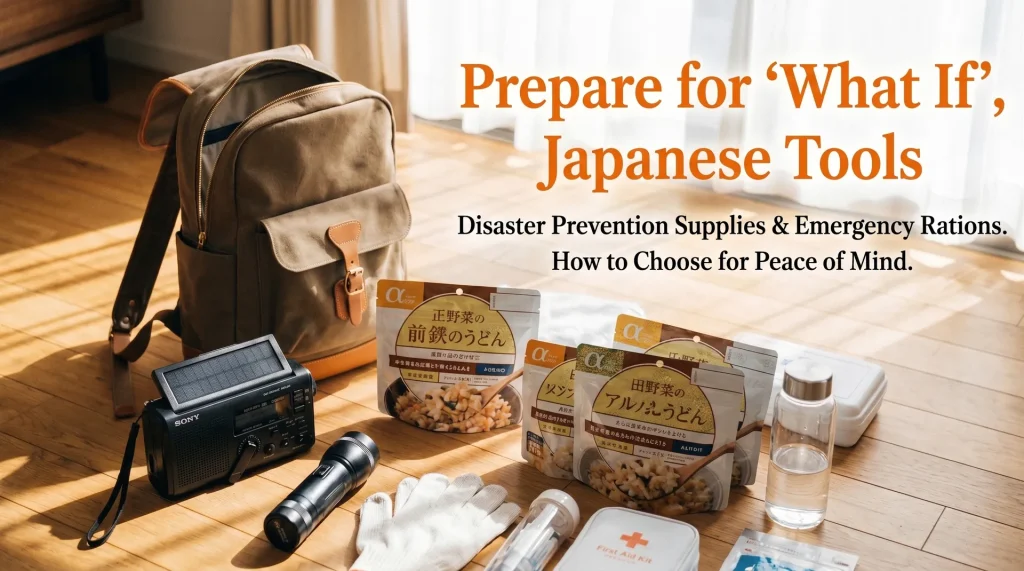
"I keep telling myself I'll get around to it" — and then another year passes.
Earthquakes, typhoons, torrential rain.
In a country that experiences more natural disasters than almost anywhere on earth, emergency preparedness matters as much as having insurance.
And yet, when disaster strikes, stories of "the radio was broken" or "we couldn't eat the emergency food" are far too common.
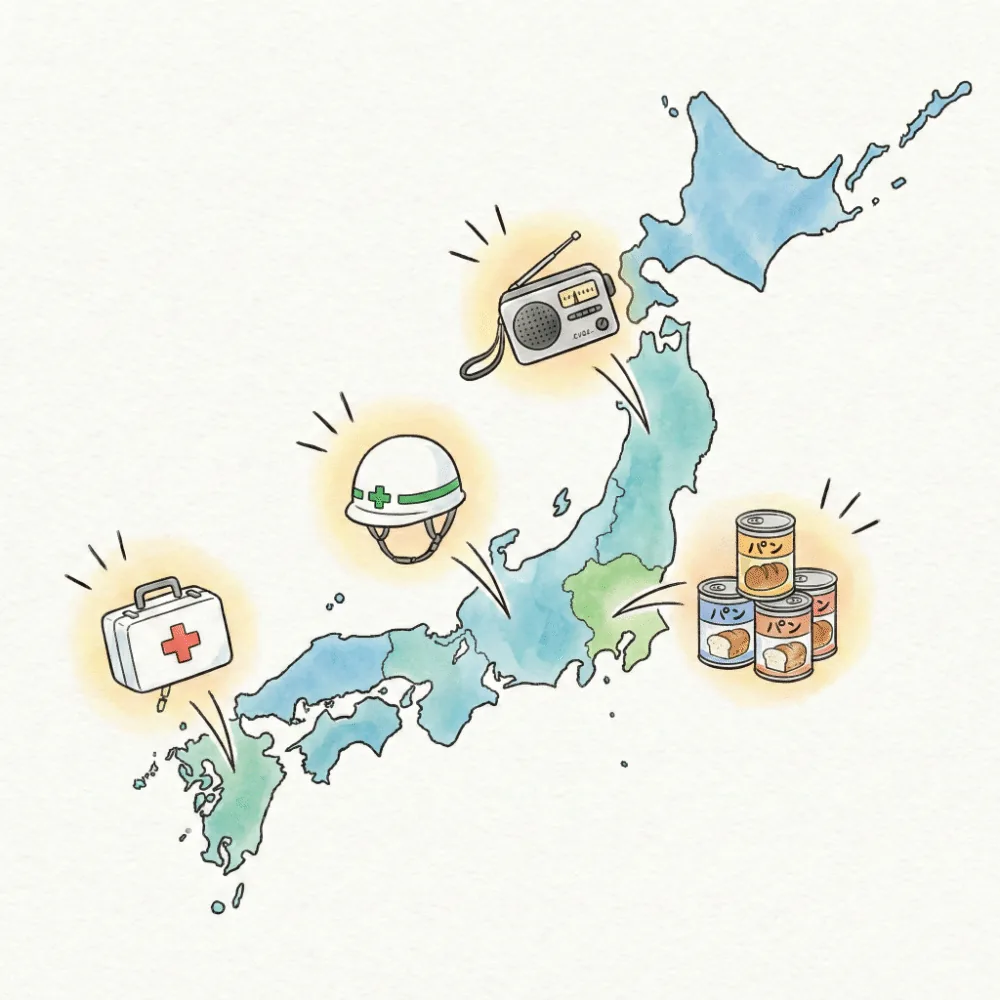
Here's the simple truth: when it comes to protecting lives, trust only Japanese-made disaster preparedness gear.
Long-term food storage and hygiene products made to Japan's strict quality standards are among the finest in the world — precisely because they've been refined by real disaster experience.
This guide covers everything from genuinely delicious emergency food to truly useful multi-function radios and portable toilet solutions — a responsible adult's checklist for peace of mind.
Series: This article is Part 1 of the "Prepare & Organize (Hygiene, Disaster Prep & Food Storage)" series.
Quick Reference: Disaster Preparedness Checklist by Category
| Category | Essential Items | Target Quantity | Key Point |
|---|---|---|---|
| Water & Food | Drinking water, alpha rice, canned bread | 3 L water × 3 days per person | Use rolling stock to keep freshness |
| Information & Light | Hand-crank radio, flashlight, whistle | 1 of each (per family member) | Solar charging capability adds security |
| Sanitation | Portable toilet, odor-proof bags, wet wipes | 35 uses per person (7 days) | Toilet access is the #1 challenge when water is cut |
| Evacuation Gear | Emergency backpack, emergency blanket, water purifier | 1 backpack + 1 storage box | Store near the entrance or bedroom |
1. Why Japanese-Made? The Reliability Behind Disaster Gear Built for Japan
Disaster preparedness gear is something you hope to never use. But when you need it, you need it to work perfectly under the worst possible conditions.
Unreadable instructions or equipment that breaks on first use is not an option.
Designed for Japan's Climate — and the Japanese Body
Japanese disaster gear is engineered to endure Japan's specific conditions: scorching, humid summers and bitter winters, with four distinct seasons in between.
Emergency food, too, centers on rice — a source of deep comfort for Japanese people under the stress of displacement in ways that foreign alternatives simply cannot replicate.
"Reliability over price." That is the core reason to choose Japanese-made disaster gear.
2. Information: Hand-Crank Multi-Function Emergency Radios
In a disaster, radio is essential for cutting through rumors and accessing reliable information.
When your phone battery dies, a hand-crank radio becomes your only link to the outside world.
Sony — Portable Emergency Radio ICF-B99
The definitive emergency radio. Charges your phone via solar panel and hand crank.
In a market flooded with cheap emergency radios, Sony's build quality stands apart.
Turning the built-in handle charges the internal battery, which can then charge a smartphone via USB.
A solar panel on top provides another charging path.
AM/FM reception is excellent, and the spotlight function serves as a flashlight during blackouts.
It's an investment — but this single device keeps you connected to information when it matters most.
3. Rescue Signal: The Kokuyo Twin Wave — Louder Than Your Voice
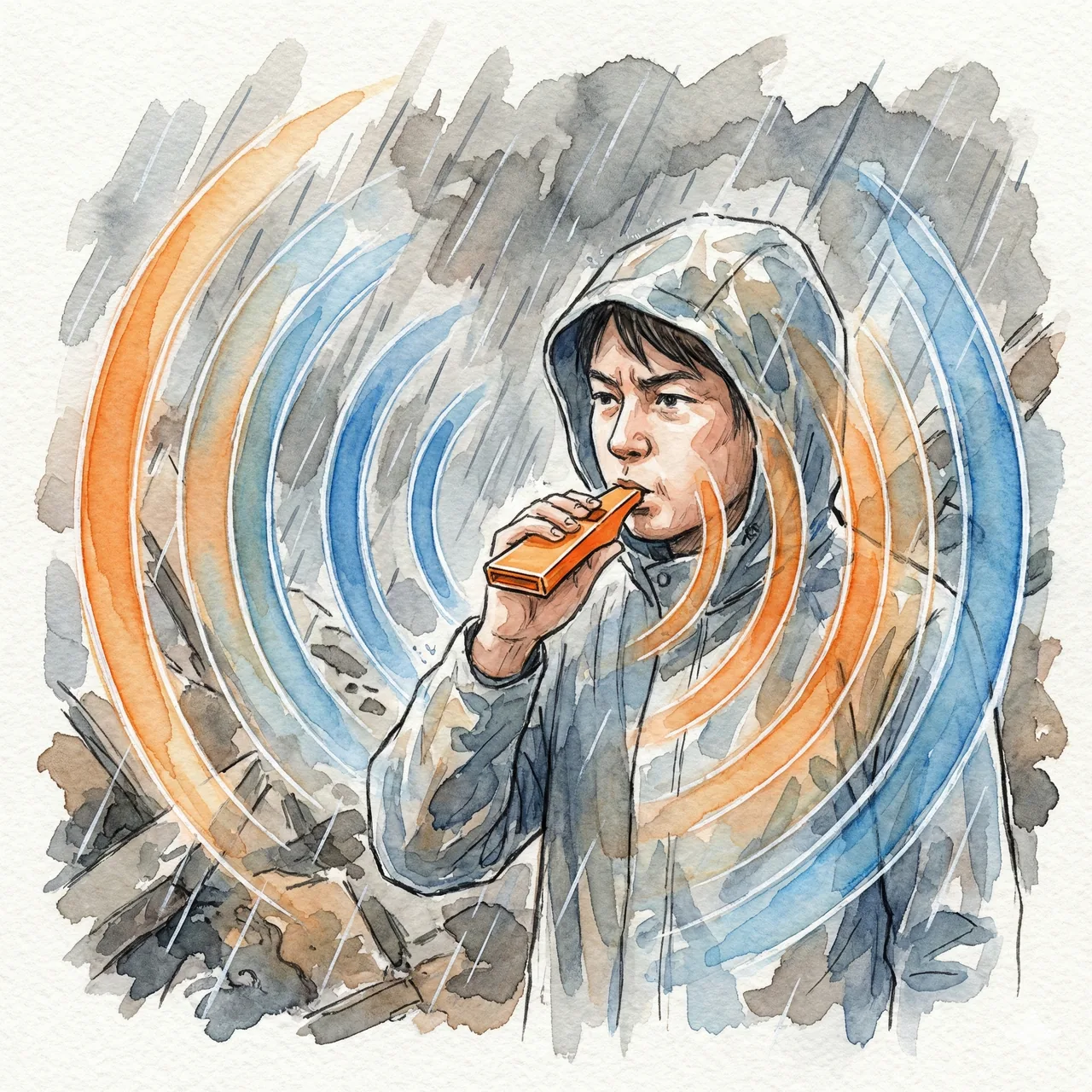
If you're trapped under debris from a collapsed building or furniture, shouting for help is dangerous — it exhausts your body and destroys your voice before rescuers can reach you.
A disaster rescue whistle — able to produce a sharp, piercing sound with minimal breath — can be the difference between being found and not being found.
Why the "Twin Wave"?
Kokuyo — Disaster Rescue Whistle Twin Wave:
It looks like an ordinary whistle, but its design is special: it simultaneously produces two distinct frequencies — 3,200 Hz and 4,800 Hz.
These frequencies sit in the range most easily detected by the human ear, and crucially, they cut through ambient noise without being masked.
The slim profile attaches easily to a neck strap, and the mouthpiece cap keeps out dirt and moisture — a perfect detail for emergency equipment.
Kokuyo — Disaster Rescue Whistle Twin Wave
A lifeline that costs just a few dollars — attach it and forget it's there until you need it.
One light puff produces a shockingly penetrating high-pitched tone.
The two overlapping frequencies create an "unpleasant" sound in the best possible sense — the kind that instantly catches the attention of rescuers and bystanders.
Keep one on your disaster backpack, your commute bag, and your children's school bag. One of Japan's quietly brilliant products.
4. Emergency Food: Alpha Rice & Canned Bread That Taste Good After 5 Years
The era of "survival biscuits and suffering" is over.
Japan's freeze-drying and food preservation technology is among the world's best — five years on the shelf and still genuinely enjoyable to eat.
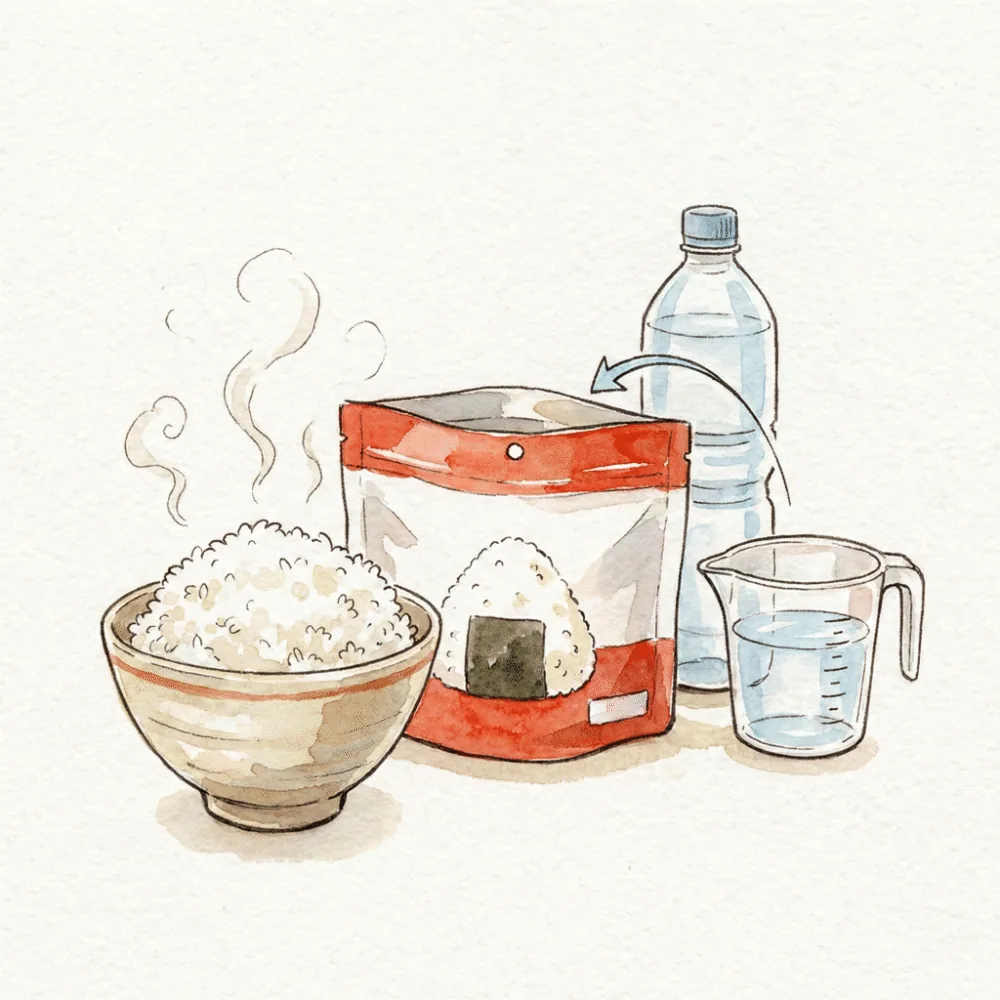
Alpha Rice: A Full Meal With Just Water
Oshinishokuhin (Oshino Foods):
The pioneer of alpha rice — cooked rice that is rapidly dried while retaining its structure.
Rehydrates with hot water in 15 minutes, or cold water in 60 minutes, to produce soft, fluffy rice.
Available in plain white rice, gomoku gohan (seasoned rice), dry curry, chicken rice, and many more varieties.
Comes with a spoon and can be eaten straight from the bag — no dishes required, no water wasted on washing up.
💡 Even Endorsed by Tokyo Police: Making Instant Noodles with Cold Water
Even without a heat source, instant cup noodles can be made with cold water alone — a tip widely shared by the Tokyo Metropolitan Police Department's Disaster Countermeasures Division.
- Method: Fill the cup with cold water as normal and wait 15–20 minutes (yakisoba works the same way).
- Taste & texture: The noodles come out slightly firm — al dente. The broth flavor develops fully. It's not unpleasant at all — think "chilled ramen."
- Note: Deep-fried (flash-fried) noodles rehydrate better than non-fried versions, which take longer.
Oshinishokuhin — Alpha Rice 12-Variety Complete Set
Variety that prevents palate fatigue — the gold standard in emergency food.
A set of 12 different flavors spanning Japanese, Western, and Asian styles: white rice, wakame rice, dry curry, shrimp pilaf, and more.
During a disaster, stress suppresses appetite — having something to look forward to ("what shall I eat today?") provides genuine psychological comfort.
Stores for up to 5 years, spoon included.
Bologne — Can de Bologne (Canned Danish Bread)
A Kyoto Gion-born Danish pastry that keeps for 3 years — the emergency food treat.
Open the can and find a moist, genuine Danish pastry inside.
No dryness whatsoever — the buttery aroma is immediate and inviting.
During a disaster, something sweet provides real psychological stabilization.
Loved by children and older adults alike — this is the "reward" you'll be genuinely glad to have stocked.
5. Water: Japanese Portable Water Purifiers & DIY Filtration
A person can survive weeks without food, but only days without water.
A device that can turn bathwater or rainwater into drinking water dramatically improves survival odds while waiting for water trucks to arrive.
A Water Purifier Designed for Japanese Water
Karihana Seisakusho — mizu-Q PLUS:
In a market dominated by imported purifiers, this one was specifically developed for Japanese water quality conditions.
Hollow-fiber membrane filters completely block E. coli and Cryptosporidium bacteria.
Fibrous activated carbon removes chlorine odor and musty off-flavors as well.
Designed to attach directly to standard PET bottle threads — no proprietary bottle required.
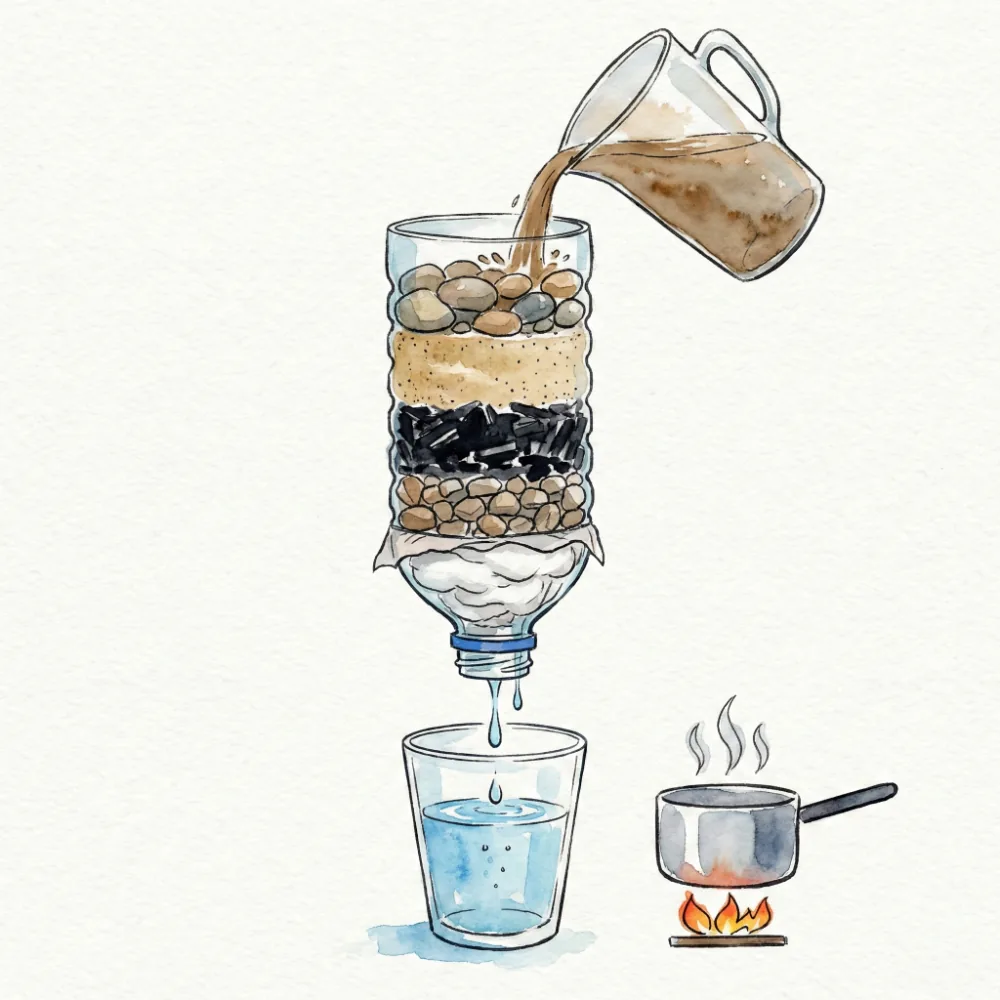
💡 Turn Muddy Water Clear: Building a DIY Filtration Device from a PET Bottle
Without a purifier, everyday materials can filter turbid water. Note: this removes sediment only — it does not kill bacteria. Always boil the filtered water (at least 1 minute) before drinking.
- Cloth / cotton: Pack into the bottle neck (final filter).
- Small pebbles: Base layer.
- Charcoal (activated): Absorbs odors and fine particles.
- Sand: Removes fine sediment.
- Large pebbles: Removes coarse debris (top layer).
Cut off the bottom of a PET bottle and invert it. Fill with the layers in order as above.
Slowly pour murky water in through the top. Clear water will emerge from the neck below.
※ The first few passes may still be cloudy — run it through several times until the output clears.
Karihana Seisakusho — Portable Water Purifier mizu-Q PLUS
Attach to any PET bottle. Removes 99.9% of bacteria — Japanese technology.
"Drink directly from a river" becomes possible with this compact purifier.
Unlike straw-type imports, it uses a standard PET bottle as the tank — you simply squeeze the bottle to push water through the filter.
A single cartridge purifies approximately 350 liters (about 1.5 bathtubs' worth).
Tuck it in a corner of your disaster backpack — it's your last line of defense when stored water runs out.
6. Sanitation: Japanese Odor-Proof Portable Toilet Systems
When disaster survivors are asked "what was the hardest part?", the most common answer isn't food or water — it's the toilet.
When the water supply is cut, flush toilets stop working. Whether or not you've prepared for this single issue determines the quality of your entire shelter experience.
The Technology of Containing Odor
BOS — Odor-Proof Bag (Kurillon Kasei):
Originally developed for medical waste applications — the most powerful odor-blocking bag on the market.
Seal waste inside and hold the bag right under your nose: no smell whatsoever.
When garbage collection is suspended and waste must be stored at home for days, this keeps your living space livable.
Portable toilet sets:
A combination of solidifying agent and waste bags. Japanese solidifying agents absorb rapidly and carry strong antibacterial action — essential for infection prevention in a shelter environment.
The recommended minimum stockpile is 5 uses × 7 days = 35 uses per person.
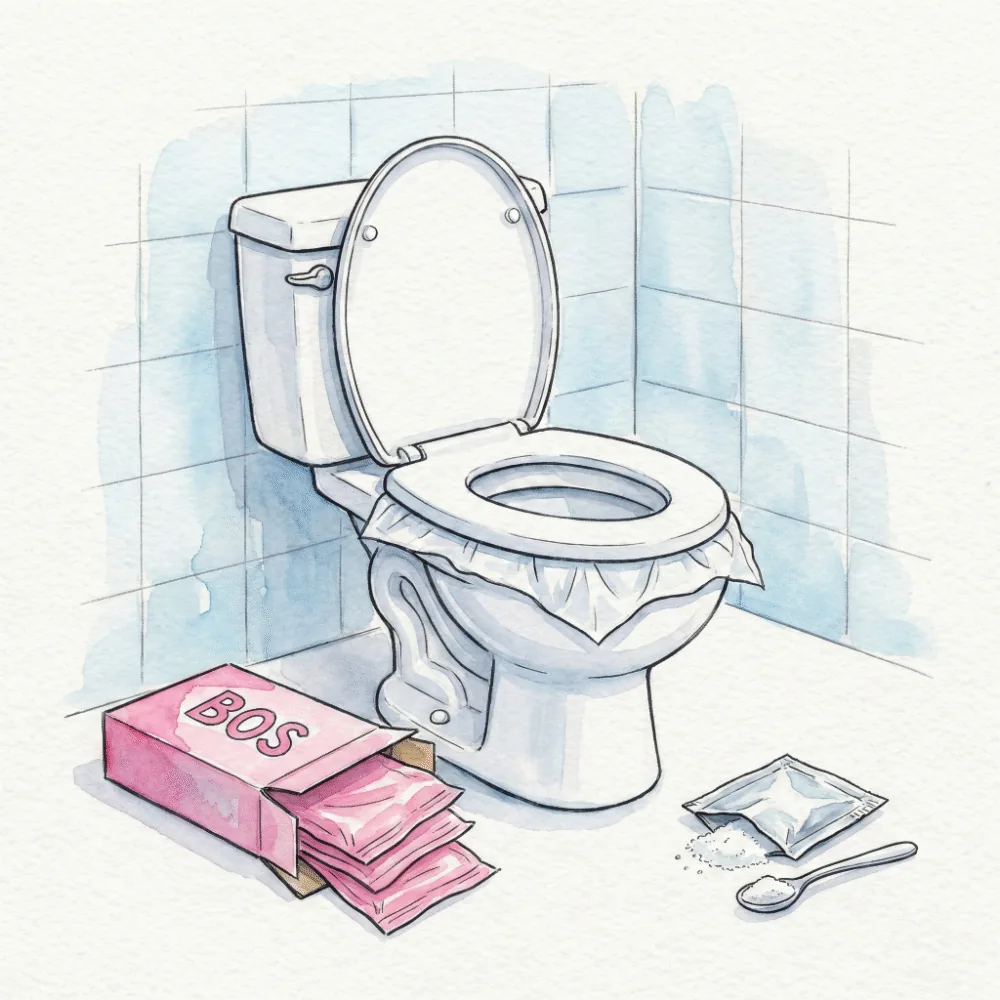
Kurillon Kasei — BOS Emergency Portable Toilet Set
"It genuinely doesn't smell" — medical-grade odor-blocking power.
The same BOS bag that's famous as a nappy disposal solution, now in a disaster toilet kit.
Includes solidifying agent, waste bags, and BOS's best-in-class odor-proof outer bags in one set.
An essential item for apartment dwellers facing the reality of storing waste at home during an outage.
7. Warmth & Sleep: Compact Emergency Blankets & Air Mattresses for Shelters
Evacuation shelter floors are hard and cold. Sleep deprivation saps physical strength and raises illness risk.
Compact, portable solutions for securing a decent sleeping environment are more important than many people realize.
Noise Consideration — a Uniquely Japanese Detail
- Silent emergency blanket:
Traditional mylar emergency blankets produce loud crackling noise with every movement — a real source of conflict in shared shelter spaces.
Japanese "silent" versions use special materials that minimize noise, so you can shift position during the night without disturbing those around you. - Disaster air mattress:
Inflated with a straw or pump, these create a 5cm air cushion that insulates against cold, hard floors.
Rolls down to palm-sized when deflated, expands to a genuinely comfortable sleeping pad.
The difference in how your body feels the next morning is remarkable.
Silent Emergency Blanket (Japanese-made)
A shelter-spec aluminum sheet that won't wake your neighbors.
A specially treated sheet that reduces the distinctive crinkle-crunch noise of standard emergency blankets.
Usable at any hour in an evacuation shelter without disturbing others' sleep.
Palm-sized and lightweight — put one in every family member's pack.
Disaster Air Mattress
Sleep soundly even on a cold, hard floor — an air bed for emergencies.
Just blow into the included straw to create a 5cm layer of air between you and the floor.
Blocks cold from gymnasium or community center floors and protects your body from pressure points.
Rolls into an extremely compact package that fits in the gaps of your emergency bag.
8. Phase-Free Living: Everyday Items That Double as Disaster Gear
Emergency supplies don't have to live in a closet.
"Phase-free" is a growing design philosophy that eliminates the boundary between everyday life and emergency preparedness — using items you already enjoy day-to-day as your disaster tools.
Cassette Stoves & Single Burners
Iwatani cassette stove:
The tabletop cassette stove you use for hot pot is one of the most powerful disaster preparedness tools you can own — it becomes your heat source the moment utilities are cut.
CB gas canisters are available at convenience stores and burn for approximately 60 minutes each.
Camp single burners:
For solo households or portable evacuation scenarios, a compact camp burner is ideal.
Japanese brands like SOTO and Snow Peak fold to palm size and deliver remarkably stable heat output.
"The tool you brew morning coffee with at the campsite" becomes "the tool that keeps you alive" when infrastructure fails.
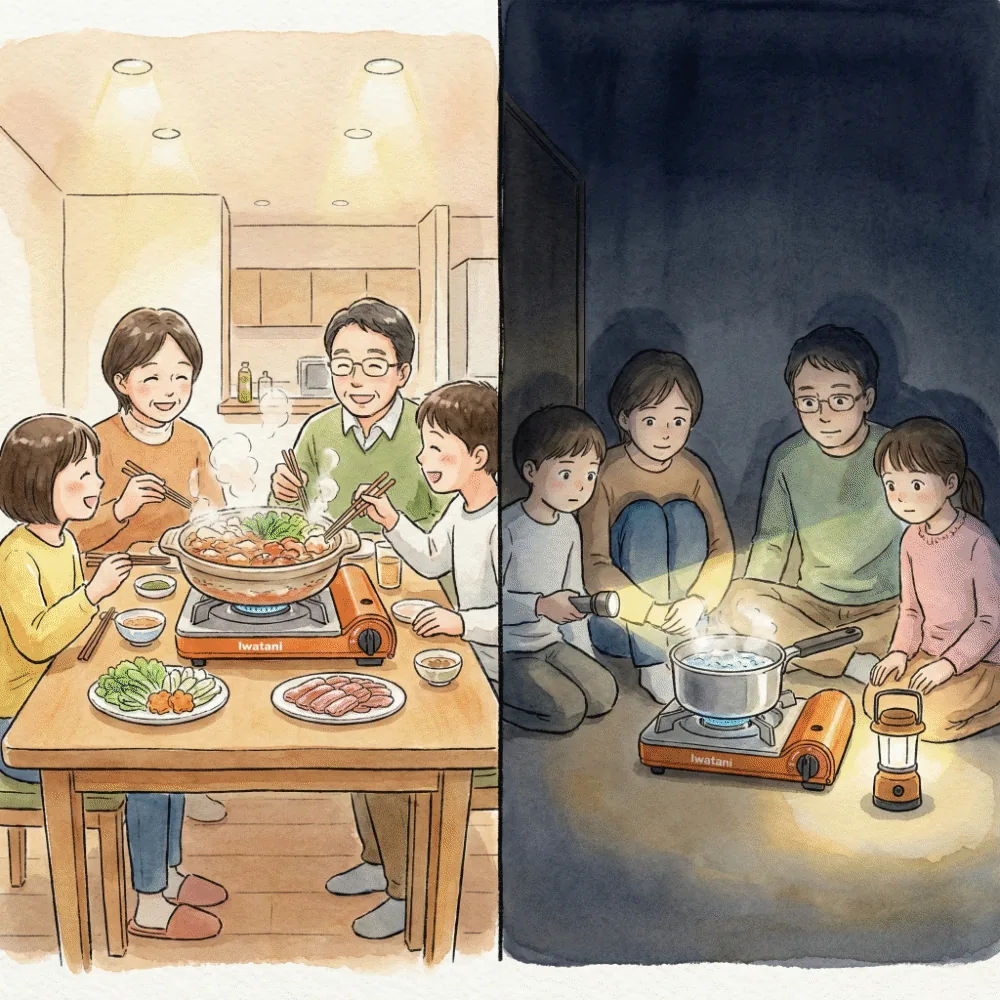
Iwatani — Cassette Fu Tough Maru
Wind-resistant and heavy-pot-ready — the ultimate disaster-ready cassette stove.
A double wind-guard unit that "lets air in but keeps wind out" — the flame holds steady even outdoors or on a balcony.
Rated for 20 kg of weight — no problem with heavy cast iron pots or Dutch ovens.
Comes with a dedicated carrying case for easy storage and transport. This is essentially a cassette stove designed with disaster use in mind.
SOTO (Shinfuji Burner) — Regulator Stove ST-310
Made in Aichi Prefecture — a legendary camp stove with cold-weather performance.
A single burner every serious camper knows, made in Japan.
Runs on standard cassette gas, and crucially, its micro-regulator keeps heat output stable even in cold temperatures.
Performs reliably during winter disasters when other stoves falter.
Folds to a very compact form — fits in the side pocket of a disaster backpack.
9. Kit or Custom? Choosing the Right Disaster Set for Your Household
If researching and selecting every item individually feels overwhelming, a professionally curated disaster kit is a smart shortcut.
First-Out vs. Secondary Stockpile
| Type | Purpose | Recommended Form |
|---|---|---|
| First-out bag (emergency grab bag) |
The bare minimum you take when evacuating immediately after disaster strikes. (For survival) |
Backpack set Both hands free. Not too heavy (under 15 kg for adults; 10 kg for women and older adults). |
| Secondary stockpile (at-home supplies) |
Supplies to sustain you for several days at home or in a shelter while utilities are restored. (For living) |
Box / container Water, food, cassette stove, portable toilet — stock generously. |
The most reliable approach: buy a disaster-certified backpack kit first, then customize it by adding your personal essentials — prescription medicines, glasses, menstrual products, nappies, etc.
[First-Out] La PITA — Disaster Set SHELTER
A stylish disaster backpack that actually looks good in your entryway — Good Design Award winner.
Solves the problem of disaster kits being "ugly and hidden away where they'll never be found."
The exterior is made from tarpaulin fabric used in tents — waterproof and highly durable.
The lightweight pack comes curated with the minimum essentials: radio, toilet, air mattress, and more — nothing superfluous.
[Secondary Stockpile] Defend Future — 7-Day Emergency Food Set
Supervised by a registered dietitian and disaster preparedness expert — 7 days of complete nutrition.
Built around the concept of "not just filling your stomach, but eating well and getting proper nutrition."
Includes vegetable curry and nutritional yokan (sweet bean jelly) alongside alpha rice, addressing the carbohydrate-heavy limitation of most emergency food sets.
Water is included — this one box can carry a household through the critical first days after a disaster.
10. Frequently Asked Questions
How much water should I stockpile per person?
The minimum is 3 liters per person per day × 3 days = 9 liters.
This includes drinking water plus enough for minimal cooking and hygiene.
A week's supply (21 liters) provides more comfortable security.
A practical target: two 6-bottle cases of 2-liter PET bottles per person.
What is "rolling stock"?
Buy a little more of everyday foods than you need, eat the oldest first, and restock as you go.
Rather than relying solely on dedicated emergency food, rotating retort curry pouches, pasta, canned goods, and cup noodles through your regular cooking keeps your stockpile perpetually fresh.
It eliminates the "expired emergency food" problem and means you eat familiar flavors during a disaster.
Where should I keep the disaster backpack?
Near the front door or in the bedroom — somewhere you can grab it immediately.
Buried at the back of a closet defeats the entire purpose.
Earthquakes strike at night, so having the bag at your bedside or in the hallway you'll use to evacuate is the rule.
This is exactly why well-designed bags that look good left out on display are growing in popularity.
Is my everyday portable battery pack good enough for disaster use?
It's essential, but pair it with a battery-powered backup charger.
Standard mobile battery packs are convenient, but become useless if a power outage drags on and you can't recharge them.
Also stock a battery-powered phone charger (Panasonic makes a reliable one) and keep a surplus of alkaline batteries — the combination provides backup when USB charging is unavailable.
Are 100-yen shop disaster supplies good enough?
They help, but use specialist products for the core items.
Water storage containers, aluminum sheets, and similar basics are fine from 100-yen shops.
For precision items — radios, flashlights, long-term food storage, and solidifying toilet agents — purpose-built specialist products offer significantly better reliability and durability.
Use the 100-yen shop for supplementary additions, not primary gear.
How do I maintain and check my disaster kit?
Set aside one day per year — Japan's Disaster Prevention Day (September 1st) is the natural anchor.
Check food expiry dates, battery charge levels, and that radios and flashlights function correctly.
Mobile battery packs self-discharge — top them up once a year.
As children grow and family composition changes, update the kit with age-appropriate items: nappies, baby food, reading glasses, etc.
Final Thoughts: Peace of Mind Is Something You Can Prepare For
Assembling disaster preparedness supplies is more than buying things.
It is a commitment — to protect your life and the lives of the people who matter to you — and an investment in the future.
Japanese disaster gear is the crystallized wisdom of generations who have lived through real disasters and kept improving their response.
Solid preparation lifts the vague background anxiety that many people carry and creates space to live today with more presence and intention.
Nothing happening is the best outcome. But if something does happen, you want to think "I'm so glad I prepared" — and mean it. Start now, even with one item.
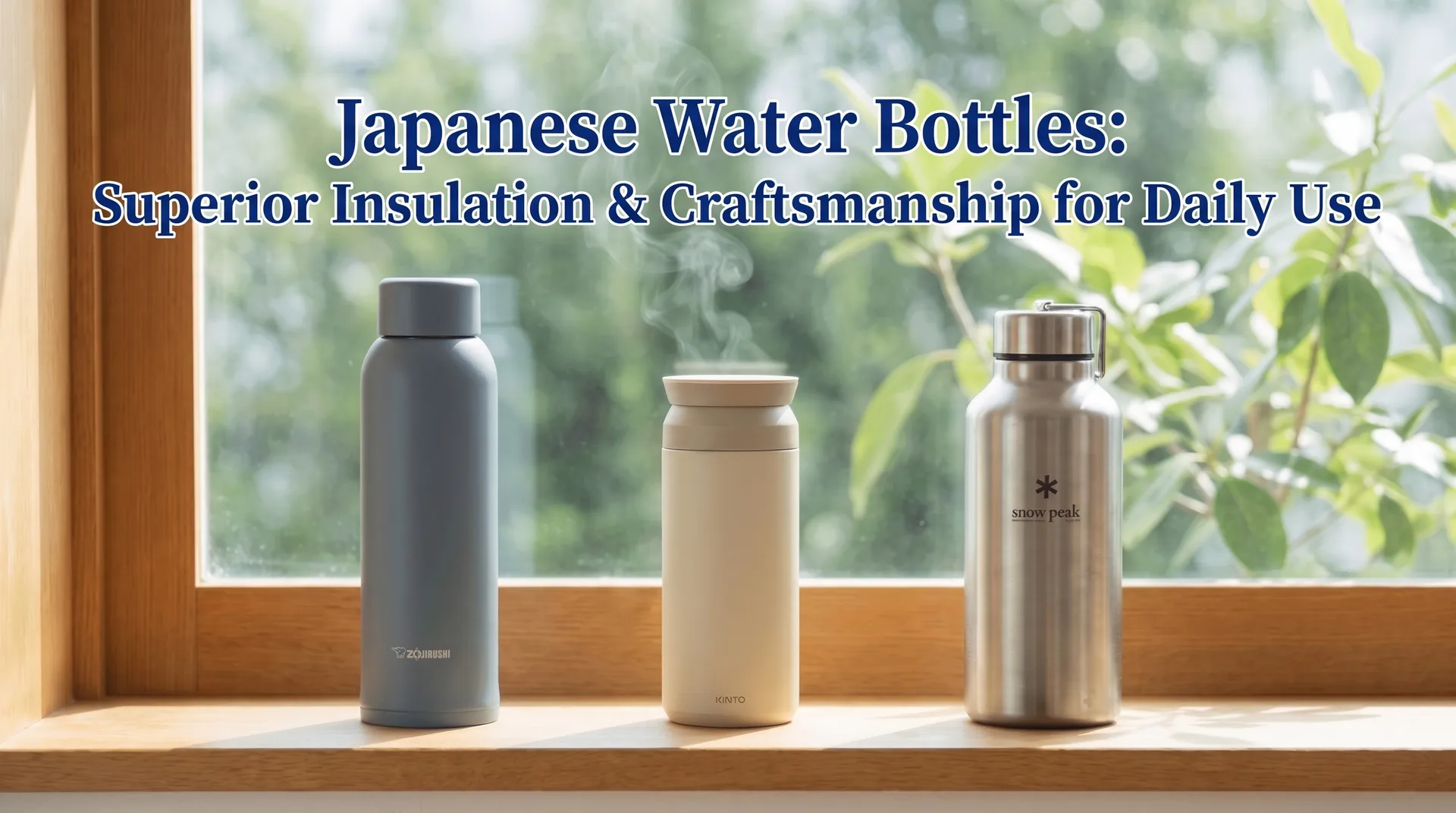
Japanese Water Bottles for Life: Tsubame Sanjo Durability & Thermos Reliability
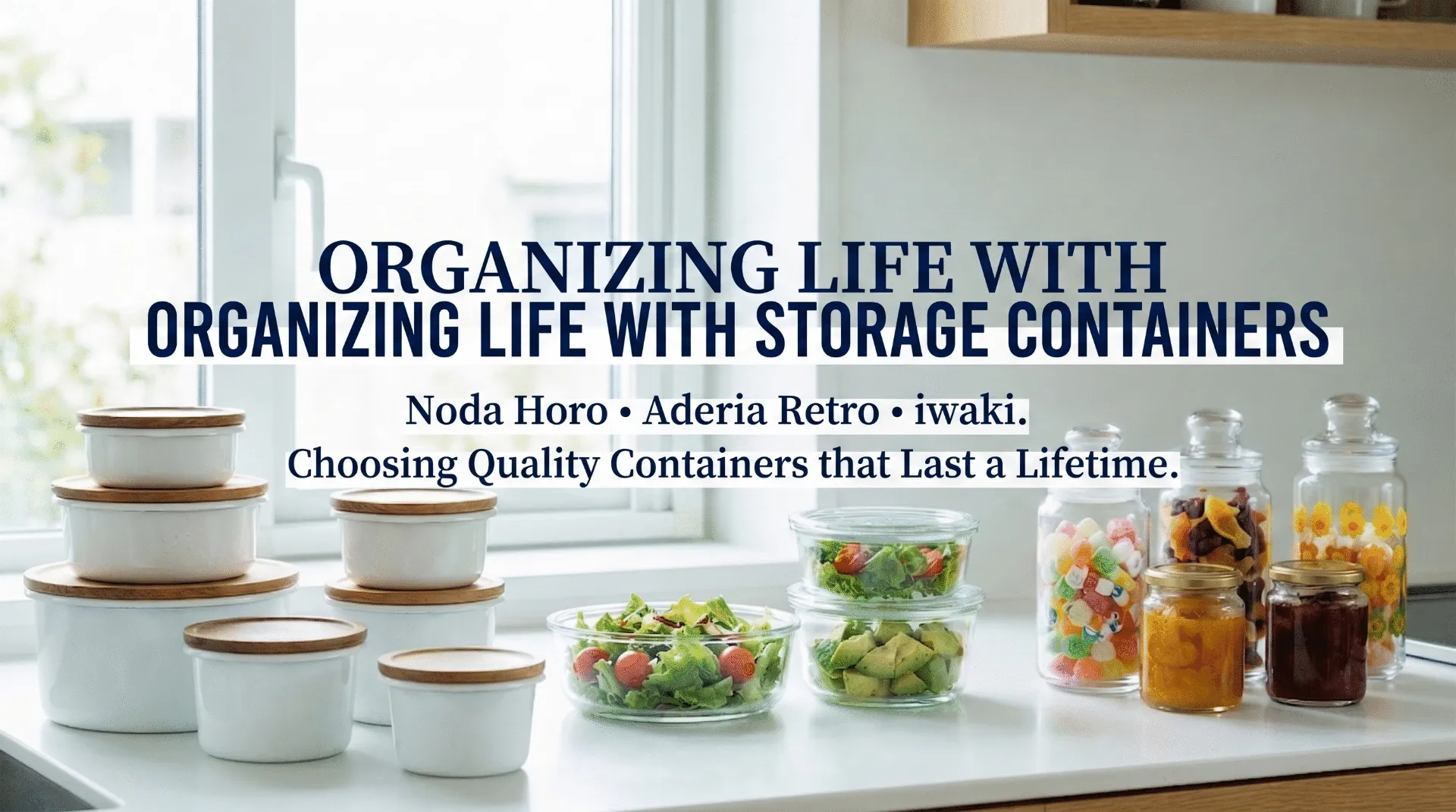
Best Food Storage Containers: Noda Horo & Aderia Retro for an Organized Fridge