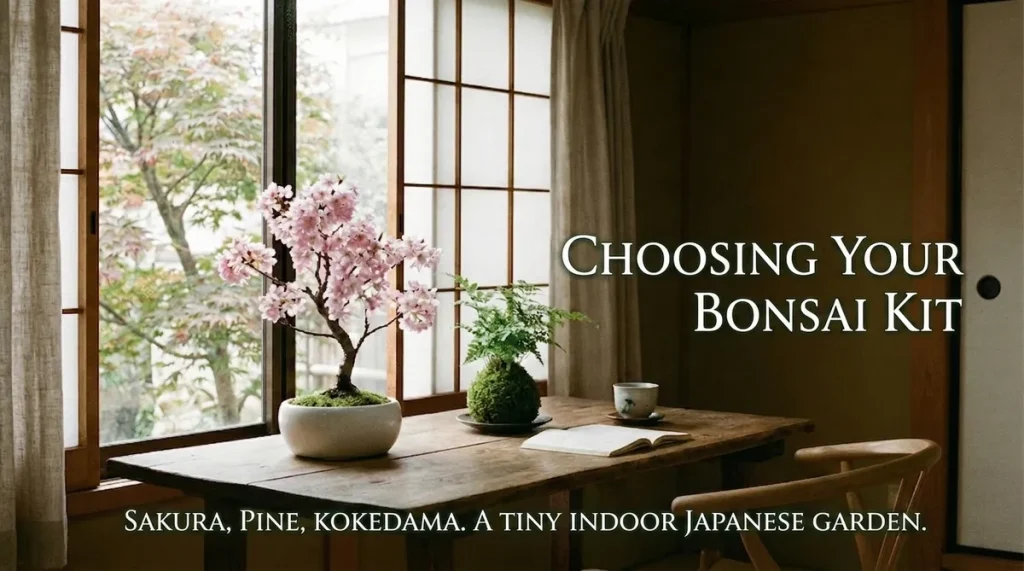
"I'd love some greenery in my room, but houseplants take up too much space…"
"Wouldn't it be lovely to feel the changing seasons right on my desk?"
If that sounds like you, the answer might be "modern bonsai" — a global trend that's redefining
what bonsai can look like.
Bonsai has a reputation for being a pastime reserved for experts, requiring years of patience and a traditional
garden. But today, there are starter kits for growing tiny cherry or pine trees in palm-sized pots, and charming
kokedama (moss balls) that work as living sculpture in any modern interior.
This guide covers everything from beginner-friendly cultivation kits to watering essentials, so you can bring a
miniature Japanese garden into your home starting today.
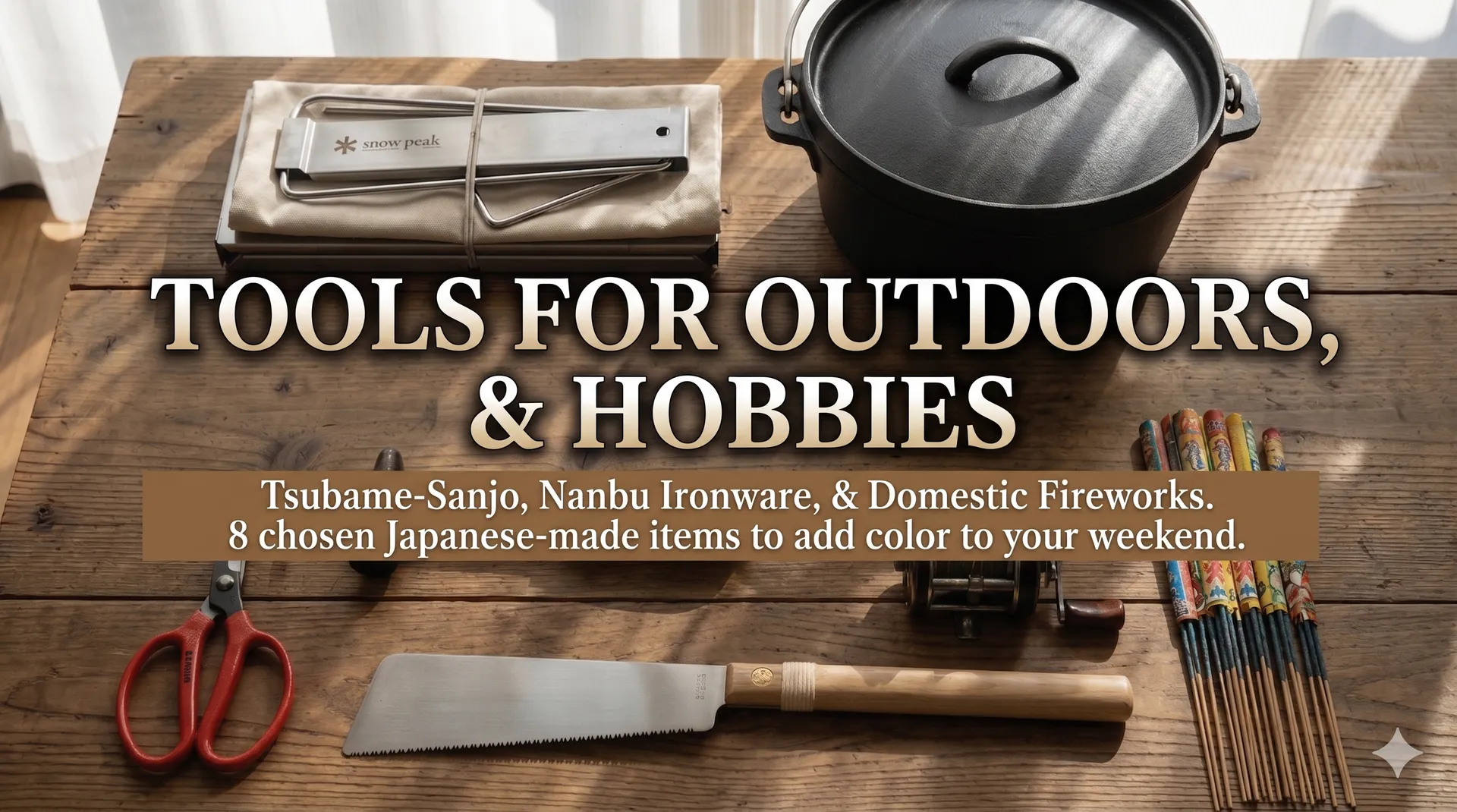
Series: This article is part 4 of the "Outdoor & Hobby Tools" series.
Quick Reference: Bonsai & Kokedama at a Glance
| Type | Difficulty | Best Location | Price Range |
|---|---|---|---|
| Kokedama (moss ball) | ★☆☆ Easy | Indoors / windowsill | $10–$30 |
| Mini bonsai (potted) | ★★☆ Moderate | Indoors / balcony | $20–$80 |
| Bunjin-style bonsai | ★★★ Advanced | Outdoor / partial shade | $50–$300+ |
| Mixed planting (yose-ue) | ★★☆ Moderate | Indoors / terrace | $30–$100 |
1. Modern Bonsai Goes Global — Small Pots, Big Aesthetic
Overseas, "BONSAI" has earned the status of living art. Back in Japan, younger generations are rediscovering it under the banner of "modern bonsai" — a style designed for contemporary living spaces.
Change the pot, change everything
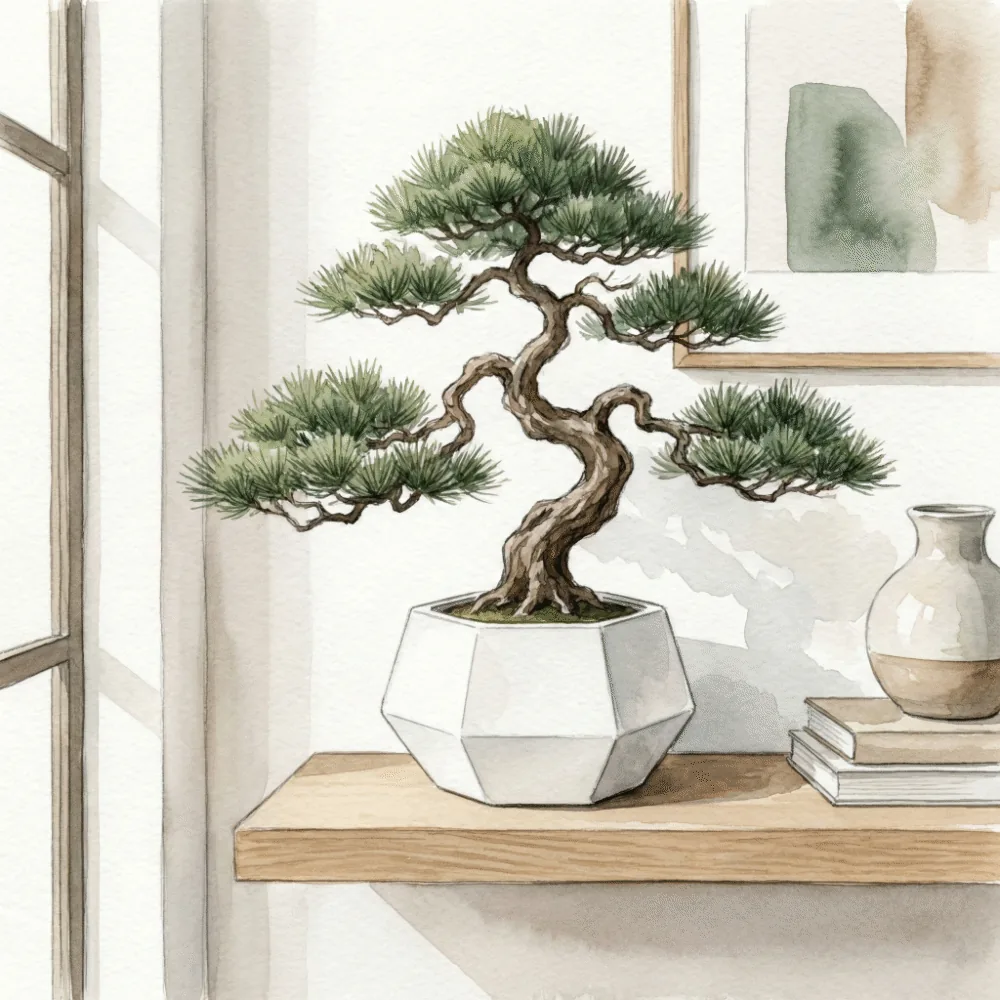
Modern bonsai simply means bonsai styled for today's interiors. Swap the traditional terracotta pot for white
ceramic, colorful stoneware, or a glass vessel, and the whole mood shifts instantly.
The idea is to condense the raw power of a full-grown tree into something you can hold in the palm of your
hand.
In a world of constant digital distraction, having a living, growing thing on your desk — something that demands
a few quiet minutes of attention each day — is a genuine form of therapy.
2. Bonsai vs. Kokedama — Which Is Right for Beginners?
When you're ready to start, the first decision is: a potted bonsai, or a kokedama (moss ball)? Here's how they compare.
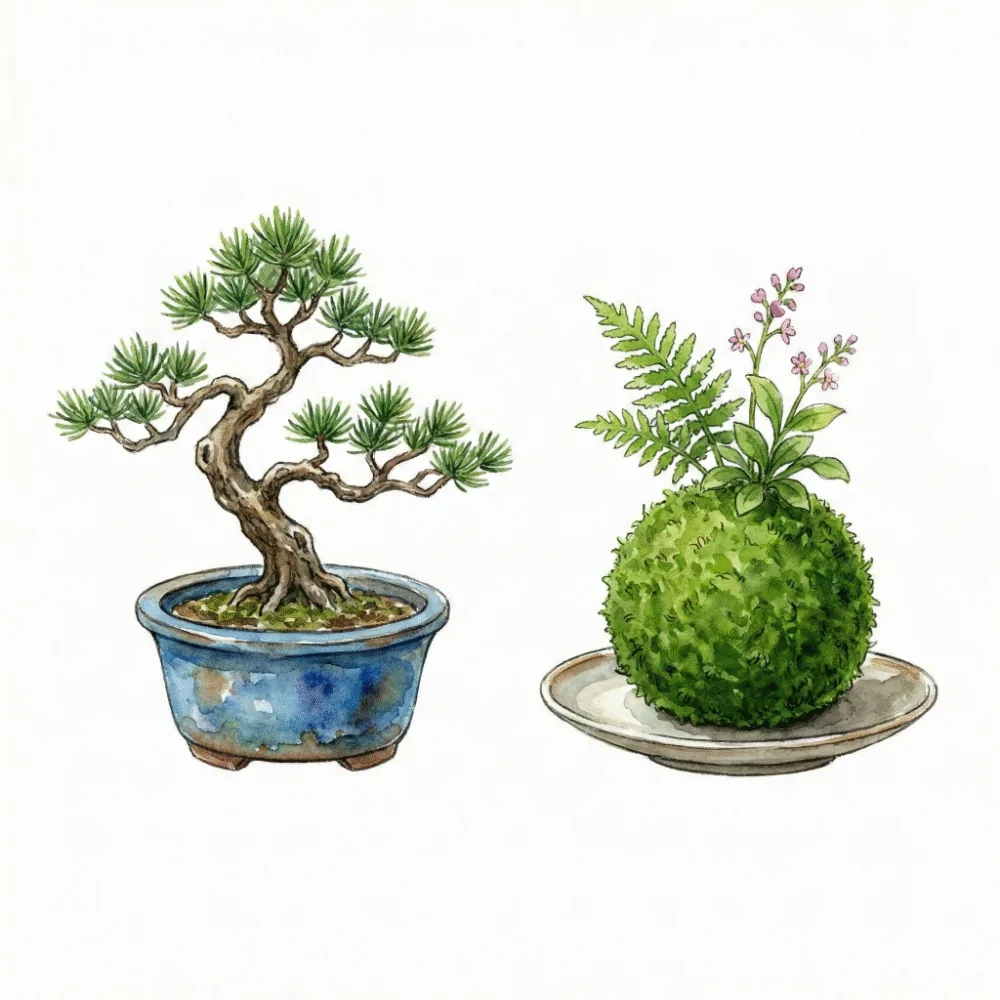
Bonsai for longevity; kokedama for simplicity
Potted Bonsai
Pros: More soil means better water retention — easier to keep alive. Can be grown and shaped over decades.
Cons: Needs periodic repotting and pruning.
Kokedama
Pros: Soil wrapped in moss, no pot needed — just set it on a plate anywhere. Wonderfully quirky as décor.
Cons: Dries out faster (daily watering required). Needs reshaping every 1–2 years.
If you've never grown a plant before, starting with a potted bonsai kit is the safer bet — the extra soil acts
as a buffer against forgetting to water.
3. 3 Japanese Starter Kits — Cherry, Pine & Kokedama
Buying a finished bonsai is perfectly fine, but growing from seed builds a bond that's hard to describe. Here are three kits that work beautifully as both gardening projects and interior décor.
①染付小紋 Bonsai Kit — Cherry, Maple & Black Pine
If you see cherry blossom in stock — grab it immediately.
This popular series from Seishin Togei features traditional sometsuke komono (blue-and-white
porcelain pattern) pots that look stunning in any modern room.
The lineup includes cherry blossom, Japanese maple, and black pine — but the cherry variety is
seasonally limited and almost always sold out. If you find it available, don't hesitate.
Maple and pine are equally rewarding, letting you experience four distinct seasons in miniature right on your
desk.
Japanese Bonsai Starter Kit — Seeds, Pots & Tools
A complete beginner's bonsai growing kit with Japanese tree species seeds, individual pots, soil discs, and tools. A hands-on way to start your miniature garden.
View on Amazon② Handmade Kokedama Kit (with seedling)
Get your hands dirty and make your own moss ball.
This kit includes keto clay (a sticky, humus-rich soil), the seedling, and preserved moss. You knead the clay
into a ball, wrap the roots, then bind it in moss — it feels like therapeutic pottery.
Making it yourself means you understand the structure completely, and the attachment you feel to something you
built from scratch is completely different from buying a finished piece.
Handmade Kokedama Moss Ball Kit
Complete DIY kit with keto clay, seedling, and preserved moss. A hands-on way to create a living Japanese ornament.
View on Amazon③ Moss Terrarium DIY Kit
A miniature universe inside glass — and watering just once a week.
For anyone worried about forgetting to water, a closed glass terrarium is the ideal solution. The sealed
environment retains humidity, so watering every one to two weeks is enough.
Arrange the included stones, sand, and figurines however you like — your desk becomes the stage for a tiny
world entirely of your own design.
The Unique Gardener — Moss Bowl Terrarium Kit with LED Light
All-in-one kit with a handmade glass bowl, three moss varieties, river gravel, accent stones, and a cork lid with LED accent lights. Low-maintenance living décor with a calm, nature-forward aesthetic that pairs naturally with the meditative spirit of kokedama.
View on Amazon4. The Golden Rule: Watering & Where to Place Your Bonsai Indoors
Nine out of ten cases where a bonsai dies trace back to watering mistakes or the wrong location. These basics will keep yours alive.
Outside most of the time; inside when you want to enjoy it
Bonsai are trees — they love sunlight and fresh air. Keeping one indoors permanently will weaken it over
time.
A good rhythm is "weekdays on the balcony, weekends in the living room." More than half the
week outdoors keeps your tree healthy.
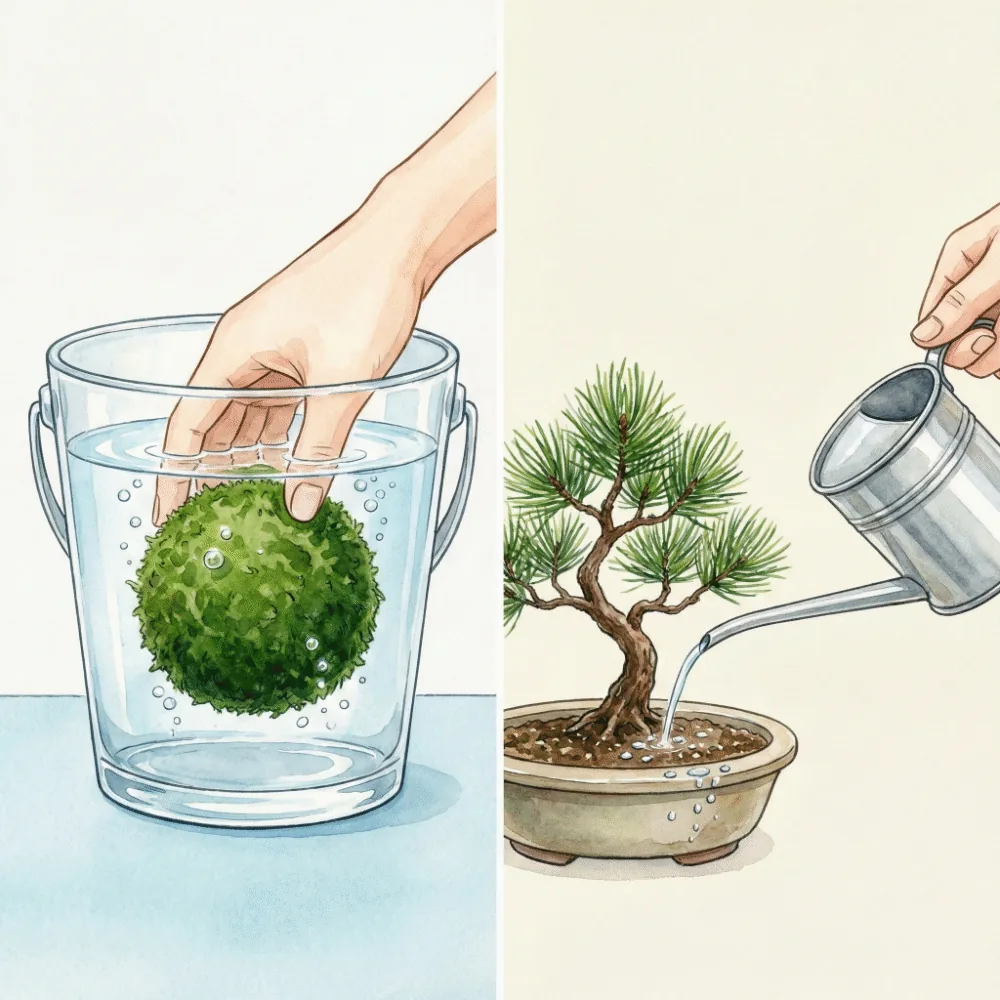
Watering rule:
Water thoroughly once the top layer of soil feels dry — pour until it drains from the drainage hole.
For kokedama, the most reliable method is "deep soaking": submerge the moss ball in a bucket of water and wait
until the bubbles stop, then lift it out.
5. Shaping Your Bonsai — First Steps in Pruning & Wiring
The real magic of bonsai isn't just growing a tree — it's sculpting one. Shaping a bonsai to your vision is where the craft becomes an art.
It takes courage to cut — and cutting creates beauty
Trimming overgrown or crossing branches is called sentei (pruning). It may feel drastic at first, but
removing excess growth improves airflow and actually protects the tree from disease.
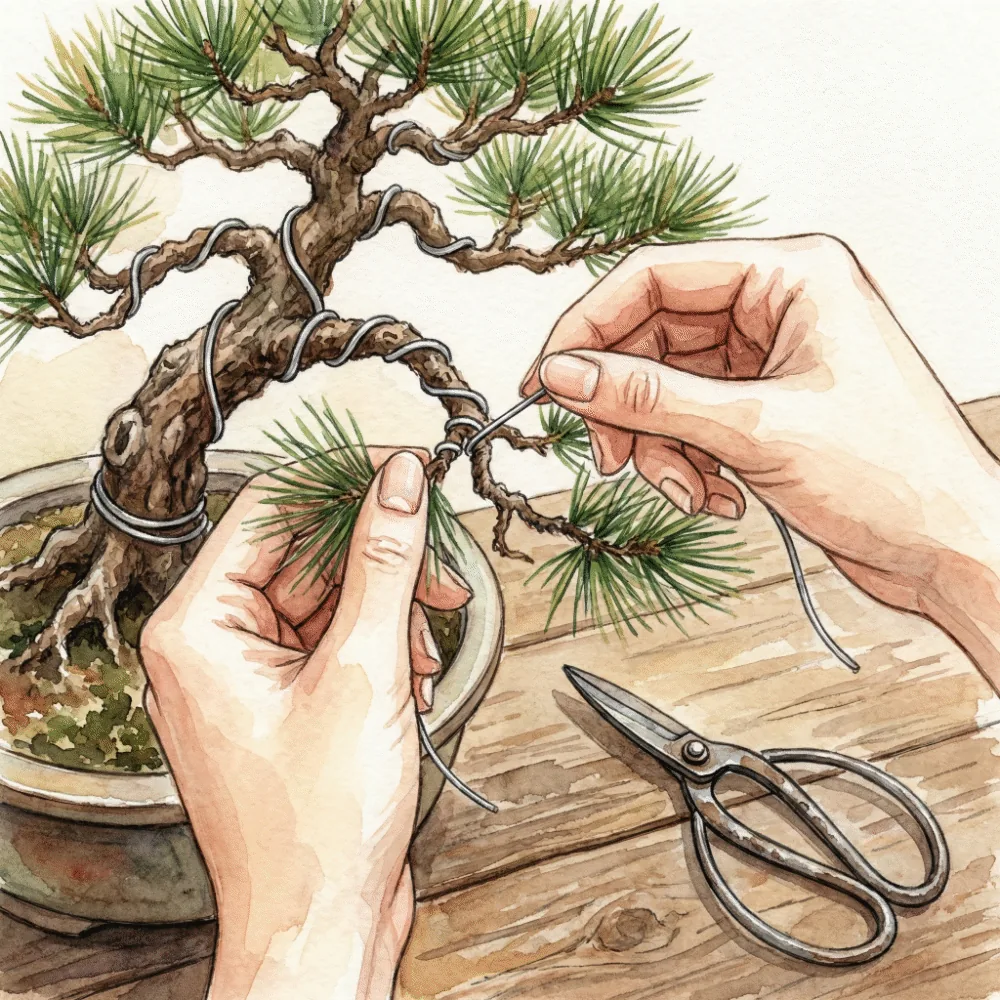
Once you're comfortable with pruning, try wiring: wrapping aluminum wire around branches and
gently bending them into position. This is how you give a small tree the weathered, windswept look of a tree
that has survived centuries in the mountains.
A good pair of bonsai scissors (like those from the "garden scissors" guide) makes all the difference.
6. No Tokonoma? No Problem — Styling Modern Bonsai in Any Room
Most modern homes don't have a traditional tokonoma (alcove), but modern bonsai doesn't need one.
Give it space — let it be the only thing in the frame
Bonsai is the art of subtraction.
Rather than crowding your bonsai among other knick-knacks, leave a generous empty space around it and let it
stand alone.
That surrounding negative space is what creates the sense of presence — suddenly a tiny pot becomes the focal
point of the entire shelf.
Placing a sheet of washi paper or a small wooden display stand (a kadai) beneath the pot adds an
extra layer of refinement without any extra cost.
7. The Even Easier Option: Moss Terrarium
If the thought of daily watering makes you anxious, or if you're not keen on insects, a moss terrarium may be the perfect answer.
A self-sustaining ecosystem inside a glass jar
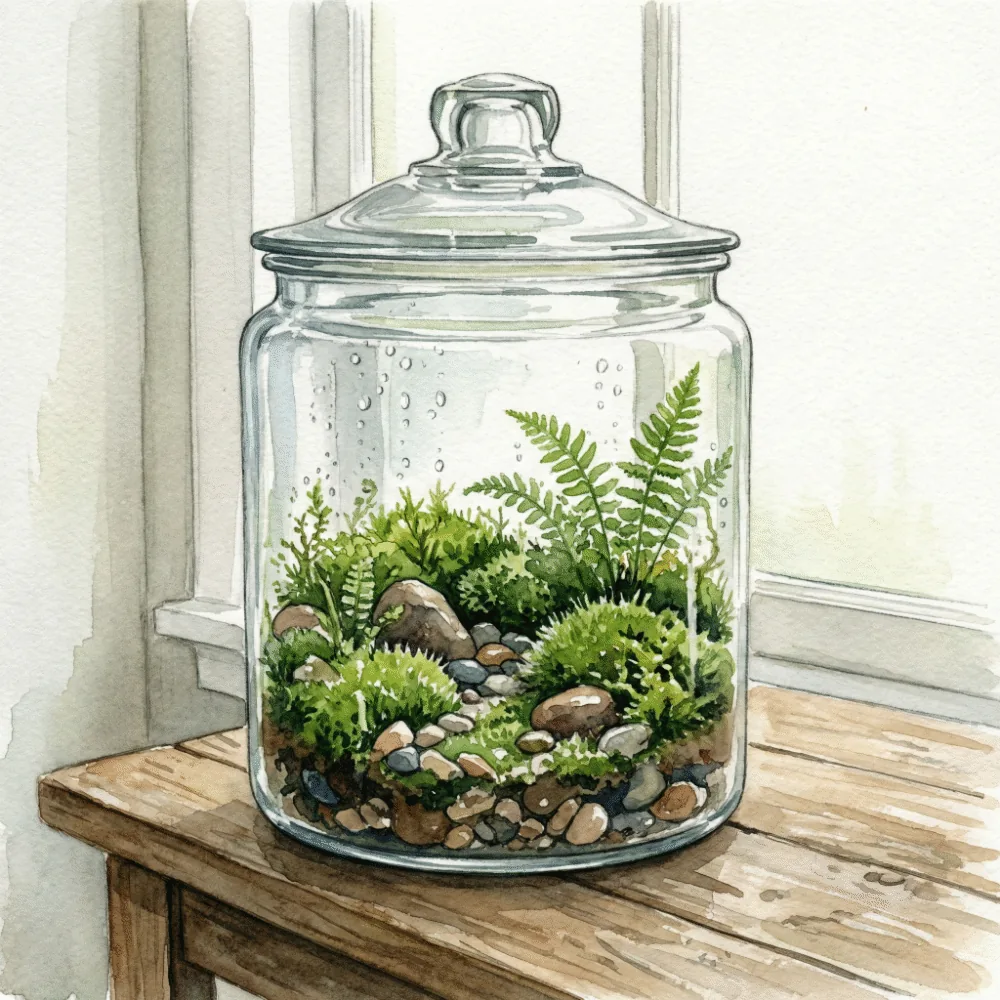
A moss terrarium is exactly what it sounds like: moss planted inside a glass container. The glass retains
humidity, so you only need to mist it every week or two — no daily commitment required.
Because the container is mostly sealed, insects are rarely a concern, which makes it ideal for a desk corner or
bookshelf.
Add a miniature figurine — a tiny deer, a small lantern — and your terrarium becomes a world with a story.
8. Frequently Asked Questions
What do I do about watering when I travel for a few days?
Use the "tray water" method and move the plant to a shaded spot.
Place the pot in a shallow tray filled with water so the roots can absorb moisture slowly. However, don't leave it
like this for more than two to three days — prolonged standing water causes root rot.
For longer trips, an automatic drip waterer or leaving the plant with a trusted friend is your best option.
Will I get pests?
It's possible, especially if your bonsai lives outdoors.
Aphids are the most common culprit. Check the pot and leaves before bringing the plant indoors, and treat any
infestation quickly with a garden-safe insecticide spray.
Moss terrariums are almost pest-free thanks to their sealed environment.
How long does it take for a seed-grown bonsai to look like a real bonsai?
Realistically, three to five years, depending on the species.
In year one you'll see a delicate sprout; by year two it starts to look genuinely tree-like. If you want something
that already has character, buy a young sapling (not seeds) or a finished bonsai and focus on shaping from there.
Can I grow bonsai indoors under LED lights only?
Yes, with a dedicated plant-growth LED.
Standard room lighting won't provide enough photons, and the tree will stretch towards any available light
(etiolation). A full-spectrum grow light placed close to the foliage can replicate enough of what the sun provides
to keep most species healthy indoors year-round.
Is bonsai a good gift idea?
Mini bonsai and kokedama are increasingly popular as gifts. That said, some cultures associate plants with unlucky
symbolism (a plant that can die), so it's worth knowing your recipient's preferences.
A seasonally themed variety like cherry blossom, paired with a handwritten care card, makes a thoughtful and
memorable present.
My bonsai looks dead. Can it be revived?
Snap a small branch: if the inside is still green and flexible, there's hope.
A branch that breaks with a dry crack and looks pale brown inside is likely dead, but one that bends slightly with
green tissue inside is still alive.
Move the tree to a shaded spot outdoors, water carefully, and apply a liquid plant reviver (such as Menedael or
similar). Be patient.
Final Thoughts: A Universe on Your Desk
Bonsai and kokedama are more than decoration.
Watering them each morning, noticing new growth, trimming away a dead leaf — these small rituals bring a quiet,
grounding rhythm to a busy day.
In that tiny pot lives a full-sized story: a tree shaped by time, weather, and your own hands.
Start with one of these kits, and see what kind of small world you can create.
Japanese Flower Vases — How One Stem Can Transform a Room
Washi Lighting — Soft Japanese Glow for Any Interior