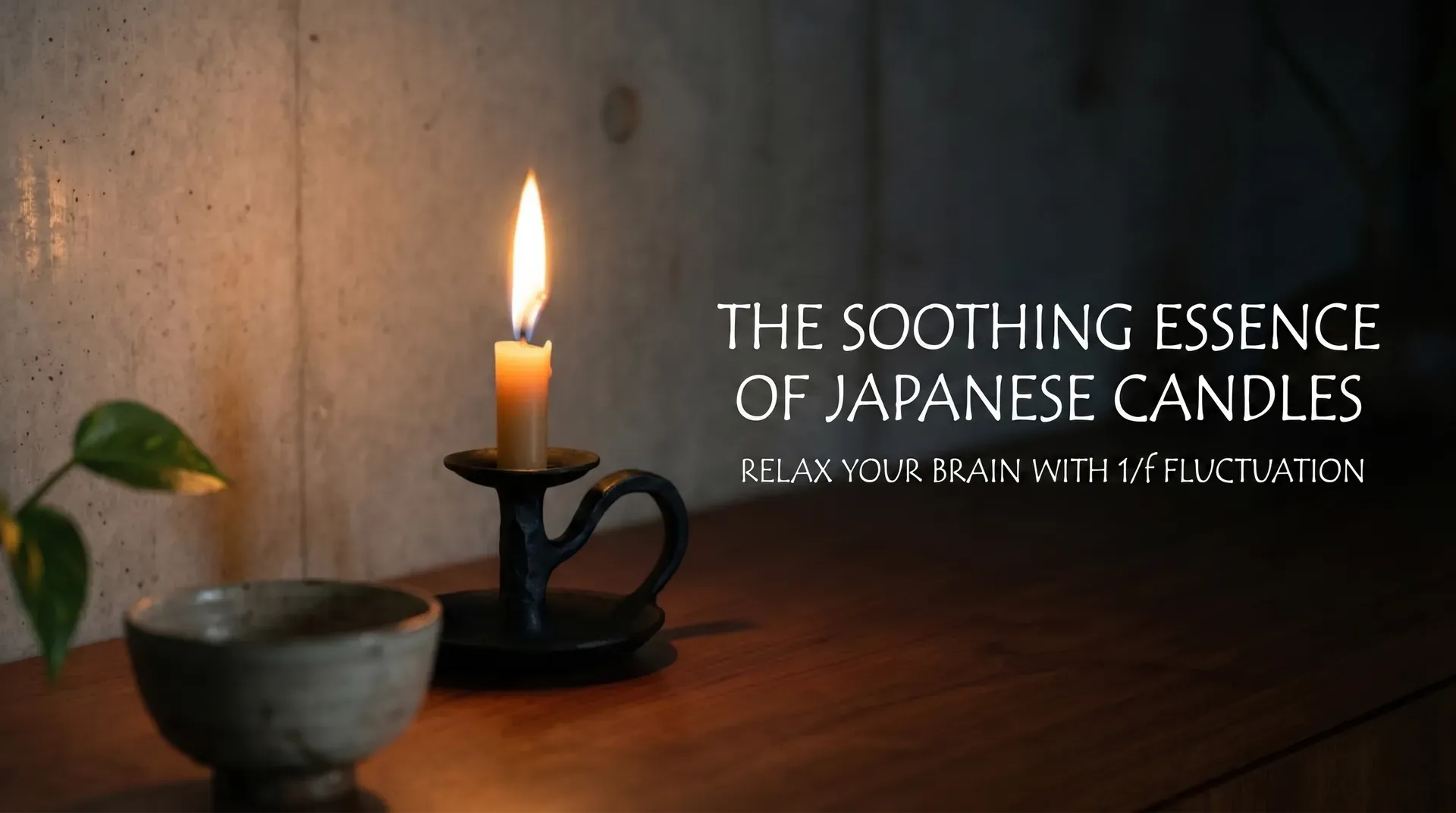
"Which Japanese wind chime should I get?" — this article answers that one question. The short version: glass Edo furin for a soft, brief chime; Nambu iron for a deep, long resonance; Nousaku brass for a bright metallic tone that blends into any interior. Those are Japan's three essential wind chime types.
Research suggests that hearing a wind chime can cause the brain to associate the sound with "wind is blowing," triggering a physiological cooling response — a measurable drop in perceived temperature without any change in actual air temperature. Sound as a cooling tool: classic Japanese summer thinking.
"I live in an apartment — won't the neighbors complain?" is a valid concern, but indoor hanging and a few simple tricks make wind chimes perfectly livable. This page covers material differences, how to choose, and how to hang one without bothering anyone.
Quick Reference: Japan's 3 Essential Wind Chimes Compared
| Material & Brand | Sound Character | Best For |
|---|---|---|
| Edo Furin (Glass) Shinohara Furin Honpo |
Chirin… — bright, brief, gentle ring | Traditional summer atmosphere; hand-painted motifs like goldfish and fireworks |
| Nambu Furin (Iron) Iwachu |
Reeeen… — high, clear tone with long resonance | Deep, meditative atmosphere; Nambu ironware enthusiasts; Zen-influenced spaces |
| Brass Wind Chime Nousaku |
Kira kira — bright, sparkling metallic chime | Modern interiors; anyone wanting a chime that suits both Japanese and Western rooms |
1. The Science: Why Wind Chimes Actually Cool You Down
A wind chime is not just decoration. It's a scientifically grounded cooling tool.
1/f Fluctuation and the Relaxation Response
The irregular rhythm of a wind chime — unpredictable, never exactly repeating — falls into a category of natural sound patterns called 1/f fluctuation. This is the same mathematical property found in the sound of a stream, ocean waves, or birdsong.
When the brain hears these patterns, it shifts toward a relaxed state — alpha brainwaves, parasympathetic nervous system activation.
For Japanese people especially, there is an additional conditioned response: the sound of a wind chime is neurologically linked to "wind is blowing → it's cooler." Research has shown that peripheral blood vessels can constrict and skin surface temperature can drop by several degrees simply upon hearing the sound — without any real change in room temperature.

2. Edo Furin (Glass): The Jagged Rim That Makes It Ring
Visually light, evocative of water and sky — the glass wind chime is the most immediately recognizable image of Japanese summer.
Why the Opening Is Deliberately Jagged
The most distinctive feature of an Edo furin is the unfinished, jagged opening at the base — what glassblowers call the "kuchi" (mouth).
This is not a defect or unfinished craftsmanship.
If the rim were polished smooth, the glass clapper inside would slide without friction and produce no sound.
The deliberately rough, fire-cut edge creates the friction that — when the clapper makes contact — produces the signature bright, brief "chirin chirin" of an Edo furin.
Hand-blown with no mold, each chime has a slightly different wall thickness, which is why no two Edo furin sound exactly alike.

3. Nambu Furin (Iron): The Clarity That Only Cast Iron Delivers
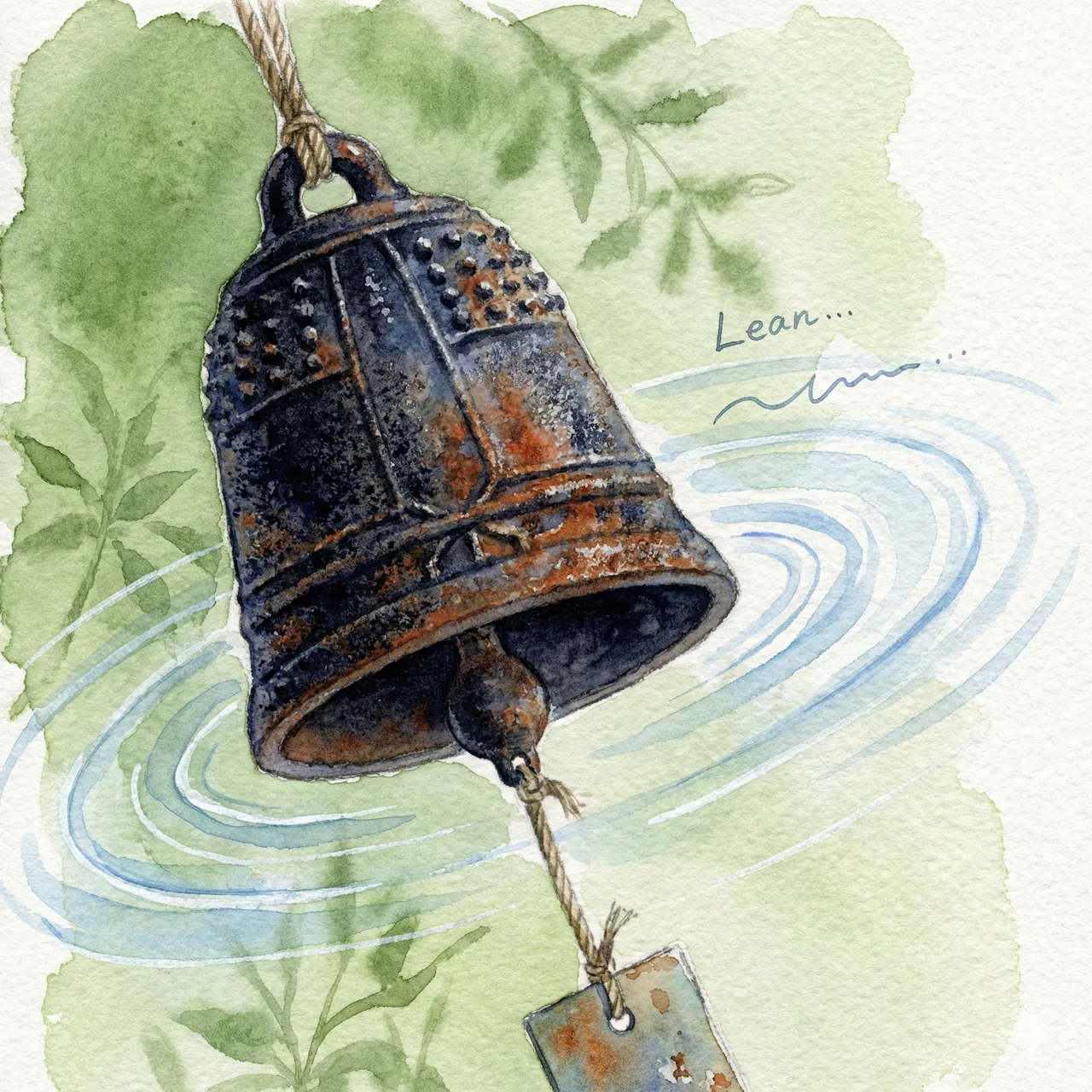
Made from Nambu tekki — the cast iron tradition of Iwate Prefecture — the Nambu furin has been designated a cultural sound of Japan.
It was chosen for Japan's "100 Soundscapes Worth Preserving" list.
High Frequency Tone with Long Sustain
Cast iron produces a high, crystalline "reeen…" that carries far and resonates for several seconds after each strike.
The high-frequency component (3,000 Hz and above) of this tone is associated with direct parasympathetic stimulation — the same quality found in Tibetan singing bowls and temple bells.
Closing your eyes and listening to a Nambu furin on a still summer morning produces a quality of silence-in-sound that glass chimes simply cannot replicate.
4. Brass Wind Chimes (Nousaku): Modern Sparkle for Any Room
The newest category of Japanese wind chimes uses brass and other copper alloys — a natural extension of Takaoka City's (Toyama Prefecture) centuries-old metal casting tradition.
Nousaku leads this space, and their wind chimes have become a design object as much as a seasonal accessory.
The sound is similar to Nambu iron but with a brighter, more "kira kira" (glittering) quality — metallic and clear, like a small handbell.
The minimal, refined design means a brass wind chime works in a Scandinavian-furnished living room just as naturally as in a traditional Japanese space.
5. Apartment Etiquette: How to Enjoy a Wind Chime Without Bothering Anyone
A beautiful sound in your apartment can easily be noise pollution to your neighbors. Here's how to enjoy responsibly.
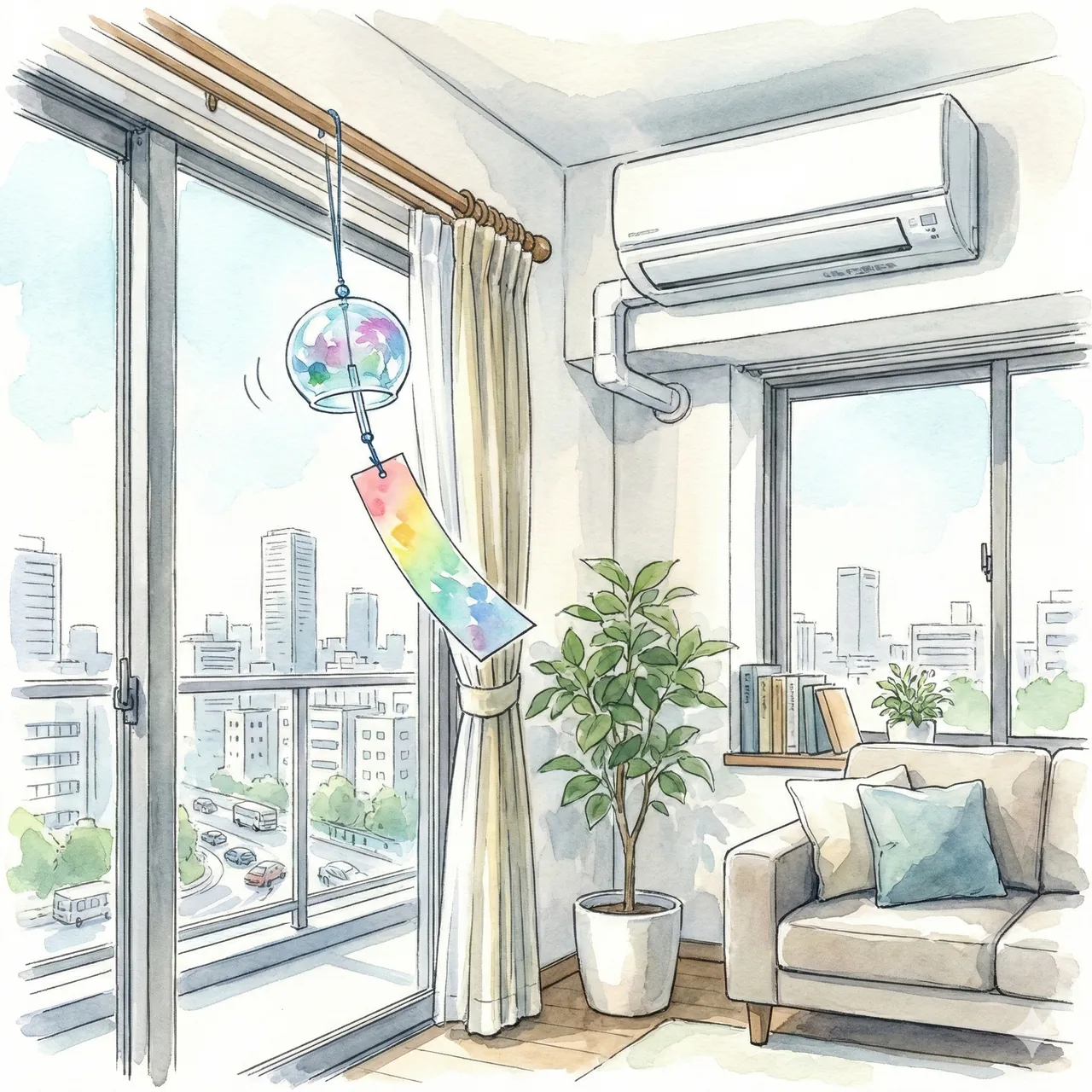
Hang It Indoors Near Your Air Conditioner
In apartments and densely packed neighborhoods, hang the chime indoors, not on the balcony.
A curtain rod near an open window, or a hook near an air conditioning unit, provides enough gentle airflow to ring the chime occasionally — audible to you without projecting outside.
If you do hang outdoors, bring the chime inside every night and on windy days. Social convention in Japan considers continuous nighttime ringing from a neighbor's chime a form of noise nuisance.
To reduce volume: add a heavier strip to the paper tanzaku (the hanging paper tab), or wrap the clapper lightly with tape or soft cloth.
6. Recommended Brands: Edo, Nambu & Takaoka Copper
One trusted craftmaker for each of the three materials.
Shinohara Furin Honpo — Edo Furin (Tokyo)
The shop credited with coining "Edo furin" — still hand-blowing every piece.
Shinohara is the workshop that established the name "Edo furin" and continues to make each chime using the traditional chu-buki (free-blown, no mold) technique — one craftsperson, one breath at a time.
Because each piece is formed without a mold, the wall thickness varies from chime to chime, and so does the exact tone. No two are identical.
The hand-painted interior designs — goldfish, morning glory, fireworks, summer landscapes — are applied from inside the blown glass, giving them an unusual depth and translucency.
Iwachu — Nambu Furin (Iwate)
The world's most respected Nambu ironware brand, founded in 1902.
Iwachu has been at the center of the global Nambu tekki revival, combining centuries of casting tradition with a modern design sensibility that appeals to international collectors.
Their wind chimes are known for the extraordinary length of the resonance and the exceptional clarity of pitch — a quality achieved only with premium iron casting that cools slowly and evenly.
Beyond the classic bell shape, Iwachu also produces color-enameled iron furin in contemporary hues, making them work in modern spaces while preserving the essential Nambu sound.
Nousaku — Brass Wind Chimes (Toyama)
From Takaoka's 400-year casting tradition — a wind chime that functions as interior design.
Nousaku is the contemporary face of Takaoka's metal casting industry, transforming industrial casting techniques into objects that live beautifully in modern homes.
Their brass wind chimes feature a deliberately understated hairline finish — the natural surface of the alloy, without excessive polishing — that ages gracefully over years of use.
The tone is bright, clear, and musical — a small instrument as much as a decorative object. Works equally well hanging in a tatami room or a Scandinavian living room.
7. Frequently Asked Questions
My Nambu iron wind chime is starting to rust. What should I do?
Some surface rust is inevitable — embrace it or gently maintain it.
Iron and moisture are not compatible long-term. Keep the chime away from rain where possible.
Light rust doesn't significantly affect the sound. If you want to slow it, wipe with a dry cloth and apply a very thin coat of neutral oil (camellia or mineral oil). One application lasts months.
How do I clean an Edo glass wind chime?
Gentle washing with neutral dish soap and warm water.
However: many Edo furin have hand-painted designs applied to the inside of the glass. Aggressive scrubbing or abrasive cleaners can lift the paint.
Soak briefly in warm soapy water, then use a soft sponge with a light touch. Rinse and dry before rehinging.
The tanzaku (paper strip) tore. Can I replace it?
Yes — easily, with any sturdy paper.
The tanzaku is the piece that catches the wind and sets the chime in motion. Cut a strip of washi (Japanese paper) or similarly stiff paper to match the original dimensions, punch a small hole, thread the cord through, and re-hang.
Varying the tanzaku size and weight adjusts how easily the chime rings — wider or lighter strips react to softer breezes; narrower or heavier strips require more wind.
Is there a way to reduce the volume for apartment use?
Yes — wrap the clapper lightly to dampen the impact.
Wrapping the clapper (the inner piece that strikes the bell) with a thin layer of tape or soft cloth softens the attack while preserving some ring.
Alternatively, hang the chime where the air movement is gentler — in the interior of a room rather than directly in the window draft.
When should I put the wind chime out, and when put it away?
Mid-summer through mid-autumn is the conventional season.
Japan's wind chime culture centers on the period from the rainy season's end (early July) through the autumn equinox (late September).
There are no strict rules, but seasonality is central to how Japanese people relate to decorative objects — so most households put the chime away once the air turns noticeably cool.
Is a wind chime an appropriate gift?
One of the best summer gift options, particularly at a more formal level.
Edo glass furin are colorful and widely appealing — appropriate for almost any age group.
Nambu iron and Nousaku brass wind chimes carry more weight as a gift — they read as considered, lasting, and distinctly Japanese. Both are well-suited to o-chugen (summer mid-year gifting) or gifts for occasions that call for something elegant and durable.
Final Thoughts: Cooling the Mind Before the Room
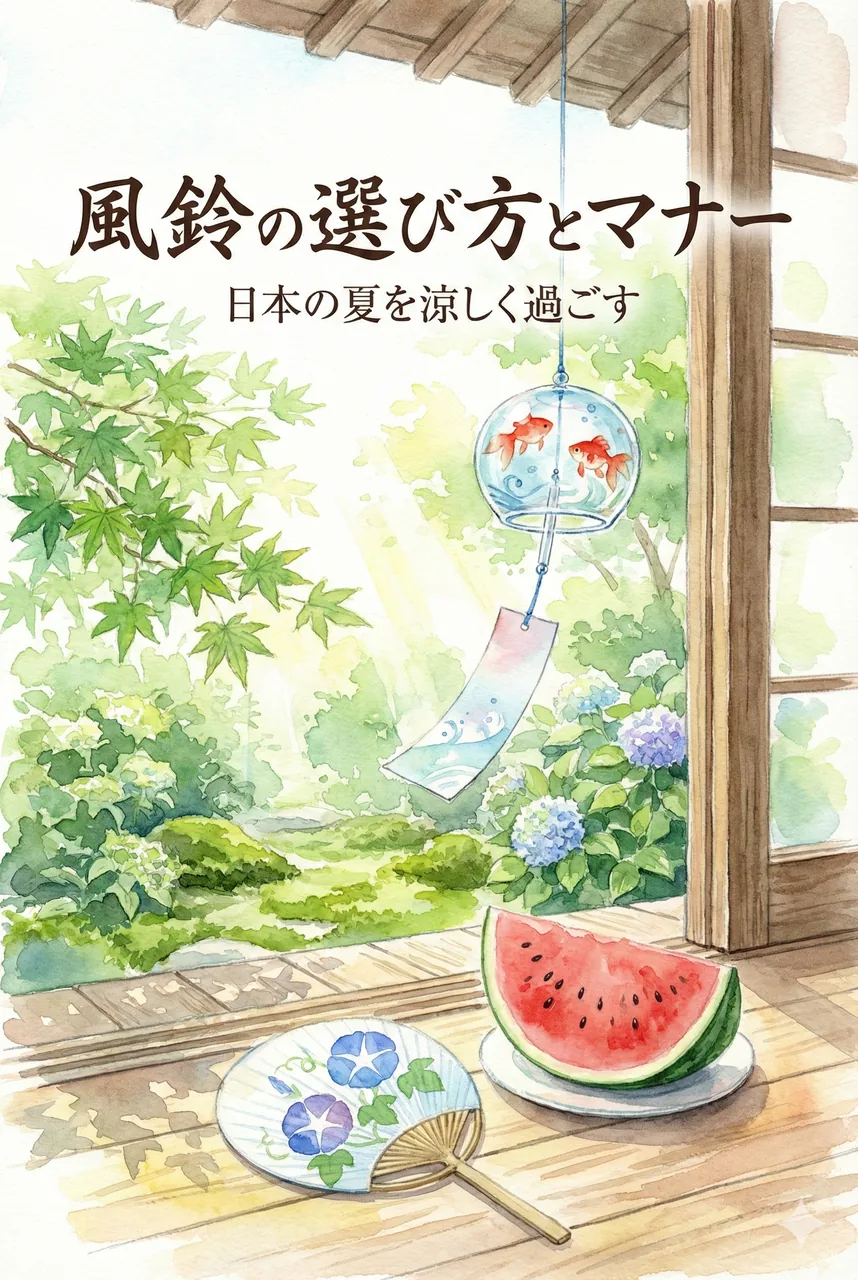
Even in the age of air conditioning, the wind chime hasn't disappeared — because it isn't really an air conditioning device. It's a device for the mind.
Each quiet "chirin" says: the air is moving. Something just changed. Pause a moment and feel it.
The ability to notice small natural shifts — and let them matter — is perhaps what a good summer is made of.
Pick a sound that suits your space. Hang it somewhere the air finds it.

Japanese Incense: Awaji Island & Kyoto Scents for Your Space

Japanese Bath Additives: Hot Spring Minerals and Herb Baths at Home