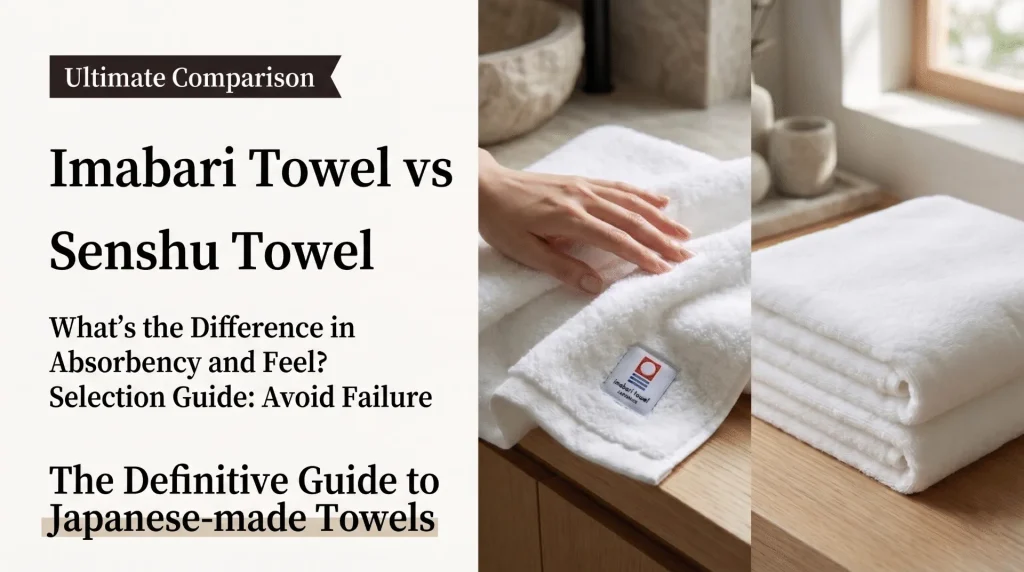
The kind of towel you bury your face in right after a bath — soft, fluffy, instantly absorbing.
You want to use something genuinely good, something made in Japan. But the moment you start researching, you run
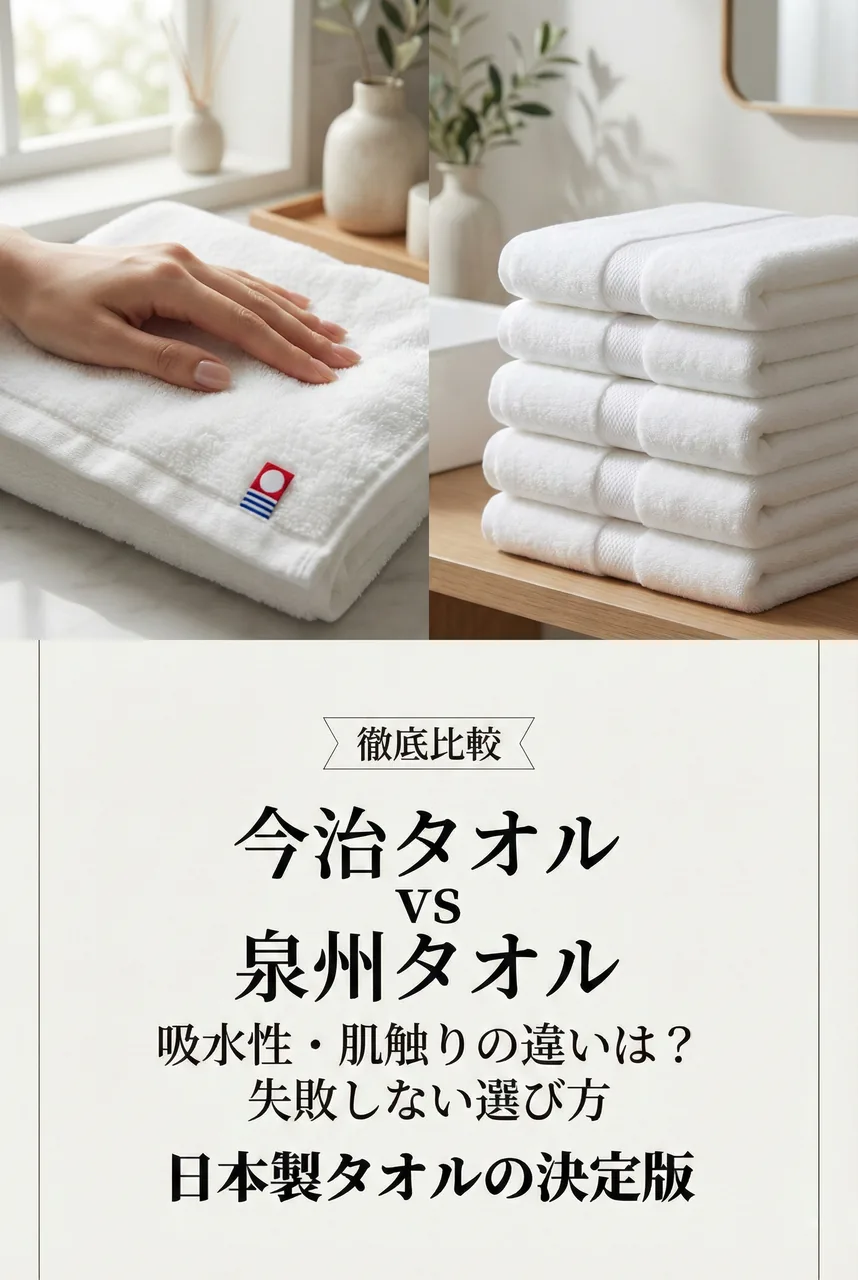
into the same question: Imabari or Senshu — which one?
The biggest difference between the two comes down to when they're washed during production.
Imabari is the gift-giver's gold standard. Senshu is the professional's everyday workhorse — prized for absorbency
and honest value.
This guide breaks down Japan's two great towel regions side by side, so you can find the one that fits your actual
life.
1. The Core Difference Between Imabari and Senshu
Both rank among the world's best for absorbency, but their manufacturing processes give them different
strengths.
In a single line: "Imabari for luxury" and "Senshu for practicality."
| Feature | Imabari Towel (Ehime) | Senshu Towel (Osaka) |
|---|---|---|
| Process | Pre-bleached yarn (saki-zarashi) | Post-weave bleaching (ato-zarashi) |
| Feel | Fluffy, voluminous, plush | Crisp, light, slightly textured |
| Price | Premium (gift-oriented) | Accessible (everyday use) |
| Hallmark | "5-Second Rule" quality certification | Zero-impurity finish; absorbs instantly from day one |
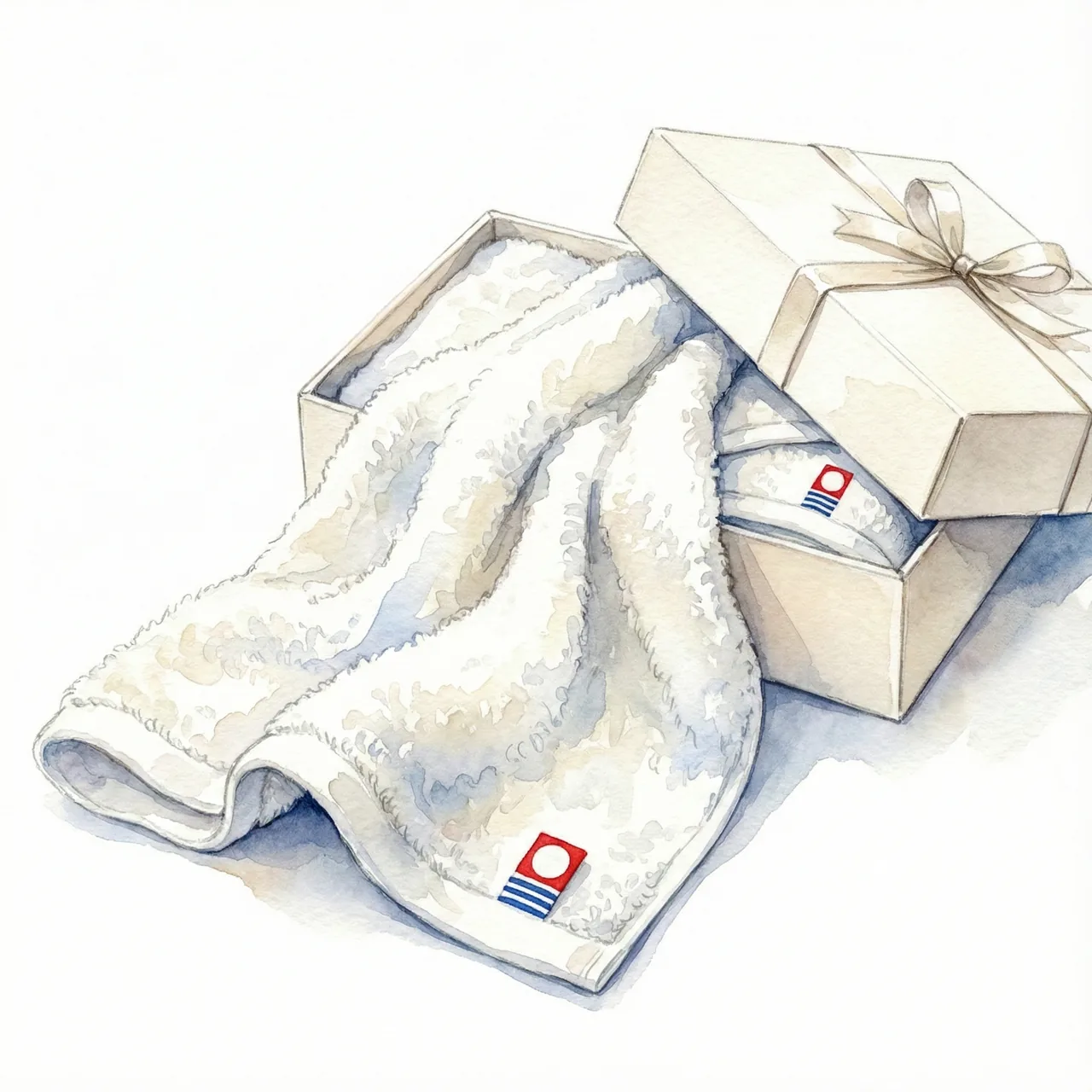
① Imabari: The Prestige of Japan's Towel Capital
How it's made: pre-bleached, pre-dyed yarn
The thread is bleached and dyed before weaving, allowing for the intricate jacquard patterns that give Imabari
towels their distinctive refined look.
What is the "5-Second Rule"?
To earn the Imabari Towel certification, a sample must begin sinking within 5 seconds of being placed on water
— a rigorous standard for absorbency.
While Imabari towels are often described as "absorbing right out of the package," a first wash is still
recommended to reduce initial fiber shedding.
② Senshu: Clean, Crisp, and Built for Real Use
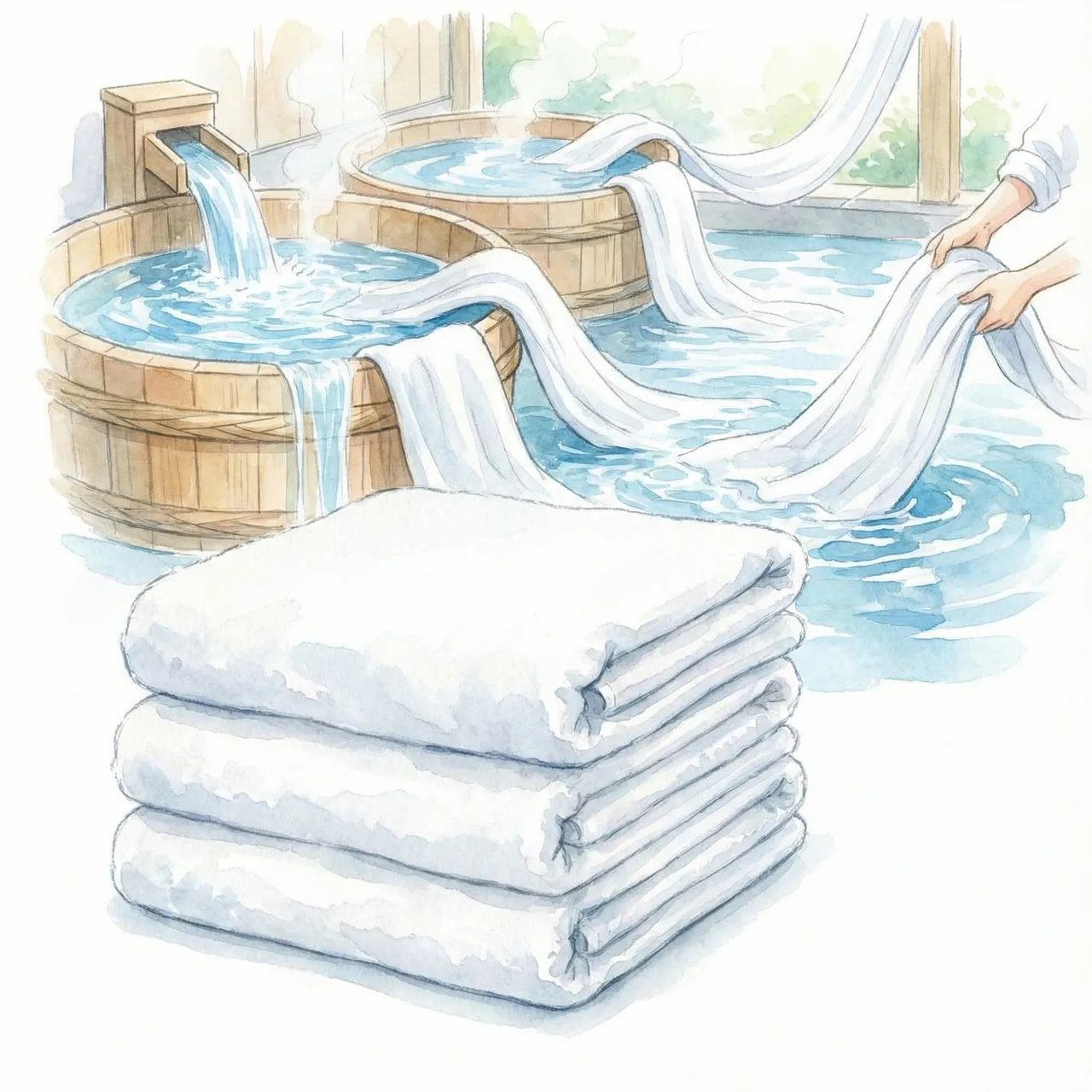
How it's made: post-weave bleaching (ato-zarashi)
The towel is woven first, then given a thorough wash afterward.
This final rinse strips out all the sizing agents, oils, and impurities left from the manufacturing
process.
Why it matters:
Because the cotton fiber starts with nothing coating it, a Senshu towel absorbs impressively from the very
first use — no break-in period.
It also holds its shape well and resists shrinkage, which is why hospitals, salons, and professional
facilities have long preferred Senshu over other options.
2. Top 3 Imabari Towel Brands
For gifts, self-indulgence, or a touch of Japanese textile luxury. These are the Imabari brands that set the standard.
[No.1] Kontex — MOKU Series and More
The face of stylish Imabari towels.
Kontex blends traditional Imabari craftsmanship with contemporary design in a way few others manage.
Their flagship MOKU series — thin, fast-drying, almost linen-like in hand — has become a cult favorite among sauna
and bathhouse enthusiasts.
They also produce hooded baby bath towels and a wide range of lifestyle-focused pieces.
If you want an Imabari towel that looks as good as it performs, Kontex is the starting point.
Kontex Organic Cotton Towels from Imabari, Japan
Certified Imabari towels made from organic cotton. Plush yet lightweight, with Kontex's signature soft texture. Available in face towel and set options. Made in Japan.
View on Amazon[No.2] Towel Museum — Personalized Gift Specialist
When you need a gift that genuinely impresses.
A well-known name in Japanese department stores, the Towel Museum specializes in premium Imabari towel sets — many
featuring custom embroidered names, making them a go-to for wedding gifts, baby showers, and milestone presents.
The quality is impeccable, and the packaging alone conveys the thoughtfulness.
For personalized embroidery orders, the Towel Museum ships directly from Japan; for a similarly gift-ready Imabari
set available on Amazon, see below.
Made in Japan Imabari Certified Border Bath Towels — 2-Piece Set
Officially Imabari-certified bath towels — clean border design, soft and absorbent from first use. A reliable gift-ready option that ships from Amazon. Made in Japan.
View on Amazon[No.3] IKEUCHI ORGANIC — The Organic Pinnacle
"Woven by the wind." The purest organic towels in Japan.
IKEUCHI ORGANIC takes safety to an almost philosophical extreme — their stated goal is cotton so clean you could
eat it.
GOTS-certified organic throughout, woven in Imabari, and built to last through years of heavy use.
Unlike towels that soften only to go flat, IKEUCHI's towels become more yours with every wash.
A devoted fanbase of buyers who won't settle for anything else.
View IKEUCHI ORGANIC brand page
IKEUCHI ORGANIC 520 — GOTS Certified Fluffy Organic Cotton Towel
The flagship fluffy model from IKEUCHI ORGANIC. GOTS-certified organic cotton, woven in Imabari. Exceptionally soft, long-lasting, and gets better with every wash. Made in Japan.
View on Amazon3. Top 3 Senshu Towel Brands
For the bathroom, the kitchen sink, or the gym bag. These are the Senshu towels that earn their place in daily life.
[No.1] hiorie — Hotel Style Towels
The breakout hit of Japanese e-commerce. Unbeatable value in a made-in-Japan towel.
The brand that turned countless households into Senshu converts — the kind where people say "I replaced every
towel in the house with these."
Voluminous yet fast-drying, and offered in a wide range of colors to match any bathroom.
For years, hiorie has been the Senshu brand you recommend without hesitation.
HIORIE Japan Hotel Style Bath Towels — 4-Piece Set
The Senshu classic that wins repeat customers. 100% cotton, naturally washed, fast-drying, and soft from first use. Set of 4 — enough to replace your whole shelf. Made in Japan.
View on Amazon[No.2] Senshu Bijin (Ueno Towel) — Thin, Superbly Absorbent
Incredible thinness. Twice the absorbency. A favorite with women.
If you've ever thought "bath towels are too bulky and take forever to dry," this is the answer.
Senshu Bijin towels are slim enough to fold into a fraction of the space, yet absorb several times their weight in
moisture — your hair is dry before you've finished wrapping it.
Fewer loads of laundry, fast drying even indoors, and a lightness that makes you wonder why you ever used a thick
towel.
UENO TOWEL Luxury Japanese Bath Towel — Senshu, Greige
From Ueno Towel — the maker behind Senshu Bijin. Ultra soft, quick-drying, and lightweight. The Senshu atosarashi process means it absorbs right out of the package. Made in Japan.
View on Amazon[No.3] SHINTO TOWEL — 2.5-Ply Gauze Innovation
A century-old maker updating Senshu tradition.
Shinto Towel was founded over 100 years ago and developed a unique "2.5-ply gauze" construction — taking the
middle layer of triple gauze and cutting it in half.
The result is a towel with an unusual lightness and suppleness that neither regular terry nor standard gauze can
replicate.
Carried by design-forward select shops in Japan, these towels are as interesting as they are practical.
Note: Shinto Towel is primarily distributed through Japanese retailers; the double gauze Senshu alternative below
ships internationally.
Muko Towel Double Gauze Bath Towel — Senshu, Set of 2
A double-gauze Senshu bath towel that captures the spirit of Shinto's lightweight gauze philosophy. Thin, quick-drying, and genuinely soft. Made in Japan, Senshu, Osaka.
View on Amazon4. How to Care for Your Towels So They Last
A few simple habits will keep a good towel from going stiff and rough.
Use Less Fabric Softener — or None at All
It's counterintuitive, but fabric softener actually reduces absorbency and weakens fibers over
time.
The coating it leaves behind blocks the cotton loops from wicking moisture — the opposite of what you want in a
towel.
Wash with detergent only as a rule; if the towel starts to feel stiff, a small amount of softener occasionally
won't hurt.
That's all it needs.
One step before hanging to dry:
After the spin cycle, give each towel 10 big shakes before you hang it.
This snaps the pile loops (the little loops that make it fluffy) back upright.
When the towel dries, the difference in softness is dramatic.
You might also like:
How to Wash Towels Without Ruining Them — Expert Care Guide ›
5. Frequently Asked Questions
Which one actually lasts longer?
Both are durable, but Senshu towels have a slight edge here.
The post-weave bleaching process removes impurities from the start, which gives the cotton fiber more structural
resilience — they resist the limpness that eventually comes to all towels.
Imabari towels, particularly those with longer, softer pile, need a little more care around snagging (keep them
away from velcro, rough surfaces, and sharp nails).
Which is better for babies or sensitive skin?
Both meet high safety standards, but for softness against skin — especially a baby's — Imabari towels
(particularly organic ones like IKEUCHI) have an almost unmatched gentleness.
If quick-drying and maximum cleanliness matter more — for instance, changing towels several times a day — a thin
Senshu gauze towel is the practical choice.
Can I use a dryer?
Generally yes, but 100% cotton does shrink slightly with heat over time.
For Imabari towels with long fluffy pile, heavy dryer use degrades the loops faster.
A good compromise: air-dry or line-dry as usual, then finish with 10 minutes in the dryer at the
end.
The result is noticeably fluffier than air-drying alone — without the wear of full-cycle machine drying.
Why are Imabari towels more expensive?
Several reasons: the cost of the strict quality certification process (including the 5-Second Rule), the complexity of jacquard weaving for decorative patterns, and the substantial brand equity that comes with the Imabari name. In return, you get the kind of unboxing moment and gift presentation that stands apart — and a towel that earns its price in daily use.
6. Final Thoughts: Imabari for Gifts, Senshu for Every Day
"Imabari for the special occasion."
"Senshu for every morning."
This is the smartest way to enjoy the best of Japanese towel craftsmanship.
It's just a towel — until the moment you bury your face in a truly great one.
The difference in how your morning starts is real.
Start with one face towel. Try both regions.
Let your own skin be the judge.