
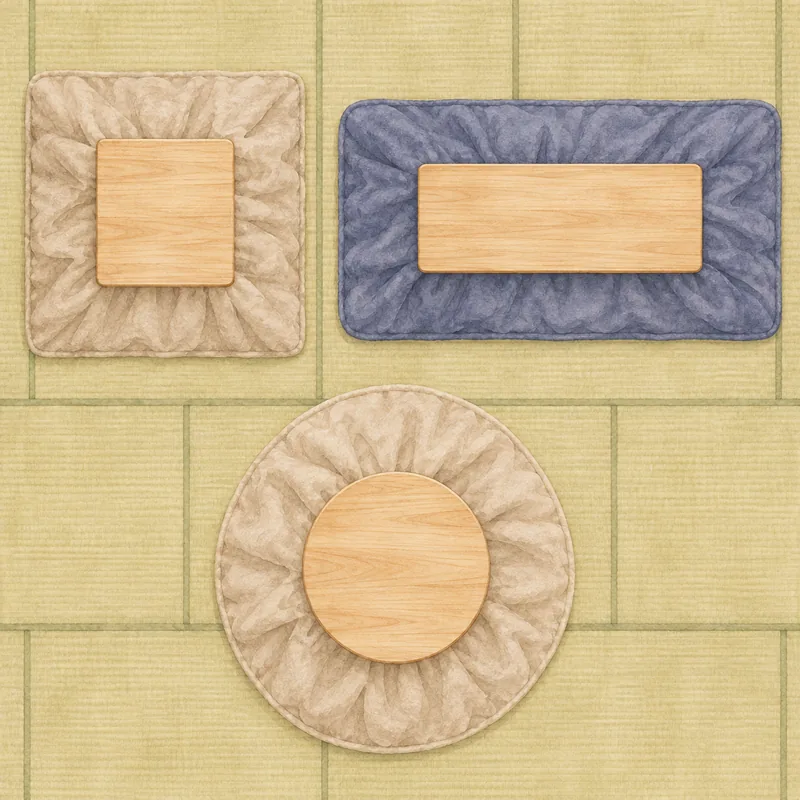
A kotatsu futon is sized by the tabletop. A 120 × 80 cm rectangular kotatsu takes a 205 × 245 cm (81 × 96 in) futon; an 80 cm (31 in) square one takes 205 × 205 cm (81 × 81 in); a round kotatsu takes a round futon.
The other surprise comes later. The label says "machine washable," but a 205 × 245 cm futon won't fit most home washers. And a kotatsu futon spends seven or eight months of the year in a closet, so how you store it decides how it comes out next winter.
This guide covers sizing by tabletop shape, fill and fabric, where to wash it, how to store it, the under-futon mat, and three Japan-made kotatsu futons you can order outside Japan.
Quick Reference: Kotatsu Futon Size by Tabletop
| Tabletop | Futon size |
|---|---|
| Square, 60–75 cm (24–30 in), for one | 160–190 cm (63–75 in) square |
| Square, 80–90 cm (31–35 in) | 205 × 205 cm (81 × 81 in) |
| Rectangle, about 120 × 80 cm (47 × 31 in) | 205 × 245 cm (81 × 96 in) |
| Rectangle, about 150 × 90 cm (59 × 35 in) | 205 × 285 cm (81 × 112 in) |
| Round, about 90 cm (35 in) across | Round, 205 cm (81 in) across |
| Dining kotatsu (chair height) | A futon made for that model |
Japan-made futons you can buy abroad are in chapter 6 ▾.
1. Why Japanese: The Futon Is Most of the Kotatsu
A kotatsu is a low table with a heater under the top and a quilted futon draped between the frame and the tabletop. You sit on the floor with your legs under the futon. The futon is what keeps the heat in, and it's also most of what you see: the tabletop shows only at the edges.
Add 100–120 cm to the tabletop
As a rule, a kotatsu futon should be the tabletop size plus 100–120 cm (40–47 in) in each direction. Too small, and the hem doesn't reach the floor, so heat escapes. Too big, and it eats your floor space. For a chair-height dining kotatsu, add 130–150 cm (51–59 in).
You don't have to calculate. Japanese listings usually state the tabletop size a futon fits, such as "for 80–90 cm square tables." Measure your table and pick a futon whose range includes it.
One futon on top, one underneath
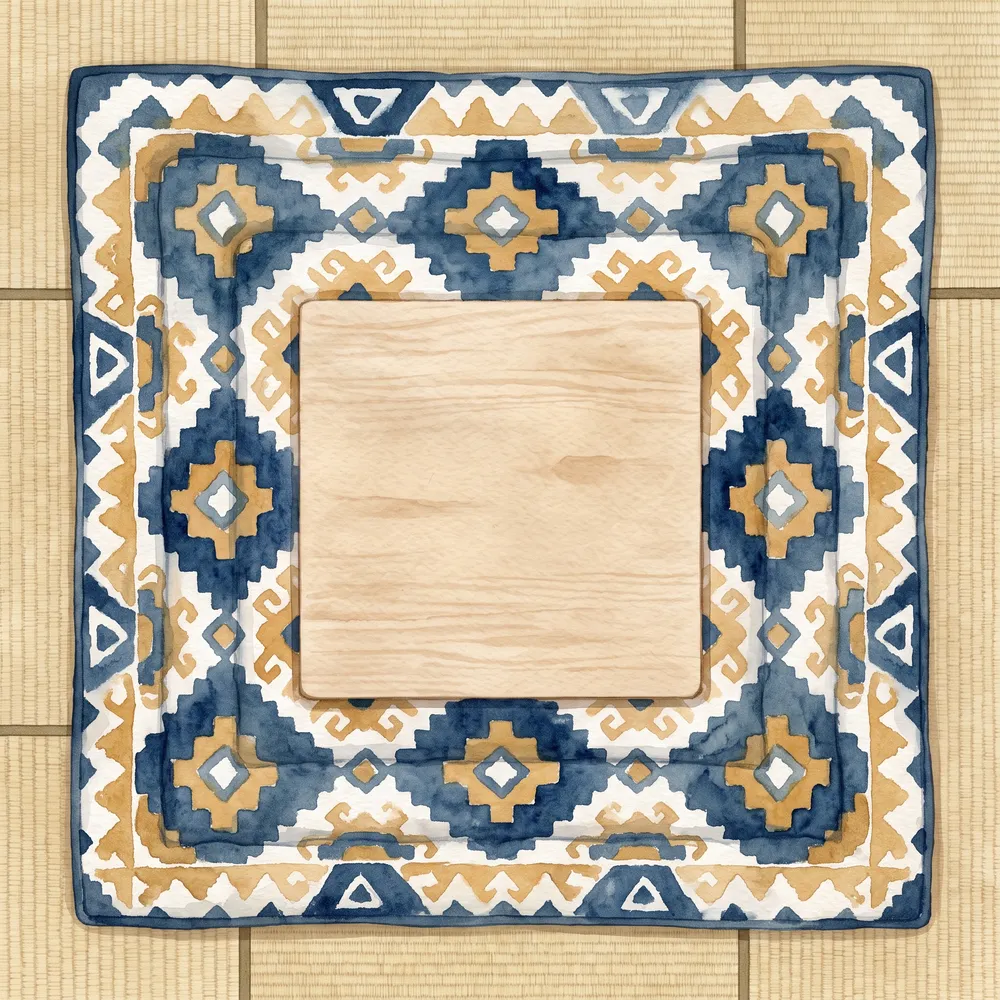
The basic set is a kake-buton (the quilt over the table) and a shiki-buton (the mat underneath). In a cold room, a thin middle layer can go under the quilt. Some households also lay a thin cover, uwagake, over the quilt to catch spills; it should be 5–10 cm (2–4 in) larger than the quilt. And the futon isn't fastened to anything: it simply lies on the frame, and the tabletop's weight holds it in place.
2. Fill and Fabric: What You'll Feel
Polyester or cotton fill
Japanese listings give the composition of the face, the back and the fill. Polyester fill is light, easy to handle and doesn't hold moisture; most kotatsu futons today use it. Cotton fill drapes heavily against you, but is heavier and slower to dry. Neither is better; choose by how much care you can give it.
Your skin touches the back
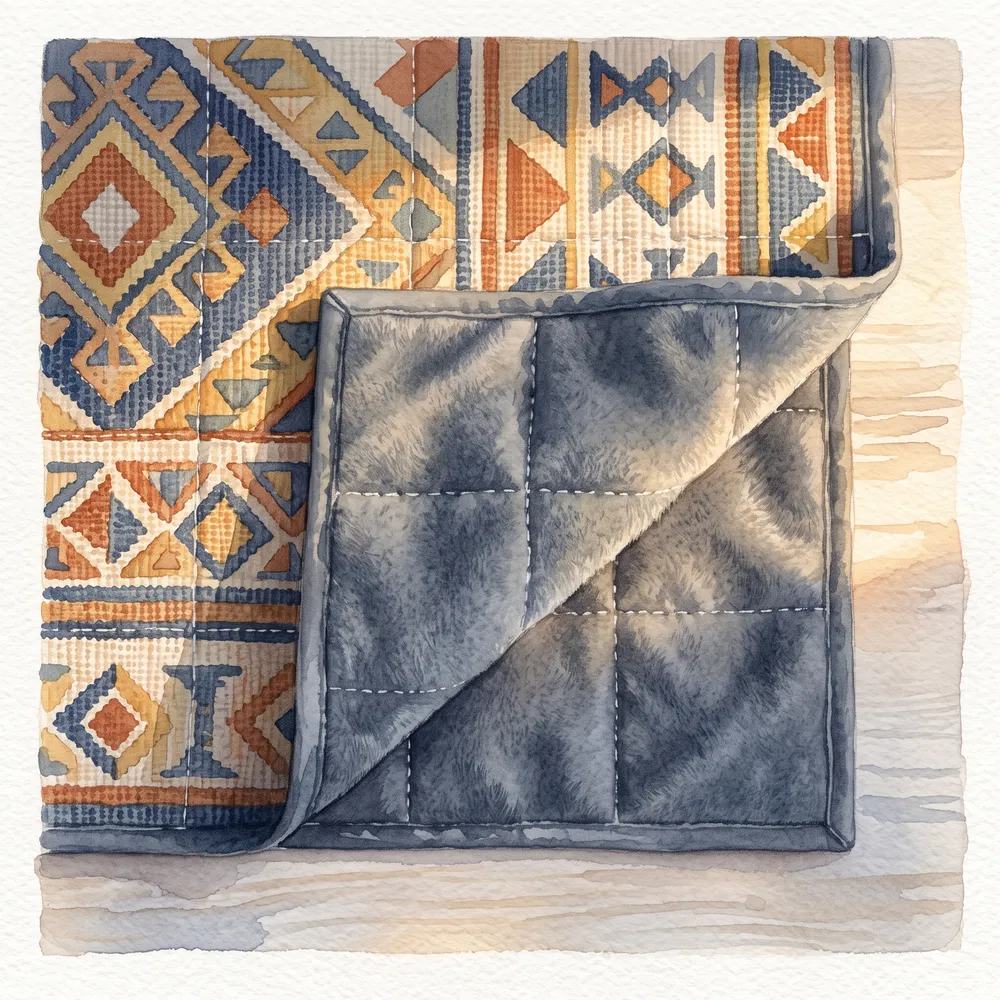
Under the kotatsu, your legs touch the back fabric, not the face. Flannel is brushed and never cold to the touch. Microfiber is smooth and light. Woven cotton such as shijira, with its crinkled texture, feels dry and crisp if you run warm.
3. "Washable" Doesn't Mean It Fits Your Washer
Check the care label first: a tub with water means machine or hand washable, a tub with a cross means dry clean only. That's the futon's side. The other side is your machine. A 205 × 245 cm futon won't fit most home washers. If it goes in with some room to spare, wash it; if you have to cram it in, don't, or you'll strain the machine.
So you choose between four places: your own washer (fold or roll it, dirty side out, in a large net, on a bulky-item cycle with mild detergent), stamping it clean in the bathtub, a laundromat with large machines (check the capacity first), or a dry cleaner.

However you wash it, dry it over two parallel poles in an M shape, so air flows between the layers, and turn it halfway through. And the easiest answer of all: put a cover on the futon. Spills land on the cover, which is thin enough for a home washer.
4. It Spends Longer in the Closet Than Out
A kotatsu is usually out from about November to March. For the other seven or eight months, the futon is in storage, so how it comes out next winter depends almost entirely on how it went in.
Dry it completely before storing it. A futon used all winter has absorbed sweat; even if you don't wash it, air it out first. Stored damp, it will smell, or grow mold. Remove dust by hand or with a vacuum; beating it damages the fabric and fill.
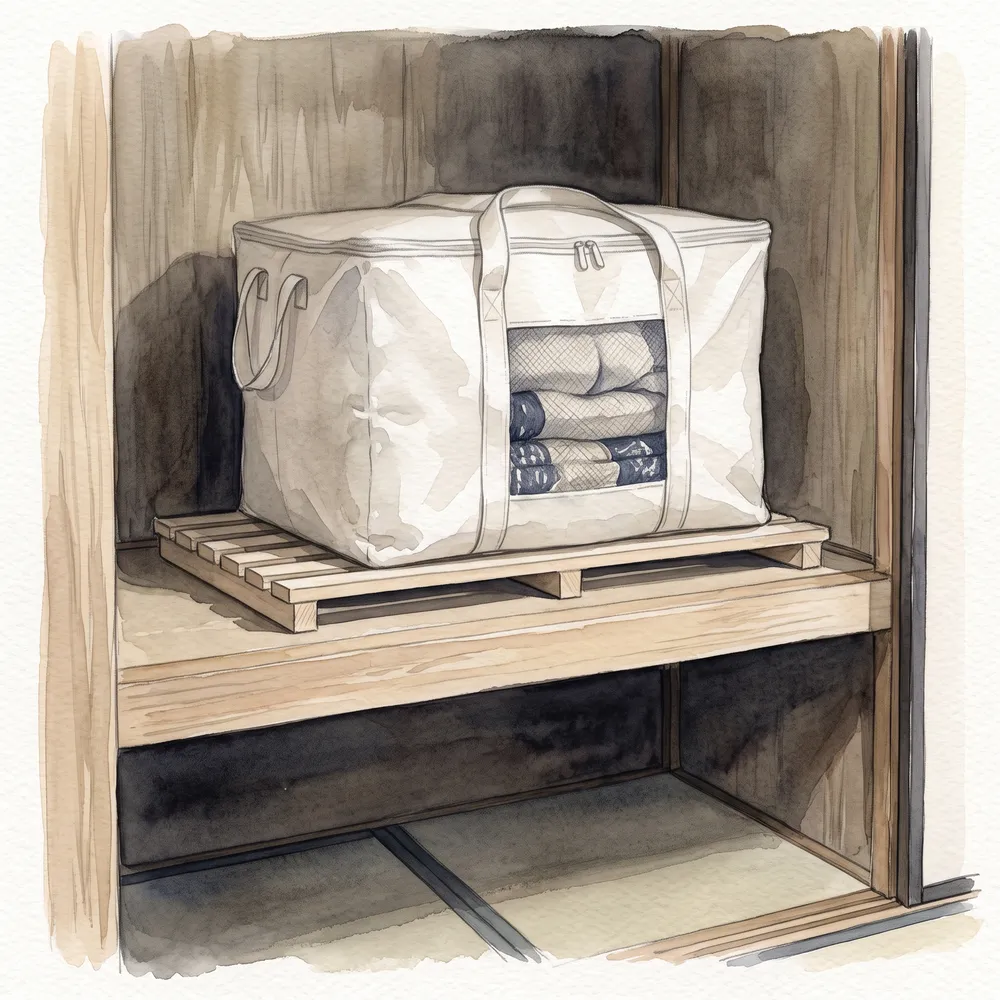
Vacuum bags are fine with two conditions: the futon must be fully dry, and don't squeeze it flat; about two-thirds of its original volume is enough. A breathable non-woven bag is safer if you have the space. Keep it on an upper shelf, off the floor.
5. Heat Escapes Downward, Too
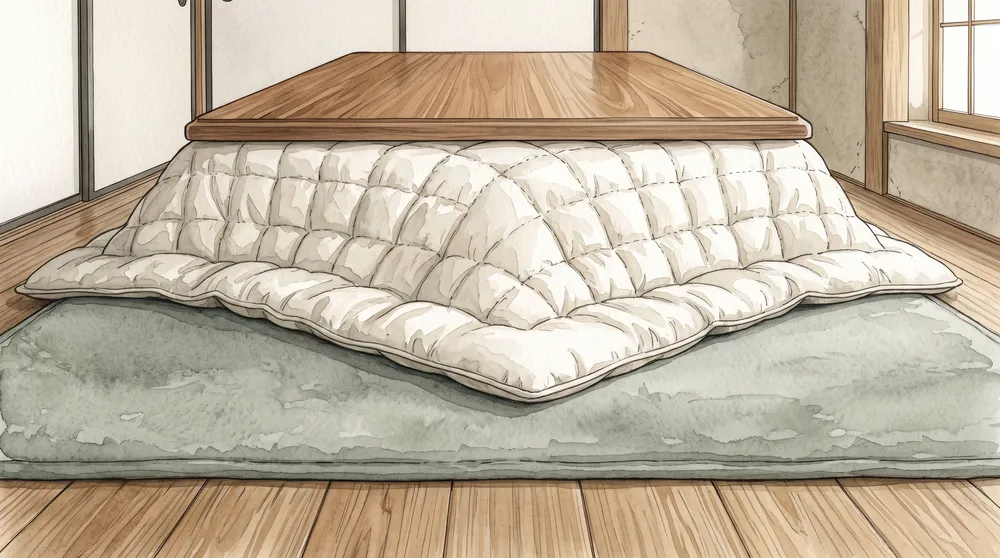
If your feet stay cold under the futon, heat is draining into the floor, especially a wood floor. A kotatsu mat (shiki-buton) or thick rug underneath adds a layer of air. Choose one a size larger than the quilt so the hem rests on the mat, not the bare floor.
6. Japan-Made Kotatsu Futons You Can Buy Outside Japan
Most of the futon makers in the Japanese edition of this guide sell only in Japan. Ikehiko, a Fukuoka futon maker founded in 1886, does list Japan-made kotatsu futons on Amazon.com, and so does FULI.
Ikehiko Kotatsu Futon, 205 × 205 cm Square, Cotton (2381)
For an 80–90 cm (31–35 in) square kotatsu. A brown cotton-faced kotatsu quilt made in Japan. Square 205 × 205 cm (81 × 81 in) is the most versatile size for one or two people.
Ikehiko Kotatsu Futon 205 × 205 cm Square, Brown Cotton (2381)
Loading product details…
Ikehiko Kotatsu Futon & Mat Set, 205 × 205 cm, Flannel (2674)
Quilt and under-mat together. Flannel is warm to the touch from the moment you slide in, and the matching mat stops heat draining into the floor (chapter 5). Made in Japan.
Ikehiko Kotatsu Futon & Mat Set 205 × 205 cm, Flannel (2674)
Loading product details…
FULI Kotatsu Futon, 205 × 205 cm Square, Shijira Cotton
For anyone who runs warm. A 100% cotton face woven as shijira, a crinkled cotton that feels dry and crisp, with a soft peach-skin back. Made in Japan.
FULI Kotatsu Futon 205 × 205 cm Square, Shijira Cotton (Brown)
Loading product details…
7. Frequently Asked Questions
How do I choose a kotatsu futon size?
Add 100–120 cm (40–47 in) to each side of the tabletop. A 120 × 80 cm table takes 205 × 245 cm; an 80–90 cm square takes 205 × 205 cm; a round 90 cm table takes a round 205 cm futon. For chair-height dining kotatsu, add 130–150 cm.
How do I know if it fits my washer?
If it goes in with room to spare, it's fine; if you have to cram it, it isn't. Otherwise use the bathtub, a laundromat with large machines, or a dry cleaner. A crossed-out tub on the label means dry clean only.
How many layers do I need?
A quilt on top and a mat underneath. In a cold room add a thin middle layer under the quilt. A thin cover on top keeps the quilt clean.
Can I use a vacuum storage bag?
Yes, if the futon is completely dry and you don't squeeze it flat; stop at about two-thirds of its size. Polyester fill recovers fairly well after airing, but not always fully, so a breathable bag is safer if you have room.
Why does my kotatsu futon smell when I take it out?
It wasn't fully dry when it went into storage. A winter's use leaves it holding sweat. Air it before storing, use a breathable bag, and keep it on an upper shelf.
Will a Japanese kotatsu heater work in my country?
The futon will; the heater needs checking. Japanese kotatsu heaters are built for Japan's 100V power, so they need a step-down transformer of adequate capacity in 120V countries, and a plug adapter as well in 230V regions. Our kotatsu table guide covers this in detail.
Final Thoughts: The Washer Decides, Not the Label
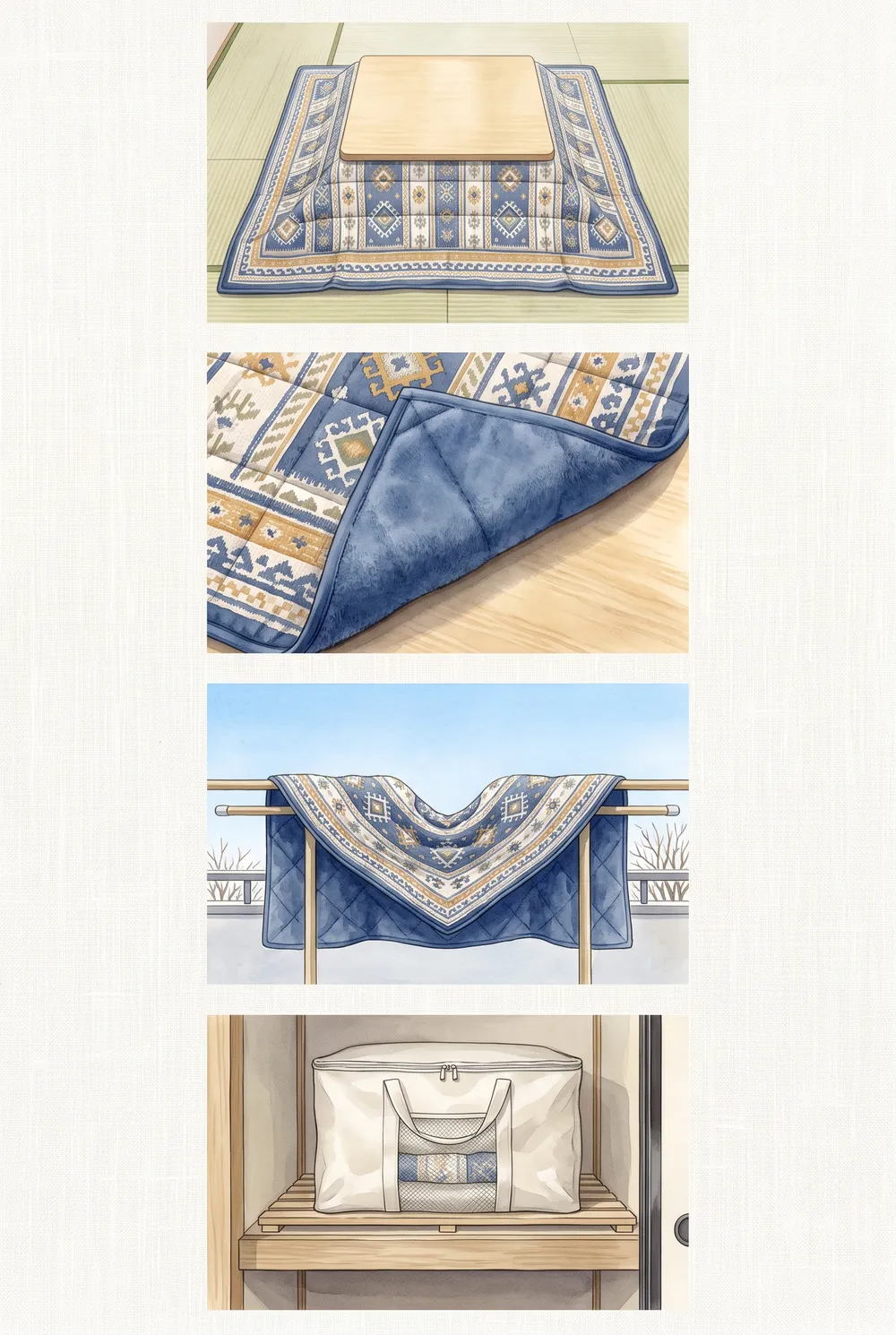
Size comes from the tabletop: add 100–120 cm, or read the "fits tables" range in the listing. Check the back fabric for feel. "Washable" only helps if your washer can take it; a cover is the easiest fix. And store it bone-dry: it spends most of the year in the closet.
A good kotatsu futon is most of a good kotatsu.
Kotatsu: Buying a Japanese Heated Table That Lasts

Japanese Blanket Guide: Izumiotsu & Kawata Feather Down