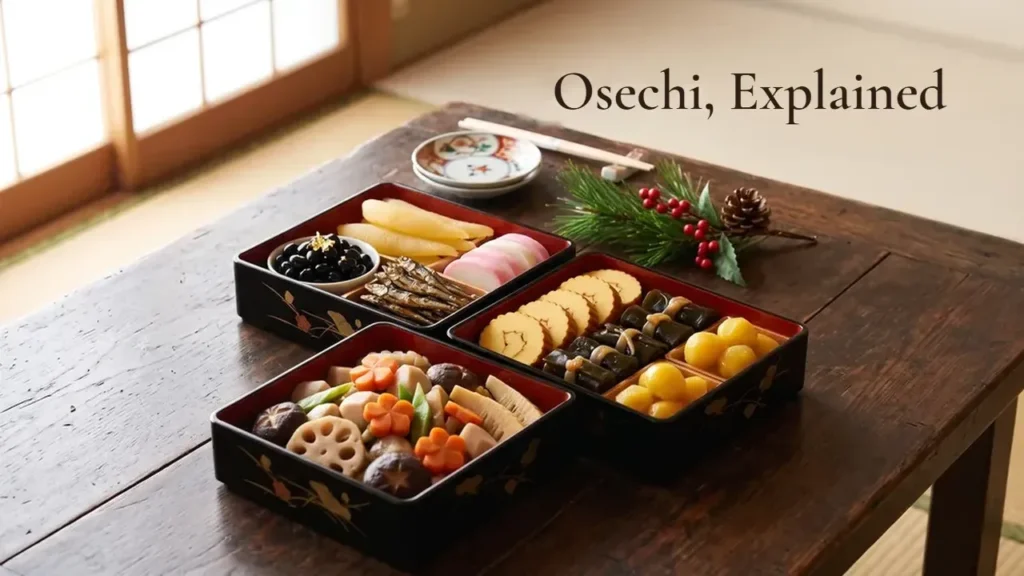
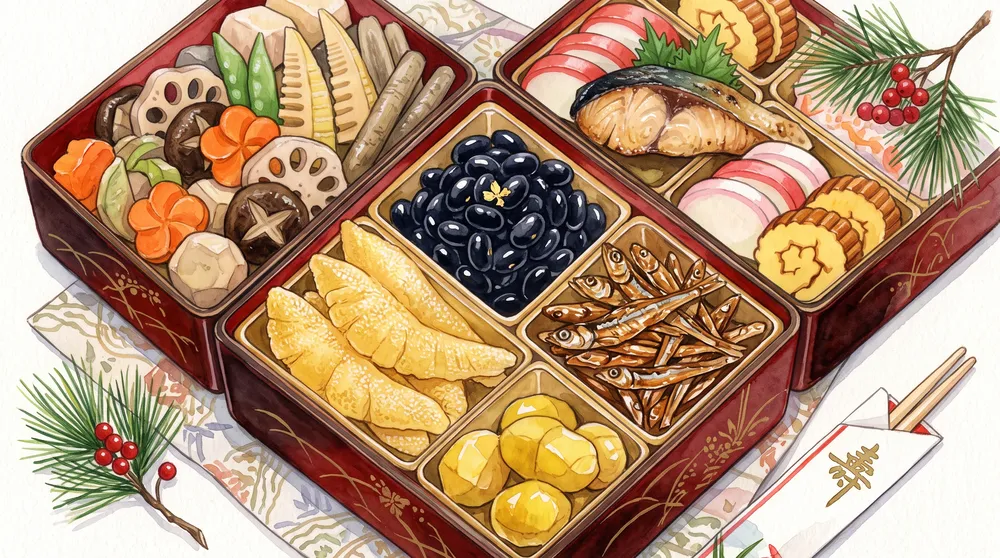
Osechi ryori is the food Japanese families eat over the first days of the New Year, packed in stacked lacquer boxes called jubako.
Every dish is made before the year ends, seasoned to keep for days, so that no one has to cook through the holiday. Each one also carries a wish: black beans for working hard and staying well, herring roe for many children, dried sardines for a good harvest. Today most families in Japan order their osechi rather than make it all, and that has its own pitfalls.
This guide explains what osechi is, what the three essential "celebration dishes" mean, how ordering osechi works if you spend New Year in Japan, why the flavors are so strong, and how to serve it in a jubako, with a Japanese lacquer box you can buy abroad.
Quick Reference: The Three Celebration Dishes
| Dish | What it is | The wish |
|---|---|---|
| Kuromame | Sweet simmered black soybeans | To work diligently (mame ni) and stay healthy |
| Kazunoko | Herring roe | Many children and descendants |
| Tazukuri (gomame) | Candied dried baby sardines | A good harvest |
| Tataki gobo (Kansai) | Pounded, seasoned burdock root | Takes tazukuri's place in western Japan |
1. Why Japanese: Food Made So No One Cooks at New Year
The name comes from osechiku, food offered to the gods on seasonal festival days and then shared among the people. The custom of eating it as the New Year feast spread widely in the Edo period.
Osechi was designed to last. Before refrigerators, food had to keep for several days, so each dish leans on sugar, salt or vinegar. That let the household, including whoever usually cooked, rest through the first days of the year. Packing it into stacked boxes, jubako, is said to carry a wish too: good fortune piled layer on layer.
2. What's in the Box: The Three Celebration Dishes
The heart of osechi is the iwai-zakana sanshu, three celebration dishes. With these and mochi, it's said, the New Year is complete.
Kuromame: black soybeans
Black soybeans simmered slowly in syrup until glossy. Mame means bean, and also "diligent" and "healthy," so they carry the wish to work hard and stay well through the year.
Kazunoko: herring roe
Herring roe, crunchy and salty, soaked in a dashi-soy marinade. Because a herring carries so many eggs, it stands for many children and a flourishing family line.
Tazukuri: candied dried sardines
Tiny dried sardines toasted and coated in a sweet soy glaze. The name means "making rice fields": small fish were once used to fertilize paddies, and the dish is said to stand for a good harvest. It's also called gomame. In Kansai, tataki gobo, pounded burdock root, takes its place.
When you look at an osechi box, look at these three first: the gloss and even size of the black beans, the size of the herring roe, how few of the little sardines are broken. A maker who takes care here takes care everywhere.
3. Spending New Year in Japan: How Ordering Osechi Works
Most Japanese households now order osechi from department stores, restaurants and online shops. It's sold for delivery within Japan, and the timing surprises visitors.
Orders open in summer
Osechi is close to made-to-order: ingredients, cooks and delivery slots are all planned from expected orders. Early-booking prices start around August and rise through autumn, and popular mid-priced three-tier boxes start selling out in October. Most shops let you cancel free until mid-November or early December.
Frozen, chilled or fresh
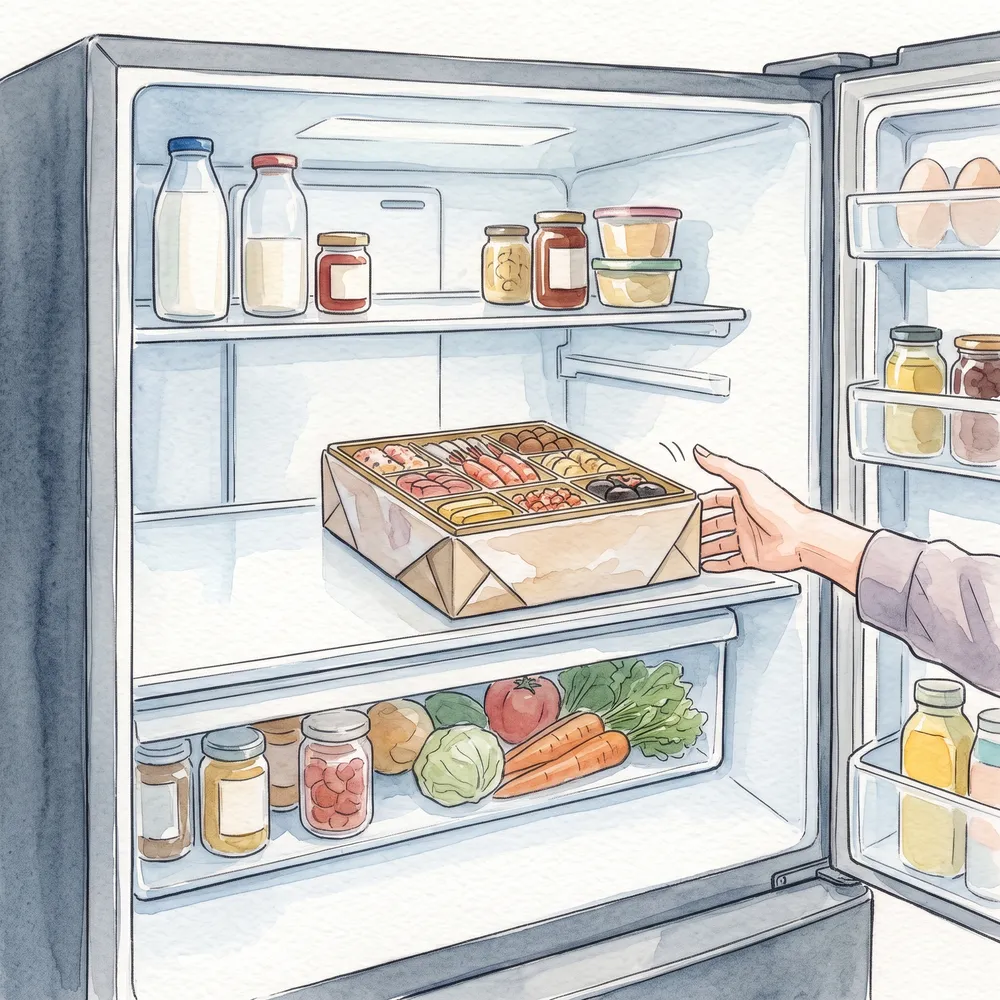
Frozen osechi offers the widest choice, but it must thaw slowly in the fridge for 20 to 24 hours, so it goes in on the morning of December 31. Thawed in a hurry at room temperature, it turns watery. Clear a full fridge shelf before you order. Chilled and fresh osechi can be served as they arrive, but you must be home for delivery, usually on December 30 or 31.
"Serves four" isn't a standard
There's no fixed rule for servings, and a three-tier box doesn't mean three servings. Compare the box size and the number of items, and remember that osechi is usually eaten alongside ozoni soup and other dishes.
4. Why Osechi Tastes So Strong
Osechi is seasoned boldly because it was built to keep: sugar, salt or vinegar let it last for days without a refrigerator. Many ordered osechi are still seasoned that way for the same reason. That isn't good or bad; it's design. If you prefer it lighter, look for boxes described as lightly seasoned or dashi-forward, and expect a shorter shelf life in return.
More dishes aren't always better, either. A jubako holds a fixed amount, so the more items, the smaller each portion. For a family, fewer items with a decent amount of each usually goes over better than forty-five tiny ones.
5. Serving It: One Tier in a Lacquer Jubako
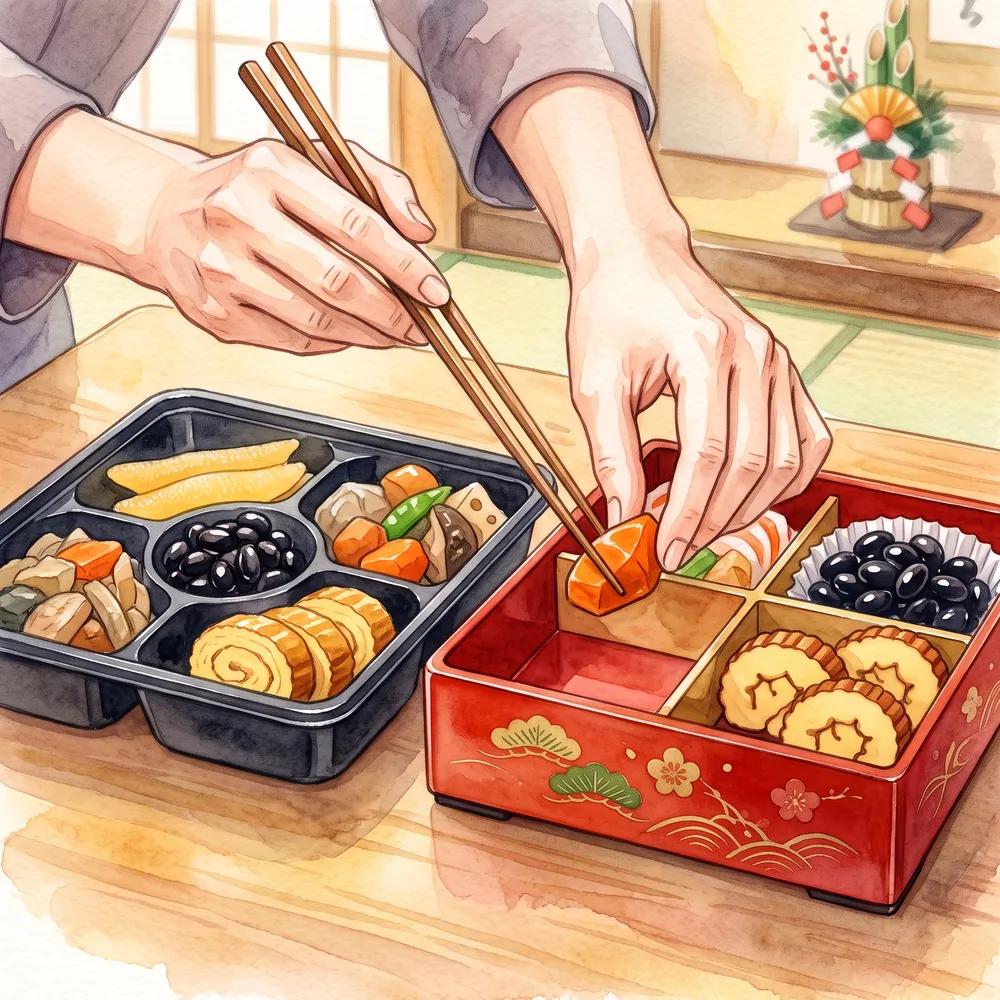
Ordered osechi usually arrives in black or red plastic boxes. Serve it as it is if you like, but move just the top tier into a real lacquer jubako and set it in the middle of the table. The same food suddenly looks formal. The other tiers can stay in their delivery boxes, so there's little extra washing up.
A jubako is used once a year, but that once makes a big difference, and it works for picnics, sushi and sweets the rest of the year.
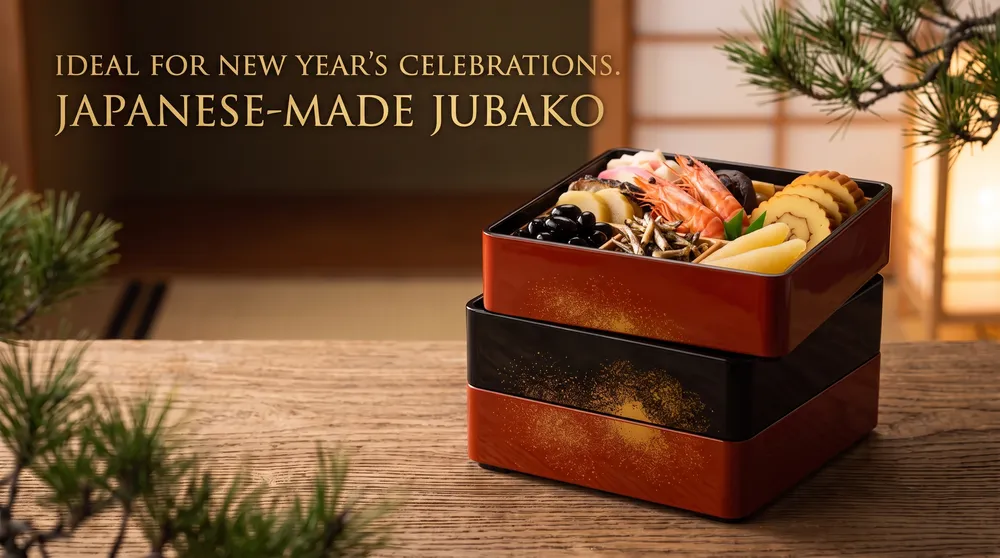
Maeju Yamanaka Lacquerware Jubako, Three Tiers (Karinomatsu)
A three-tier jubako made in Japan, sized for four to five people. From Maeju, a maker of Yamanaka lacquerware in Ishikawa. Black with a gold pine design, 21 cm (8.3 in) square, it suits osechi at New Year and sushi or sweets through the year.
Maeju Yamanaka Lacquerware Jubako, Three Tiers, Karinomatsu 21 cm (7R-603)
Loading product details…
6. Frequently Asked Questions
When is osechi eaten?
From New Year's Day through the first few days of January. It's eaten together with ozoni, a soup with mochi, and the box is usually opened on the morning of January 1.
Can I order osechi from outside Japan?
Generally no: osechi is sold for delivery within Japan. Abroad, Japanese grocery stores may carry some of the dishes, such as kuromame or kamaboko, around the New Year, and the three celebration dishes are simple enough to make at home.
Does frozen osechi taste worse than fresh?
Not much, if it's thawed properly. Quick-freezing has improved a lot. The condition is a slow 20–24 hour thaw in the fridge; hurried thawing at room temperature makes it watery.
How long does osechi keep?
Follow the label. As a rough guide, chilled osechi often keeps until about January 2, and fresh osechi is meant to be finished on New Year's Day. Thawed osechi can't be refrozen, and don't leave it out long in a warm room.
What's the difference between Kanto and Kansai osechi?
The third celebration dish. Kanto (eastern Japan) uses tazukuri, candied sardines; Kansai (western Japan) uses tataki gobo, pounded burdock. Kuromame and kazunoko are common to both.
What do I do with leftovers?
Change the dish. Chop simmered vegetables into mixed rice, put rolled omelet and kamaboko in a sandwich, fold black beans into a pound cake or milk jelly.
Final Thoughts: A Box That Lets Everyone Rest
Osechi is food made ahead so that no one has to cook at New Year, packed in stacked boxes for luck piled on luck. Its heart is three dishes: black beans for diligence and health, herring roe for children, dried sardines for a good harvest.
In Japan, order early, thaw frozen osechi slowly and don't trust "serves four." Anywhere, a lacquer jubako turns the same food into a New Year table.
Japanese Mochi: Koganemochi, Habutae and New Year Noshi
Jubako: The Tiers Are a Recipe, Not a Stack